
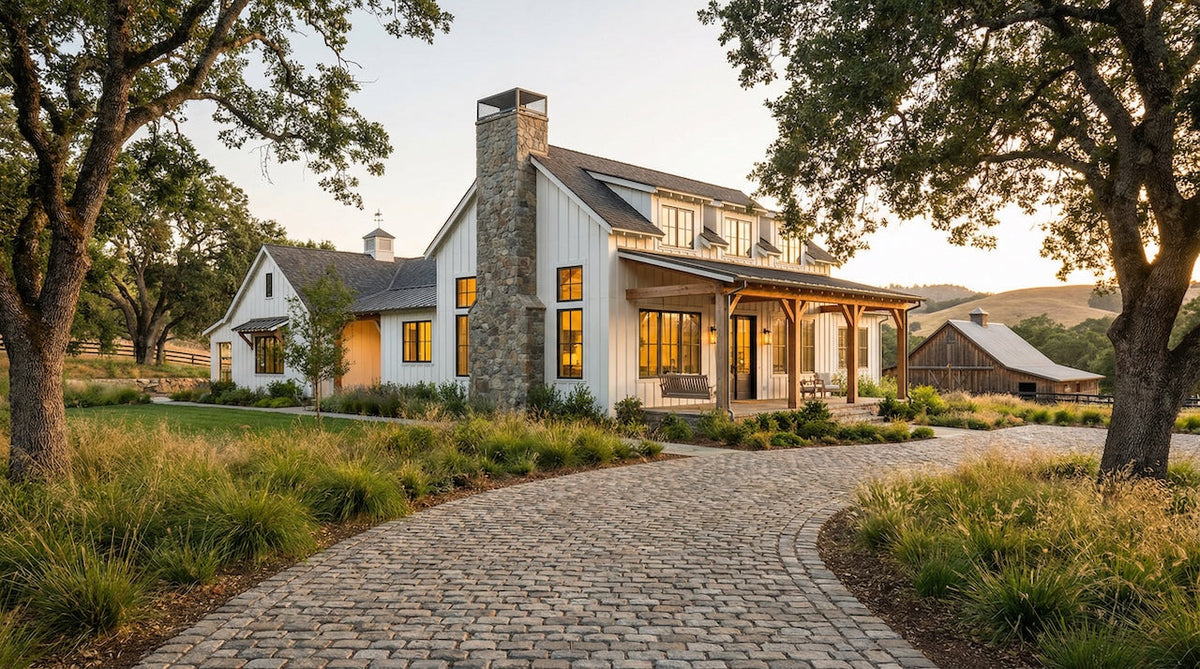
Walk any historic street in New York or the Hudson Valley and you will see the kind of driveway many homeowners and designers quietly want: granite Belgian blocks underfoot, not just poured concrete. Belgian block driveways look timeless, feel solid, and instantly elevate curb appeal, but cost is usually the first question.
Maybe you are a homeowner in Rockland County or Westchester who wants a stone driveway that will stand up to New York winters. You might be a designer or architect deciding between new granite and reclaimed stone for a client’s entrance. Or maybe you are a contractor putting together a bid and need clear material numbers per square foot before you price base and labor.
If you are comparing granite Belgian block price per square foot to concrete, asphalt, or even reclaimed cobblestone, this guide gives you clear numbers and real-world context. You will see where new granite makes the most sense, when reclaimed jumbo cobblestones are worth the upgrade, and how to keep your budget grounded without sacrificing design.
Belgian blocks started as workhorse street pavers and turned into a go-to material for driveways, edging, and courtyards. Granite units do not just sit on top of the soil; when installed correctly on a compacted base, they handle vehicle traffic, winter weather, and freeze–thaw cycles for decades with little maintenance beyond joints and edges.
Compared to concrete or asphalt, you are paying more up front for dense natural stone and more labor, but you are trading that higher initial spend for a driveway that ages beautifully instead of cracking, flaking, or looking tired after a few winters. For homeowners, architects, and contractors in New York and neighboring states, this durability matters as much as price.
When people ask about “Belgian block cost per square foot,” they usually want a simple number. In practice, the total cost is a mix of material price, base preparation, labor, and logistics. Understanding each bucket helps you set realistic expectations before you order the first pallet.
Material is usually priced per piece or per square foot, installation crews often quote per square foot or per linear foot for borders, and base work can vary depending on soil, slope, and whether you are replacing an existing driveway. Trucking and offloading also play into the final figure, especially for jobs outside the immediate New York metro.
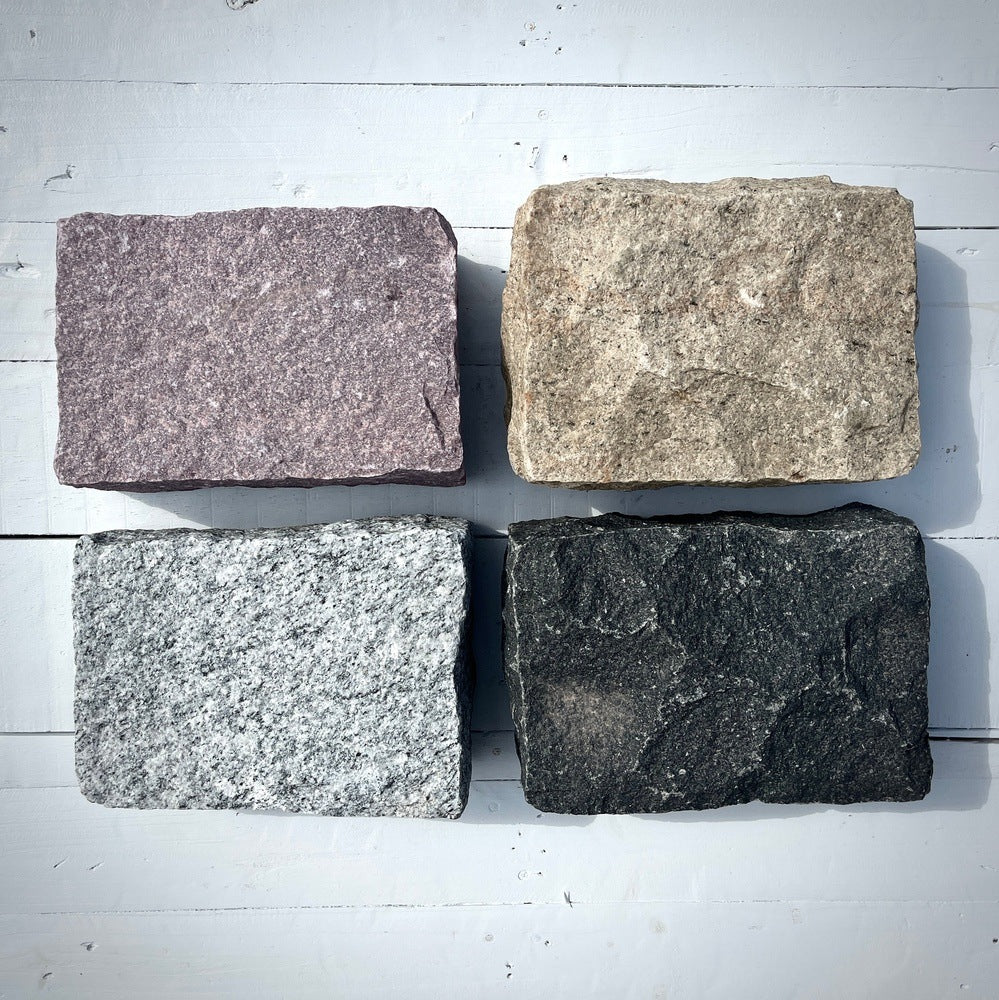
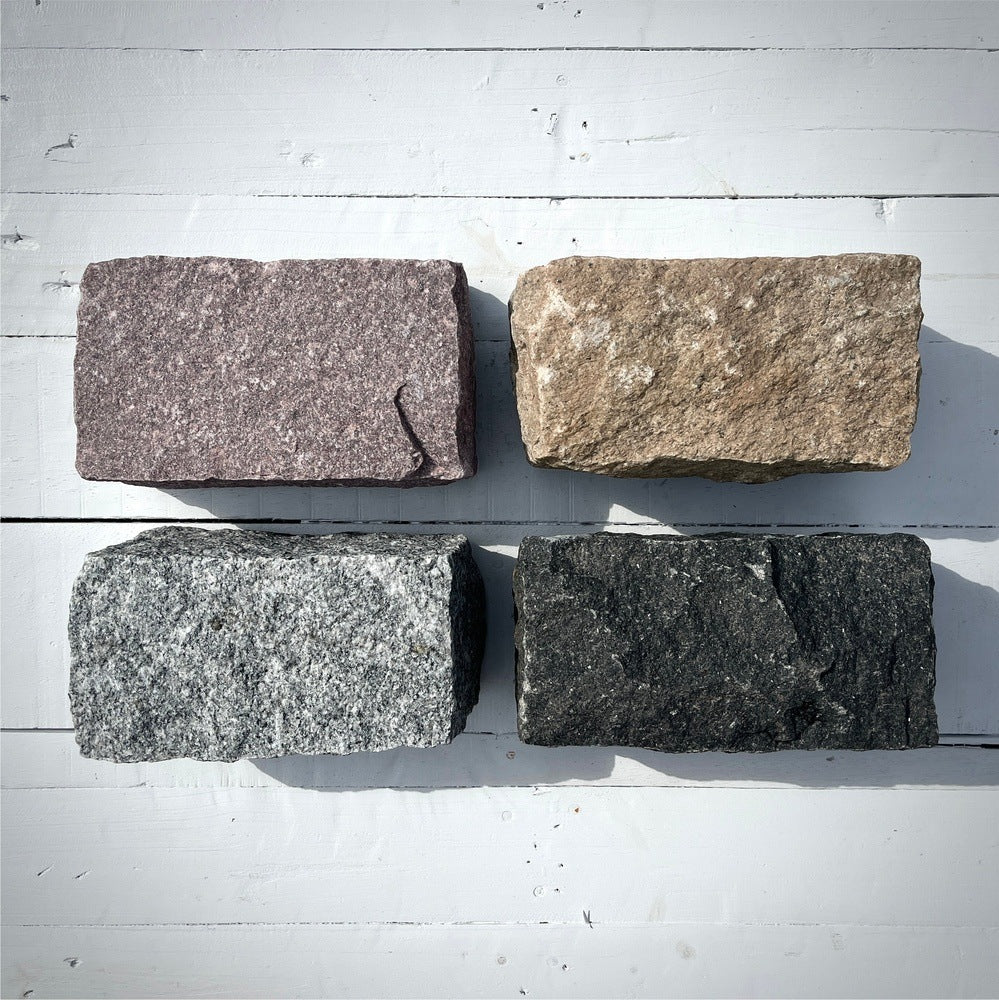
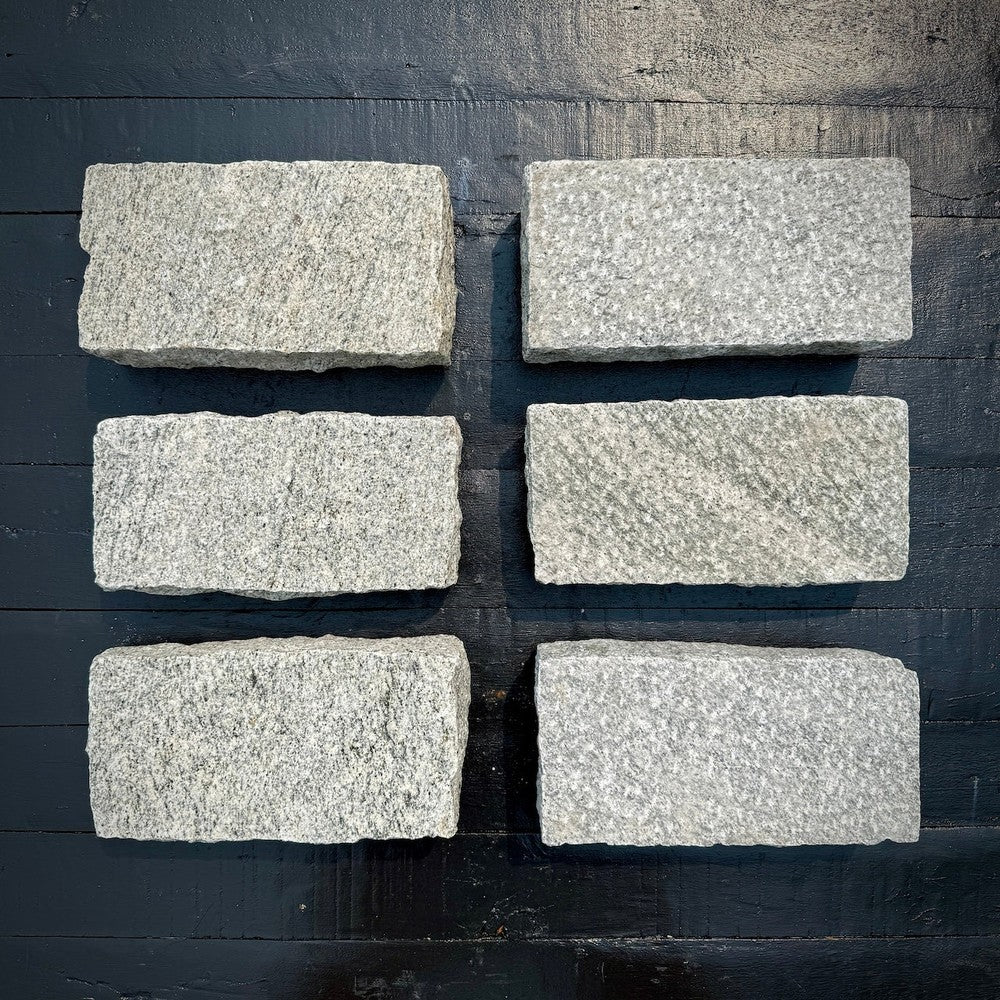
At Chief Bricks, granite for driveways is offered both as newly quarried Belgian blocks, imported from India, and as reclaimed cobblestones salvaged from US streets, with clear material costs per square foot so you can plug numbers straight into your budget. New Jumbo Belgian blocks, New Regulation units, and reclaimed cobblestones each bring a different look and price point.
As of October 2026, typical material cost per square foot (with 1/2-inch joints) for driveway layouts using Chief Bricks stone is:
Those figures are for material only and are valid at the time of writing; contractors should still confirm current pricing on each product page before finalizing bids. Professional installation typically adds about $12 to $24 per square foot, depending on site, access, and pattern. To turn square footage into a stone count at your joint width, use our cobblestone & Belgian block calculator, and see the coverage calculator guide for how much extra to order.
To make planning easier, here is a side-by-side look at three common driveway options: new granite Belgian blocks, standard concrete, and reclaimed cobblestones. Exact numbers will vary by project and installer, but this table gives you a realistic starting point for New York–area work.
| Driveway Option | Typical Material Cost per sq ft | Installation Complexity | Expected Lifespan | Visual Character | Best Use Cases |
|---|---|---|---|---|---|
| New Granite Belgian Blocks | Approx. $11.90–$12.40 (grey, material only, jumbo vs. regulation, 1/2-inch joints) | Higher – requires careful base prep, setting individual units, joint treatment | Long-term, often several decades with proper installation and maintenance | Clean, timeless stone look with consistent sizing and color | Primary drive lanes, aprons, and bands in New York, New Jersey and Northeast homes |
| Standard Concrete Slab | Often lower upfront material cost than granite, varies by mix and finish | Moderate – form, pour, finish; faster install but sensitive to curing and weather | Medium-term; more prone to cracking, scaling and discoloration in freeze–thaw climates | Uniform surface, can be tinted or stamped but generally less depth than stone | Budget-friendly full-width driveways or areas where speed and simplicity matter most |
| Reclaimed Cobblestones | Approx. $16.30–$21.40 (material only, jumbo vs. regulation reclaimed, 1/2-inch joints) | Higher – similar to new stone but with more variation to account for in layout | Long-term; it is granite, with added character from prior use | Historic, patinated look with softened edges and color variation | High-visibility entries, circular courts, heritage-inspired properties and luxury projects |
On paper, concrete driveways often look cheaper per square foot than granite Belgian blocks; a straightforward poured slab typically involves lower material and faster installation. However, concrete is more likely to develop visible cracks, surface scaling, and discoloration, especially in climates like New York where freeze–thaw cycles and de-icing salts are tough on standard mixes.
Granite Belgian blocks, by contrast, are individual units with joints that can flex slightly with movement. A properly built stone driveway can outlast more than one concrete or asphalt surface, and when a section does need adjustment, local repairs are simpler: you lift and relay, rather than demo and re-pour. For homeowners looking beyond a 5–10 year horizon, granite’s lifecycle value can offset the higher upfront Belgian block cost per square foot.
Reclaimed cobblestones carry the same structural advantages as new granite, but add something extra: visible age. Softened corners, worn textures, and subtle color variation make reclaimed jumbos and regulation stones feel like they have lived a previous life on real streets before arriving in your driveway.
For designers and architects, reclaimed jumbo cobblestones are often chosen for projects where narrative matters as much as performance, from luxury homes in the Hudson Valley to high-end residences in places like Santa Barbara or the Hamptons. If you are aiming for a driveway that feels rooted in New York and not just “stone from anywhere,” reclaimed cobblestones are usually worth the premium over new Belgian blocks, which in grey runs about 37% more for jumbos and about 73% more for regulation stones. Because they are reused rather than newly quarried, reclaimed cobblestones can also count toward LEED v4/v5 Material Reuse credits; see how reclaimed stone supports LEED certification.
Location plays a quiet but important role in both cost and choice of Belgian blocks. In regions like Rockland County, Westchester, and Northern New Jersey, Belgian block driveways and borders are already part of the visual language of neighborhoods; material availability and contractor familiarity tend to keep installation windows reasonable.
In coastal or wildfire-prone regions, granite Belgian blocks can contribute to fire-safe landscaping strategies, especially around the home perimeter. If you are considering Belgian blocks as part of a broader landscape design, you may find inspiration and planning tips in resources like the Chief Bricks article on granite Belgian block fire safety and the guide on Patio & Walkway Design Ideas Using Reclaimed Bricks & Stones, which show how cobblestones and reclaimed materials support both aesthetics and resilience.
Planning is where Belgian block driveways either shine or start to overrun budgets. The easiest route is to separate the project into a few clear decisions: where the blocks go, which size you choose, and how you handle transitions to the street, garage, and landscape. Keeping these choices grounded in your use patterns helps you invest where it matters most.
One cost-effective approach is to use Belgian blocks strategically as bands, aprons, or wheel tracks instead of paving the entire driveway field. Stone at the entry, along the sidewalks, and around planting beds provides the high-impact visuals most people notice, while concrete or asphalt carries the rest of the load. Another option is to reserve reclaimed cobblestones for focal areas—like a circular court or front approach—and use new jumbos or regulation units elsewhere for a cleaner cost profile.
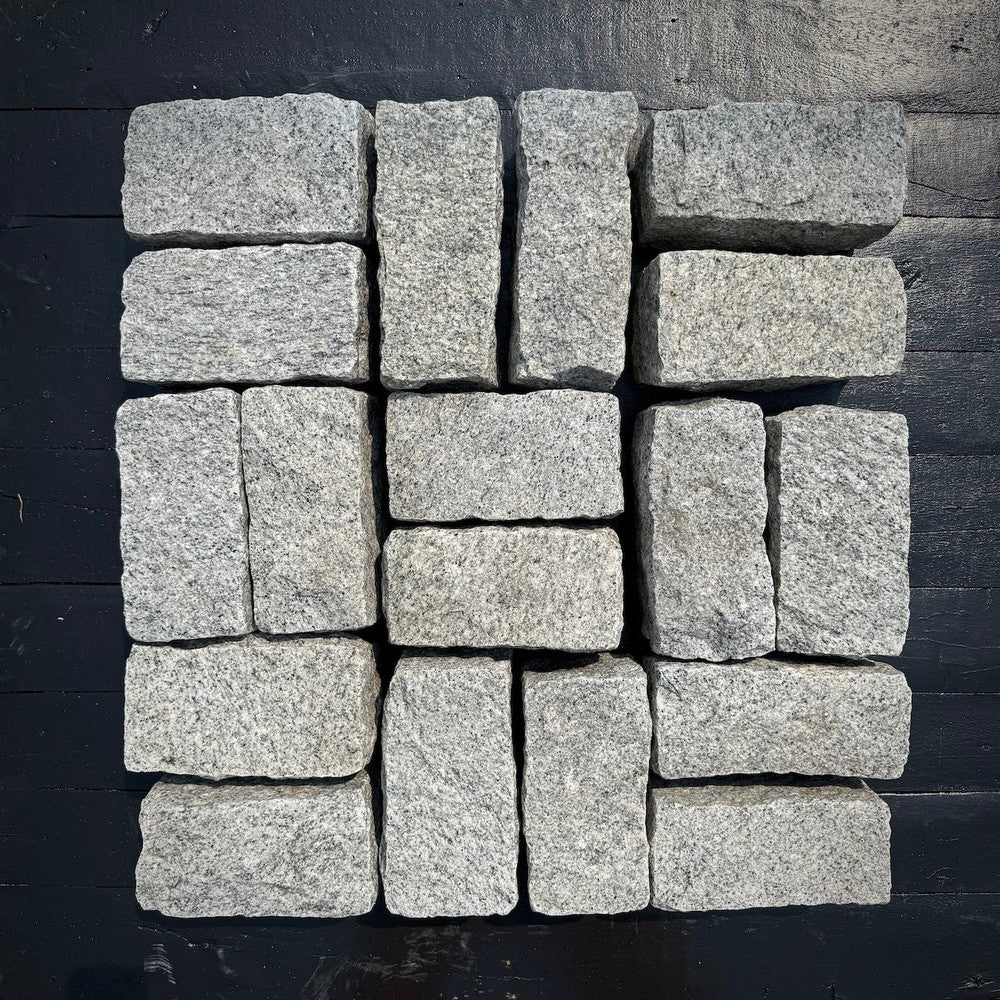
Jumbo Belgian blocks create a bold, larger-scale pattern that pairs well with wide driveways, estate-style entrances, and properties where you want the stone to read clearly from the street. Regulation units bring a more traditional, smaller module that can feel closer to historic city streets and tighter paving designs.
If your driveway has curves, islands, or transitions to walkways, mixing jumbo stones in main drive lanes with regulation or smaller units at edges and paths can keep joints aligned and patterns readable. This layered approach also lets you adjust cost per square foot by reserving higher-priced reclaimed cobblestones for the most visible zones.
Start with the material numbers listed earlier—$11.90 to $21.40 per square foot depending on whether you choose new Belgian blocks or reclaimed cobblestones—and then consult your installer for base and labor estimates; about $12 to $24 per square foot for installation is a reasonable planning range. Many contractors in New York and New Jersey can provide Belgian block driveway quotes per square foot that reflect local conditions, including excavation, base depth, and joint treatment.
To avoid surprises, ask for separate line items for material, base prep, installation, and any concrete or asphalt tie-ins. If you are planning borders, bands, or mixed surfaces, make sure the bid clearly lists square footage or linear footage for each zone. This structure makes it easier to adjust scope without breaking the whole plan.
Real-world examples are invaluable when choosing Belgian block driveways. Chief Bricks has documented projects ranging from reclaimed jumbo cobblestone courts at Bell Hill Farm in Windham, NY to modern Old Tappan homes with jumbo Belgian block entrances, providing design cues and pattern ideas that translate directly to residential driveways.
Pair those stories with guides like our cobblestone driveway guide, which walks through benefits and practical considerations of stone driveways. Together, they help homeowners, designers, and contractors avoid guesswork and build driveways that feel intentional rather than experimental.
If you are ready to explore specific materials for your project, these core products at Chief Bricks cover most driveway scenarios, from clean new granite to reclaimed stones with history:
For broader landscape and hardscape inspiration with stone, you can also browse the Chief Bricks Journal under the stones tag, including articles like Enhancing Farmhouse Design with Reclaimed Cobblestones, Top Granite Cobblestone Pool Deck Ideas for Stylish Homes, and 9 Ways to Use Handcut Granite Belgian Blocks. These guides show how Belgian blocks and cobblestones transition smoothly from driveways into patios, pool decks, and garden spaces.
For most driveways in New York and the Northeast, yes. Granite costs more up front than concrete or asphalt, but a well-built stone driveway handles vehicle traffic, winter weather, and freeze–thaw cycles for decades and ages beautifully instead of cracking or scaling. If you plan to stay in your home beyond a 5–10 year horizon, that long-term value usually outweighs the higher initial cost per square foot.
The choice between new and reclaimed comes down to the look you want, not the strength you need. New granite Belgian blocks give a clean, consistent finish at the lower material price, from about $11.90 per square foot in grey (1/2-inch joints). Reclaimed cobblestones, from about $16.30 per square foot, bring softened edges and the patina of real streets. Both are granite and both are made for cars. If a full stone surface is more than your budget allows, using blocks for the apron, borders, or bands and finishing the center in concrete or asphalt keeps the stone where people notice it most.
Work out how many Belgian blocks or reclaimed cobblestones you need for your edging with our Belgian Block & Cobblestone Edging Calculator.
If you are still weighing the two, our guide Cobblestones vs. Belgian Blocks: What’s the Difference? explains how newly quarried Belgian blocks and reclaimed cobblestones compare, so you can choose the right stone for your entrance.
The information provided in our guides, installation tips, and blog content is for general reference only. Every project is unique, and site conditions can vary. We strongly recommend consulting a qualified professional installer to review your specific project and provide final guidance.
Share: