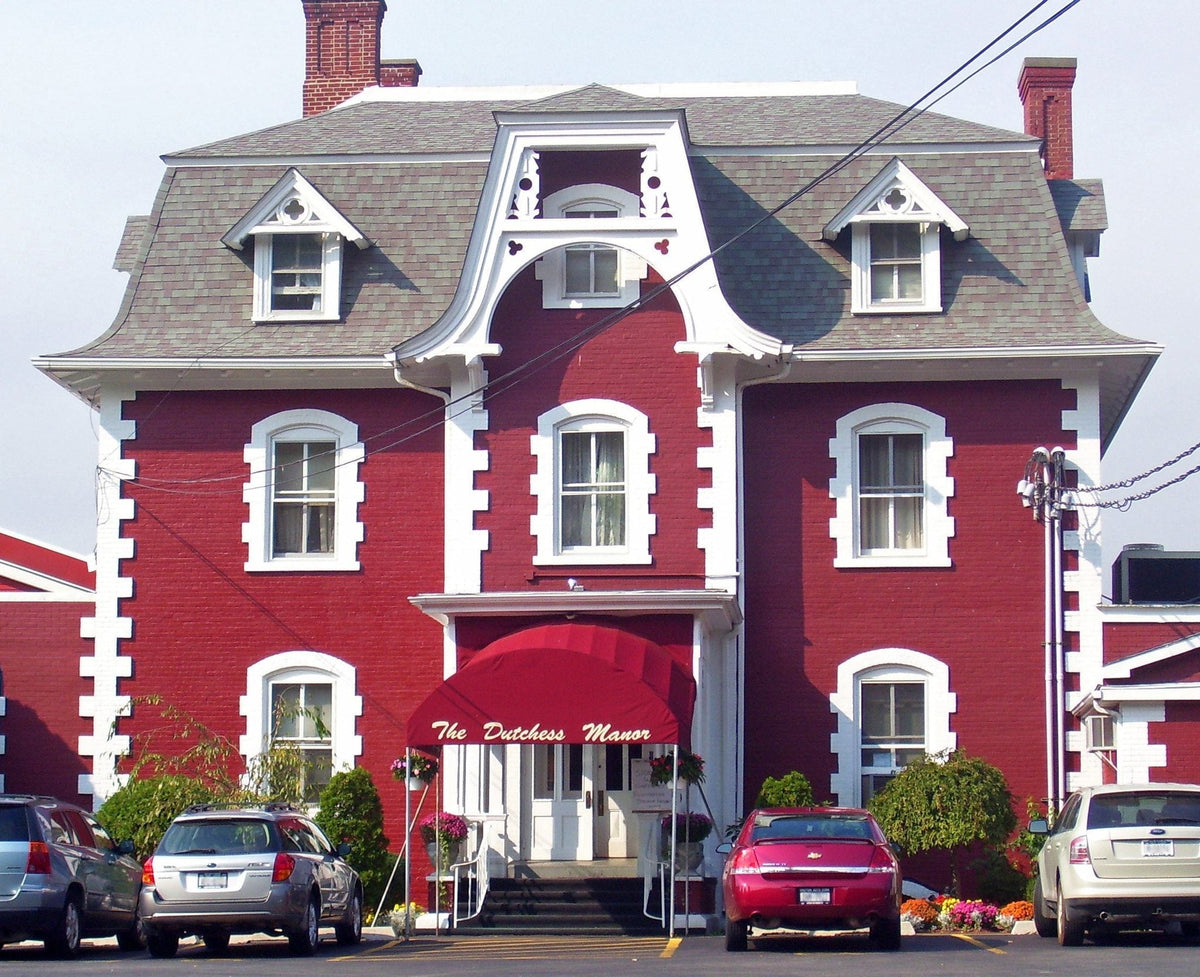
Drive Route 9D in Beacon and you pass a house with a mansard roof and quoined corners, with views of the Hudson and the Highlands beyond. For more than six decades it was a place for weddings, bar mitzvahs and proms. Before that, it belonged to a man who owned three local brickyards. Soon it will become the front door to a new riverside trail.
The house is Dutchess Manor, in Beacon, and it is back in the news. Its story is a small window onto something much bigger: the Hudson River brickyards, and the families and neighborhoods that grew up around them.
Maybe you are a homeowner who loves old New York brick and wants to know where it came from. You might be a designer who likes to tell clients the story behind a material. Or maybe you are a contractor who has handled thousands of Hudson Valley bricks and is curious about the people who made them. This guide breaks down what is planned for Dutchess Manor, the house's history, what it shows about the brickyard families of the Hudson, and where to read more about Hudson Valley brick.
These facts come from the Hudson Highlands Fjord Trail's press release of October 28, 2026.
| Question | Answer from the Fjord Trail |
|---|---|
| Where is it? | On Route 9D in Beacon, NY, at the midpoint of the planned Fjord Trail |
| When was it built? | Constructed in 1867, as a country estate |
| Who designed it? | Architect George Harney, based in nearby Cold Spring and Newburgh |
| What style? | Second Empire, with quoining on the corners and a mansard roof |
| Brickyard connection? | Bought in 1886 by Francis Timoney, an Irish immigrant and local brickyard owner |
| Historic listing? | Added to the National Register of Historic Places in 1982 |
| What happens next? | A Fjord Trail visitor center and staff offices, slated to open in 2027 |
Note: this summarizes the Fjord Trail's press release. Chief Bricks is not involved in the project.
On October 8, 2026, the Town of Fishkill Planning Board approved the site plan from Hudson Highlands Fjord Trail, Inc. (HHFT) to turn Dutchess Manor into the visitor center and organizational hub for the Fjord Trail, a 7.5-mile multi-use trail between the City of Beacon and the Village of Cold Spring.
The Fjord Trail says the historic structure will be restored to its original 19th-century footprint. The reimagined site will include 67 parking spaces for trail visitors and is slated to open in 2027.
"In addition to restoring this 19th-century building and surrounding landscape, we are creating new accessible public spaces and indoor and outdoor spaces that will support programmatic partnerships with schools and local nonprofits," said HHFT President and CEO Peter Mullan.
The Fjord Trail also plans to collect stories and memories from the public and from the Coris family, who ran the house as an events venue, for its interpretive programs.
According to the Fjord Trail, Dutchess Manor was built in 1867 as a country estate for grain merchant James Wade and his wife, Louisa Van Amburgh Wade. Louisa's family had owned the land for decades and farmed it. The couple hired architect George Harney to design the house and two outbuildings, in the Second Empire style, with quoins on the corners and a mansard roof.
The house changed hands several times:
For a brick lover, the most interesting owner is Francis Timoney. The Fjord Trail says that by the time his family moved in, he owned three local brickyards, including one just north of the house in Dutchess Junction. The area became known as Timoneyville, because it was home to many of his laborers.
That one detail says a lot. Here, at least, a brickyard shaped the place around it: who lived nearby, where they worked, even what the neighborhood was called. The owner lived close to one of his yards, and his workers' homes gave the area its name.
It is worth being clear about what the press release does not say. It does not describe what Dutchess Manor is built of, or say that any of its brick came from Timoney's yards. The house was built nearly twenty years before he bought it. What it shows is a brickyard family living in what the Fjord Trail calls one of the most distinctive Second Empire buildings in the Hudson Valley, close to the yards that supported it.
Dutchess Manor is one story among many. We have written about the wider history of Hudson Valley brick in several guides:
Once the visitor center opens, Dutchess Manor may become one more place to stop on a Hudson Valley brick trip. The Fjord Trail's interpretive programs will tell the house's own story.
Our New York reclaimed bricks were made in the Hudson Valley. We salvage them from older buildings and streets, and every brick is checked by hand, cleaned of old mortar and dirt, and sorted by type, size and color.
To see how they get from an old wall to your pallet, read our guide to how we source, sort and clean reclaimed bricks.
If you value a material with a story, yes. A reclaimed Hudson Valley brick was made in the region's yards, served in an old building or street, and is ready for a second life in your wall, fireplace or patio. It has a weathered surface and a color range that new brick has to imitate, and using it keeps good material in use.
The trade-offs are clear. Reclaimed bricks vary in size and color, so a sample and a careful look are worth the time. And reclaimed bricks aren't tested to current structural standards, so we sell them for non-structural use.
To see the bricks, start with our reclaimed bricks guide, or visit our yard in Nanuet, NY. No appointment is needed, but if you call ahead at (718) 379-1232, we will make sure you get our full attention.
The information provided in our guides, installation tips, and blog content is for general reference only. Every project is unique, and site conditions can vary. We strongly recommend consulting a qualified professional installer to review your specific project and provide final guidance.

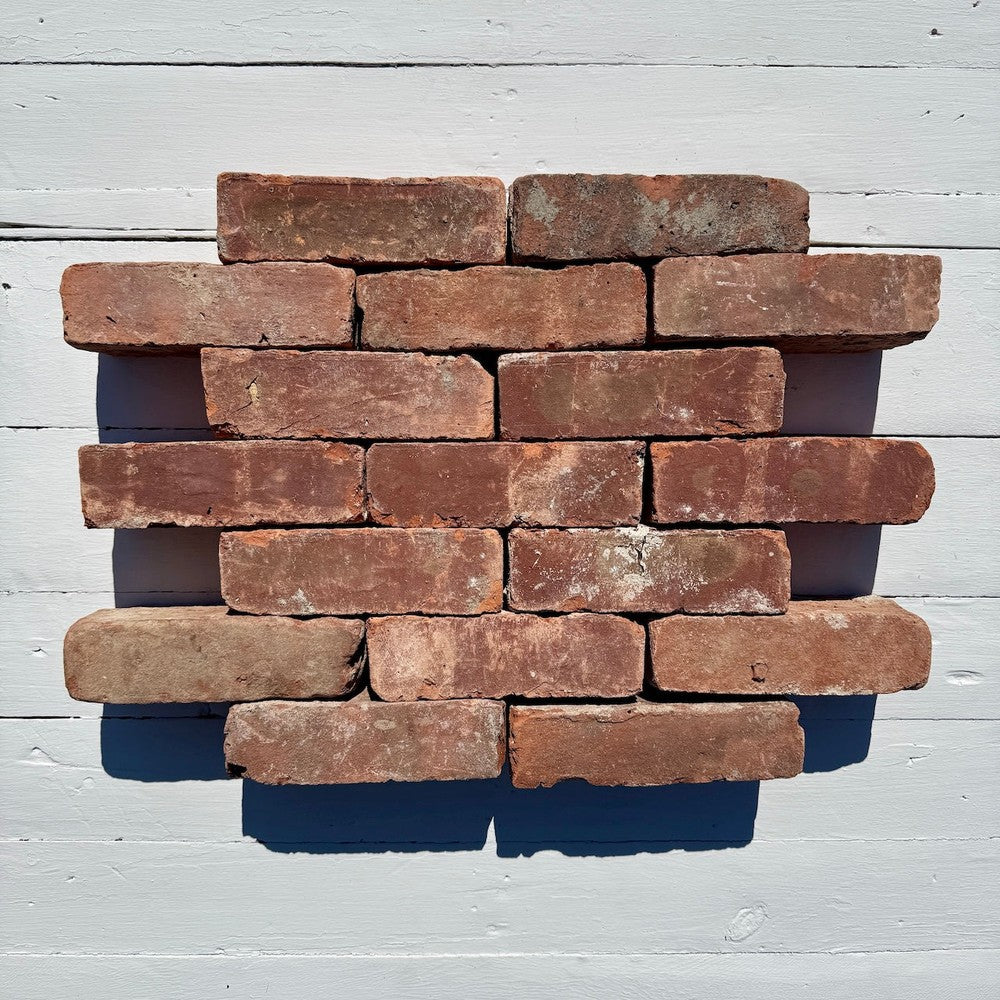
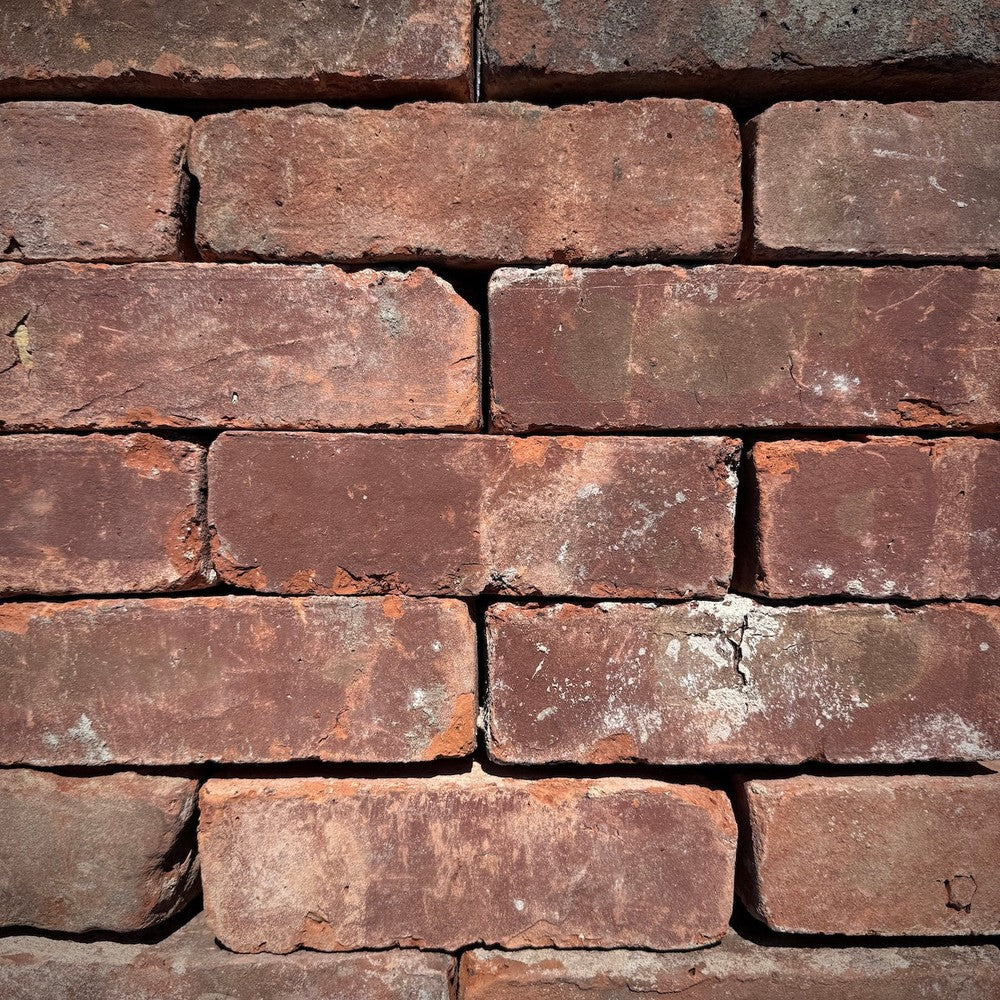
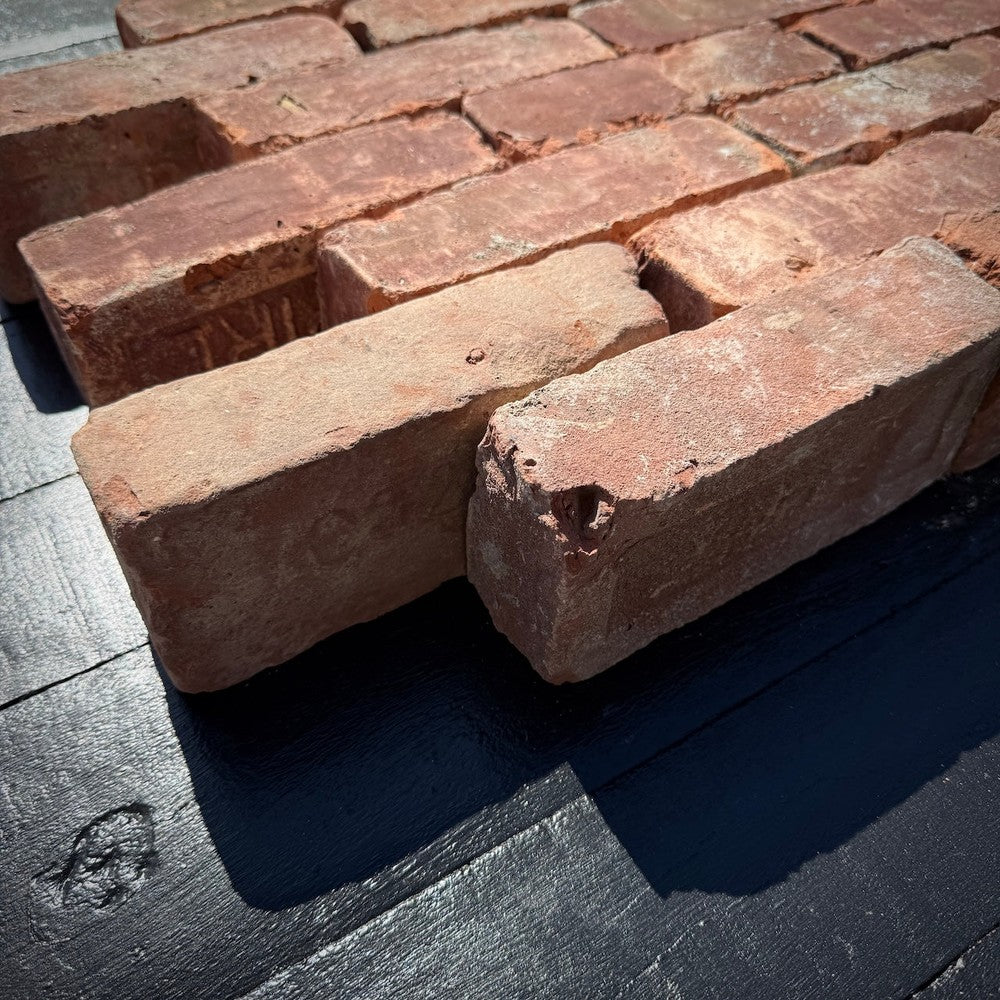
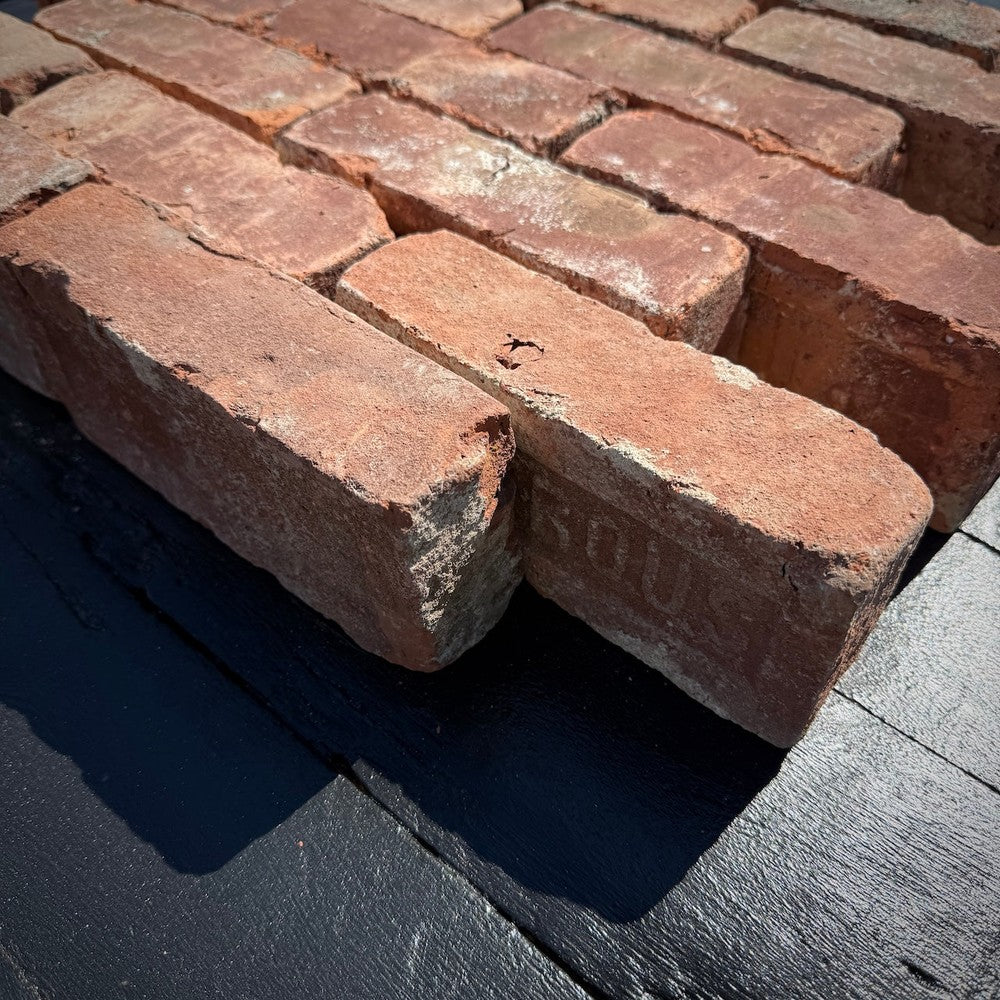
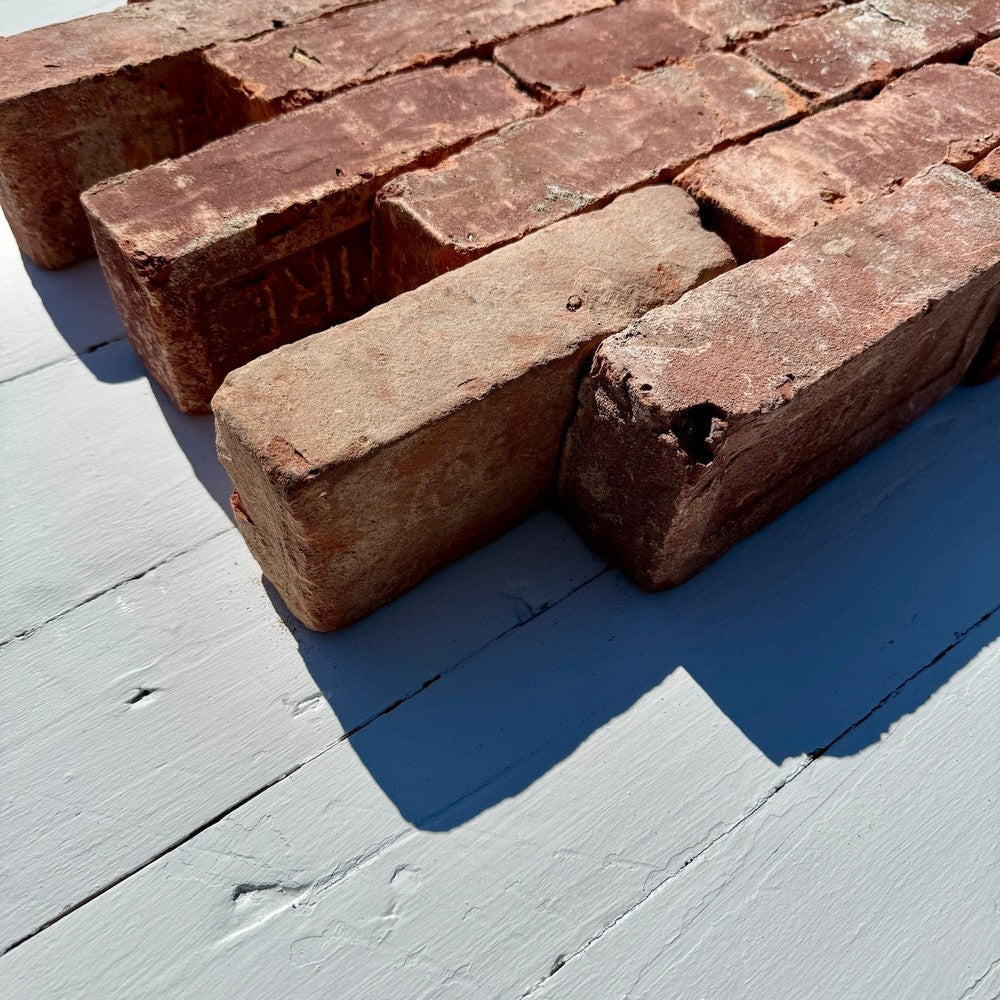
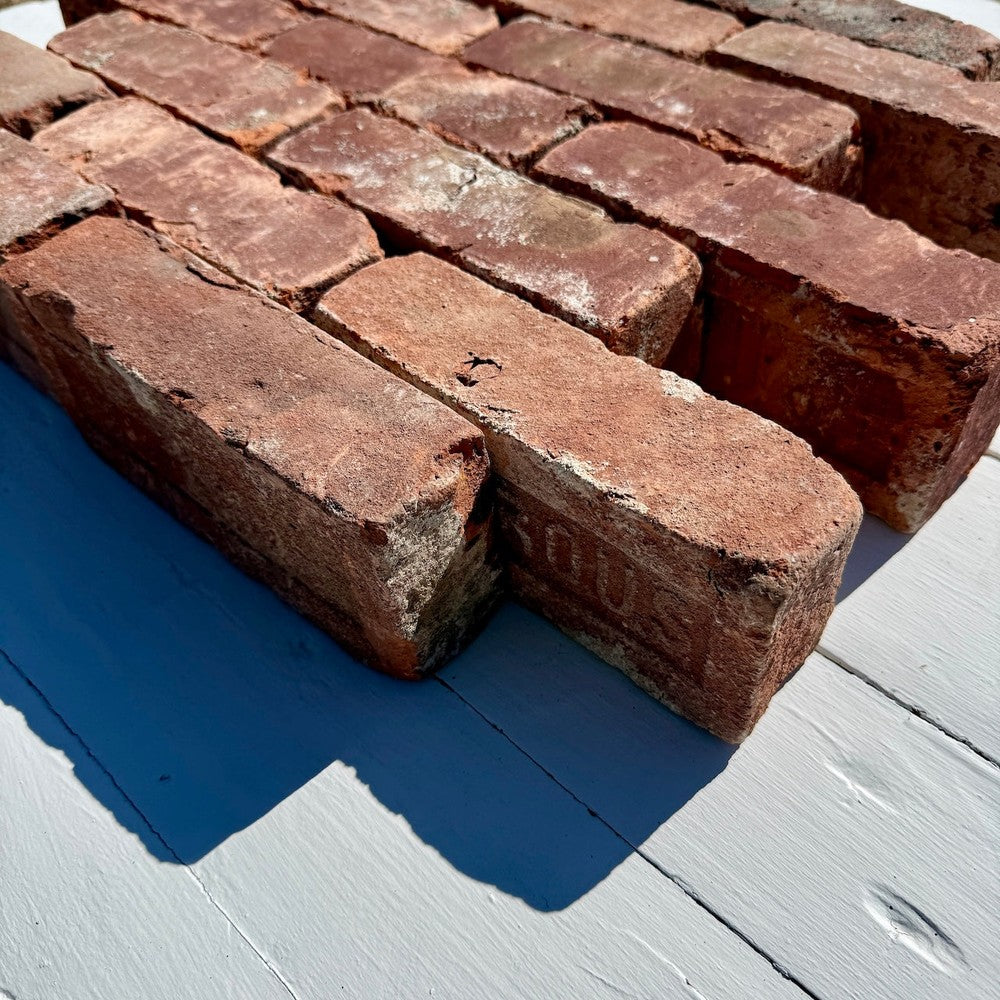
Discover the rich history and unmatched quality of Chief Bricks’ Reclaimed Red Bricks, carefully salvaged from iconic buildings in New York City. These handpicked bricks are meticulously cleaned and prepared for reuse, ready to add character to your building projects across America.
Crafted through a high-compression process, these bricks are exceptionally hard and durable, making them perfect for walls, decorative accents, or restoration projects. Reclaimed bricks aren't tested to current structural standards, so we sell them for non-structural use. Their eco-friendly nature minimizes waste, while their unique frog marks—distinctive imprints from Hudson Valley brickyards—add a touch of historical authenticity to each piece.
Work out how many bricks you need for a wall with our brick calculator, or for a patio or walkway with our brick paver calculator.
Pictures are an indication only. Feel, look and color differ from item to item.
Share: