

Introduction: Why Handcut Granite Belgian Blocks
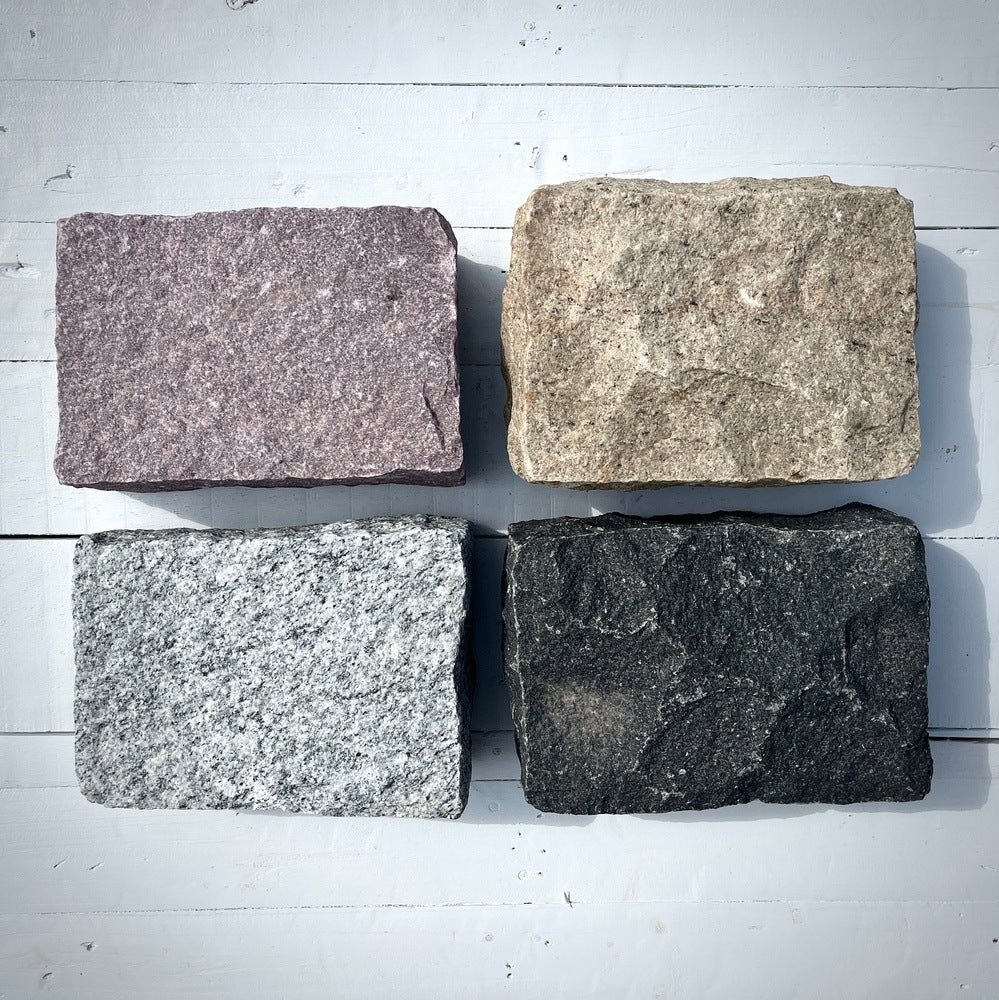
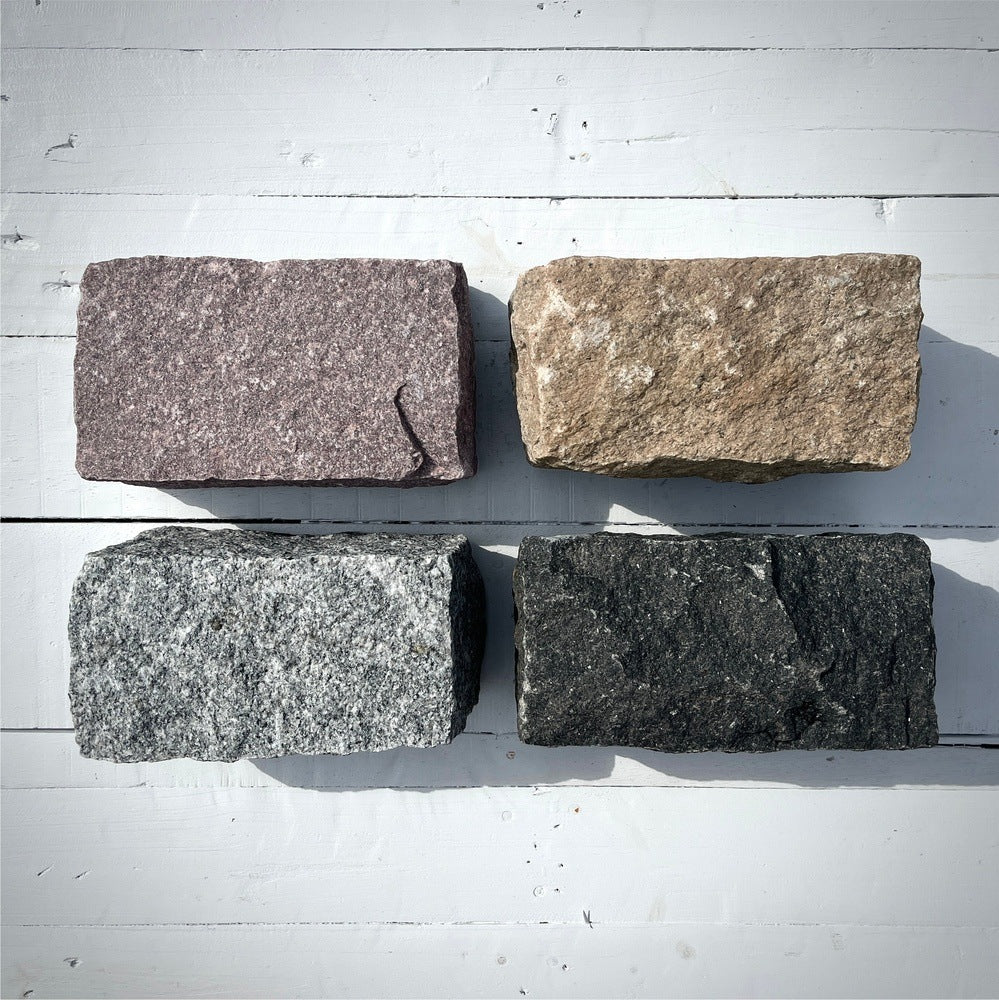
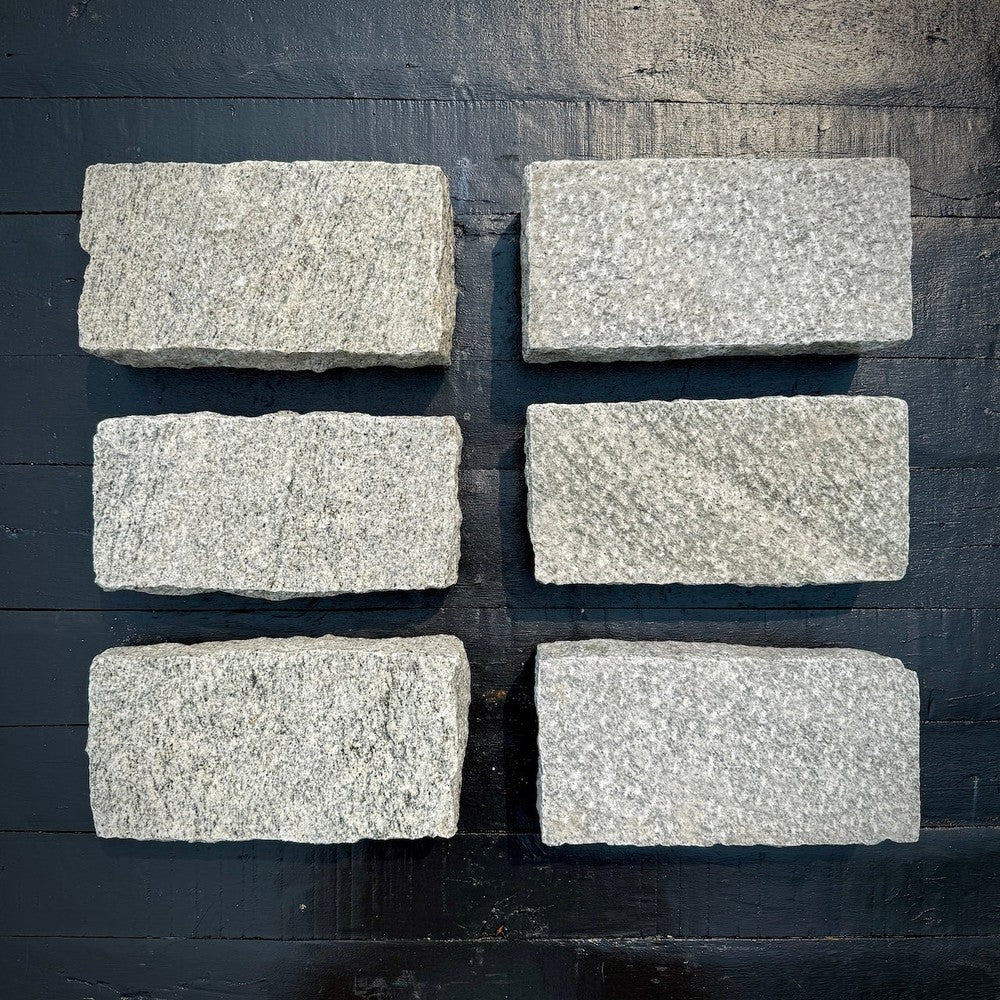
Handcut granite Belgian blocks sit in the same family as reclaimed brick: materials that have already proven themselves on real streets and sites. Instead of trying to imitate age with surface distressing, each block shows honest tool marks and color shifts straight from the quarry and years of weather.
Granite is dense and highly resistant to abrasion, which is why these blocks have long been used along streets, docks, and heavy‑use drive lanes. In the Northeast, they handle plows, road salt, and freeze–thaw cycles without spalling, making them a smart complement to reclaimed New York bricks in long‑term work.
Summary of Popular Applications
| # | Use | Main role | Best suited for |
|---|---|---|---|
| 1 | Driveway edging & borders | Protects pavement edges, keeps gravel or asphalt contained, sharpens curb appeal. | Asphalt or concrete drives, reclaimed brick or stone driveways. |
| 2 | Driveway aprons & parking strips | Defines entries, handles turning loads, visually bridges street and driveway. | Front entries, shared drives, high‑visibility curb cuts. |
| 3 | Walkways & garden paths | Creates durable, textured walking surfaces or path borders. | Garden routes, side yards, access paths to patios and sheds. |
| 4 | Patio frames & insets | Outlines patio fields, controls edges, adds contrast to brick or stone. | Brick patios, bluestone terraces, concrete slabs needing definition. |
| 5 | Lawn & garden bed edging | Keeps mulch in, turf out, and mower lines clean. | Planting beds, tree rings, transitions between lawn and gravel. |
| 6 | Low retaining & seat walls | Holds back soil on small grade changes and doubles as casual seating. | Garden terraces, raised beds, edges of patios and courtyards. |
| 7 | Steps, landings & risers | Forms durable risers and side walls for exterior stairs. | Front stoops, side yard steps, access down to lower patios. |
| 8 | Fire pit surrounds | Creates a heat‑resistant ring or low wall around outdoor fire features. | Backyard gathering zones, brick or stone patios. |
| 9 | Water features & focal accents | Frames ponds, fountains, or planters; reinforces geometry and sightlines. | Pond edges, fountain bases, feature beds near entries. |
9 Ways to Use Handcut Granite Belgian Blocks
Check our inspiration gallery.
1. Driveway edging and borders
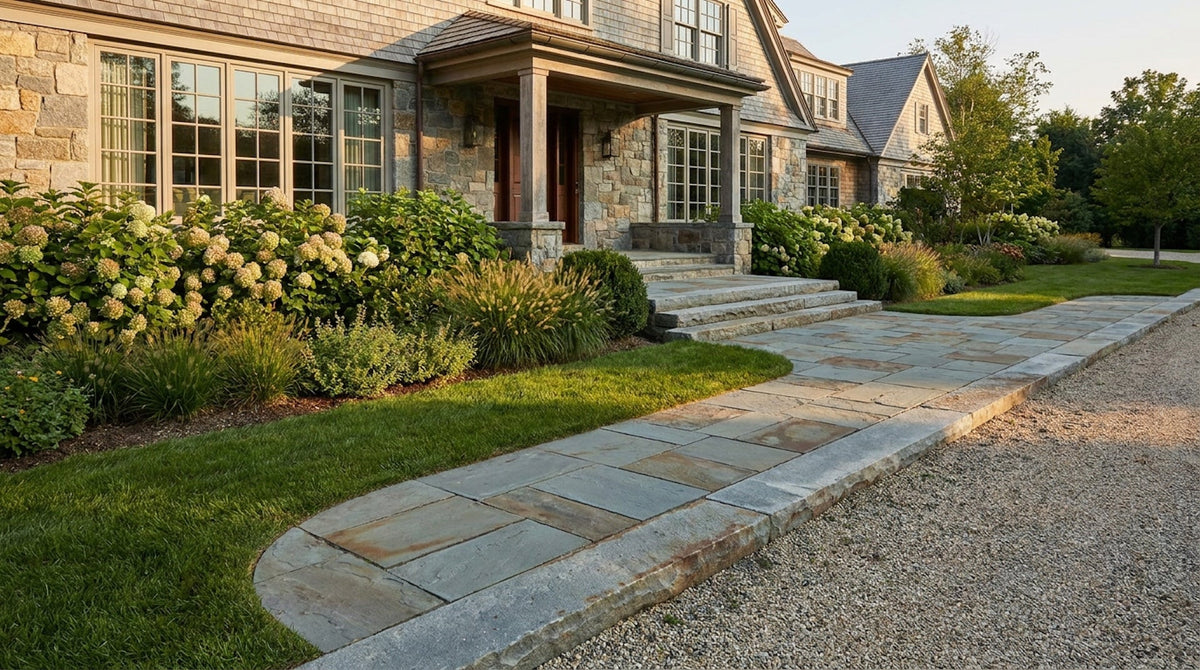
A single or double row of Belgian blocks along each side of a driveway creates an immediate, finished edge. The blocks prevent asphalt or concrete from crumbling, keep gravel from migrating into your lawn, and visually tighten the whole approach.
Blocks can be set flat or on edge depending on the look and the height you need for containment. In older neighborhoods, pairing a reclaimed brick or cobblestone driveway with granite borders mirrors historic streetscapes while staying practical for daily parking.
2. Driveway aprons and parking strips
At the street, a granite apron made from Belgian blocks signals the entry and absorbs the turning and braking forces that would otherwise chew up asphalt. Because granite is hard and thick, it resists rutting and tracks less tire wear than softer paving.
You can also run bands of blocks as parking strips beside a main drive, giving wheels a durable place to land without expanding the entire paved width. This works especially well on tight urban or suburban lots where you want more green and less blacktop.
3. Walkways and garden paths
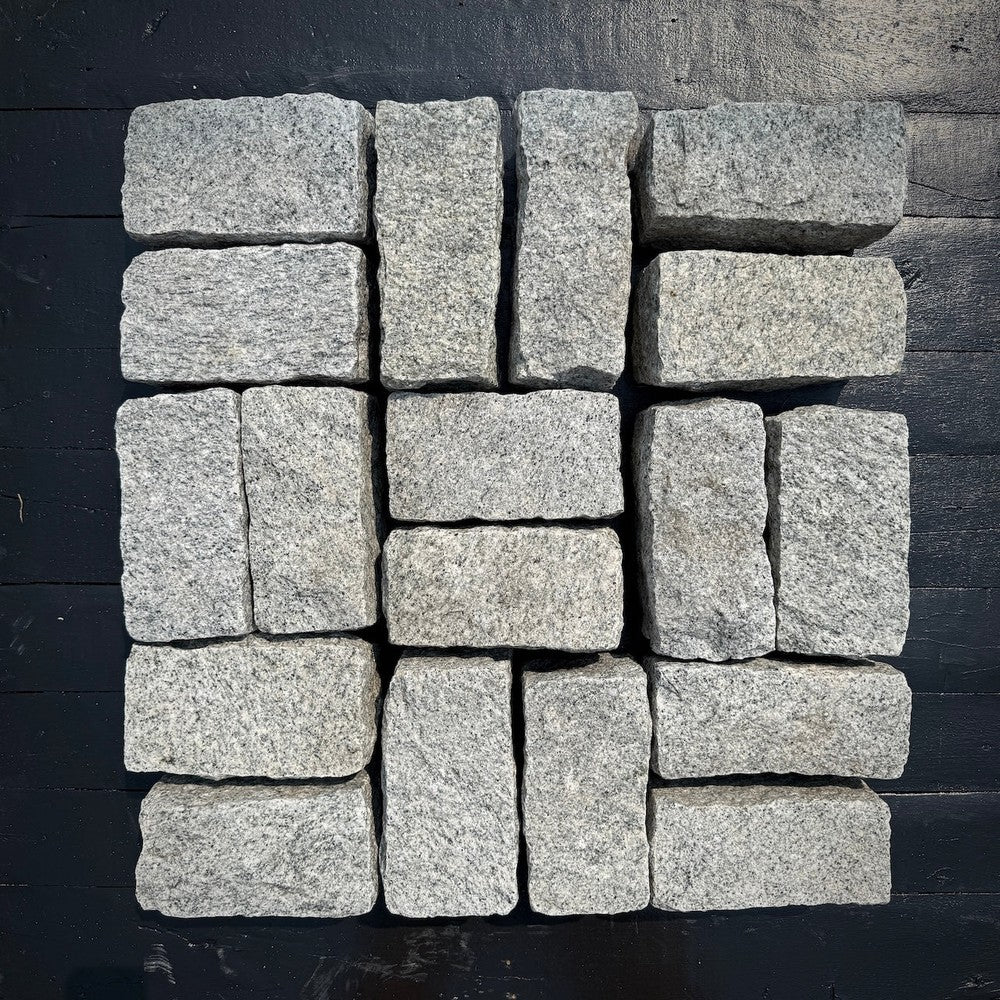
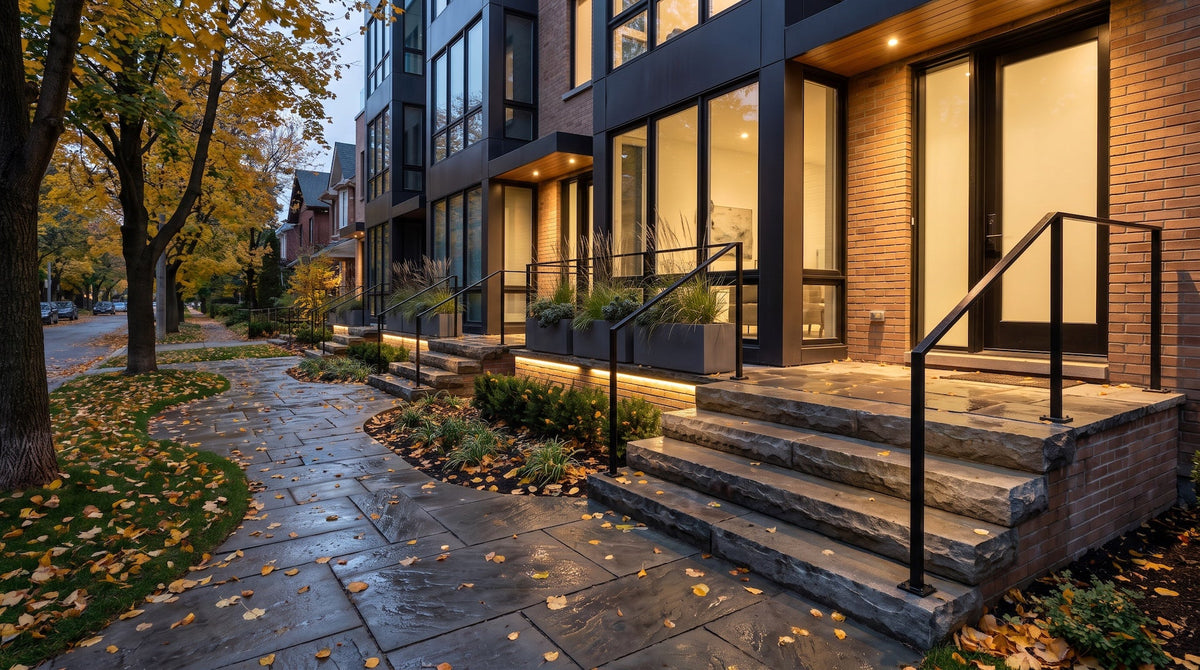
Belgian blocks can form complete paths or act as strong edges around a looser infill like gravel or compacted stone dust. Set on a prepared base, they provide a firm, textured surface that still drains well and feels appropriate next to brick or stone foundations.
For garden routes, staggered patterns or gentle curves read softer and more organic, especially when the joints green up slightly over time. In more formal front walks, straight runs and tight joints lean into a tailored, townhouse feel.
4. Patio frames and insets
Granite Belgian blocks make excellent frames for patios, whether the field is reclaimed brick, bluestone, or concrete pavers. The border keeps edges from spalling, hides cuts, and lets you resolve irregular patio shapes cleanly against lawns and beds.
You can also pull bands of blocks through the patio as insets, breaking up large fields and echoing structural grids from nearby facades. This is an easy way to repeat the same stone at multiple scales across a project, from edges to focal stripes.
5. Lawn and garden bed edging
Around planting beds, Belgian blocks keep mulch in place and stop grass from creeping into soil where it does not belong. Homeowners often lay them with long sides touching to form a continuous edge that is easy to mow against.
Curved layouts work well around trees and informal beds, while straight runs define vegetable gardens or modern planting schemes. Over time, a bit of moss and lichen on the granite softens the line and ties it back to mature plantings.
6. Low retaining and seat walls
Stack Belgian blocks to form low retaining walls for garden terraces or raised beds, especially on small grade changes. Because the units are substantial, they read as solid masonry rather than thin veneer.
Top these walls with stone caps or reclaimed brick soldier courses and they double as informal seating along patios and walkways. This is a useful move in compact urban yards where every vertical surface has to pull double duty.
7. Steps, landings, and risers
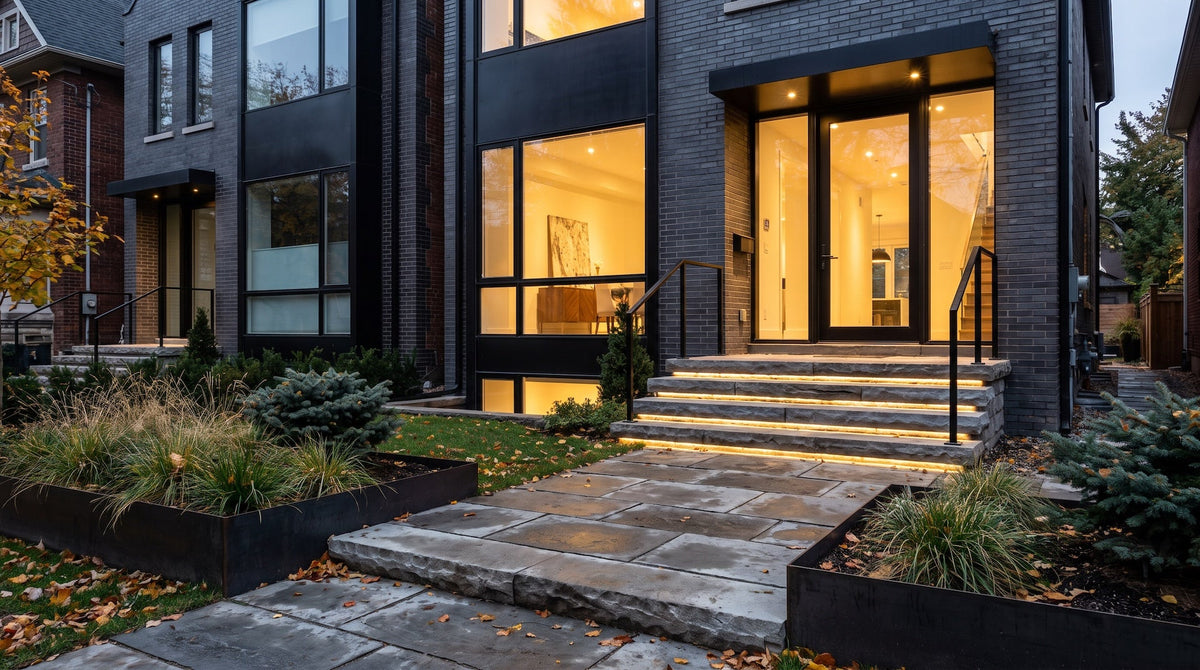
Granite blocks are strong enough to serve as risers and side walls for exterior steps, paired with stone or concrete treads. Their mass helps anchor stair runs visually and structurally, particularly on slopes where lighter materials can look temporary.
You can carry the same block from driveway edging into the stair detailing, keeping language consistent from the curb up to the front door. That continuity is one of the reasons Belgian blocks pair so well with historic brick facades.
8. Fire pit surrounds
Granite handles heat well, so Belgian blocks are a natural fit for fire pit rings and low walls around outdoor fireplaces. Whether you build a full circle or square, the blocks define the zone and protect adjacent planting and paving.
Many builders pair the stone with a steel insert for safety and an easier clean‑out while keeping the exterior face all masonry. Around the pit, reclaimed brick or stone paving finishes the composition and keeps sparks off grass.
9. Water features and focal accents
Around ponds, fountains, or rills, Belgian blocks can frame the water’s edge and hide liner transitions. The stone’s weight and texture keep edges from feeling flimsy, especially when water levels fluctuate.
They also work as bases for urns, planters, and sculpture, creating small plinths that echo larger masonry moves on the site. Using the same granite in these focal points and in utilitarian edges keeps the whole landscape tied together.
Pairing Belgian Blocks with Reclaimed New York Bricks
Reclaimed New York bricks bring color variation, softened corners, and kiln marks that tell the story of early city buildings. Handcut granite Belgian blocks meet that character with their own tool marks and grain, but in a different scale and tone.
Together, they create a masonry palette that feels local, durable, and sustainable, reusing material that has already proven itself in this climate. Whether you are laying a townhouse front walk, a shared courtyard, or a commercial entry, that mix of brick and granite gives the project a grounded, long‑view feel from day one.
Share: