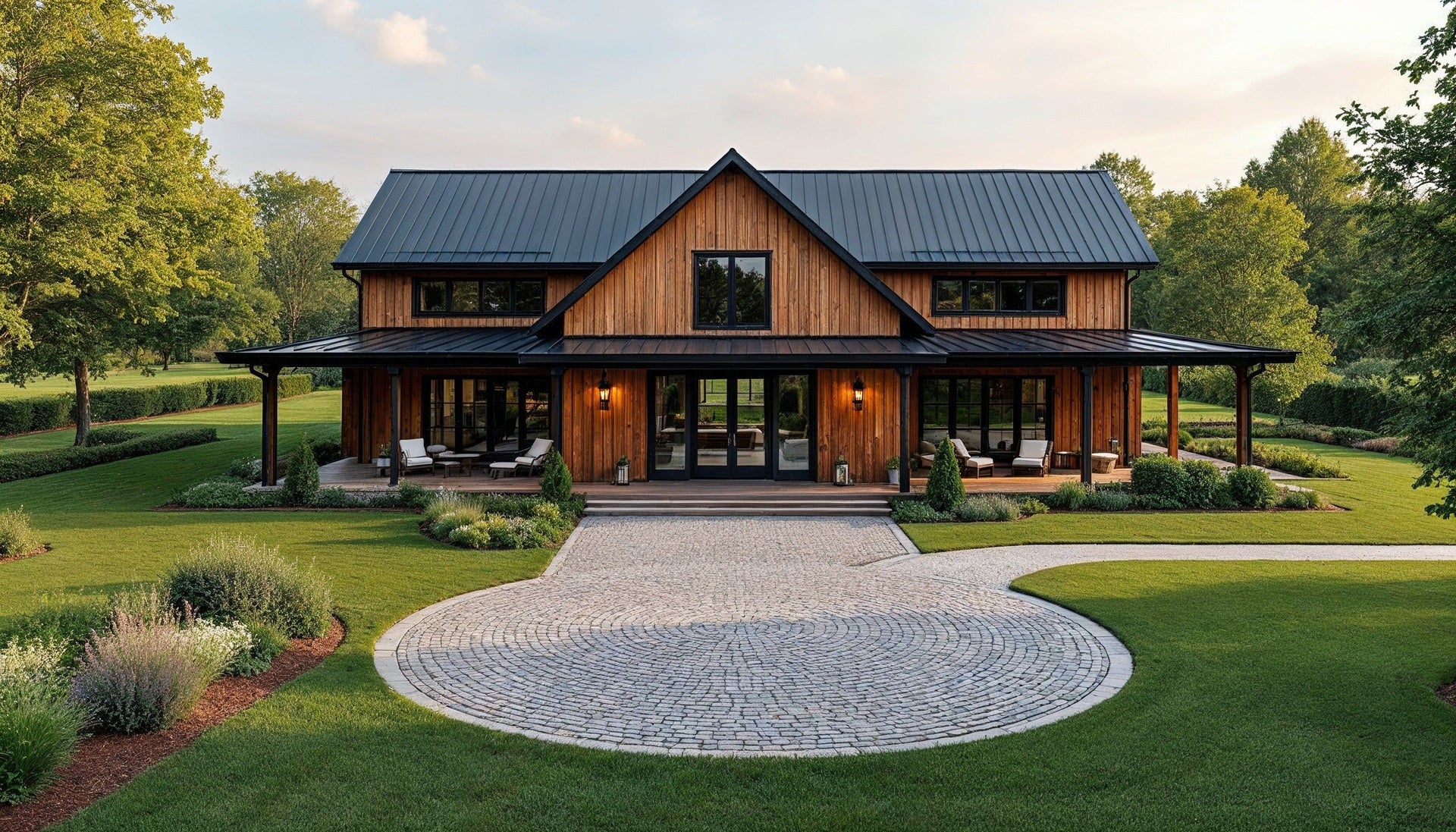

Solid granite steps, treads, and pattern pavers with slip‑resistant finishes and clean lines.
- Solid granite steps and treads for entries, stoops, and garden stairs.
- Pattern pavers and fillers to tie stairs into patios and walkways.
- Thermal, non‑slip surfaces designed for all‑weather safety.
- Heavy‑duty materials chosen for long‑term performance and low maintenance.
What Are Granite Steps, Treads & Patterns?
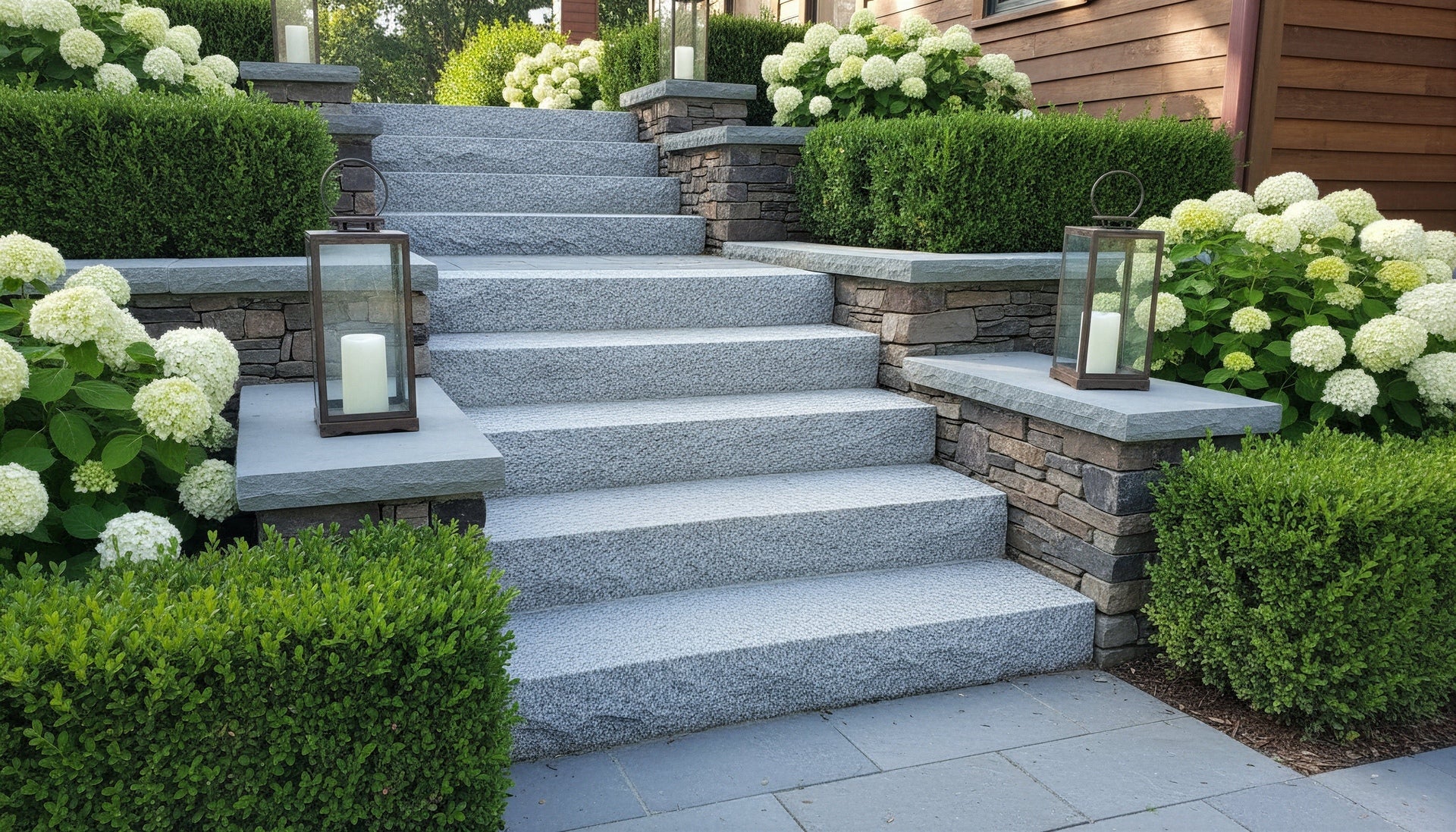
When people talk about granite stairs, they usually mean one of two main products: solid granite steps or granite treads. Solid steps are large, thick blocks of stone that form a full, self‑supporting stair, while treads are thick slabs designed to cap an existing concrete, block, or masonry structure. Granite pattern pavers and fillers complete the system by covering landings, walkways, and spaces between steps with matching stone.
All of these products are cut from dense, durable granite that resists weather, salt, and heavy use better than poured concrete or many other materials. With a thermal or flamed surface, they provide excellent slip resistance outdoors, even when wet or frosty.
Homeowner-Friendly Guides:
Why Choose Granite for Steps and Landings?
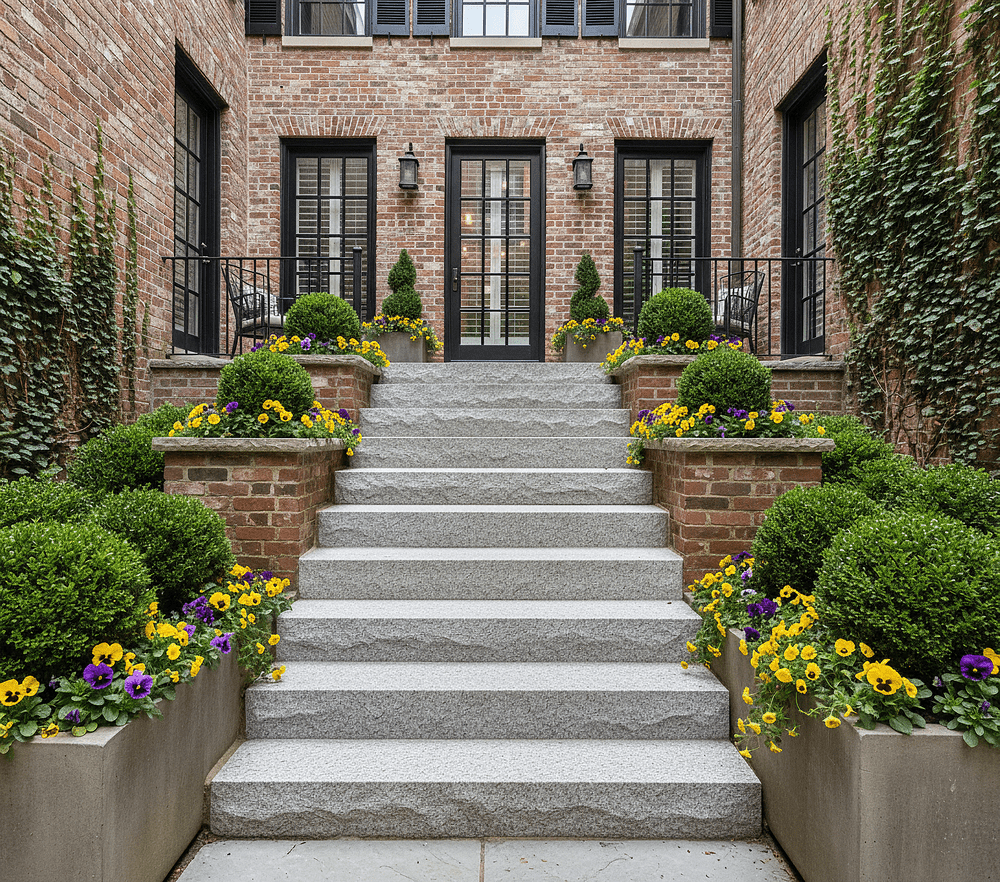
Granite is chosen for steps because it is strong, stable, and ages gracefully under constant foot traffic and changing weather. Institutions and homeowners alike like that they can “do it once” and not worry about replacing chipped treads or spalling concrete in a decade. The stone’s neutral gray tones and precise edges also pair easily with brick, cobblestone, Belgian blocks, and modern landscape materials.
From a safety perspective, the right finish makes a major difference. Our outdoor granite steps and treads use a thermal (flamed) finish that creates a uniform, non‑slip surface underfoot. Combined with correct nosing and drainage, this helps keep entries and garden stairs safer year‑round.
Homeowner-Friendly Guides:
Granite Products We Offer
Granite Steps
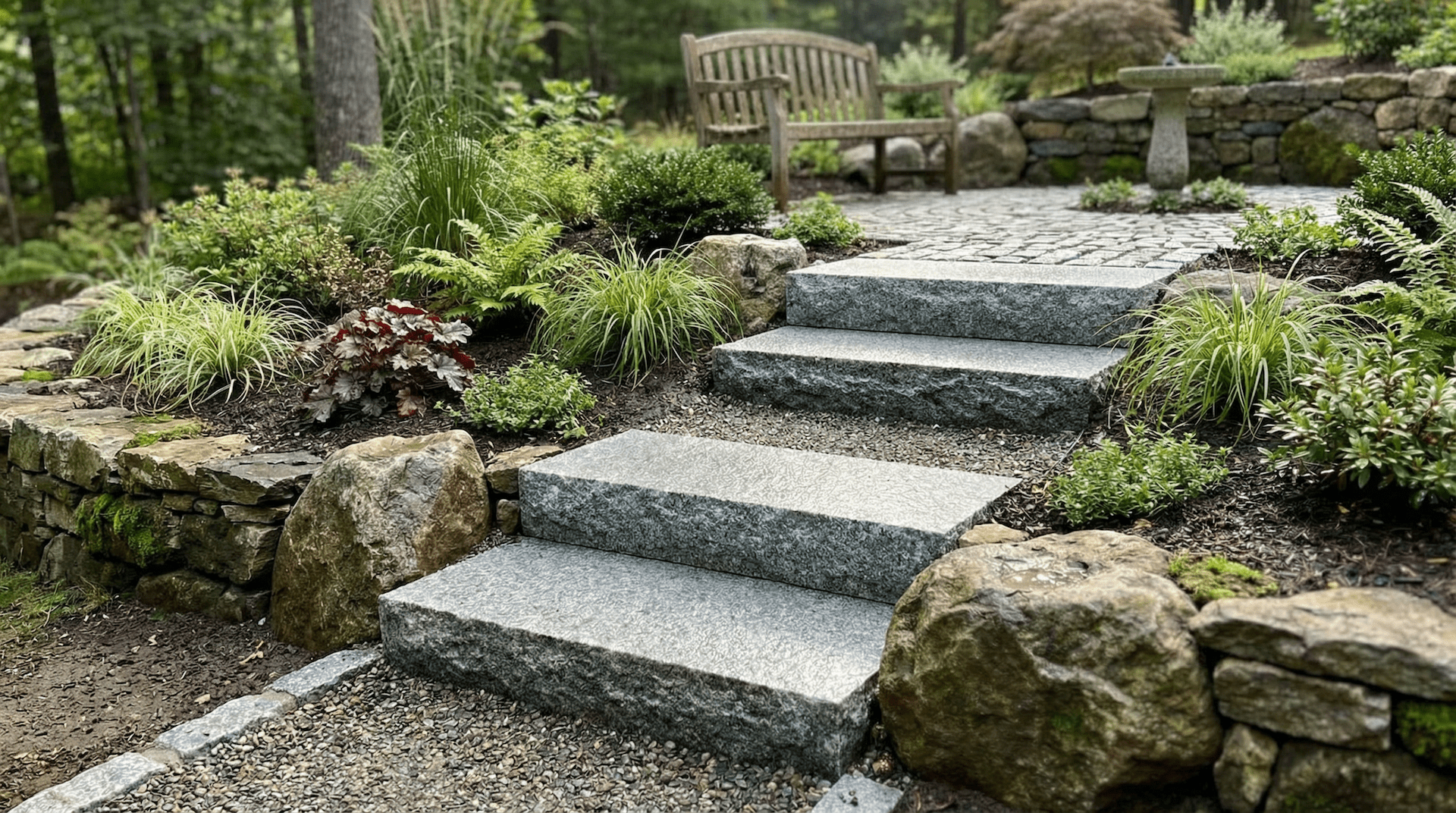
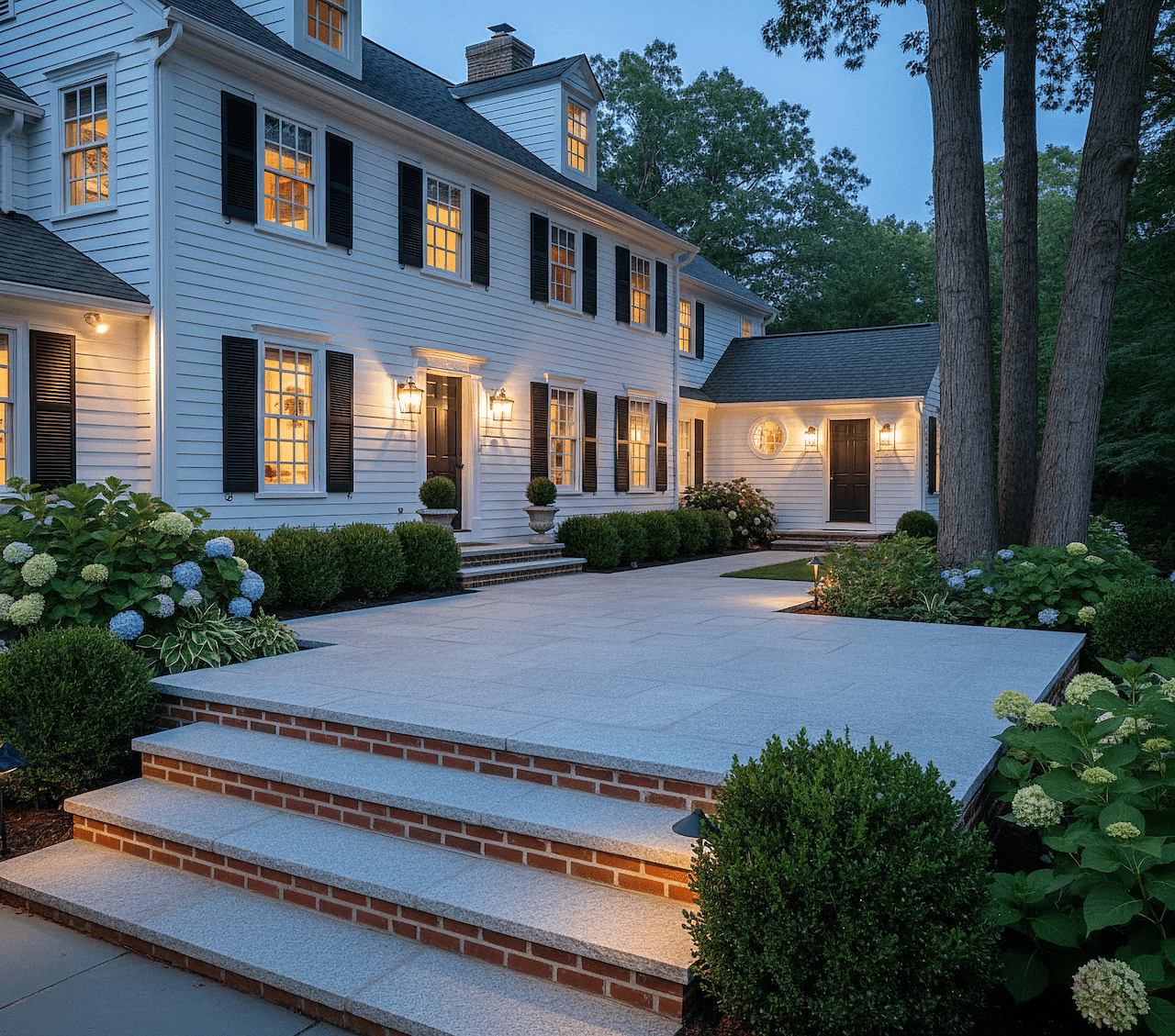
Solid granite steps are large, one‑piece units that create full stairs with minimal visible joints. They are ideal for new builds or major renovations where you can prepare a proper base or footing and want a staircase that feels substantial and permanent.
Highlights:
- Solid blocks of granite with integral tread and riser.
- Best for: main entry stairs, stoops, garden stair runs, commercial and campus projects.
- Look: clean, monolithic steps with defined nosing and consistent texture.
Granite Treads
Granite treads are thick stone slabs used to cap existing stair structures. They are a smart way to upgrade older concrete, block, or brick steps, giving the staircase a fresh, durable surface without demolishing the entire base.
Highlights:
- Thick slabs cut to standard widths and lengths for easier planning.
- Best for: retrofitting concrete steps, topping brick or block stairs, creating landings and caps.
- Look: sleek, continuous stone surfaces that modernize older structures.

Granite Pattern Pavers
Granite pattern pavers are coordinated paving units designed for use on landings, walkways, and patios around your steps. They share similar color and finish with your steps and treads, so you can carry the same look across a porch, entry landing, or connecting paths.
Highlights:
- Patterned sizes that work in running bond or modular layouts.
- Best for: landings, porches, walkways, and patios that connect to granite stairs.
- Look: cohesive surfaces that align with granite steps and treads for a unified design.

Granite Step Fillers
Granite step fillers are pieces sized to sit between solid steps or to adjust riser height and spacing. They make it easier to align the total rise with your site conditions and give longer runs of stairs a consistent, comfortable step height.
Highlights:
- Sized to work between steps and in front of landings for proper riser heights.
- Best for: long stair runs, hillside installations, and projects that need precise step spacing.
- Look: clean transitions between steps that blend into the overall stair design.
Common Uses for Granite Steps, Treads and Landings
Granite steps, treads, and patterns can be used alone or together to create durable, low‑maintenance transitions around your property.

Front entries and stoops
Granite steps and treads upgrade front entries by replacing cracked concrete or dated materials with a clean, permanent staircase. Solid steps are ideal for new stoops, while treads can cap existing concrete to refresh the look and improve safety.
Pairing the stairs with matching pattern pavers on the landing creates a cohesive entry that feels intentional from the street to the front door.
Garden Stairs and Hillside Paths
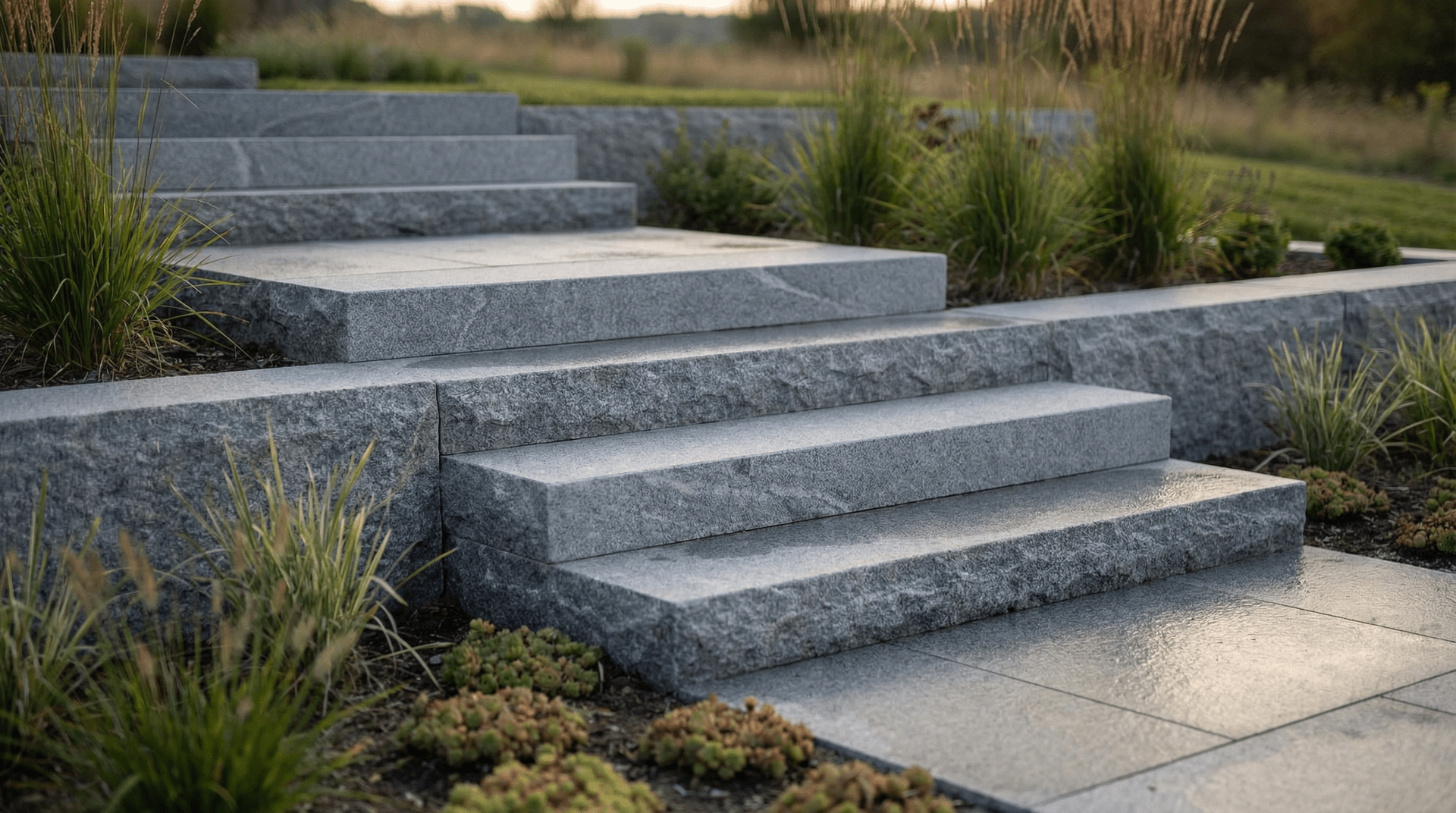
In the landscape, granite steps are perfect for moving comfortably up and down slopes. Solid steps or steps plus fillers can create long runs that stay stable under weather and foot traffic, unlike timber or loose stone.
Granite pattern pavers around the stairs can transition to walkways, terraces, or seating areas, tying changes in elevation into the overall design.

Patios, Landings, and Pool Areas
Granite pattern pavers can be used to build patios and landings that connect directly to stairs or door thresholds. The same non‑slip finishes that work on steps make granite a practical choice around pools, hot tubs, and other wet areas.
Using the same stone on treads, landings, and surrounding hardscape keeps everything visually unified and makes maintenance simpler over time.
Granite Dominates Modern Landscaping
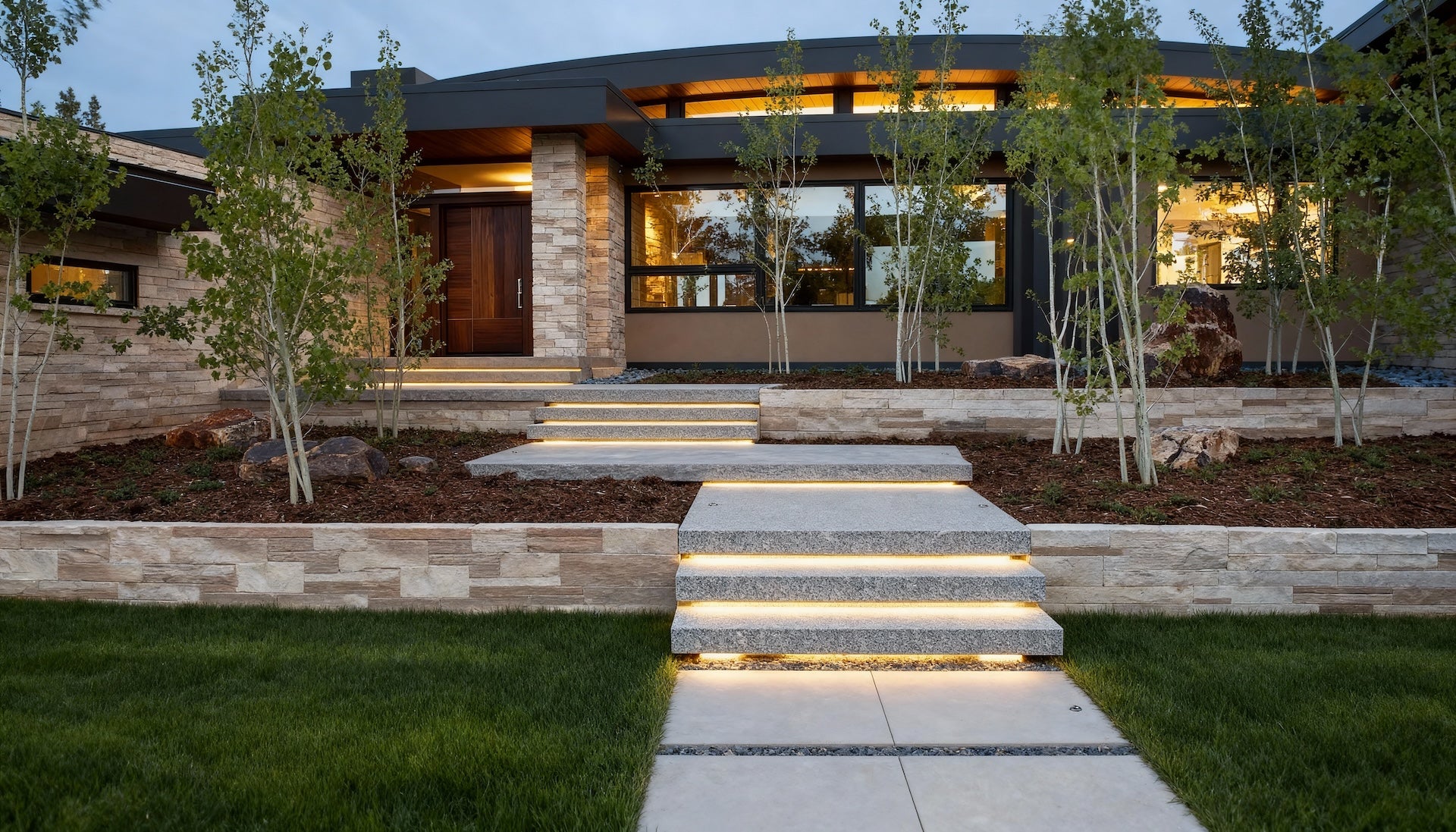
You might think a step is just a step, but modern landscape architecture pushes us to think differently. A staircase design can be a major architectural feature, serving as a focal point for your property.
These modern granite stepdesigns show just how creative you can get with this classic material.
Installation
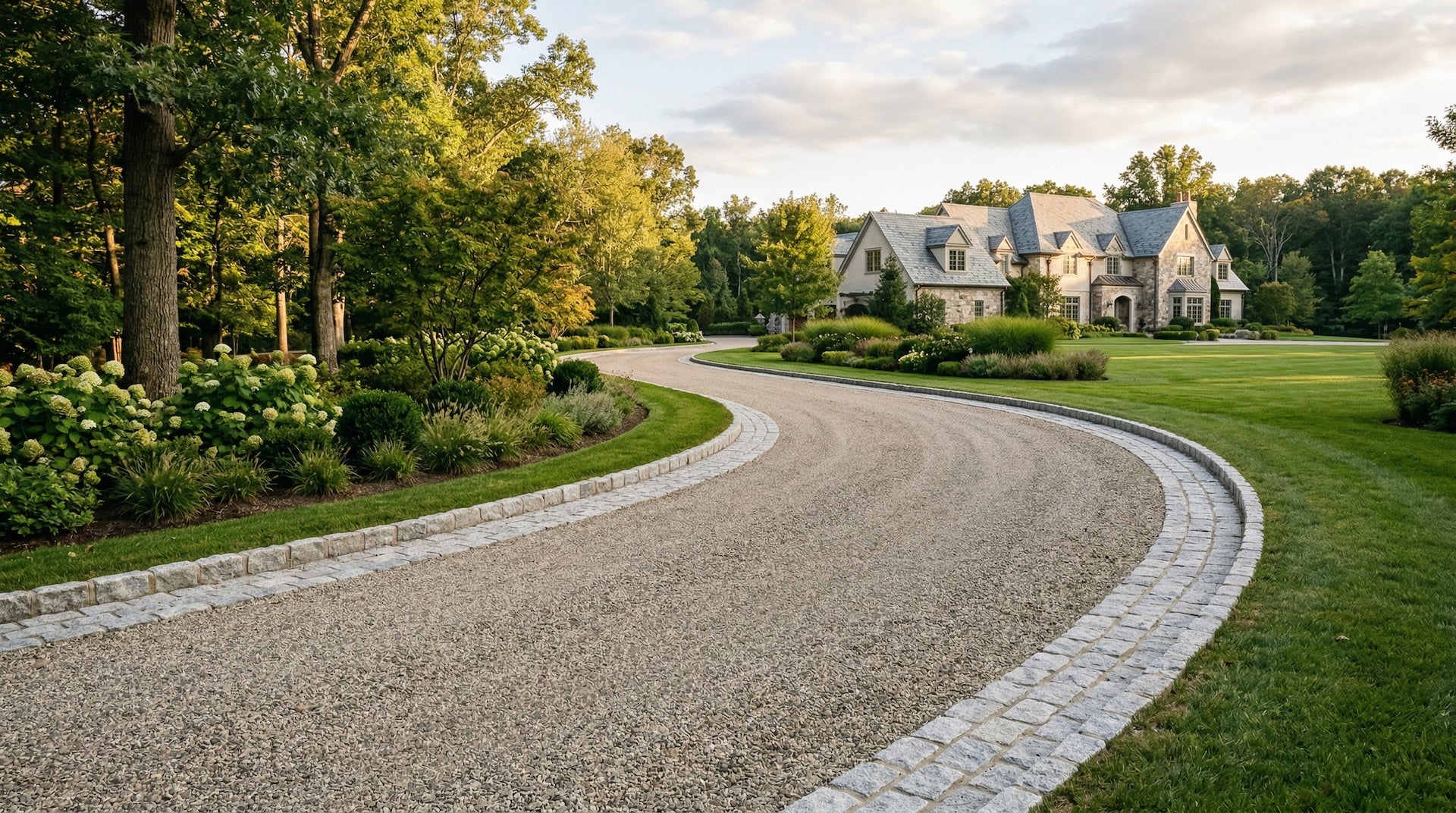
Granite steps and treads are heavy and require a proper base and professional installation for best results. For solid steps, installers typically excavate, compact a deep gravel base, and may pour a concrete footing to keep the stair stable and level.
For treads installed over existing concrete, the base must be sound, clean, and level before the stone is adhered. In both cases, correct slope, nosing, and drainage details help keep water away from risers and prevent icing issues.
Homeowner-Friendly Guides:

Maintenance & Care
Granite steps and treads are very low maintenance once installed properly. Regular sweeping and occasional rinsing are usually enough to keep surfaces clean; thermal finishes hide minor scuffs and provide traction.
Avoid harsh chemicals or de‑icing products that are not safe for natural stone, and do not use metal shovels aggressively on edges. With basic care, granite steps and treads retain their appearance and performance for decades.
Cost & Planning
Costs for granite steps, treads, and patterns depend on sizes, quantities, and whether you are building new stairs or resurfacing existing ones. Materials are usually priced per piece (for steps, treads, and fillers) or per square foot (for pattern pavers), while installation costs reflect excavation, base work, and handling.
Because granite installations are long‑term investments, many clients choose to coordinate stair design with walkways and landings from the start. Sharing measurements, photos, and your current site conditions allows us to recommend the right combination of steps, treads, fillers, and patterns for your project.
Homeowner-Friendly Guides:
WHY CHOOSE CHIEF BRICKS FOR GRANITE STEPS
From Source to Site. Without Compromise.
Unmatched quality
Solid granite steps, treads, fillers, and pattern pavers sized to work together. Outdoor‑ready finishes chosen for traction and durability in all seasons.
Direct from the source
Direct sourcing from our dedicated quarry so you get consistency in quality and color across granite products.
Nationwide supply
We ship straight from our yard to your project across the United States.
Project-specific support
Expertise in pairing granite with reclaimed brick, cobblestones, and Belgian blocks for cohesive designs.
FAQs
What’s the difference between granite steps and granite treads?
Granite steps are solid, one‑piece units that include both the tread and riser, forming a self‑supporting stair. Granite treads are separate slabs designed to sit on top of an existing structure, such as concrete or block steps, to upgrade the surface.
Are granite steps slippery when wet?
No. Our outdoor granite steps and treads use a thermal (flamed) textured finish that creates a non‑slip surface, even in rain or light frost. Smooth, polished finishes are generally avoided outdoors because they can be slippery.
Can I install granite treads over my existing concrete steps?
Yes. As long as the concrete is sound, clean, and properly prepared. Installers typically check for cracks and level, then use mortar or adhesive to bond the granite treads to the base.
How long do granite steps last compared to concrete?
Properly installed granite steps can last for decades with minimal maintenance and are less prone to cracking, chipping, and surface spalling than many poured concrete stairs.
Do I need fillers between granite steps?
On many projects, granite step fillers are used between solid steps to fine‑tune riser heights and match site grades. They help create comfortable, consistent steps and clean transitions on slopes.