
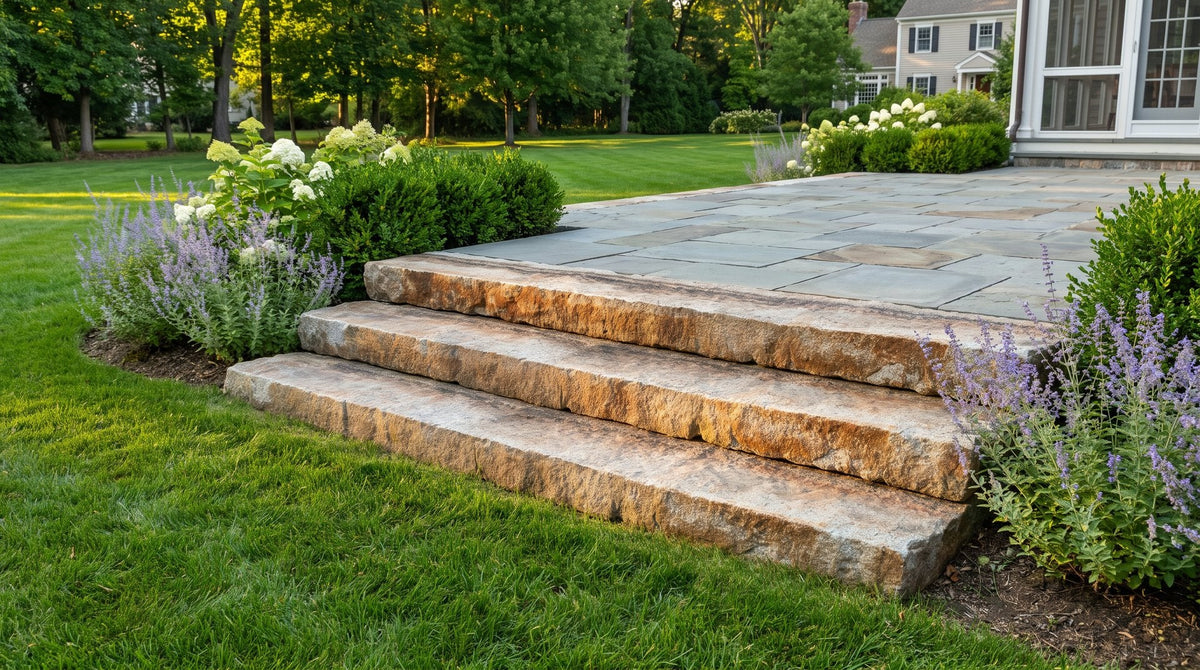
Walk down an old street in New York and look at the curb. That long, grey block of granite has taken a century of tires, snowplows, salt and feet, and it is still in one piece. When a street is rebuilt, some of those curbs come out. The best of them are far too good to crush into fill, and they make some of the most solid outdoor steps you can buy.
Reclaimed granite curbstone steps are exactly that: old granite curbs from New York and the surrounding region, selected as whole pieces and put back to work as steps, treads and landings. Each one is a single long stone, so a step that spans your whole path is one piece, with no risers to build and no small units to fit together.
Maybe you are a homeowner replacing a cracked concrete stoop. You might be a landscape designer looking for steps that match a cobblestone courtyard. Or maybe you are a mason who wants the sizes and weights pinned down before the truck shows up. This guide covers the sizes, weights and prices, where granite curbstone steps work best, and how to plan a stair with them.
A street curb is a long block of granite, set on edge along the sidewalk so only a few inches show above the road. Laid flat on its side, the same block becomes a step: the deep side that was buried in the ground turns into the tread you walk on, and the narrow top becomes the thickness of the step.
That is why our Reclaimed Granite Curbstone Steps come about 14 to 20 inches deep and 5 to 7 inches thick. Old curbs were cut to slightly different sizes over the years, so the depth and thickness vary from piece to piece, while the lengths are sorted to the foot from 2 to 8 feet.
The stone is the same granite as our reclaimed granite cobblestones, which came off the same streets. It is dense, hard and made for traffic, frost and de-icing salt. Years on the street left softened edges, weathered split faces, original drill and split marks, and grey stone warmed by tan and rust tones. New granite cannot copy that.
Each step is sold by the piece and priced by its length. Shorter steps cost less per foot, so a 4-foot step is the best value for a typical garden path.
| Length | Price per linear foot* | Price per step* | Approx. weight |
|---|---|---|---|
| 2 ft | $59 | $118 | 240 lb |
| 3 ft | $59 | $177 | 360 lb |
| 4 ft | $59 | $236 | 480 lb |
| 5 ft | $69 | $345 | 600 lb |
| 6 ft | $69 | $414 | 720 lb |
| 7 ft | $79 | $553 | 840 lb |
| 8 ft | $79 | $632 | 960 lb |
Every length is about 14 to 20 inches deep and 5 to 7 inches thick. Weights are based on a 17-inch by 6-inch section at about 120 lb per linear foot, so a thicker or deeper piece will weigh a little more. Steps ship on pallets of up to four pieces.
Note: Reclaimed stone varies. Pictures are an indication only, and the color, edges and exact size differ from piece to piece.
A curb is one of the hardest jobs any stone can have. It takes car tires, snowplow blades, salt and a hundred winters of freezing and thawing. Granite was the material cities chose for it because it holds up. A curb that survived all that will not notice a few people walking up to your front door.
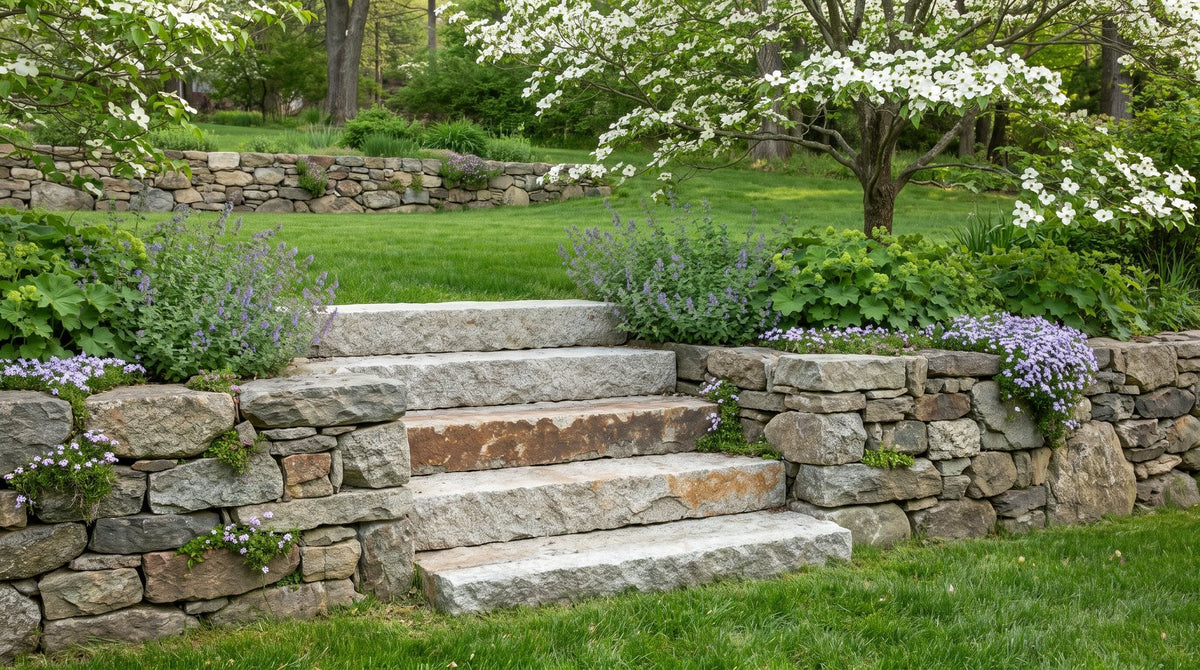
New stone looks new. A reclaimed curb already has softened corners, a weathered face and the drill and split marks left by the stonecutters who shaped it. Set as a step, it looks like it has always been there, which is exactly what an older house, a brick facade or a cobblestone court needs.
One long curb can span a full garden path or most of a front entry. That means a stair with fewer joints and a stronger, more architectural look than one built from small pieces. At 5 to 7 inches thick, each step reads as solid stone, not a thin cap.
Every curb reused is one less in the landfill, and no new stone has to be quarried, cut or shipped across an ocean for your stair. Reclaimed material also counts toward LEED v4 and v5 material reuse credits. Our article on LEED v5 and reclaimed materials explains how.
For a broader look at stone stairs, see our guides to the natural stone staircase and granite garden stairs and hillside paths.
Pave a courtyard, landing or front walk with our reclaimed granite regulation cobblestones and step up to the door on granite curbs. The cobblestones and the curbs came off the same kind of streets, so the grey, tan and rust tones match without trying.

On a brick colonial, townhouse or farmhouse, broad grey steps sit well against warm red brick. Add a black iron rail and low evergreen planting for a classic Northeast entry.
Set a run of 4-foot curbs up a planted slope, with a landing every few steps. Ferns, grasses and hydrangeas soften the long granite edges and make the stair feel like part of the garden.

Edge the driveway with granite cobblestones or Belgian blocks, then use one or two long curbs to step up from the drive to the front walk. It separates cars from people with material that belongs together.
Weathered granite also works against clean modern architecture. Long, simple steps in front of glass, steel or smooth stucco add warmth and age where everything else is new.
Measure the total height the stair has to climb, then divide by a comfortable outdoor rise of about 5 to 7 inches. Because each curb rests on the one below, its rise is close to its own thickness, so a 2-foot change in grade usually works out to four steps of about 6 inches. Our curbstone steps calculator does the math from your rise and step length and gives you the stones, weight and price.
A step that spans the full width of the path in one piece looks best and is the most stable. A 4-foot step suits a typical garden path. Front steps look best a little wider than the door and its trim, so a single door usually takes a 4- or 5-foot step, while a wide entry or a door with sidelights calls for 6 to 8 feet.
On a long slope, a landing every few steps makes the stair easier to climb. A landing can be two curbs side by side, or a small patch of cobblestones between flights.
Know where the truck can park and how each step will get from the pallet to its spot. At 480 lb for a 4-foot step, this is not a one-person job.
Curbstone steps are set from the bottom up on a compacted crushed-stone base, or on a concrete footing at a front door. The front of each step rests on the back of the step below by an inch or two, with compacted fill behind it, and each tread is pitched slightly forward so water runs off. Our step-by-step guide on how to install reclaimed granite curbstone steps covers the base, handling and setting in full.
Granite stands up to de-icing salt far better than concrete, but skip rock salt anyway; our guide on how to de-ice granite steps safely explains what to use instead.
We ship across the United States. Most orders ship the next day, and transit runs 1 to 21 days depending on quantity and destination. Add the steps to your cart and enter your address for a shipping quote. If it looks too high, call us at (718) 379-1232; we sometimes have alternative ways to get your steps to your door for a more reasonable price.
You can also see the curbs in person at our yard in Nanuet, NY (Rockland County), Monday to Friday from 7am to 3pm. No appointment is needed, but if you call ahead at (718) 379-1232, we will make sure you get our full attention.
For front entries, garden stairs and patio step-downs, yes. A reclaimed granite curb gives you a solid, single-piece step with real age on it, at $59 to $79 per linear foot*, and it is about as durable as stone gets outdoors.
The trade-offs are weight and variation. At about 120 lb per linear foot, the steps need a crew or a machine and a proper base. And no two pieces are the same, so plan the layout with the stones in front of you rather than expecting identical units. If you want perfectly uniform steps with a crisp sawn top, our new granite steps are the better fit.
If you want steps that look like they have been there for a hundred years, start with our Reclaimed Granite Curbstone Steps, or browse the full steps, treads and pavers collection.
* Prices as of November 2026, per piece by the unit. Confirm current pricing on the product page before ordering.
The information provided in our guides, installation tips, and blog content is for general reference only. Every project is unique, and site conditions can vary. We strongly recommend consulting a qualified professional installer to review your specific project and provide final guidance.

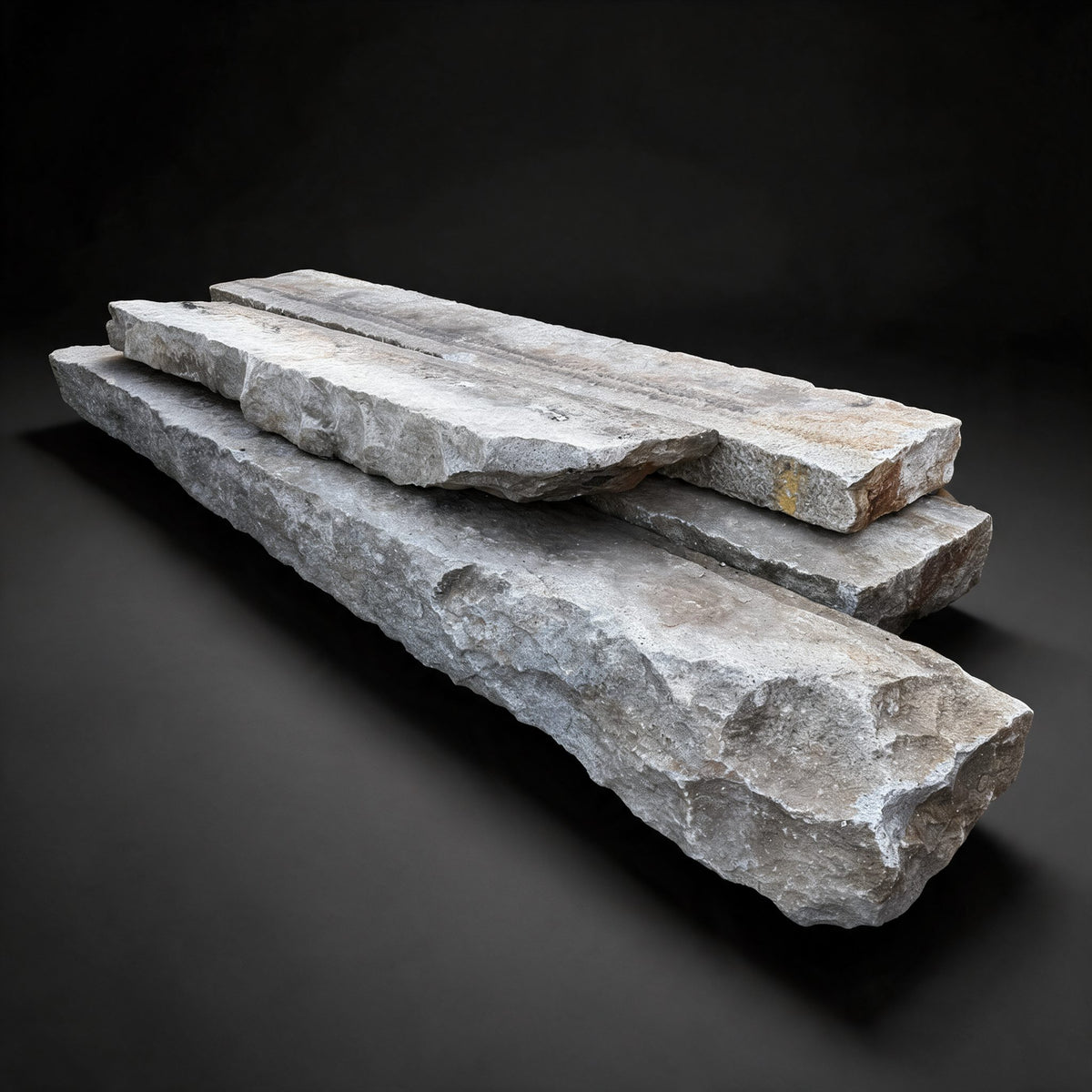

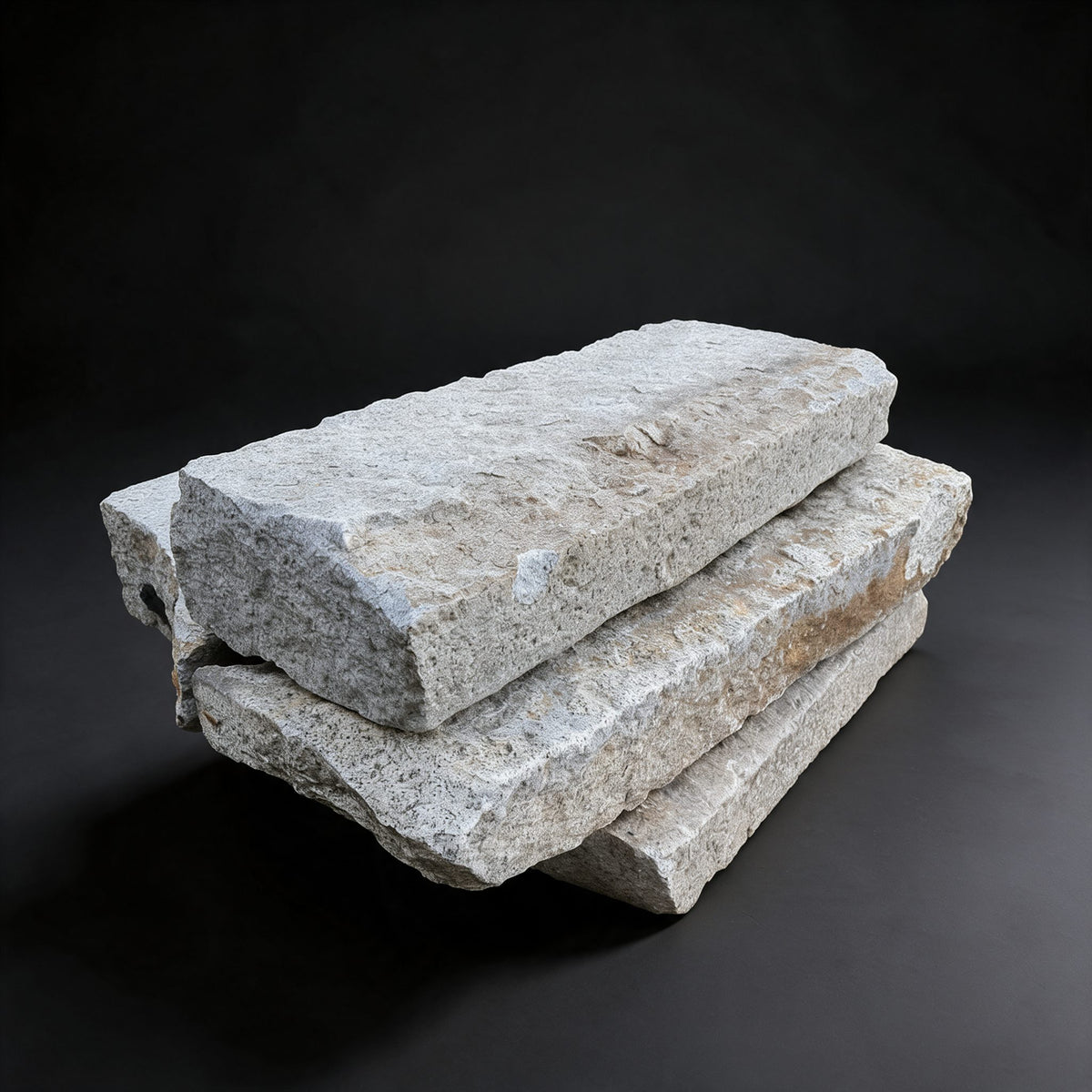
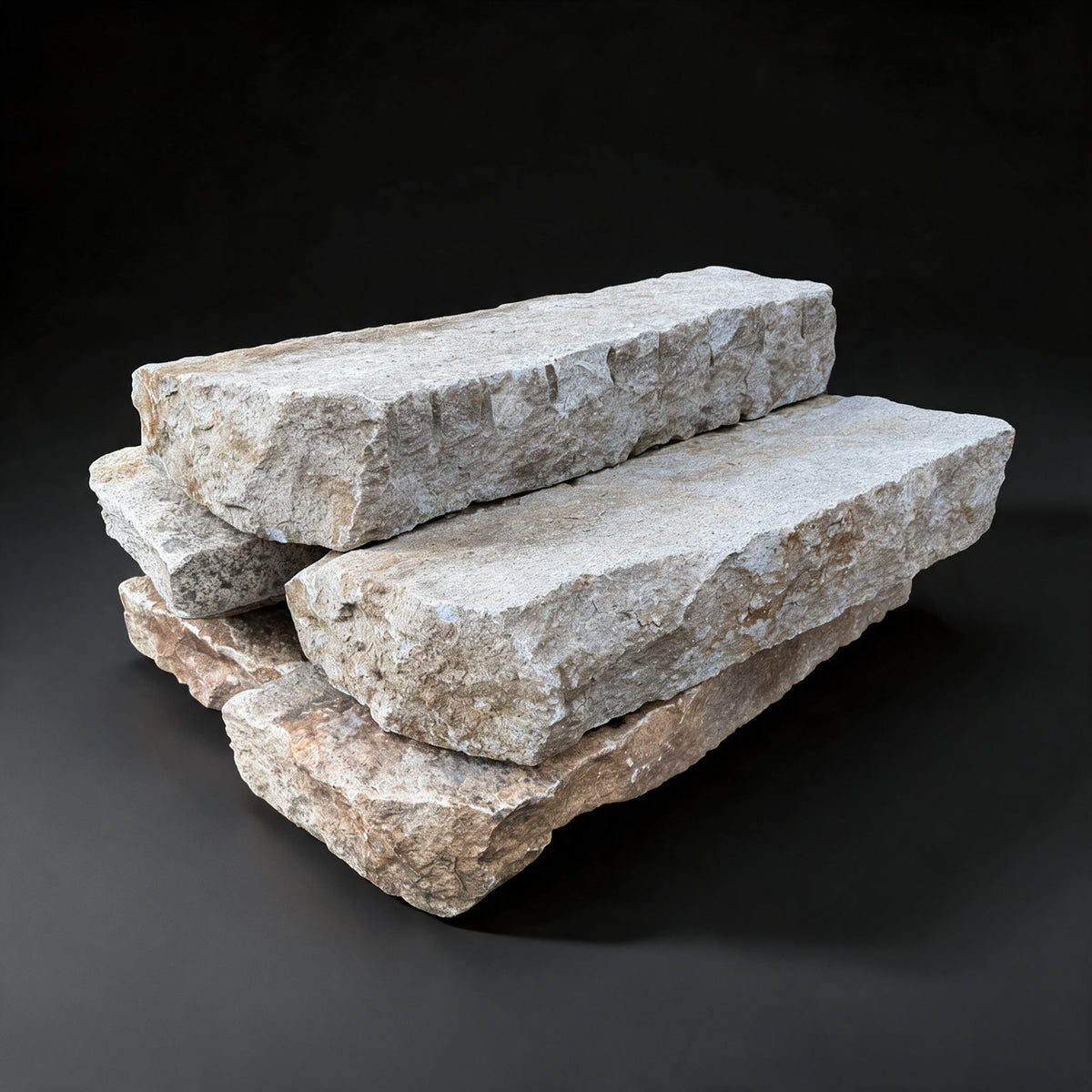
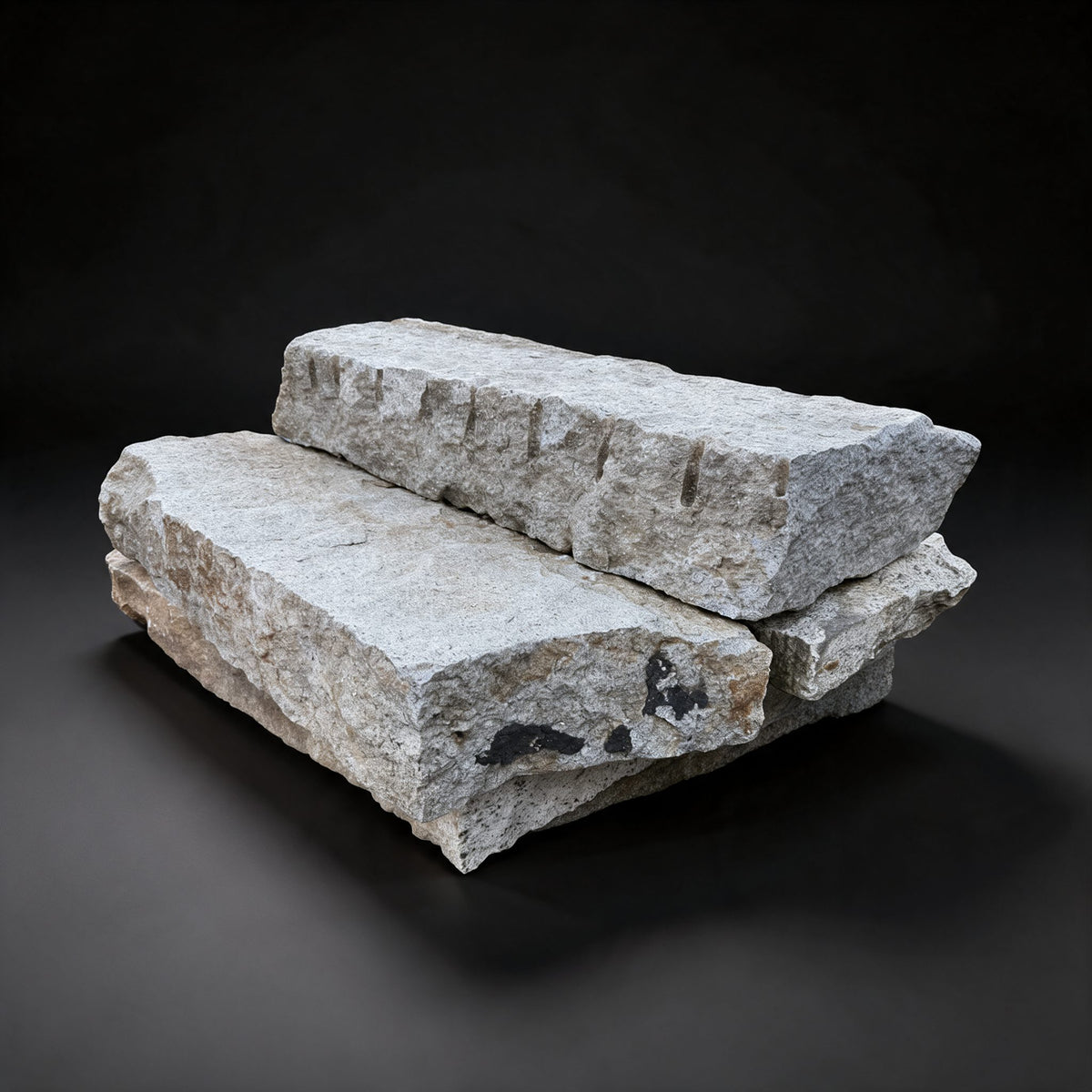
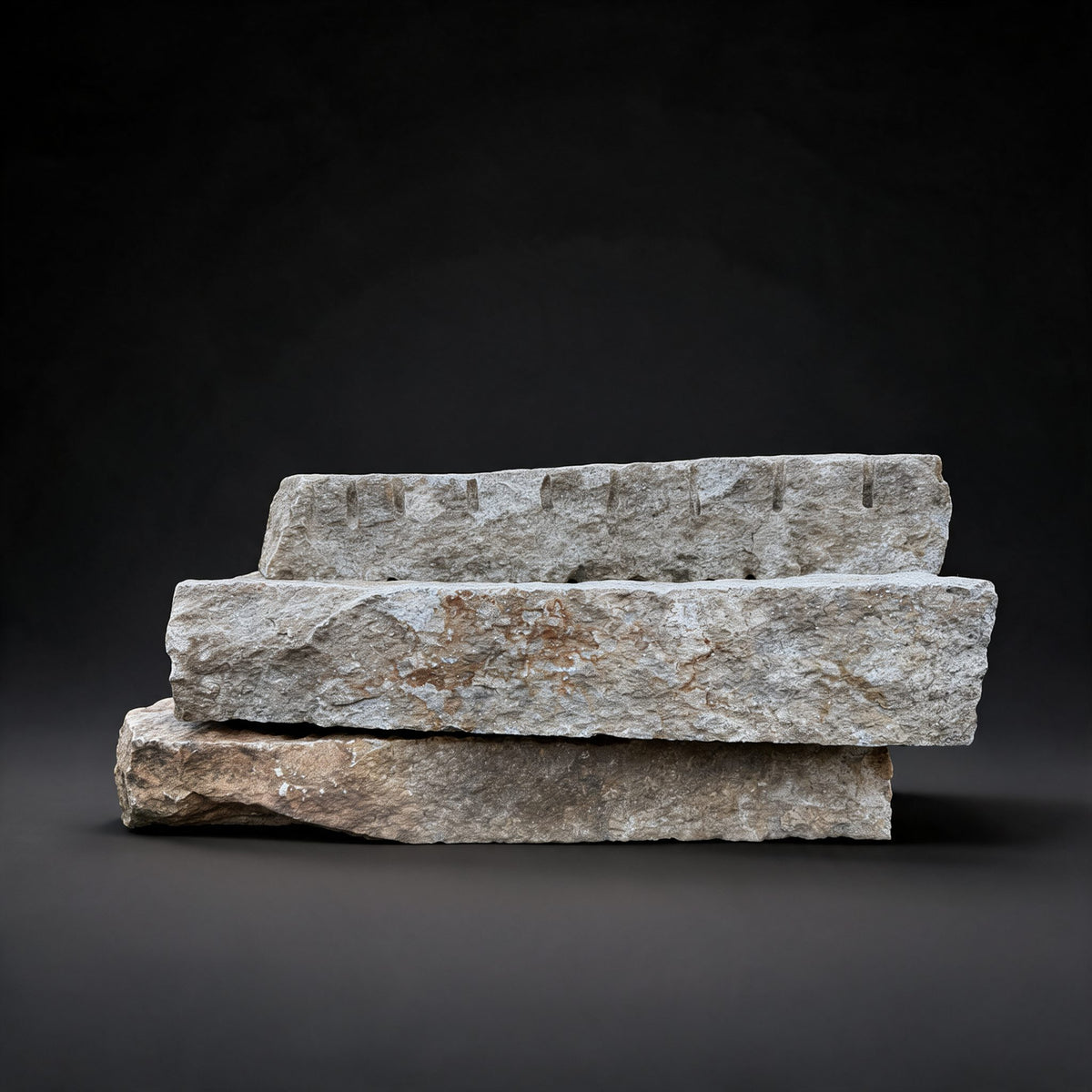


Give a front entry, garden stair or terrace the weight of real New York stone with Reclaimed Granite Curbstone Steps. These are solid granite curbs salvaged from streets and sidewalks in New York and the surrounding region. We keep them out of the landfill and select whole pieces that set well as steps, treads and landings.
They are the same granite as our reclaimed granite cobblestones: dense, hard-wearing and made for decades of traffic, frost and de-icing salt. Years on the street left softened edges, weathered split faces and grey stone with natural tan and rust tones that new granite can't copy. We offer them in lengths from 2 to 8 feet, about 14 to 20 inches wide and 5 to 7 inches thick.
Set them on a compacted gravel base, each step resting on the one below with about a 2" overlap, the same way as our reclaimed bluestone curbstone steps. Work out how many steps you need with our curbstone steps calculator.
They pair well with our reclaimed granite regulation cobblestones for a landing, walkway or driveway apron in matching stone.
Pictures are an indication only. Feel, look and color differ from item to item.
Share: