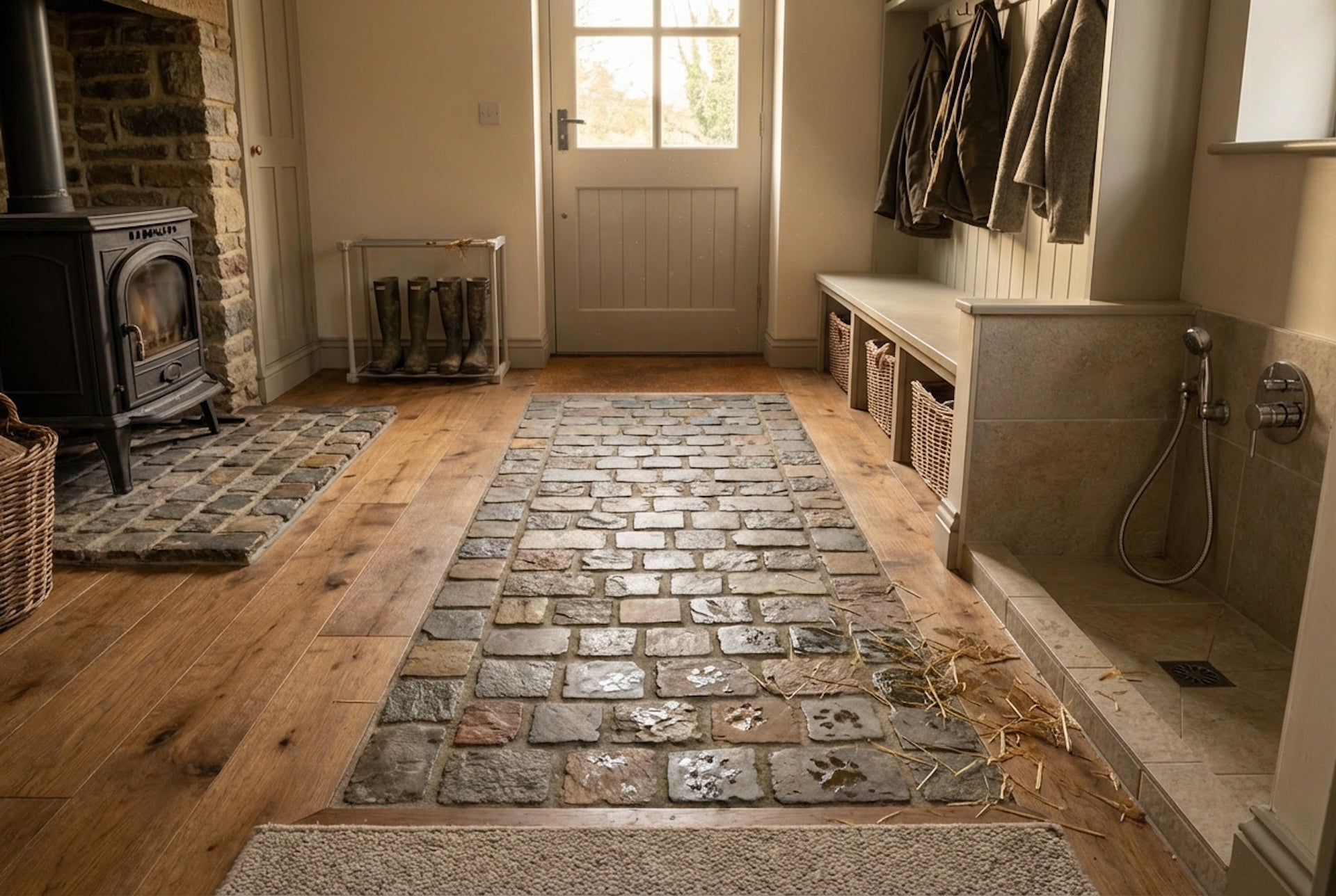

Cobblestones from Historic Streets, Ready for Your Project
- Reclaimed from historic streets and projects
- Durable granite suited for vehicle traffic and freeze–thaw climates
- Multiple sizes: jumbo, regulation, cubes, and more
- Palletized and ready for contractors or DIY‑friendly pros

What Are Cobblestones?
Cobblestones are naturally durable stone blocks used for centuries to pave streets, courtyards, and pathways. Traditionally cut from dense stone like granite, they create a distinctive, textured surface that stands up to heavy use and harsh weather. Today, cobblestones are used to bring that same historic feel to modern homes and landscapes.
Reclaimed cobblestones are salvaged from existing pavements and projects, then cleaned and sorted for reuse. This process preserves the stone’s natural patina, color variation, and worn edges that are impossible to replicate with new materials. Choosing reclaimed cobbles lets you combine sustainability, performance, and character in a single material.
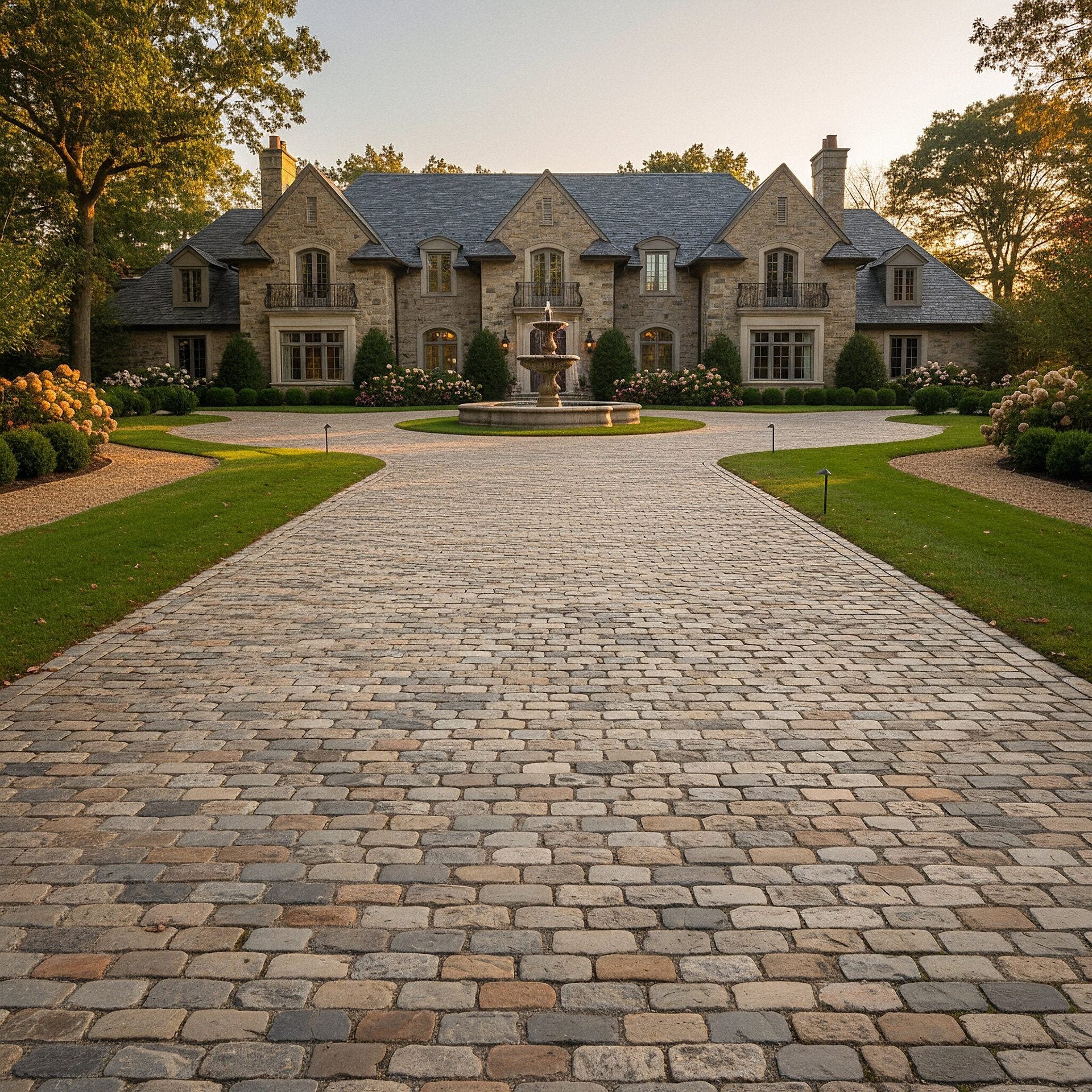
Why Choose Reclaimed Cobblestones?
Reclaimed cobblestones offer visual depth and history that new stone simply does not match. Each piece carries marks of its past life, subtle wear, color shifts, and irregularities that give a finished surface warmth and authenticity. When installed at a home or estate, they create an instant sense of permanence and craftsmanship.
From a performance standpoint, reclaimed granite cobblestones are extremely dense and resistant to de‑icing salts, vehicle traffic, and freeze–thaw cycles. Because the stone has already endured decades of use, you know exactly how it behaves outdoors. Reuse also keeps high‑quality stone out of landfills, reducing the environmental impact of your project.
Cobblestone Types We Offer
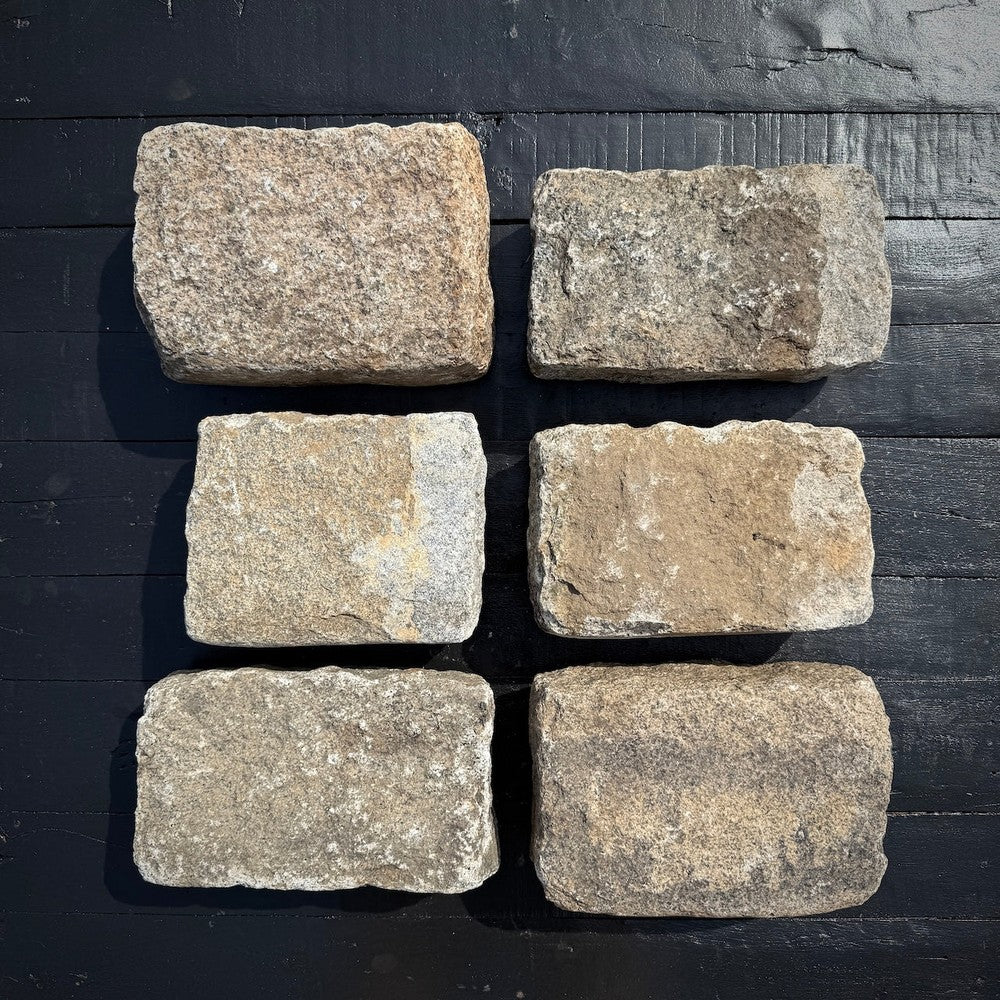
Reclaimed Granite Jumbo Cobblestones
Jumbo cobblestones are larger rectangular blocks, ideal for driveways, courtyards, and areas where you want a bold, substantial look. Their size creates a dramatic pattern and helps distribute loads from vehicles and equipment. They are also effective as large edging stones for driveways, gardens, and gravel parking areas.
Highlights:
- Approximate size: 11” x 7” x 4”
- Best for: driveways, courtyards, parking areas, bold borders
- Look: larger scale joints, strong visual rhythm, historic character
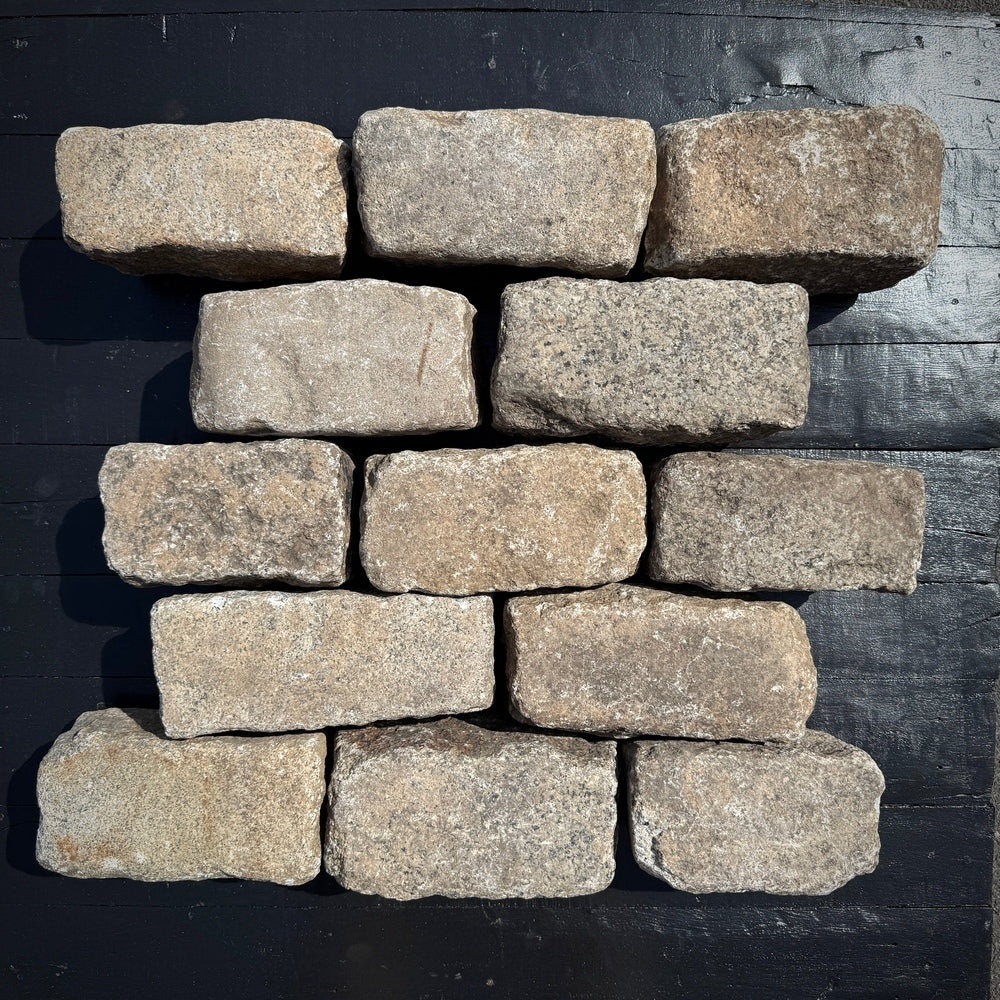
Reclaimed Granite Regulation Cobblestones
Regulation cobblestones are mid‑sized blocks often seen in traditional city streets. They balance scale and ease of installation, making them a go‑to choice for driveways and walkways where both vehicles and pedestrians share the surface.
Highlights:
- Approximate size: 9” x 5” x 5”
- Best for: driveways, shared courts, walkways, patios
- Look: classic cobblestone street appearance, comfortable underfoot
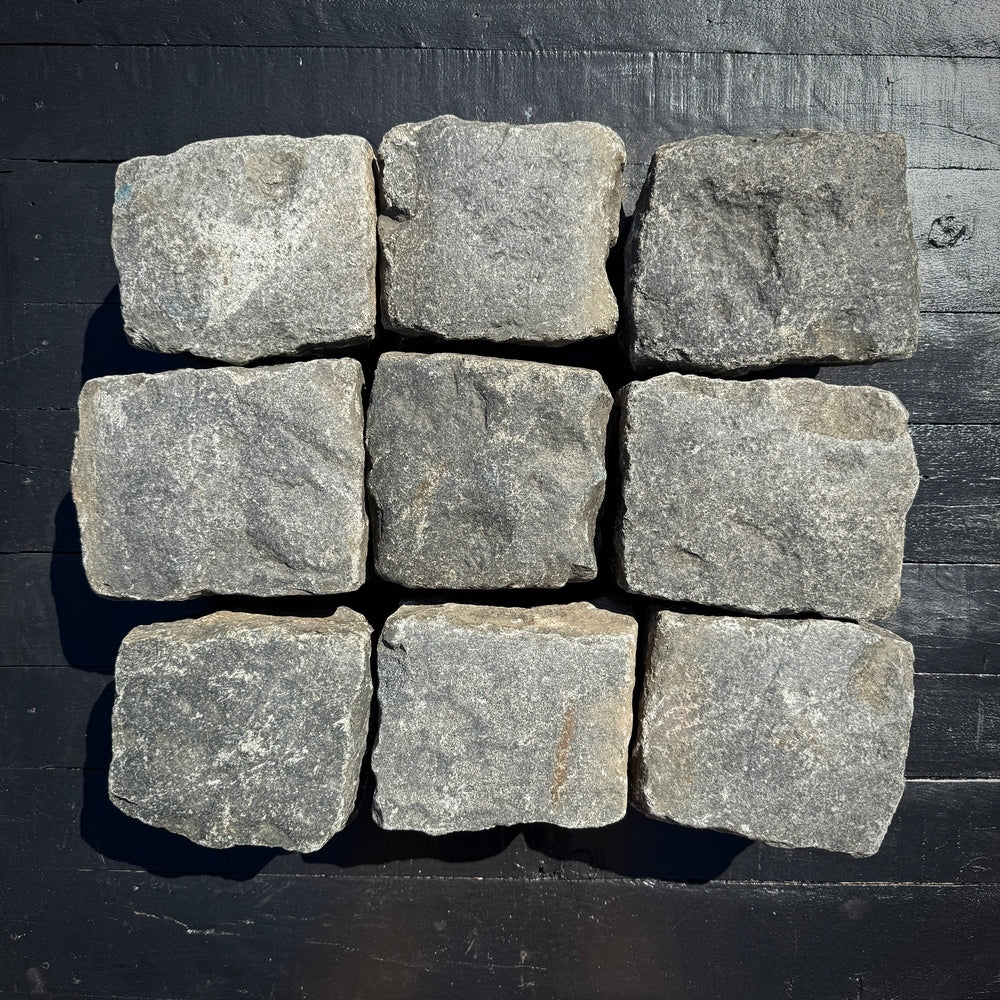
Reclaimed Granite Cobblestone Cubes
Cobblestone cubes are smaller blocks that excel in curves, tight radii, and detailed borders. They are ideal when you want intricate patterns, fan layouts, or smooth transitions around steps, trees, and garden features.
Highlights:
- Sizes: 5", 6", 7"
- Best for: walkways, edging, curves, decorative bands and insets
- Look: fine‑grained pattern, great for accents and detailing

Thin Stones
Thin cobblestones deliver the same reclaimed granite look and patina as our full‑depth stones in a slimmer, lighter format. They are ideal where you need to keep build‑up low, such as over existing concrete, around door thresholds, or on steps and vertical surfaces.
Highlights:
- Sizes: 11" x 7" x 1.5-2" thick
- Best for: wall veneers, step risers, borders, and thin paving upgrades
- Look: authentic reclaimed New York granite that pairs seamlessly with jumbo and regulation cobblestones
Common Uses for Cobblestones
Cobblestones can be used in many ways around a property. Here are some of the most popular applications and what works best for each.
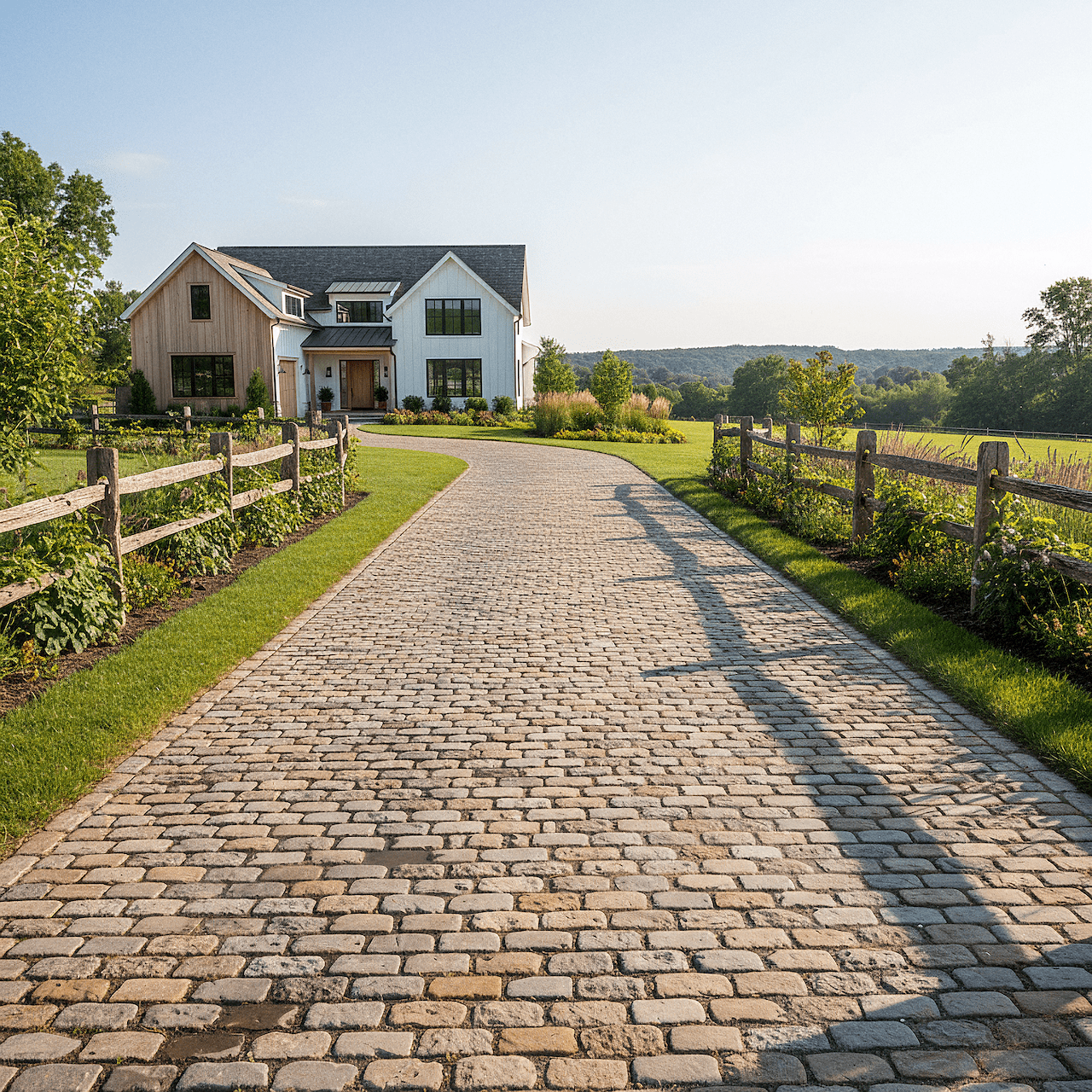
Cobblestone Driveways
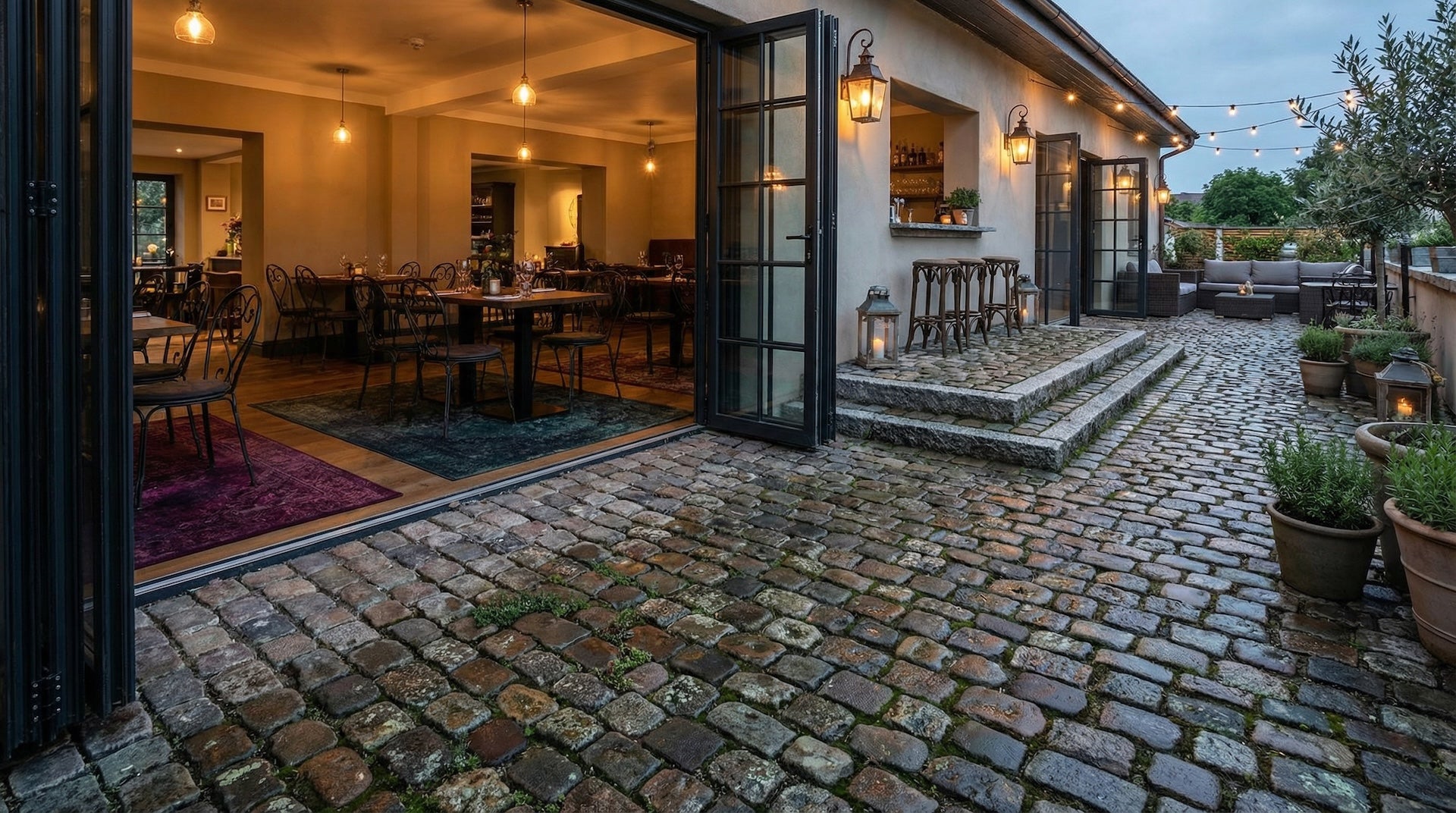
A cobblestone driveway offers durability and curb appeal at the same time. The interlocking blocks create a surface that can handle vehicles, plows, and foot traffic for decades when properly installed. Reclaimed granite cobblestones are particularly suited for driveways in cold, wet climates because they resist cracking and spalling.
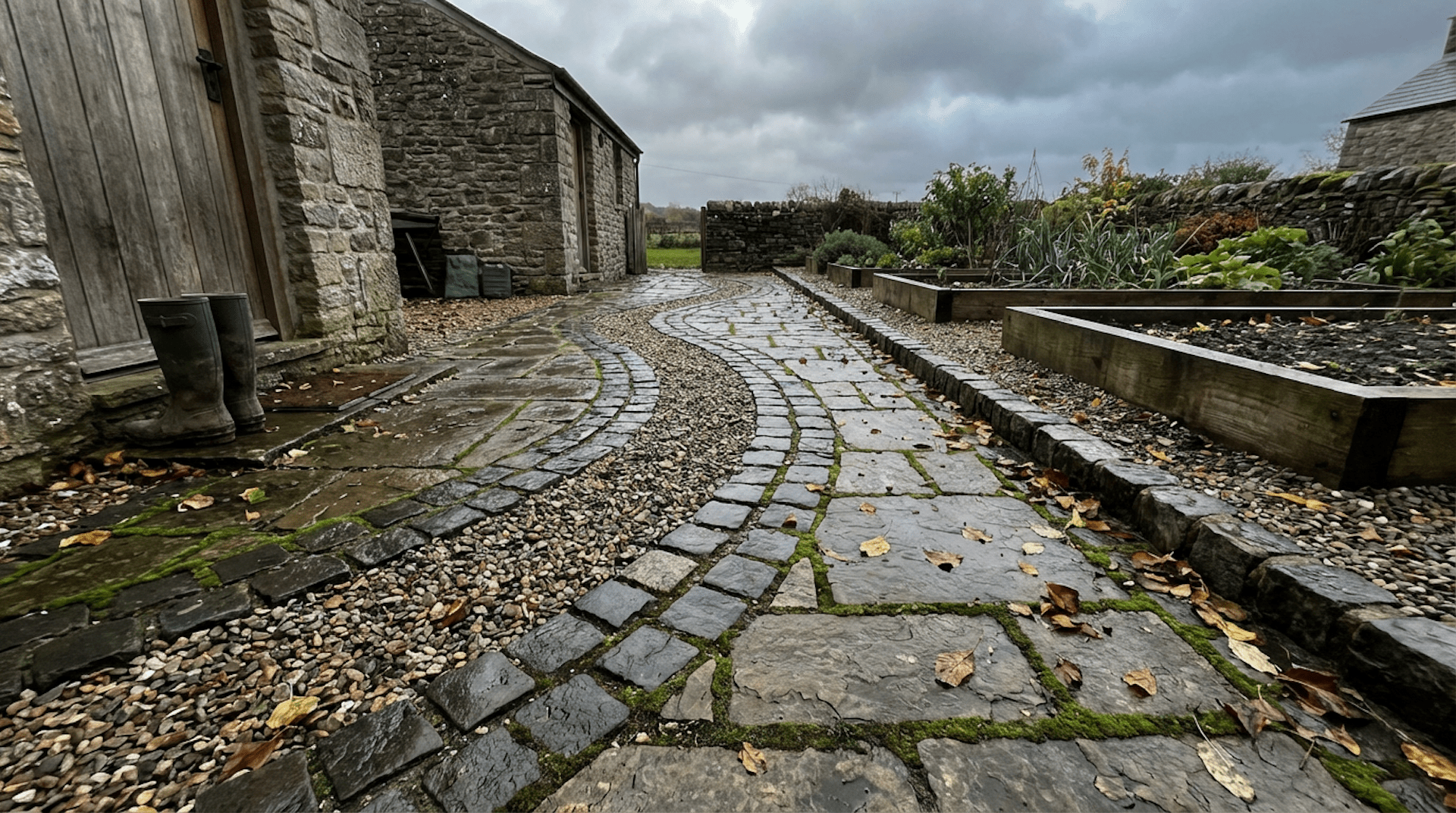
Patios, Walkways and Garden Paths
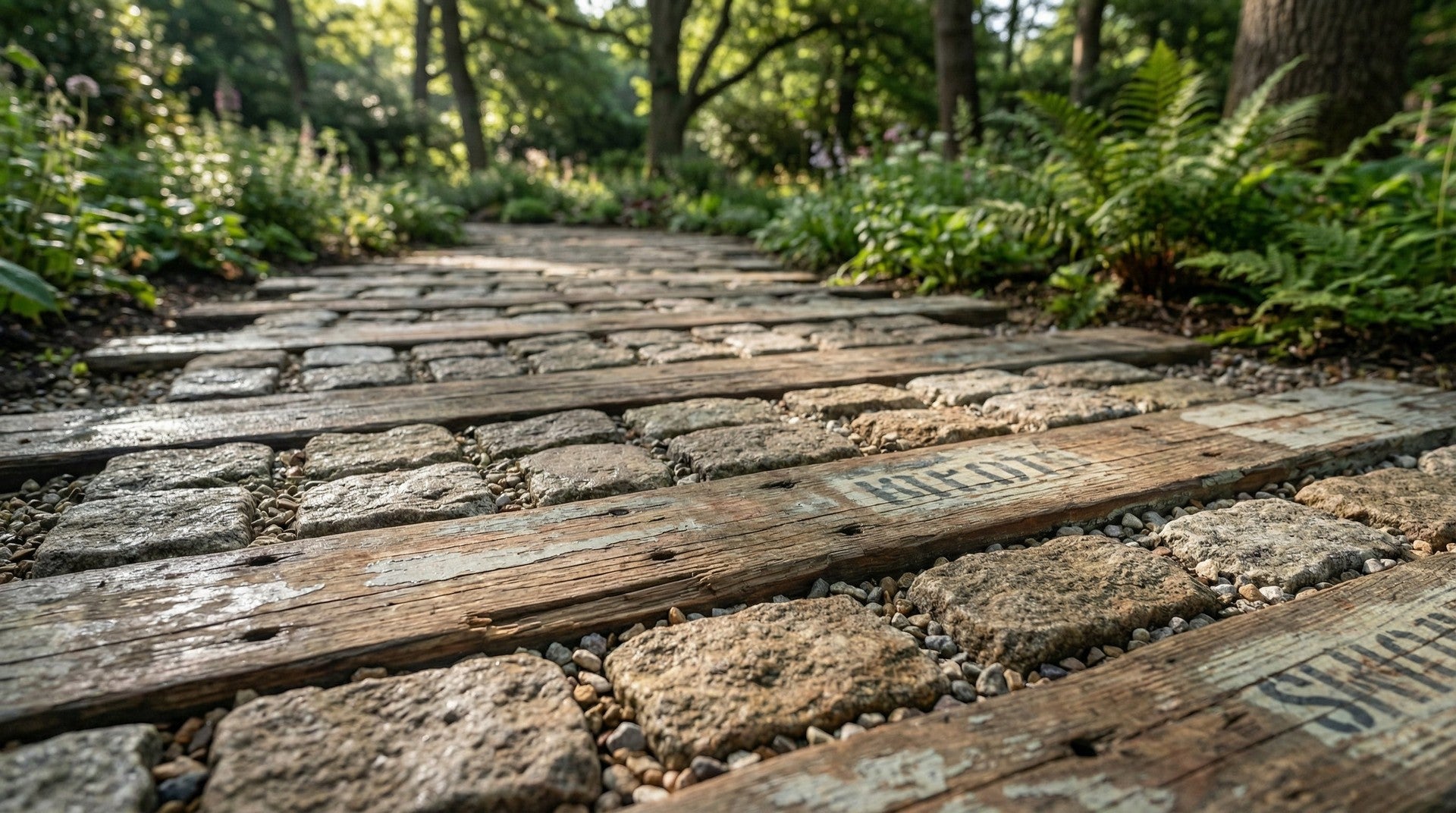
Cobblestones make charming paths that feel solid yet organic. Smaller formats and cubes are comfortable underfoot and can follow gentle curves through gardens, side yards, and around patios. You can run cobblestone walkways independently or tie them into a cobblestone driveway or terrace for a cohesive look.

Outdoor Kitchens, Terraces, and Courtyards
Cobblestones can be used to build entire patio surfaces or to frame patios built with brick or larger stone. Their thickness and strength make them ideal for terraces that must handle furniture, gatherings, and seasonal shifts. Reclaimed stone gives outdoor living areas a time-worn, old-world feel right away.
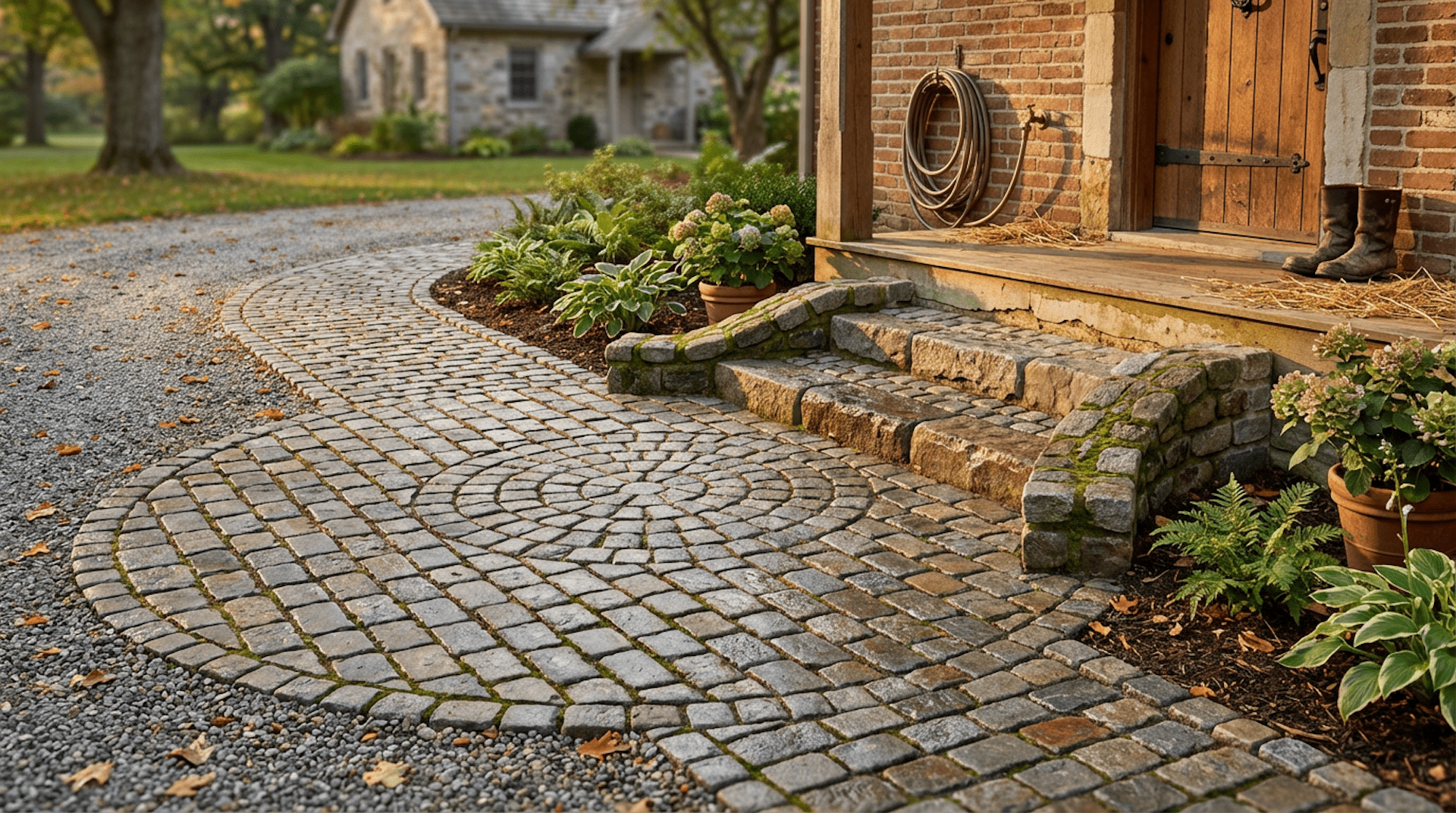
Edging, Borders, and Transitions
Even a few rows of cobblestones can dramatically upgrade a landscape. Use them as borders along asphalt or gravel driveways, around planting beds, or between lawn and patio areas. Jumbo or regulation stones work well on edge to retain soil and mulch, while cubes and smaller cobbles are ideal for tighter curves.

Pool decks
Discover stunning granite cobblestone pool deck ideas that combine timeless beauty with lasting durability for your outdoor oasis.

Farmhouses
Reclaimed cobblestones instantly anchor a farmhouse in history, adding authentic texture to drives, courtyards, and paths.
Discover how Bell Hill Farm in Windham, NY uses 2,500 reclaimed jumbo cobblestones from Chief Bricks to create timeless driveways and courtyards overlooking Windham Mountain.
Guide: Enhancing Farmhouse Design with Reclaimed Cobblestones

Installation
There's something magical about a cobblestone driveway. It brings to mind old cobblestone streets and a sense of history that other driveway materials just can't match. If you're interested in that classic curb appeal, you probably have a lot of questions about making a stone driveway a reality.
You're in the right place. We're going to walk through everything you need to know about this beautiful and durable option for your home. You'll learn the benefits, the challenges, and what it really takes to get one.
Maintenance & Care
Cobblestones are inherently low maintenance, but a few simple steps can keep them looking their best. Occasional sweeping and rinsing keeps dirt and organic material from building up in joints. In colder climates, use de‑icing products that are safe for stone and avoid aggressive metal shovels on raised edges.
Over time, joints may need to be topped up and a few stones adjusted, especially in high‑traffic areas. That’s normal for a flexible paving system and can be addressed without replacing the whole surface.
Homeowners-Friendly Guides:
Cost & Planning
Pricing for cobblestone projects depends on stone type, quantity, layout, and site conditions. Materials are typically priced per stone, while installation costs depend on excavation depth, base preparation, patterns, and labor rates in your area.
Many of the cobblestone streets we reclaim from are over a century old. With proper installation, your project can deliver the same kind of lifespan.
Share your measurements, site photos, and a rough description of your project, and we’ll help you select the right cobblestones and estimate how much stone you’ll need.
WHY CHOOSE CHIEF BRICKS FOR COBBLESTONES
From Source to Site. Without Compromise.
Sorted by hand
Stones are carefully hand‑sorted and organized on pallets ourselves for better consistency on site.
Direct from the source
No middlemen. You have direct access to reclaimed New York cobblestones from historic sites which we picked up ourselves.
Nationwide supply
We ship straight from our yard to your project across the United States.
Sustainably sourced
Reclaimed materials reduce environmental impact, and our stones have already lasted decades in city streets.
Proven Expertise
We reclaim, import, sort, and palletize everything in-house. Our team knows these materials inside and out.
Project-specific support
From homeowners to large-scale contractors, we provide tailored guidance to ensure the right materials, quantities, and delivery for every project.
FAQs
Are reclaimed cobblestones strong enough for driveways and parking areas?
Yes. Reclaimed granite cobblestones are extremely dense and have already proven themselves under traffic for decades. With a proper base and installation, they handle cars, trucks, and service vehicles very well.
How do cobblestones perform in freeze–thaw climates?
Granite cobblestones are well‑suited for freeze–thaw conditions when installed on a properly drained base. They resist cracking and spalling, and any minor seasonal movement can usually be corrected by re‑setting individual stones instead of replacing large sections.
Do cobblestones require sealing?
Most cobblestone projects do not require sealing. Many clients prefer the natural look and patina that develops over time. If you want enhanced color or added stain resistance in specific areas, we can discuss sealer options that are appropriate for stone.
How much maintenance do cobblestones need?
Routine sweeping, occasional rinsing, and checking joints are usually all that’s needed. Over the years, you may need to refill joints or re‑set a few stones in high‑use areas, but full‑scale repairs are uncommon when the base is done correctly.
How many cobblestones will I need for my project?
The quantity depends on stone size, pattern, and the square footage of your project. If you share your measurements and preferred stone type, we can calculate an estimated stone count and number of pallets for you.
Can cobblestones be combined with other materials?
Absolutely. Many projects pair cobblestones with reclaimed brick, concrete, or natural stone slabs. For example, using cobbles as a driveway surface and as a border around brick or bluestone patios.