
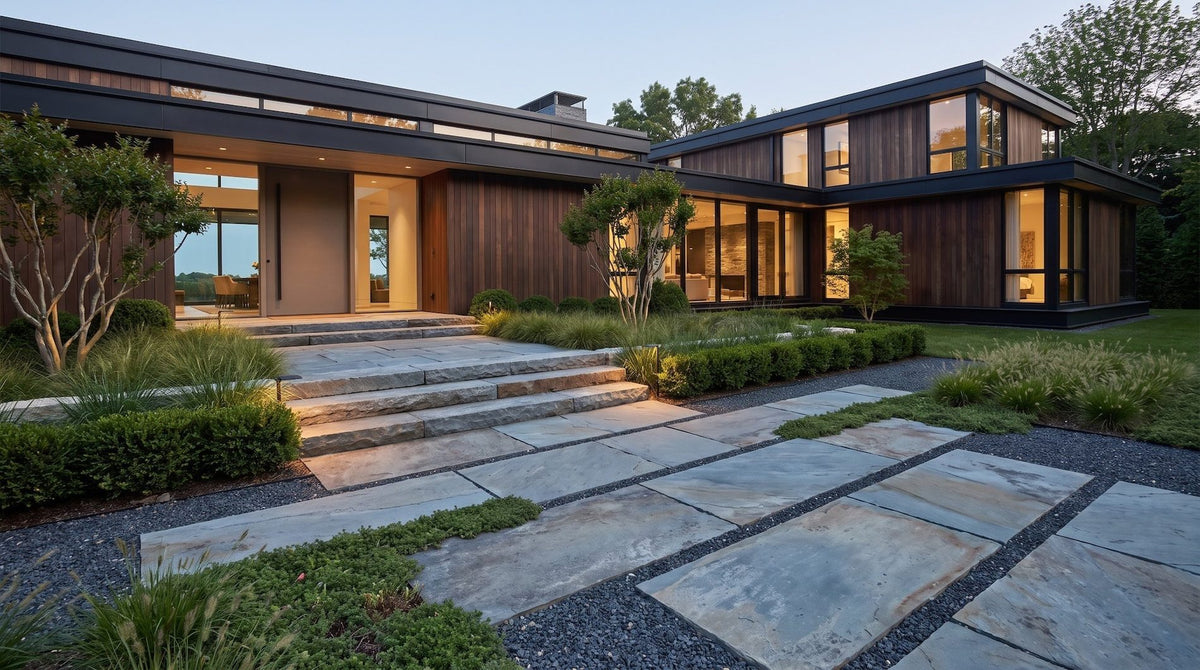
Some outdoor spaces look finished the day they are installed. Others look like they have been there for generations. Reclaimed bluestone belongs in that second category.
It has the kind of surface character that new materials struggle to imitate. You see softened edges, old cleft faces, blue-gray color shifts, darker charcoal areas, and the small marks that come from decades of real outdoor use. That history gives a patio, walkway, or set of garden steps a grounded look from day one.
For homeowners, reclaimed bluestone is a strong choice when the goal is not just to pave an area, but to create a landscape that feels permanent. It works especially well around traditional homes, brownstones, colonials, farmhouses, estates, and renovated properties where thin, overly uniform pavers would feel out of place.
Maybe you are a homeowner planning a new patio behind an older house. You might be a landscape designer looking for paving with real age for a client's front walk. Or maybe you are a contractor deciding where slabs end and steps begin on a sloped site.
At Chief Bricks, reclaimed bluestone is available in large sidewalk slabs for flat paving and substantial curbstone pieces for steps, landings, and grade changes. Whether you are planning a small front walk or a complete outdoor living area, understanding where each material fits can make the project easier to design and better to live with.
New bluestone can be beautiful. But reclaimed bluestone brings another layer to the project: real age. These pieces were previously used as sidewalks, curbs, and other parts of historic streetscapes and properties. Years of weather, foot traffic, moisture, and seasonal change created a surface that looks naturally established.
That does not mean reclaimed bluestone looks worn out. It means the material has depth. The face of a slab may shift from blue-gray to charcoal, with soft mineral movement and occasional hints of green, lilac, or warmer tones. Edges are often less sharp than machine-cut stone, which helps the finished landscape feel less rigid.
For many homeowners, this is the main attraction. A reclaimed bluestone patio does not look like it came from a standard pallet at a big-box store. It has visual movement. It photographs well. It pairs naturally with old brick, reclaimed cobblestone, mature landscaping, painted woodwork, and traditional architecture.
There is also a practical side. Bluestone has long been used in Northeast outdoor environments because it is substantial, durable, and well suited to properly planned pedestrian paving. Reclaimed material has already spent years outside. Its character has been earned through actual service, not manufactured into the surface. For more on that character, see what makes reclaimed bluestone different and reclaimed vs new bluestone pavers.
Reclaimed bluestone works best when you want a hardscape surface to feel solid, calm, and connected to the home. It can be used in many outdoor areas, but the right format depends on whether you are paving a flat surface or dealing with a change in elevation.
The material is especially effective in landscapes that need to bridge old and new. You might have a renovated home with modern windows but still want the property to feel rooted in its neighborhood. Or you may be adding a patio behind a house that already has brick, stone, or mature trees. Reclaimed bluestone helps the new work feel like part of the property rather than an obvious add-on.
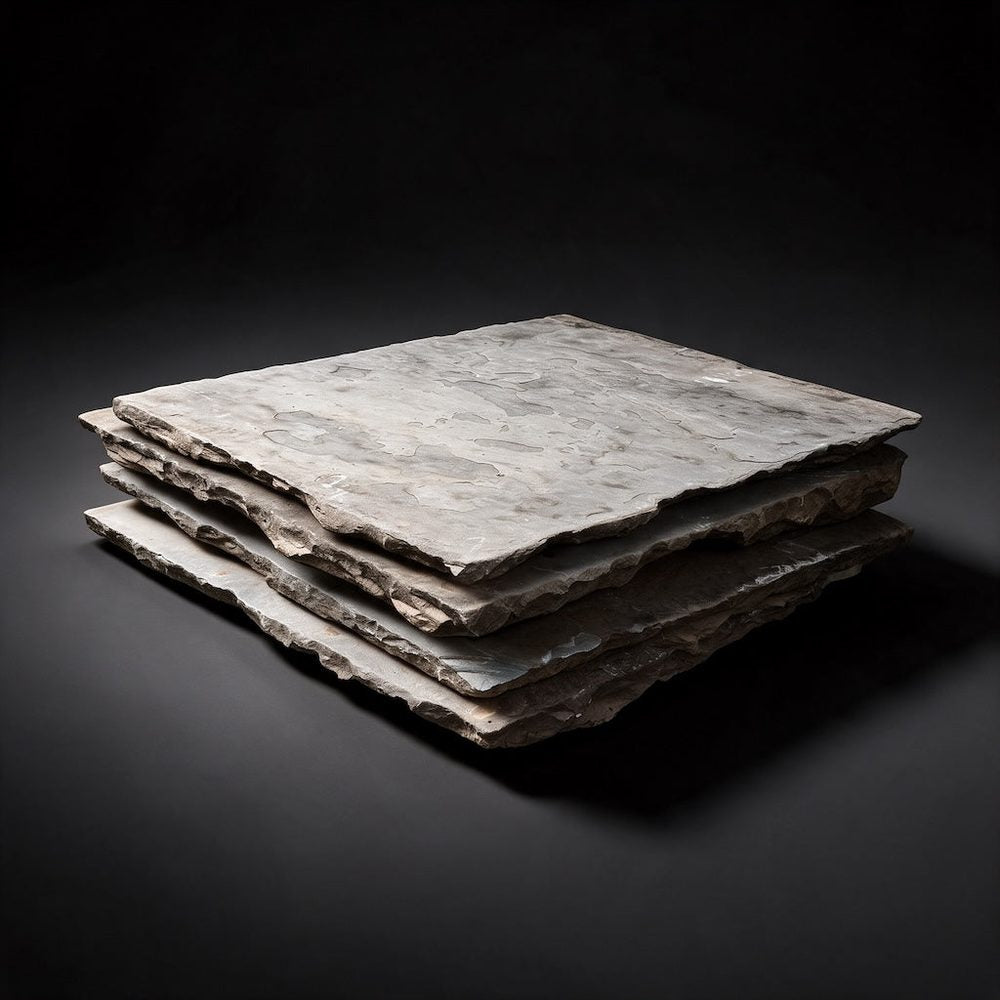
For patios, walkways, terraces, and other flat pedestrian surfaces, Reclaimed Bluestone Sidewalk Slabs are the natural starting point. These are large-format pieces salvaged from historic pedestrian paving, which gives them a scale that many modern pavers do not offer.
Large slabs change the look of a hardscape immediately. Instead of many small pieces and a busy field of joints, you get broader runs of stone. That can make a small patio feel more open and an expansive courtyard feel more intentional. The larger format also works well with outdoor furniture because tables, chairs, and benches sit on a calmer visual surface.
Chief Bricks offers reclaimed bluestone sidewalk slabs in substantial lengths, with approximately 100 square feet of usable material per pallet, not counting joints. The slabs are selected for solid, intact edges and no broken corners, which gives homeowners and installers more usable material for layouts, cuts, borders, and transitions. The slabs are generally too thin for driveways; where cars will drive, we recommend our thicker reclaimed curbstones instead.
The slabs come in three sizes: about 3 feet long by 2 to 3 feet wide, 4 feet by 2 to 4 feet, and 5 feet by 2 to 5 feet, all 2 to 4 inches thick. The 3- and 4-foot sizes are $59 per square foot and the 5-foot slabs are $69 per square foot. A full pallet weighs about 3,950 lb. Slabs ship by the full pallet, so a 300-square-foot patio, for example, comes to about 330 square feet with extra for cuts, or four pallets.
A bluestone slab patio is a classic choice for outdoor dining. The muted blue-gray palette works with black metal furniture, teak, cedar, brick walls, painted siding, and soft planting colors. It feels relaxed enough for a backyard but refined enough for a formal garden or estate-style landscape.
Walkways are another strong use. A front path made from reclaimed bluestone immediately changes the first impression of a home. It can connect a driveway to a front porch, lead visitors through a gate, or create a side-yard passage that feels designed instead of forgotten.
For a courtyard or terrace, use the slabs to create broad paved areas with planting beds around the perimeter. The stone gives the space a quiet foundation, while shrubs, grasses, perennials, and containers add seasonal movement. The combination feels established without being overly formal. Our step-by-step guide on how to build a reclaimed bluestone patio covers layout, base, and joints.
Flat paving solves one part of the landscape. Changes in elevation need a different material. That is where Reclaimed Bluestone Curbstone Steps come in.
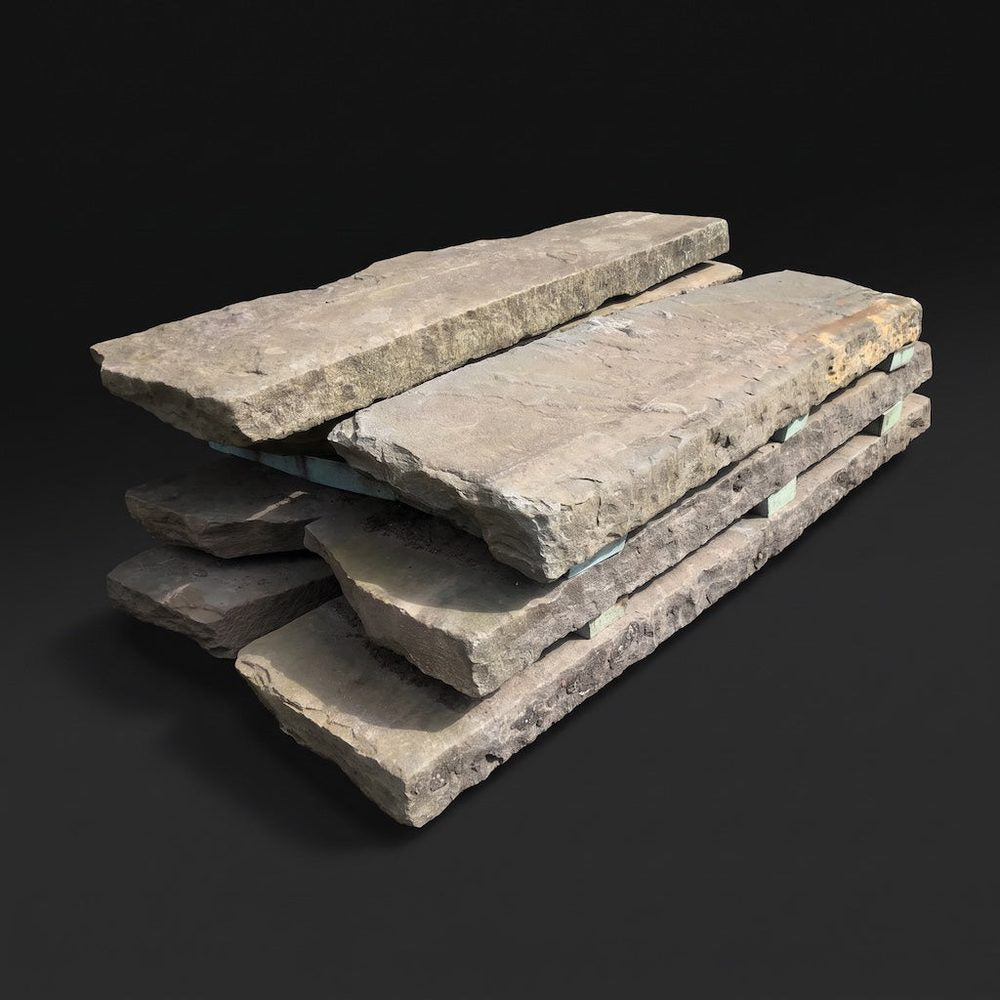
These are solid reclaimed curbstone pieces selected for use as steps, stair treads, landings, and landscape transitions. Their long, monolithic shape creates a substantial look that is difficult to achieve with thinner individual pavers or stacked manufactured units.
Rather than building a step from several small stones, a long reclaimed curbstone can form the full width of a garden stair or front entry tread. Fewer joints create a cleaner, more architectural result. The eye reads one strong piece of stone instead of a patchwork of smaller materials.
Reclaimed curbstone steps are available in lengths from roughly 2 to 8 feet, about 14 to 20 inches deep and 4 to 6 inches thick, for properly prepared pedestrian applications. They are $79 per linear foot for 2- to 4-foot pieces, $89 for 5 and 6 feet, and $99 for 7 and 8 feet. Our bluestone steps calculator works out how many steps your slope needs and what they will cost. Their weathered faces and softened edges make them especially appropriate for traditional homes, historic renovations, brownstones, colonial properties, and landscapes where the goal is timeless character rather than a sharp contemporary finish.
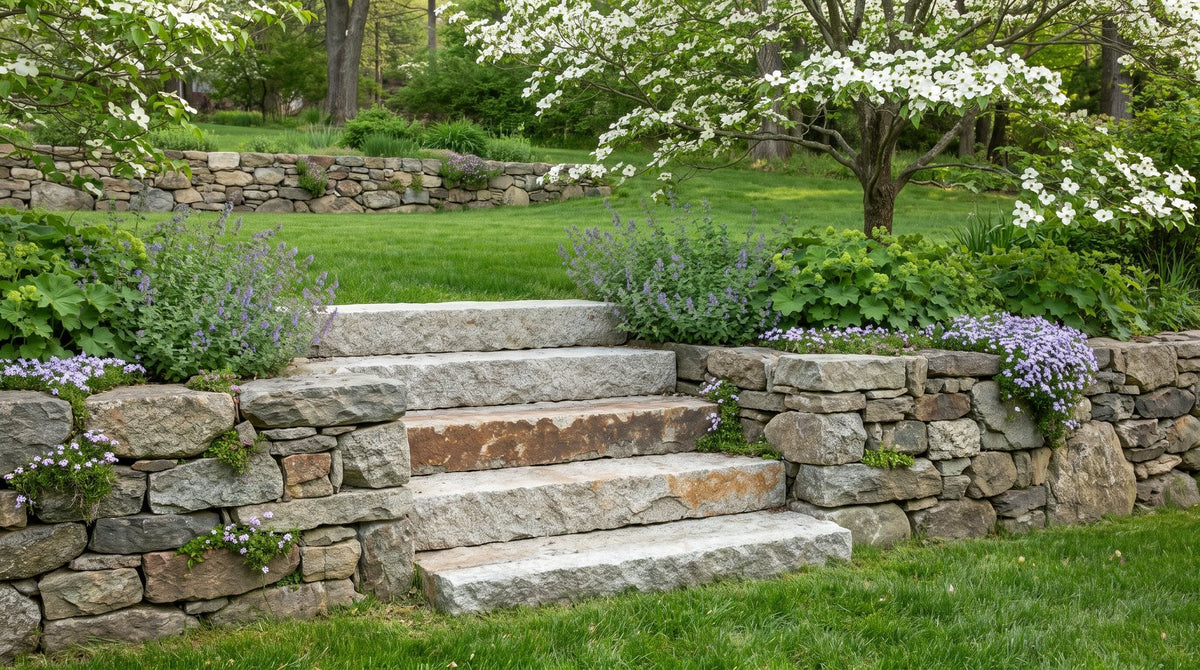
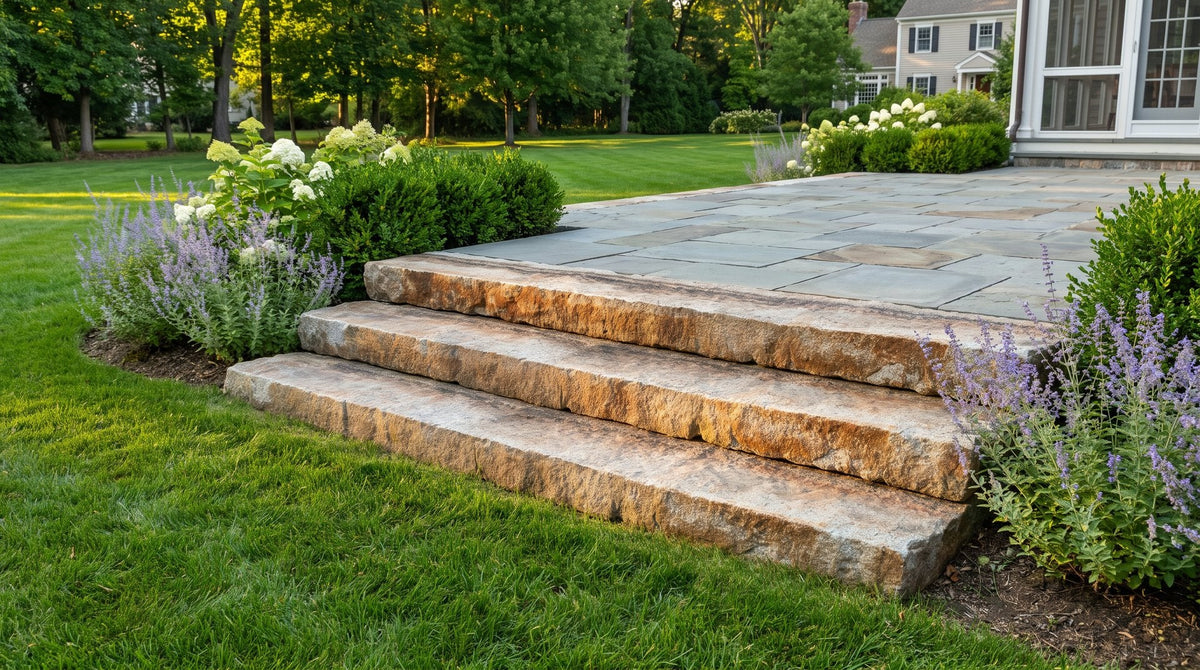
One of the best things about reclaimed curbstone is its visual weight. Even a simple two-step transition can feel special when each tread is a thick, weathered piece of natural stone. It gives the landscape a sense of permanence before any planting goes in. Our guides to reclaimed bluestone steps and bluestone garden steps for slopes and terraces go deeper.
The best reclaimed bluestone projects often use both formats together. Sidewalk slabs handle the flat areas. Curbstone steps handle elevation changes. Using both creates a landscape that feels connected, even when the patio, front walk, garden, and entry are in different parts of the property.
Picture a backyard patio built with large reclaimed bluestone slabs. A pair of curbstone steps leads down to a lawn or garden path. The same blue-gray material appears in both places, but the scale changes to fit the use. The result feels intentional because the patio and steps speak the same design language.
This approach also works well at the front of a home. A reclaimed bluestone walkway can lead from the sidewalk or driveway toward the entrance. At the final change in elevation, monolithic curbstone steps bring visitors to the porch or front door. The stone ties the whole arrival sequence together.
For added texture, many homeowners frame bluestone with reclaimed brick or granite cobblestone. Brick works well as a border around patios and paths. Granite cobblestone can define planting beds, driveways, or transition areas. Bluestone provides the broad, calm surface while brick and granite add detail around the edges. See how to combine bluestone, antique brick and cobblestone.
Reclaimed stone is not a material to treat as an afterthought. It pays to make a few decisions early, especially because each piece has natural variation in color, texture, wear, and dimensions.
Think about movement before choosing a layout. Where do people enter the yard? Where will furniture sit? Is the patio for quiet morning coffee, family dinners, or larger gatherings? Do you need a direct route from the driveway to the front door? Are there slopes that need to be handled with steps?
Once those questions are clear, the material choice becomes easier. Flat gathering areas call for slabs. Changes in grade call for curbstone steps. A good plan usually includes both circulation and destination spaces.
Measure the finished area, then work with your installer or landscape designer to account for edges, cuts, curves, waste, and any border materials. Reclaimed slabs are not factory-identical, and that is part of their appeal. But it also means a thoughtful layout matters. For a first estimate, our bluestone slab calculator turns your measurements into slabs and full pallets.
For patios and walkways, consider where full pieces can be featured and where cut pieces can be placed less visibly. For steps, make sure the length and depth work with the actual slope, retaining walls, landing areas, and approach path.
Reclaimed bluestone rewards careful installation. A qualified mason, landscape contractor, or hardscape installer can help plan base preparation, drainage, pitch, joint treatment, and transitions. The goal is to let the stone’s natural irregularity look intentional, not accidental.
Ask potential installers whether they have experience with reclaimed stone or large-format natural-stone slabs. A team that understands how to sort pieces, blend tones, set elevations, and place the best faces in the most visible areas can make a major difference in the finished result.
Water should move away from the home and away from areas where it could collect. This is true for every hardscape, but it matters even more when you are investing in substantial natural stone. Proper base work and slope help keep patios, paths, and steps performing well through changing weather.
For entry steps and garden stairs, think about where water will run during heavy rain. For patios, think about furniture placement, nearby downspouts, planting beds, and how the paved area connects to the lawn. Early drainage planning is far easier than trying to solve problems after installation.
Use large reclaimed bluestone slabs for a front walk and finish the approach with thick curbstone steps. Add low boxwood, hydrangeas, or native grasses along the edge. This works particularly well with brick facades, painted clapboard homes, stone foundations, and colonial architecture. More ideas are in historic bluestone front entry design ideas.
Create a broad patio using sidewalk slabs, then edge it with planting beds or a reclaimed brick border. Add a curbstone step down to the lawn so the transition feels clean and substantial. The result is an outdoor room that works for both weekday dinners and larger gatherings.
On a sloped property, use curbstone steps to move between garden levels. Connect each landing with bluestone slab paths. The combination creates an easy walking route while making the grade change feel like part of the design instead of a problem to hide.
Use reclaimed bluestone as the main paving surface in an enclosed side yard or rear courtyard. Add a brick wall, wood gate, climbing vines, and simple metal furniture. The weathered stone gives the space immediate age and makes even a newer property feel more established.
Reclaimed bluestone can help connect a pool area to the rest of the yard. Use slabs for seating zones, outdoor dining, or a route back to the house. Curbstone can form transitions between elevations, planting terraces, or nearby outdoor rooms. Always work with your installer to select an appropriate finish, drainage plan, and layout for the specific pool environment. Around a pool, the slabs need to be cut so they fit closely together. Keep in mind that blue-gray stone gets hot underfoot in strong summer sun, so shaded seating areas are often the best place for it near a pool; for a sunny pool deck, our Granite Pattern Pavers are an alternative.
Reclaimed bluestone is heavy, substantial material, so logistics should be part of the planning process from the beginning. Consider access for delivery trucks, pallet staging, distance from the curb or driveway to the work area, and whether equipment will be needed to move stone around the property.
Chief Bricks ships reclaimed bluestone nationwide, helping homeowners, designers, contractors, and builders source authentic materials beyond the Northeast. If your project is outside the New York area, it is still possible to bring real reclaimed bluestone into the design.
Before ordering, confirm your approximate square footage, number of steps, preferred applications, site access, and project timeline. It is also smart to coordinate delivery with your installer so materials arrive when the crew is ready to stage and use them. That keeps the project moving and avoids unnecessary handling.
Add the slabs or steps to your cart and enter your address for a shipping quote. If it looks too high, call us at (718) 379-1232; we sometimes have alternative ways to get your stone to your door for a more reasonable price. You can also see the stone in person at our yard in Nanuet, NY; no appointment is needed, but if you call ahead at (718) 379-1232, we will make sure you get our full attention.
For patios, walkways, courtyards, and garden steps around a traditional or established home, usually yes. Reclaimed bluestone gives you broad, substantial stone with decades of weathering already on it, so the hardscape looks settled from the day it is finished.
It is not the answer everywhere. The slabs are generally too thin for driveways, sunny pool decks can get hot underfoot, and a very modern, crisp design may call for new stone instead. Used where people walk, sit, and arrive, though, it is hard to beat. For a closer look at the numbers, see our reclaimed bluestone cost guide.
Ready to start planning? Explore Reclaimed Bluestone Sidewalk Slabs for patios and walkways, or shop Reclaimed Bluestone Curbstone Steps for entries, landings, and garden stairs.
The information provided in our guides, installation tips, and blog content is for general reference only. Every project is unique, and site conditions can vary. We strongly recommend consulting a qualified professional installer to review your specific project and provide final guidance.
Reclaimed Bluestone Curbstone Steps
Reclaimed Bluestone Sidewalk Stones & Slabs
Share: