
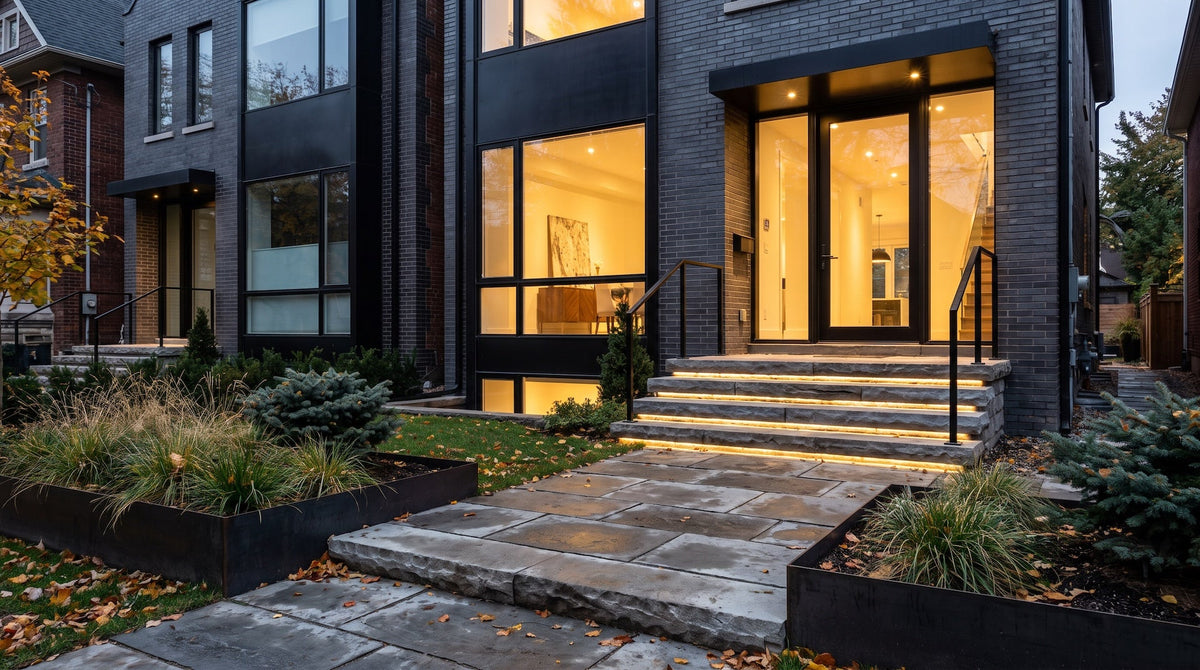
Some of the best landscapes do not rely on a single material. They use contrast well.
That contrast does not need to be loud. In fact, the strongest combinations are often the most restrained. Reclaimed bluestone, antique brick, and cobblestone work so well together because each material brings something different to the project. Bluestone offers broad, calm surfaces and weathered blue-gray tones. Antique brick brings warmth, scale, and historic texture. Cobblestone adds weight, edge definition, and a deeper, more rugged feel.
When these materials are used thoughtfully, they can make a patio, walkway, front entry, courtyard, terrace, or garden path feel more layered and more connected to traditional architecture. Instead of looking pieced together, the landscape feels rooted. It gains the kind of visual depth that new, highly uniform hardscapes often lack.
This guide explains how to combine reclaimed bluestone with antique brick and cobblestone in a way that feels balanced, timeless, and practical. It covers where each material works best, how to distribute them across the property, and how to avoid a result that feels too busy or overly decorative.
Table of Contents
- Why This Material Combination Works
- What Each Material Brings to the Design
- Bluestone, Brick, and Cobblestone at a Glance
- Where to Use Each Material
- How to Build a Cohesive Layout
- Best Landscape Applications
- Design Ideas for Combining the Materials
- Common Mistakes to Avoid
- Planning a Multi-Material Hardscape
- Nationwide Shipping and Sourcing
Why This Material Combination Works
Reclaimed bluestone, antique brick, and cobblestone all share something important: they look better with a little age. None of them depend on a perfectly smooth surface or a sharp, fresh-cut finish to feel complete. That is what makes them such natural partners.
Bluestone tends to provide the calmest visual field. It gives you broad surfaces for walking, sitting, dining, or approaching the house. Antique brick adds smaller-scale texture and warmer color. Cobblestone introduces weight and structure, especially at edges, transitions, and areas that need a stronger boundary.
Because the materials vary in scale, color, and texture, they create contrast without competing if they are assigned clear roles. The key is to let each one do the job it is best suited for rather than trying to use all three everywhere at once.
This approach is especially effective around traditional homes, brownstones, farmhouses, colonials, brick townhouses, and estates, but it can also work in newer landscapes that need more texture and permanence.
What Each Material Brings to the Design
Before combining materials, it helps to understand what each one contributes. The strongest hardscapes usually give every material a purpose instead of treating them as interchangeable decorative options.
Reclaimed bluestone
Reclaimed bluestone is usually the foundation material in this combination. Its weathered blue-gray tones, broad format, and naturally worn surface make it ideal for patios, walkways, landings, and other main pedestrian areas.
Reclaimed Bluestone Sidewalk Slabs work especially well when you want the hardscape to feel substantial and established. They create a calmer surface than many small pavers because the larger format reduces joint lines and gives the eye more room to rest.
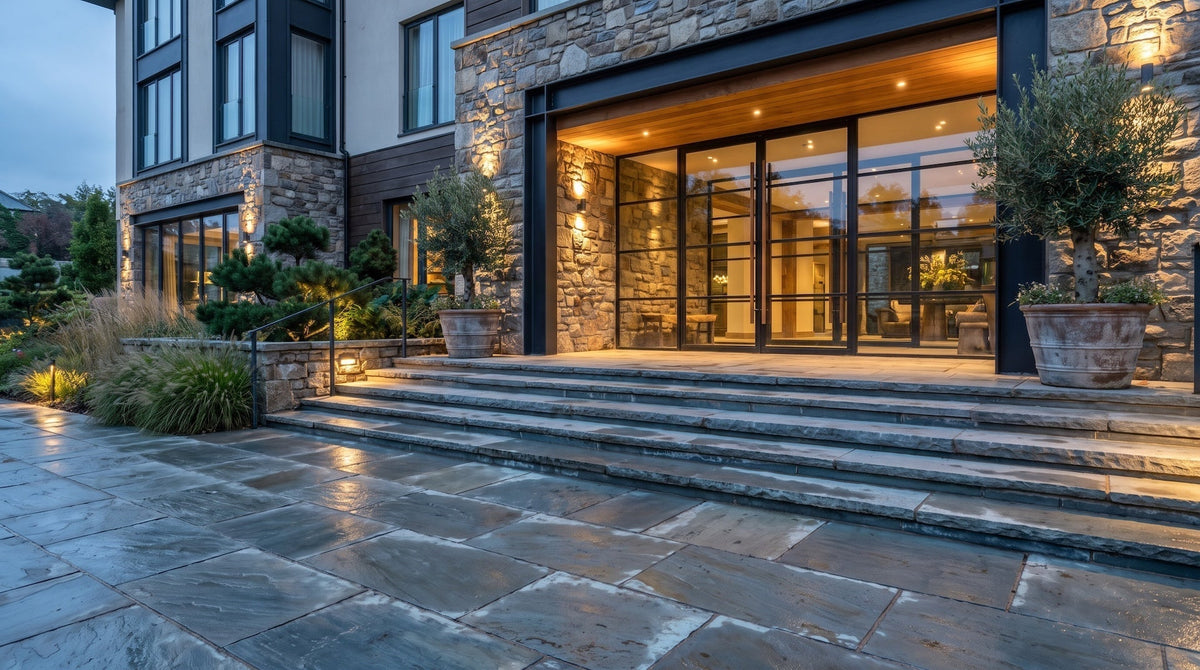
For changes in elevation, Reclaimed Bluestone Curbstone Steps bring the same weathered character to front entries, garden stairs, landings, and patio transitions. Their long, thick form makes them a natural bridge between flat paving and level changes.
Antique brick
Antique brick introduces warmth. Its reds, oranges, dark tones, kiln marks, and softened corners create a visual counterpoint to the cooler tones of bluestone. Brick is especially useful where you want definition, detail, or a slightly finer texture.
It works beautifully as a border around a bluestone patio, as a walkway edge, in low walls, garden planters, risers, or other secondary elements. Because the units are smaller, brick can also help soften transitions and introduce a more layered look around the perimeter of a hardscape.
Cobblestone
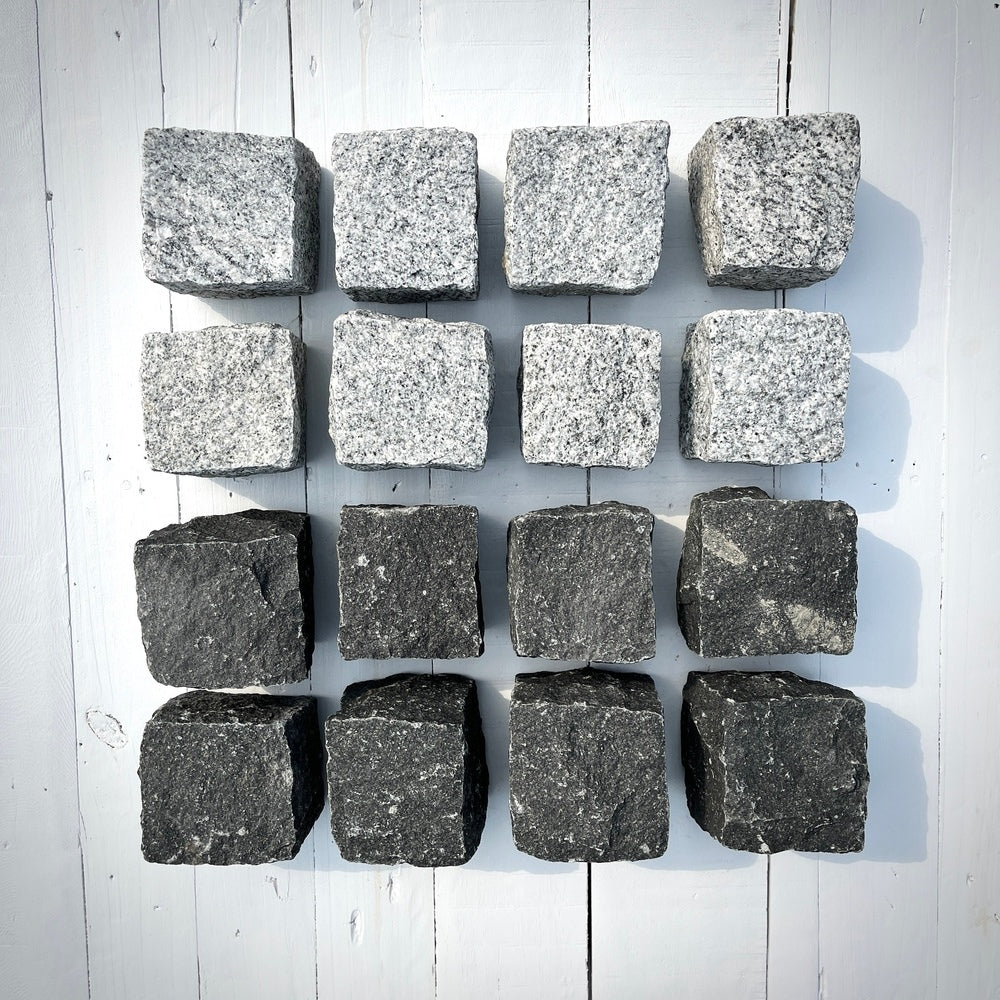
Cobblestone is often the strongest accent material of the three. It has more depth, more texture, and a heavier visual presence. That makes it especially useful where a hard edge is needed, such as driveway borders, apron transitions, garden edging, and places where pedestrian and vehicle zones meet.
Used sparingly, cobblestone can anchor the whole design. It frames other materials without overpowering them and adds a sense of old-world structure that pairs naturally with reclaimed stone and brick.
Bluestone, Brick, and Cobblestone at a Glance
| Material | Best Role | Visual Effect | Common Uses |
|---|---|---|---|
| Reclaimed bluestone | Main paving surface | Calm, substantial, weathered, architectural | Patios, walkways, courtyards, landings, broad paths |
| Antique brick | Warm secondary material and border detail | Textured, historic, warm, layered | Borders, low walls, planters, risers, edging, accent bands |
| Cobblestone | Heavy accent and edge definition | Strong, rugged, structured, grounded | Driveway edges, aprons, perimeter bands, transitions, entry framing |
Where to Use Each Material
The easiest way to keep a multi-material hardscape from feeling busy is to give each material a primary zone. You can repeat it elsewhere in smaller ways, but it helps to establish a hierarchy.
Bluestone for broad surfaces
Use reclaimed bluestone in the largest pedestrian areas. Patios, courtyards, front walks, landings, and major garden paths all benefit from the stone’s broad format and restrained color palette. It creates the visual base layer for the landscape.
Brick for borders and supporting details
Use antique brick where you want warmth and definition rather than broad expanses. A brick edge around a bluestone patio can make the patio feel more finished. Brick can also tie the hardscape back to a brick house, chimney, retaining wall, or garden wall.
Cobblestone for thresholds and edges
Use cobblestone where the design needs a stronger frame. This is especially effective at driveway aprons, property-edge details, garden edges, and places where the landscape transitions from vehicle use to foot traffic. In smaller quantities, cobblestone acts almost like punctuation.
If all three materials show up in the same square footage at the same intensity, the project can feel overworked. If each one has a clear task, the result is more elegant.
How to Build a Cohesive Layout
One of the biggest challenges in combining materials is knowing how much of each to use. A good rule is to choose one lead material, one support material, and one accent material.
In most landscapes, reclaimed bluestone should be the lead material. It covers the largest surfaces and creates the main walking and seating areas. Antique brick should usually act as the support material, adding warmth and intermediate texture. Cobblestone then becomes the accent, used more sparingly to frame key transitions or edges.
Keep the palette disciplined
Even though you are using three materials, the project should still read as one landscape. Avoid introducing too many other competing finishes, especially if they do not relate to the old-world character of the core materials. A patio with bluestone, brick, cobblestone, patterned tile, bright gravel, and stamped concrete all at once will rarely feel calm.
Instead, let the supporting materials be quieter. Gravel, wood, black metal, planting, and simple lighting often help the stone and brick stand out more naturally.
Repeat details across the property
One border band is helpful, but repetition is what makes a material strategy feel intentional. A brick edge at the patio can connect to a brick planter near the front walk. Cobblestone at the driveway can reappear as a small edge detail at a gate. Bluestone can continue from the front entry to the rear terrace or side-yard path.
You do not need to repeat every material in every zone. But repeating each one at least once or twice in the right places helps the entire property feel connected.
Best Landscape Applications
Some outdoor spaces benefit especially well from this combination because they naturally include surfaces, edges, and transitions that can be assigned to different materials.
| Application | Recommended Material Mix | Why It Works |
|---|---|---|
| Backyard patio | Bluestone field with antique brick border and optional cobblestone edge at adjoining drive or path | Creates a calm main surface with warmth at the perimeter and stronger definition where needed |
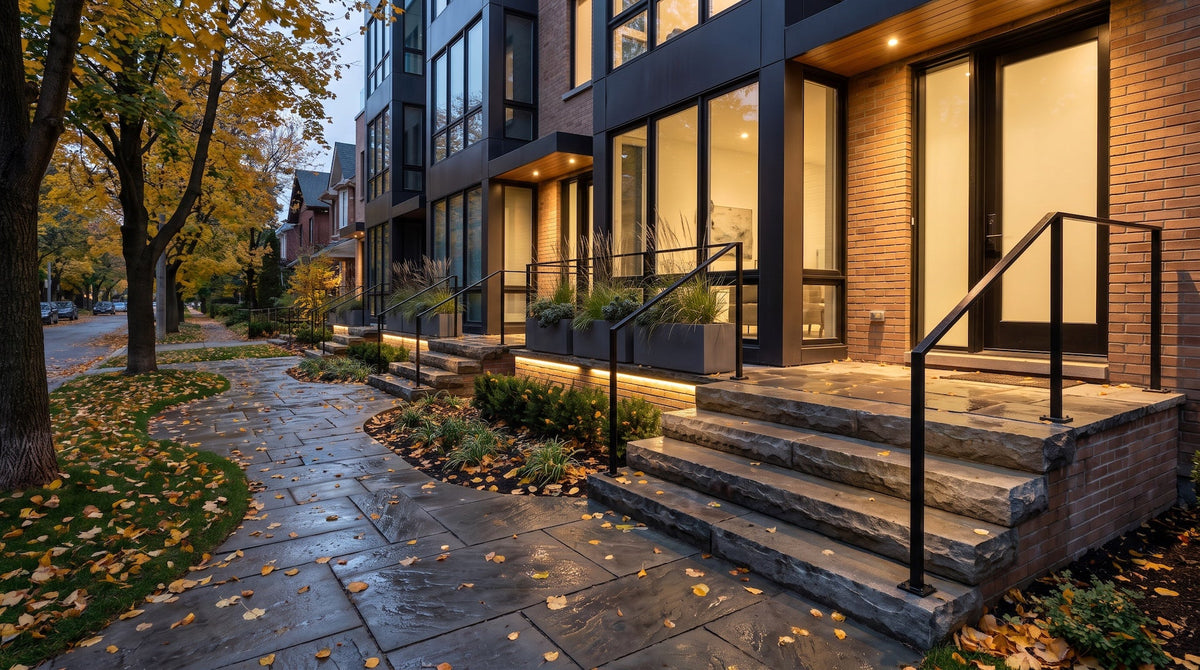
| Front walk and entry | Bluestone walkway, curbstone steps, brick edging, cobblestone accents near the driveway | Builds a layered arrival sequence that feels traditional and substantial |
| Courtyard | Bluestone paving with brick walls or border bands and selective cobblestone framing | Adds old-world enclosure and texture without making the space too busy |
| Garden path | Bluestone stepping route with brick edging or cobblestone threshold details | Keeps circulation clear while allowing the path to blend into planting |
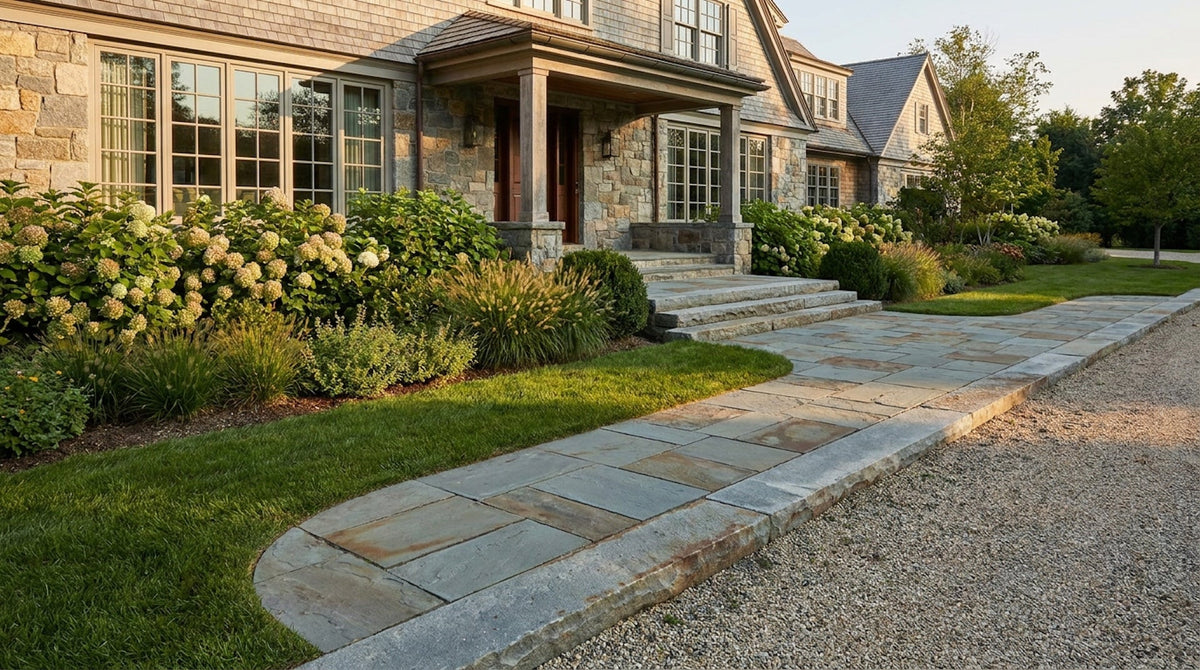
| Driveway transition | Cobblestone apron or border leading to bluestone pedestrian paving and brick details near the house | Separates vehicle and pedestrian zones while maintaining a cohesive historic material palette |
Design Ideas for Combining the Materials
Traditional brick-home patio
Use reclaimed bluestone as the main patio surface, then frame it with a single antique brick border. Add a low brick planter wall at one edge and reserve cobblestone for the transition near the driveway or side-yard gate. This works especially well behind brick colonials, brownstones, and older townhouses.
Estate-style front approach
Create a front walk with reclaimed bluestone slabs and use curbstone steps where the grade changes. Let antique brick edge the path lightly, then use cobblestone at the driveway apron and entry transition. The result feels layered and formal without being stiff.
Old-world courtyard
Use bluestone to keep the courtyard calm underfoot, especially where furniture needs a stable surface. Introduce antique brick in the surrounding walls, border bands, or planters. Use cobblestone sparingly at the threshold or outer edges to frame the room.
Garden terrace with level changes
Build a terrace or patio with bluestone slabs, then use reclaimed bluestone curbstone for steps down to a lawn or lower garden. Antique brick can form low retaining walls or edge planting beds, while cobblestone can mark the transition to a gravel or driveway area.
Compact urban side yard
In a smaller property, use bluestone for the main walking path, brick to soften and warm the edges, and cobblestone only at one or two key points such as a gate threshold or utility-area transition. Keeping the palette tight prevents the space from feeling cluttered.
Common Mistakes to Avoid
Good material combinations feel inevitable. Weak ones feel assembled. The difference usually comes down to restraint, scale, and hierarchy.
Using too many patterns at once
If brick is laid in a decorative pattern, cobblestone is arranged as a heavy band, and bluestone is already highly varied, the hardscape can become visually crowded. Start with simple layouts and let the material character create the interest.
Giving every material equal emphasis
Not every material should get the same amount of attention. If bluestone, brick, and cobblestone all compete as the main surface, the design loses clarity. Choose which one leads and let the others support it.
Forgetting the architecture
The hardscape should support the house, not ignore it. A brick home may naturally welcome more antique brick in the design. A painted farmhouse may need a softer distribution. A formal entry may call for stronger geometry than a loose garden path.
Overcomplicating small spaces
On a small patio or side yard, too many material changes can make the space feel smaller. In compact areas, use bluestone as the primary material, add brick in one restrained way, and use cobblestone only if it solves a real edge or threshold condition.
Planning a Multi-Material Hardscape
Before choosing exact materials, map the landscape by function. Identify the main walking surfaces, the major seating areas, the entry sequence, the driveway edge, the garden thresholds, and any grade changes. Once those roles are clear, material selection becomes easier.
Think in layers. The base layer is usually the broad paving surface. The second layer is the border, planter, or wall material that supports it. The third layer is the accent or edge detail that adds structure in specific places.
It also helps to coordinate material use across the full property rather than treating each zone separately. A patio should relate to the front walk. The front walk should relate to the driveway edge. The side-yard gate should not feel like it belongs to another house altogether.
For elevation changes, use Reclaimed Bluestone Curbstone Steps to continue the same weathered stone character through stairs, landings, and thresholds. This keeps the project cohesive even when the hardscape changes level or direction.
Nationwide Shipping and Sourcing
Projects that combine reclaimed bluestone, antique brick, and cobblestone often have a strong Northeast or old-world feel, but the same design logic works in landscapes across the country. Chief Bricks ships nationwide, making authentic reclaimed hardscape materials available for patios, front entries, walkways, courtyards, terraces, and garden projects throughout the United States.
Before ordering, identify your approximate square footage, step count, border lengths, project location, site-access conditions, and installation timeline. This helps determine the right material quantities and delivery plan for a multi-material job.
For the strongest result, use Reclaimed Bluestone Sidewalk Slabs as the main paving surface and Reclaimed Bluestone Curbstone Steps where the hardscape needs substantial stairs, thresholds, or landings. Antique brick and cobblestone can then be layered in to create warmth, edge definition, and historic texture.
Build a layered, timeless material palette: Shop Reclaimed Bluestone Sidewalk Slabs for patios and walkways, and browse Reclaimed Bluestone Curbstone Steps for front entries, landings, and garden transitions.


Share: