
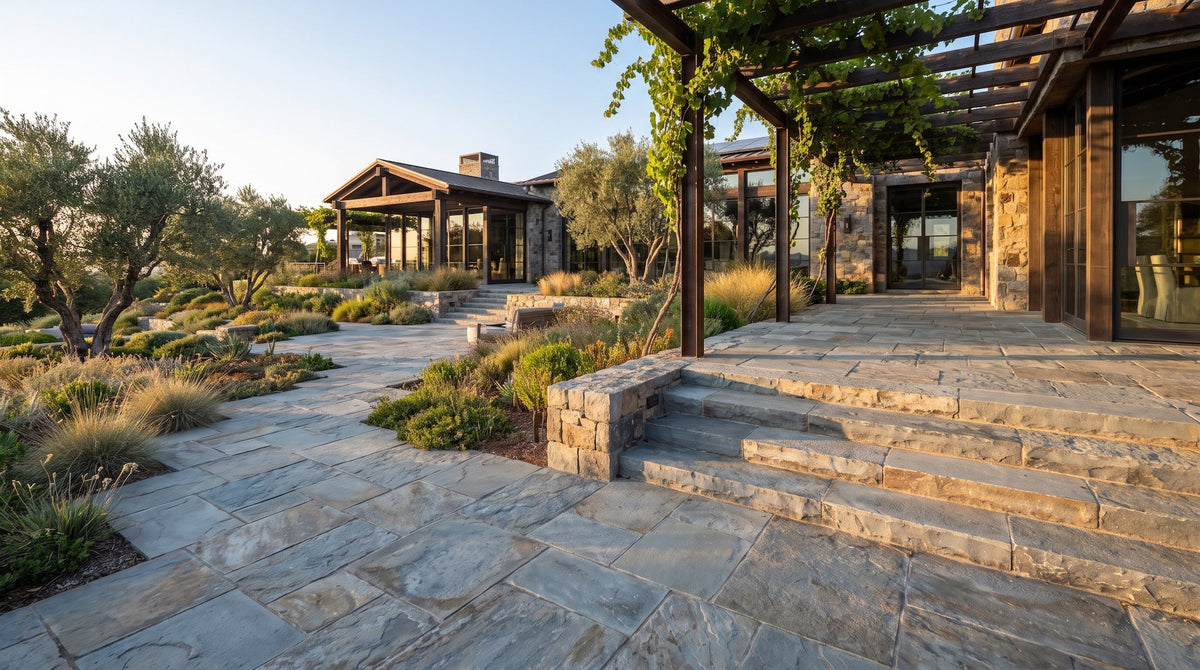
A good outdoor step should do more than solve a change in elevation. It should make the transition feel like part of the landscape.
That is where reclaimed bluestone stands apart. These are not thin manufactured caps or small pavers pieced together to imitate a substantial stair tread. Reclaimed bluestone curbstone steps are solid pieces of natural stone with real age, weathered surfaces, softened edges, and the visual weight that traditional homes and landscapes need.
Use them at a front door, in a garden, at the edge of a patio, beside a retaining wall, or anywhere one outdoor level meets another. The material has the kind of quiet authority that makes even a simple two-step transition feel permanent.
For homeowners planning an entry upgrade, a terraced garden, a patio connection, or a sloped-yard project, reclaimed bluestone steps offer an authentic alternative to precast concrete, thin stone caps, and overly uniform new materials. This guide covers the available sizes, the most common applications, design ideas, planning considerations, and how to choose the right reclaimed stone for your project.
Table of Contents
- What Are Reclaimed Bluestone Steps?
- Why Choose Reclaimed Bluestone?
- Common Sizes and Dimensions
- Most Common Uses
- Best Step Applications at a Glance
- Front Entry Steps
- Garden Steps and Sloped Yards
- Patios, Landings, and Thresholds
- Reclaimed Bluestone Design Ideas
- Planning Your Project
- Installation and Drainage Considerations
- Nationwide Shipping and Delivery
What Are Reclaimed Bluestone Steps?
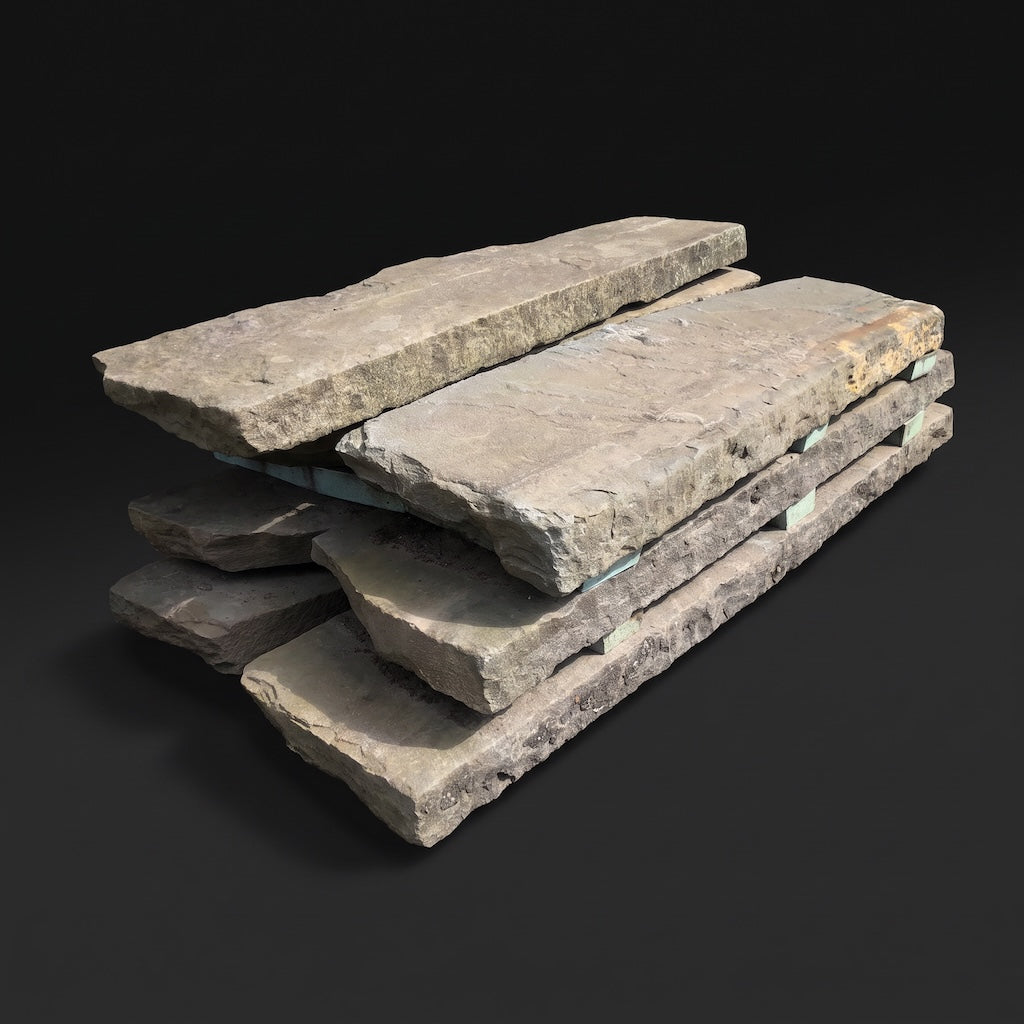
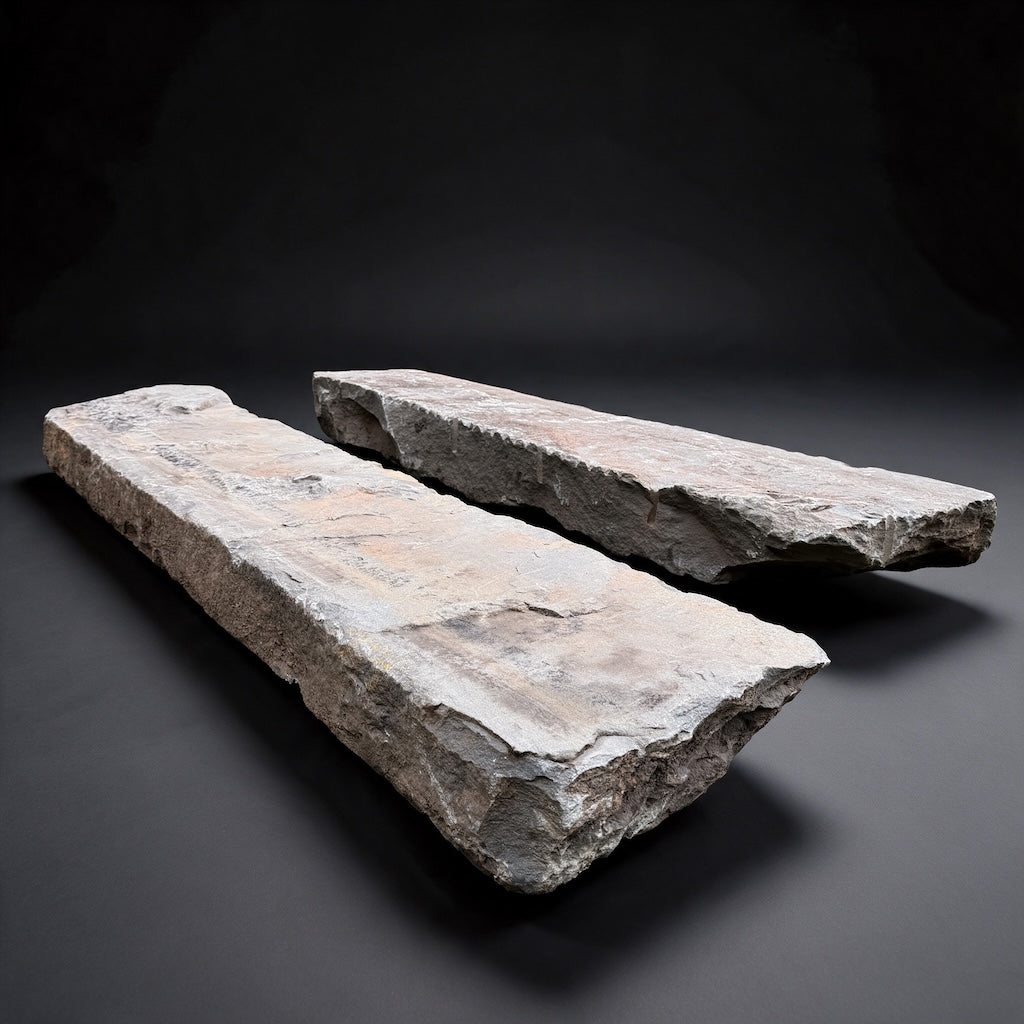
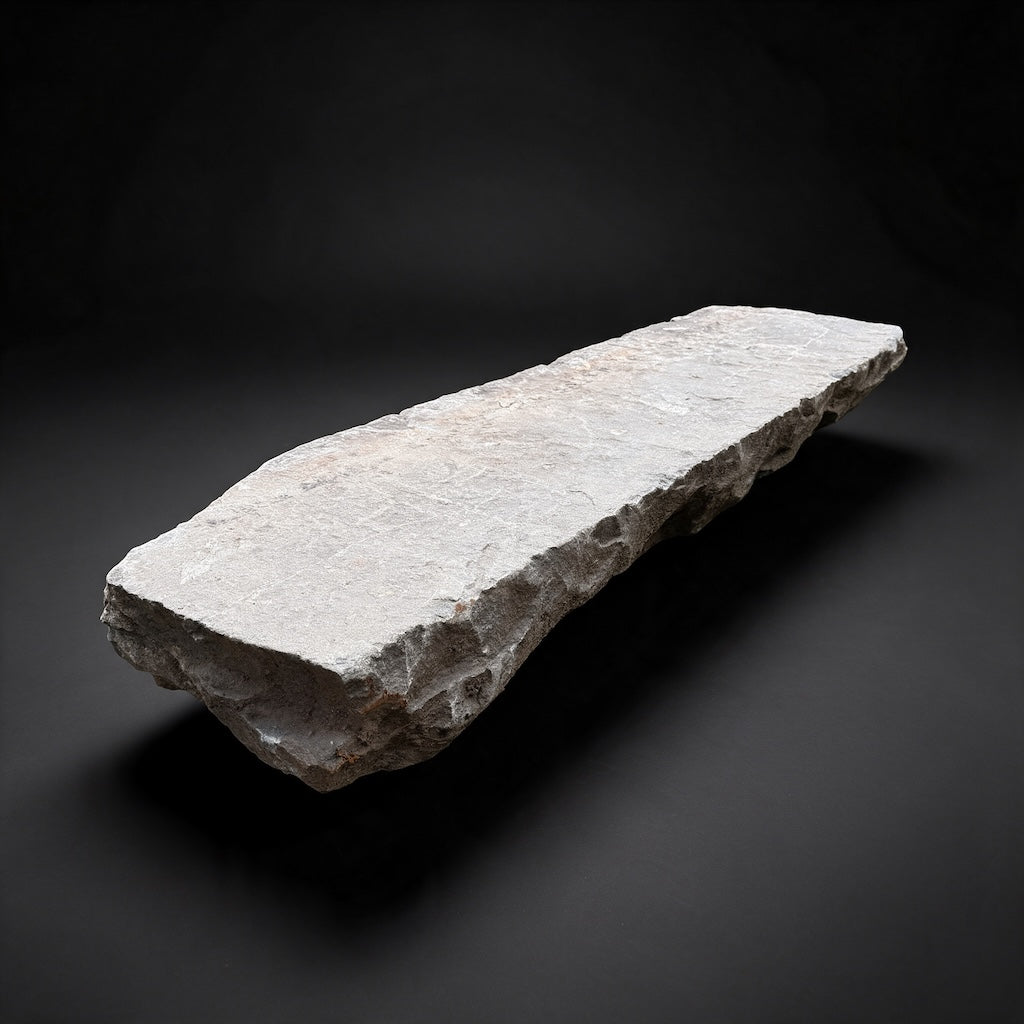
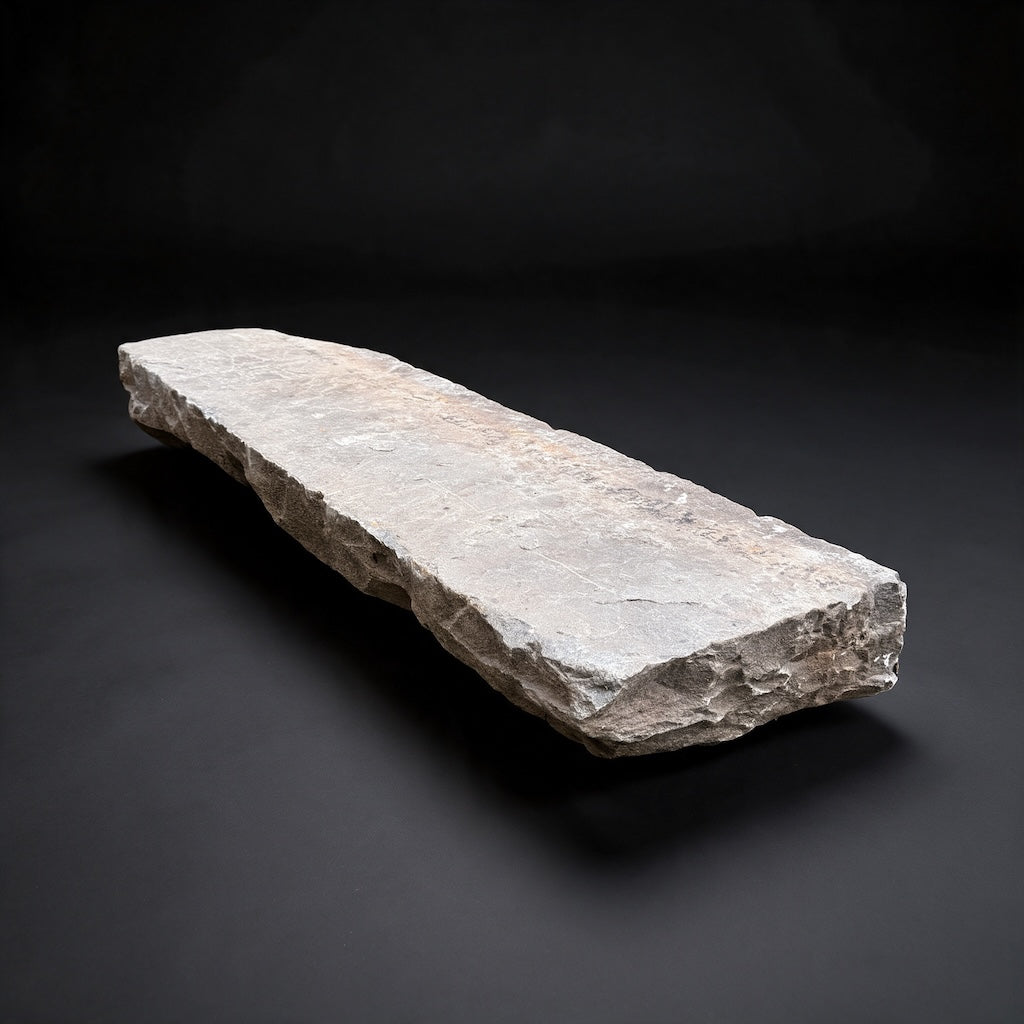
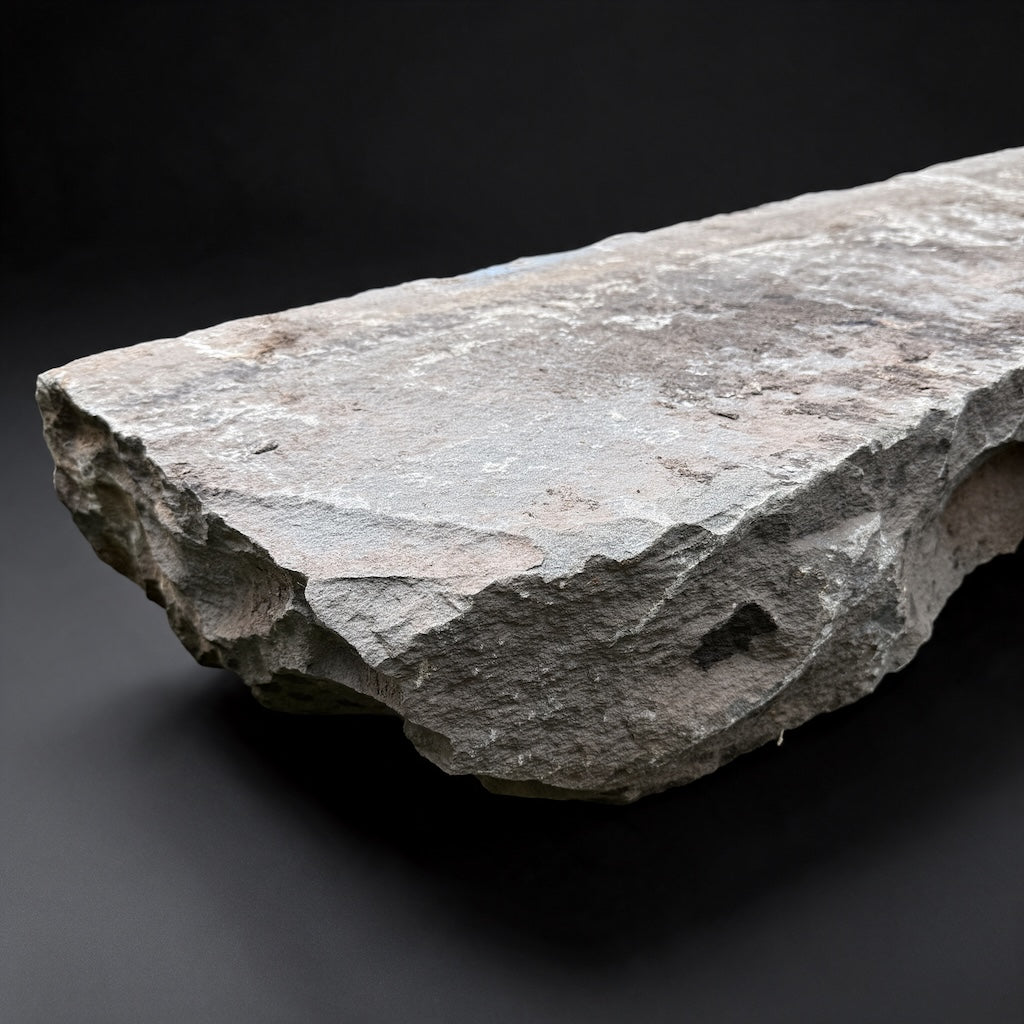
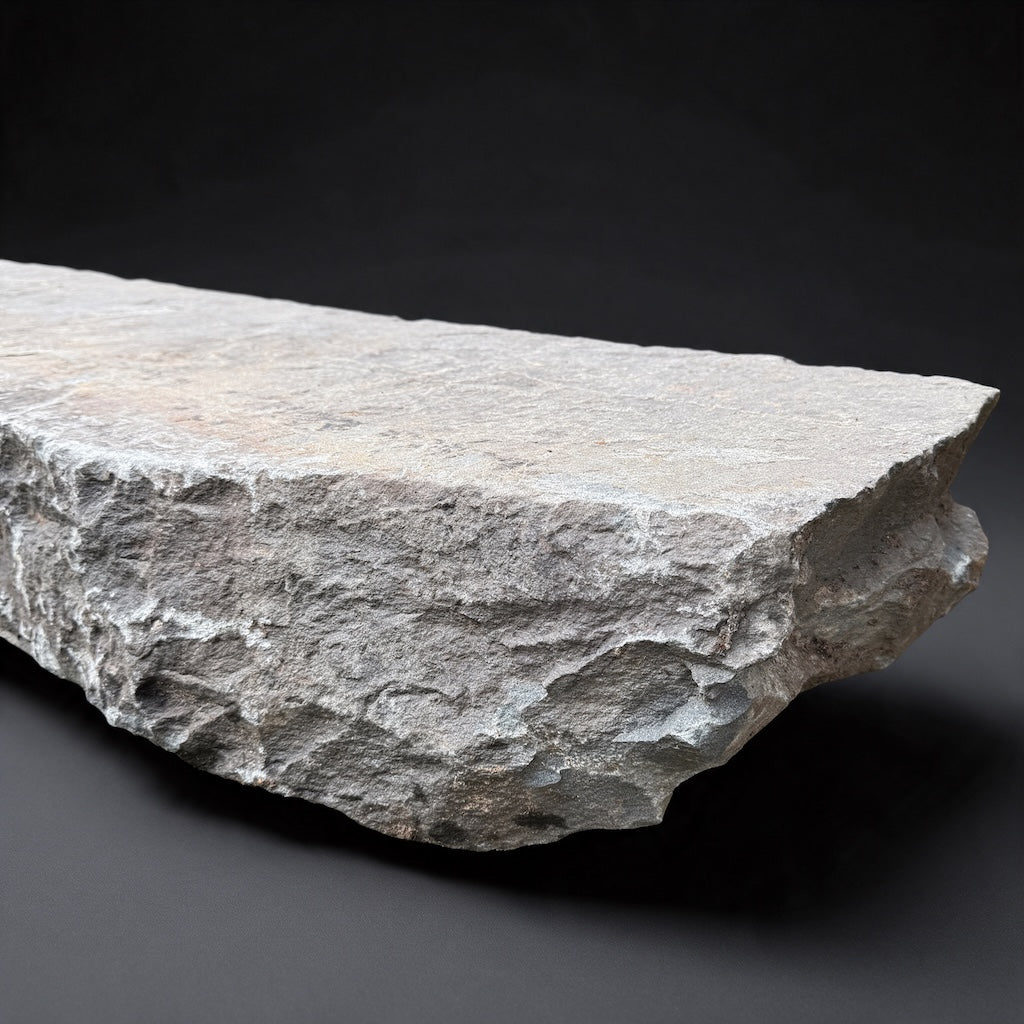
Reclaimed bluestone steps are salvaged pieces of historic bluestone curbing and stone infrastructure that have been repurposed as stair treads, landscape steps, entry steps, landings, and thresholds. Their previous life outdoors gives each piece a naturally weathered surface that newly fabricated stone cannot fully duplicate.
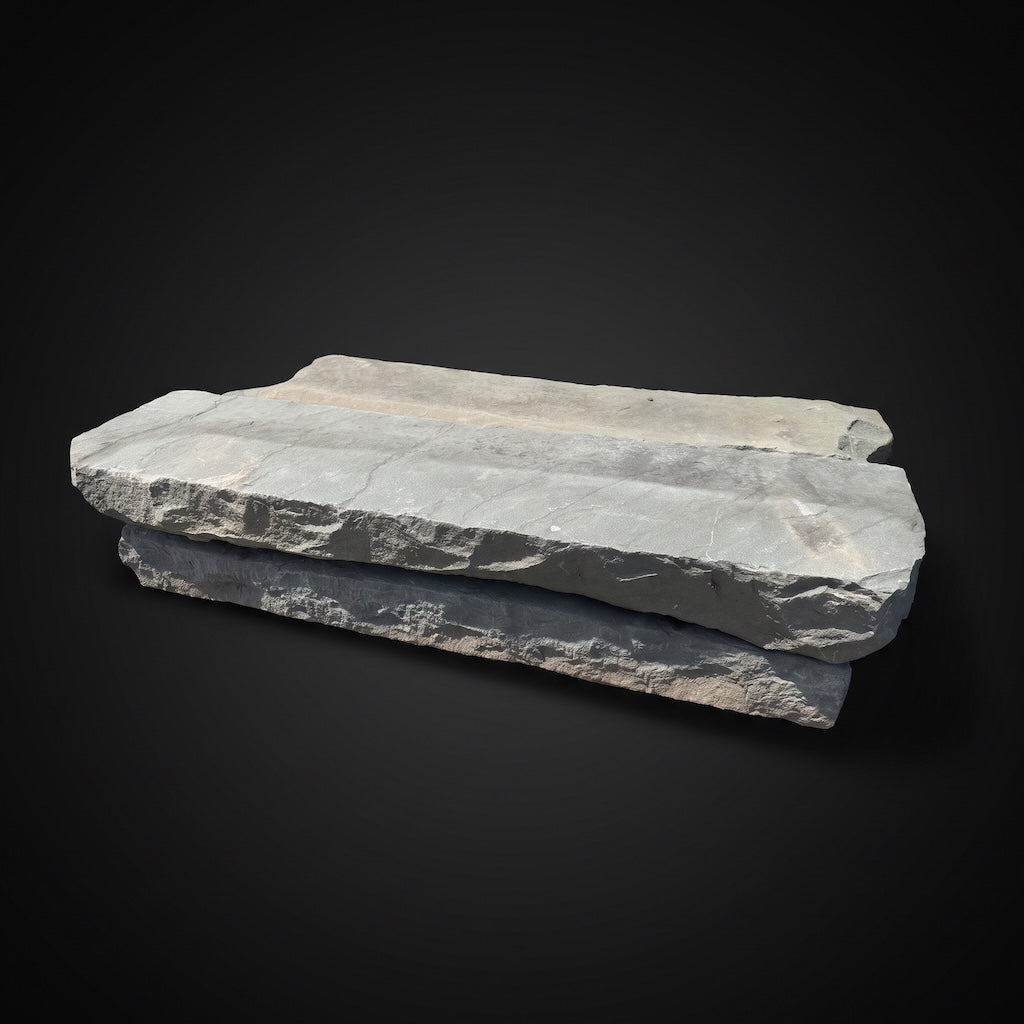
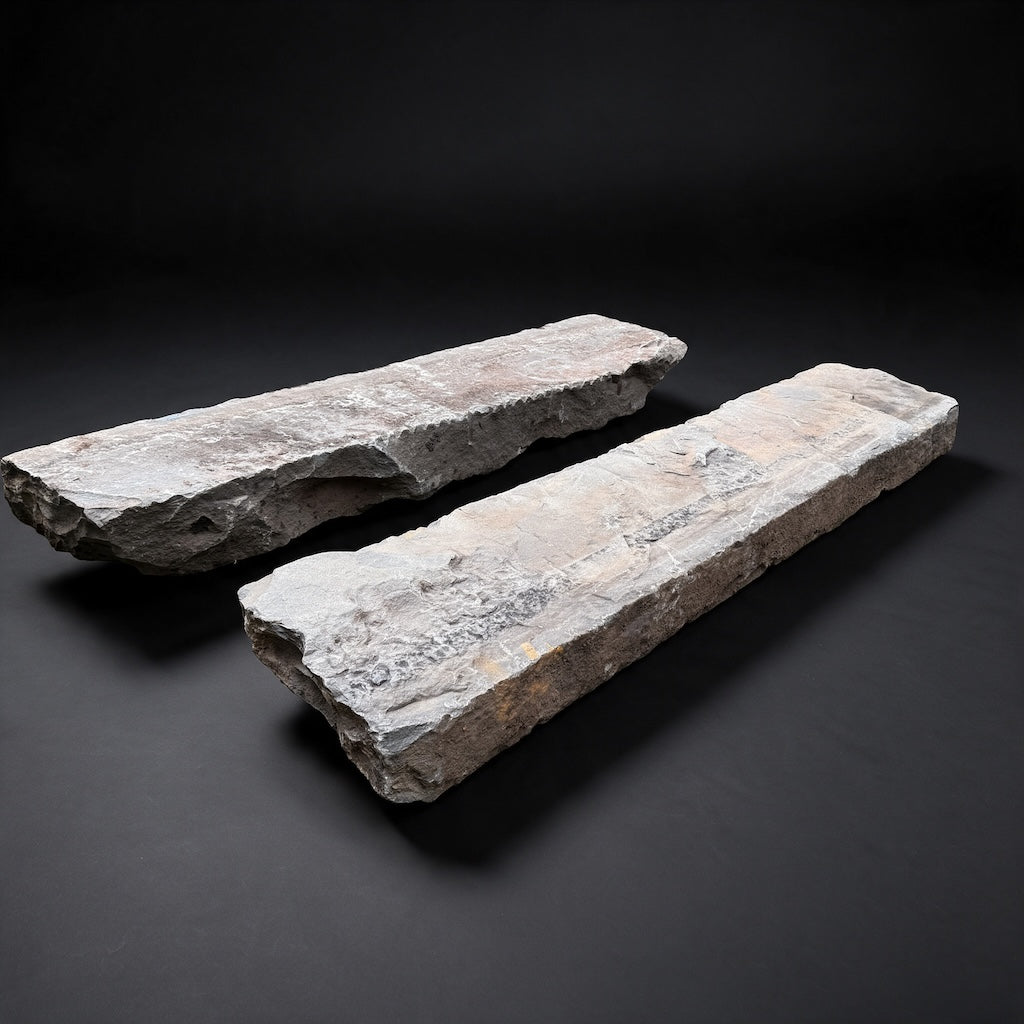
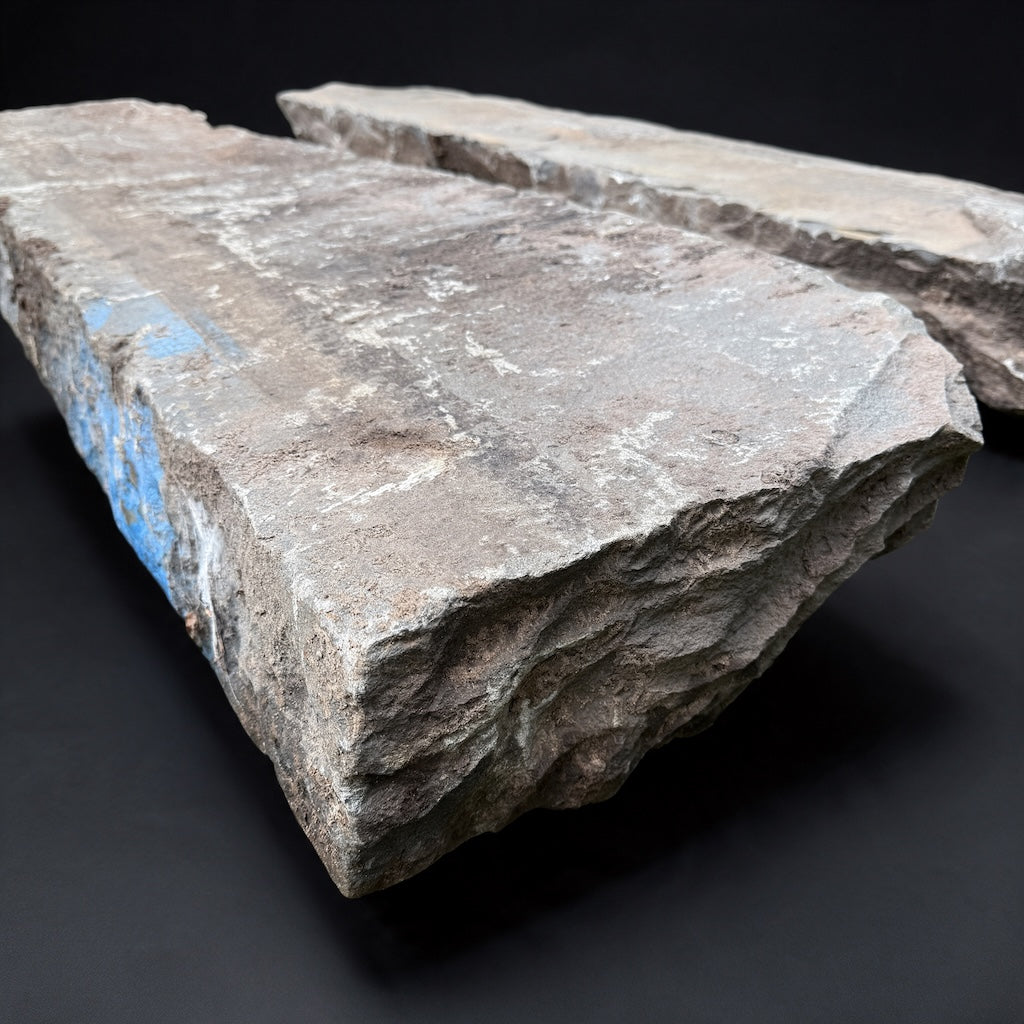
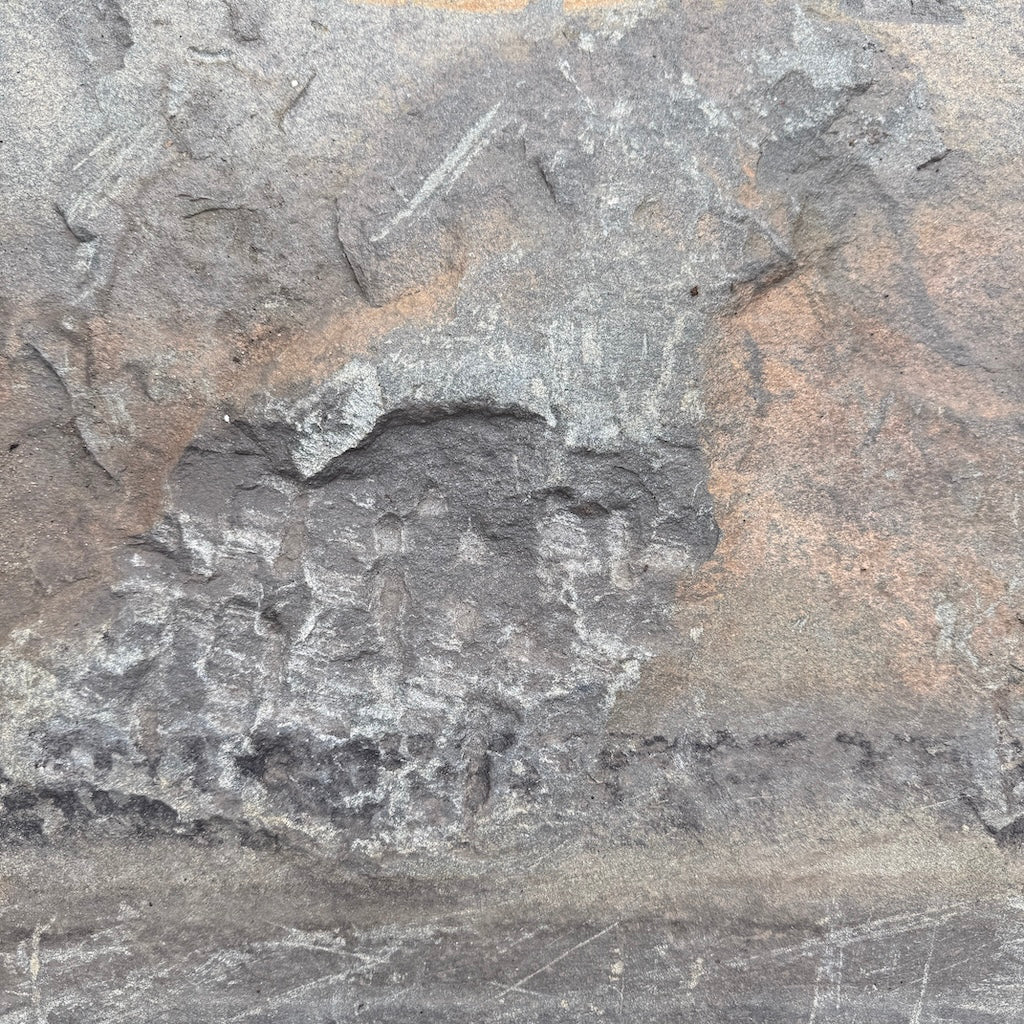
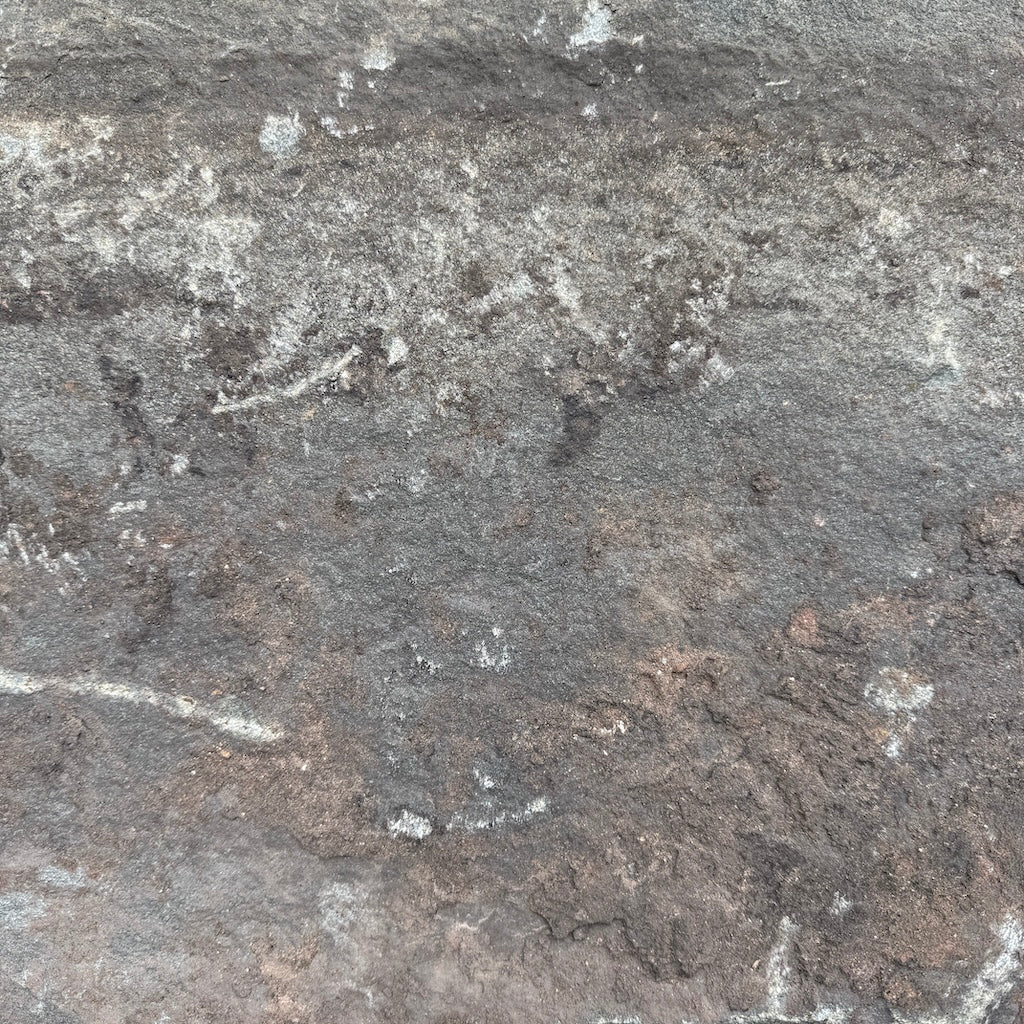
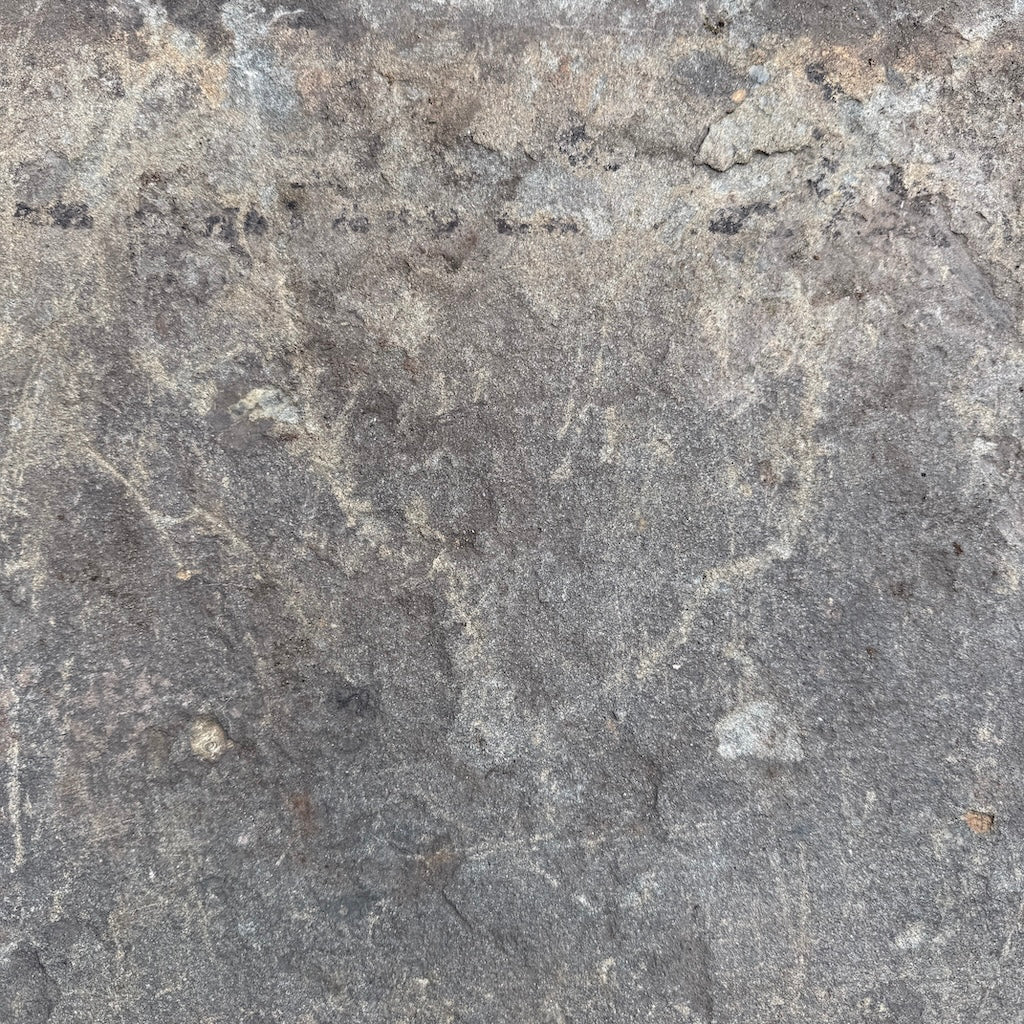
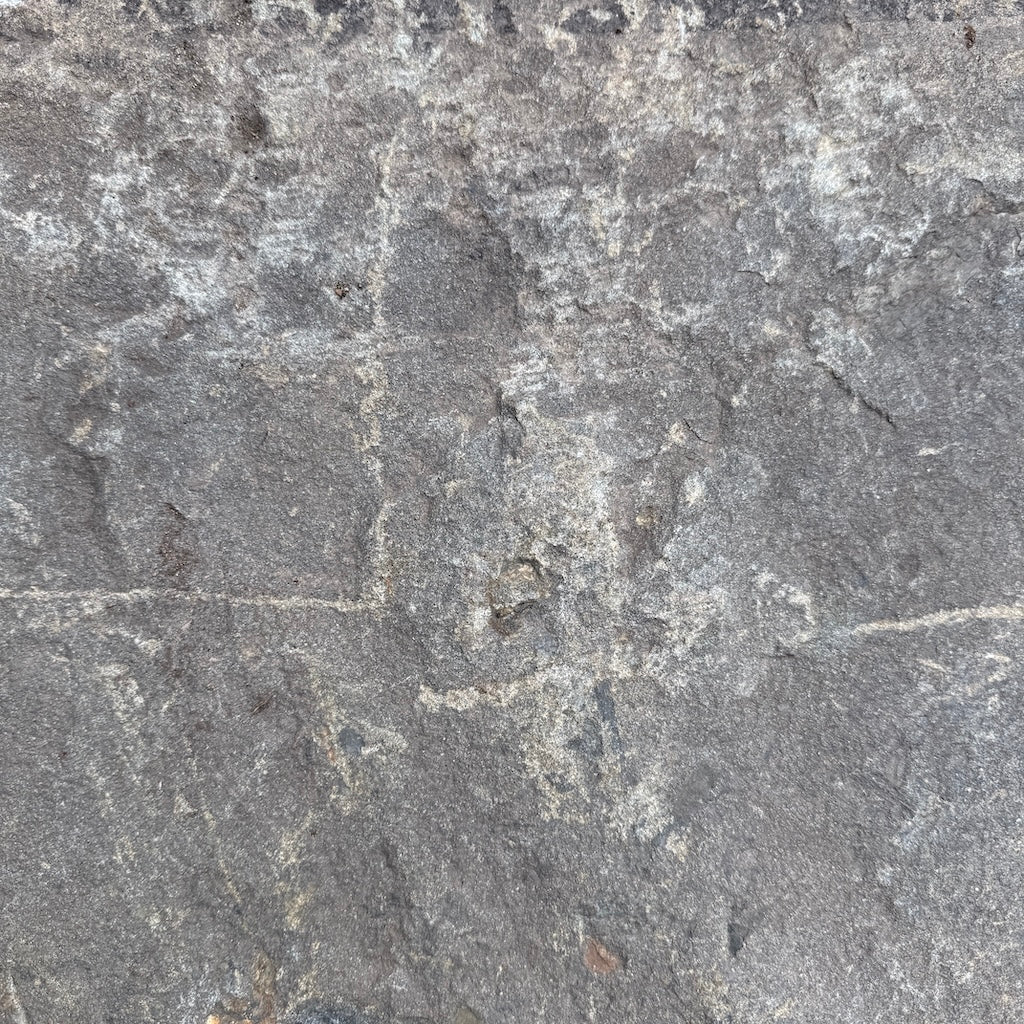
The stone often shows softened edges, walk-worn faces, blue-gray and charcoal color variation, and natural mineral movement. These details are not added later. They developed over years of exposure to weather, foot traffic, and changing seasons.
Reclaimed Bluestone Curbstone Steps from Chief Bricks are selected as intact pieces with no broken corners. This gives homeowners, landscape designers, builders, and masons substantial natural stone for projects where appearance and usable material matter equally.
Unlike small pavers or thin caps, reclaimed curbstone steps have a monolithic quality. One long stone can create a full-width tread or landing. That means fewer joints, less visual clutter, and a stronger architectural result.
Why Choose Reclaimed Bluestone?
Reclaimed bluestone has something most newly manufactured outdoor materials lack: real history. The stone has already lived through years of outdoor use, and its surface tells that story without looking fragile or worn out.
For a homeowner, the biggest advantage is usually character. A reclaimed bluestone step looks established from the day it is installed. It does not need years of weathering to soften hard edges or break up a uniform finish. It already has a calm, timeworn appearance that feels at home beside old brick, mature trees, stone foundations, iron railings, and traditional planting.
It is also a strong material choice for projects that need visual weight. A thin capstone can disappear against a large porch, brick facade, or wide patio. A thick reclaimed bluestone tread holds its own. It creates a clear transition and gives the entry or landscape a stronger sense of permanence.
Authentic outdoor character
Every reclaimed piece has variation. You may see slate-blue areas, charcoal shading, mineral streaks, softened corners, and subtle differences in texture. This gives the finished stairway or landing more depth than a surface made from identical manufactured units.
Fewer joints and a cleaner layout
Long curbstone pieces can create broad treads with fewer joints. This is especially useful at front entries and garden stairs, where a simple layout often looks more refined than a complicated pattern of smaller pieces.
A natural fit for traditional architecture
Reclaimed bluestone steps work especially well with Northeast-style homes, including colonials, brownstones, farmhouses, brick townhouses, estates, and historic renovations. They can also add texture and warmth to newer homes that need a more established landscape.
Common Sizes and Dimensions
Reclaimed bluestone curbstone steps are available in substantial sizes suited to pedestrian stairways, front entries, landings, and landscape transitions. At Chief Bricks, pieces are generally available in lengths from 2 to 8 feet, with approximately 14 to 20 inches of depth and 4 to 6 inches of thickness.
Those dimensions matter because they affect the look and feel of the finished step. Length influences whether a piece can span the full width of the stair. Depth affects the walking surface. Thickness gives the stone visual weight and helps it read as a true architectural element instead of a thin decorative layer.
| Dimension | Typical Range | Why It Matters |
|---|---|---|
| Length | Approximately 2 to 8 feet | Longer pieces can create broad, monolithic treads with fewer visible joints. |
| Depth | Approximately 14 to 20 inches | Provides a substantial tread surface for front entries, garden stairs, and landings. |
| Thickness | Approximately 4 to 6 inches | Adds visual weight and helps the stone feel substantial within the landscape. |
| Color and texture | Varies by piece | Creates a one-of-a-kind installation with authentic weathered character. |
| Edge condition | Selected intact pieces with no broken corners | Provides a cleaner finished look and more usable stone for installation. |
Because reclaimed stone is authentic material, no two pieces will be exactly alike. Length, thickness, color, edge wear, and surface texture can vary. That variation is part of the appeal, but it is important to plan for it early with your contractor, mason, or landscape designer.
Most Common Uses
Reclaimed bluestone curbstone can be used anywhere your landscape needs a durable, attractive change in elevation. The stone works best when the design calls for broad, substantial treads rather than lots of small pieces.
Some homeowners use it only at the front door. Others carry it through the entire property, using the same stone at a patio edge, garden stair, gate threshold, and rear entrance. Repeating the material in several areas helps the landscape feel connected.
- Front-entry steps: Create a stronger, more welcoming approach to a porch, stoop, or main door.
- Garden steps: Handle slopes and terraced planting areas with natural-stone treads.
- Patio transitions: Connect an outdoor dining area or terrace to a lawn, driveway, pool area, or lower garden.
- Landings: Create stable, substantial spaces at doors, gates, stair breaks, and garden entrances.
- Thresholds: Use a single piece at a side door, rear entry, garden gate, or transition between materials.
- Retaining-wall steps: Build reclaimed bluestone treads into brick, stone, or masonry retaining walls.
- Terraced landscapes: Connect different outdoor levels while giving the property a more intentional structure.
Best Step Applications at a Glance
| Application | How Reclaimed Bluestone Works | Design Benefit |
|---|---|---|
| Front entry | Use long curbstone pieces as broad treads leading to a porch, stoop, or front door. | Creates a heavier, more welcoming arrival and complements brick, stone, and traditional facades. |
| Garden stairs | Set individual stone pieces into a slope, planting bed, or terraced garden route. | Turns a difficult grade change into a natural landscape feature. |
| Patio-to-lawn transition | Use one or more stone treads to step down from a patio to a lower outdoor area. | Creates a clean, durable connection without relying on thin pavers or concrete units. |
| Door landing | Use a broad piece of bluestone outside a door, gate, or garden entrance. | Adds a stable, architectural pause before entering the home or outdoor room. |
| Retaining-wall integration | Build the stone treads into a brick, masonry, or natural-stone retaining wall. | Unifies the stairway and wall into one complete hardscape composition. |
| Side-yard access | Use reclaimed stone to solve small grade changes along a narrow side route. | Makes overlooked utility areas feel more intentional and easier to use. |
Front Entry Steps
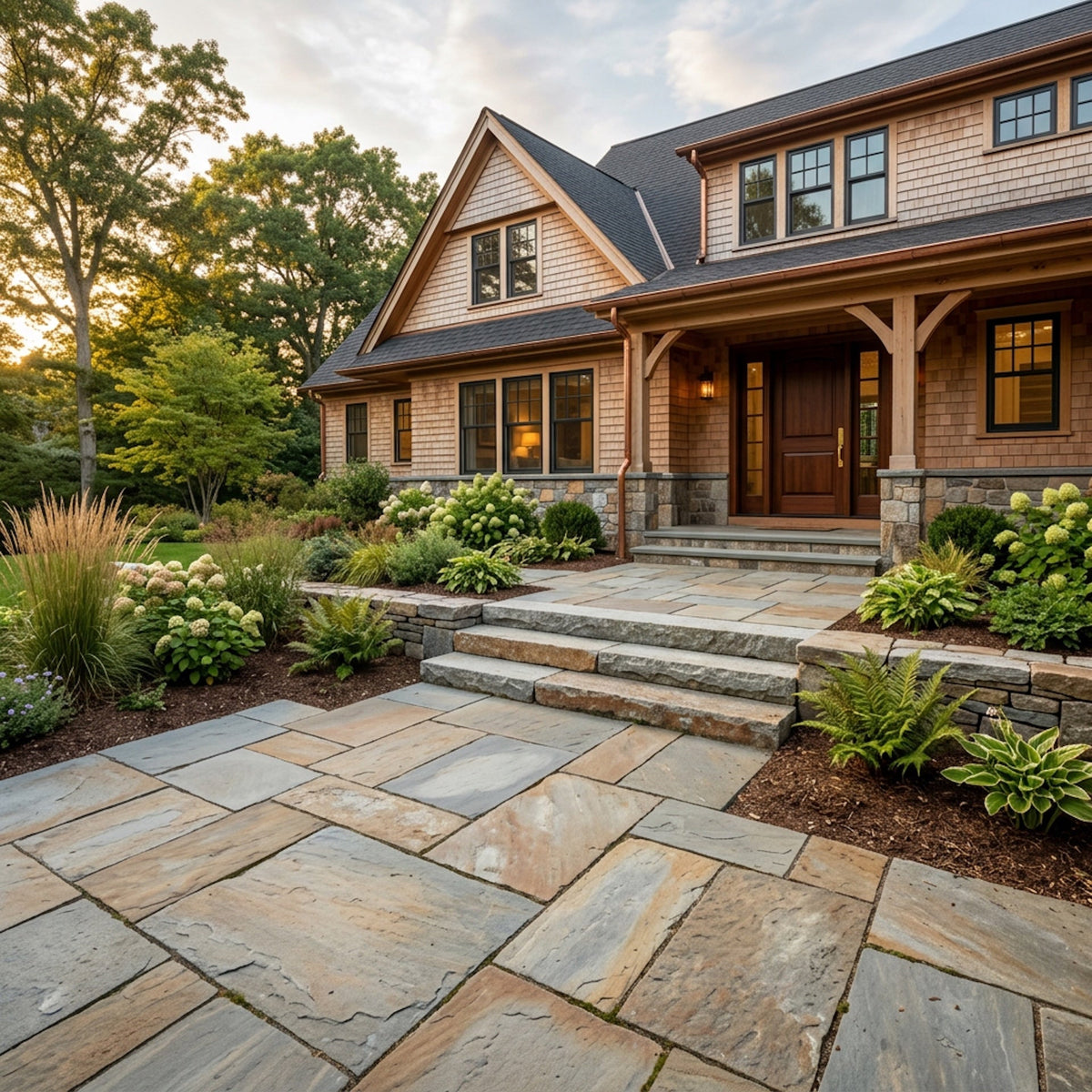
A front entry is one of the best places to use reclaimed bluestone. It is the point where visitors pause, look closely at materials, and form their first impression of the home. A substantial stone tread immediately gives the entrance more presence.
For a small elevation change, one broad reclaimed bluestone step may be enough. For a raised porch or stoop, several treads can create a short stairway that feels balanced with the architecture. The goal is not to make the stair overly elaborate. The goal is to make it feel proportional, secure, and connected to the house.
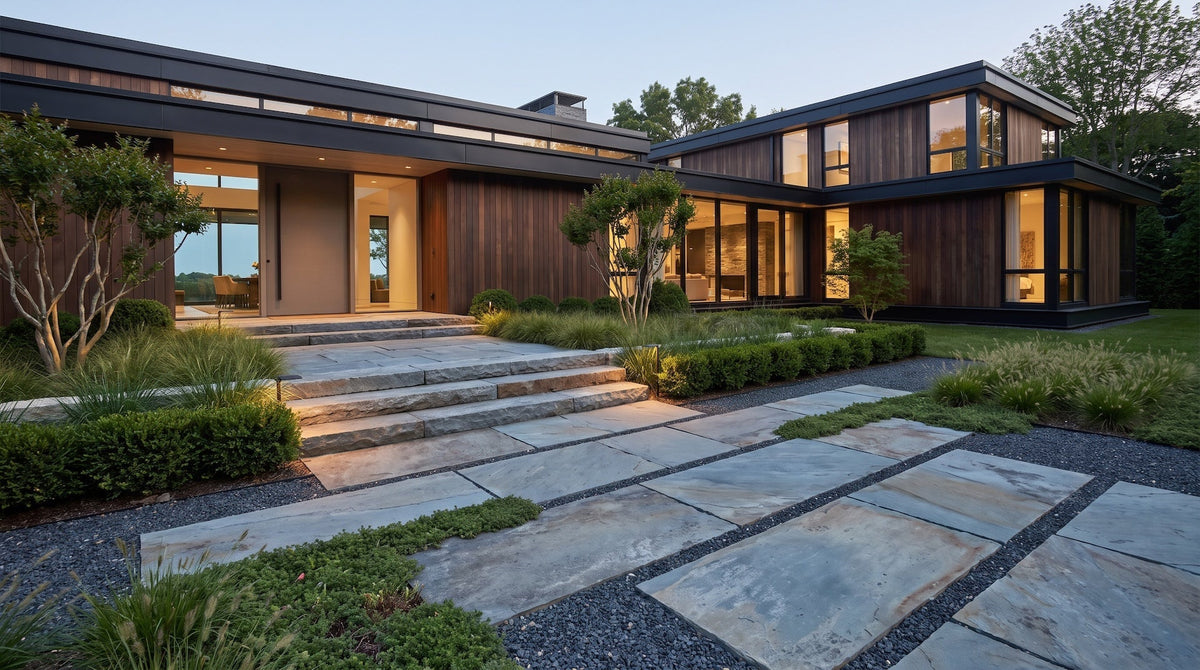
Reclaimed bluestone pairs especially well with brick facades, stone foundations, painted clapboard, cedar shingles, black iron railings, and traditional porch details. It can also be a strong contrast against cleaner modern architecture, where a weathered natural material helps soften glass, steel, smooth stucco, or crisp siding.
Keep the entry proportional
Before selecting stone, look at the house from the street. Consider the width of the front door, porch, columns, railings, windows, and facade. A step should not feel too narrow for a broad entrance, and it should not overwhelm a compact home.
Long reclaimed curbstone pieces are useful because they can create full-width or nearly full-width treads. This reduces joints and helps the step feel like an intentional architectural feature rather than a patchwork of smaller materials.
Garden Steps and Sloped Yards
Sloped yards can be frustrating when they are left untreated. A simple walk from a patio to a lawn or from a driveway to a side entrance can become muddy, awkward, or difficult to navigate. Reclaimed bluestone steps help turn that grade change into an attractive part of the landscape.
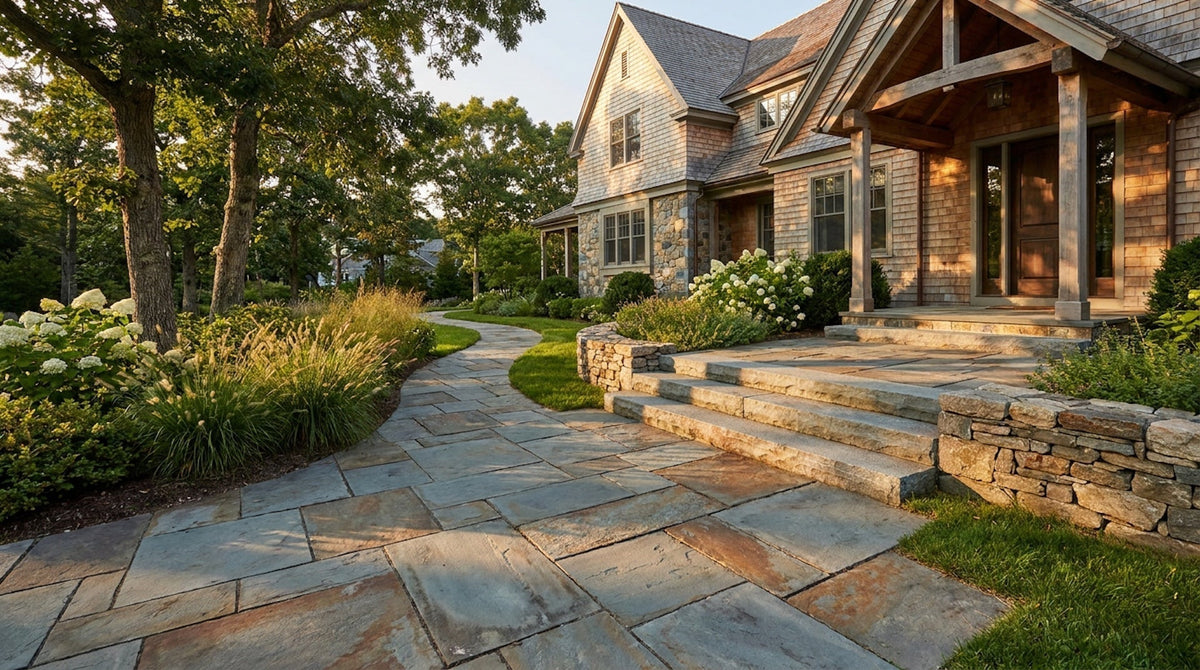
Set into a slope, the stone can create a natural route through a garden. Add planting on both sides, and the stairway becomes a focal point rather than a problem to hide. Ferns, ornamental grasses, hydrangeas, boxwood, hostas, low evergreen shrubs, and flowering perennials all work well beside the muted blue-gray tones of reclaimed bluestone.
The best garden stairs do not feel forced. They follow the direction people naturally want to travel. They may connect a patio to a fire-pit area, a lawn to a vegetable garden, a driveway to a side door, or a lower terrace to an upper garden room.
Use landings when needed
On a longer slope, a landing can make the stairway more comfortable and visually interesting. A small bluestone landing gives people a place to pause before continuing to the next run of steps. It also creates a natural opportunity to turn the route or open the view toward another part of the garden.
Landings are useful in formal and informal landscapes alike. In a structured garden, they can create symmetry and order. In a looser naturalistic setting, they can feel like a quiet stone pause between planting areas.
Patios, Landings, and Thresholds
Reclaimed bluestone steps are not limited to stairways. Some of their best uses are simple one-step transitions. A patio that sits slightly above a lawn, driveway, or side yard may only need one broad curbstone tread to feel finished.
This kind of transition is often more elegant than a series of smaller pavers. The stone creates a crisp edge at the patio while still looking natural. It gives people a clear place to step down and helps define where one outdoor area ends and another begins.
For the main patio surface, pair curbstone steps with Reclaimed Bluestone Sidewalk Slabs. The slabs handle broad, flat pedestrian paving, while curbstone pieces handle changes in elevation. Using both materials creates a cohesive landscape because the colors, weathered texture, and natural-stone character relate to one another.
Thresholds are another simple but useful application. A single piece of reclaimed bluestone can sit at a garden gate, side door, rear entrance, shed entry, or transition from a stone patio to a gravel path. These small moments add up. Repeating the stone throughout the property helps the entire landscape feel more designed.
Reclaimed Bluestone Design Ideas
Classic brick-home entry
Use reclaimed bluestone curbstone as broad front steps leading to a brick porch or facade. Continue the material into a front walk made from reclaimed sidewalk slabs. Add black railings, low evergreen planting, and a reclaimed brick edge for a classic Northeast entry.
Terraced backyard patio
Build the main patio with large reclaimed bluestone slabs. Use curbstone steps to move down to a lawn, fire-pit area, or lower dining terrace. The broad treads make the transition feel architectural while the slabs keep the paved surface calm and substantial.
Informal garden stair
Set reclaimed bluestone steps through a planted slope. Keep the route slightly relaxed rather than overly symmetrical. Frame it with ferns, perennials, native grasses, and flowering shrubs for a garden that feels established and easy to move through.
Courtyard side entrance
Use a single reclaimed bluestone landing outside a side door, then connect it to a courtyard or path with reclaimed sidewalk slabs. Add a wood gate, climbing vines, warm brick, and simple metal lighting for an old-world outdoor room.
Estate driveway transition
Use granite cobblestone to define the driveway edge, then use reclaimed bluestone steps to move from the drive toward a formal front walk or garden path. This combination creates a clear separation between vehicle areas and pedestrian spaces while keeping the material palette historically grounded.
Planning Your Project
The most successful reclaimed stone projects start with a plan. Before choosing individual step pieces, think about how people use the space and how the change in elevation affects movement through the property.
Start with the route
Walk the area as it exists today. Where do people come from? Where are they trying to go? Is the path from the driveway to the door direct? Does a patio need a clear connection to the lawn? Is there a garden area that people avoid because the slope is inconvenient?
A good stairway follows real movement. It should not feel decorative for the sake of decoration. Once you understand the route, you can decide how many steps are needed, where a landing belongs, and whether the stair should be formal, informal, straight, or gently turned.
Measure before selecting stone
Measure the width of the proposed steps, the total elevation change, available landing area, retaining-wall conditions, nearby door swings, and adjoining path widths. These details help determine which reclaimed stone lengths and configurations will work best.
Because reclaimed bluestone varies naturally, it is smart to work with your contractor or landscape designer before finalizing the material order. They can help plan the layout around the available pieces and account for transitions, cuts, and site conditions.
Match the style of the property
A traditional colonial may call for centered, symmetrical steps and clipped evergreen planting. A farmhouse may look better with a slightly more relaxed garden stair and informal perennial beds. A brick townhouse may need a compact stoop transition with black railings and a direct bluestone path.
The stone can work in all of these settings. What changes is the layout, supporting materials, planting, lighting, and degree of formality.
Installation and Drainage Considerations
Reclaimed bluestone is substantial natural material, and it should be installed on a properly prepared base. The stone itself is only one part of the finished stairway. Proper grading, drainage, support, and construction methods all matter.
Work with an experienced mason, landscape contractor, or hardscape installer who understands natural stone. They can evaluate the site, prepare the base, plan drainage, set the right elevations, and make sure each tread is properly supported.
Water should move away from the home and away from areas where it can collect at doors, landings, or the base of a stairway. This is especially important at front entries, patios, and retaining walls. Good drainage protects the hardscape and helps keep the route more comfortable to use in changing weather.
Also plan delivery and staging before the stone arrives. Reclaimed bluestone is heavy. Confirm truck access, pallet placement, equipment needs, and the route from the delivery point to the installation area. Coordinating delivery with your installer can reduce handling and keep the project moving.
Nationwide Shipping and Delivery
Reclaimed bluestone may be rooted in Northeast streetscapes and historic architecture, but your project does not need to be located in New York or New England to use it. Chief Bricks ships nationwide, making authentic reclaimed bluestone available for front entries, garden stairs, patios, landings, and landscape projects across the United States.
Before ordering, share your approximate step widths, number of treads, landing needs, project location, site-access details, and installation timeline. This helps ensure you select the right material and plan the best delivery approach.
For larger projects, coordinate material delivery with your mason, contractor, or landscape crew. That allows the stone to be staged safely and installed efficiently when the team is ready to begin work.
Explore authentic reclaimed stone for your project: Shop Reclaimed Bluestone Curbstone Steps for entries, stairs, and landings, and browse Reclaimed Bluestone Sidewalk Slabs for patios, walkways, courtyards, and garden paths.
Share: