
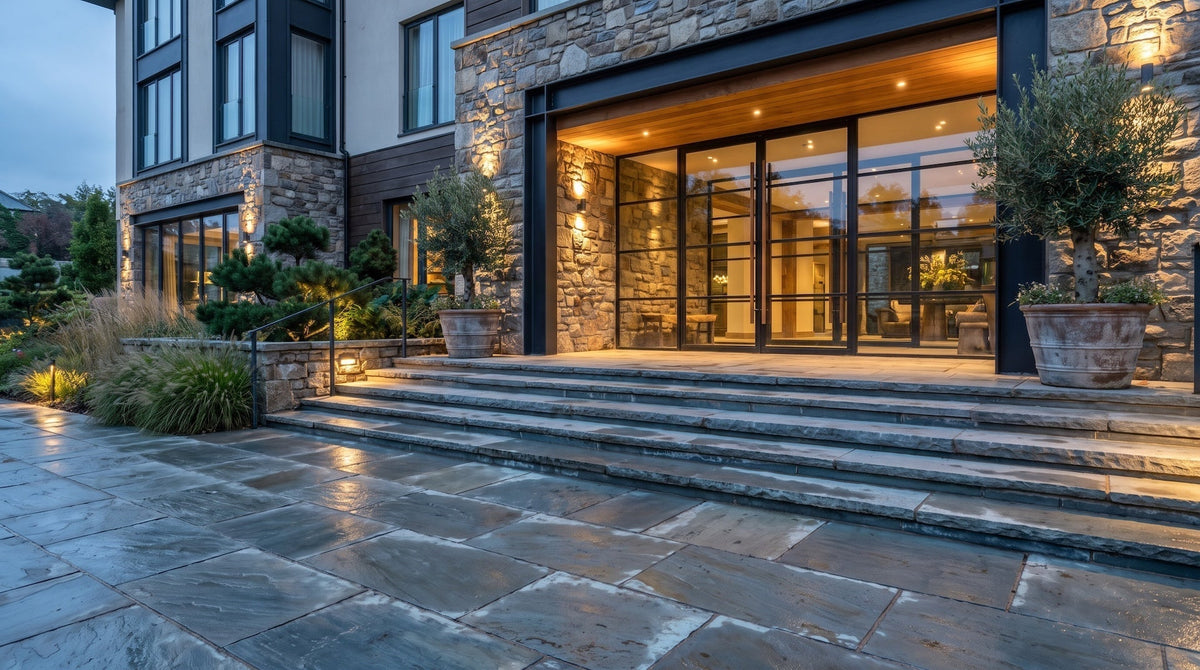
A patio can be more than a flat place for a table and a few chairs. Done well, it becomes an outdoor room. It gives the backyard structure, creates a place to gather, and makes the transition from house to garden feel more intentional.
The material you choose has a lot to do with whether the patio feels temporary or permanent. Reclaimed bluestone brings the kind of age, surface texture, color variation, and visual weight that helps a new patio look established from the beginning.
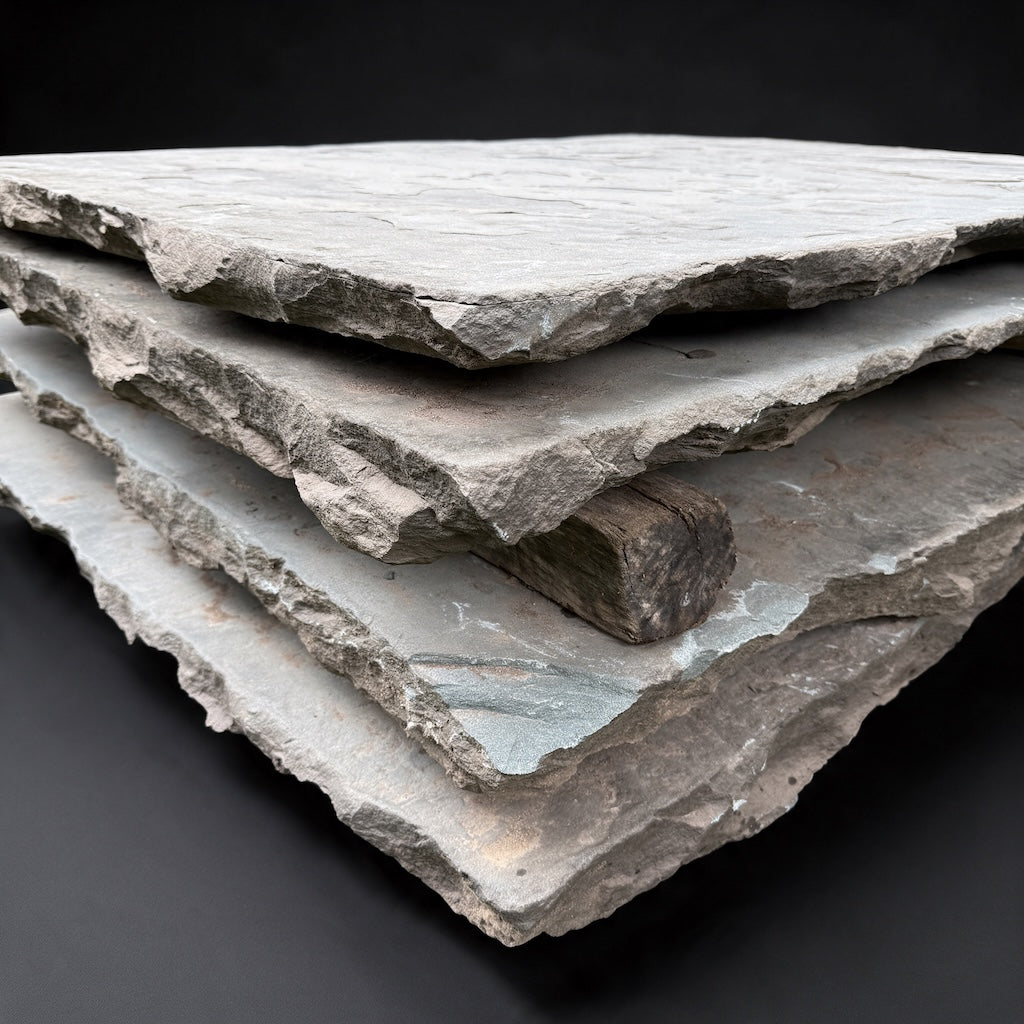
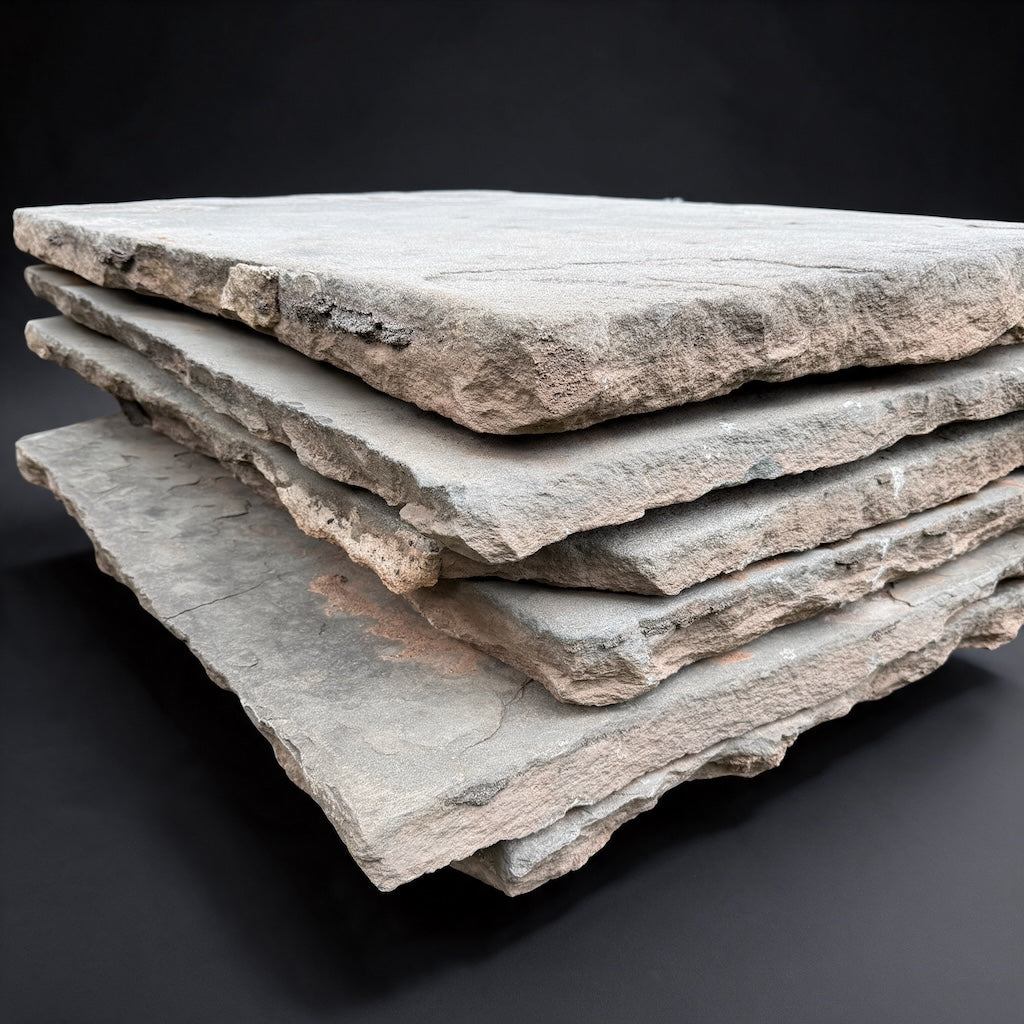
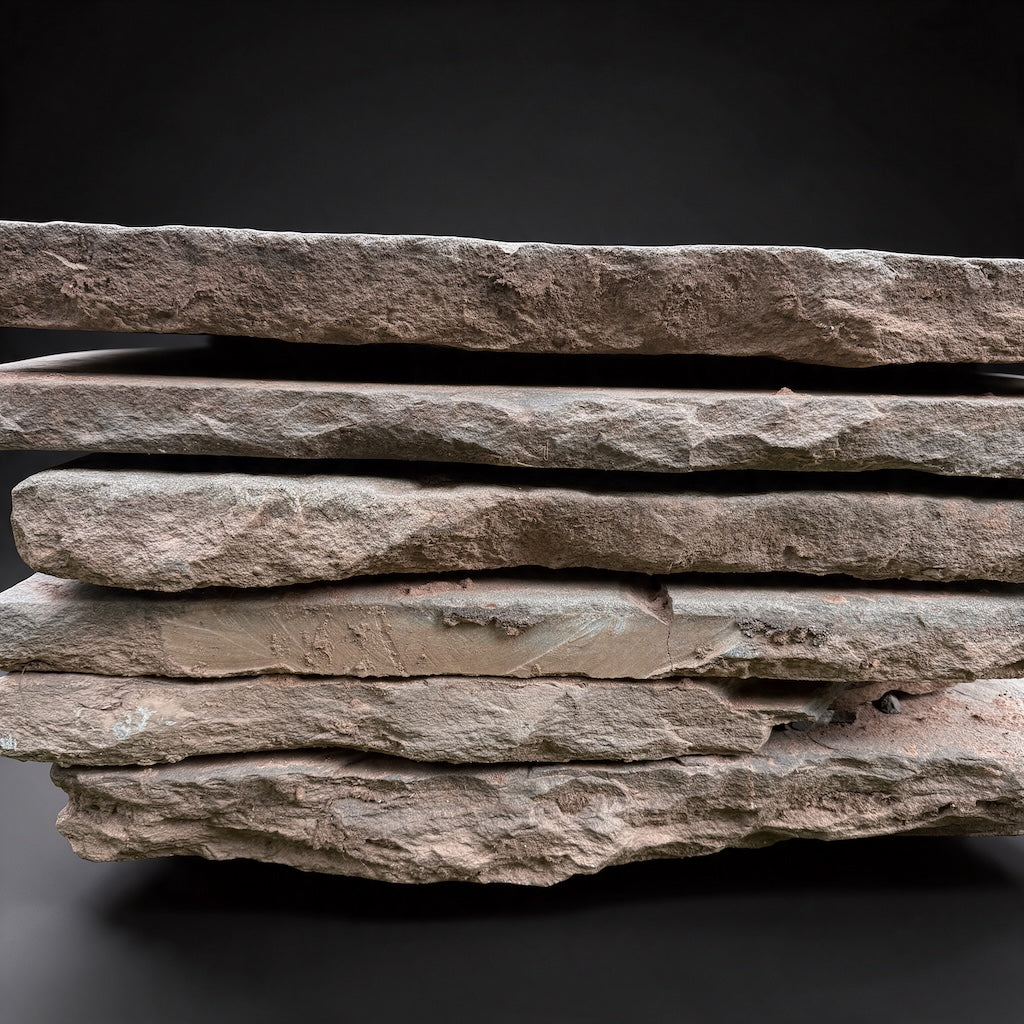
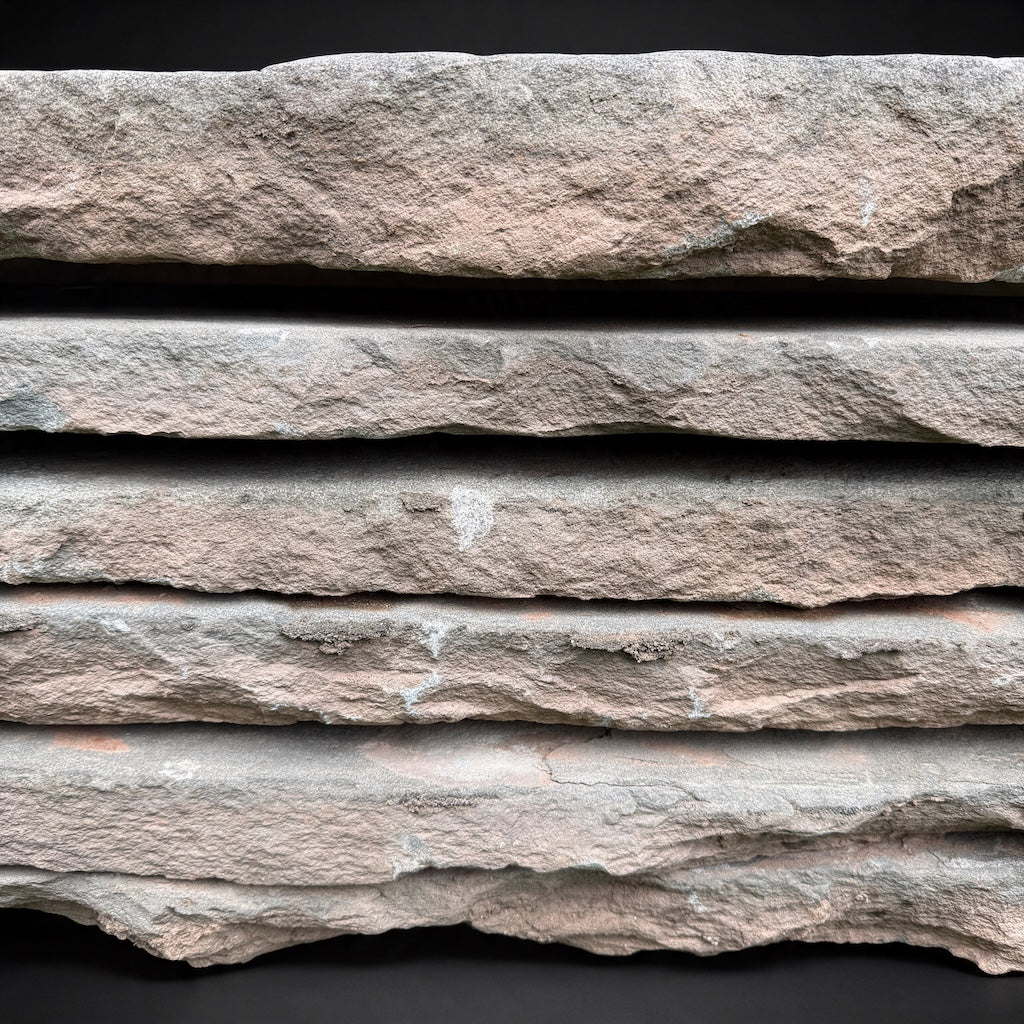
Instead of a surface that feels fresh from a warehouse, reclaimed bluestone has real outdoor history. The slabs have naturally weathered faces, softened edges, and blue-gray tones shaped by years of use. That character works especially well with brick homes, colonials, farmhouses, brownstones, traditional estates, renovated older homes, and gardens with mature landscaping.
This guide explains how to plan a timeless reclaimed bluestone patio, choose a layout, connect the patio to the rest of the landscape, and make smart decisions about drainage, steps, borders, installation, and delivery.
Table of Contents
- Why Choose Reclaimed Bluestone for a Patio?
- What Makes a Patio Feel Timeless?
- Start With a Patio Plan
- Choosing Reclaimed Bluestone Slabs
- Patio Layout Options
- Bluestone Patio Layouts at a Glance
- Choosing the Right Patio Size
- Adding Steps and Transitions
- Borders, Edges, and Complementary Materials
- Planting Around a Bluestone Patio
- Installation and Drainage Considerations
- Nationwide Shipping and Delivery
Why Choose Reclaimed Bluestone for a Patio?
Reclaimed bluestone has a quality that is hard to manufacture: real age. Each piece has spent years outdoors, often as part of older sidewalks, streetscapes, and pedestrian paving. Exposure to weather and foot traffic creates surfaces with visual depth, softened edges, and a naturally established feel.
For a patio, that matters. A large paved area becomes one of the most visible features in the yard. If the material feels too uniform, too thin, or too new, the entire outdoor space can feel less connected to the home. Reclaimed bluestone helps avoid that problem because it already has texture and history built into every slab.
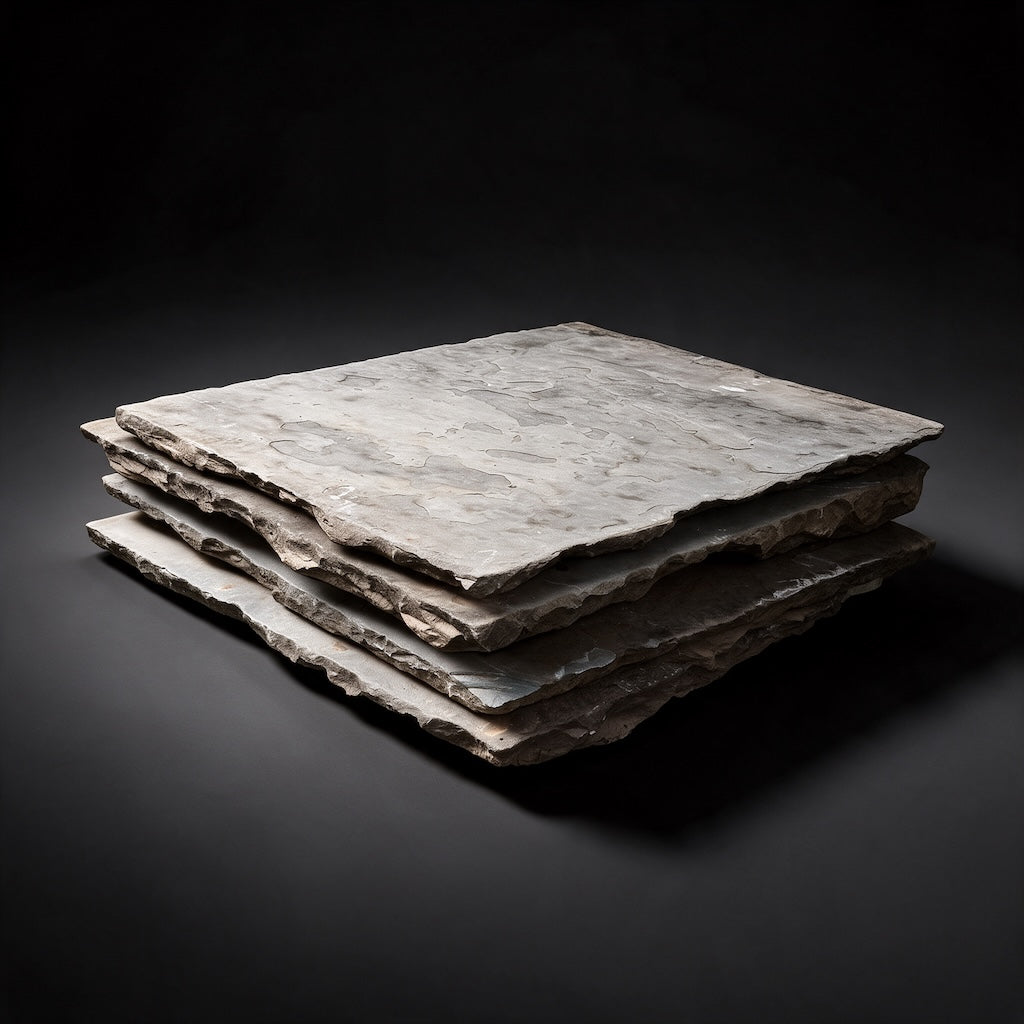
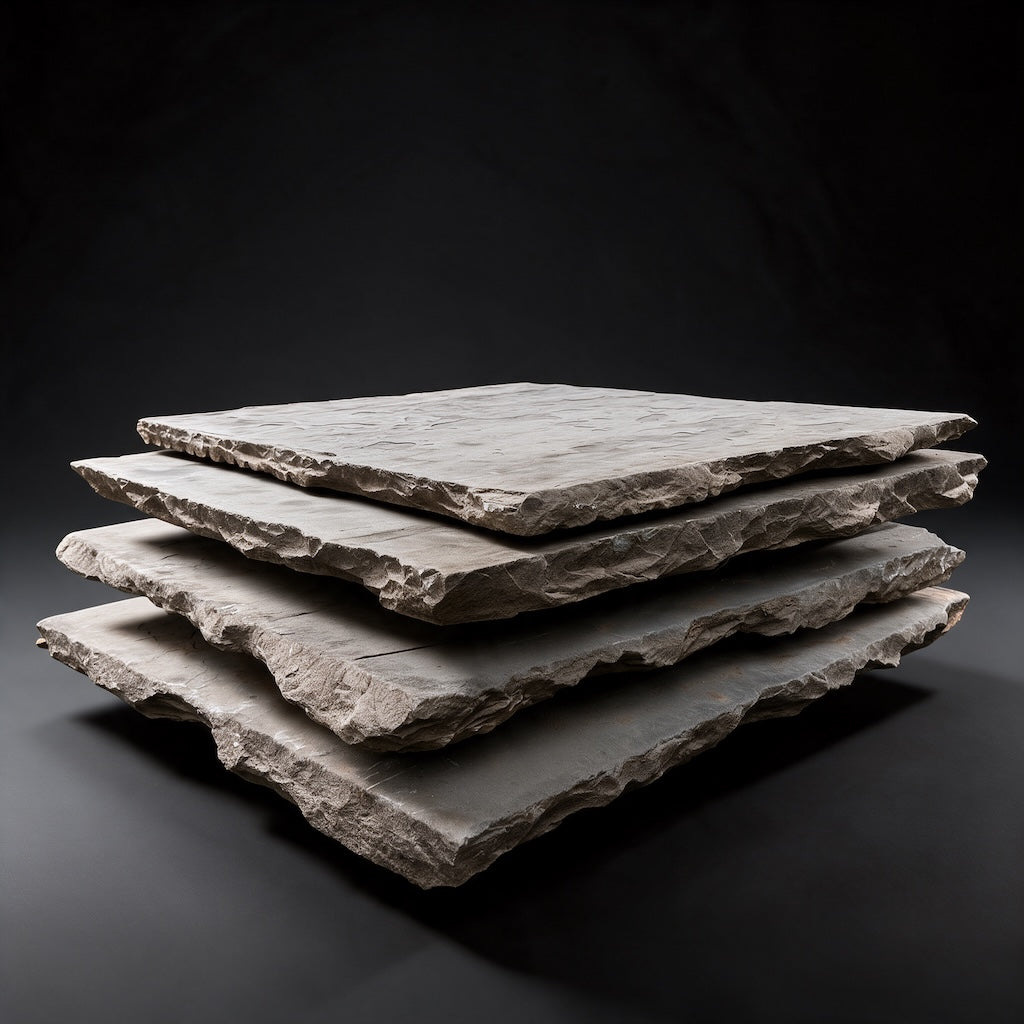
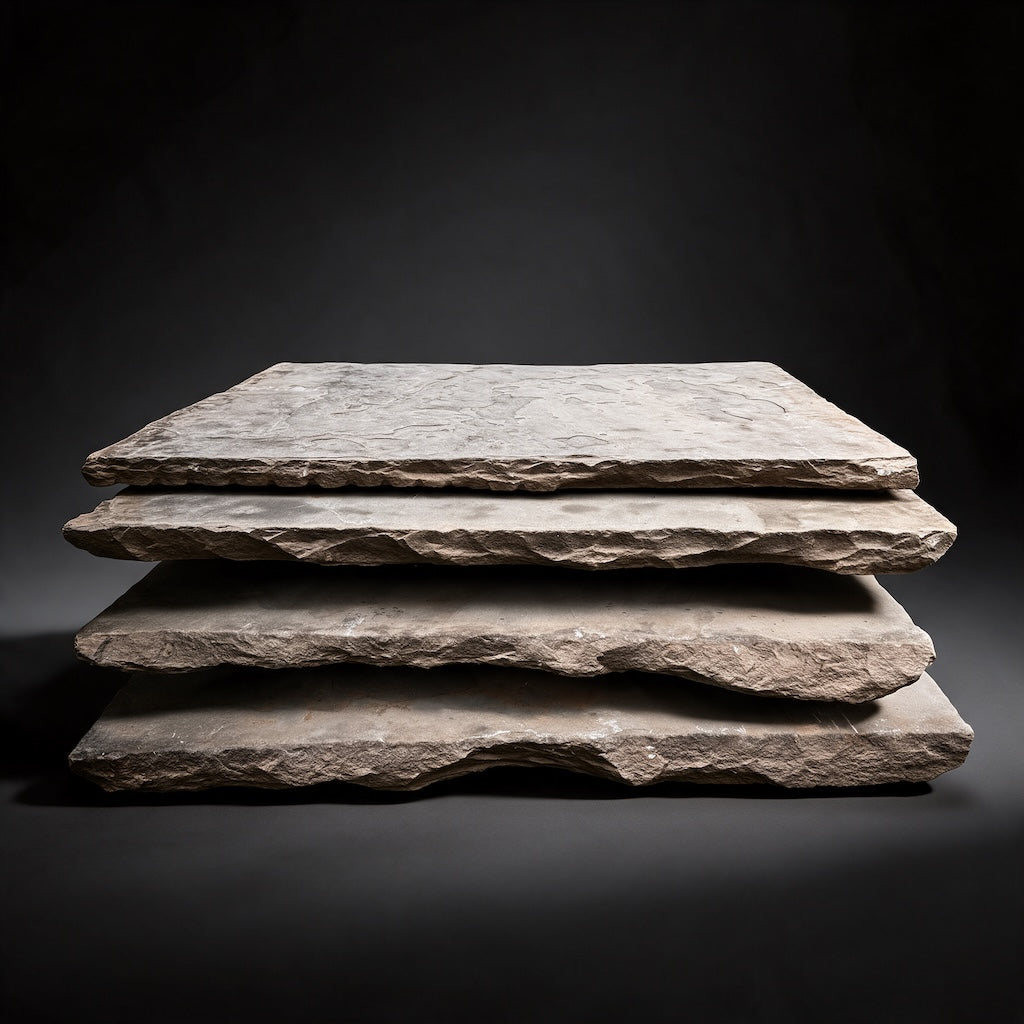
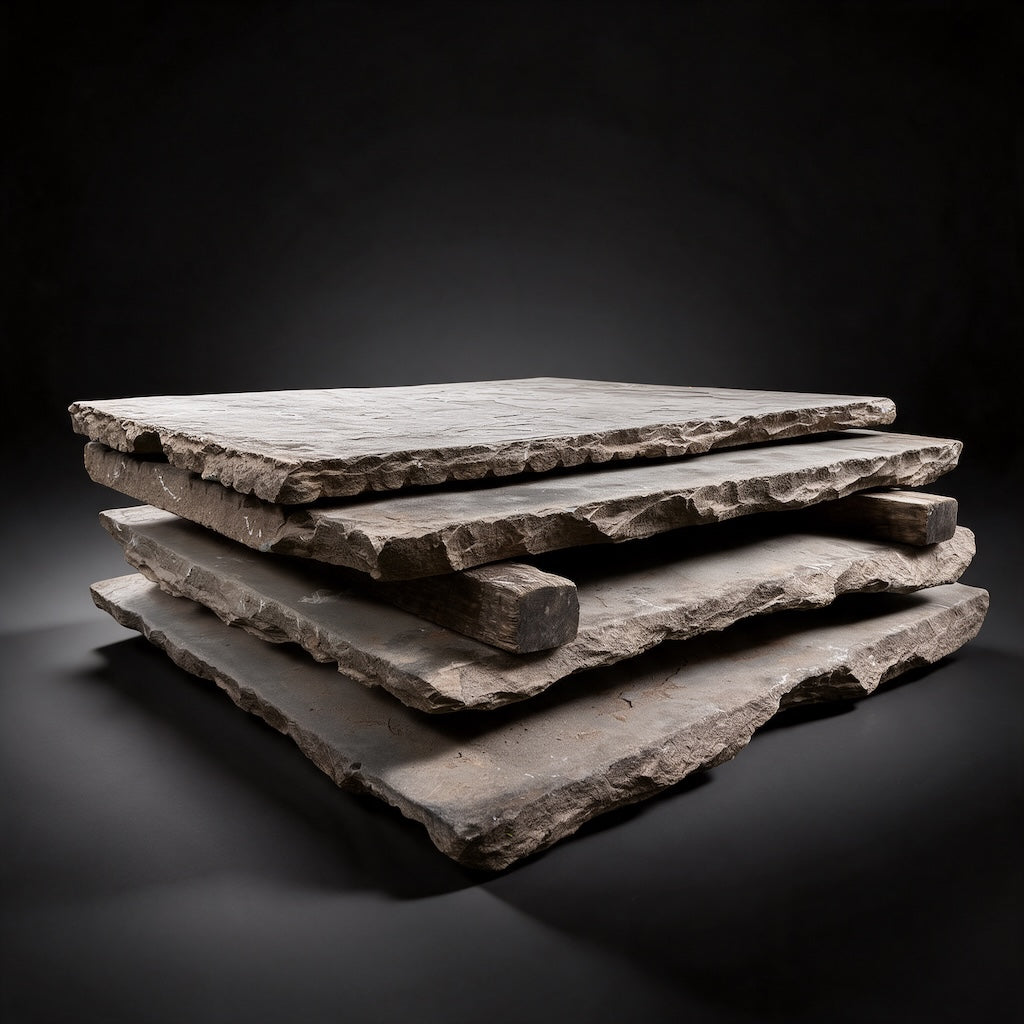
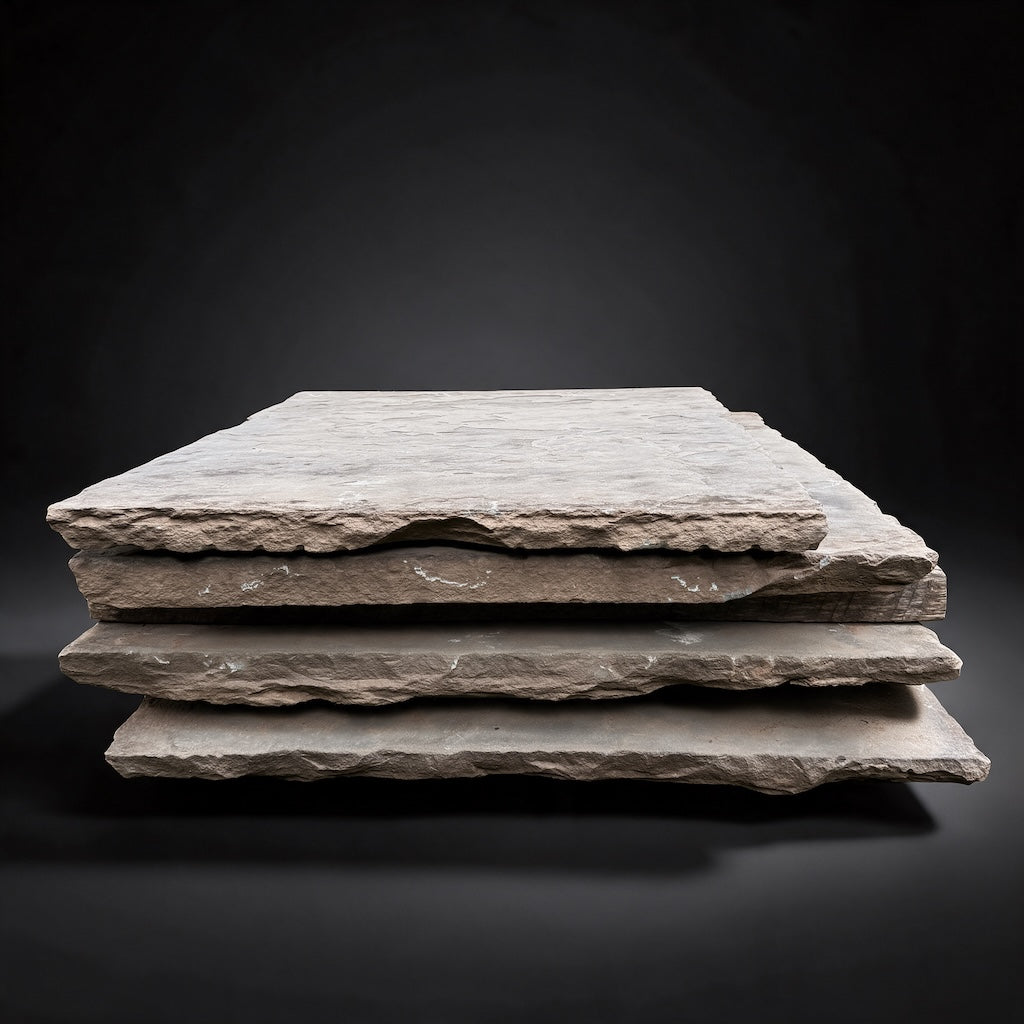
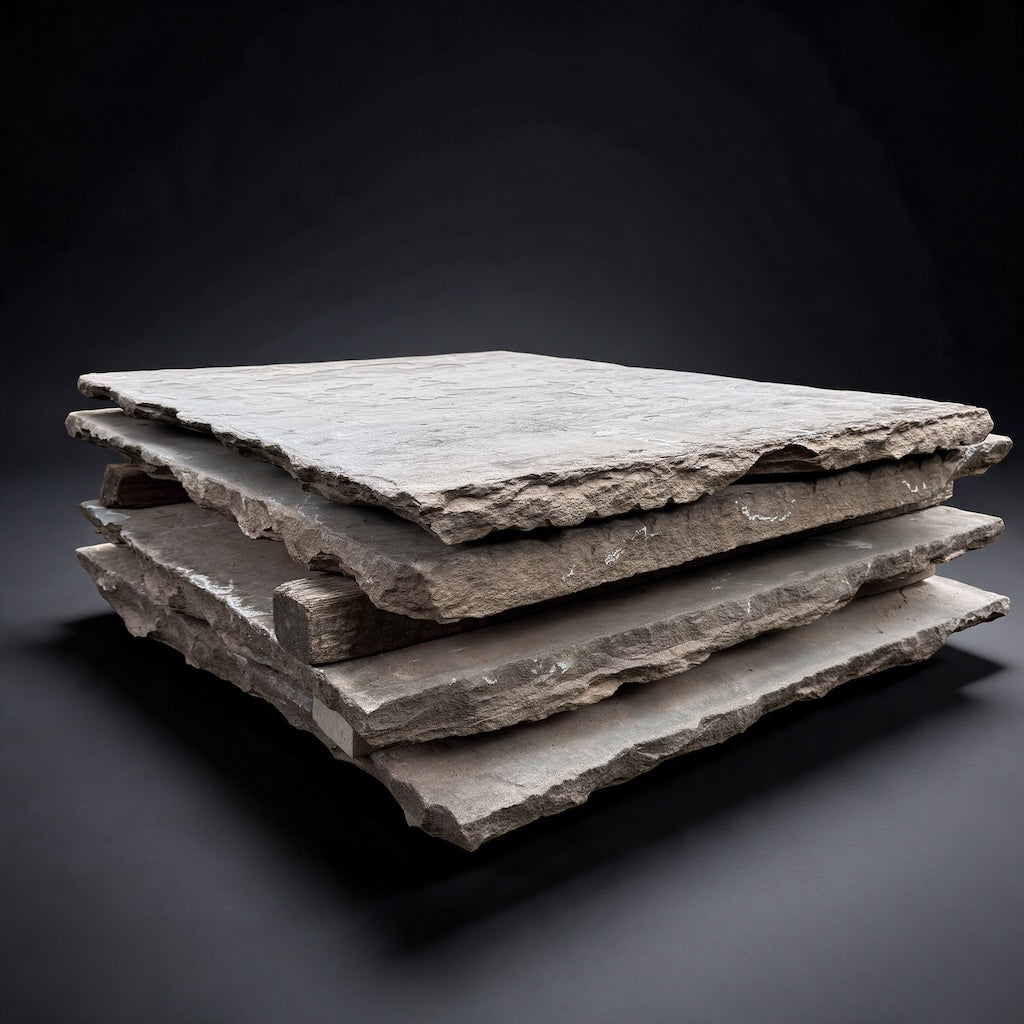
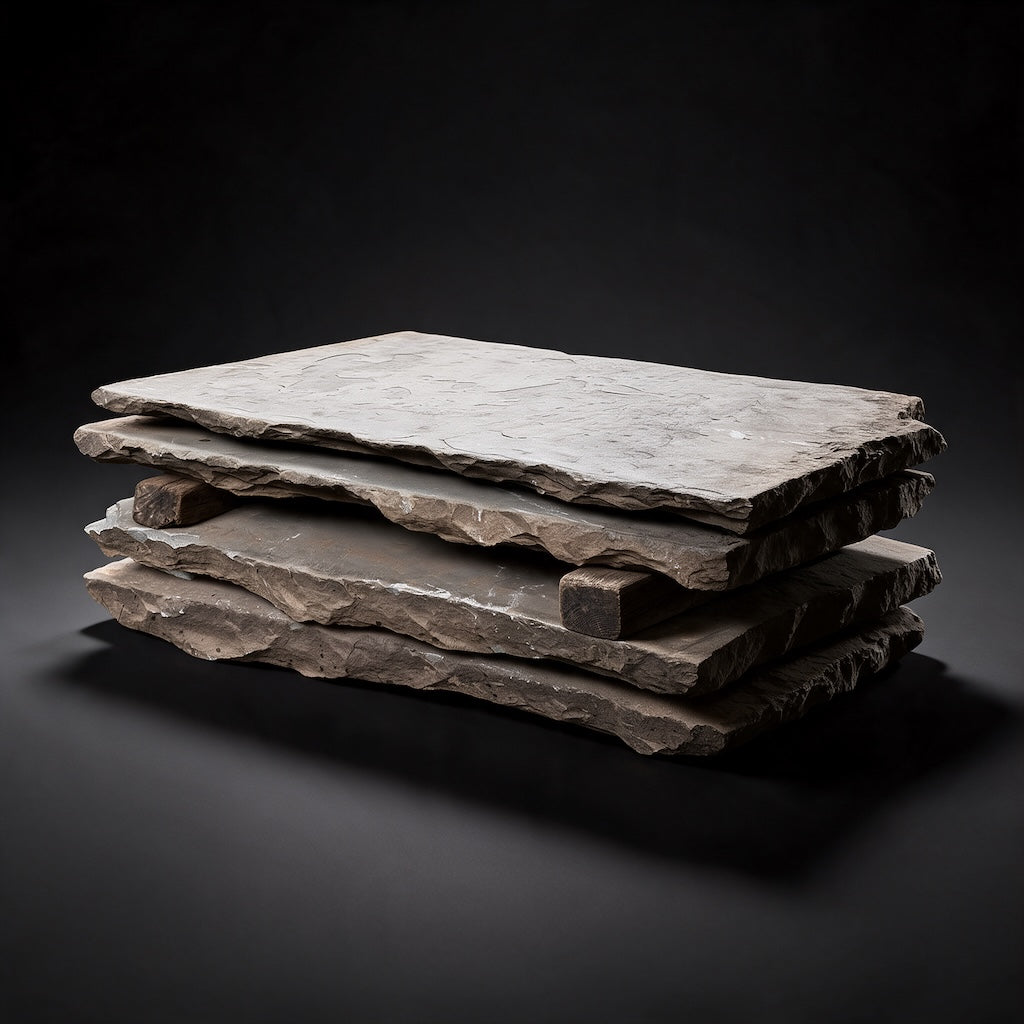
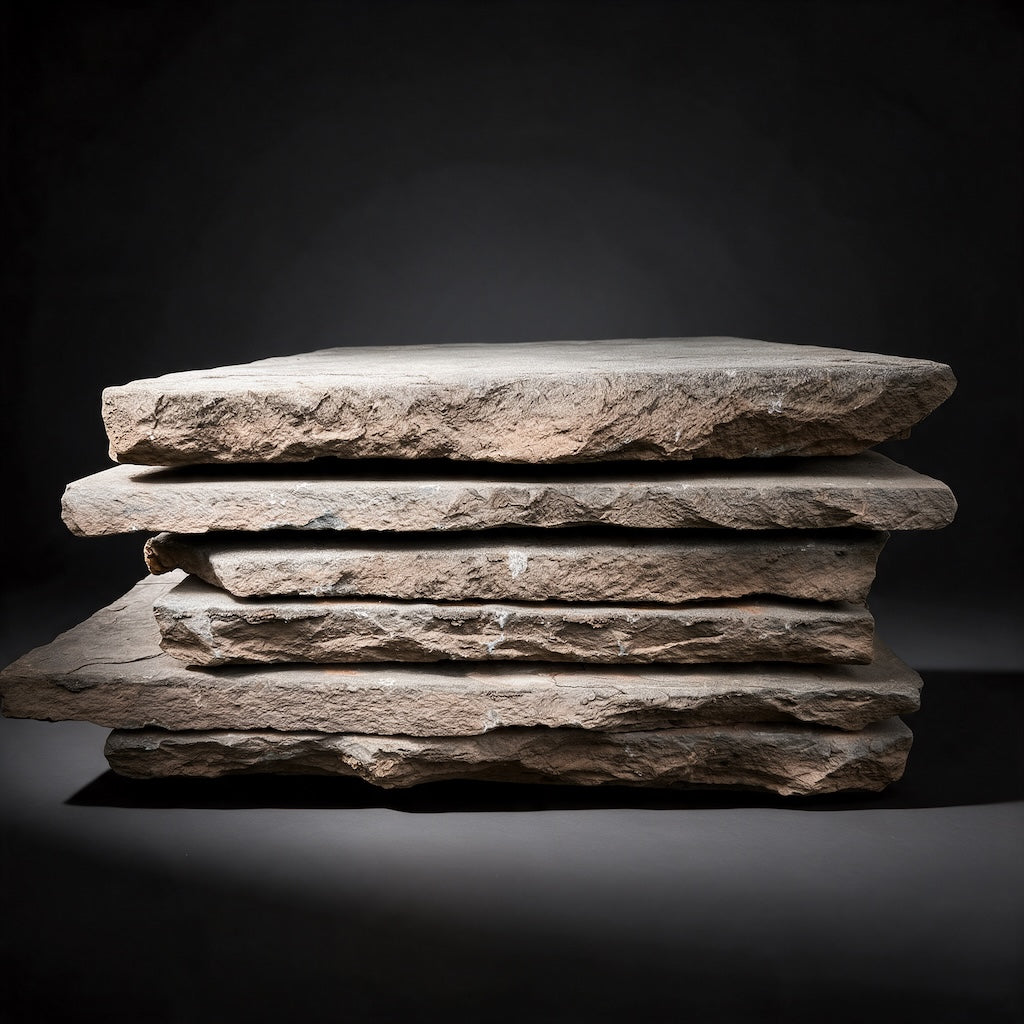
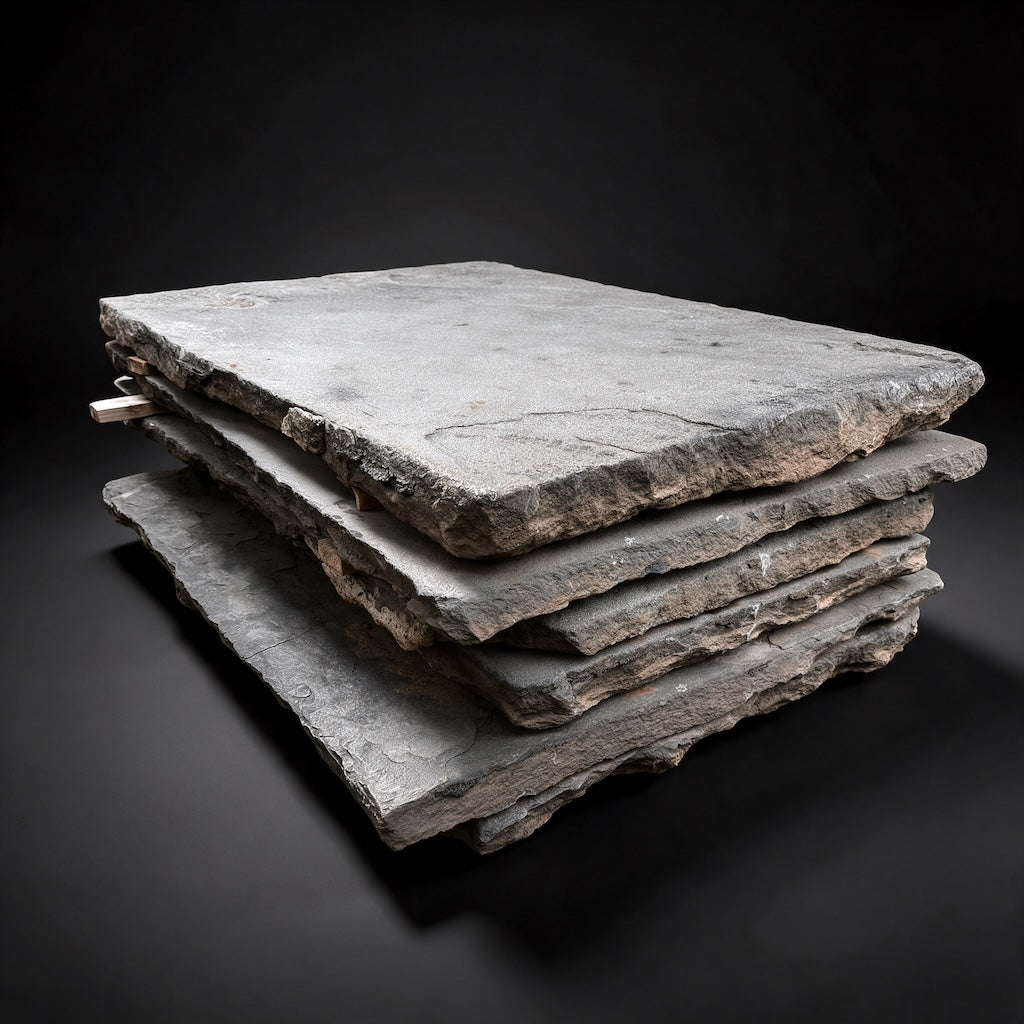
Reclaimed Bluestone Sidewalk Slabs are a strong option for patios, courtyards, terraces, outdoor dining areas, and pedestrian hardscapes. Their large format creates fewer joints and a more substantial finished surface than many small paver systems.
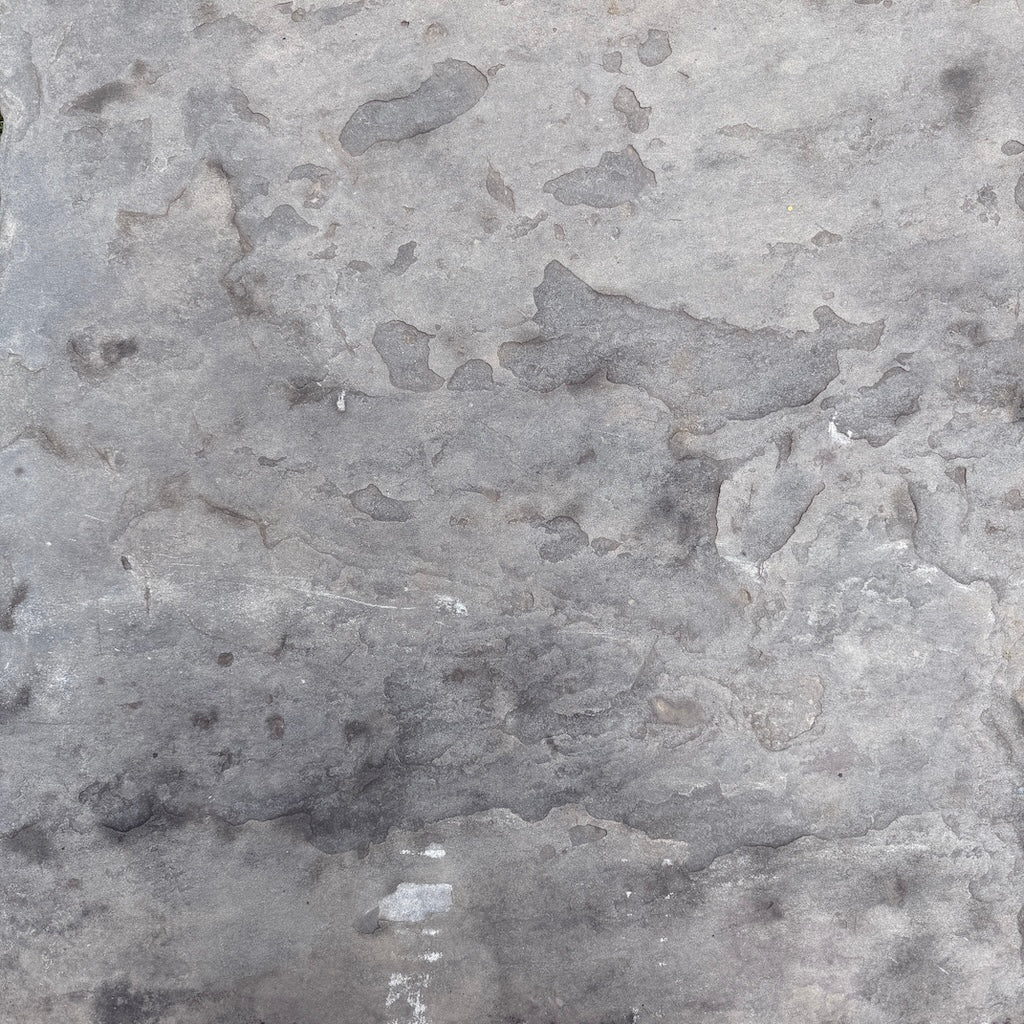
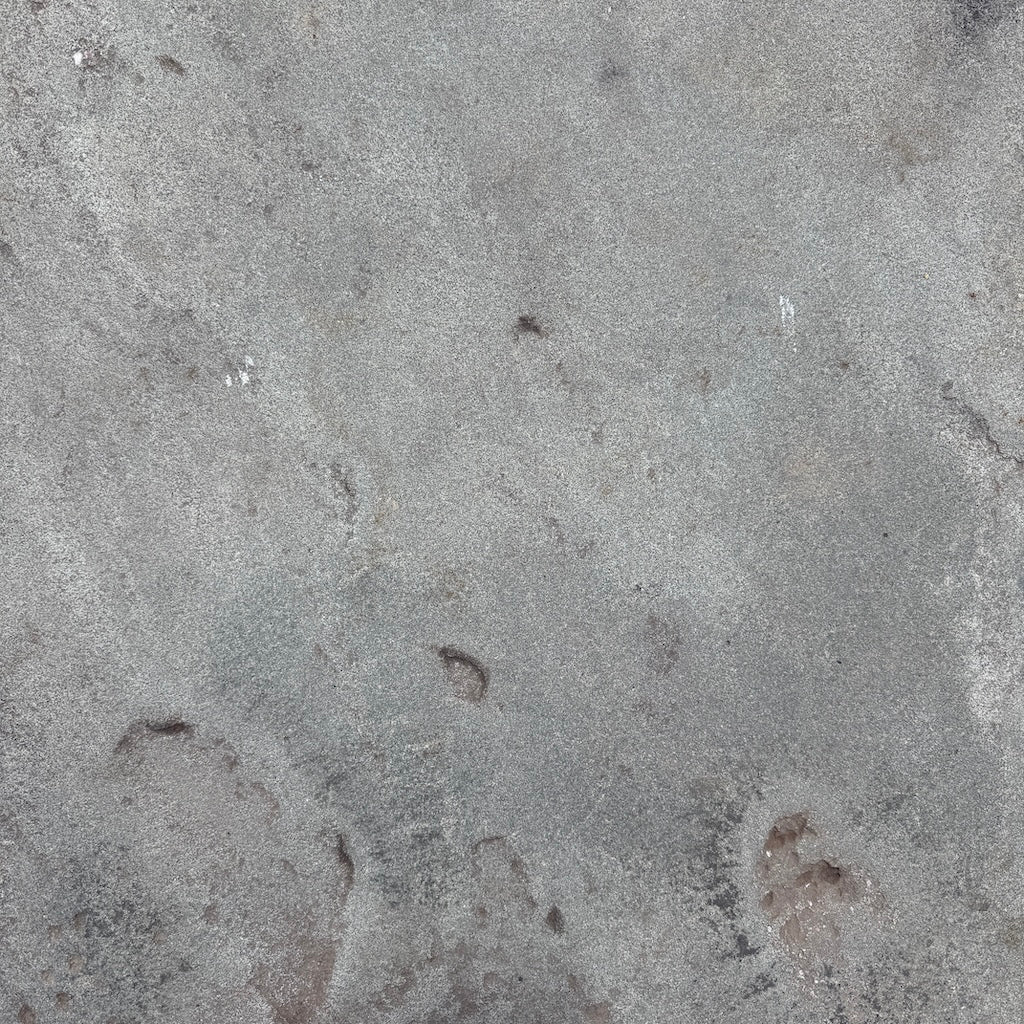
The color range also works in almost any traditional landscape. Expect blue-gray, charcoal, slate, muted green, lilac, and occasional warmer mineral tones. This variation lets the stone work naturally with reclaimed brick, granite cobblestone, wood, black metal, painted siding, stone walls, and layered garden planting.
What Makes a Patio Feel Timeless?
A timeless patio does not depend on one trend, one furniture collection, or one decorative feature. It starts with strong proportions, honest materials, and a layout that makes sense for how people actually use the yard.
Reclaimed bluestone helps because it already has a restrained, natural look. It does not need to compete with planting, architecture, or outdoor furniture. Instead, it provides a quiet foundation for the rest of the landscape.
Most timeless patios share a few characteristics:
- Simple geometry: The shape relates naturally to the house, doors, lawn, and existing circulation routes.
- Substantial materials: The paving has enough thickness and visual weight to feel permanent.
- Balanced scale: The patio is large enough for its intended use without overwhelming the yard.
- Thoughtful transitions: Steps, landings, and paths connect the patio to the lawn, garden, driveway, or house.
- Layered planting: Greenery softens the edges and helps the stone sit naturally in the landscape.
- Long-term flexibility: The space can work for a quiet breakfast, a family dinner, or a larger gathering.
The goal is not to make the patio look old for the sake of it. The goal is to create an outdoor space that will still look right when the furniture changes, planting fills in, and the home evolves over time.
Start With a Patio Plan
Before choosing a slab layout, start with the way you want to use the patio. This sounds obvious, but many projects begin with a material choice before the homeowner has decided what the space needs to do.
Ask a few practical questions. Will the patio be used for dining, lounging, grilling, entertaining, or all of the above? Do you need room for a large table? Will there be a grill, outdoor kitchen, fire pit, or built-in seating? Does the patio connect directly to the kitchen, family room, pool, lawn, or garden?
These answers affect the size, shape, and location of the paved area. A small bistro patio outside a side door needs a different layout than a broad outdoor dining terrace behind a family kitchen. A fire-pit area may need a separate zone with more circulation space around it. A patio near a garden may need a path leading to a gate, shed, or rear yard.
Follow natural movement
The best patio layouts work with how people already move around the property. If everyone exits through the same back door, that route should be clear. If the lawn is used for play, the patio should have an easy connection to it. If guests come in through a side gate, consider how they will reach the main seating area.
Do not force the patio into a shape that ignores the house or blocks obvious circulation. A good hardscape should make the yard easier to use, not create awkward detours.
Think about views
Stand inside the house and look out. What will you see through the main doors and windows? A bluestone patio can become an extension of the interior, especially when the paving aligns with the threshold and the outdoor furniture creates a defined room.
Also think about the view from the patio itself. You may want to look toward a garden bed, lawn, mature tree, pool, fireplace, water feature, or distant view. Position seating and circulation so the best view is not blocked by a grill, storage area, or unnecessary hardscape.
Choosing Reclaimed Bluestone Slabs
For a reclaimed bluestone patio, the slab format is one of the biggest design decisions. Large-format sidewalk slabs create a broad, architectural surface with fewer joints. They are especially useful for patios where the goal is to make the paving feel calm, substantial, and connected to traditional architecture.
Chief Bricks offers reclaimed bluestone sidewalk slabs in large formats, with approximately 100 square feet of usable stone per pallet. The slabs are selected for solid, intact edges and no broken corners, giving homeowners and installers more usable material for layout, cuts, transitions, and finishing details.
Because this is real reclaimed stone, expect variation. Individual slabs may differ in color, grain, surface wear, dimensions, thickness, and edge character. Those differences create a custom surface that does not repeat like manufactured paving.
The key is to use variation deliberately. An experienced installer can sort stone before setting it, placing the most visually striking pieces in prominent areas and using smaller or cut pieces near edges, walls, planting beds, and less visible transitions.
Patio Layout Options
There is no single best reclaimed bluestone patio layout. The right choice depends on the shape of the space, the architecture of the home, the desired level of formality, and the natural variation in the slabs.
Large-format random layout
This is one of the most natural choices for reclaimed bluestone. Slabs of different lengths and widths are arranged in a balanced composition that avoids obvious repetition. The layout feels organic but should still be carefully planned so joints do not become overly narrow, awkward, or chaotic.
It works well for traditional homes, garden patios, informal outdoor rooms, farmhouse properties, and landscapes with mature planting. The result feels established and relaxed without looking messy.
Running bond layout
A running bond layout uses staggered joints to create a steady rhythm across the patio. It can look more structured than a random layout while still allowing the natural variation of reclaimed stone to show through.
This approach works well alongside brick homes, rectangular patios, long terraces, and spaces where you want a strong directional flow from the house toward the yard.
Formal ashlar-inspired layout
For a more organized look, slabs can be arranged in a planned pattern that uses related sizes and aligned joint lines. This creates a more formal surface while keeping the texture and weathered character of reclaimed material.
A formal layout can work beautifully at colonial homes, estate properties, symmetrical rear facades, and courtyards where the landscape has a strong sense of order.
Irregular garden layout
Some homeowners prefer a looser arrangement that feels more connected to a natural garden. This can work well in informal settings, especially when planting grows close to the patio edge and the stone transitions into gravel, mulch, lawn, or groundcover.
The key is restraint. A relaxed layout should still provide stable surfaces for furniture and clear walking routes. Natural should not mean difficult to use.
Bluestone Patio Layouts at a Glance
| Layout Style | Best For | Overall Look | Planning Consideration |
|---|---|---|---|
| Large-format random | Traditional homes, garden patios, farmhouses, casual outdoor rooms | Natural, established, and relaxed | Requires thoughtful slab sorting so the finished layout feels balanced rather than scattered. |
| Running bond | Rectangular patios, brick homes, long terraces, directional layouts | Ordered, classic, and visually steady | Works best when joints are planned to avoid short or awkward pieces at the perimeter. |
| Formal ashlar-inspired | Colonials, estate properties, symmetric rear facades, structured courtyards | Refined, balanced, and more formal | May require more careful material sorting and layout planning before installation begins. |
| Irregular garden layout | Informal gardens, cottage-style properties, naturalistic planting schemes | Organic, softer, and less structured | Maintain stable furniture zones and comfortable walking routes despite the relaxed pattern. |
Choosing the Right Patio Size
One of the most common patio mistakes is building too small. A space may look large on a plan, but furniture, chairs, grills, planters, and circulation all take up room quickly.
Start with the largest activity the patio needs to support. If you plan to host family dinners, lay out the dining table size first. Then allow room for chairs to pull back and for people to walk around the table. If you want a lounge area, think about the sofa, chairs, coffee table, side tables, and the open space needed to move through the seating arrangement.
It is better to create one well-proportioned patio than a surface that is technically usable but constantly feels crowded. At the same time, avoid making the paved area so large that it takes over the yard and leaves no room for planting, lawn, or softer landscape elements.
Use zones for larger patios
Large patios often work best when divided into zones. One area may be for dining. Another may be for lounging. A third may connect to a grill, outdoor kitchen, fire pit, or garden path.
You do not need walls to define these zones. Furniture, planting, changes in direction, steps, low walls, planters, and lighting can all create gentle separation while keeping the patio feeling open.
Adding Steps and Transitions
A patio rarely exists by itself. It needs to connect to the house, lawn, garden, driveway, side yard, or another outdoor space. These transitions are where a project often starts to feel complete.
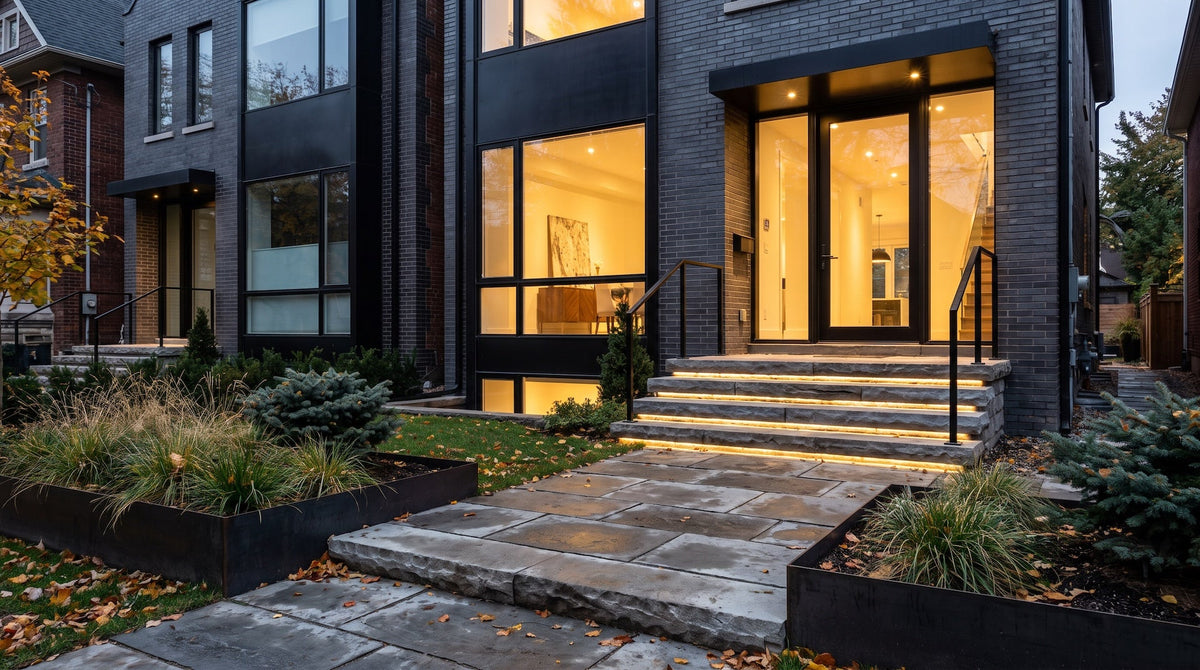
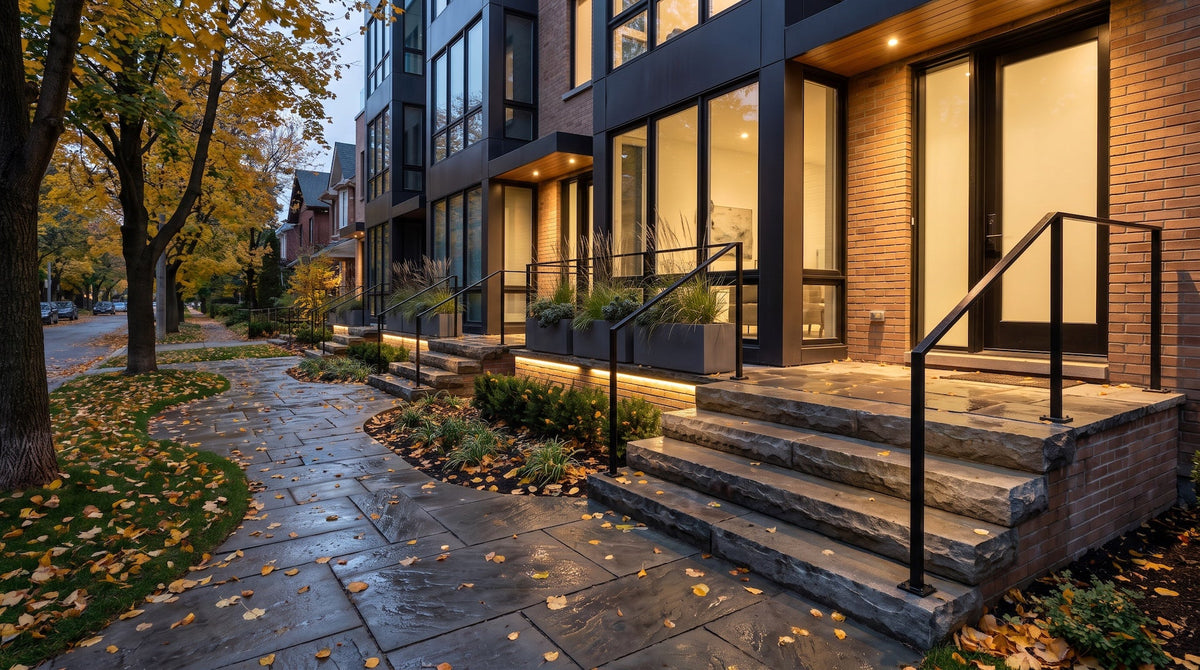
For elevation changes, pair the patio slabs with Reclaimed Bluestone Curbstone Steps. Curbstone pieces can be used as broad stair treads, landings, thresholds, and step-down transitions from the patio to a lower lawn or garden.
Using reclaimed sidewalk slabs for flat paving and reclaimed curbstone for steps creates a cohesive material palette. The forms are different because the jobs are different, but the weathered blue-gray character ties the landscape together.
Patio-to-lawn transitions
A single broad stone step can be enough to make a patio edge feel intentional. It gives people a clear, comfortable place to move down to the lawn and prevents the patio from ending in an abrupt drop or an awkward row of small pavers.
For a more dramatic grade change, several curbstone treads can create a short stairway. Frame the sides with planting, low walls, or brick edging to help the transition feel built into the landscape.
Door landings and thresholds
Where the patio meets the house, a bluestone landing can create a strong transition at French doors, sliding doors, kitchen exits, mudroom doors, or side entries. This is especially useful when the door opens directly onto the patio and needs a clear, stable area outside.
Use the landing as a visual bridge between interior and exterior. Align it with the doorway when possible, and make sure the surrounding grades and drainage direct water away from the house.
Borders, Edges, and Complementary Materials
A reclaimed bluestone patio does not need a border to look finished, but the right edge treatment can add definition and help the patio connect with other materials around the property.
Reclaimed brick borders
Reclaimed brick is one of the best materials to pair with bluestone. The warm reds, oranges, and darker tones of old brick create a natural contrast against the cool blue-gray surface of the stone.
Use brick as a perimeter band, a planting-bed edge, a short garden wall, a step riser material, or a transition to a gravel path. The combination feels rooted in historic Northeast architecture and works well with both formal and informal landscapes.
Granite cobblestone edges
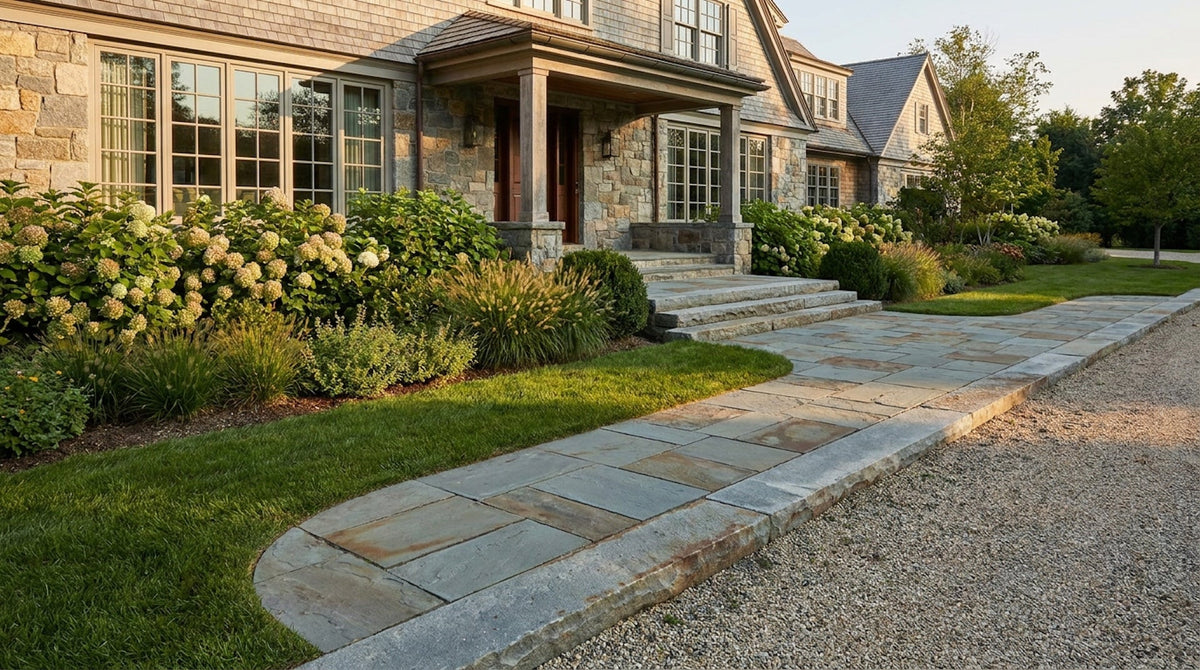
Granite cobblestone can create a stronger, more rugged edge around a patio, driveway, or garden path. It works particularly well where vehicle and pedestrian areas meet, such as a driveway apron or a path leading from a parking area to the patio.
Use it in moderation. A simple granite band can define the edge without competing with the bluestone as the main surface.
Gravel and planted edges
For a softer landscape, let the patio meet gravel, lawn, groundcover, or planting beds. Gravel can create a useful transition zone around a fire pit, garden shed, or informal seating area. Planting can soften the stone edge and make the patio feel less boxed in.
The right edge depends on the style of the property. Formal homes may benefit from brick or stone borders. Cottage gardens and farmhouses may look better with softer planting and a more relaxed transition.
Planting Around a Bluestone Patio
Planting is what helps a bluestone patio feel like part of a landscape instead of a paved platform dropped into the yard. Reclaimed stone already has a natural connection to the outdoors, and the right planting makes that connection even stronger.
For traditional properties, consider boxwood, hydrangeas, yew, clipped shrubs, roses, and perennial borders. For a softer garden look, use ornamental grasses, ferns, hostas, native perennials, flowering shrubs, and groundcovers that spill gently toward the edge of the stone.
Keep taller plants far enough from seating areas that they do not block views or make the patio feel enclosed. Use low planting near paths and stair edges so the circulation route remains clear. Layer different heights and textures rather than relying on one row of identical shrubs.
Containers can also help define the patio. Large terracotta pots, stone planters, galvanized metal tubs, or simple black planters can frame an entry point, mark the corners of an outdoor dining area, or soften a wall without requiring permanent construction.
Installation and Drainage Considerations
A reclaimed bluestone patio should be installed on a properly prepared base by an experienced mason, landscape contractor, or hardscape professional. Natural stone has its own variation, and the base, drainage, grading, and layout all influence the final appearance and performance.
Start with drainage. Water should move away from the house and away from low points where it could collect. Consider roof runoff, downspouts, existing grading, planting beds, and nearby doors before finalizing the patio elevation.
Next, plan the base and edge support. The proper approach depends on local conditions, the selected installation method, soil, climate, and how the patio will be used. Your installer can recommend the right system for the project and make sure the stone is supported evenly.
Because reclaimed bluestone varies by piece, experienced installers will often sort the slabs before setting them. This allows them to balance color, thickness, size, and surface character across the patio. It also helps them place the best pieces where they will be seen most clearly.
Do not overlook delivery access
Reclaimed stone is heavy. Before ordering, think about where delivery trucks can park, where pallets can be staged, and how the stone will move from the delivery point to the patio area. Narrow side yards, steep driveways, gates, existing landscaping, and limited street access can all affect the plan.
Coordinate delivery with your contractor when possible. That gives the installation team the best chance to stage the stone safely and begin work without unnecessary handling.
Nationwide Shipping and Delivery
Reclaimed bluestone is closely associated with Northeast architecture, but your project does not need to be in New York, New Jersey, Connecticut, Pennsylvania, or New England to use it. Chief Bricks ships nationwide, bringing authentic reclaimed bluestone to homeowners, designers, contractors, and builders across the United States.
Before placing an order, have your approximate patio square footage, desired layout, number of steps or landings, site-access details, and installation timeline ready. This makes it easier to plan material quantities and coordinate delivery.
For a complete reclaimed stone patio, consider using Reclaimed Bluestone Sidewalk Slabs for the main surface and Reclaimed Bluestone Curbstone Steps for changes in elevation, garden transitions, thresholds, and landings.
Start planning your patio: Shop Reclaimed Bluestone Sidewalk Slabs for the main patio surface, and browse Reclaimed Bluestone Curbstone Steps for landings, stairs, and garden transitions.
Share: