
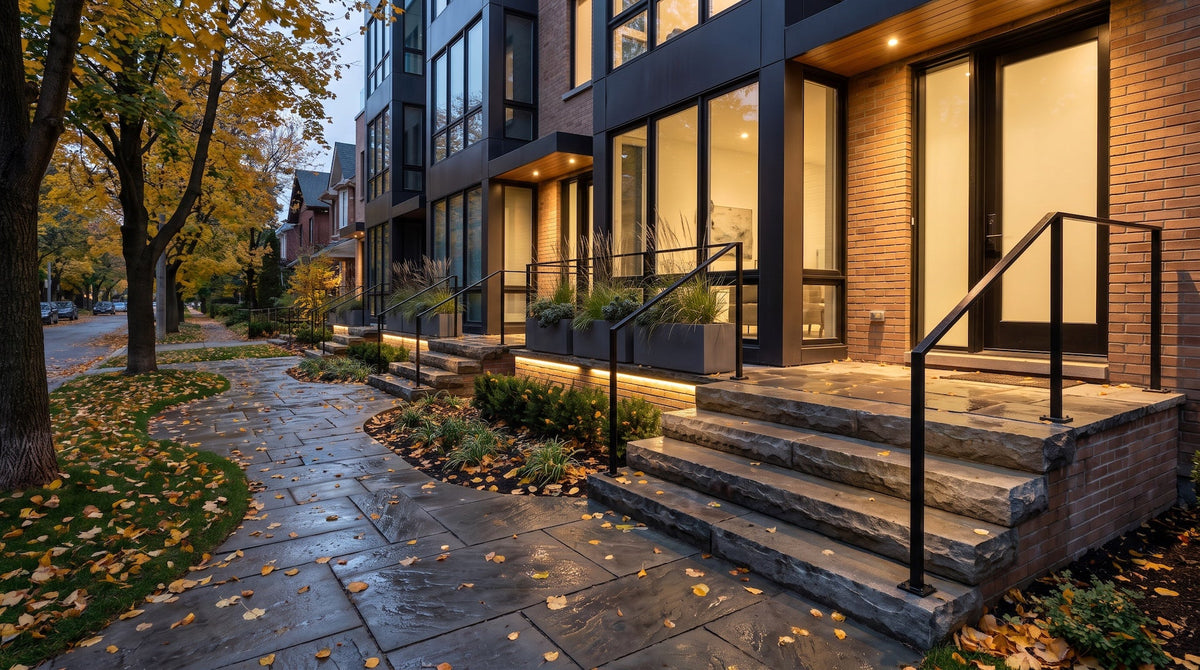
Some stone looks new no matter how well it is installed. Other stone feels like it has belonged to the property for decades. Reclaimed bluestone has that second quality.
It is not just a matter of age. What makes reclaimed bluestone different is the combination of weathered surface texture, softened edges, subtle mineral shifts, muted blue-gray color variation, and the visual calm that comes from a material shaped by real outdoor use. These are qualities that can influence an entire patio, walkway, front entry, or garden stair without the stone needing to announce itself loudly.
Homeowners often notice the difference immediately, even if they cannot name it at first. The stone feels less manufactured. Less sharp. Less repetitive. It has a more natural relationship with brick, planting, wood, iron, gravel, and older architecture because it already carries some of the wear and irregularity that outdoor spaces naturally develop over time.
This guide breaks down what gives reclaimed bluestone its distinct look and why patina, color, and character matter so much in landscape design. It also explains where those qualities show up most clearly and how to use reclaimed stone in a way that feels timeless rather than overly rustic or forced.
Table of Contents
- What Makes Reclaimed Bluestone Different?
- What Patina Really Means
- Bluestone Color Variation
- Surface Texture and Edge Character
- Patina, Color, and Character at a Glance
- Why Character Matters in Landscape Design
- Where Reclaimed Bluestone Character Shows Up Best
- Materials That Pair Well With Reclaimed Bluestone
- How to Use Reclaimed Bluestone Well
- What to Expect When Planning With Reclaimed Stone
- Nationwide Shipping and Sourcing
What Makes Reclaimed Bluestone Different?
Reclaimed bluestone is different because it was not created for a brand-new project and installed straight from fresh production. It already had a life outdoors before it became part of your patio, walkway, steps, or garden. That previous use is what gives the stone its visual depth.
Years of weather, foot traffic, moisture, seasonal change, and exposure to the elements leave subtle marks behind. Faces become naturally worn. Corners soften. Mineral tones shift. Surface texture grows more layered. The stone stops looking like a raw material and starts looking like part of a place.
That difference is especially clear when reclaimed bluestone is compared with newly cut, highly uniform stone. New material can be beautiful, but it often looks cleaner, sharper, and more controlled. Reclaimed stone tends to feel quieter and more settled. It has variation without chaos and age without looking damaged.
For homeowners, that often means the hardscape blends more naturally with the rest of the property. Instead of drawing attention as a brand-new surface, reclaimed bluestone can make a project feel rooted in its setting from the beginning.
What Patina Really Means
Patina is one of those design words that gets used often, but not always explained clearly. In simple terms, patina is the visible effect of time on a material. It is not dirt, damage, or neglect. It is the surface character that develops as a material ages in the real world.
With reclaimed bluestone, patina appears through softened faces, subtle surface wear, weathered mineral markings, and a finish that no longer looks freshly quarried. The stone has been exposed to years of rain, sun, freeze-thaw cycles, foot traffic, and natural outdoor conditions. That history creates an appearance that is difficult to reproduce in a new product.
Patina matters because it changes how the eye reads the material. Fresh-cut stone often looks more exact and more separate from its surroundings. Patinated stone feels integrated. It sits more comfortably beside mature planting, reclaimed brick, old wood, historic facades, and weathered metal.
This is one reason reclaimed bluestone works so well in projects that aim for a timeless look. The stone already carries the softness that many landscapes only gain after years of use.
Patina is not the same as damage
Some homeowners worry that reclaimed stone will look too rough or inconsistent. In reality, good reclaimed bluestone is valued for weathered character, not structural failure. The appeal comes from natural surface aging, color depth, and worn texture rather than broken, unstable, or unusable material.
That distinction is important. A patio or set of garden steps should still feel substantial and usable. Reclaimed stone brings age to the project, but it should do so in a way that supports the installation rather than undermines it.
Bluestone Color Variation
One of the most distinctive things about reclaimed bluestone is that it rarely reads as just one flat shade of blue-gray. The stone often includes a range of tones across the same project, and those shifts are part of what gives the material so much visual depth.
You may see blue-gray, charcoal, slate, muted green, lilac, and occasional warmer mineral notes. Some slabs feel cooler and more shadowed. Others show softer gray or faintly earthy variation. When laid together, those differences help the hardscape feel layered rather than repetitive.
That does not mean the finished project looks busy. In fact, reclaimed bluestone usually has a calm overall appearance because the tones are muted. The variation is real, but it is restrained. The eye reads depth and movement without being overwhelmed by strong contrast.
This is a major reason the stone works well across large areas. A patio, front walk, or courtyard built from reclaimed bluestone can remain visually interesting without relying on loud pattern changes or multiple materials to create complexity.
Why muted variation works so well
Strong color contrast can make a hardscape feel hectic, especially when used across a large surface. Reclaimed bluestone avoids that problem because its range tends to stay within a related family of tones. Even when the slabs vary, they still belong together.
That restraint makes it easier to pair bluestone with planting, brick, gravel, wood, and architecture. It acts like a stable background rather than a surface that competes with everything around it.
Surface Texture and Edge Character
Color is only part of the story. The feel of reclaimed bluestone also comes from its surface texture and edge condition. These details are often subtle, but they change the finished look in a major way.
Newly fabricated stone often has crisper edges and a fresher face. Reclaimed bluestone usually has more softened corners, walk-worn areas, and a texture shaped by prior outdoor use. The result is not perfectly smooth and not aggressively rough. It lands in a useful middle ground that feels natural underfoot and visually comfortable in the landscape.
Those softened edges make a difference in entries, patios, and garden steps because they reduce the sense of hardness that sometimes comes with machine-cut stone. Instead of every line feeling sharply defined, the overall hardscape has a little more ease to it.
Surface texture also affects how light moves across the stone. A patio with subtle variation in texture and edge softness tends to catch light more gently than a highly uniform surface. That creates a more nuanced look through the day as sun, shadow, and moisture shift across the paving.
Patina, Color, and Character at a Glance
| Feature | Reclaimed Bluestone | Why It Matters |
|---|---|---|
| Patina | Developed through real outdoor use, weather exposure, and time | Gives the stone an established look that feels natural in traditional and mature landscapes |
| Color range | Blue-gray, charcoal, slate, muted green, lilac, and subtle mineral shifts | Creates depth and visual interest without making the surface feel busy |
| Surface texture | Weathered, timeworn, and naturally softened rather than freshly cut | Makes patios, walks, and steps feel more settled and less manufactured |
| Edge character | Softened edges and worn faces from prior use | Helps the hardscape blend more comfortably with planting and older architecture |
| Overall impression | Layered, timeless, and connected to place | Supports designs that should feel grounded, established, and authentic |
Why Character Matters in Landscape Design
It is easy to think of character as something decorative, but in landscape design it affects how believable a space feels. A hardscape does not exist in isolation. It sits next to a house, planting, walls, lighting, furniture, fences, and views beyond the property line. The material needs to relate to all of that.
Reclaimed bluestone often works so well because its variation is subtle and earned. The character comes from time rather than surface treatment. That means it tends to connect naturally with other honest materials such as old brick, granite cobblestone, timber, weathered metal, gravel, and mature greenery.
Character also helps a landscape age gracefully. Some brand-new materials look their best on installation day and then become less convincing over time. Reclaimed stone tends to move in the opposite direction. Because it already has variation and patina, it often looks even better as planting grows in and the outdoor space becomes more lived in.
For homeowners, this can make the difference between a yard that feels staged and one that feels settled. The patio is still new. The front walk is still newly installed. But the stone itself helps those spaces feel as if they belong to the property already.
Where Reclaimed Bluestone Character Shows Up Best
The qualities that make reclaimed bluestone special can show up almost anywhere outdoors, but some applications reveal them especially well.
Patios and courtyards
Large paved areas give reclaimed bluestone room to show variation in tone, texture, and movement. A patio built with substantial slabs feels calm from a distance and richly detailed up close. This makes the material especially effective in outdoor dining terraces, backyard seating areas, and enclosed courtyards.
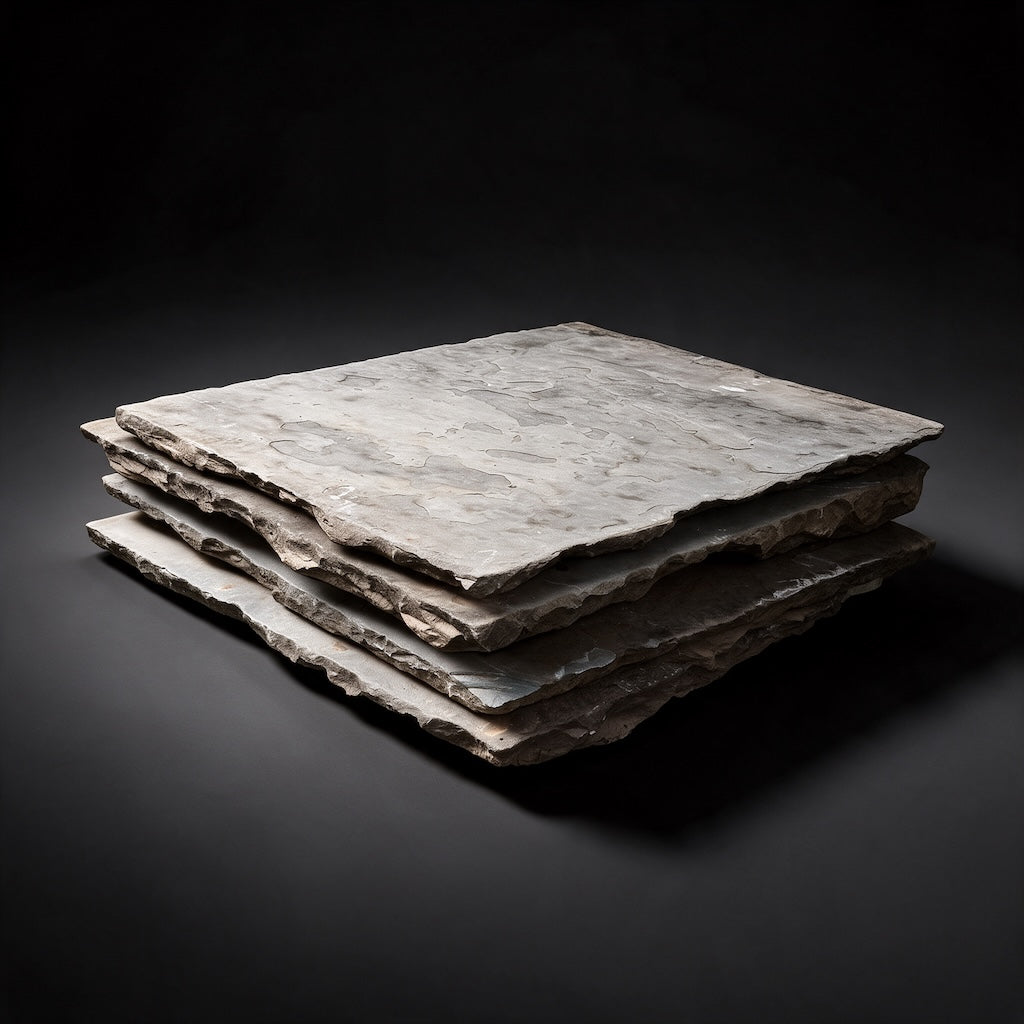
For these uses, Reclaimed Bluestone Sidewalk Slabs provide large-format paving that highlights the stone’s timeworn appearance while reducing the number of visible joints.
Front walks and entries
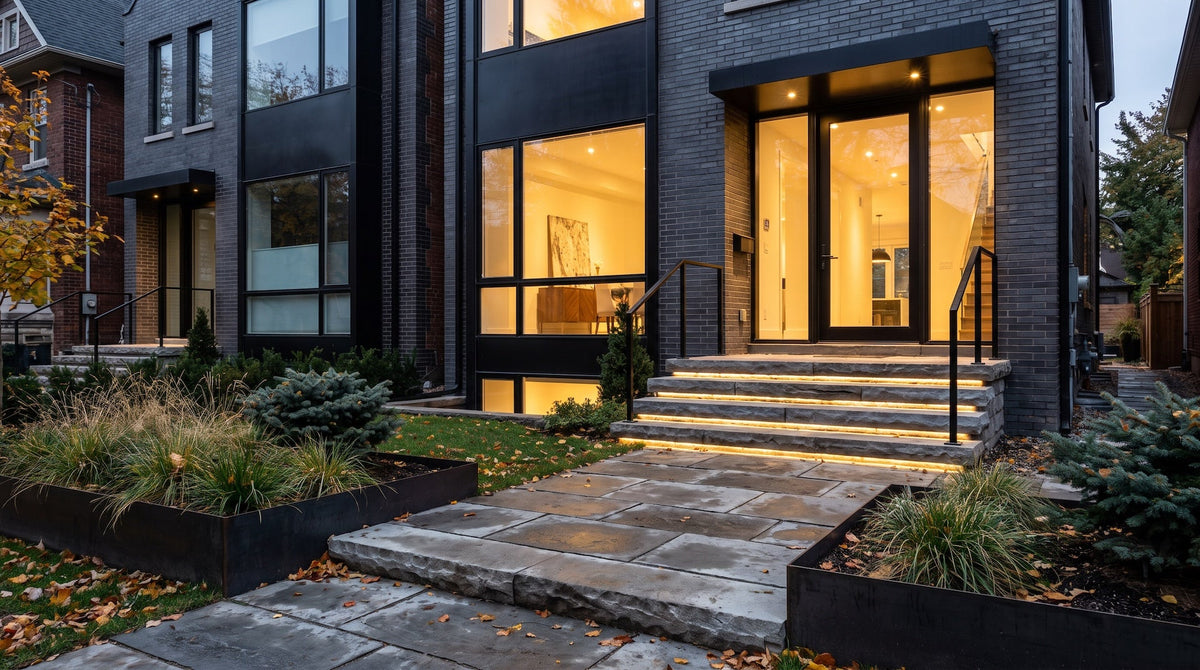
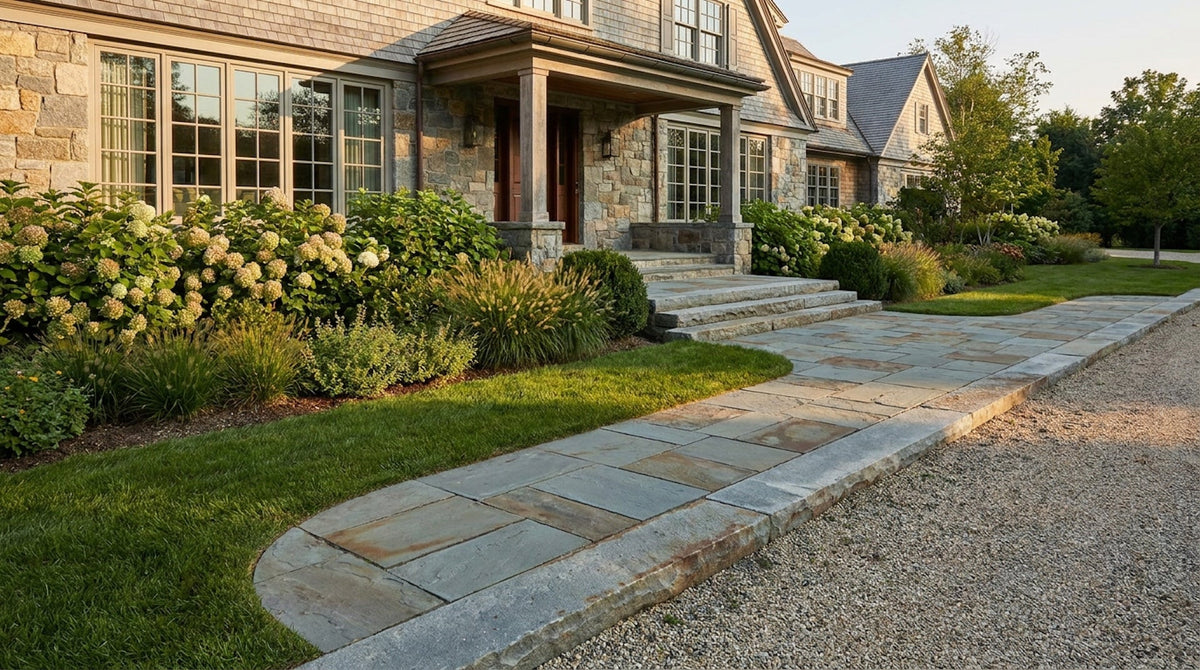
The approach to a home is one of the most powerful places to use reclaimed bluestone. Visitors notice the material at walking pace, which means they see the color variation, softened edges, and surface texture up close. The stone can make a front entry feel more substantial without becoming too formal or heavy.
Garden steps and transitions
Weathered bluestone is especially convincing in landscapes with planting, slopes, walls, and grade changes. Garden steps made from reclaimed stone feel as though they grew out of the site rather than being dropped into it recently.
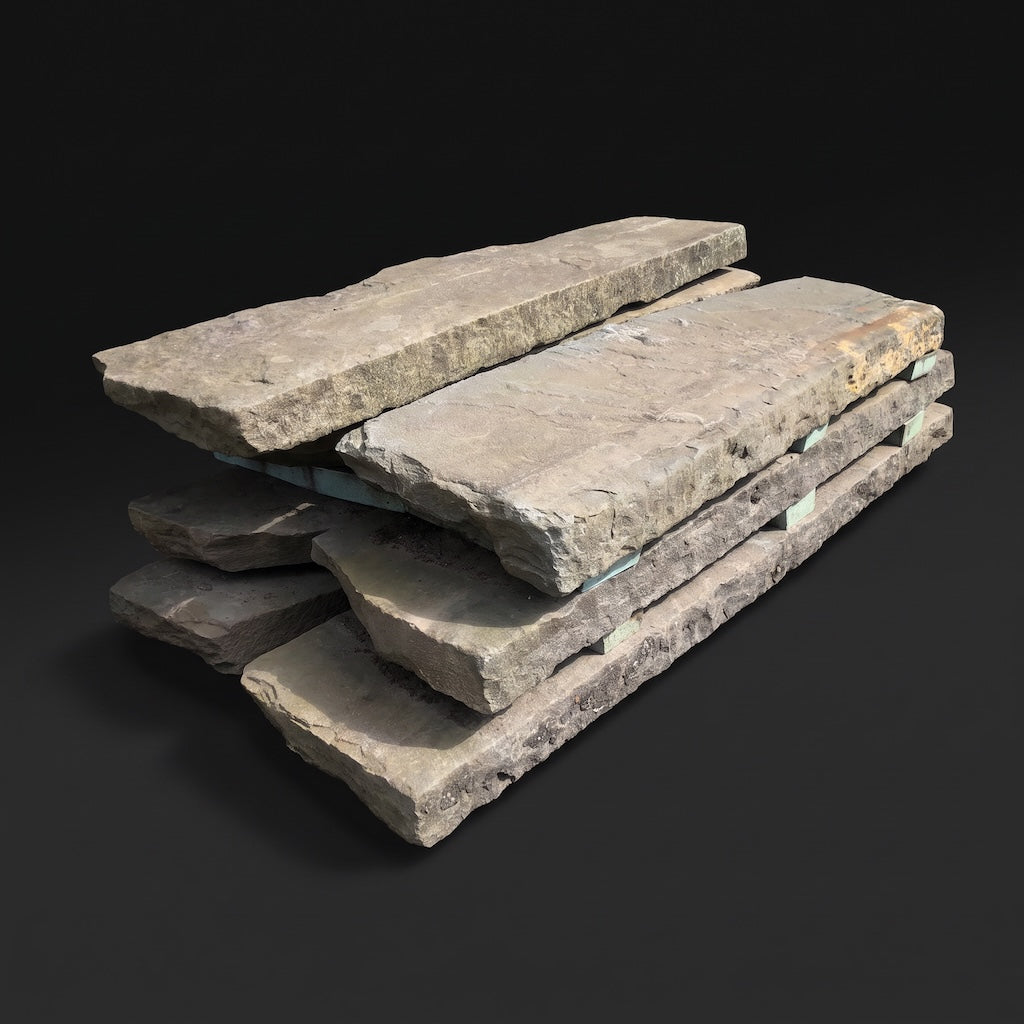
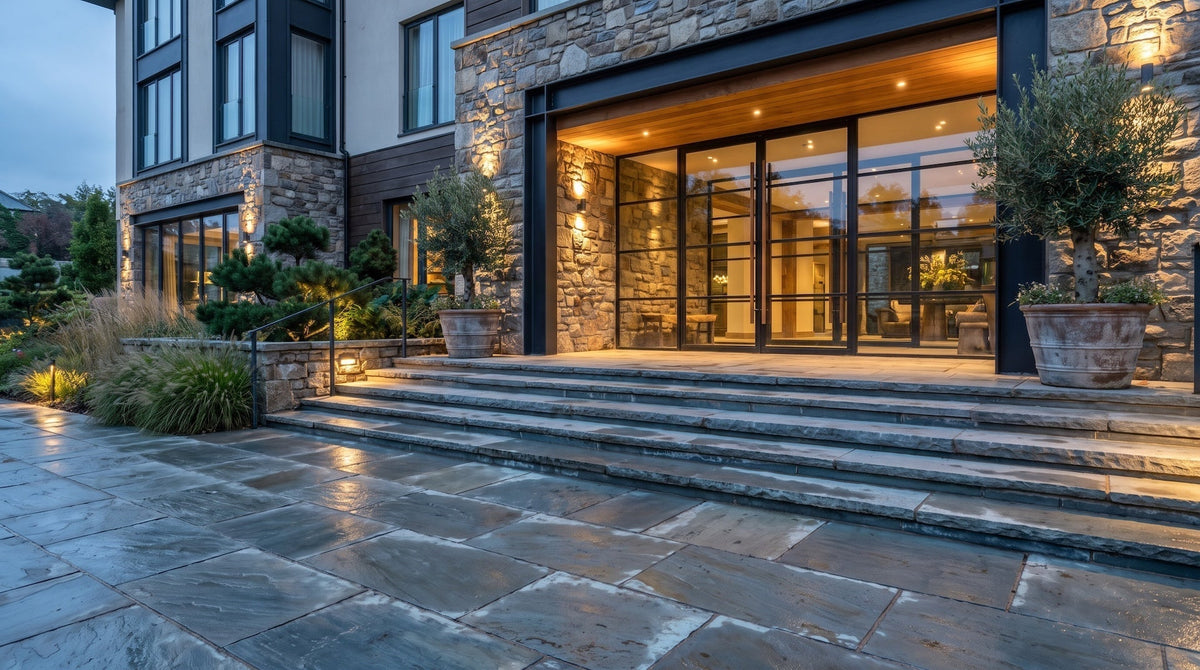
For elevation changes, Reclaimed Bluestone Curbstone Steps create broad natural-stone treads with the thickness and aged character needed for front entries, garden stairs, landings, and patio connections.
Materials That Pair Well With Reclaimed Bluestone
Reclaimed bluestone is versatile because its color palette is muted and natural. It can support both warm and cool materials as long as the overall composition stays balanced.
Reclaimed brick
Brick and bluestone are one of the best pairings in traditional landscapes. The warm reds, oranges, and darker tones of old brick contrast beautifully with the cool blue-gray cast of stone. Use brick in border bands, low walls, planters, garden edges, and entry details.
Granite cobblestone
Granite adds a slightly rougher texture and a darker, denser look. It works well as edging, driveway borders, and transitions where vehicle areas meet pedestrian paving. Used sparingly, it gives the bluestone a stronger frame without overpowering it.
Wood, gravel, and planting
Cedar fencing, painted wood trim, gravel paths, black metal railings, and layered planting all work naturally with reclaimed bluestone. These materials share the same honest, outdoor quality and help the stone feel rooted rather than staged.
The key is to avoid too many competing effects at once. Let the stone be part of a restrained palette so its variation and patina can do their job quietly.
How to Use Reclaimed Bluestone Well
Because reclaimed bluestone already has strong character, the best installations usually keep the layout and material mix relatively simple. Too much pattern, too many competing borders, or too many color contrasts can dilute what makes the stone appealing in the first place.
Let the stone carry the interest
A patio made from large bluestone slabs often needs very little embellishment. The subtle variation in the stone provides enough movement on its own. Planting, furniture, and architecture can do the rest.
Use variation intentionally
Not every slab will look the same, and that is the point. But the installation should still feel composed. Sort pieces before laying them, distribute stronger and quieter tones across the surface, and avoid clustering all the most dramatic pieces in one place.
Match the formality of the house
A formal colonial may benefit from a more structured bluestone layout. A farmhouse or naturalistic garden may work better with a looser arrangement. The stone can support both. The difference is in how the layout, border treatment, and planting are handled.
What to Expect When Planning With Reclaimed Stone
Planning with reclaimed stone is slightly different from planning with factory-consistent material. Variation is part of the value, so the design and installation should allow room for that variation rather than trying to eliminate it entirely.
Expect differences in tone, texture, dimensions, and edge character. Good reclaimed stone feels coordinated, but not identical. This is why it is useful to work with a mason, landscape contractor, or designer who understands natural stone and knows how to create a balanced layout from varied pieces.
It also helps to think about how the stone will connect to the rest of the property. Will it be used for a patio only, or continue into the front walk, garden steps, or side-yard landing? Repeating reclaimed bluestone in several places can strengthen the sense that the whole landscape belongs together.
Finally, plan delivery and staging early. Reclaimed bluestone is substantial material, and access conditions matter. A clear understanding of the site, pallet placement, and installation sequence helps the project move more smoothly.
Nationwide Shipping and Sourcing
Reclaimed bluestone may be strongly associated with historic Northeast landscapes, but its visual appeal is not limited to one region. Chief Bricks ships nationwide, making authentic reclaimed bluestone available for patio, walkway, entry, courtyard, garden, and landscape projects across the United States.
Before ordering, identify the main application, approximate square footage or step count, project location, access conditions, and installation schedule. This makes it easier to choose the right material and plan delivery in coordination with your installer.
For projects that combine flat paving and elevation changes, use Reclaimed Bluestone Sidewalk Slabs for patios and walkways, and pair them with Reclaimed Bluestone Curbstone Steps for landings, front entries, and garden stairs.
Explore authentic reclaimed stone for your project: Shop Reclaimed Bluestone Sidewalk Slabs for patios and walkways, and browse Reclaimed Bluestone Curbstone Steps for front entries, landings, and garden transitions.
Share: