
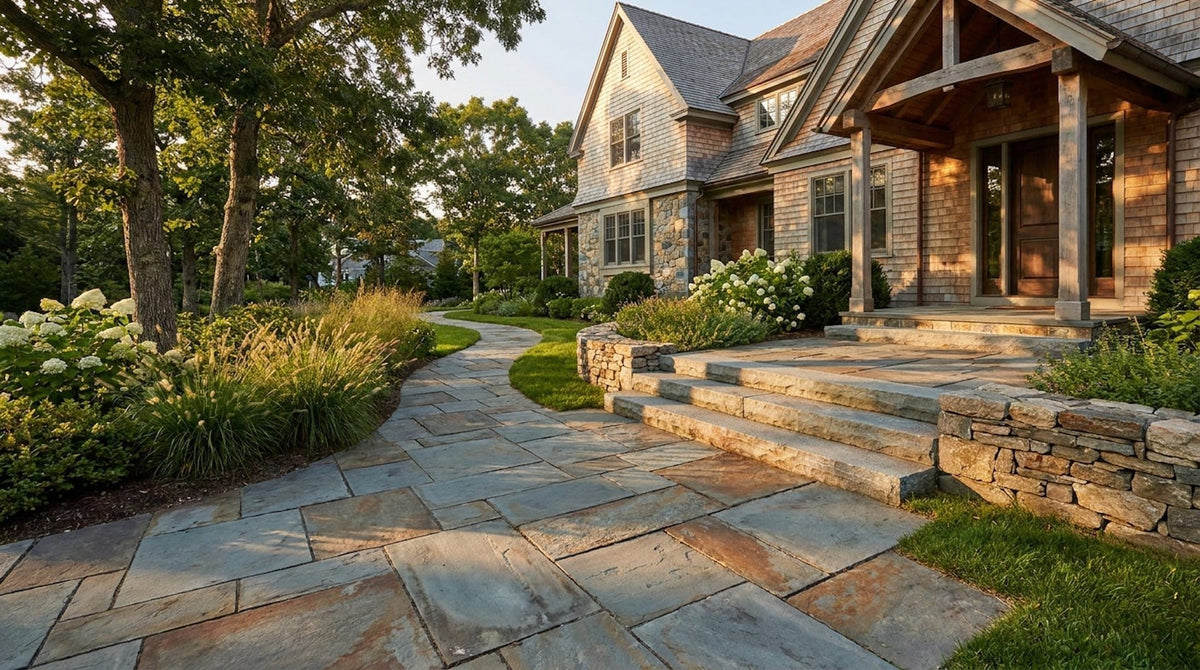
Choosing bluestone for a patio, walkway, courtyard, or front entry is usually an easy decision. Choosing between reclaimed bluestone and new bluestone pavers takes a little more thought.
Both materials can create durable, attractive outdoor spaces. Both bring natural-stone color and a classic Northeast look to a property. But they do not create the same finished result. New bluestone tends to look cleaner, more uniform, and more controlled. Reclaimed bluestone has real age, weathered surfaces, softened edges, and color variation that only comes from decades of outdoor use.
For some projects, the crisp consistency of newly quarried stone is exactly right. For others, especially historic homes, brownstones, colonials, farmhouses, estates, and traditional landscapes, reclaimed bluestone brings a depth that new material cannot fully duplicate.
Maybe you are a homeowner who loves the look of bluestone but is not sure which kind fits your house. You might be a designer comparing options for a client. Or maybe you are a contractor who needs to know how each material changes the layout and installation.
This guide compares reclaimed bluestone sidewalk slabs with new bluestone pavers so you can decide which material fits your project, your architecture, and the look you want to create.
Choose reclaimed bluestone when you want authentic age, natural variation, weathered texture, and a landscape that feels established from the start. Choose new bluestone when you want a more uniform appearance, predictable sizing, and a cleaner, more contemporary finish.
Neither material is automatically better. The right choice depends on the style of the home, the project location, the amount of variation you want to see, and how the stone will connect with the rest of the landscape.
For a patio behind a newer contemporary home, new bluestone may create the controlled look you want. For a front walk leading to a brick colonial or a garden terrace beside a historic property, reclaimed bluestone may feel much more natural.
| Factor | Reclaimed Bluestone Sidewalk Slabs | New Bluestone Pavers |
|---|---|---|
| Overall look | Historic, weathered, and naturally established | Clean, fresh-cut, and more uniform |
| Color variation | Natural blue-gray, charcoal, slate, mineral movement, and one-of-a-kind shifts | Generally more consistent in tone and finish |
| Surface character | Walk-worn faces, softened edges, and authentic outdoor patina | Sharper edges and a newer, more controlled surface appearance |
| Dimensions | Varies by slab because each piece is authentic reclaimed stone | Usually more standardized and predictable |
| Best for | Historic homes, brownstones, colonials, farmhouses, traditional patios, garden paths, and restoration projects | Contemporary patios, modern homes, formal geometric layouts, and projects requiring consistent sizing |
| Layout style | Organic, substantial, architectural layouts with fewer joints and more natural variation | Precise, repeatable, and more uniform paving patterns |
| Installation approach | Benefits from an installer experienced with sorting and laying varied natural stone pieces | Often simpler to lay in highly regular patterns because sizes are more consistent |
| Long-term visual effect | Feels layered, timeless, and connected to historic Northeast architecture | Feels polished, orderly, and intentionally new |
For homeowners who want a patio or walkway to feel like it has been part of the property for decades, Reclaimed Bluestone Sidewalk Slabs are often the stronger choice. If your priority is exact repetition, crisp edges, and a highly controlled contemporary layout, new bluestone pavers may be the better fit.
Reclaimed bluestone is natural stone salvaged from older sidewalks, streetscapes, curbs, patios, public spaces, and architectural landscapes. Instead of being newly quarried and cut for a current project, the stone is recovered from its previous use and selected for reuse.
That past use is what gives reclaimed bluestone its distinct appearance. Years of foot traffic, rain, snow, sun, freeze-thaw cycles, and general outdoor exposure soften the surface. Corners become less sharp. Faces develop a natural worn texture. Blue-gray tones deepen and shift across each piece.
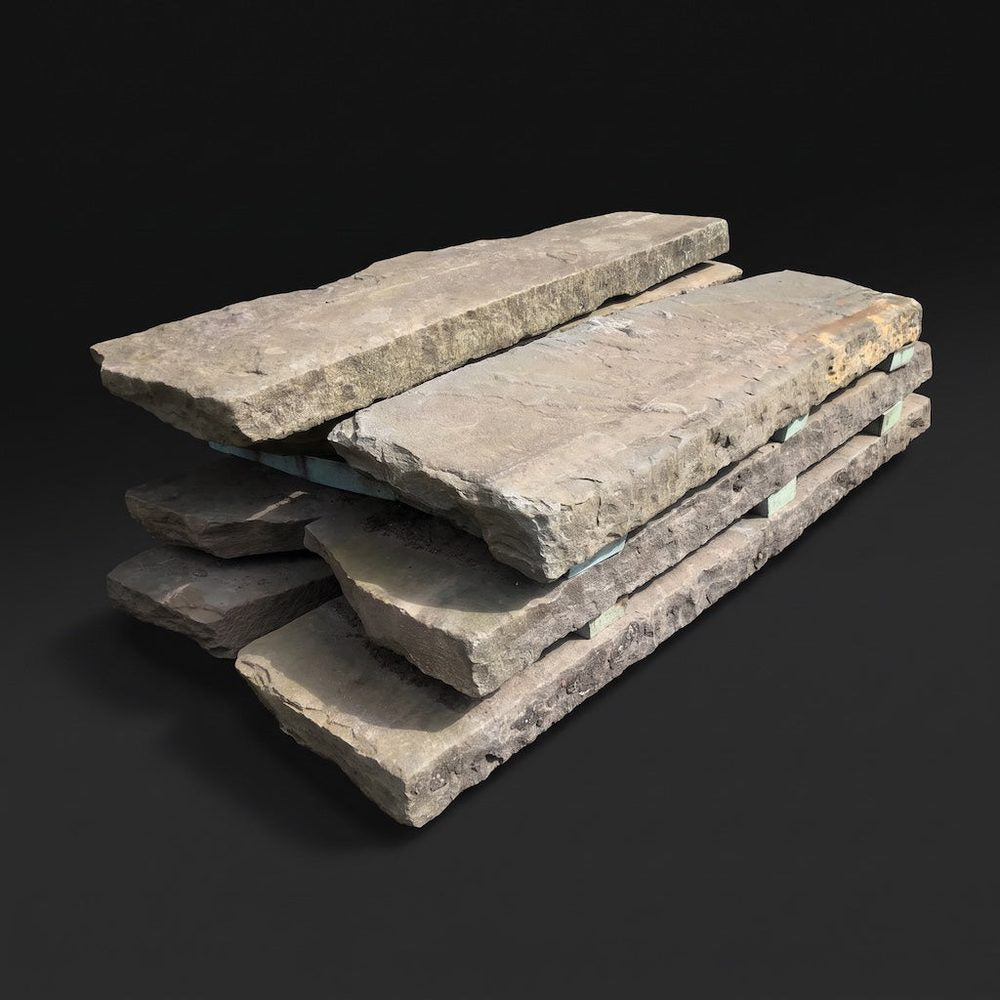
Reclaimed Bluestone Sidewalk Slabs are especially useful for homeowners who want broad, substantial pieces for patios, walkways, courtyards, terraces, and other pedestrian paving areas. The slabs have a timeworn appearance that works naturally with traditional architecture and mature landscaping.
Because reclaimed stone is authentic natural material, every piece varies. You may see changes in color, dimensions, texture, edge condition, mineral movement, and surface wear. This is not a defect. It is one of the main reasons homeowners, architects, and landscape designers choose reclaimed stone. For a closer look at that character, read what makes reclaimed bluestone different.
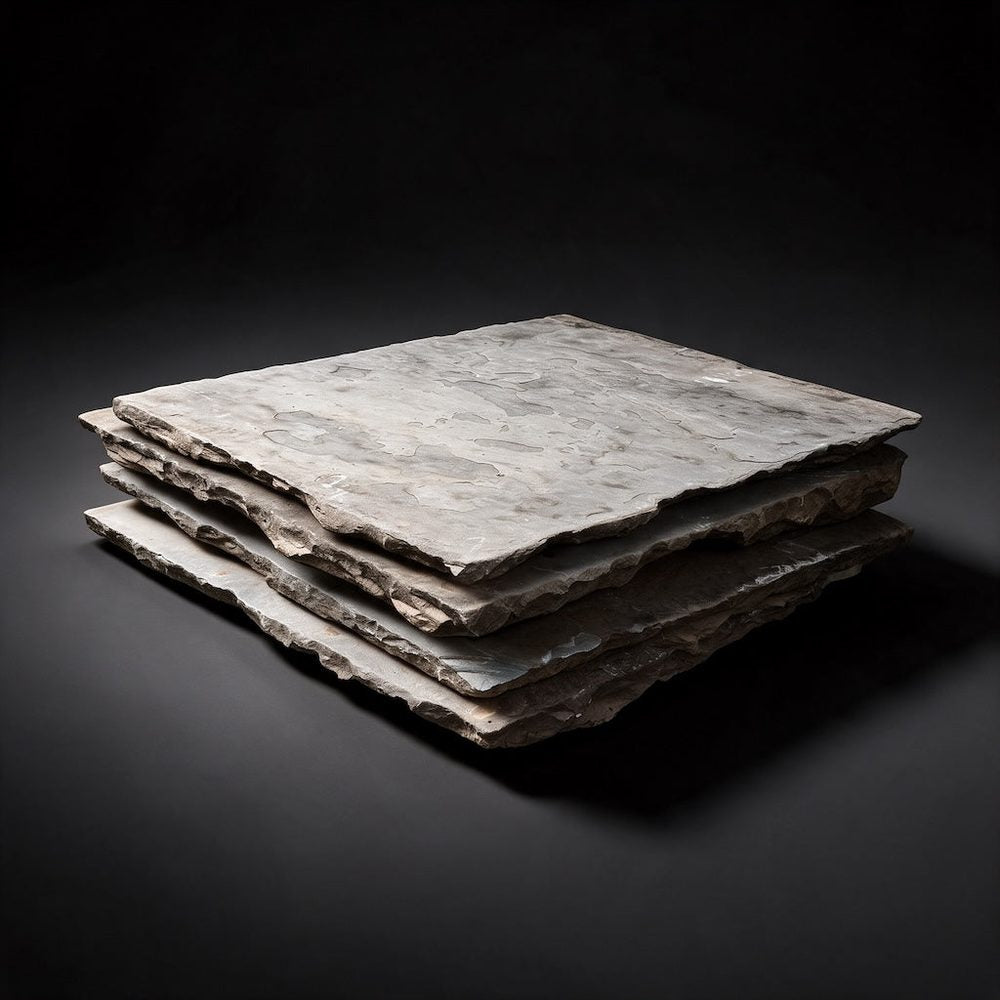
New bluestone is freshly quarried natural stone cut and prepared for current construction and landscape projects. It is available in a wide range of shapes, finishes, thicknesses, and formats depending on the supplier and intended use.
Many homeowners choose new bluestone because it offers a more predictable appearance. The pieces can be cut to relatively consistent dimensions, which may simplify a formal layout or a design that relies on tight visual control. New stone can also have sharper edges and a more uniform surface than reclaimed material.
That uniformity can be helpful, but it can also make an outdoor space feel newer. This is not necessarily a negative. A clean-lined patio may be exactly what a modern home needs. The question is whether the stone should look freshly installed or whether you want it to feel like it has already belonged to the property for years.
New bluestone is often the better fit for minimalist landscapes, contemporary architecture, highly regular paving patterns, and projects where every unit needs to follow a closely controlled dimensional plan.
The biggest difference between reclaimed and new bluestone is visual character.
New bluestone generally has a cleaner appearance. It may have more consistent color, sharper edges, and a relatively fresh-cut surface. In the right setting, that crispness looks refined. It works well with modern windows, smooth stucco, steel railings, simple planting, and contemporary outdoor furniture.
Reclaimed bluestone feels more layered. It has the slight irregularity that makes natural materials interesting. You may see blue-gray, slate, charcoal, muted green, lilac, and warmer mineral tones across one installation. The surfaces can be naturally cleft, worn, or softened by decades of use.
That variation is especially valuable when the goal is a timeless landscape. A reclaimed bluestone path beside an older brick house does not look like it was added as a recent upgrade. It can feel as if the walk has always been there, even when the project is brand new.
Weathered stone has a visual softness that pairs well with planting. Perennials, shrubs, groundcover, mossy edges, ornamental grasses, and mature trees all look natural next to reclaimed bluestone. The stone does not compete with the landscape because it already has subdued color and texture.
This makes reclaimed slabs particularly effective in gardens, old-house renovations, courtyards, estate landscapes, and transitional spaces between the house and yard.
New bluestone can create stronger lines and a more exact layout. If you want a patio with crisp geometry, uniform joints, and a more controlled color palette, it may be the better choice. It also works when the architecture itself is very clean and simple.
A contemporary pool terrace, a minimalist rear patio, or a newly built home with modern detailing may benefit from the sharper character of new stone. The material can still feel natural, but it will read as more precise and recently installed.
Stone size changes the way a hardscape looks. Larger pieces create fewer joints and a broader visual field. Smaller pieces create more pattern and detail. Neither approach is wrong, but the scale should match the house and the outdoor space.
Reclaimed sidewalk slabs are known for their substantial format. They can be used to create patios and walkways with long runs of stone and fewer visible interruptions. This gives a finished project a more architectural appearance, especially when compared with small modular pavers.
For a patio, larger slabs can make the surface feel calmer and more spacious. For a walkway, they can make the route feel more direct and intentional. For a courtyard, they help furniture, planting, walls, and architecture become the main focus instead of a busy paving pattern.
New bluestone is often available in more standardized formats, which can make it easier to create repeated patterns. This can be useful when the design calls for a precise ashlar layout, a repeating rectangular grid, or a carefully balanced formal patio.
Our reclaimed bluestone sidewalk slabs come in three sizes: about 3 feet long by 2 to 3 feet wide, 4 feet long by 2 to 4 feet wide, and 5 feet long by 2 to 5 feet wide. All are 2 to 4 inches thick. They are sold by the pallet, which holds about 100 square feet of stone, not counting joints, and weighs about 3,950 lb; plan a little extra for cuts and edge pieces.
Reclaimed bluestone is not factory-identical. Dimensions, thickness, color, and edge character can vary from slab to slab. That is part of its appeal, but it means the installer should understand how to sort and place natural stone.
The best layouts use the variation intentionally. Larger and more visually striking pieces can go in prominent areas. Smaller pieces and cuts can be used at edges, near planting beds, or in less visible transition zones. When handled well, the finished patio or path feels rich and natural rather than random.
A small courtyard may benefit from a large-format reclaimed slab layout because fewer joints help the space feel less crowded. A broad front walk can look more important when it is built from substantial pieces rather than many small pavers.
At the same time, a very large patio may need a thoughtful joint layout and multiple sizes to avoid looking too repetitive. This is where a landscape designer or experienced installer can help create a pattern that feels balanced from every viewpoint.
Reclaimed and new bluestone can both be used in outdoor hardscapes. The key difference is not whether either material can work outdoors. It is which one best supports the architecture, layout, and overall feeling you want the finished project to have.
| Application | Reclaimed Bluestone Sidewalk Slabs | New Bluestone Pavers |
|---|---|---|
| Front walks | Ideal for brownstones, colonials, brick homes, farmhouses, and traditional entries where weathered character matters. | Well suited to newer homes and formal entries requiring a uniform, clean-lined path. |
| Patios | Best for timeless dining terraces, outdoor living areas, and spaces that should feel established from day one. | Best for contemporary patios, precise geometric layouts, and cleaner outdoor entertaining spaces. |
| Garden paths | Creates a natural, timeworn route through planting beds, lawns, gates, and landscaped garden rooms. | Works well for structured gardens with crisp borders, repeated spacing, and formal symmetry. |
| Courtyards | Creates an old-world, architectural surface with broad slabs, fewer joints, and authentic variation. | Creates a more orderly courtyard with consistent paving units and controlled visual repetition. |
| Historic restorations | Excellent choice for period homes, heritage properties, brick townhouses, and restoration-minded landscape projects. | May look too new unless the project calls for a cleaner replacement material or a more recently updated appearance. |
| Estate landscapes | Pairs naturally with mature trees, reclaimed brick, granite cobblestone, stone walls, and traditional planting. | Works for formal estate designs where symmetry, exact layout, and uniformity are the primary goals. |
| Modern homes | Offers warm texture and contrast when paired with steel, glass, wood, and naturalistic planting. | Often the easier fit for minimalist homes with sharp architecture and a restrained material palette. |
| Highly geometric layouts | Can work when variation is welcomed, but it requires careful sorting and an experienced natural-stone installer. | Usually the stronger choice when the design depends on exact dimensions, tight joints, and repeated patterns. |
For homeowners seeking age, depth, and historic character, Reclaimed Bluestone Sidewalk Slabs are particularly effective for patios, walkways, garden paths, and courtyards. For a project with elevation changes, pair the paving with Reclaimed Bluestone Curbstone Steps for front entries, landings, and garden transitions.
There is also room to use both materials in one property. A homeowner may choose reclaimed bluestone for the front entry and garden areas, then use cleaner new stone in a contemporary pool setting or a highly structured rear terrace. The key is to make the transition intentional.
Whether you choose reclaimed or new bluestone, installation planning matters. Stone is only one part of the system. The base, drainage, grading, joint treatment, edge restraint, and transitions to the house all affect the long-term result.
For reclaimed slabs, work with an installer who is comfortable with natural variation. They should know how to sort stone by thickness, color, texture, and size. They should also understand how to set the best faces in the most visible locations and how to use cuts without making them stand out. Because reclaimed slabs range from 2 to 4 inches thick, the installer adjusts the setting bed under each piece so the finished surface comes out flat. Our guide on how to build a reclaimed bluestone patio walks through the process.
For new bluestone, the installation may be more straightforward when pieces are uniform. But the same fundamentals still apply. The base must be properly prepared, water must drain away from the house, and the finished surface should suit how the area will be used.
A beautiful bluestone patio will not perform well if water has nowhere to go. Before choosing material, consider existing grades, roof runoff, downspouts, planting beds, and the direction water moves during heavy rain.
Patios, walkways, and landings should be planned so water moves away from the home and does not collect at doors, steps, or low points. Drainage is easier to address before installation than after the stone is in place.
Reclaimed bluestone is substantial material; a pallet of slabs weighs about 3,950 lb. Before delivery, confirm where pallets can be placed, whether trucks can access the property, and how stone will move from the staging area to the work zone.
This is especially important for urban homes, narrow driveways, tight side yards, and properties with limited access. Coordinate delivery with your mason, landscape contractor, or installer so the stone arrives when the team is ready to begin work.
It is tempting to compare stone only by the immediate material price. But a front walk, patio, or courtyard is a long-term part of the property. It is worth considering not only what the material costs today, but also how it will look and feel after years of use.
Reclaimed bluestone can bring a level of character that is difficult to recreate later. It may make a renovation feel more authentic, help a new landscape connect with an older home, and create a stronger first impression for guests, buyers, and neighbors.
New bluestone can be the more efficient choice when uniformity is the main objective. It may simplify a highly exact layout or fit a contemporary design where variation would distract from the architecture.
For budgeting, our reclaimed bluestone sidewalk slabs are $59 per square foot for the 3- and 4-foot sizes and $69 per square foot for 5-foot slabs. Installation labor typically adds about $12 to $24 per square foot, in line with Belgian block and granite step work. Reclaimed bluestone curbstone steps, 14 to 20 inches deep and 4 to 6 inches thick, run $79 per linear foot for 2- to 4-foot lengths, $89 for 5 and 6 feet, and $99 for 7 and 8 feet. To price your own layout, try our bluestone slab calculator and bluestone steps calculator. Reused stone also counts toward LEED v4 and v5 material reuse credits; see how reclaimed materials help with LEED certification.
The real value question is simple: what kind of finished space do you want to live with? If you want a hardscape that feels historic, layered, and naturally established, reclaimed stone often delivers more visual return than a perfectly uniform alternative.
Use reclaimed bluestone sidewalk slabs for the path from the sidewalk or driveway to the front door. Add a thick reclaimed stone landing and curbstone steps where the elevation changes. Frame the route with brick edging, boxwood, hydrangeas, or low perennial beds. For more entry ideas, see historic bluestone front entry design ideas.
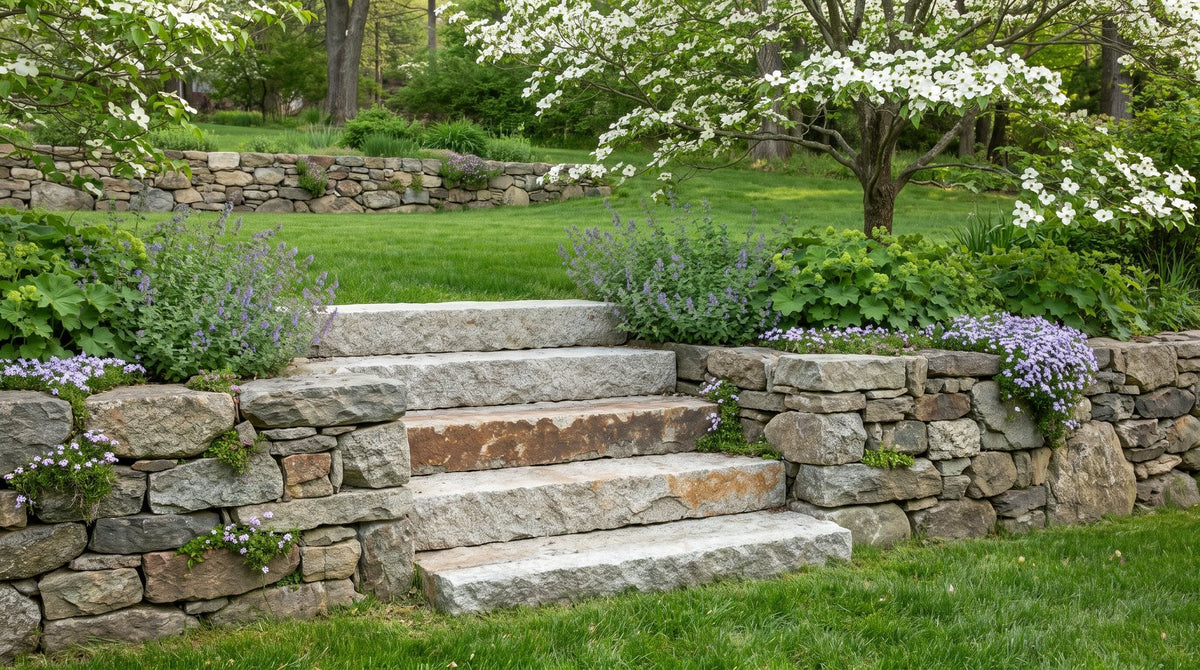
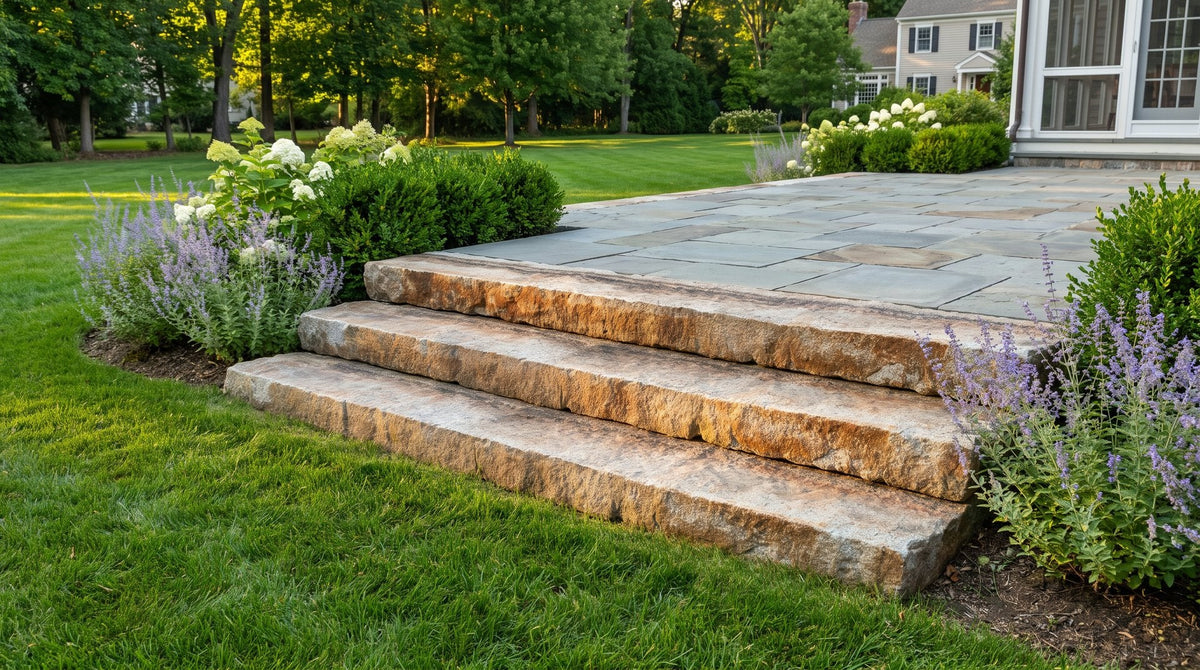
For steps, explore Reclaimed Bluestone Curbstone Steps. Their substantial size works especially well for front entrances, porch transitions, garden stairs, and landings. Our guide to reclaimed bluestone steps covers sizes and layouts.
Build a broad patio using reclaimed slabs, then soften the perimeter with planting beds, a reclaimed brick border, or low stone walls. The worn blue-gray surface creates a comfortable foundation for a dining table, outdoor kitchen, lounge furniture, or fire-pit seating area.
Keep the layout simple. Large pieces of stone, restrained joint lines, and well-planned planting often create a stronger result than a complicated pattern.
Use reclaimed slabs to connect the house to a shed, gate, greenhouse, vegetable garden, or rear seating area. Where the landscape slopes, add reclaimed curbstone steps to create a safe and substantial transition.
This approach works well because the materials feel connected. The path, landing, and steps all share the same family of weathered stone, even though each piece serves a different purpose. For sloped yards, see bluestone garden steps for slopes and terraces.
For an old-world look, use reclaimed bluestone as the main paving material and introduce reclaimed brick at the edges. Brick can define planting beds, create a border course, or form a low garden wall. The warm colors of brick bring contrast to the cool blue-gray stone.
This combination works especially well behind brick homes, around carriage houses, alongside wood fences, and in enclosed side yards where the goal is to create an outdoor room. Our article on how to combine bluestone, antique brick and cobblestone has more pairings.
Start with the architecture. Is the house historic, traditional, modern, rustic, formal, or somewhere in between? A material that looks right on a sleek contemporary house may not feel right beside a 100-year-old brick facade.
Next, look at the surrounding landscape. Mature trees, old brick, granite curbs, stone foundations, and layered planting often support reclaimed bluestone beautifully. Clean concrete, steel, glass, and minimal planting may favor a more uniform new stone finish.
Then think about how much variation you want to see. If you like material with movement, texture, and one-of-a-kind detail, reclaimed bluestone is likely the better fit. If you want consistency, matching pieces, and sharper lines, new bluestone may be more appropriate.
Finally, consider the project as a whole. A patio is not just paving. A front walk is not just a path. These surfaces shape how you move through the property and how the home is experienced from the outside. Choose the material that helps tell the story you want the property to tell.
Reclaimed bluestone is strongly associated with Northeast architecture and historic streetscapes, but homeowners across the United States can use it in their projects. Chief Bricks ships nationwide, making authentic reclaimed bluestone available for patios, walkways, courtyards, garden paths, steps, and entry upgrades far beyond the Northeast.
Before ordering, measure your space and identify the main application. Know your approximate patio or walkway square footage, whether you need steps or landings, and how materials will be delivered and staged on site.
It also helps to coordinate your order with your installer. Reclaimed stone should arrive when the crew is ready to sort, stage, and install it. This keeps the project organized and protects the material from unnecessary handling.
Add the slabs or steps to your cart and enter your address for a shipping quote. If it looks too high, call us at (718) 379-1232; we sometimes have alternative ways to get your stone to your door for a more reasonable price. You can also see our reclaimed bluestone in person at our yard in Nanuet, NY; no appointment is needed, but if you call ahead at (718) 379-1232, we will make sure you get our full attention.
If you want a patio or walk that looks established from day one, usually yes. Reclaimed bluestone brings decades of weathering, softened edges, and color variation that new stone simply has not had time to develop.
New bluestone still earns its place where the design depends on exact dimensions, tight joints, and a crisp contemporary finish. The right choice comes down to the house and the look you want. For many traditional homes, reclaimed stone is the one that feels like it belongs. Our reclaimed bluestone cost guide covers what it costs.
Explore authentic reclaimed stone for your project: Shop Reclaimed Bluestone Sidewalk Slabs for patios and walkways, and browse Reclaimed Bluestone Curbstone Steps for front entries, landings, and garden transitions.
The information provided in our guides, installation tips, and blog content is for general reference only. Every project is unique, and site conditions can vary. We strongly recommend consulting a qualified professional installer to review your specific project and provide final guidance.
Reclaimed Bluestone Curbstone Steps
Reclaimed Bluestone Sidewalk Stones & Slabs
Share: