
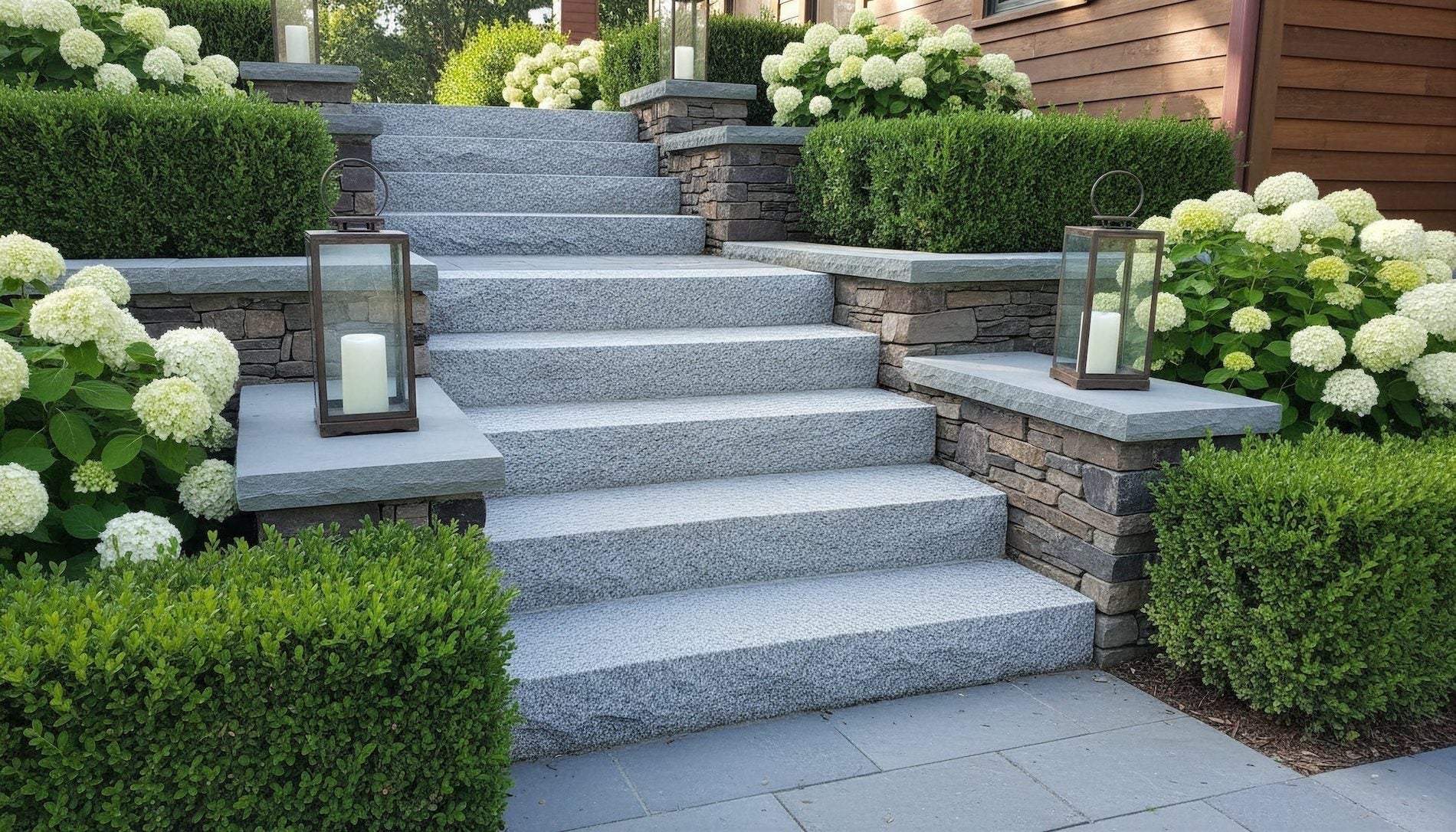
If you are tired of painting wood stairs, tripping on uneven concrete, or worrying every winter about slippery steps, granite steps are a major upgrade. They give your home a solid, permanent entry and a level of curb appeal you normally see in design magazines or high‑end neighborhoods. For New England homeowners in particular, granite stands up to freeze‑thaw cycles, de‑icing salts, and heavy foot traffic better than almost any other residential step material.
This guide walks through what granite steps are, how they look and feel compared to other options, what sizes and styles most homeowners choose, what to expect from installation, and how to budget and care for them over time.
What Granite Steps Are (And Why Homeowners Choose Them)
Granite steps are thick, solid blocks of natural stone used to build exterior stairs at your front door, side door, or in the landscape. Instead of a hollow precast concrete unit or framed wood structure, each step is a heavy piece of stone often 7 inches thick with a textured, thermal slip‑resistant surface.
Many homeowners first notice granite steps when they see them on a neighbor’s home or on a classic New England property. The steps look like they belong to the house, not like a bolt‑on afterthought. They feel solid underfoot and usually tie into other stonework such as granite posts, pavers, or wall caps.
As a homeowner, you might consider granite steps when:
- Your existing concrete or brick stairs are cracked, uneven, or pulling away from the house.
- You are renovating the front of the home and want a more substantial, long‑term solution.
- You are planning a new build and want to choose finishes that support higher resale value.
There are also granite treads, which are thinner 2" slabs that sit on top of an existing structure (like concrete) instead of creating a full, self‑supporting staircase. These are especially useful if you like the layout of your current stairs but want the look and durability of stone.
How Granite Steps Compare to Concrete and Wood
When homeowners research granite steps, they usually compare them to precast concrete and wood or composite stairs. Understanding the differences helps you decide if granite is worth the investment for your home.
Durability and lifespan
Granite is one of the hardest, densest building stones used in residential construction. It is the same type of stone used in bridges, city sidewalks, and heavily used public plazas. Properly installed granite steps can last for generations with minimal maintenance.
Concrete, by contrast, is more likely to crack, chip, or spall under de‑icing salts and repeated freeze‑thaw cycles. Wood and many composites can warp, rot, or fade, especially where snow piles up against them year after year.
Safety and slip resistance
A quality granite step is finished with a thermal (also called flamed) top surface. This gives the stone a fine texture that improves traction when wet or snowy, which is particularly important for New England winters. Many homeowners find that granite feels more secure than smooth troweled concrete after a storm.
You can also choose front edge profiles that fit your household. A rock‑faced nose looks more rustic, while eased or slightly rounded edges are popular in family homes where children and deliveries use the stairs every day.
Curb appeal and resale value
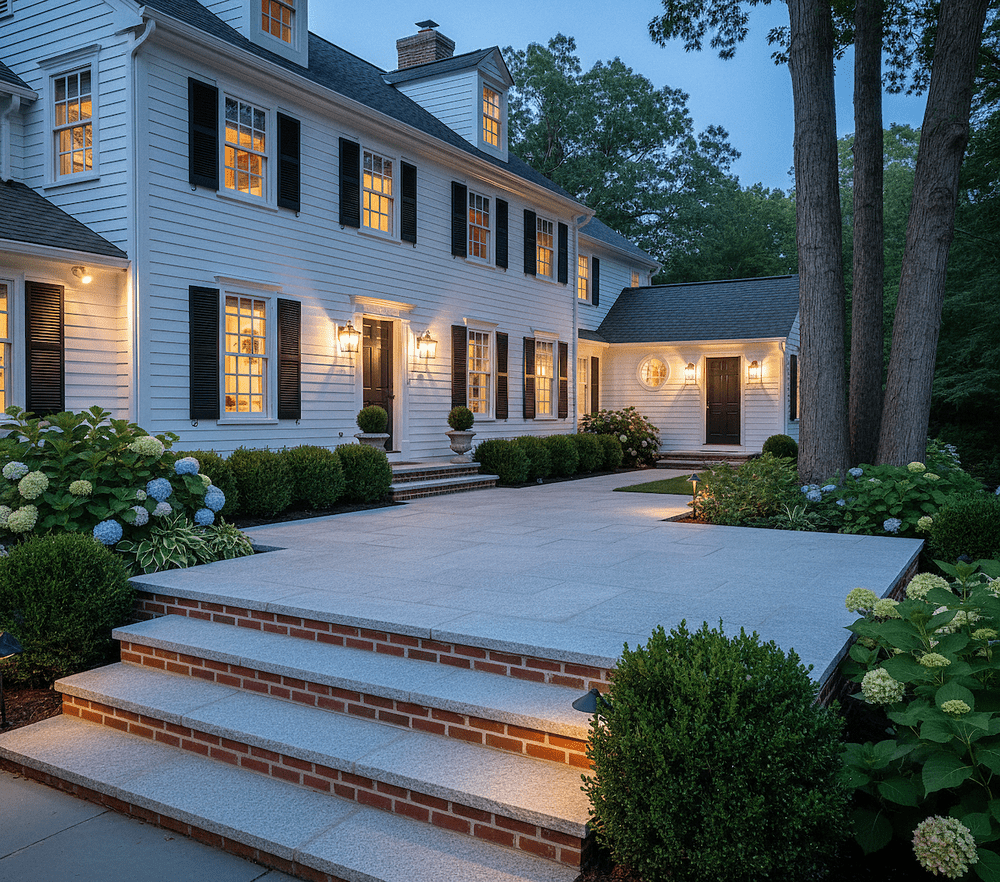
Granite steps dramatically change how a home looks from the street. Instead of a builder‑grade concrete stoop, the front door becomes a feature: wide stone treads, crisp edges, and a color that ties your siding, roof, and walkway together.
Real‑estate agents and appraisers often note that high‑quality masonry and stonework support resale value, especially in markets where buyers expect classic materials. Coordinating granite steps with matching posts, mailboxes, or pavers strengthens that impression of quality.
Maintenance
Granite steps require very little ongoing care. A quick sweep and occasional rinse are usually enough. Concrete and wood, on the other hand, may need patching, sealing, staining, or repainting over time. For busy homeowners, granite offers peace of mind: once it is installed correctly, you mostly stop thinking about it.
Real World Uses For Granite Steps
You might be wondering how flexible granite steps are outside of a classic front porch. The truth is, they show up in everything from estate veneer projects to simple garden paths because the durability and slip-resistant finishes make them a safe, long-term choice in all kinds of climates.
Read “Design Trends: Modern Landscapes with Granite Steps” for more ideas on how steps connect with modern architecture and mixed-material hardscapes.
Residential front entrances
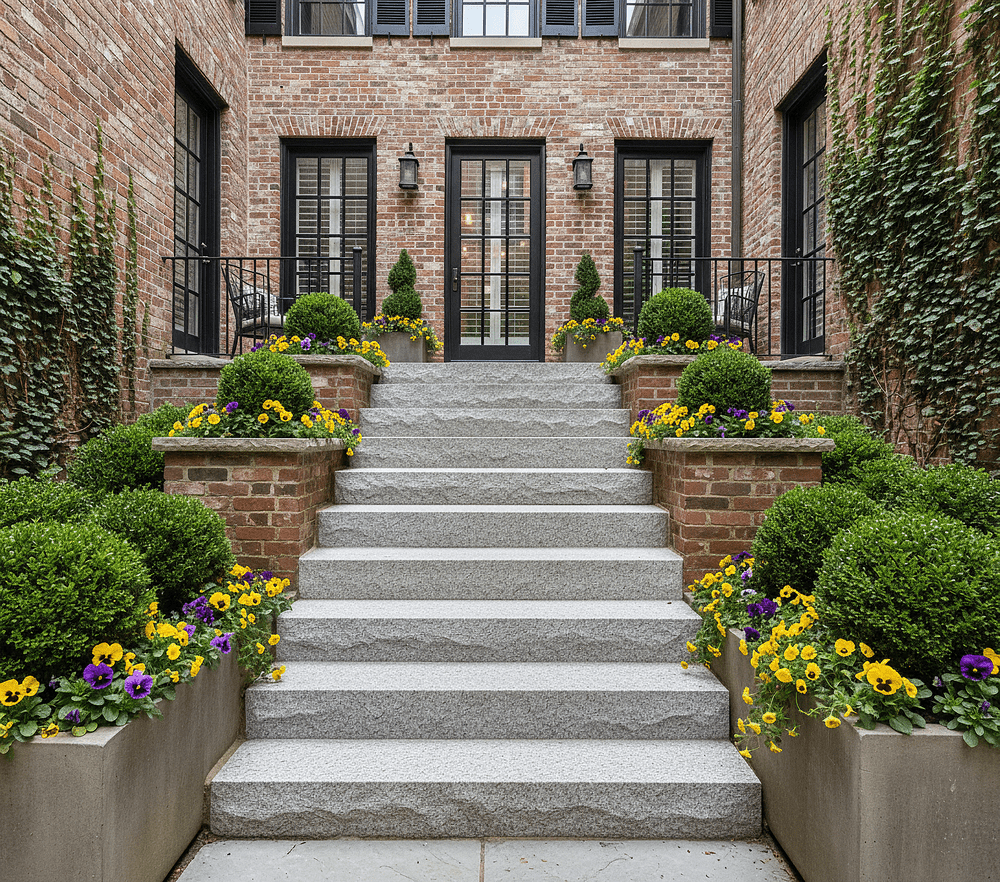
This is the obvious use, and still the most common. Many New England and Northeast homes now pair granite steps with stone veneer facades, brick walkways, or cobblestone aprons to create an entrance that looks upscale and stands up to freeze–thaw cycles.
The Chief Bricks inspiration gallery shows plenty of real-world projects for homeowners trying to visualize color, edge profiles, and configurations. You will often see steps paired with granite mailbox posts, lamp posts, or curbing so everything reads as one coordinated entry feature.
The key is sizing the steps so the width and number of risers feel proportional to the facade, not too narrow or visually heavy. Matching the steps to an estate veneer series or to the same Chief Gray™ used in pavers and curbing helps tie the whole front elevation together.

Garden and landscape stairways
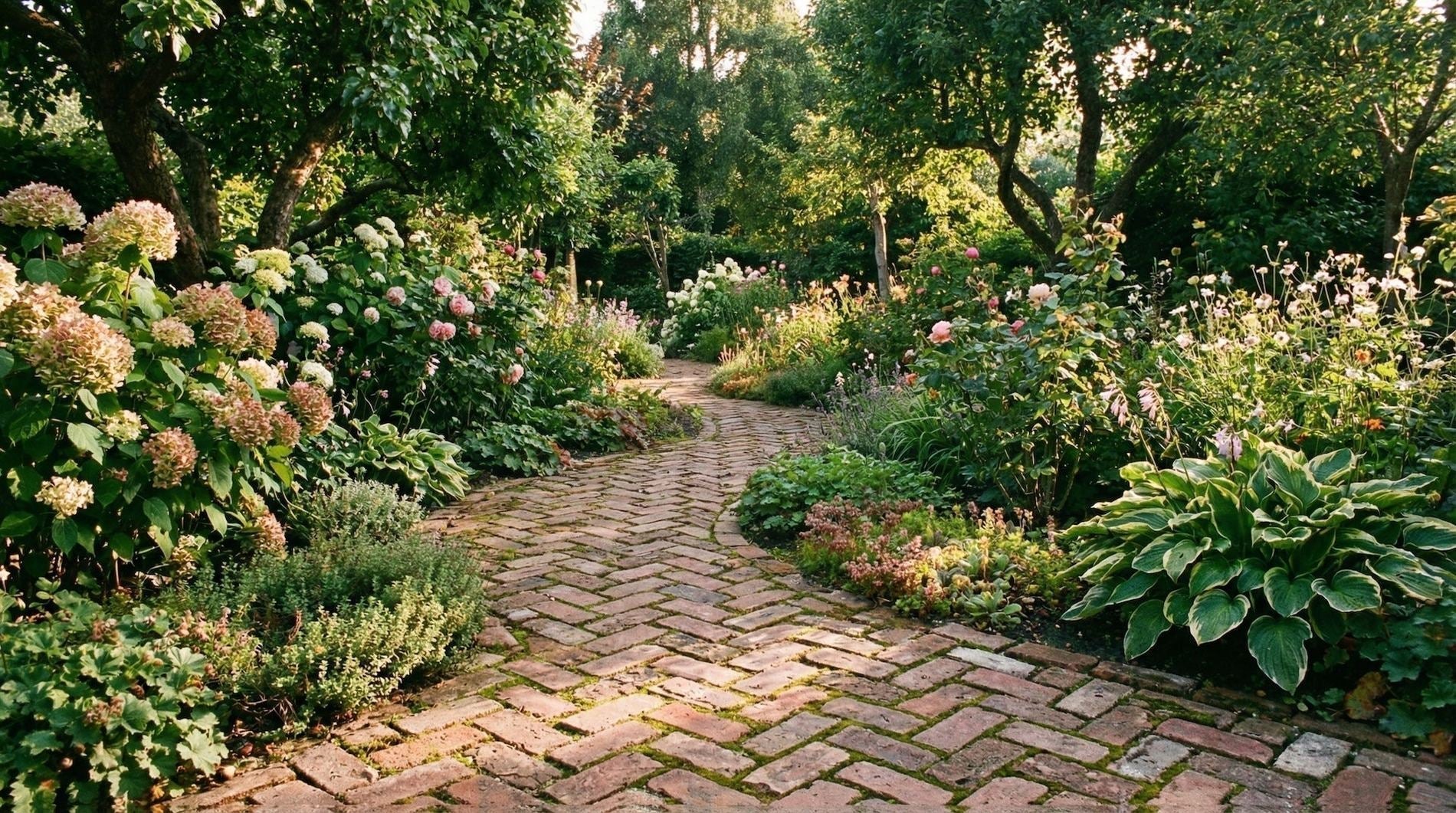
Granite steps are equally at home in sloped gardens, woodland paths, and side-yard connectors. In these settings, the stone blends naturally with boulders, retaining walls, and layered planting beds while offering a stable, non-slip route through the grade change.
Landscape architects often set steps into hillside cuts over a compacted gravel base or concrete footing to combine drainage with the bearing needed for heavy stone units. They sit comfortably next to stone birdbaths, rustic benches, or small viewing patios surfaced in pattern pavers or cobbles.
The overall effect feels organic and informal, but the underlying layout, base prep, and riser/tread geometry are still very intentional. These paths frequently become secondary circulation, leading to quiet seating areas, fire pits, or garden rooms paved in complementary granite.

Commercial, institutional, and urban sites
Granite steps are a workhorse material in city plazas, public buildings, transit entries, and campus projects because they tolerate constant foot traffic and de-icing products far better than many cast concrete alternatives. Large-format slabs, extended runs, and wide landings are common here to handle crowd flow and accessibility requirements.
On bigger jobs, design teams often start with manufacturer or supplier resources that spell out available sizes, finishes, and edge treatments for code-compliant stair runs. The same principles apply as in residential work, but spans are longer and details like handrails, lighting, nosings, and edge visibility become critical to meeting egress and safety codes.
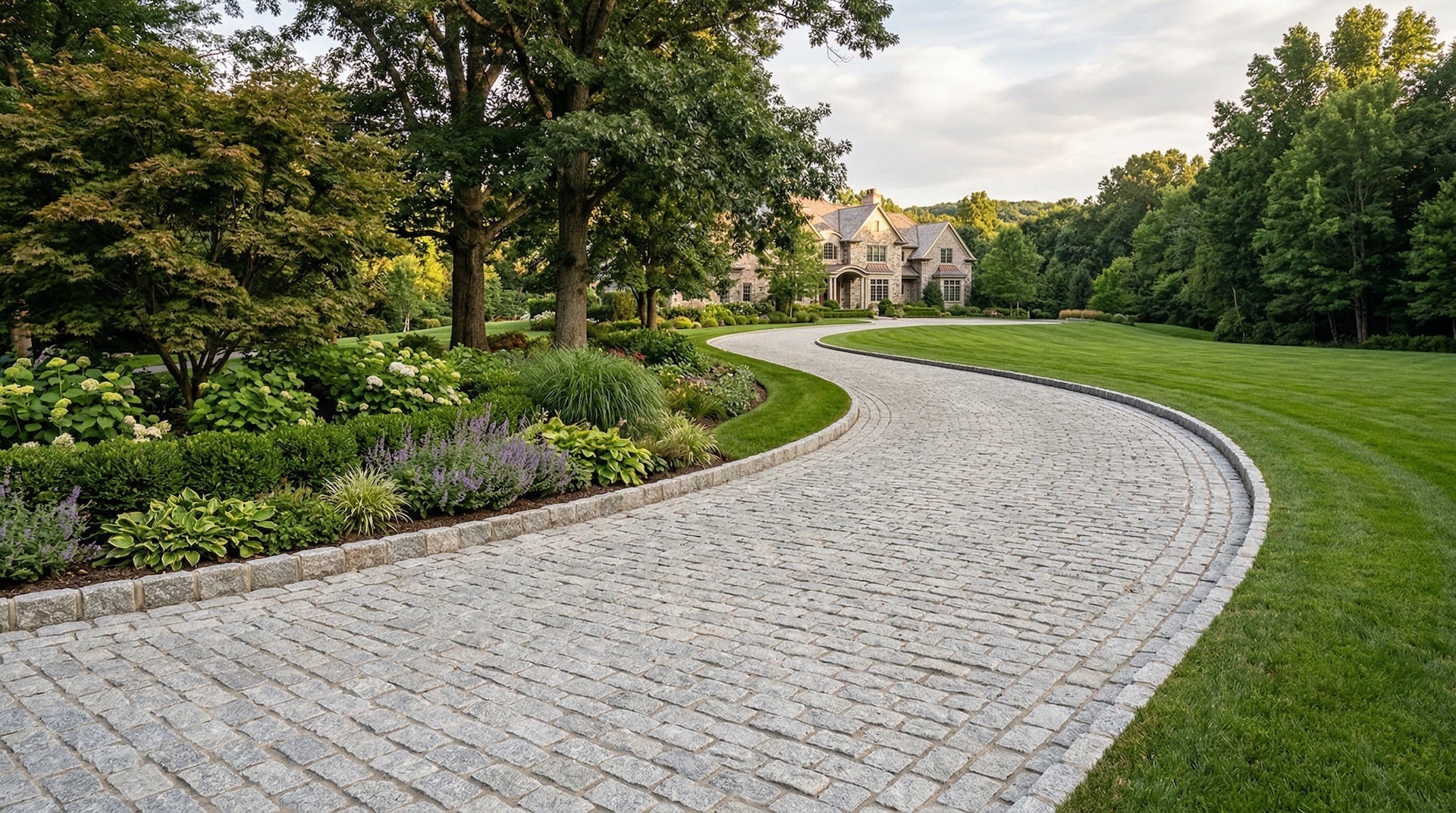
Granite also appears as pool coping, terrace steps, and amenity-level stairs in hotels and multifamily projects, where owners want materials that still look sharp after years of use. Coordinating steps, treads, and coping with granite pavers or curbing keeps the entire hardscape palette consistent across the site.

Granite Step Sizes, Styles, and Colors Homeowners Love
One of the most common homeowner questions is, “What size granite steps should I get, and what will they look like?” The good news is that Chief Bricks offers standard sizes that cover most homes, along with custom options for unique entries.
Typical granite step dimensions
While every project is different, most exterior granite steps fall within certain comfortable ranges.
- Step height: 7 inches for exterior stairs.
- Step width: frequently 13 to 24 inches, with deeper widths at main front entries.
- Step length: frequently 3, 4, 5 or 6 feet, with longer steps available on custom orders
Homeowners often choose step lengths such as 4 feet, 5 feet, or 6 feet, depending on how wide the front door and porch are and how much presence they want. Longer and wider steps instantly make the entry feel more welcoming and easier to navigate when multiple people are coming and going.
Profiles and edge details
The front face of the step—what you see from the street—can be finished in several ways.
- Rock‑faced (standard): a hand‑split, textured face for a traditional, historic, or rustic look.
- Straight / thermal‑eased (custom): a cleaner, more modern profile with softened edges for comfort.
- Radius or curved: custom‑cut steps that follow a curved porch or walkway and create a very distinctive entry.
If your home has a more classic or farmhouse style, rock‑faced fronts paired with neutral gray granite often look right at home. For newer builds with black windows and simple lines, straight edges and slightly darker stone can feel more contemporary.
Color and matching other stone
For most homeowners, the most versatile choice is a neutral gray granite with consistent color across all pieces. Proprietary blends such as Chief Gray™ in the Chief Bricks product range are specifically quarried for uniform color and grain, so your steps, pavers, posts, and wall caps all match.
You can also choose warmer or darker tones to complement specific siding colors or to add contrast against pale clapboard or trim. A good rule of thumb is to bring photos of your home and, if possible, a piece of your siding or paver sample when visiting a stone yard.
What Homeowners Should Know About Granite Step Installation
Granite steps are heavy and require proper equipment and base preparation, so most homeowners choose to work with a mason, landscape contractor, or builder rather than tackling installation alone. Understanding the basic process will help you have better conversations with contractors and evaluate quotes.
Base options: concrete pad vs gravel
No matter how beautiful the stone is, it will not perform if it sits on soft or unstable soil. Contractors typically use one of two base systems.
- Concrete pad: Common at front doors and main entries where long‑term stability is critical, poured over a compacted gravel base and sized to extend beyond the footprint of the lowest step.
- Compacted gravel base: Used more often for garden stairways and small grade changes in the landscape, built with layers of crushed stone compacted to create a firm, well‑drained platform.
In colder climates, the contractor also needs to consider frost depth so the base is not forced upward by freezing and thawing soils. This is one of the details that separates professional installations from DIY attempts that look good at first but move over time.
Typical installation steps
While every site is unique, most installations follow a similar sequence.
- Measure the total rise from the lower grade to the finished porch or threshold.
- Decide on the number of risers and step sizes based on comfort and code requirements.
- Excavate for the base, add compacted gravel, and, if used, pour the concrete pad.
- Use a skid steer, crane, or specialty equipment to set the first granite step perfectly level.
- Stack additional steps or install treads, checking level and alignment as the stair rises.
- Finish surrounding areas with pavers, walkways, or plantings to tie the entry together.
As a homeowner, you can ask prospective contractors to walk you through how they handle base prep, drainage, and step alignment. Good installers are usually happy to explain their process.
Budgeting: How Much Granite Steps Cost for a Home
Exact pricing depends on your local market, the stone you select, and the complexity of your site, but understanding what drives cost will help you plan.
What affects granite step pricing
- Size and number of steps: Larger, wider, and deeper steps use more material and weigh more, which can add to both stone and equipment costs, and a long multi‑step staircase will cost more than a simple two‑step entry.
- Stone selection and finish: Standard gray granite with thermal tops and rock‑faced fronts is typically the most economical, while special colors, textures, and curved or radius steps often carry a premium.
- Access and site conditions: Limited access for equipment, steep slopes, major excavation, and demolition of existing stairs all influence final installed cost.
Many homeowners think of granite steps in terms of installed cost per step rather than just the stone price, and getting detailed quotes that separate materials, base work, and installation is a smart way to compare options.
Caring for Granite Steps Over the Long Term
One of the biggest advantages of granite is how little it asks from you after installation. With a few simple habits, your front steps can look good and feel safe for decades.
- Regular cleaning: Sweep off sand, leaves, and debris and occasionally rinse with water to keep the surface tidy and reduce staining.
- Seasonal checks: Each spring, look for movement, rocking, or gaps and confirm that water runs away from the house instead of pooling at the base of the steps.
- Winter care: Use de‑icing products approved for natural stone and shovel snow promptly so packed ice does not sit on the treads for long periods.
Compared to repainting wood or patching concrete every few years, these tasks are straightforward and fit easily into a normal home‑maintenance routine.
Conclusion
Granite steps do more than get you from point A to point B. They send a quiet signal that this entrance matters, that someone cared enough to pick a material that will be there for your kids and theirs. They define your entry / backyards and elevate the property.
Architects appreciate the design control, homeowners like the feeling of safety underfoot, and builders respect how these pieces perform under real abuse. Backed by producers such as Chief Bricks, granite steps are a proven, well documented system rather than a guess. Whether you choose granite steps or treads, the quality stands out.
If your current entry feels tired, this might be the moment you trade quick fixes for stone that lasts, and bring granite steps into your next plan. From stone pavers to stone benches, integrating granite creates a cohesive and lasting landscape.



Share: