

The outdoor spaces people remember are the ones that feel effortless to spend time in. A simple patio or pool deck can work, but granite landings, treads, and pattern pavers give those areas the kind of finish you expect from a boutique hotel or well-designed resort.
Granite brings a calm, grounded look to patios and pool areas. It has enough character to feel natural, but enough consistency to work with modern furniture, outdoor kitchens, and clean-lined architecture. Most importantly, it is built for bare feet, wet footprints, and everyday life outside.
In this article, you will see how granite steps, landings, and paving can shape patios, transition zones, and pool areas, with a focus on design, comfort, and lifestyle across a range of U.S. climates.
Table of Contents
- Why Granite Works So Well for Outdoor Rooms
- Design Ideas for Granite Patios and Landings
- Using Granite Around Pools and Water Features
- Planning Flow Between Doors, Landings, and Patios
- Finishes, Comfort, and Slip Resistance
- Installation Basics for Patios and Pool Decks
- Maintenance and Longevity in Outdoor Settings
- Working with Stone Suppliers and Outdoor Designers
Why Granite Works So Well for Outdoor Rooms
Outdoor living spaces have to do more than look good on day one. Patios and pool decks see furniture dragging, spilled drinks, dropped grilling tools, and constant sun and water. Granite is one of the few materials that can handle all of that gracefully.
Granite paving is naturally hard, dense, and weather-resistant. It stands up to UV exposure, temperature swings, and heavy foot traffic without fading or wearing smooth quickly. In many cases, it stays cooler underfoot than darker, man‑made surfaces, which matters around sunny pools.
Visually, granite sits in the sweet spot between luxury and relaxed. You can keep things minimal with large-format, light grey pavers, or lean rustic with smaller pattern pavers and cobbles. Either way, the material reads as high‑end and permanent.
Design Ideas for Granite Patios and Landings
Patios and landings do a lot of quiet work in an outdoor layout. They connect doors to yards, tie together different levels, and host everything from coffee for two to big celebrations.
Modern entertaining patios
Light, silver-grey granite pavers are a favorite for modern patios. Their cool tone pairs well with black or teak furniture, metal railings, and slim-profile outdoor kitchens. A flamed or textured surface adds subtle interest while keeping the area practical when it rains.
Running one paving pattern from the back door landing out across the main patio helps everything feel like a single outdoor room. You can then define dining and lounge zones with furniture, planters, and lighting rather than changing materials.
Classic garden terraces
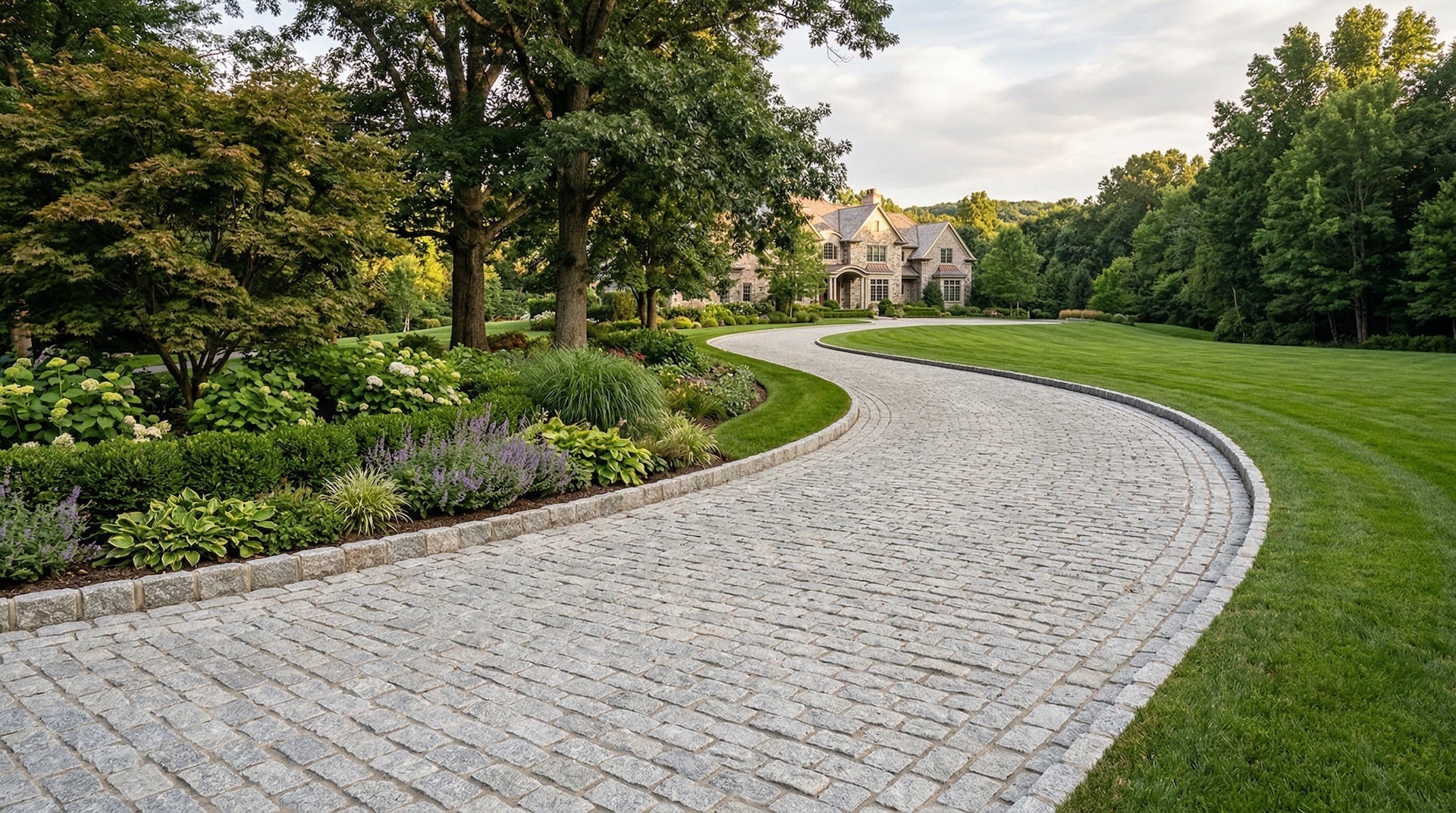
For more traditional homes, smaller-format granite pattern pavers or cobbles can create terraces that feel timeless. Soft joint lines and gentle color variation sit nicely next to planting beds, stone walls, and classic outdoor furniture.
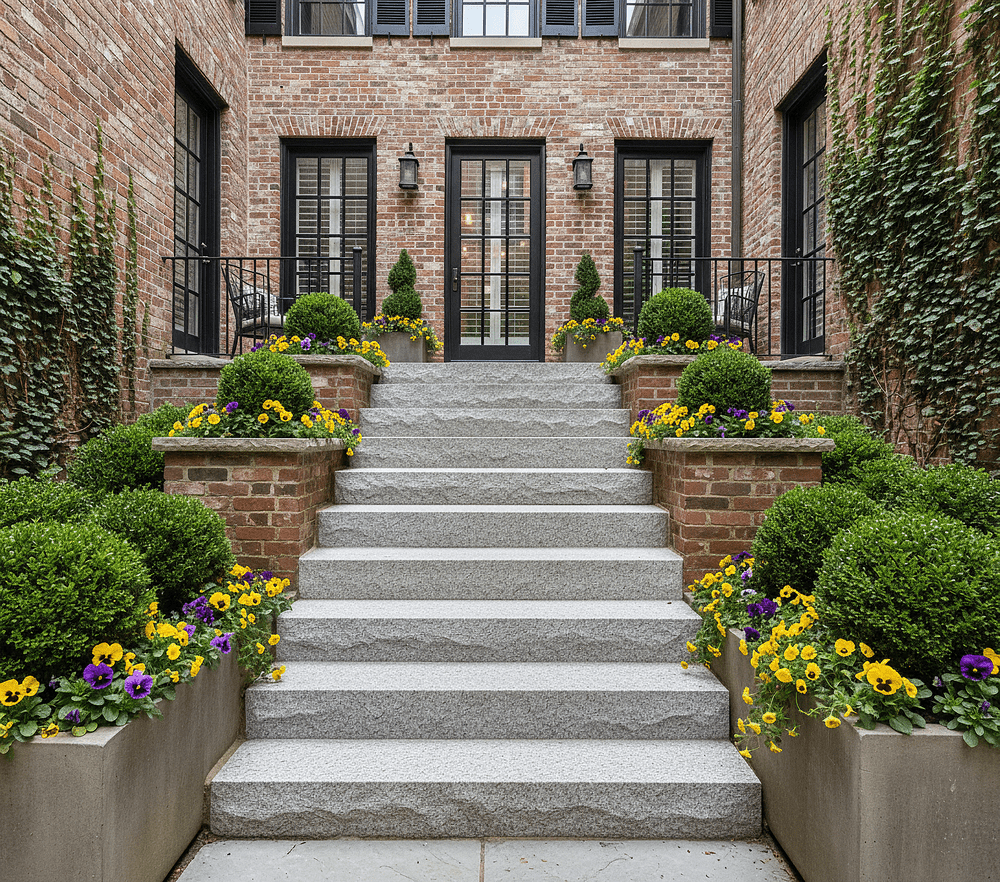
Stepping down from the house with a granite landing, then onto a slightly lower terrace, is a simple move that adds depth and makes even modest yards feel layered.
Everyday landings that feel special
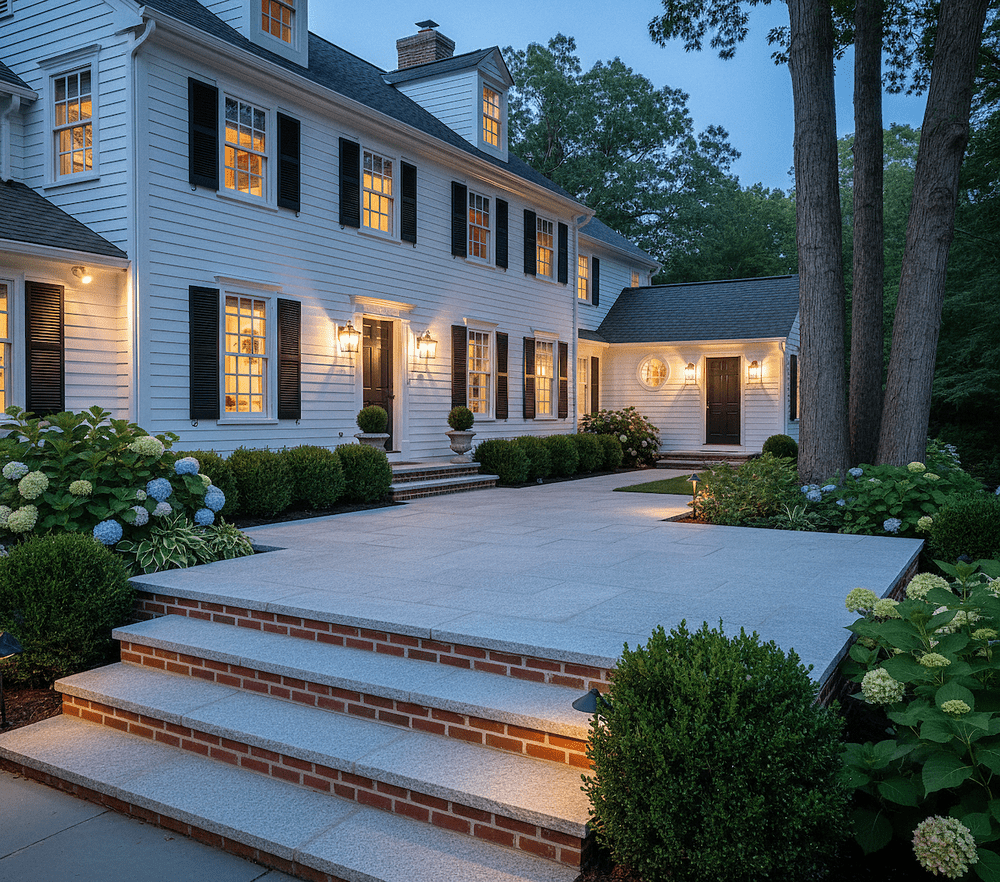
Not every landing has to be large to make a difference. Even a modest granite platform outside a patio door, side entry, or mudroom can change how you use that transition. It becomes a place to pause, kick off shoes, or set down bags before moving inside.
By matching the landing stone to nearby patio or walk materials, you avoid the “add‑on” look and get a consistent, finished feel across all the outdoor zones.
Using Granite Around Pools and Water Features
Pool areas and water features push paving materials harder than almost any other outdoor zone. There is constant moisture, bare feet, and often sunscreen and pool chemicals in the mix. Granite, when finished correctly, handles this combination exceptionally well.
Pool coping and main deck
Granite pavers and coping give pools a clean, tailored edge. Textured granite offers strong grip for wet feet, making it a safe choice around water compared to polished stone or smooth concrete.
Choosing lighter shades helps keep the deck more comfortable in strong sun. Many homeowners run the same granite from the coping out onto lounge areas so the pool feels integrated with the rest of the outdoor living space.
Transition landings and steps
Between the house and pool, granite landings and wide steps smooth out changes in grade. These transition zones are also perfect spots for seating walls, planters, or an outdoor shower.
Using granite for stair treads, landing edges, and key circulation paths makes the space feel coherent, even if you mix in other materials like wood decks, turf, or gravel elsewhere.
Relaxed lounge zones
Granite patios are a natural fit for lounge areas with daybeds, sectionals, and fire features. Their stable surface keeps furniture level and wobble‑free, which matters when you are setting drinks on low tables or balancing a plate on your lap.
Because granite weathers gracefully, these lounge zones tend to look better over time than softer or heavily coated surfaces that can chip, peel, or stain easily.
Planning Flow Between Doors, Landings, and Patios
Great outdoor spaces feel easy to move through. That ease comes from planning how people actually live and circulate, not just where the furniture will sit in a rendering.
Connect thresholds with generous landings
Start by looking at your main doors: kitchen sliders, living room doors, or a walk‑out basement. Each one benefits from a level, generous granite landing that matches or slightly exceeds the door width. This reduces awkward steps and makes moving trays, plants, or furniture in and out simpler.
From those landings, think about the shortest, most natural routes to key destinations: the grill, dining area, pool, or a detached structure. Granite paths and steps that follow those desire lines make the whole yard feel intuitive.
Use level changes to your advantage
Small drops in grade are opportunities to create distinct outdoor “rooms.” A couple of granite treads down from a house landing can mark the shift from an everyday patio to a more relaxed lounge or fire pit zone.
On sloped sites, you can borrow ideas from hillside gardens: short runs of steps, small landings, and granite edges that double as casual seating.
Finishes, Comfort, and Slip Resistance
Because patios and pool decks are barefoot spaces, finish choices matter as much as color. The goal is a surface that feels good underfoot, stays comfortable in the sun, and provides traction when wet.
Textured finishes for grip
Flamed granite creates a micro-rough surface that increases grip without feeling harsh. This finish significantly improves slip resistance compared to polished granite and are widely recommended for pool surrounds and wet areas.
In contrast, polished granite should generally be avoided on pool decks and high‑traffic wet zones, where it can become slick under water and sunscreen.
Color and heat underfoot
Light and mid-grey granites tend to stay more comfortable in direct sun than very dark stones, which absorb more heat. This makes them popular choices for pool decks and exposed patios.
Beyond comfort, color also sets the tone of the space: cool greys feel modern and crisp, while warmer tones can soften the look and blend into surrounding planting and decking.
Installation Basics for Patios and Pool Decks
Even the best stone will not perform well if it is not supported correctly. Patios and pool decks must deal with water, ground movement, and concentrated loads from furniture and structures.
Stable base and drainage
Most granite patios and pool decks are built on a compacted aggregate base with proper grading, or on a concrete slab designed for the site conditions. In both cases, the goal is a stable, well‑drained platform so pavers do not settle or rock.
Perimeter restraints, properly compacted bedding layers, and thoughtful jointing help keep pattern pavers locked in place even with frequent use.
Details at edges and transitions
At pool edges, steps, and perimeter transitions, careful detailing makes the difference between a surface that feels finished and one that feels improvised. Granite coping, nosed treads, and aligned joints all contribute to a clean look and comfortable step edges.
Expansion joints, movement joints, and flexible transitions to adjacent materials help the system handle temperature changes without cracking or losing alignment.
Maintenance and Longevity in Outdoor Settings
One of the biggest lifestyle benefits of granite is how little you have to think about it once it is in. Compared to many composite or coated surfaces, granite tends to age in place rather than fail suddenly.
Routine cleaning
Most granite patios and pool decks stay in good shape with occasional rinsing, sweeping, and spot cleaning where food, drinks, or leaves land. Because the stone is so dense, surface staining is less of a concern than with more porous materials.
When needed, pH‑neutral cleaners designed for natural stone are usually enough to refresh the surface without damaging finishes or nearby plantings.
Sealing and surface treatments
Some homeowners choose to seal granite to increase stain resistance or fine‑tune slip resistance, especially in high‑use outdoor kitchens or around pools. Others leave the stone unsealed and rely on its natural performance. Both approaches can work when products are chosen for exterior stone and applied correctly.
In very wet or shaded areas, anti‑slip coatings can further boost traction if needed, provided they are compatible with granite and outdoor conditions.
Working with Stone Suppliers and Outdoor Designers
Because patios, landings, and pool areas are at the heart of outdoor living, it makes sense to treat them like any other major room in the house. That means planning them intentionally and choosing materials with care.
Chief Bricks will help you match granite colors, sizes, and finishes to your climate, design style, and budget. A landscape designer or contractor can then translate those choices into a layout that feels effortless to use, from the first step out the door to the last lounge chair by the pool.
When all of those decisions line up, the result is more than just a hard surface. It is a granite‑framed outdoor room that quietly hosts mornings, parties, and everything in between, season after season.



Share: