
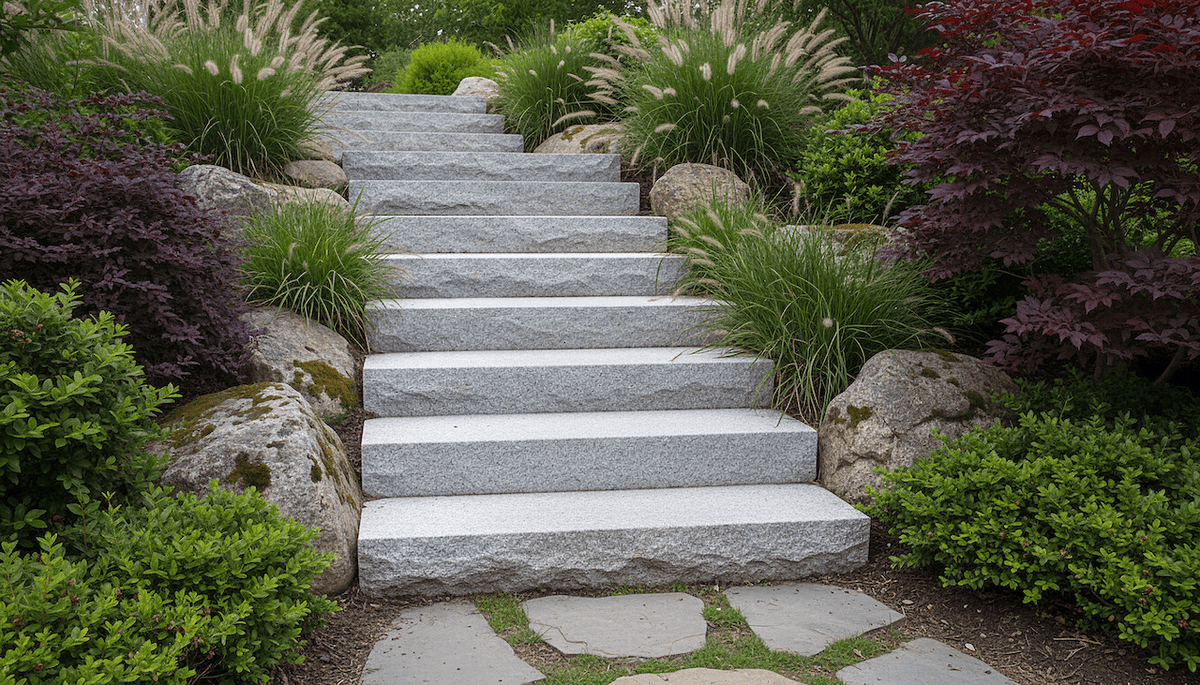
You do not build a natural stone staircase because you want something plain. You build it because you want that feeling. The solid step under your feet and the cool touch of stone in summer define the experience.
A set of natural stone steps can do that for your home, patio, or garden. These features withstand years of foot traffic and harsh weather. You are probably asking questions about outdoor stone durability, safety, and cost.
This planning guide covers materials, layout, and installation tips. You will learn to choose the right stone slabs and avoid common pitfalls. Real-world advice replaces fluff here.
Maybe you are a homeowner tired of a cracked concrete stoop or a muddy shortcut down the side yard. You might be a designer or landscape architect looking for steps that tie a patio, a door and a sloped garden together. Or maybe you are a contractor or mason who wants the sizes, weights and base details pinned down before the stone arrives on a truck.
Table of Contents:
- Why Homeowners Fall In Love With A Natural Stone Staircase
- Popular Stone Choices For Staircases
- Natural Stone Staircase Design Basics
- Structural Basics Under Every Good Stone Stair
- How Natural Stone Works With The Rest Of Your Hardscape
- Safety, Traction, And Maintenance
- Planning Your Project Like A Pro
- Finishing Touches That Take A Staircase From Good To Great
- Cost, Value, And Long Term Thinking
- Conclusion
- Is a Natural Stone Staircase Worth It?
Why Homeowners Fall In Love With A Natural Stone Staircase
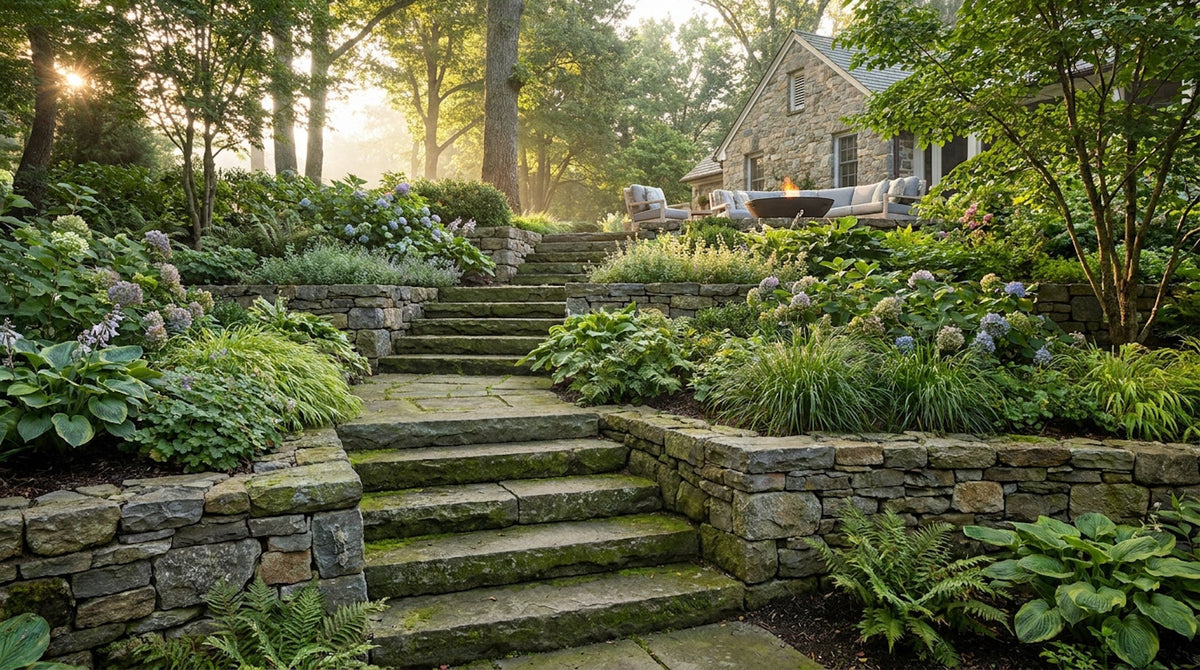
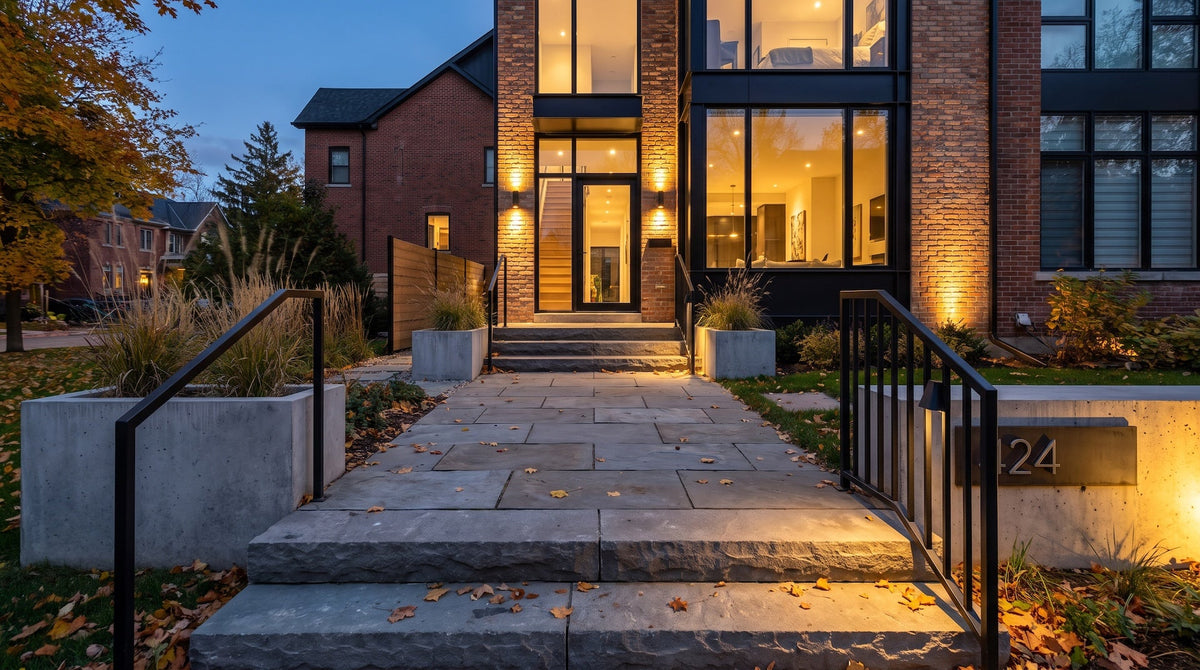
There is a reason historic homes still have their original stone steps. Stone feels grounded in a way poured concrete or wood never does. Each block carries a pattern that creates a total backyard transformation.
Modern hardscape suppliers understand this appeal. If you browse product lines, you will see steps, pavers, and edging stones that are made to work together.
This matters because your outdoor spaces should flow together. A staircase usually connects a patio to a door or terraces in a sloped yard. Matching stone products makes the project look intentional instead of pieced together.
Popular Stone Choices For Staircases
Let us walk through the common stone options you will see on quotes. They do not all behave the same once they are in your yard. Choosing the wrong one for your climate can cause headaches later.
| Stone type | Typical look | Best uses |
|---|---|---|
| Granite | Speckled, dense, very hard | Granite steps for heavy use, freeze thaw climates |
| Reclaimed bluestone | Blue gray, fine grain, weathered patina | Curbstone steps for entries and garden stairs, walkways |
You may also see limestone and sandstone on quotes. They are softer stones, so this guide focuses on the two that Chief Bricks carries for outdoor stairs: granite steps and treads, which are new granite imported from India, and reclaimed bluestone curbstone steps.
These can come as big pre-cut steps or as irregular slabs you stack. Manufacturers carry stone products cut to consistent heights, depths, and lengths. This helps builders set them faster and get even risers.
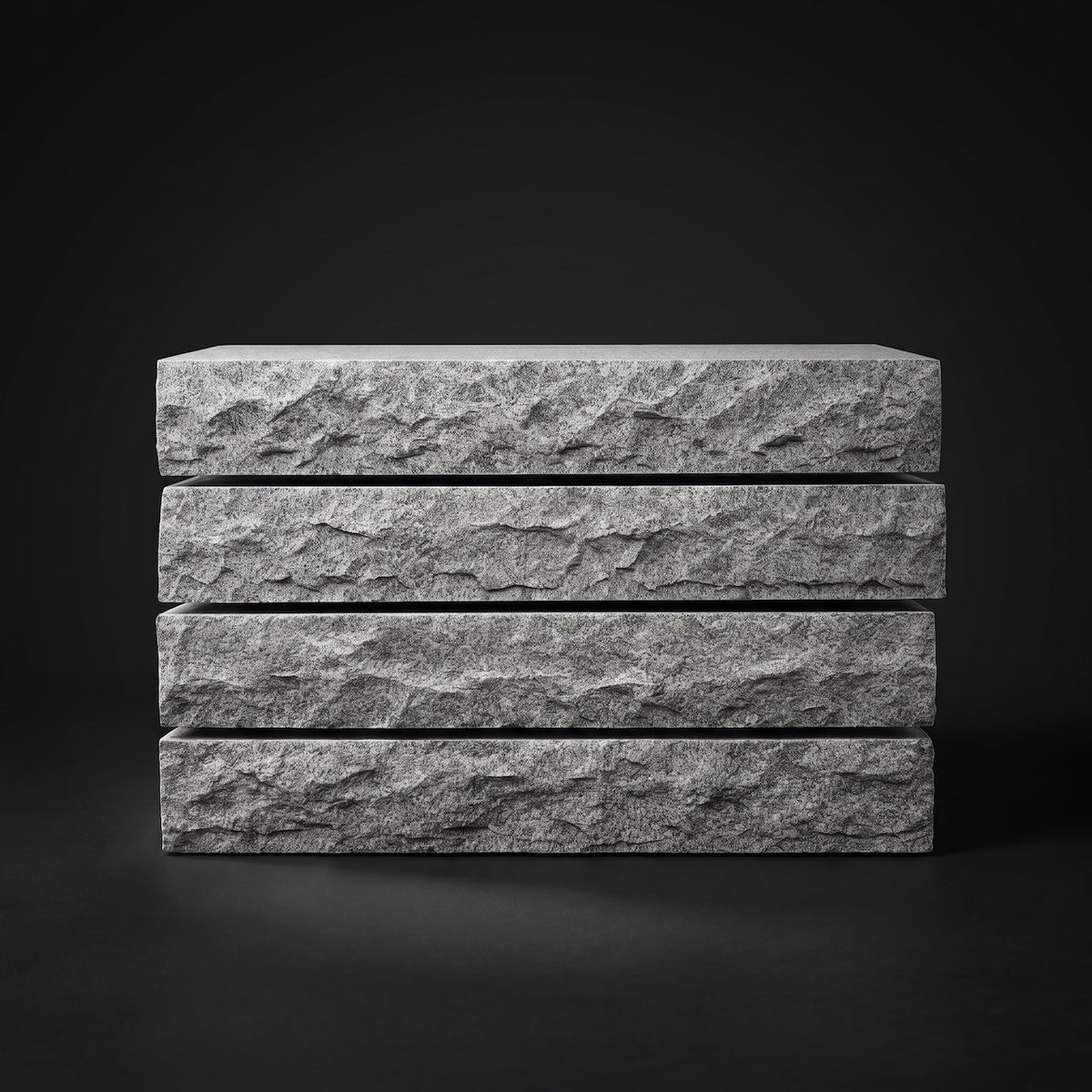
Chief Bricks granite steps and treads are stocked in 3 to 6 foot lengths; 7 and 8 foot lengths are available by custom order only. Reclaimed bluestone curbstone steps run 2 to 8 feet long, 14 to 20 inches deep and 4 to 6 inches thick. Mixing natural stone pieces with precast products is also popular.
Natural Stone Staircase Design Basics
Before you fall in love with a sample, figure out what will feel safe. That starts with some basic stair math. Skip this part, and you get a staircase that trips people up.
Rise, Run, And Comfort
Most building codes call for stair risers between 4 and 7.75 inches tall. Outside steps feel best a bit wider and lower. People move more casually outdoors and often carry bags or gear.
Design advice usually suggests 5 to 7 inches for risers and 13 to 18 inches for tread depth. Check the rise and the tread depth together to ensure comfort. Matching standard modules will save cutting time.
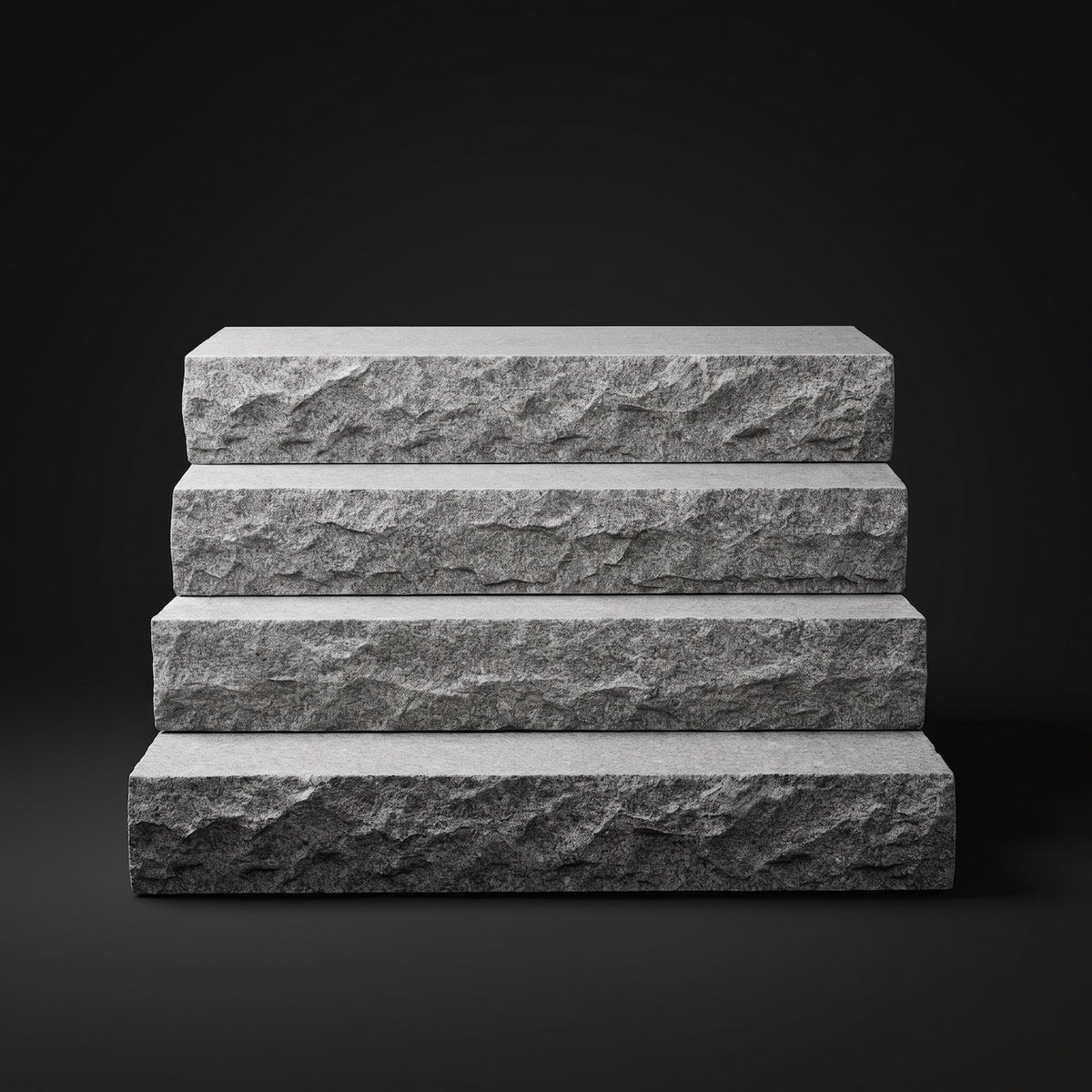
You can get stones pre-cut close to these sizes. Our granite steps rise 7 inches each and come 13, 18, 24, 36 and 48 inches deep, so the 13 and 18 inch depths sit right in this range. Your contractor should still measure your actual grade and adjust. Starting with smart sizes helps keep everything consistent.
Width, Flow, And How People Move
Consider who will use this natural stone staircase. If it is a main entry, 4 to 5 feet wide feels right. Steep inclines might require landings to break up the run.
Side yard access stairs can drop down to 3 feet if space is tight. Anything less than that feels cramped fast. If you carry planters or tools, you will want more room.
If you picture yourself sitting on a step, plan a wider top step. You can add a landing made with matching stone; a 36 or 48 inch deep granite step works as a landing on its own. This creates a welcoming transition zone.
Structural Basics Under Every Good Stone Stair
The prettiest stone will move or crack if the base under it fails. This is where good installers earn their money. The base and drainage work are rarely seen but are vital.
A common steps build up for dry laid outdoor stairs looks like this.
- Excavate about 12 inches, below topsoil and any organic matter, and about 6 inches beyond the steps at the sides and front.
- Fill with processed gravel (3/4 or 1 inch crushed base), not pea stone, small crushed stone or sand, and compact it in 3 to 4 inch layers.
- Finish the base level at the height of the bottom of the first step.
- Set each step dry, pitched about 1/4 inch away from the house over its depth so water sheds off, with plastic shims out of sight toward the inside edges to fine-tune level. Test each step for rocking before setting the next.
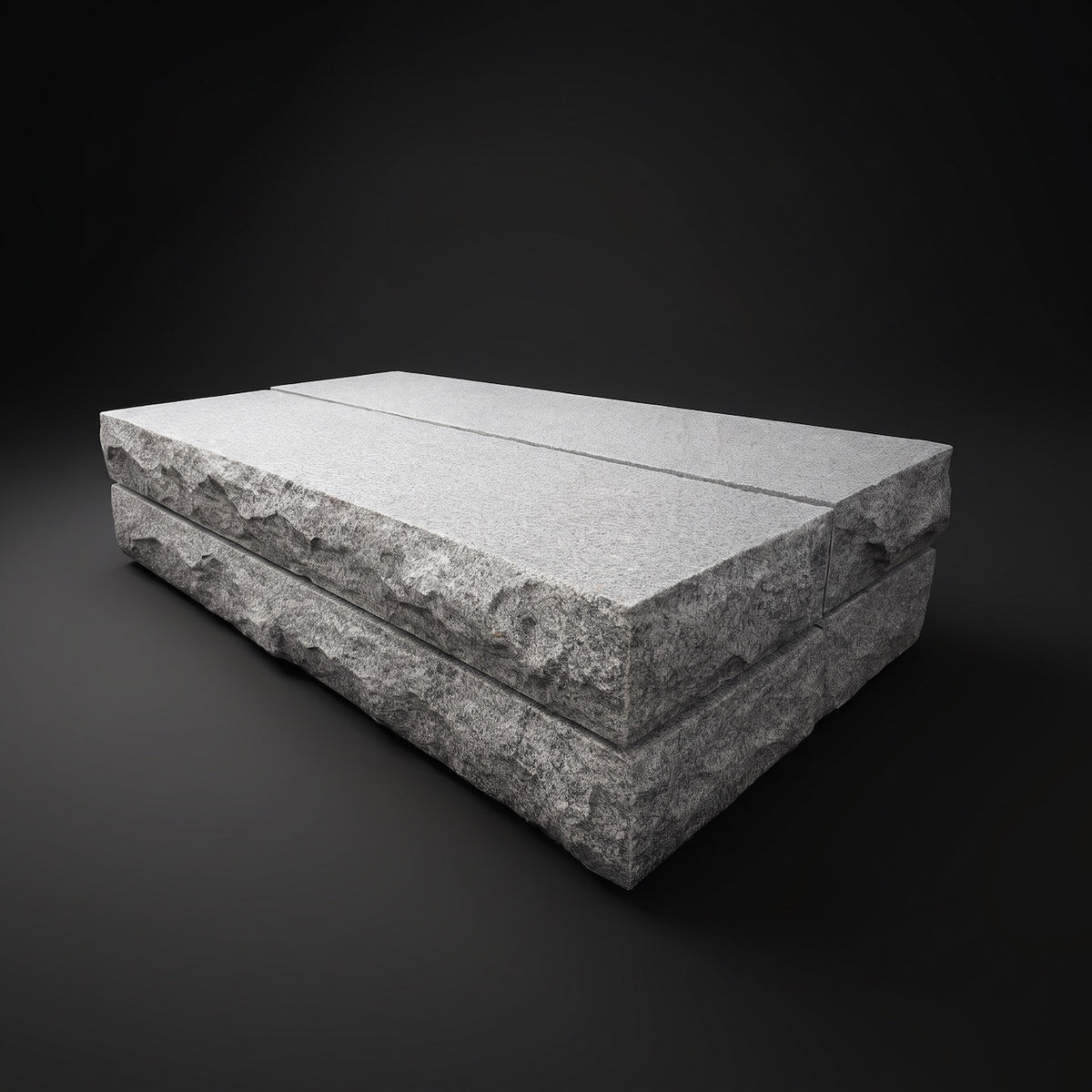
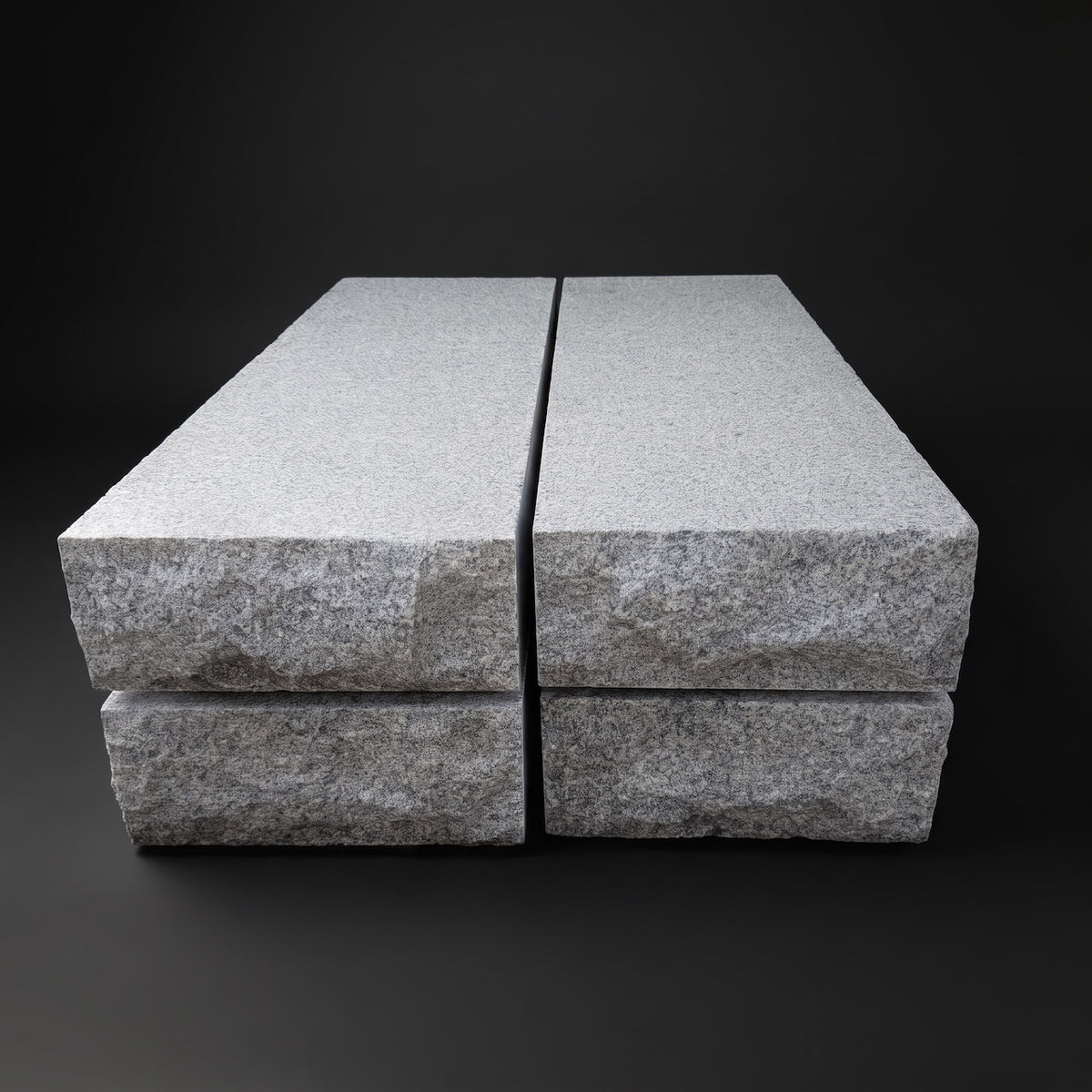
With granite steps, granite step fillers set in pairs under each step, about 1/2 inch back from the front edge, build the rise, and each step overlaps the one below by about an inch. Large, heavy sets at a front door usually go on a concrete pad about 6 inches thick, formed level and a little larger than the steps, ideally over compacted gravel; check local code and frost depth. For bluestone, our guide on how to install reclaimed bluestone steps walks through base, layout and setting.
You can rent a plate compactor to compact the gravel properly. This keeps your natural stone staircase from settling weirdly. It prevents the steps from turning into a tripping hazard later.
Proper compaction keeps the base layers from shifting. For large structural runs, most homeowners bring in a contractor. You can handle planting or lighting on your own later.
How Natural Stone Works With The Rest Of Your Hardscape
A staircase rarely stands alone. You want the steps, patios, and retaining walls to talk to each other visually. This is easier now than ever with integrated systems.
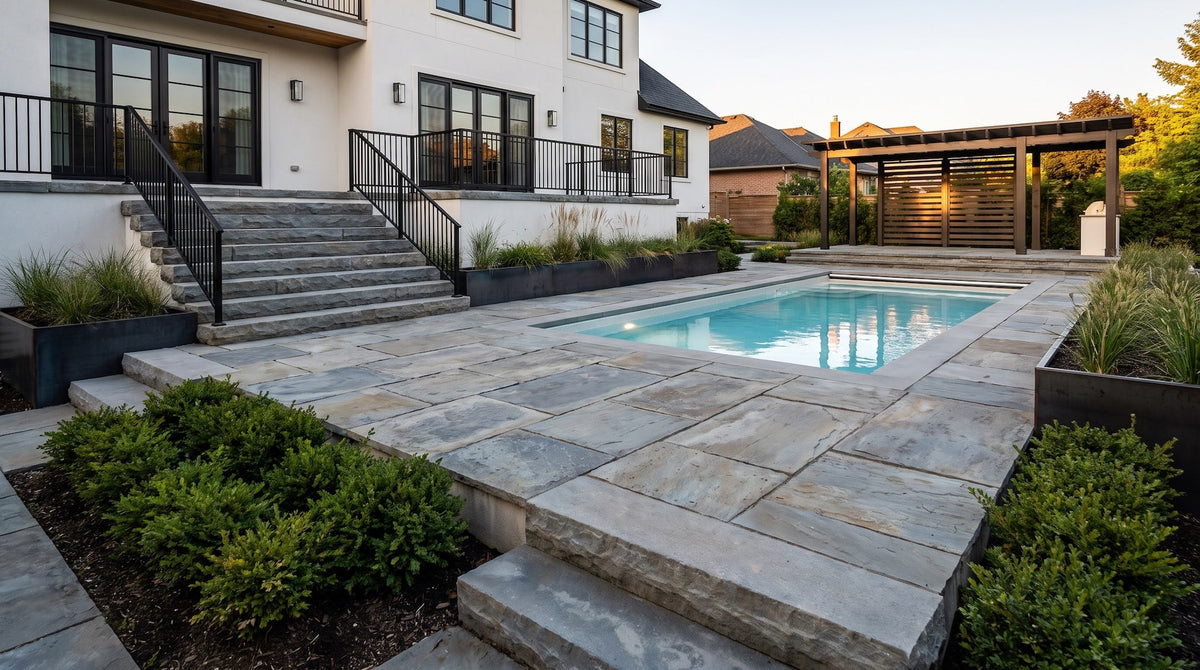
Companies offer families of products that match color and texture. You can coordinate granite steps with garden Jumbo Cobblestones as edging stones. This means you can build a staircase that shares the same tone as your patio.
Consider adding features like granite pattern pavers or Belgian blocks near the landing. This lets you move from rugged stone risers into a smooth gathering space. Near the stair, an outdoor kitchen creates a destination.
Indoors, the same logic applies. If your entry steps lead into a hall with stone tile, use similar tones. Designers often tie indoor and outdoor materials together for a calm feel.
Safety, Traction, And Maintenance
Beauty is great, but nobody wants a slick step under wet shoes. Natural stone gives you options for safe finishes. You just have to think about texture up front.
Choosing Non Slip Textures
Ask suppliers for textured surfaces on tread areas. These finishes add fine ridges that improve traction. Smoother surfaces work better on vertical risers.
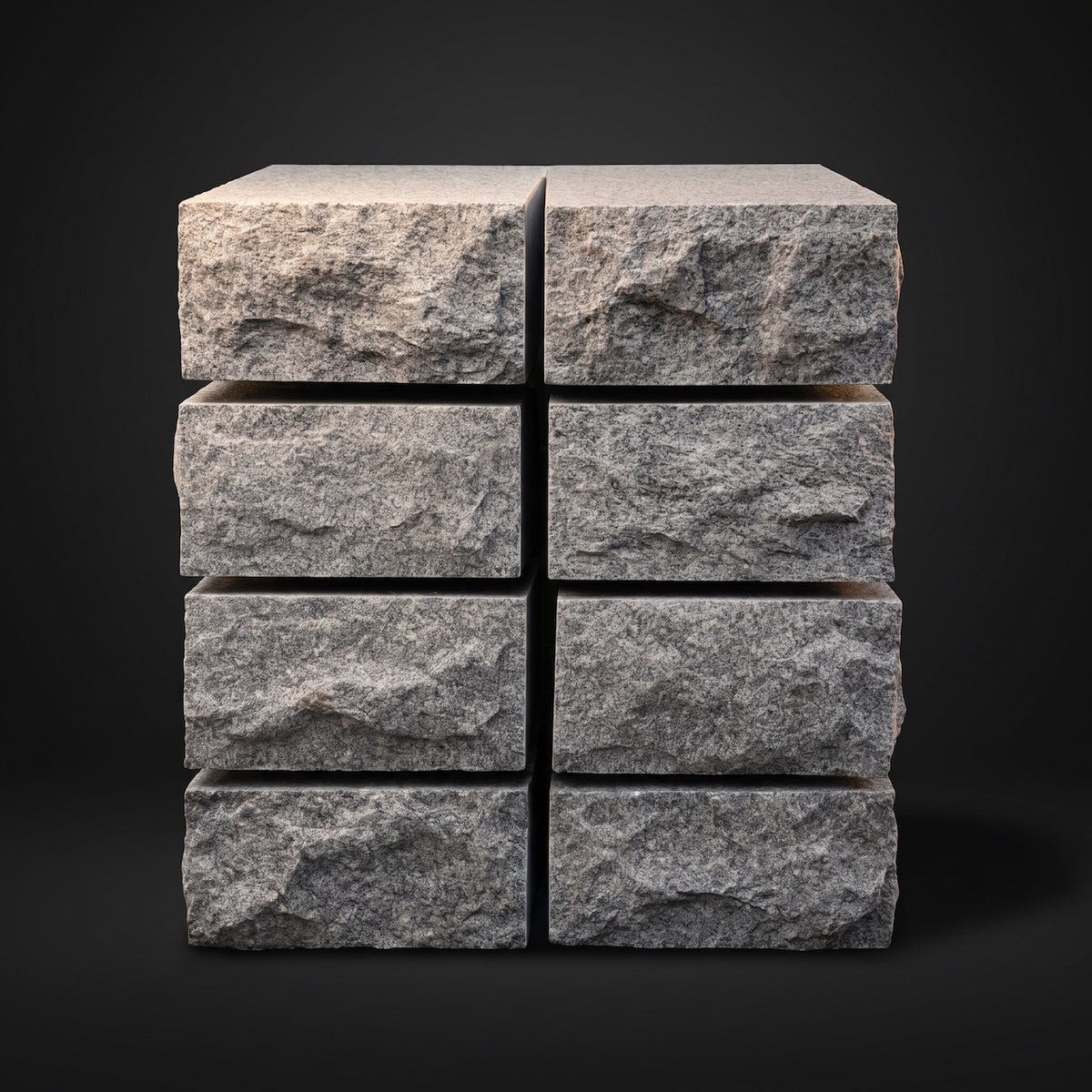
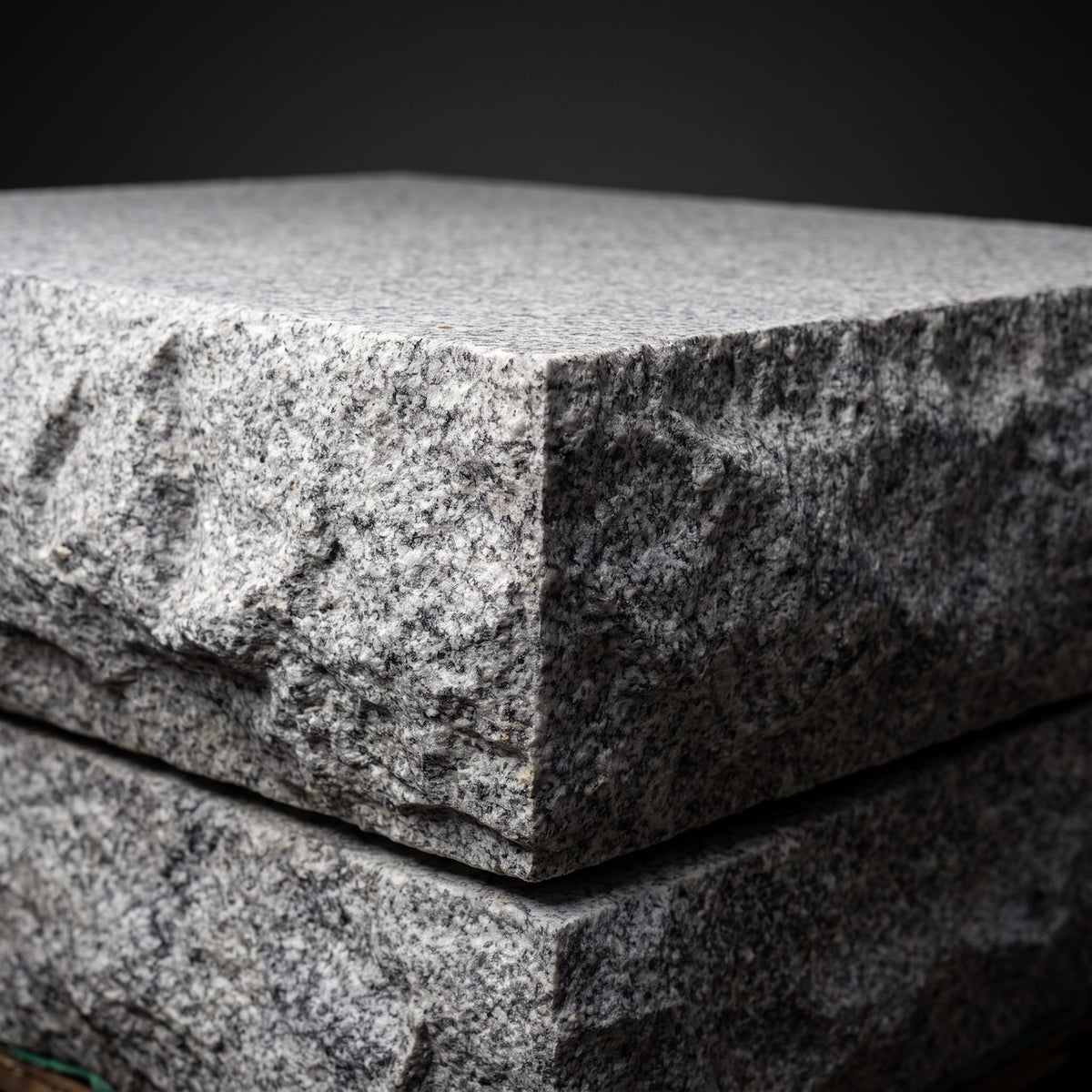
The Chief Bricks granite stone steps, treads and pattern pavers feature a thermal top / flame top for safety considerations. On the steps and treads, the top and bottom are sawn, one long side is sawn and the other three sides are rock face.
Dealing With Stains, Moss, And Grime
Outdoor stone picks up life on its surface over time. You will see leaf stains, dirt, and maybe some moss. This is normal and can look good in a garden setting.
You can clean your staircase with mild detergent and a stiff brush. For tougher staining, suppliers stock cleaners made for stone. Always use products that match your specific material.
In winter, avoid rock salt (sodium chloride). Use calcium chloride or magnesium chloride sparingly, or sand for traction, and clear snow with a plastic shovel. Our guide on how to de-ice granite steps safely covers the details.
Planning Your Project Like A Pro
The smoothest projects involve detailed planning. A little homework saves money. Looking at finished projects can inspire layout ideas.
Learn The Basics Before You Sign Anything
You do not have to become an engineer. Getting familiar with installation guides makes it easier to talk with contractors. Hardscape suppliers give a lot of this away.
Our complete homeowner guide to granite steps covers sizes, weights and setting in more depth. Reviewing it helps you understand the scope. Reading through these gives you better questions to ask.
Getting Help From Pros
If your staircase ties into a slope, get professional help. Permeable pavers and drainage require expertise. Granite steps are heavy, about 437 pounds for a 4 foot by 13 inch step and about 605 pounds for a 4 foot by 18 inch step, so they are usually set by crane truck or machine, and the base must be ready before the delivery truck arrives.
Finishing Touches That Take A Staircase From Good To Great
Once the structure is set, the fun begins. This is where you can play with style. Think about edges, lighting, and nearby features.
Edges, Caps, And Borders
A strong edge frames the steps. On the sides, you can use garden edging to contain mulch. The top step should sit snug against the house or kickplate.
Use landscape edging to define the path leading to the stairs. If your steps connect to a patio, consider compatible pavers. This pulls the whole composition together.
Create multi-level patios for a grander effect. Elevated outdoor spaces benefit from wide stone steps. Elevated outdoor living areas are a top trend right now.
Lighting And Night Safety
Do not wait until the end to think about lighting. It is easier to plan wiring before you place the first step. Riser lights allow you to see each tread at night.
Many homeowners browse our inspiration gallery for ideas. Having reference pictures saves time with your installer.
Cost, Value, And Long Term Thinking
Here is the part everyone worries about. Is natural stone worth the price? For most homes, the answer is yes.
Stone steps that are well built last for decades. They take on a patina but do not peel. Buyers see stone as a premium feature.
To put numbers on it, Chief Bricks granite steps are $69 per square foot of top surface*, so a 3 foot by 13 inch step is about $224 and a 4 foot by 18 inch step about $414. Granite treads are $34.75 per square foot*, about $104 for a 3 foot by 12 inch tread, and reclaimed bluestone curbstone steps run $79 to $99 per linear foot* depending on length. Labor to set granite steps is about $12 to $24 per square foot, but installed cost depends on the site, the base and access.
To manage budget, you can mix materials. Use stone for the main run and pavers for the landing. For steps, stone offers a timeless value that budget materials cannot match.
Others phase projects over a few seasons. You can add walls or outdoor kitchens later. This spreads the cost while maintaining quality.
Conclusion
Choosing to build a natural stone staircase is really choosing how you want your home to feel. It is a choice for solid steps that greet you every time you walk in. It creates a garden path that feels grounded.
You are not starting from scratch. You can browse our granite steps and treads and reclaimed bluestone steps and learn from our installation guides. Combine that support with your vision, and you will end up with steps that carry you comfortably for years.
Is a Natural Stone Staircase Worth It?
For most homes, yes. A stone staircase costs more up front than poured concrete or wood, but it does not peel, rot or need resurfacing, and well-built stone steps last for decades. Granite steps give you a crisp, consistent rise with a slip-resistant thermal top, while reclaimed bluestone brings a weathered, historic look with the reuse story that comes with salvaged stone.
It is not the right call everywhere. The stones are heavy and need a proper base, machine access and an experienced installer, and a temporary path or a rental property you plan to sell soon may not justify the investment. If budget is tight, use stone for the main run and simpler material for the landing.
Our yard is in Nanuet, NY (Rockland County), and you are welcome to see the stone in person. No appointment is needed, but if you call ahead at (718) 379-1232, we will make sure you get our full attention.
Add the steps to your cart and enter your address for a shipping quote. If it looks too high, call us at (718) 379-1232; we sometimes have alternative ways to get your steps to your door for a more reasonable price.
When you are ready to choose, start with our granite steps and reclaimed bluestone curbstone steps.
* Prices as of October 2026. Confirm current pricing on each product page before ordering.

Share: