

Granite steps vs concrete steps is a question that comes up on almost every serious outdoor project. Whether you are sketching a new front entry or planning a long garden staircase, the debate between granite steps vs concrete steps forces you to pick between short term savings and long term value. This decision often sets the tone for the entire exterior of a property.
If you are an architect, builder, landscaper, or homeowner who cares about how the project will look and age, this choice matters. The material you set today will control safety, maintenance, and curb appeal for decades. It impacts everything from your winter maintenance routine to the eventual resale value of the home.
Table of Contents:
- Key Takeaways
- Granite Steps vs Concrete Steps: What People Really Want To Know
- Durability and Longevity in Real Conditions
- How Each Option Looks on Day One and Year Ten
- Maintenance, Cleaning, and Repair
- Safety, Comfort, and Code Issues
- Upfront Cost vs Long Term Value
- Granite Steps vs Concrete Steps: Best Use Cases
- Design Flexibility and Pairing With Other Materials
- Environmental and Reuse Considerations
- What About Repair Choices: Patch vs Replace
- Conclusion
Key Takeaways
| Category | Granite Treads | Concrete Steps |
|---|---|---|
| Typical Lifespan | 50–100+ years | 10–25 years |
| Compressive Strength | 15,000–19,000+ psi | 3,000–5,000 psi |
| Freeze–Thaw Resistance | Very high | Moderate, degrades over time |
| Water Absorption | Very low (dense stone) | Higher porosity |
| Edge Durability | Edges stay crisp | Prone to chipping and crumbling |
| Salt Resistance | Handles de-icing salts well | Risk of spalling and scaling |
| Weather Performance | Stable in harsh climates | Breaks down with repeated exposure |
| Appearance (Day One) | Natural, timeless stone | Clean but uniform |
| Appearance (10+ Years) | Ages gracefully | Fades, cracks, looks patchy |
| Slip Resistance | Flamed or thermal finishes stay grippy | Broom finish can polish smooth |
| Consistency of Step Geometry | Factory-cut precision | Depends on field forming |
| Maintenance Needs | Low, mostly cleaning | Regular sealing and patching |
| Repair Frequency | Rare | Recurring |
| Repair Method | Replace single step or tread if needed | Patch, then patch again |
| Long-Run Safety | Consistent traction and edges | Increased slip risk over time |
| Upfront Cost | Higher | Lower |
| 30-Year Ownership Cost | Lower overall | Higher due to repairs and replacement |
| Design Flexibility | Wide sizes, profiles, finishes | Limited finish durability |
| Pairing With Other Materials | Excellent with brick and cobblestone | Visually weaker pairings |
| Reusability | Can be lifted and reused | Usually downcycled |
| Environmental Impact | Long life, reusable material | Cement is carbon intensive |
| Best Use Cases | Permanent, high-value entries | Temporary or budget projects |
Granite delivers durability, safety, and curb appeal for decades. Concrete trades upfront savings for higher long-term maintenance.
Granite Steps vs Concrete Steps: What People Really Want To Know
Most people are not just asking which material is stronger structurally. They want to know how it feels to walk those steps after ten winters, or twenty. They are curious if they are setting themselves up for expensive repairs every few years.
Under that simple phrase, granite steps vs concrete steps, there are a few core questions driving the search. Property owners need to understand the practical daily reality of living with these materials. They want to know if the investment pays off.
- How long will these steps actually last under real weather and real foot traffic?
- What will they look like after salt, snow, dirt, and years of heavy use?
- How often will I be patching, sealing, or replacing them?
- What does each choice do to my budget over twenty or thirty years?
Once you look at it that way, the choice starts to get clearer. It becomes less about the initial price tag and more about the lifetime ownership experience. Smart design focuses on the total lifecycle.
Durability and Longevity in Real Conditions
Step materials live a hard life outdoors. They carry concentrated loads at the edges where people step most heavily. They see water, snow, de-icing salt, mud, and everything in between.
If you are in the Northeast or Midwest, those freeze thaw swings are brutal on masonry. Water expands by roughly nine percent when it freezes. This force is strong enough to crack solid rock if it gets inside.
This is where natural stone behaves very differently from cast concrete. The density of the material dictates its survival rate. This difference is measurable and significant.
How Granite Steps Handle Weather
Granite forms under extreme pressure and heat deep in the earth. That gives it a very dense structure and very low water absorption. The compressive strength of granite can exceed 19,000 psi, making it incredibly resilient.
It does not flake and does not pop when water freezes in surface pores, because there are far fewer open pores to begin with. This density prevents the micro-cracking that destroys other materials. In outdoor steps, that translates to a few big advantages.
- High resistance to freeze thaw cycles, even in harsh northern climates.
- Edges that stay crisp instead of rounding off and crumbling away.
- Very low risk of spalling from de-icing salts when compared to most concrete mixtures.
It is common to see granite staircases on civic buildings that are more than a century old and still serviceable. Many historic city halls and libraries still feature their original granite runs. If the base and foundation are sound, granite steps often last fifty to one hundred years or more with only cleaning.
How Concrete Steps Break Down Over Time
Concrete is strong in compression, usually ranging from 3,000 to 5,000 psi for residential pours. However, it has inherent weaknesses at the surface. Water and salts slowly work their way into the cement paste through capillary action.
Tiny cracks open as the material cures and settles. Each freeze cycle forces these cracks wider as trapped water turns to ice. Over time, this turns into surface scaling, spalling, and broken corners.
Even a well mixed and well finished concrete stair run is vulnerable to this pattern. The chemical reaction between de-icing salts and concrete can also create calcium oxychloride. This compound expands inside the concrete, breaking it apart from the inside out.
That is why you see many sets of concrete steps patched again and again, with each patch lasting less than the last. In many climates, a realistic service life for basic concrete steps is ten to twenty five years before major repair or replacement. That may be fine for temporary entries or tight budgets, but it is a real cost to factor in.
| Property | Granite Steps | Concrete Steps |
|---|---|---|
| Typical lifespan | 50 to 100 years plus | 10 to 25 years |
| Compressive Strength | 15,000 - 19,000+ psi | 3,000 - 5,000 psi |
| Freeze thaw resistance | Very high | Moderate, degrades over time |
| Edge durability | Stays sharp | Prone to chipping |
| Salt exposure | Handles de-icing salt well | Risk of spalling and scaling |
For architects and owners working on public steps, schools, or long entry flights, this gap in lifespan becomes a core design decision. The inconvenience of closing an entry for replacement is often higher than the material cost difference.
How Each Option Looks on Day One and Year Ten
A staircase is one of the first things people notice on a property. It pulls the eye and sets the tone for the entire entry experience. So the surface material cannot just be strong, it also has to hold its aesthetic appeal.
The Visual Strength of Granite
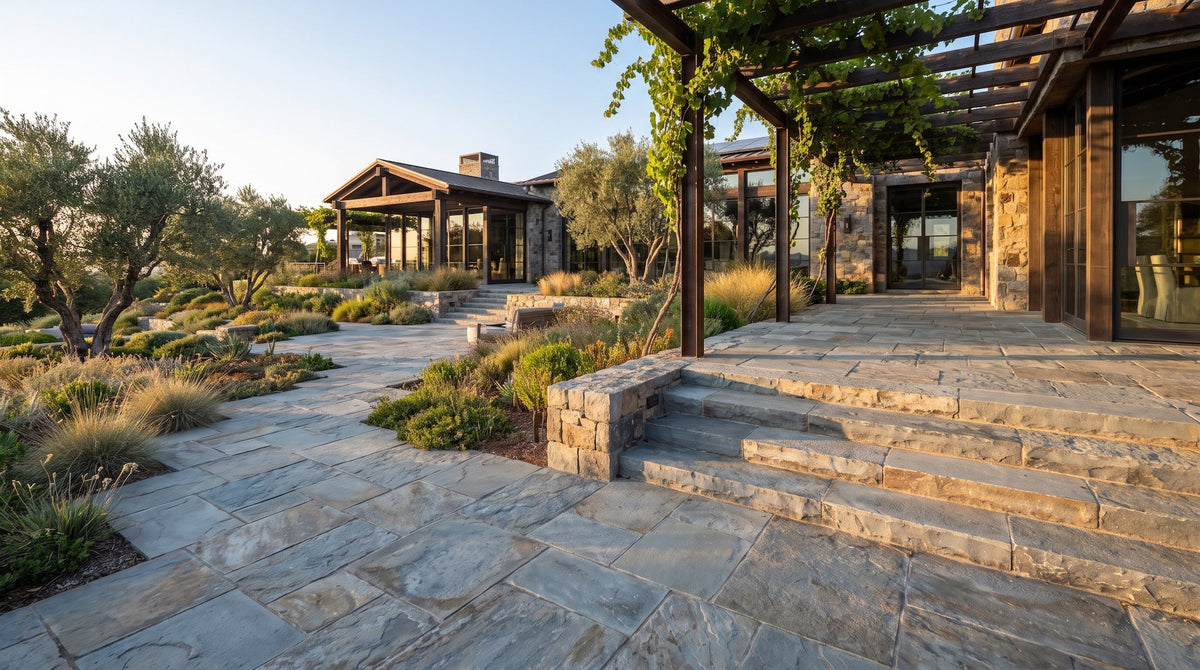
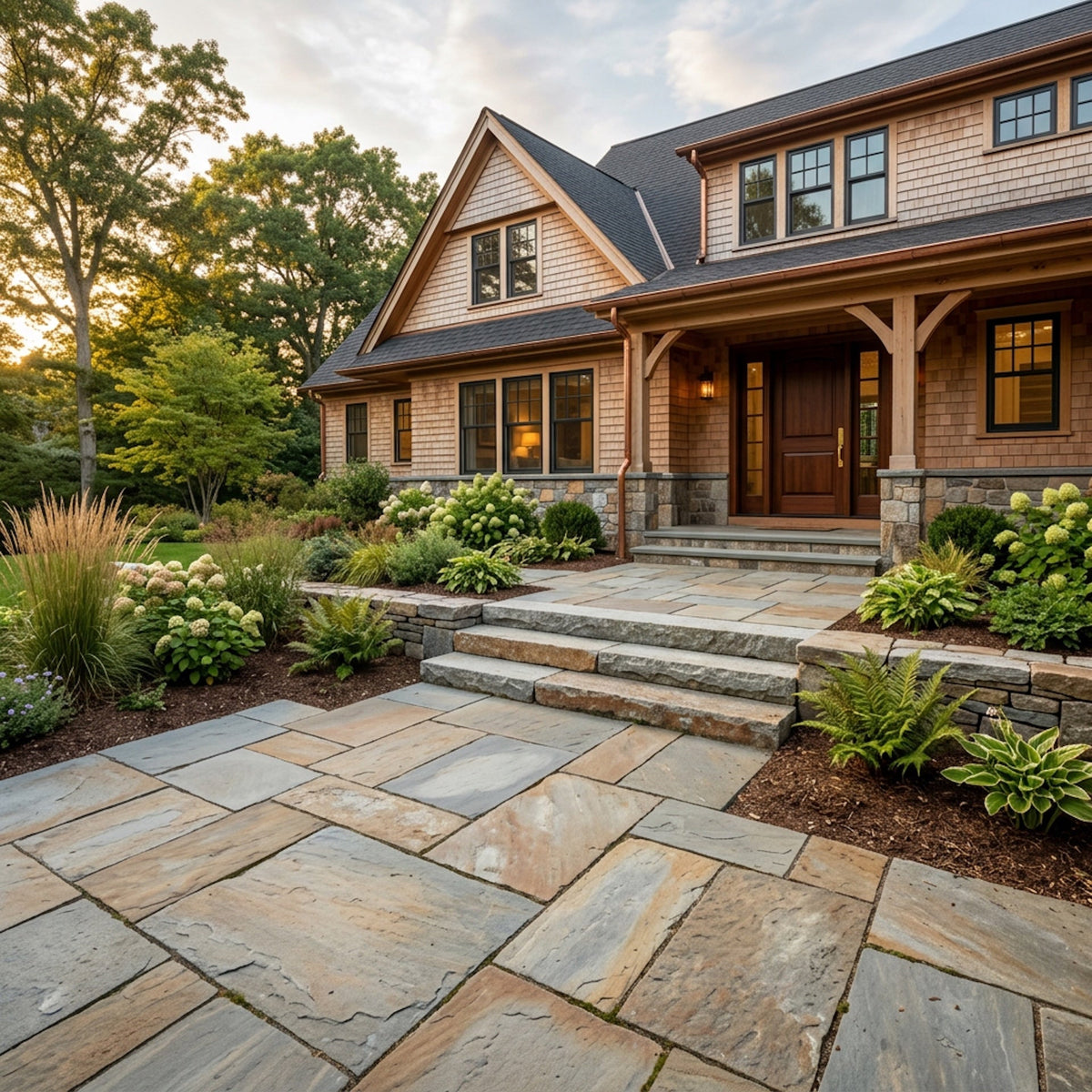
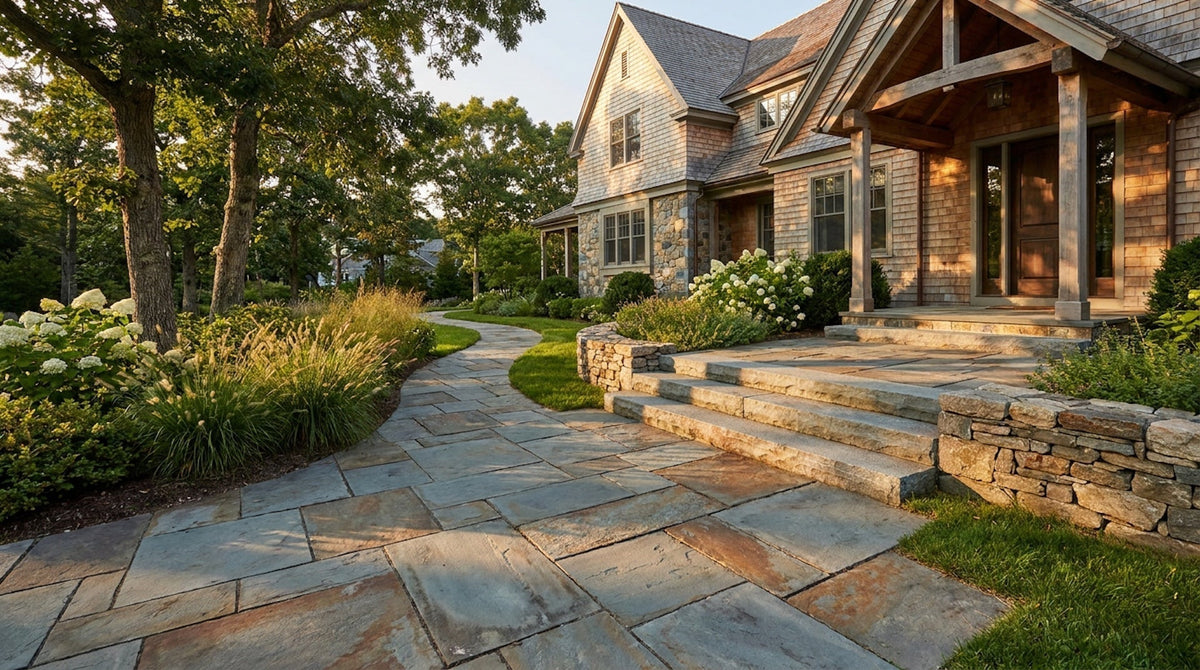
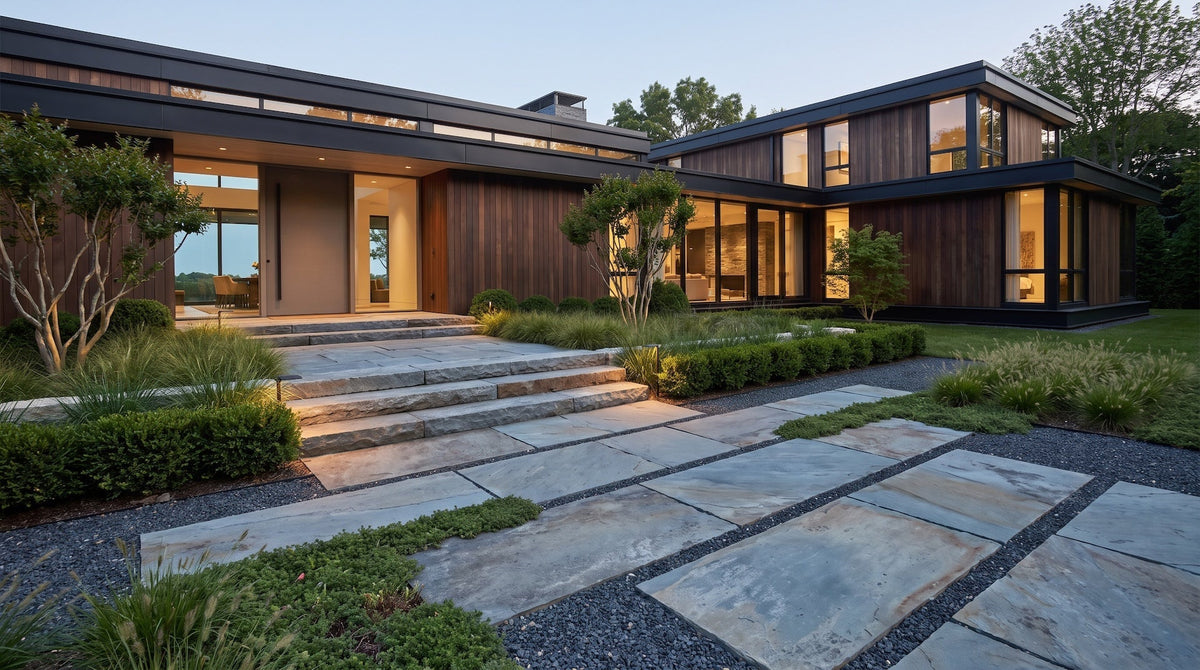
Granite has that quiet, grounded presence that fits as well on a brownstone stoop as it does on a modern glass box. Each slab has natural variation in grain and speckle. No two steps look exactly the same, which adds organic character.
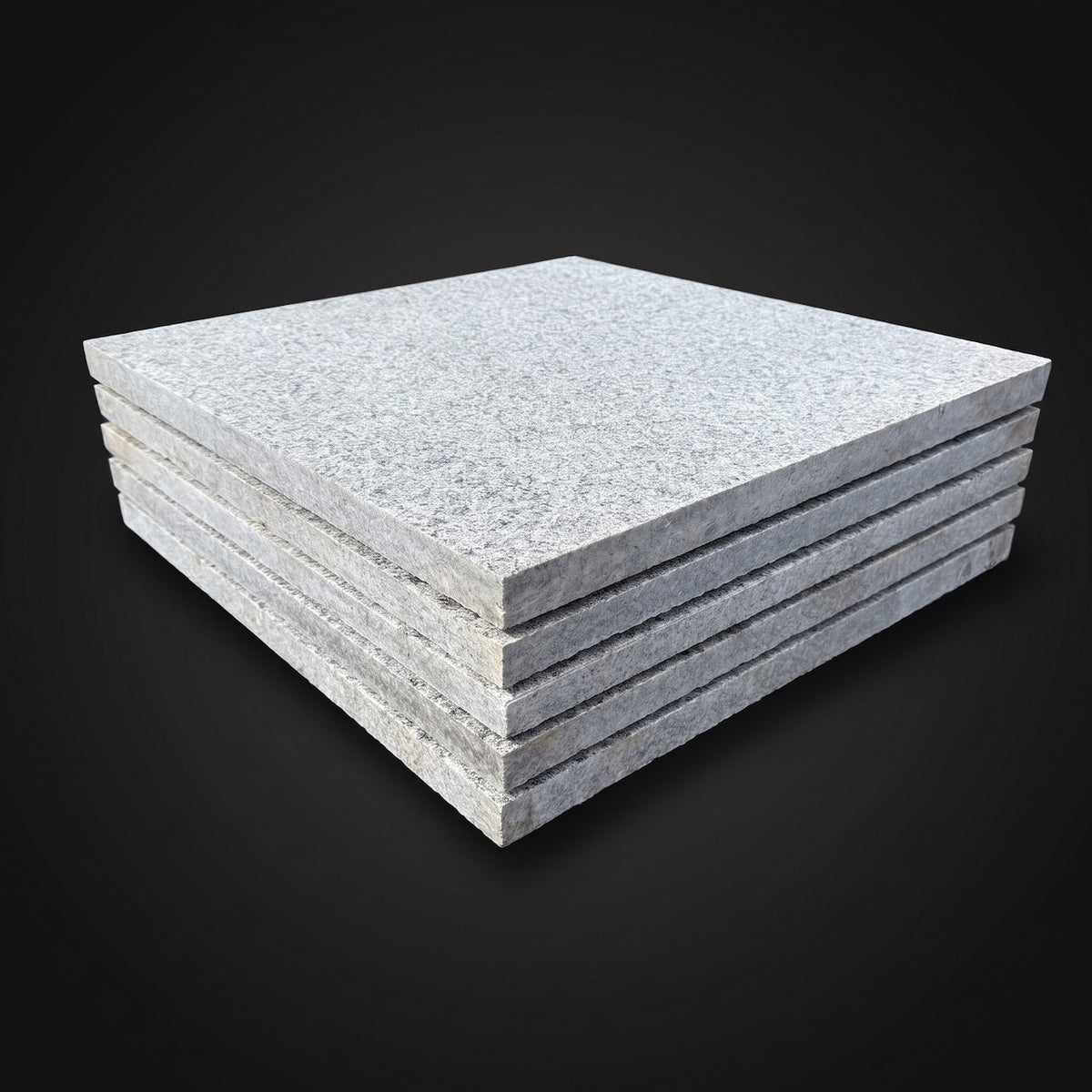
You can pick flamed / thermal finishes that give a subtle texture. This finish adds grip and provides a matte, refined look. That works beautifully next to reclaimed bricks, cobblestones, or Belgian blocks.
If you want a more historic palette across the project, you can source from Chief Bricks for materials that match that era. Their inventory helps tie new construction into older surroundings. The other big win is how granite ages.
As long as it is not attacked with harsh acids, it tends to mellow rather than look tired. The color holds because it is mineral-based, not pigment-based. Small chips that do appear often just read as part of the stone texture.
The Look of Concrete Steps Over Time
Concrete can be colored and stamped to imitate stone or brick. At first, this can look pretty convincing and offer a high-end look for less money. There are pattern mats and pigment systems that do a good job in the first few years.
But sun, traffic, and moisture slowly fade the surface and highlight the imperfections. Unlike stone, the color is often just a surface layer or a mixed-in dye that bleaches under UV rays. Seams in stamp patterns stand out as the grout lines wear differently.
Areas with more wear become smoother and darker, so the steps age in a patchy way. Once the first crack appears, the eye tends to land there. It breaks the illusion of the "stone" look instantly.
Over a decade, many stamped or colored concrete steps lose the depth they had on day one. They drift back to a more standard, flat gray look, especially if maintenance has slipped. This visual degradation lowers the perceived value of the home.
Maintenance, Cleaning, and Repair
If you are a property manager, you care less about the material label and more about your calendar. You need to know how often your crew will be sealing or patching the entry. You also need to account for how much dust, dirt, or moss will collect in the surface.
Living With Granite Steps
Most granite used for exterior steps has very low porosity. That means stains sit on the surface instead of soaking in fast. Regular rinsing, a gentle detergent, and a stiff brush are usually enough to keep it clean.
You do not need to worry about pressure washing damaging the stone, provided you use reasonable settings. In shady, damp corners, you might see some moss growth over the years. This brushes off easily or can be treated with mild, stone-safe cleaners.
Some designers like that hint of green, especially in garden settings, as it creates a settled look. Sealing is often optional rather than mandatory for darker granites. On lighter stones in very high traffic entries, you may choose a breathable sealer, but the stone usually performs well without it.
Living With Concrete Steps
Concrete is more porous than granite by nature. It absorbs liquids and can hold onto dirt in its micro texture. To slow this down, many pros seal concrete every few years, especially in areas with freeze thaw cycles.
Stripping old sealer and reapplying new layers is a labor-intensive job. Over time, small cracks open regardless of your efforts. To keep water out of the structure, these need to be filled, patched, or routed and sealed.
This is normal behavior for concrete, but it is a recurring line in your maintenance budget. Oil, rust, and leaf stains are also tougher to remove from concrete without aggressive cleaners. Strong acids used to clean concrete can etch the surface, making it even more porous for the next stain.
For high end residential entries and hospitality projects, that can be a serious annoyance. It forces a rigorous cleaning schedule just to maintain a baseline appearance.
Safety, Comfort, and Code Issues
A stair run is one part sculpture and one part safety device. Surface slip resistance, edge definition, and riser consistency all affect how safe and comfortable a staircase feels to use. This is critical for preventing liability issues.
Traction and Slip Resistance
Flamed granite offers a slightly rough surface texture created by quick, high heat at the face. This raises tiny crystals and gives strong traction even when the step is wet or lightly iced. Many architects pick flamed finishes on steps while using a smoother finish on landings for contrast.
The good news is that this texture does not wear smooth quickly, even with heavy traffic. That means the slip resistance you sign off on during design is close to what users will have ten years down the road. It provides consistent safety year after year.
Concrete can also have good traction at first, especially if it is broom finished across the steps. But surface paste slowly polishes under foot, especially in sheltered entries, and can become smoother. You then have the classic problem of worn smooth concrete that feels slick during a rain.
Step Geometry and Long Runs
Whether you pick stone or concrete, you still need consistent riser heights and step depths. That is what keeps people from tripping on that odd first or last step. Precut granite steps make this easier to hit in practice because each step arrives at a precise thickness and depth.
Concrete steps formed on-site rely entirely on the skill of the crew setting the forms. If forms bulge or shift, the risers become inconsistent. A variance of just a quarter inch can create a trip hazard.
For long hillside runs and garden stairs, the precision of cut stone gives a very calm walking rhythm. Combined with low lighting and clear nosing, it is one of the main reasons landscape architects lean hard toward stone steps on important runs. It eliminates the variables of site-mixed materials.
Upfront Cost vs Long Term Value
This is the part owners often focus on first. Concrete usually has a lower initial material cost, no question. The crew might already be set up to pour slabs and walls, so the install can be quick and efficient.
Granite steps do cost more at the start. You are paying for a quarried and processed stone slab, and for the trucking and handling that go with that. It is more of a capital expense mindset.
But once you bring long term maintenance and replacement into the picture, the math shifts. Here is a simple way to look at the life cycle cost.
| Item over 30 years | Granite Steps | Concrete Steps |
|---|---|---|
| Initial install | Higher | Lower |
| Resealing | Low or optional | Regular, recurring |
| Patch and repair | Minimal | Moderate to high |
| Replacement risk | Unlikely | Likely one full replacement |
When you spread costs across thirty or forty years, granite steps usually end up with a lower cost per year of service. The savings become more clear in harsher climates where concrete tends to suffer most. You avoid the massive disruption of jackhammering out old steps.
If you like thinking in terms of other materials, you can check out the comparison of asphalt versus concrete options to see similar trade-offs. That same idea applies to stair materials in a slightly different way. You pay for durability up front to save on hassle later.
Granite Steps vs Concrete Steps: Best Use Cases
So which should you choose in the end? The right answer depends on budget, context, and how long you plan to own or manage the property. Each material has its rightful place in construction.
Where Granite Steps Make the Most Sense
Use granite steps when you care about the long horizon. That includes custom homes, brownstone and townhouse restorations, civic buildings, and hospitality entries. It is essential for any project where stone, brick, and cobblestone are already driving the design language.
They shine where they can pair with reclaimed materials. For example, a staircase cut into a reclaimed cobblestone courtyard looks seamless with stone steps. A granite entry run aligned with Belgian block edging creates a unified, historic feel.
Chief Bricks supplies granite steps, steps, and granite pattern pavers that play well with reclaimed bricks and stones pulled from older New York City buildings. Using these materials grounds a new project in history. You also get more predictability on big public or campus projects.
Institutions prefer stone because they do the heavy lift once. They can move on to other maintenance needs without worrying about step replacements in fifteen years. It allows their facilities budget to focus on other things.
Where Concrete Steps Still Work Well
Concrete is fine for some jobs. If the entry is temporary while a site is under active build out, it makes little sense to invest in heavy stone. The same is true for secondary service entries where look and longevity are not top concerns.
Concrete also shows up often on very low budget housing. Here, the main design focus is often inside the unit rather than at the curb. That can be a trade that everyone on the team understands and accepts.
You may notice that people use the phrase "concrete steps" far outside construction. Business writers talk about taking concrete steps during an economic downturn to imply solid action. Similarly, political writers talk about governments taking diplomatic concrete steps in policy reports.
In all those uses, the point is the same: people want something solid, real, and reliable. Ironically, physical concrete steps often do not live up to that promise the way stone does over time. The metaphor is stronger than the material itself.
Design Flexibility and Pairing With Other Materials
A staircase does not live in isolation. It ties into landings, paths, patios, and driveways. The more flexibility you have with sizes and finishes, the easier it is to tie all of that together without visual noise.
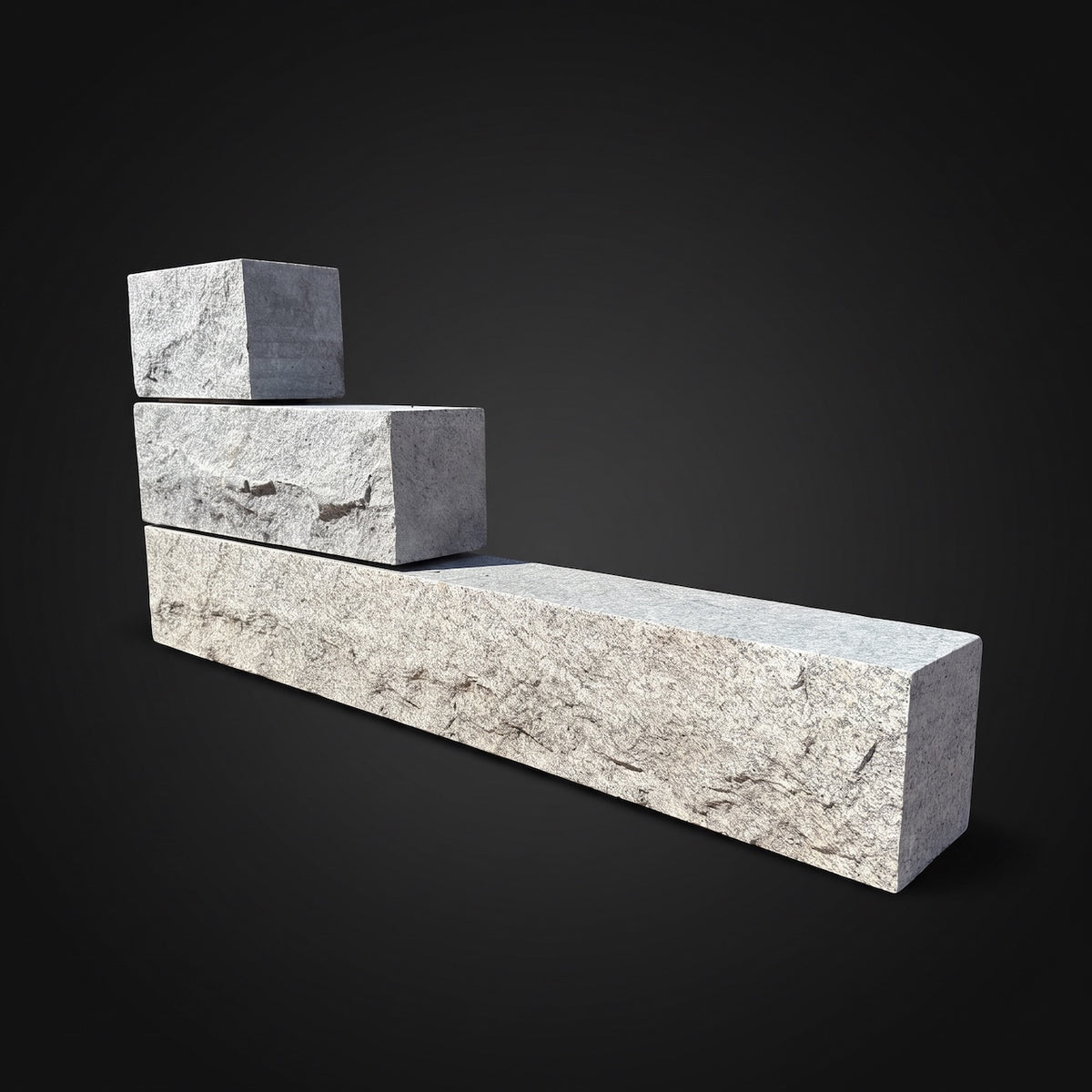
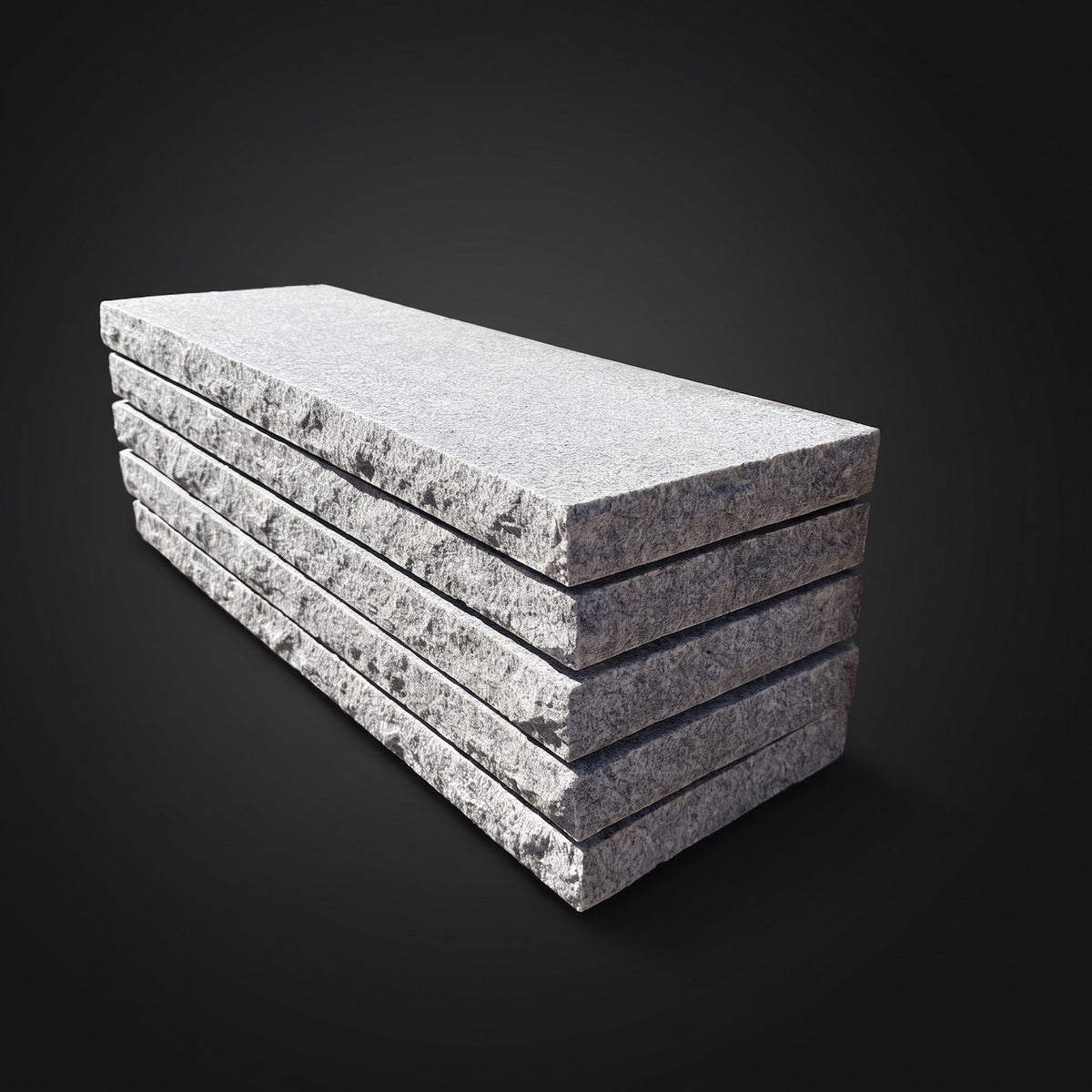
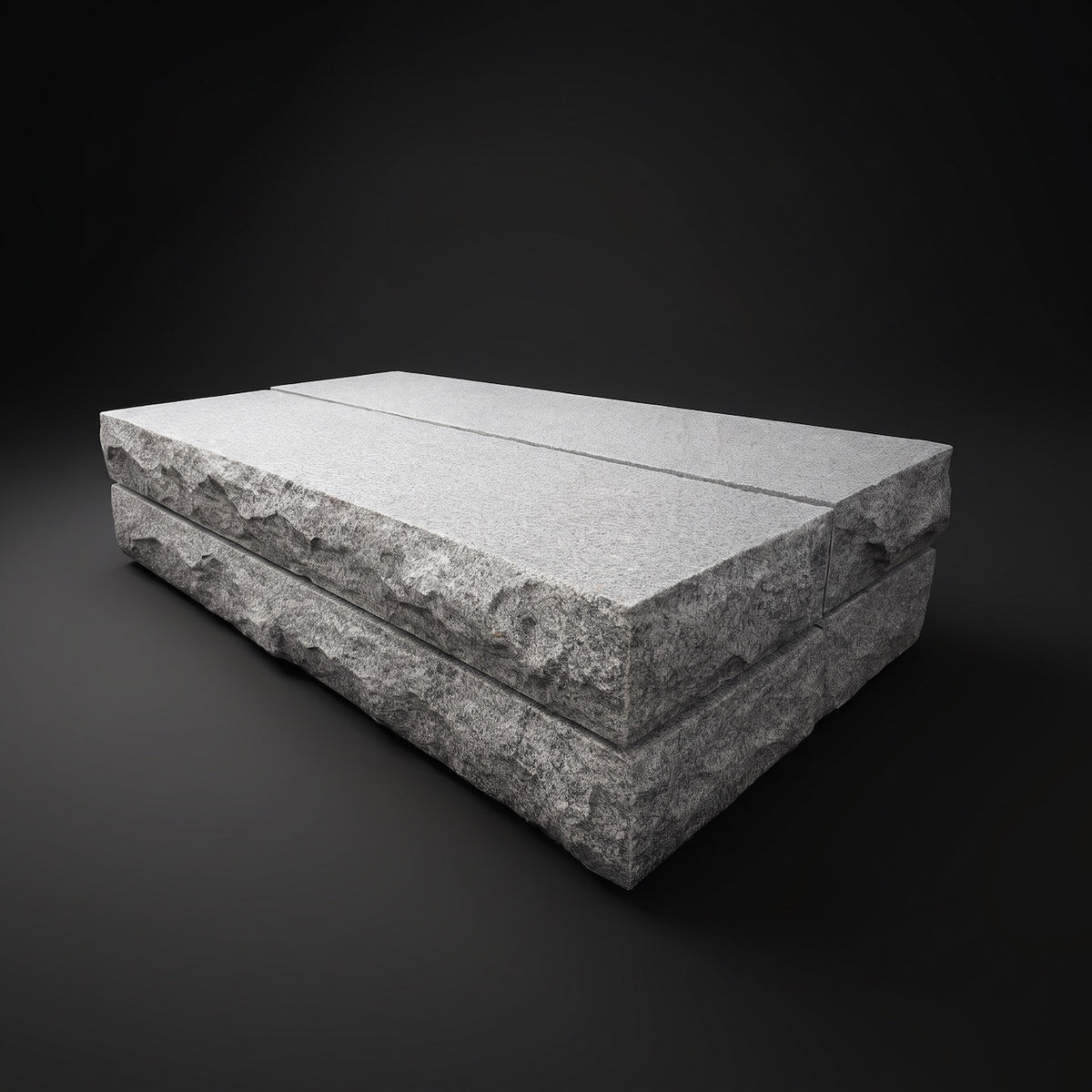
Granite steps are available in a wide range of lengths, thicknesses, and edge profiles. You can float them over masonry walls or drop them into steel frames. You can also sit them on stone cheek walls for a classic look.
One specific advantage is the ability to create a clear "nosing" or overhang. A granite step can overhang the riser by an inch or more, creating a drip line. This small detail prevents water from running down the face of the riser, keeping the entire stair cleaner.
Concrete tends to be cast in place with set dimensions, or made with simple precast units. It can adapt to many shapes, but its finish choices are more limited. Achieving a clean, durable overhang with cast concrete is difficult and prone to breaking.
Environmental and Reuse Considerations
More owners are asking about reuse, embodied carbon, and life cycle impacts. Granite steps fit well into that discussion. This is especially true where reclaimed stone or brick is part of the palette.
Unlike many man-made materials, stone can be taken up, cut down, and set again in a different project if needed. Stone is essentially reusable forever. Granite steps can often stay in service even when buildings around them change use or are demolished.
Concrete has recycling options, but most often ends its life as crushed fill or road base. It is rarely reused as a finished surface material. That is better than sending it to a landfill, but it is still downcycling compared with reusing stone elements at close to their original value.
The manufacturing of cement is also highly carbon-intensive due to the kiln firing process. While quarrying stone uses energy, it does not require the chemical transformation heat that cement does. For eco-conscious builds, local or reclaimed stone is often the greener choice.
What About Repair Choices: Patch vs Replace
Owners sometimes hope that regular patching will keep older concrete stairs going cheaply. There is some truth there, but the gains are limited. Repairing stair edges is notoriously difficult because the patch is thin and exposed to impact.
Just as people compare options in the concrete repair guide regarding fillers, there are different products for vertical and horizontal repair. But the more patched the steps become, the worse they look. The patches rarely match the original color of the faded concrete.
Those patched corners are also often the first places to fail again. Eventually you face a larger tear out job anyway. Those prior repairs may even raise the cost of demolition by adding layers of complexity.
Granite steps rarely need structural repair. If a piece does crack because of extreme loading or impact, you usually replace just that one step. The work is cleaner and more predictable than trying to bond new concrete to old concrete.
Conclusion
By this point you can see that granite steps vs concrete steps is really a choice between quick wins and long horizon thinking. Concrete offers a lower upfront cost and quicker installation. However, it asks you to live with more maintenance, more visual wear, and a shorter lifespan under real weather conditions.
Granite asks for more investment at the start. It pays you back through durability, low upkeep, and the kind of curb appeal that does not wash away in five winters. For homeowners who see their property as a long term home, that trade often feels like the right call.
Builders focused on quality also tend to prefer the permanence of stone. It reduces callbacks and complaints about cracking or scaling. A happy client ten years down the road is worth the initial effort.
So as you sketch that next entry or hillside stair run and weigh granite steps vs concrete steps, ask how you want those steps to look and feel in twenty or thirty years. If you want a staircase that still feels solid underfoot for the next generation, natural stone makes a very strong case. Granite provides a legacy of quality that concrete simply cannot match.
Share: