

For homeowners in New England and other cold climates, exterior steps have a hard life: months of snow and ice, aggressive de icing salts, freeze thaw cycles, and muddy shoulder seasons all punish stairs every year. Choosing the wrong material can mean cracks, spalling, rot, and expensive replacements long before you expect them.
Granite steps cost more up front than many concrete or wood options, but their durability, safety, and low maintenance under harsh winter conditions are exactly why they have become a go to solution in New England. This guide breaks down how granite performs in cold climates, what base prep is required to avoid frost heave, and how lifetime cost compares so you can decide whether granite steps are worth it for your home.
Why Granite Works So Well in Cold Climates
New England landscapers consistently recommend naturally quarried granite for steps, walls, and curbing because it holds up better to regional weather than many manufactured materials. Granite’s natural density, compressive strength, and resistance to moisture penetration make it especially suited to repeated freezing and thawing.
Freeze thaw and salt resistance
- Granite steps withstand heavy foot traffic and extreme weather conditions without flaking, peeling, or spalling, even after many winters.
- Unlike some concrete mixes, granite does not rely on steel reinforcement that can rust and expand, and it is less vulnerable to surface damage from de icing products when installed and maintained correctly.
Stable thermal performance
- Light colored granites used for steps in New England, such as the Chief Gray™, do not get as hot as darker stones in summer and are unaffected by UV exposure, so they age slowly and evenly.
- As a dense stone, granite eventually equilibrates to ambient air temperature; it feels cool underfoot but does not suffer damage from temperature swings the way some manufactured materials do.
Chief Bricks’ article “Enhance Your Home with Durable Granite Steps and Treads” highlights similar advantages for residential entries and landscape stairs, especially where winter performance matters.
Base Preparation and Frost Heave Protection
In New England, the difference between granite steps that “never move” and steps that settle, tilt, or rock usually comes down to base preparation and frost protection, not the stone itself. Frozen, expanding soils can lift or shift poorly supported steps, regardless of material.
Gravel pads, concrete pads, and hybrid bases
- For smaller sets of steps, a properly compacted gravel pad can be enough; it drains well and stays compacted, helping guard against frost heave.
- Larger or multi step runs often benefit from a concrete pad on top of a compacted gravel base, combining drainage with a solid, level surface that makes setting heavy granite units easier.
- Industry guidance for cold climate stone bases recommends deeper excavation in poor soils and, in extreme conditions, geosynthetic fabric or insulation to prevent movement.
Depth and drainage in cold climates
- Installers stress the importance of excavating to suitable depth and width beyond the step footprint so the base has enough mass and bearing area to resist seasonal movement.
- Good drainage, ensuring water does not pool around or behind steps, is critical in New England’s wet springs and snowmelt periods to avoid erosion and frost related heaving.
- When these fundamentals are followed, granite steps are described as maintenance free once they are installed, standing up to winters without visible weathering.
For step by step base prep advice, Chief Bricks’ broader granite step content pairs well with cold climate pad guides such as “How to Create a Concrete or Gravel Pad for Granite Steps,” which emphasize gravel plus concrete bases as the “ultimate” solution in frost prone regions.
Winter Safety and Slip Resistance
Safety is a major reason New England homeowners move from old concrete or wood stairs to granite. Snow, ice, and melt refreeze cycles can make marginal surfaces dangerous for family members and visitors.
Thermal tops and traction
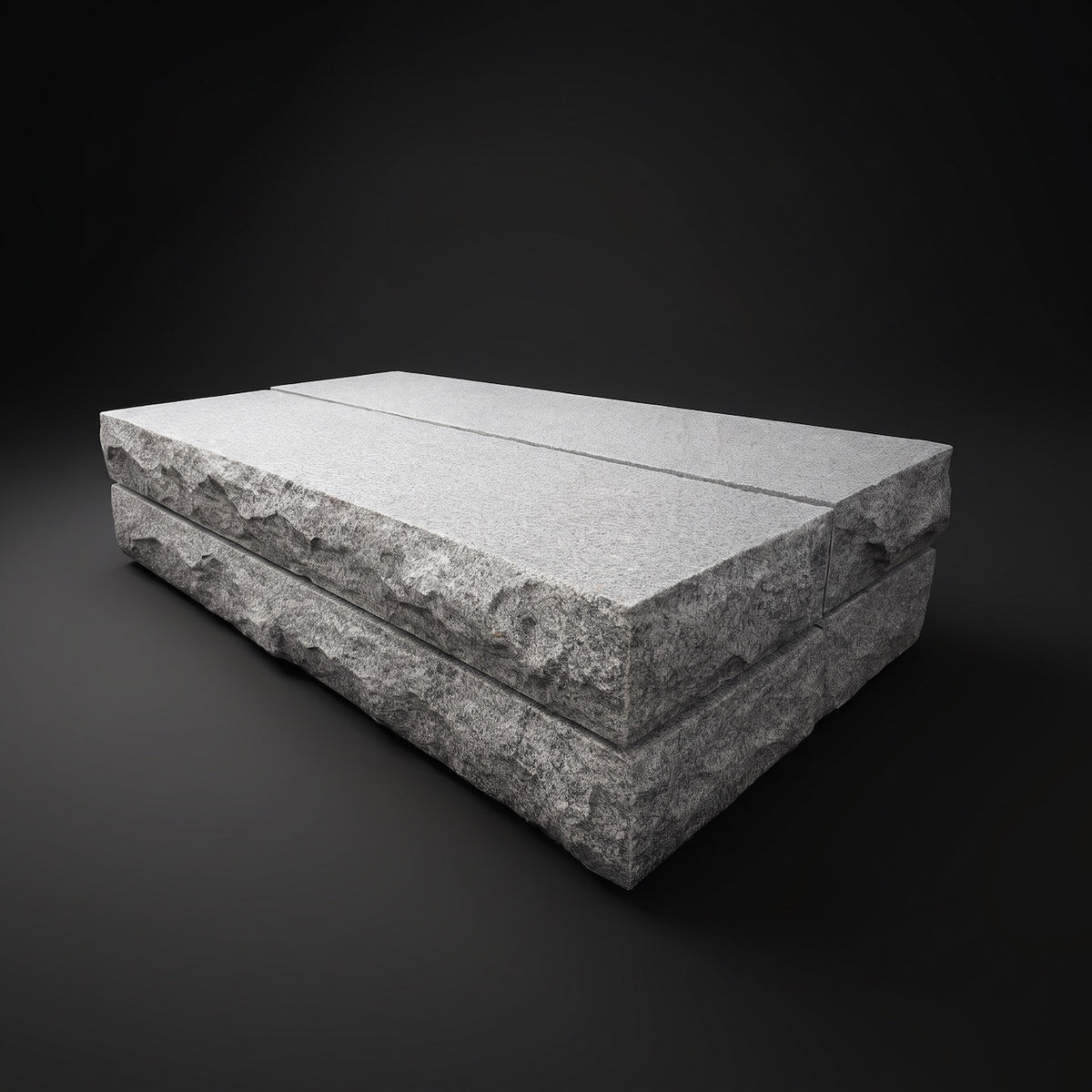
- Granite steps for exterior use are typically supplied with a thermal (flamed) finish on the top surface, which creates a fine texture designed for slip resistance in rain and snow.
- That roughened stone texture is permanent; it will not wear off like applied grit coatings or stamped patterns used on some manufactured products.
- Homeowners report that stone steps provide a stable walking surface for low rise stairs to front doors and walkways, and can be salted or scraped aggressively without harming the material.
Comparing to wood and concrete in winter
- Wood steps often become slick when finishes wear and organic growth appears, while repeated winter wetting and drying accelerates rot and structural deterioration.
- Concrete is more durable than wood but may crack or spall from freeze thaw and salt, and smoother finishes can still become dangerously icy.
- Granite offers a combination of durable texture, salt resistance, and robustness under snow removal tools that makes it particularly attractive in icy climates.
Chief Bricks’ granite step and tread guides emphasize this safety advantage, showing thermal top surfaces used at entries, on hillside stairs, and across modern landscapes that must stay functional all winter.
Lifetime Cost and Long Term Value
Granite steps nearly always cost more to purchase and install than basic concrete or wood alternatives, but in New England the value calculation changes when you factor in climate, lifespan, and resale.
Upfront cost vs. lifespan
- Granite steps can cost more than other step materials initially, sometimes significantly, but are considered “high quality and durable” investments.
- Well installed granite steps are described as able to withstand heavy foot traffic and extreme weather for decades, often outlasting multiple roof and siding cycles at the same house.
- In contrast, wood stairs in New England may need major repairs or replacement in 10–20 years and concrete steps can require patching or replacement when cracking and spalling become severe.
Resale value and perceived quality
- New England landscape firms highlight granite steps as features that enhance curb appeal and make a strong first impression, especially in markets where buyers expect natural stone.
- Granite steps can increase property value and attract buyers who prioritize well built, low maintenance hardscapes.
- Some designers even consider granite more cost effective than custom stone masonry stairs, because block steps deliver a similar look with less labor and “you’re never going to have to mess with it again.”
Chief Bricks’ granite steps and treads guide and related comparison pieces provide additional context on how granite stacks up against other materials over 20–30 years of use.
Design and Curb Appeal in New England
Beyond durability, granite steps visually fit New England architecture, from historic colonials to modern farmhouses and coastal homes, better than many alternatives.
Stylistic fit
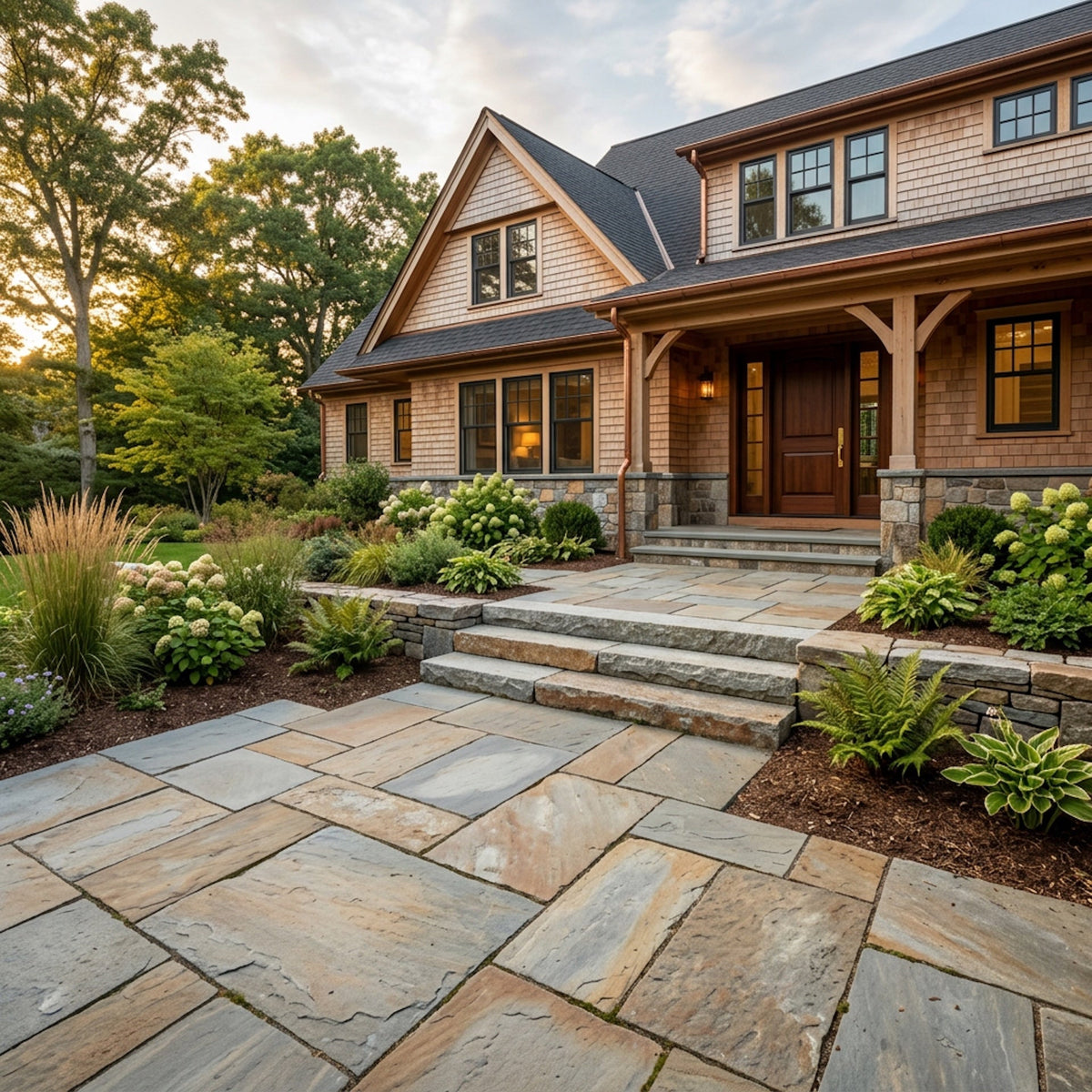
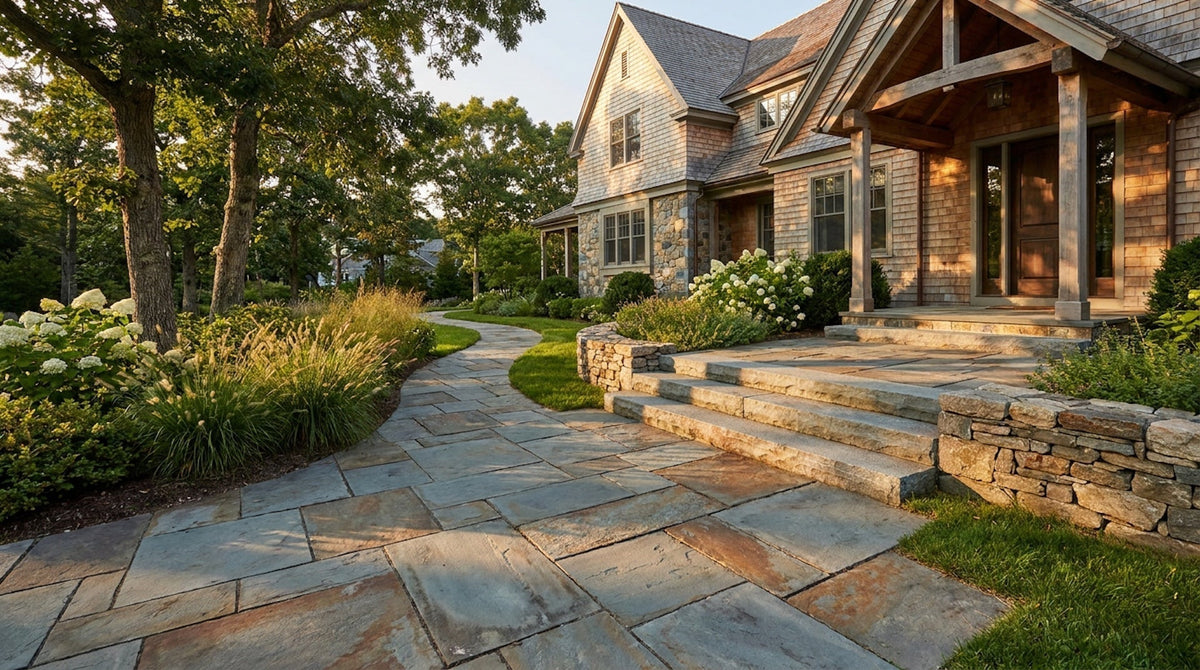
- Chief Bricks emphasizes granite’s “timeless beauty” and “elegant appearance,” which complement traditional clapboard, shingle, brick, and stone veneer exteriors.
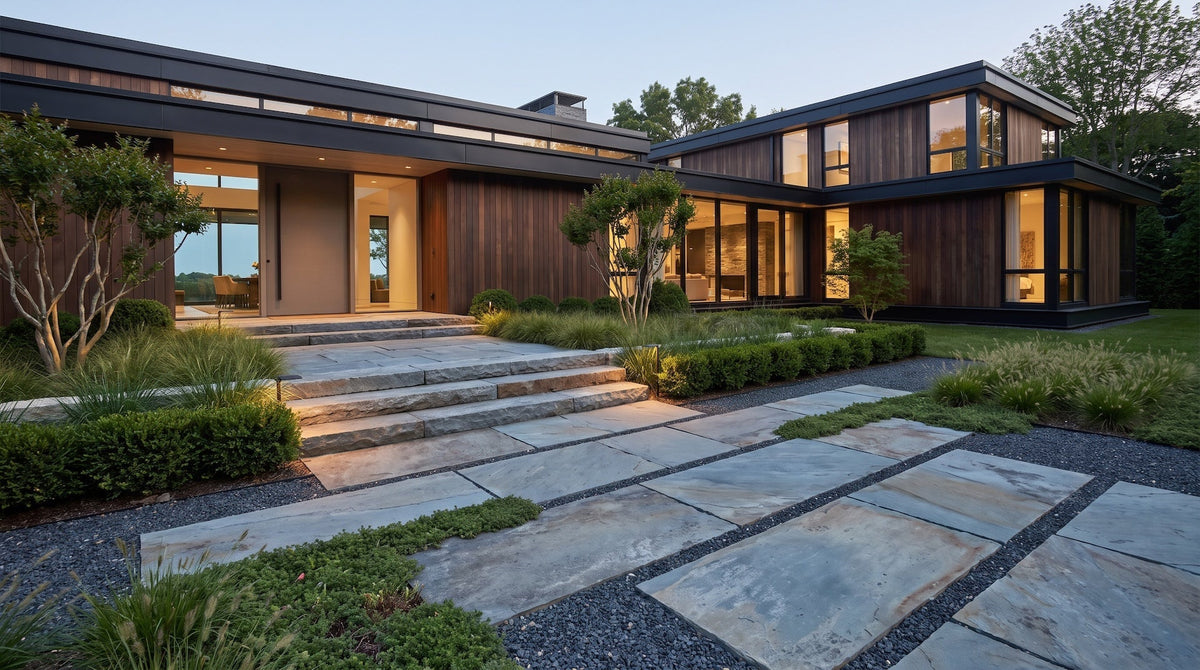
- Modern projects pair large format granite steps with clean lines, black windows, and simple plantings for a contemporary look that still feels grounded in local stone traditions.
- Reclaimed granite steps and curbing are especially popular on historic or farmhouse properties, offering a weathered patina that looks like it has always been there.
Coordinating with other stonework
- Granite steps can be coordinated with granite landings, walkways, and posts to create a unified entry sequence and tie into walls or patios.
- Content on patios and walkways in New England frequently recommends combining granite steps with brick or stone pavers to handle snowmelt and drainage gracefully.
- Chief Bricks’ design articles show real examples of granite steps integrated with reclaimed brick and stone hardscapes, which is particularly relevant to New England style yards.
For visual inspiration, you can browse the Chief Bricks articles on “steps”, which collects granite step guides, design trends, and project stories in one place.
When Granite Steps Are (and Aren’t) Worth It
Granite steps are not the right choice for every project, but in New England and similar cold climates there are clear scenarios where they are particularly worth the investment—and a few where alternatives may make more sense.
Situations where granite is worth it
- You plan to stay in the home for 10–20+ years and want to avoid future stair replacements, especially after experiencing failing wood or concrete steps.
- Your front entry is a focal point from the street and you want maximum curb appeal and a “finished” look typical of high end New England homes.
- Your property already features natural stone walls, patios, or reclaimed materials and you want steps that match that quality and aesthetic.
Situations where granite may not be the best fit
- Short term ownership or flip projects where you are unlikely to see the full payback from granite’s long lifespan and low maintenance.
- Extremely tight budgets where basic concrete or wood are the only realistic options and some maintenance and earlier replacement are acceptable.
- Sites with unresolved drainage or structural issues that would damage any stair; in those cases, base and grading work must be solved first before choosing premium finishes.
Chief Bricks’ broader granite step content, especially pieces comparing steps to other materials and explaining base prep, can help you refine the decision for your specific site and budget.
Share: