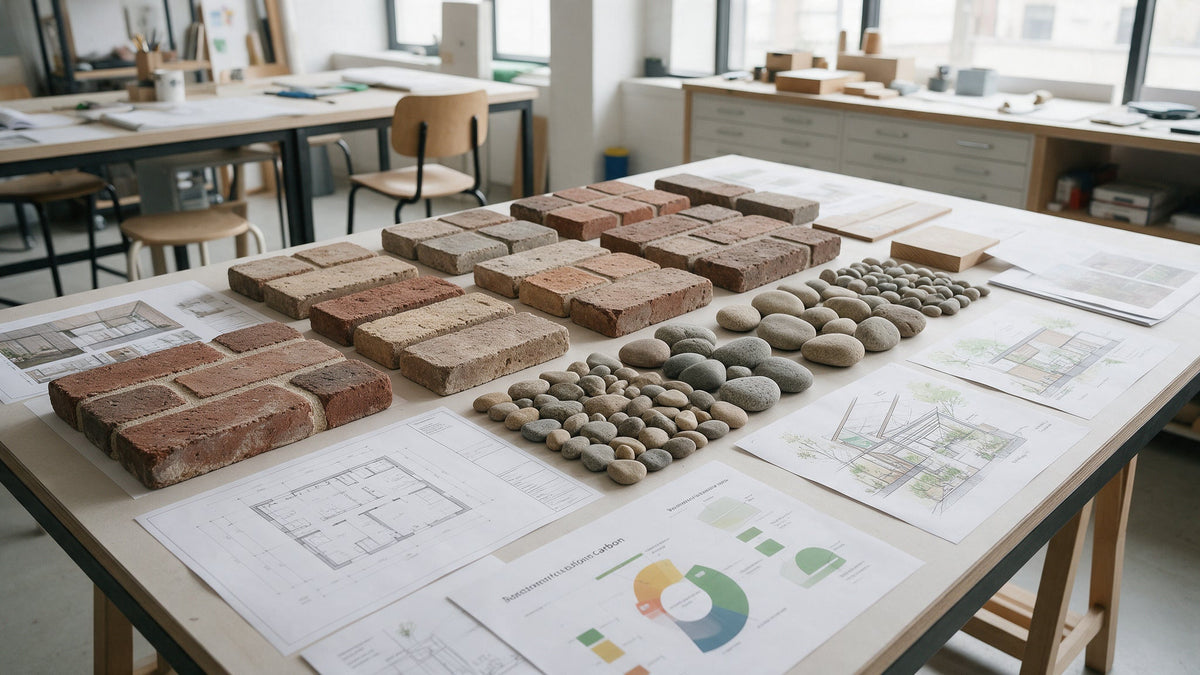
On a green building project, the conversation about materials used to come late. The design was set, the walls were drawn, and only then did someone ask which products might earn a credit. With LEED v5, that conversation moves to the start. Before a new building can be certified, its team now has to look at the carbon locked into its materials, and reuse has a credit of its own.
LEED v5 has been in use since April 2025, and the LEED Green Associate exam is now based entirely on it. This fall, the U.S. Green Building Council is also inviting review and a vote on a draft of LEED v5 for Cities, running from October 19 through November 18, 2026. For anyone who specifies or buys reclaimed brick and stone, it is a good moment to look at what v5 actually changes.
Maybe you are an architect or designer working on your first LEED v5 project. You might be a developer or owner who wants to understand what your team is talking about. Or maybe you are a contractor who has been asked to supply reclaimed masonry for a certified building. This guide breaks down what is new in LEED v5's materials section, where reclaimed brick and stone fit, and what to keep on file, without promising any credit or point.
Table of Contents
- LEED v5 Materials at a Glance
- What Is New in LEED v5
- The Two Materials Prerequisites
- Building and Materials Reuse Gets Its Own Credit
- Reduce Embodied Carbon
- Building Product Selection and Procurement
- Interior Projects
- Where Reclaimed Brick and Stone Fit
- What to Keep on File
- Bring It In Early
- Is Reclaimed Masonry Worth It on a LEED v5 Project?
LEED v5 Materials at a Glance
This table lists the parts of LEED v5's Materials and Resources section most relevant to reclaimed masonry, for new construction (Building Design and Construction). Names are as LEED uses them. Whether a material counts, and how much, is always up to the project team.
| Part of LEED v5 | Type | Why it matters for reclaimed masonry |
|---|---|---|
| Planning for Zero Waste Operations | Prerequisite | Puts waste on the agenda from the start of a project. |
| Quantify and Assess Embodied Carbon | Prerequisite | Every project looks at the carbon in its materials, masonry included. |
| Building and Materials Reuse | Credit | Reuse of buildings and materials has its own credit. |
| Reduce Embodied Carbon | Credit | Choices that lower embodied carbon are recognized. |
| Building Product Selection and Procurement | Credit | How products are chosen and sourced is part of the score. |
| Interior Material Reuse (interior projects) | Credit | The interior version of the reuse credit. |
Note: this is a plain-language summary, not credit guidance. Requirements, thresholds and documentation are set by LEED. Your project team and LEED consultant decide what applies.
What Is New in LEED v5
LEED v5 launched in April 2025 for new construction (Building Design and Construction), interiors (Interior Design and Construction) and existing buildings (Operations and Maintenance).
For materials, two things stand out. The first is where embodied carbon sits. Embodied carbon is the carbon released over a building material's whole life: making it, moving it, installing it, maintaining it and finally disposing of it. In LEED v5, quantifying and assessing it is a prerequisite for new construction, which means every certified new-construction project has to do it.
The second is that reuse is named directly: the reuse of buildings and materials has a credit of its own. For anyone working with reclaimed brick and stone, that makes the conversation much clearer.
You can read the details on the U.S. Green Building Council's LEED v5 page.
The Two Materials Prerequisites
In LEED v5's Materials and Resources section for new construction, there are two prerequisites. A project must meet both to be certified at all.
Planning for Zero Waste Operations puts waste on the agenda from the start. As its name says, the aim is planning toward zero waste once the building is operating.
Quantify and Assess Embodied Carbon asks the project team to measure and look at the embodied carbon of the building's materials. Masonry is part of that picture wherever a project uses brick or stone in its walls, structure or landscape.
Neither prerequisite is a credit for using any particular product. But both push teams to think about materials early, and that is when the choice of reclaimed masonry is easiest to make.
Building and Materials Reuse Gets Its Own Credit
For reclaimed brick and stone, the most relevant change in LEED v5 is the Building and Materials Reuse credit. As its name says, it covers both keeping existing buildings and reusing materials.
That matters because it makes reuse a goal in its own right, with its own place in the rating system.
What the credit requires, and how reclaimed materials are counted toward it, is set out in LEED's own credit language and is decided by the project team. We cannot tell you whether a given product will count or how much it will contribute. What we can say is that reclaimed brick and stone are, by definition, reused materials, so they belong in the conversation about this credit.
Reduce Embodied Carbon
Alongside the prerequisite to assess embodied carbon, LEED v5 has a credit to reduce it. As the names suggest, the prerequisite is about measuring, and the credit is about lowering the result.
Reusing a material avoids making a new one. A reclaimed brick has already been made, so using it does not call for new clay to be dug and fired. How that is reflected in a project's embodied carbon assessment depends on the method and tools the team uses, which is a question for the team and its consultant.
Our sustainability story on reclaimed bricks and lime mortar explains why reclaimed brick is a low-impact choice in the first place.
Building Product Selection and Procurement
LEED v5 also has a Building Product Selection and Procurement credit, which looks at how products are chosen and sourced. For reclaimed masonry, the practical point is that sourcing information matters.
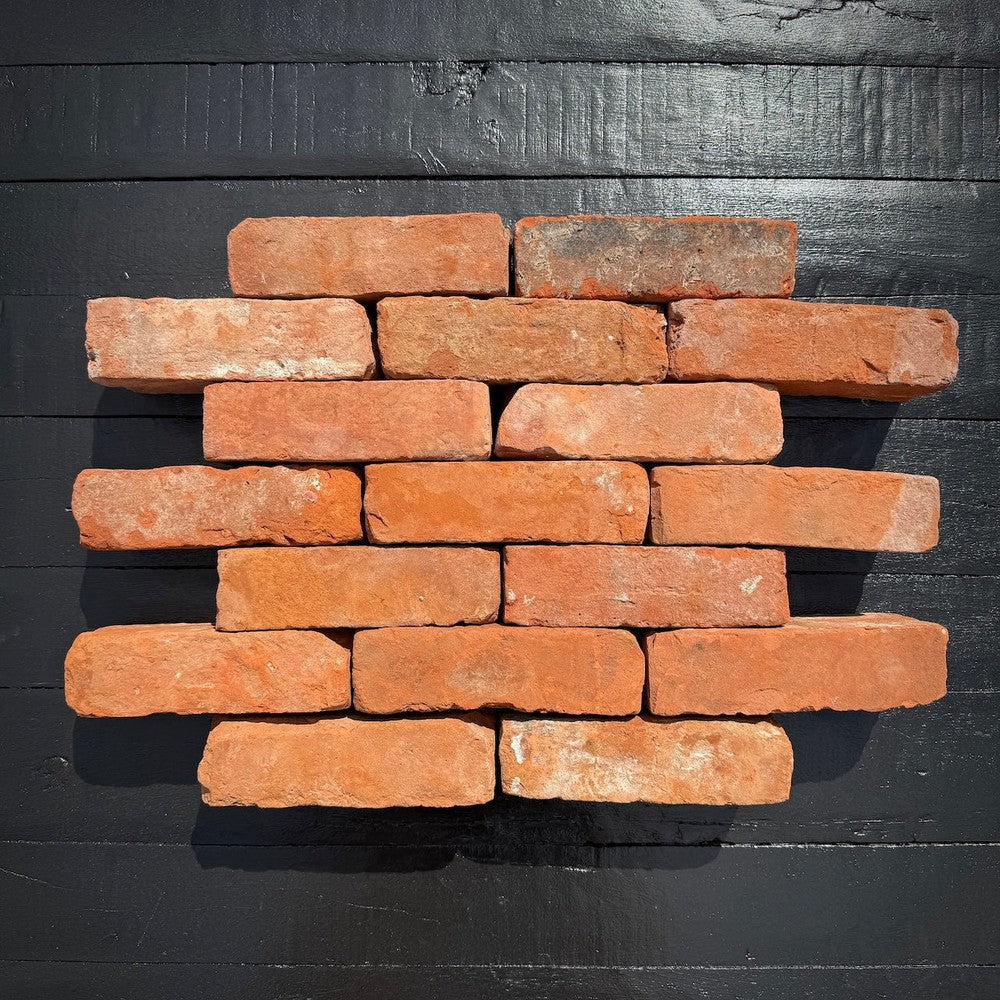
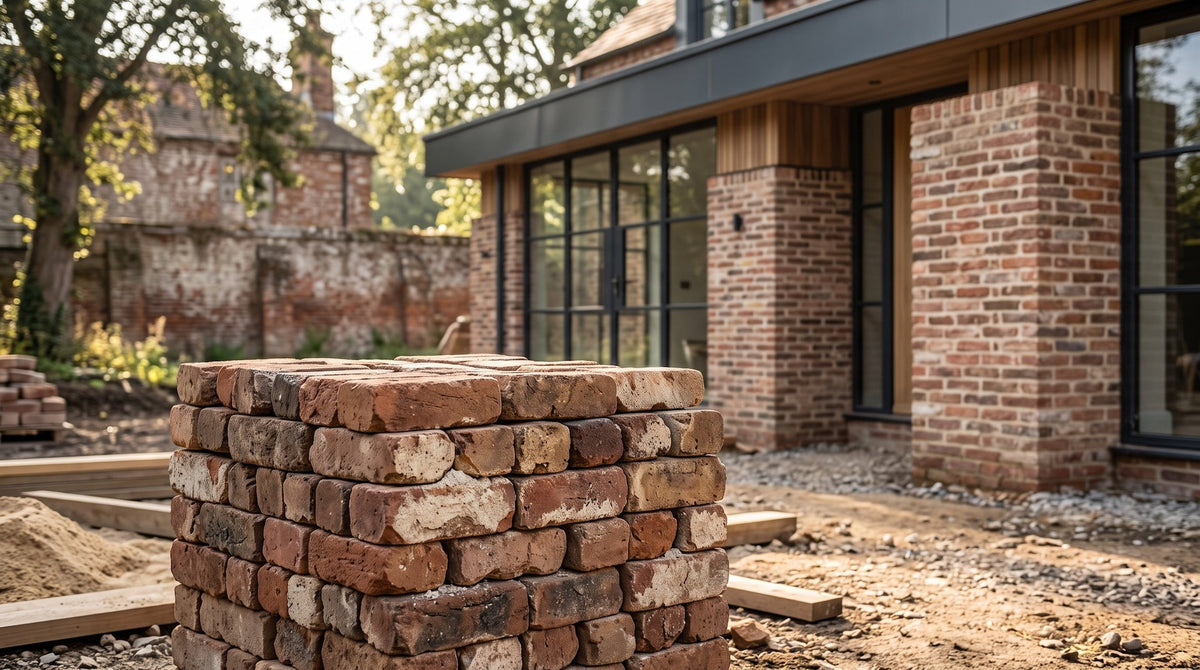
Where a material came from, what it is and how it was prepared are the kinds of details a project team may want to record. All of our reclaimed brick comes from the United States, and much of it from New York. Our New York reclaimed bricks were made in the Hudson Valley. At our yard in Nanuet, NY, every brick is checked by hand and cleaned of old mortar and dirt with hand tools, without chemical treatments.
Our granite Belgian blocks, steps and treads, by contrast, are new granite, quarried and imported. They are not reclaimed, and they should not be recorded as reused materials. Our reclaimed cobblestones and reclaimed bluestone are reclaimed.
Interior Projects
For interior projects (Interior Design and Construction), the reuse credit is called Interior Material Reuse. It is the interior version of the same idea: reuse materials instead of buying new.
Reclaimed brick often appears in interiors as a feature wall, a fireplace or a bar. For interior walls, our Reclaimed NY Thin Brick Wall Veneer is cut from reclaimed full brick, so it keeps the same faces and character without the weight of a full masonry wall. It is for walls, not floors. For interior floors, our Reclaimed NY Thin Brick Floor Tile is cut from reclaimed brick too.
Where Reclaimed Brick and Stone Fit
Reclaimed masonry can play a part almost anywhere a LEED project uses brick or stone.
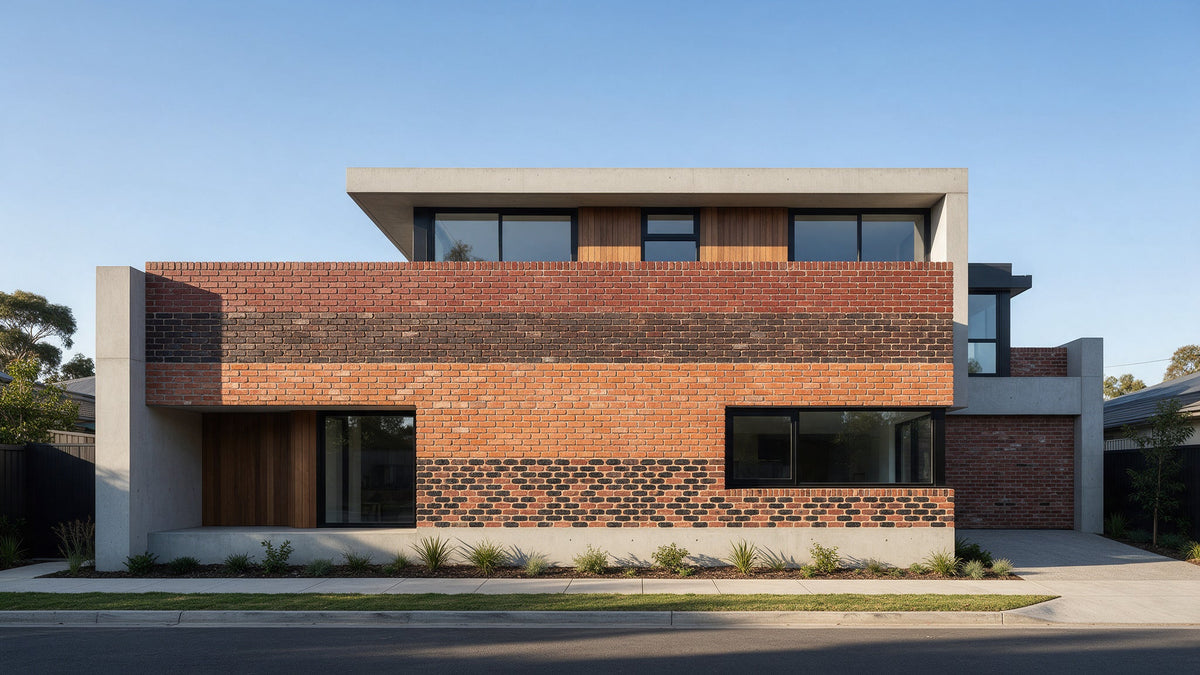
Walls and facades. Full reclaimed brick, such as our Reclaimed NY Red Bricks, for walls built as real masonry.
Interiors. Thin brick wall veneer for feature walls and thin brick floor tile for interior floors.
Landscape and hardscape. Our Reclaimed Flint Street Brick Pavers for paths, patios and driveways; reclaimed granite cobblestones; and reclaimed bluestone slabs and curbstone steps for walks and entries.
Whichever you choose, the material has to suit the job. A reclaimed product that is wrong for its use and has to be replaced early helps no one. Tell us what the material has to do, and we will point you to the right product.
What to Keep on File
Whatever the credit, a reused material is only as useful to a LEED project as its records. Keep invoices that describe the material as reclaimed, with the product, quantities and cost, and note where the material came from when it is known.
We cover this in more detail, along with the earlier LEED versions, in our guide on reclaimed bricks, stone and LEED v4 and v5. The same habits apply to v5.
Order the full quantity at once, too. Reclaimed material varies from batch to batch, and one order with one invoice is far easier to document than several small ones.
Bring It In Early
The single most useful thing a project team can do is raise reclaimed masonry early, while the design and the embodied carbon assessment are still taking shape.
Early on, it is easy to choose a reclaimed brick for a facade or a reclaimed stone for a landscape, and to plan quantities, samples and delivery. Late in a project, swapping in a reused material can mean redrawing details and chasing paperwork.
You are welcome to bring your team to see the material in person at our yard in Nanuet, NY. No appointment is needed, but if you call ahead at (718) 379-1232, we will make sure you get our full attention. Many of our products are also available as a small sample by priority mail.
Is Reclaimed Masonry Worth It on a LEED v5 Project?
For most projects that use brick or stone, it is worth a serious look. LEED v5 makes embodied carbon a prerequisite and gives reuse its own credit, and reclaimed masonry is a reused material by definition.
It is not a shortcut to points. What counts, and how much, is set by LEED and decided by your project team, and the material still has to suit the job and be documented properly. Treat reclaimed masonry as one part of a reuse-first approach, raised early.
If you are planning a LEED v5 project, start with our Reclaimed NY Red Bricks, or call us at (718) 379-1232 to talk through the materials.


Share: