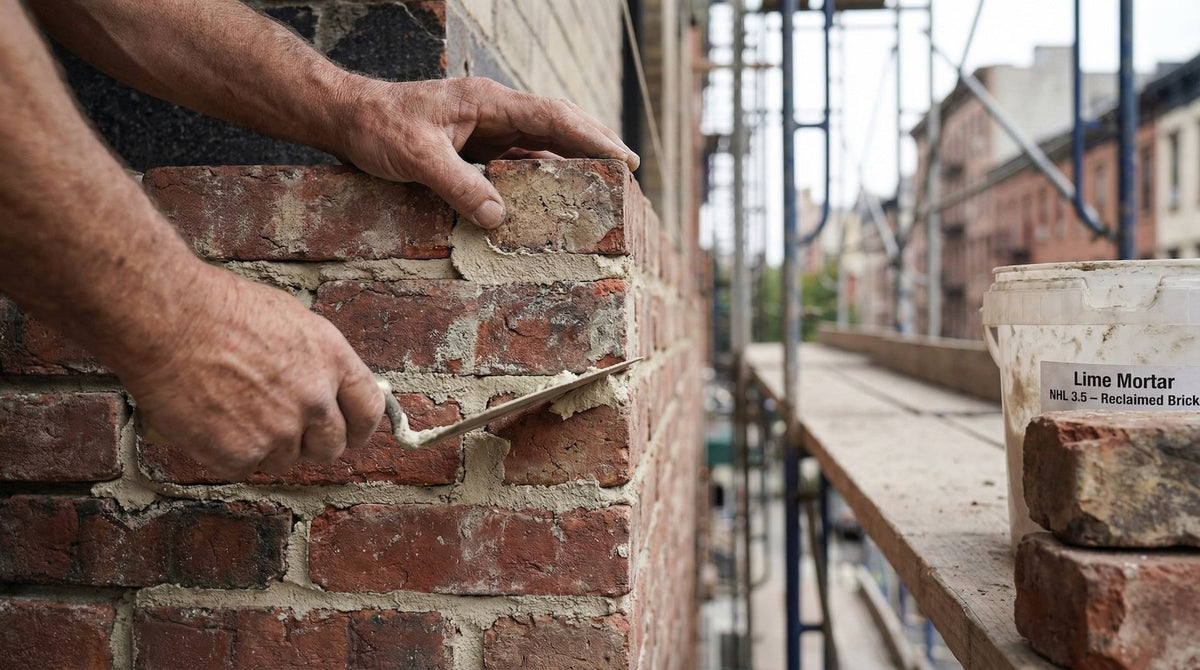
You can tell right away when a wall is built with reclaimed brick. The surface is softer, the corners are worn down, and the colors feel like they have already lived a life. That history is exactly why people love salvaged masonry, but it is also why you cannot treat it like a stack of new production bricks.
One of the biggest mistakes people make with reclaimed brick is assuming any bag of mortar from the local yard will do. Standard high‑cement mixes might seem stronger on paper, but they can quietly damage older or softer bricks over time. If you care about both the look and the lifespan of your wall, the mortar has to be chosen as carefully as the bricks themselves.
Maybe you are a homeowner planning a garden wall or a townhouse facade with salvaged brick. You might be an architect or designer writing a specification for reclaimed masonry. Or maybe you are a mason who has always reached for a standard bag mix and wants to know why reclaimed bricks call for something different.
In this article, you will learn what makes reclaimed bricks different, why mortar strength and flexibility matter so much, and how lime‑based mortars like Ecologic NHL 3.5 are designed to protect rather than punish historic masonry. By the end, you will know how to talk confidently with your mason or contractor about the right mix for your project.
Reclaimed New York bricks are not coming fresh off a modern automated line. They have been through a full service life in facades, interior walls, and chimneys built in the late 1800s and early 1900s. Many were fired in older kilns, made from local Hudson Valley clays, and laid in lime‑rich mortars that allowed buildings to move and breathe over time.
That history shows up in three main ways:
When you pull those bricks out of an old building and give them a second life as a townhouse facade, patio, or feature wall, you are inheriting all of that character plus the performance profile that goes with it.
Mortar does more than fill the gaps between units. It controls how a masonry assembly moves, drains, and handles temperature swings. In reclaimed brickwork, the wrong mortar can turn charming old material into a maintenance problem in just a few seasons.
When a mortar is harder and denser than the brick it holds, any movement or freeze–thaw stress has to go somewhere. Instead of small, manageable hairline cracks in the joints, you can see cracks and spalling develop in the brick faces themselves. In cold, wet climates like New York, that process accelerates because trapped moisture expands when it freezes.
Visually, that shows up as flaking faces, popped corners, and damp blotches around joints. Structurally, it means you are sacrificing the bricks you went out of your way to salvage. A good reclaimed brick project flips that equation around so the mortar takes the beating instead.
Traditional masonry practice leans on a simple idea: the mortar should be the weak link on purpose. It should be easier and cheaper to repair or repoint the joints than to replace original brickwork. This is what people mean when they talk about “sacrificial mortar.”
In practice, that means you aim for a mortar that is equal to or slightly weaker than the brick itself. Under load, temperature swings, and moisture cycles, minor cracks show up in the joints, not in the faces of the brick. When the time comes, a mason can rake out and repoint the mortar while leaving the reclaimed units intact.
Lime‑based mortars make this easier because they offer a combination of moderate strength, flexibility, and vapor permeability. They can move with the wall, gently redistribute stress, and allow moisture to escape rather than trapping it behind a rigid, dense surface.
Modern bagged mortars at the home center are usually based on Portland cement and graded sands, with different type letters (M, S, N, O, K) indicating relative strength and cement content. Those mixes are great for many applications, but they can be too strong and too dense for reclaimed or historic brick.
By contrast, traditional lime mortars rely on lime as the main binder and often contain little or no Portland cement at all. They tend to be more flexible, more breathable, and slower to reach full strength, which matches the way older masonry assemblies were originally designed to work.
Natural Hydraulic Lime (NHL) sits in the middle. It is still lime, but with natural impurities that allow it to gain strength through a hydraulic set in addition to the usual carbonation. NHL 3.5 mortars fall into a moderate strength range that is well‑suited to many reclaimed brick and stone assemblies in climates that see both moisture and freeze–thaw.
Ecologic NHL 3.5 Mortar for Reclaimed Bricks builds on that hydraulic lime base and bundles it into a pre‑blended mix with carefully graded sands. You do not have to guess at ratios or worry about mixing errors on site; water is the only thing you add.
For reclaimed brick projects, that product profile solves several problems at once:
Because it is specifically positioned for restoration and reclaimed masonry work, Ecologic NHL 3.5 lets you respect both the engineering and the aesthetics of the bricks you are reusing. You end up with joints that look appropriate next to a New York reclaimed facade and perform in a way that gives those bricks another long service life.
Its compressive strength is about 750 psi, in the same range as a Type N mortar, so it is strong enough for most walls without overpowering softer bricks. One 38.5 lb bag lays about 30 bricks with 1/2" joints. For mixing, laying, and curing, follow our step-by-step mortar instructions.
Some applications are more forgiving than others. If you are laying new, hard‑fired bricks in a sheltered interior wall, a standard cement‑based mortar might be completely acceptable. With reclaimed bricks, the stakes get higher in a few key zones.
In all of these cases, choosing an NHL 3.5‑based mortar for reclaimed bricks is as much about risk management as it is about performance. You are deliberately reducing the chances of having to replace the material you spent time and budget finding.
There are projects where a conventional Type N or Type S mortar is a practical choice. New brick veneers, modern CMU backup walls, and utilitarian work in low‑risk areas often fall into this category, especially when the brick itself is stronger than the mortar.
The key is to avoid treating reclaimed bricks like they belong in that same bucket by default. When the units themselves are older, more absorbent, or visibly softer than contemporary products, it is safer to step down in strength and density and focus on compatibility.
The same goes for repairs. If an old reclaimed wall needs its joints renewed, repoint with lime rather than a hard cement mix; our guide on how to repoint reclaimed brick with NHL 3.5 walks through it.
If your project mixes reclaimed and new bricks in the same elevation, a lime‑based mortar like Ecologic NHL 3.5 can also act as a bridge. It lets you treat the assembly as a whole rather than over‑specifying for the sake of the newer units and unintentionally punishing the salvaged ones.
Most of the risk around mortar selection shows up at the specification stage, long before any bricks are laid. Asking a few targeted questions early can keep everyone aligned with the needs of reclaimed material.
Here are good starting points:
These questions do two things. They signal that you are thinking about long‑term performance, not just initial strength, and they open the door for professionals to consider lime‑rich mixes they might not use on a standard new‑build project.
If you are working specifically with reclaimed New York bricks, you are dealing with material that has already proven itself in the local climate. Matching that with a mortar designed for restoration‑grade work completes the picture.
Ecologic NHL 3.5 Mortar for Reclaimed Bricks suits that kind of application: salvaged bricks, freeze–thaw exposure, and clients who want the patina to last, not just the structure. It gives you a natural lime joint that sits well next to aged brick and the performance profile traditional lime work has always relied on.
When you put that all together, the logic becomes straightforward. You are investing in reclaimed brick because you care about character, story, and sustainability. Pairing those bricks with a compatible lime‑based mortar is the step that makes sure that investment pays off for the long run.
For more on the climate side, read Mortar for New York Reclaimed Bricks.
For most reclaimed brick walls, yes. A lime mortar like Ecologic NHL 3.5 keeps the joints slightly softer and more breathable than the bricks, so stress and moisture work their way out through the mortar instead of through the brick faces. When the joints wear decades from now, you repoint them and keep the bricks.
Lime does ask for a little more care than a standard bag mix. You add only water, use each batch within about an hour, and work only when the air stays between 40°F and 85°F from a day before until three days after. Fresh joints need damp burlap and light misting for the first three days, and full cure takes about 28 days. It is made for laying and repointing full bricks, not for thin brick or floors, which are set with thin-set and grout. And if you are laying new, hard-fired bricks in a sheltered interior wall, a standard mortar can still be a practical choice.
Before you start, read our guide on how to use Ecologic NHL 3.5 lime mortar, which covers mixing, laying, and curing step by step.
Ecologic NHL 3.5 mortar ships nationwide from our yard in Nanuet, NY. Add it to your cart and enter your address for a shipping quote. If it looks too high, call us at (718) 379-1232; we sometimes have alternative ways to get your order to your door for a more reasonable price. To work out how many bricks and bags a wall needs, our brick calculator counts the bricks and can add the mortar to your order. You can also see our reclaimed New York bricks in person at the yard; no appointment is needed, but if you call ahead at (718) 379-1232, we will make sure you get our full attention.
The information provided in our guides, installation tips, and blog content is for general reference only. Every project is unique, and site conditions can vary. We strongly recommend consulting a qualified professional installer to review your specific project and provide final guidance.
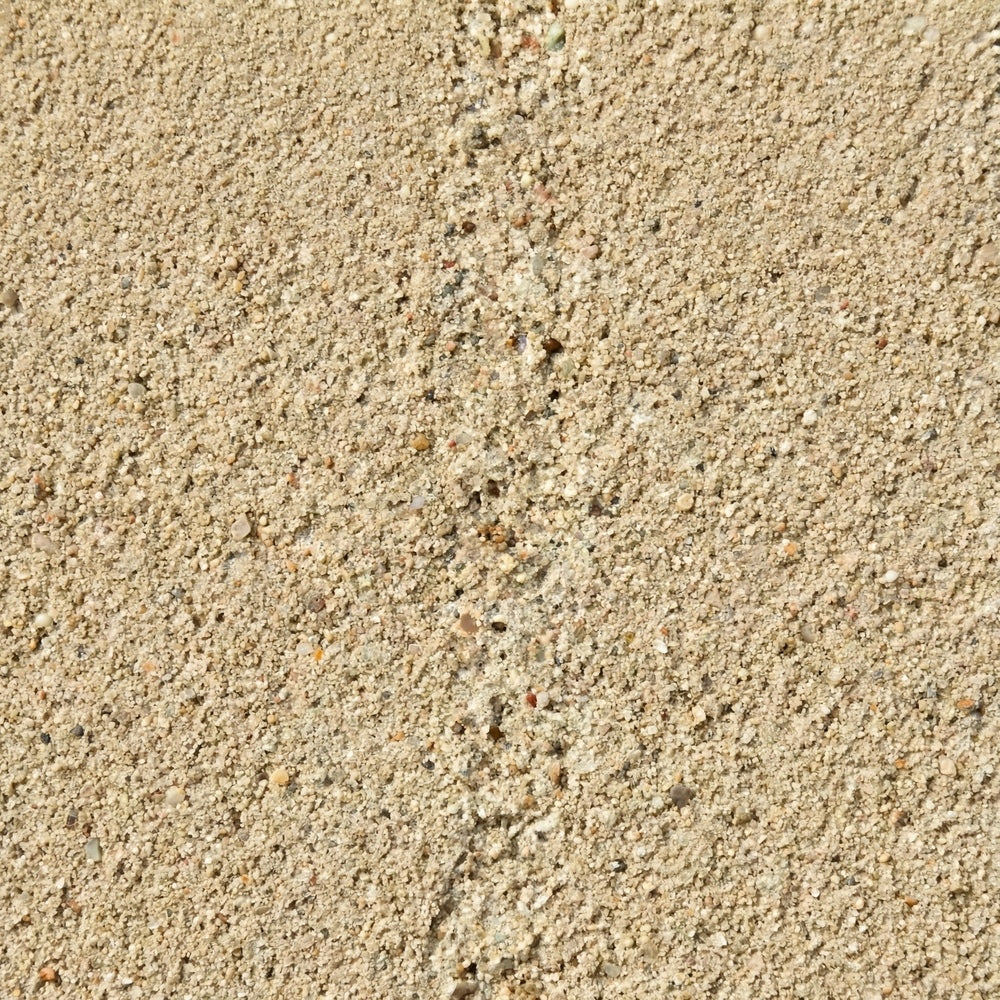
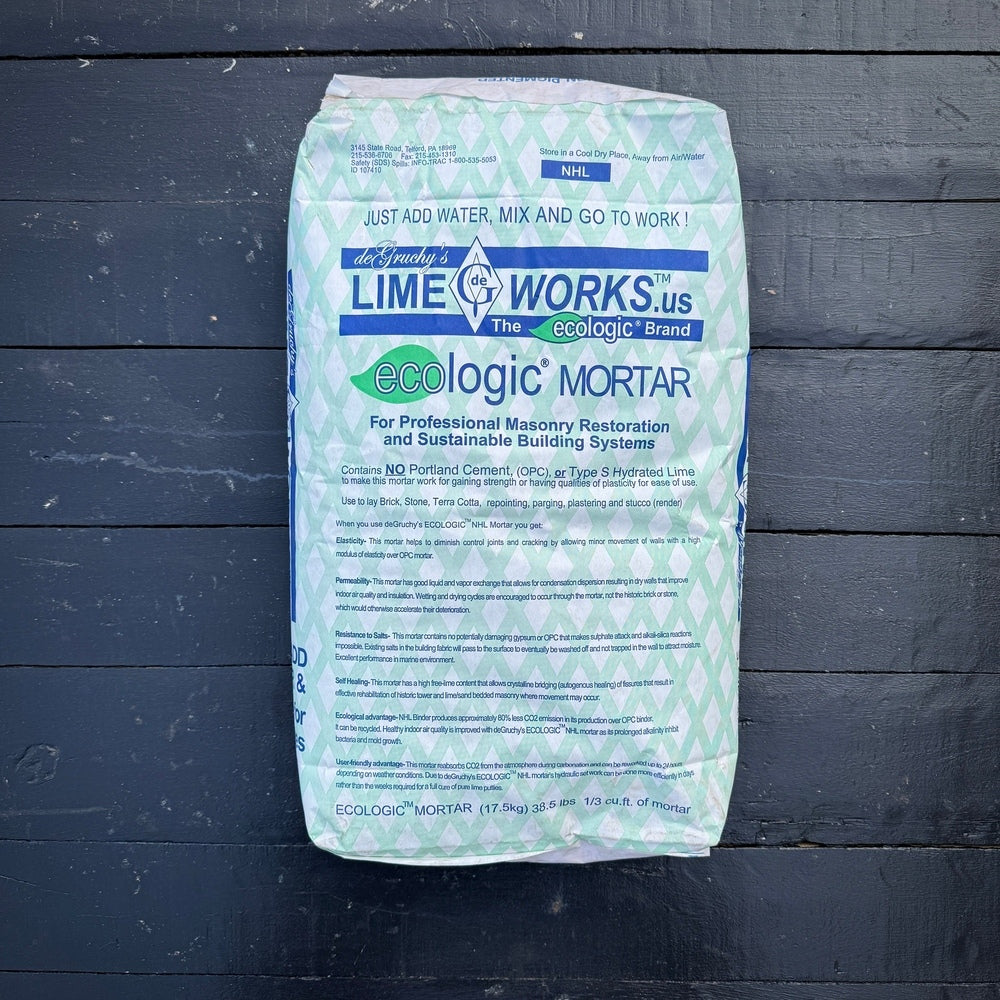
Ecologic™ Lime Mortar NHL 3.5 is a high-performance, natural hydraulic lime mortar ideal for repointing and laying reclaimed brick masonry. Pre-blended with perfectly graded sand, this “mix-and-go” dry mortar contains no ordinary Portland cement (OPC), ensuring excellent breathability and compatibility with historic brickwork. We carry the DGM non-pigmented coarse (G) grade, made for joints 3/8" and wider; it cures to a muted off-white. Designed to replicate traditional lime mortars and engineered for modern performance, this mortar supports long-lasting, durable masonry repair that protects both heritage and new reclaimed brick structures. See our step-by-step instructions for mixing and using this mortar.
Building a wall with reclaimed bricks? Our brick calculator works out how many bricks you need and, for joints of 3/8 inch or wider, offers to add the matching number of mortar bags to your quote.
Share: