
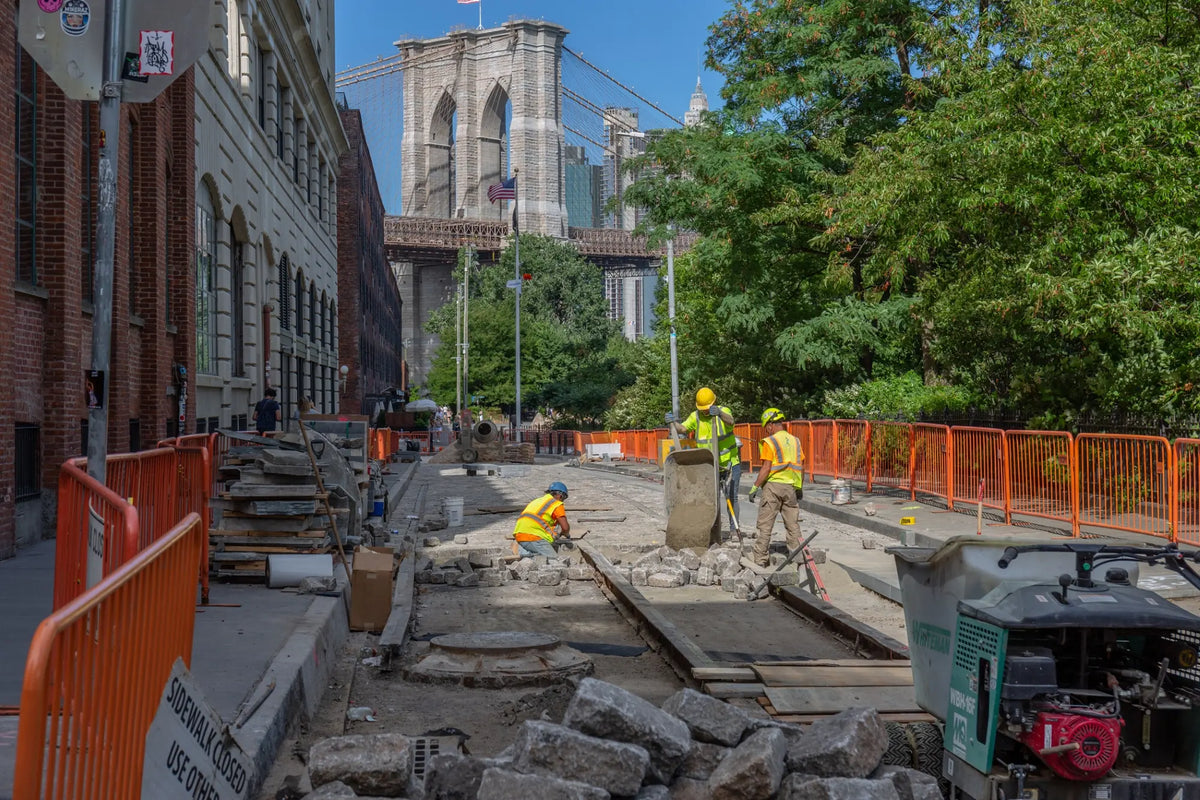
Walk down Water Street in Dumbo and you hear it before you see it: the low rumble of tires on granite, the click of heels on stone worn smooth by generations of traffic. Cobblestone streets feel as if they have always been there. But they are rarely as untouched as they look. So what is actually under a cobblestone street, and what happens to the stones when a city rebuilds one?
Brooklyn has just given a very good answer. The city's restoration of the cobblestone streets in Dumbo lifted the stones from 26 blocks, rebuilt the sewers and water mains underneath, and put the stones back. Along the way, crews uncovered thousands of objects that had been buried under the neighborhood for generations. A selection of them goes on display at the Adams Street Library in Brooklyn from 5 November.
Maybe you are a homeowner who loves the look of an old cobblestone street and wants it for a driveway or courtyard. You might be a designer matching new work to an old streetscape. Or maybe you are a contractor who has been asked where reclaimed cobblestones come from and how they should be set. This guide breaks down what the Dumbo project found, what sits under an old cobblestone street, why the city kept its original stones, and what that means for anyone building with reclaimed cobblestones today.
The NYC Department of Design and Construction announced the end of the project in November 2025. These are the figures from the city's announcement.
| What | Figure |
|---|---|
| Blocks restored | 26, most of them in two historic districts |
| Cobblestones removed and replaced | More than 800,000 |
| Extra stones brought in from off-site | About 8,000 |
| New granite curbs | More than 12,000 feet |
| New granite bike lanes | 8,800 feet |
| New storm sewers | 2,735 feet |
| Project cost and dates | $108 million; started in 2019, completed in 2025 |
Note: all figures are as published by the NYC Department of Design and Construction. Chief Bricks did not take part in the project.
Dumbo's streets are narrow, old and sit on equally old pipes. The project, run by the Department of Design and Construction with the city's transportation and environmental protection departments, set out to fix both at once: rebuild what is under the streets, and restore the cobblestone surface on top.
Twenty-six blocks were worked on, most of them inside the Dumbo and Vinegar Hill historic districts. Twenty-five of those blocks had originally been cobblestone. Over the decades, though, many of their stones had been disturbed, moved aside or taken away, and in several places the cobblestones had simply been paved over with asphalt. The 26th block, Gold Street between Front Street and Water Street, had been asphalt and was turned into cobblestone during the project.
To do the work, the crews lifted more than 800,000 cobblestones and put them back, together with about 8,000 extra stones brought in from elsewhere to finish the job. The streets now have full cobblestone surfaces again, with new granite curbs, granite bike lanes set into the stone, and a new granite-paved plaza on Pearl Street next to the Manhattan Bridge.
Images courtesy of Matthew Lapiska/NYCDDC
The short answer is: far more than stone. Under the cobblestones of an old city street you find the things a city needs to work. In Dumbo, the project built 2,735 feet of new storm sewers where there had been none, upgraded every existing catch basin and added 46 new ones, turned old combined sewers into dedicated sanitary sewers, and replaced or added thousands of feet of water mains.
That is why cobblestone streets get lifted at all. The stones themselves can last for decades in a street. The pipes, sewers and mains under them are what need to be reached, replaced or rebuilt, and the stones have to come up first.
Around the pipes, an old street can also hold traces of the people who lived and worked there long before. When the crews in Dumbo dug, they found them.
The city worked with archaeologists through the planning and the construction, and the dig turned up a large collection of everyday objects. "Porcelain cups, leather shoe soles, smoking pipes and animal bones were among 2,800 historical items dating back to the 1700s that we discovered during our construction project in DUMBO," said NYC Department of Design and Construction Commissioner Paul A. Ochoa in a statement.
Most of the finds are household, everyday and building ceramics, in earthenware, stoneware and porcelain. There are also objects of glass, metal, wood, stone and leather. Two pieces stood out to the city's team: a copper button stamped with New York State's "Excelsior" symbol, and a clay smoking pipe stamped with an eagle.
For anyone who works with old masonry, one find is especially fitting: a clay brick stamped by the Brooklyn Fire Brick Works, dug up on John Street. Old bricks and old paving stones turn up together under city streets, because the city was built from both.
Read the city's announcement closely and you will notice two words for the same stones. The transportation and design agencies talk about cobblestones. The Landmarks Preservation Commission talks about the careful restoration of historic Belgian block.
Both are right, in everyday New York speech. Historically, cobblestones were rounded river or field stones, and Belgian blocks were quarried, roughly rectangular granite blocks. Today most people use the two words for the same thing: the granite paving blocks on old streets like Dumbo's.
At Chief Bricks, we keep the two apart to make ordering simple: "cobblestones" means reclaimed granite with a weathered surface, and "Belgian blocks" means newly quarried granite. Our guide to cobblestones and Belgian blocks explains the difference in look, uses and installation.
The most useful lesson from Dumbo for anyone planning a cobblestone surface has nothing to do with archaeology. It is about the stones themselves.
When the city's preservation team met with the neighborhood during the design, residents made it clear that they wanted the old cobblestones to stay where they were. So the stones that were lifted were taken off-site, stored, and brought back to the same block they came from. Many stones from the area that became the Pearl Street plaza were moved to other blocks that needed them. Only about 8,000 stones came from outside, against more than 800,000 that were lifted and reset.
Why does it matter? Old stone and new stone do not look the same. A cobblestone that has carried carts, trucks and footsteps for generations has a softened, worn face and edges that a newly cut block does not have. Mix the two in one street and the new ones stand out. Keep the old stones, and the street still looks like itself.
The same is true at home. If you are patching an old cobblestone driveway, extending a historic courtyard, or building something new that should look as if it has always been there, weathered stone is what makes it read as old.
The Dumbo stones stayed in Dumbo. The reclaimed cobblestones you can buy come from other places: old streets and historic sites where the stones are no longer wanted where they lie.
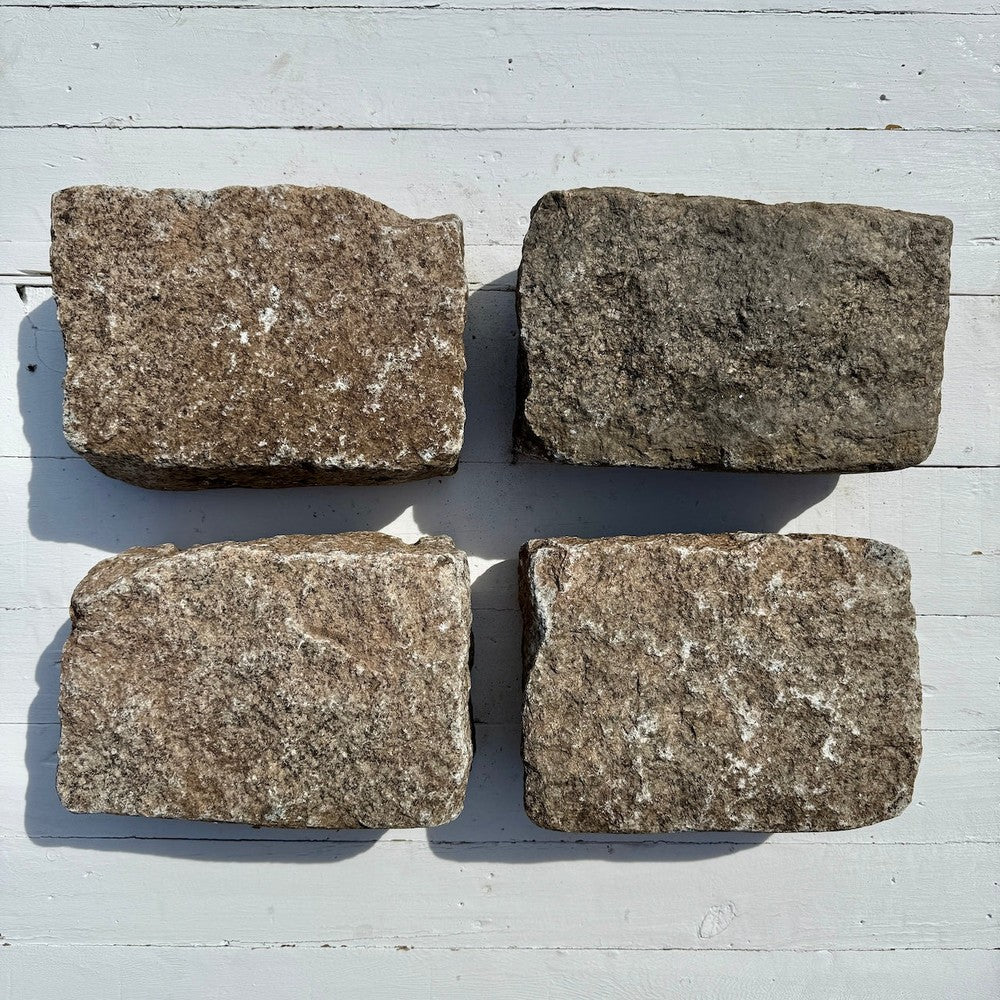
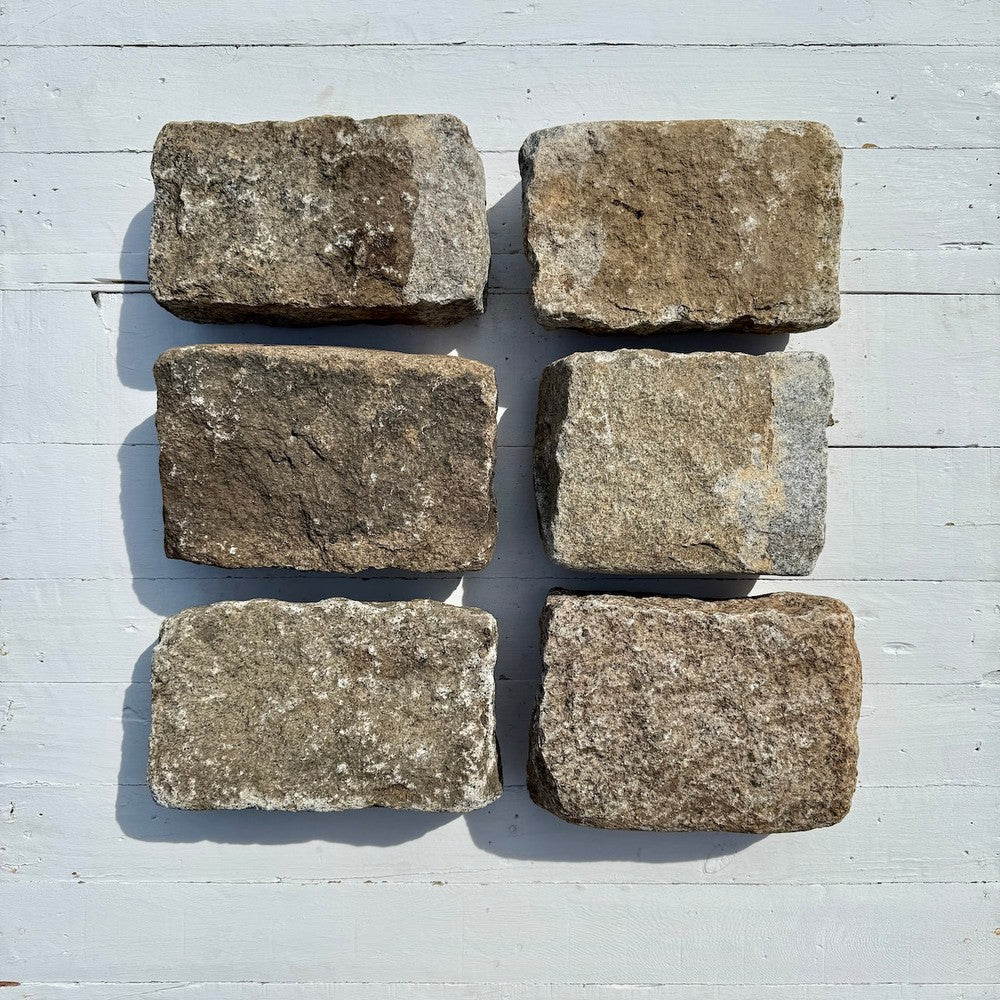
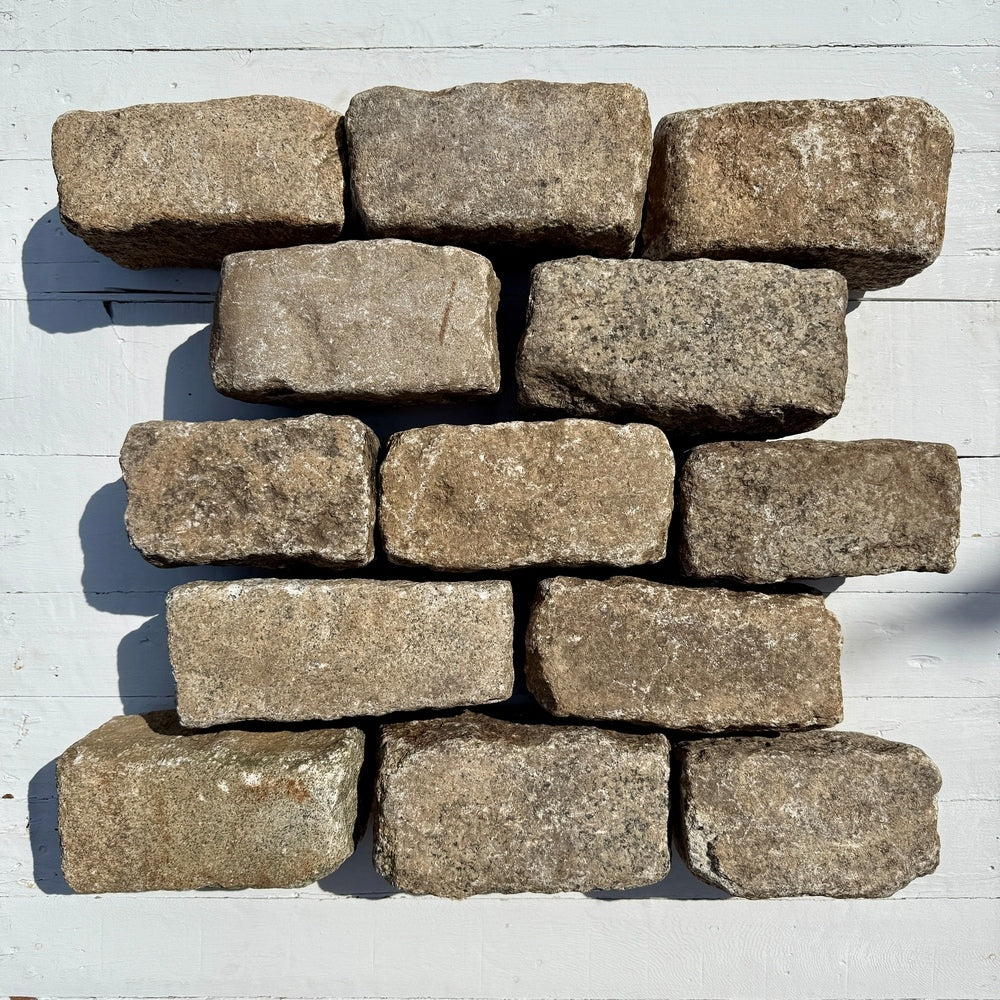
Our reclaimed cobblestones are weathered gray granite from New York and the surrounding region. We sort them by hand and stack them on pallets ourselves, so stones of one size travel together. Many have already spent decades in a street, and it shows: rounded edges, a worn top and the soft gray tone that only time gives granite.
Because they come out of old streets and sites, reclaimed cobblestones are never perfectly uniform. Sizes vary a little from stone to stone, faces are uneven, and there will be small chips and marks. That variation is exactly what you are paying for. If you want a perfectly even surface, newly quarried Belgian blocks are the better choice.
These are the reclaimed sizes we carry, with the average weight and pallet count from each product page.
| Size | Average stone (L x W x H) | Average weight | Stones per pallet |
|---|---|---|---|
| Jumbo XL | 12" x 8" x 5" | 40 lb | 120 |
| Jumbo | 11" x 7" x 4" | 30 lb | 120 |
| Regulation | 9" x 5" x 5" | 19 lb | 178 |
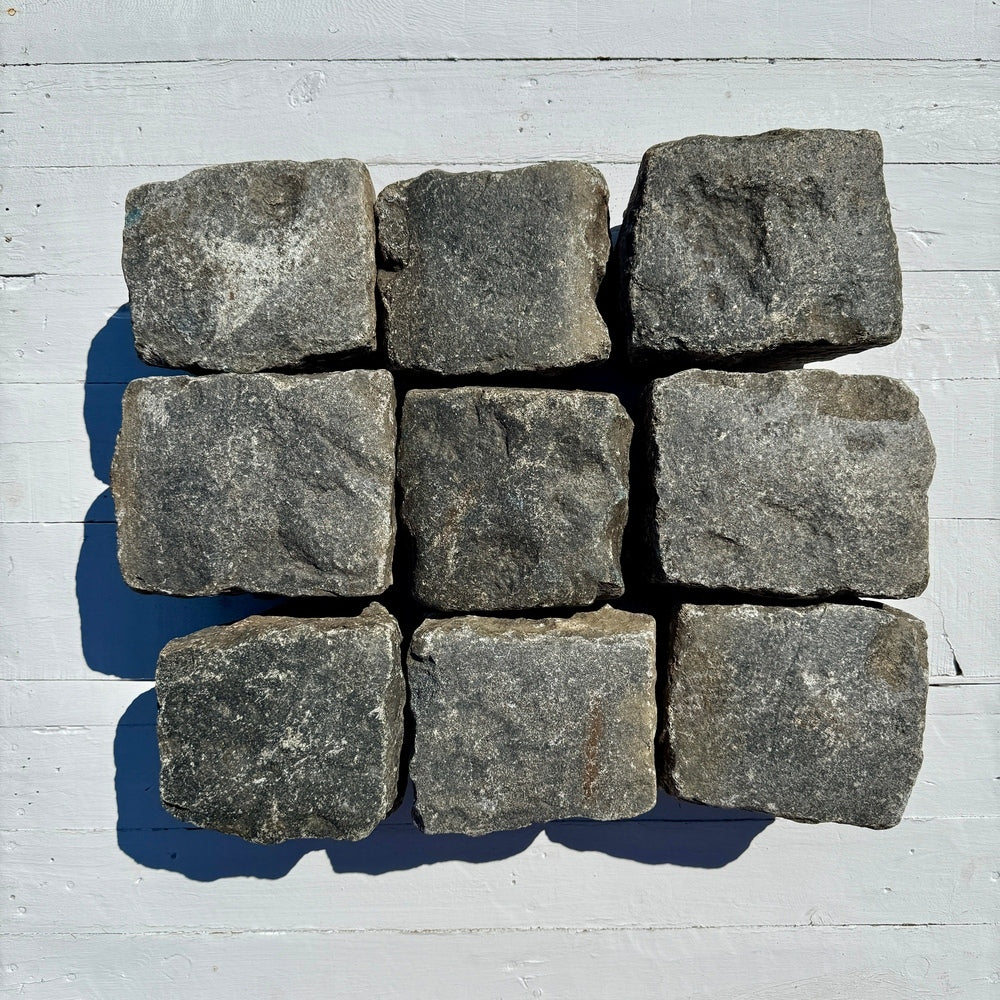
| Cube 7" | 7" x 7" x 7" | 30 lb | 90 |
| Cube 6" | 6" x 6" x 6" | 21 lb | 175 |
| Cube 5" | 5" x 5" x 5" | 9 lb | 260 |
Note: sizes and weights are averages; reclaimed stones vary. To work out how many stones you need for an area, see our cobblestone coverage guide.
Dumbo's streets carry city traffic, and the city rebuilt them as a major public works project. A driveway, walk or patio is a smaller job, but the same idea applies: the stones are only as good as what is under them.
For a driveway, set cobblestones in mortar on a concrete base, because cars and trucks load the stones hard and a rigid base keeps them in place. For walks and patios, cobblestones can also be set on sand over a well-compacted base.
Joints matter too. We plan reclaimed cobblestones with a 1" joint, because the stones are not perfectly regular. On a sand-set walk or patio, fill the joints with stone dust or coarse sand. Where the stones are set in mortar, we suggest an NHL 5 lime mortar for walks, patios and driveways. We don't recommend polymeric sand for reclaimed cobblestones.
Allow extra stone for cuts and waste: about 10% for a simple layout, and 12-15% for herringbone, curves and borders. Set aside the best-looking stones for the places people see first: the edge of the drive, the front of the walk, the patch next to the door.
If you are pricing a driveway, our reclaimed cobblestone driveway cost guide covers what to budget.
Eighteen objects from the dig go on show in "Dumbo Before the Bridges", an exhibit at the Adams Street Library, 9 Adams Street, in Brooklyn. It opens on 5 November 2026 and runs until 28 February 2027. Among the objects on display is the clay brick from the Brooklyn Fire Brick Works.
After the exhibit, the collection will likely be kept by the Landmarks Preservation Commission's NYC Archaeological Repository.
If you go, walk a few blocks to Dumbo's cobblestone streets afterwards. Most of their stones are the same ones that were lifted, stored and returned to their own block.
If you want a surface that looks like an old New York street, yes. Dumbo's restoration made the point on a large scale: the city went to the trouble of storing and returning hundreds of thousands of original stones, as residents asked. Old, weathered granite looks right in a way new stone does not. Reclaimed cobblestones give you that look from the first day, and they keep material that has already lasted decades in use.
The trade-offs are real. Reclaimed stones vary in size and surface, they need a skilled installer and a proper base, and a driveway needs to be set in mortar on concrete. If you need a perfectly even surface, newly quarried Belgian blocks will suit you better.
To see the sizes and the stone itself, start with our reclaimed cobblestones guide. You can also visit our yard in Nanuet, NY. No appointment is needed, but if you call ahead at (718) 379-1232, we will make sure you get our full attention.
The information provided in our guides, installation tips, and blog content is for general reference only. Every project is unique, and site conditions can vary. We strongly recommend consulting a qualified professional installer to review your specific project and provide final guidance.
Reclaimed Granite Cobblestone - Jumbo XL 12" x 8" x 5"
Reclaimed Granite Cobblestone - Cubes 7" x 7" x 7"

Share: