
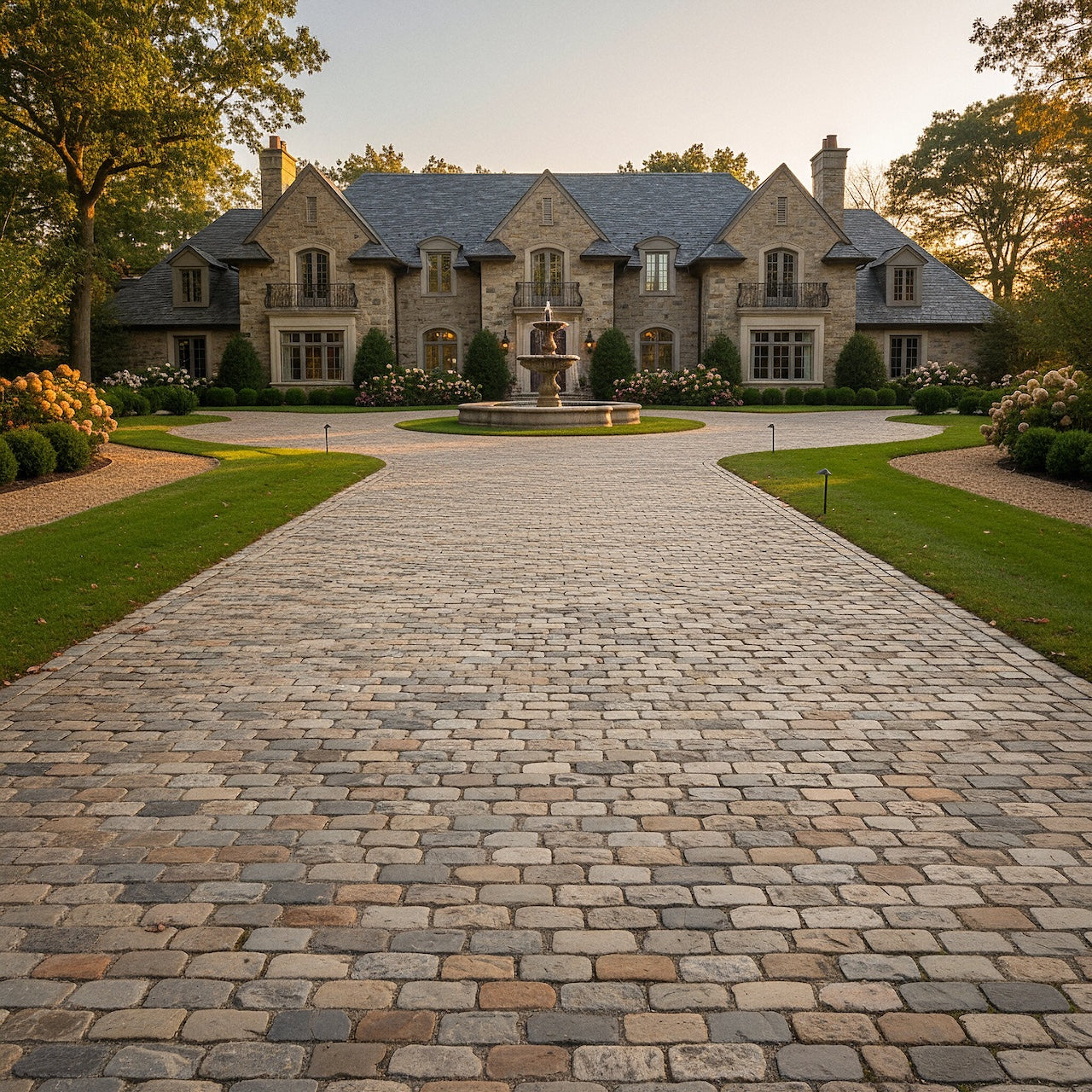
Walk down an old New York street and you will feel it under your feet first. The slight rise and fall of each stone, the sound of tires over granite, and the way the light hits those worn edges. A reclaimed cobblestone driveway brings that same feeling right up to your front door. It also comes with real-world costs that homeowners should understand before they commit.
This guide breaks down reclaimed cobblestone driveway cost in 2026 so you can plan with clear numbers instead of guesses. You will see how material, base prep, labor, edging, and layout choices affect budget. You will also learn how a hybrid layout with a cobblestone apron and borders around an asphalt center lane can deliver the historic look you want while cutting your spend by 60% or more.
Table of Contents
- What Drives Cobblestone Driveway Cost in 2026
- Material Cost Per Square Foot
- Base Prep and Foundation Costs
- Labor Cost for Cobblestone Installation
- Edging, Drainage, and Details
- Full Cobblestone vs Hybrid Driveway
- Example Budgets for Typical Driveways
- How to Estimate Your Project With a Calculator
- Logistics and Nationwide Shipping
- Tips Before You Sign a Contract
What Drives Cobblestone Driveway Cost in 2026
When homeowners first price a reclaimed cobblestone driveway, they usually look at the stone cost and stop there. In reality, the stone is just one piece of a layered system. The excavation, gravel base, setting bed, labor, and edging all play into the final price you will see in a proposal.
For 2026, a realistic installed range for a reclaimed cobblestone driveway is roughly $18 to $42 per square foot. That figure includes stone, base, labor, basic edging, and standard site conditions. Driveways on slopes, tight urban lots, or poor soil can land at the high end of that range because they require more site work and time.
Material Cost Per Square Foot
Reclaimed cobblestone material cost is the part you can control most directly because you decide which stone, size, and pattern you want. Heavier, larger granite cobbles with a smooth, consistent size are easier to lay and often command a higher price per piece. Smaller, more irregular stones may be less per piece but take more time to install.
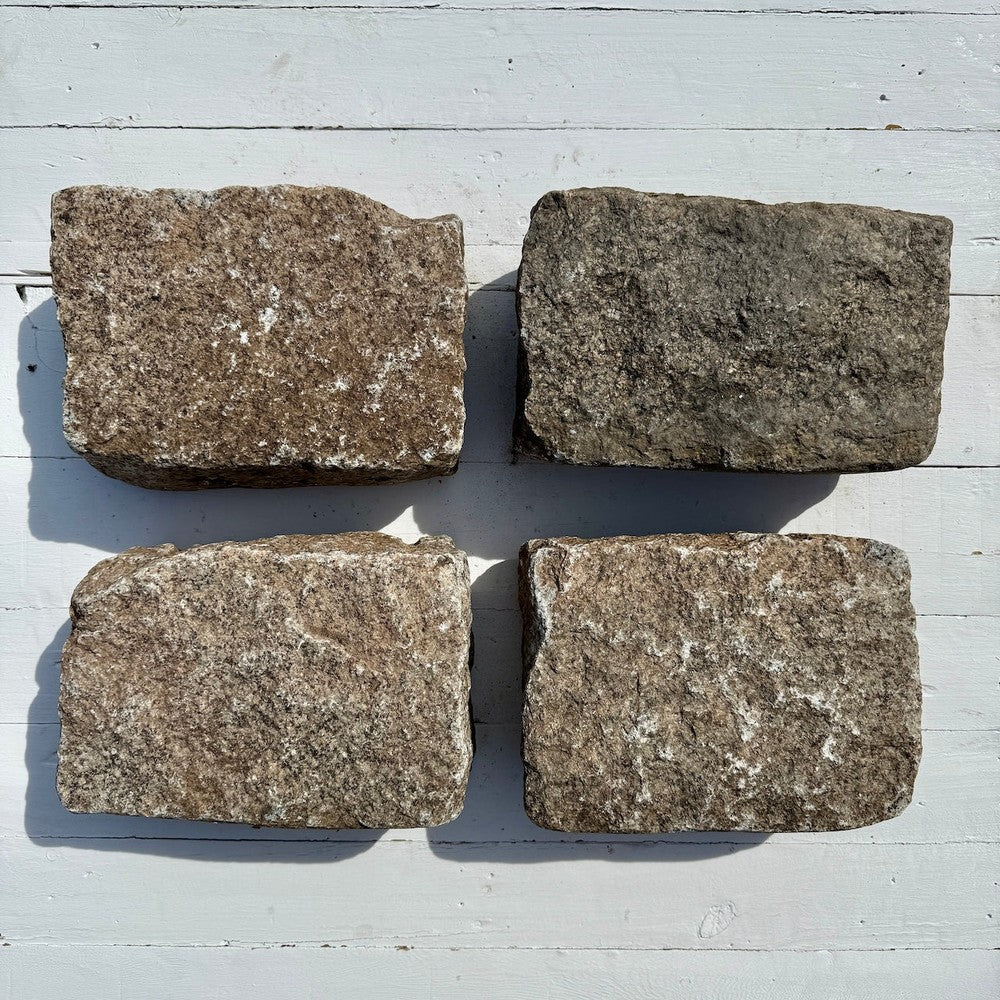
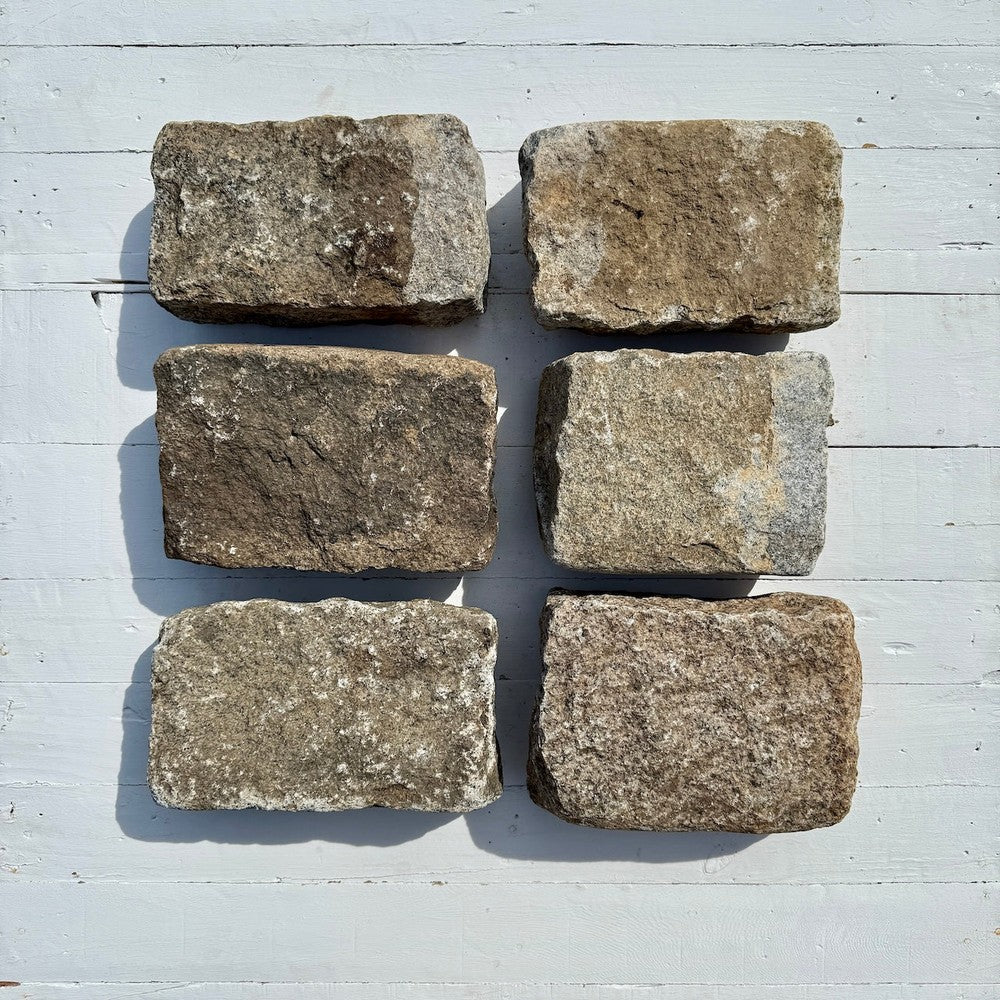
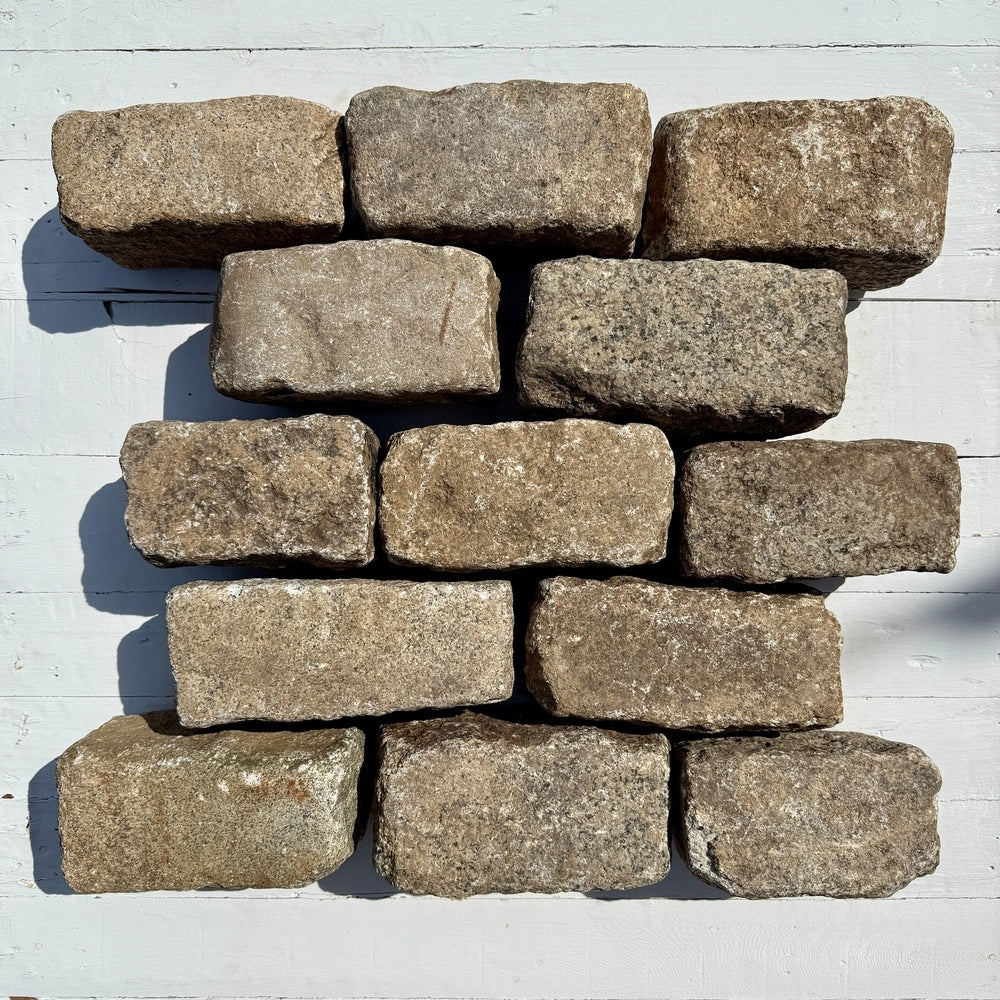
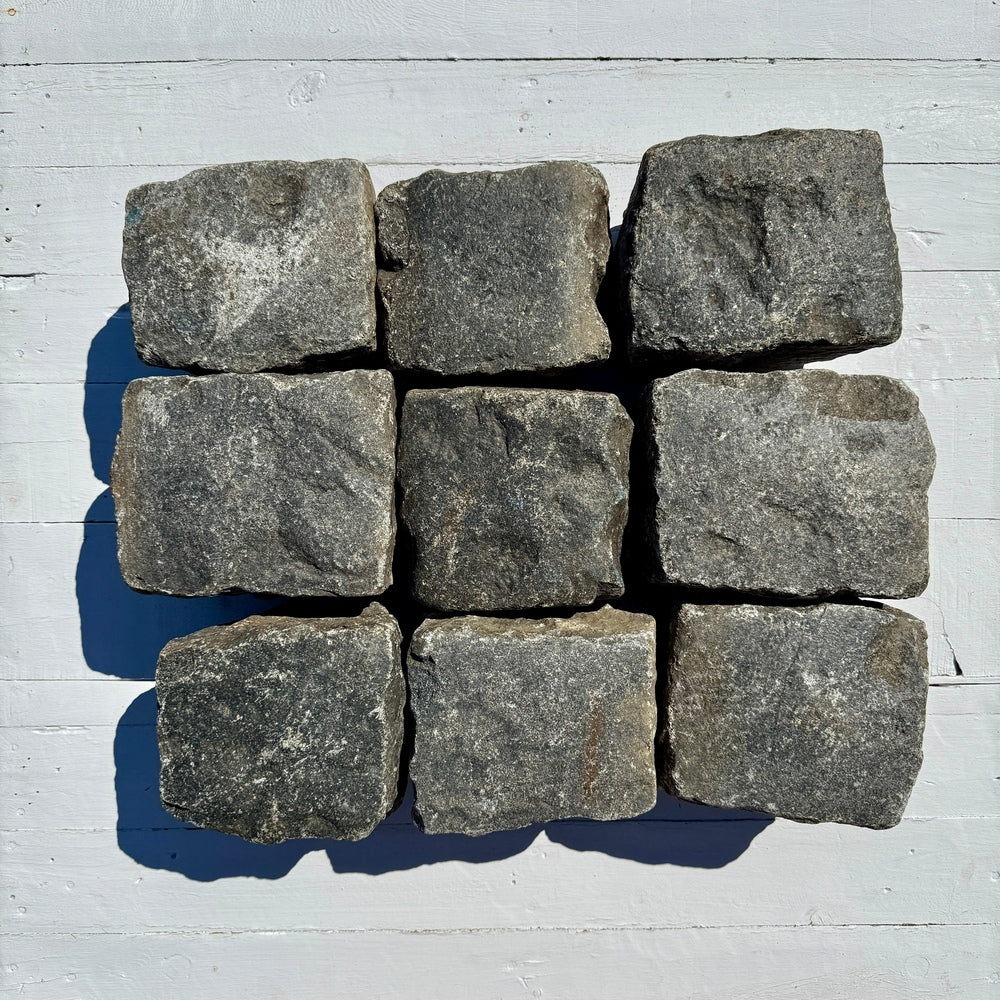
Chief Bricks stocks reclaimed granite cobblestones in several sizes, from Regulation units around 9 x 5 x 5 inches to Jumbo and Jumbo XL stones that make a bold statement at entries. These heavier pieces are designed to handle real vehicle traffic, freeze–thaw cycles, and road salt in climates from the Northeast to the Midwest. They are not decorative blocks; they were built to live in the street.
Once you know your driveway area in square feet, you can use the Chief Bricks masonry calculator to turn that into a piece count. That step matters because it allows you to compare stone options in an apples-to-apples way, instead of guessing how many pallets you will need. A good calculator will factor in joint spacing and waste so your order lands close to reality.
Base Prep and Foundation Costs
The base under your cobblestones is where many driveways succeed or fail. A reclaimed granite unit can easily outlast the house. The layers beneath it, especially in wet or freeze–thaw climates, are what keep those stones flat and locked in place when vehicles turn and brake.
Typical driveway prep starts with excavation to remove soft topsoil and organic material. Contractors then bring in crushed stone and compact it in lifts to create a stable base. On top of that, they may add a finer setting bed for the cobbles themselves. Depending on depth and access, base prep can easily account for 25% to 40% of your total driveway budget.
If you are comparing quotes and one contractor is “much cheaper,” it often means they are shaving base depth or skipping compaction. That might look good in year one, but by year three you may see rutting, loose stones, and pooling water. In traffic areas, a strong gravel base is not the place to cut corners.
Labor Cost for Cobblestone Installation
Labor is where reclaimed cobblestone driveways separate from basic poured concrete or asphalt pricing. Each stone has to be placed, adjusted, and set by hand. Reclaimed pieces also have slight variations in size and shape that give them character, but that character takes skill and time to lay correctly.
By 2026, it is common to see labor for cobblestone installation in the $12 to $24 per square foot range, depending on pattern complexity, stone size, and region. A simple running bond or staggered pattern will be on the lower end. Intricate fans, circles, or custom banding at the entry can push toward the upper end because the installer is essentially building a piece of stone furniture in front of your house.
If your driveway is long, steep, or hard for trucks to reach, expect labor costs to increase. The same goes for coastal or mountain areas where qualified masons and hardscape crews are booked months in advance. When you hire someone who understands reclaimed material, you are paying for a trained eye as much as for a day rate.
Edging, Drainage, and Details
The details that hold a cobblestone driveway together rarely show up in quick “per square foot” conversations, but they show up in the final invoice. Stable edging at the sides of the driveway keeps the stones from spreading over time as vehicles roll on and off the surface. That edging can be poured concrete, granite curbing, steel, or even a wider cobblestone band set in a reinforced bed.
Drainage is just as important. On flat sites, contractors may need to add a subtle crown or install trench drains so water does not sit between stones. In colder regions, standing water will find every joint, freeze, and try to push stones upward. Budget-wise, edging and drainage generally add 10% to 20% on top of your basic driveway number, but they help protect everything you already invested in the stone and base.
Do not forget access and clean-up. Getting pallets of reclaimed cobblestone to a hillside property or a tight urban lot takes planning. There may be charges for equipment, forklifts, or temporary staging space, especially when the project is in a dense city or a historic neighborhood with narrow streets.
Full Cobblestone vs Hybrid Driveway
A full cobblestone driveway looks incredible in person and can anchor the entire front elevation of a home. It also represents the high end of the budget range because every square foot is built like a small street. For many homeowners, the smarter move is to reserve cobblestones for the high-impact areas and use a more cost-effective surface for the center lanes.
A hybrid layout typically uses reclaimed cobblestones for an apron at the street, borders along the edges, and possibly a landing zone near the garage. The drive lane itself is finished in asphalt or another paving material. Because asphalt is faster to install and requires less handwork, this approach can cut total driveway cost by 60% or more while keeping the historic cobblestone look where it matters most visually.
This hybrid detail works especially well in regions with snow plows and heavy de-icing. The plow runs mostly on asphalt, while the cobblestone apron at the street absorbs the first slice of salt and traffic. At the house, a cobblestone landing in front of the garage or entry steps creates that Old World arrival moment even if the cars are parked on a smoother surface most of the time.
Example Budgets for Typical Driveways
To put numbers into context, imagine a relatively standard suburban driveway around 600 square feet. A full reclaimed cobblestone installation in 2026 might sit somewhere between $10,800 and $25,000 depending on stone choice, base depth, and local labor. A similar driveway in a coastal metro area with challenging access or more complex patterns could push beyond that range.
Take that same 600-square-foot driveway and run a hybrid layout instead: 150 square feet of reclaimed granite cobblestones for the street apron and edges, and 450 square feet of asphalt for the main lane. The cobblestone portion still uses a full base and hand-set stone around the perimeter, but the asphalt center is much faster and cheaper to install. The blended result often lands at a fraction of the full cobblestone cost while reading the same from the curb.
Larger rural and estate driveways – 1,000 square feet and up – magnify these savings. The more surface you cover, the more sense it makes to concentrate reclaimed cobblestone at the entry, turns, and pedestrian areas, then lean on asphalt or another durable surface for the long runs.
How to Estimate Your Project With a Calculator
Before you call contractors, it helps to run your own rough numbers. That way, you will know immediately whether a quote is in the right ballpark for your project size and chosen layout. Start by measuring the length and width of each driveway section in feet and multiply to find the square footage. Do this separately for cobblestone zones and for any asphalt or concrete lanes you plan to include.
Once you have total square footage, use the Chief Bricks masonry brick and stone calculator to estimate how many reclaimed cobblestones you will need. A good calculator will account for joint spacing and waste so you do not undershoot your material order. You can then apply a realistic per-square-foot installed cost range to your cobblestone areas and a separate number to your asphalt center to see where your total budget might land.
This early planning step is especially useful if you are designing a hybrid driveway with a cobblestone apron and borders. You can quickly test what happens if you widen the apron, carry cobblestones further up the drive, or trim back to a more minimal border to hit a specific budget target.
Logistics and Nationwide Shipping
Reclaimed cobblestones are heavy. A single pallet of granite can weigh more than an entire compact car. That means you need a supplier who understands how to stage, palletize, and ship stone efficiently from yard to jobsite, whether your project is in New York, New Jersey, California, Texas, Florida, or anywhere in between.
Chief Bricks focuses on reclaimed masonry and cobblestones and ships nationwide across the continental United States. Pallets of reclaimed granite cobblestones, Belgian blocks, and complementary brick products are grouped, inspected, and prepared with jobsite logistics in mind. For busy homeowners and builders, that reliability matters as much as the stone itself.
If you are working with a contractor, share your preferred cobblestone product and estimated quantities early so they can coordinate delivery timing, equipment, and staging. On tight urban lots or steep hillside properties, the logistics plan can influence which stone sizes and patterns make the most sense for your team to install.
Tips Before You Sign a Contract
Once you know the typical cost per square foot and the main budget drivers, the final step is to choose the right team and scope. Ask to see photos of past reclaimed cobblestone work, not just concrete or paver jobs. Look for driveways that show consistent joints, well-set borders, and clean transitions at the street and garage.
Make sure your proposal specifies not just the stone, but also base depth, compaction, edging type, and drainage plan. For hybrid layouts, confirm exactly where cobblestone will start and stop, and how it will meet the asphalt or other paving. Clear details up front help avoid change orders later.
Lastly, remember that a reclaimed cobblestone driveway is as much a design feature as it is a hardscape. The choices you make about patterns, borders, and hybrid layouts will shape how your home feels every time you pull in. By understanding what to budget in 2026 and where you can save without sacrificing character, you can build a driveway that is both honest to the material and sensible for your wallet.
Share: