Run your hand along an old brick front in Brooklyn and you can feel its age: edges softened by weather, faces that range from deep red to orange, mortar joints worn back from the surface. A wall like that is hard to fake. When part of it has to be repaired, the question every owner faces is the same: how do you add new work that looks as if it has always been there?
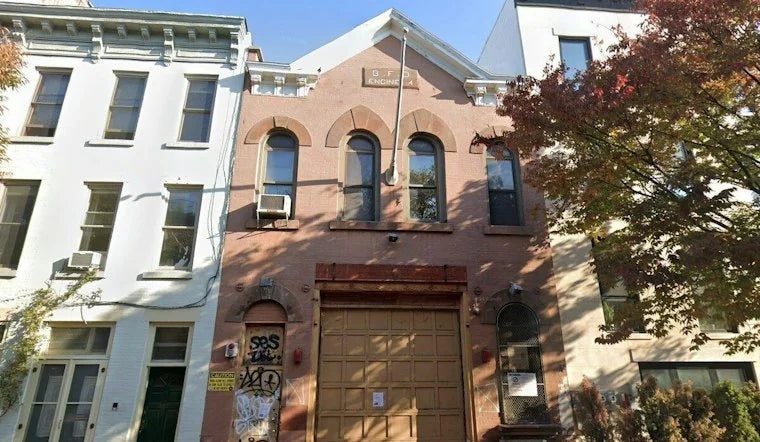
This fall, New York City started work on one of those walls. A firehouse in Cobble Hill, built in 1857, is being turned into a music school, and the city says the renovation will restore its historic brick and terra-cotta facade.
Maybe you own an 1800s row house or carriage house with a damaged front. You might be an architect planning a restoration and looking for brick that fits. Or maybe you are a mason who has been asked to make a repair disappear. This guide breaks down what the city has announced for the firehouse, why 1800s brick is hard to match, how restorers approach a match, and where reclaimed brick fits in a restoration. It is not preservation or compliance advice: your architect, and the Landmarks Preservation Commission if your building is designated, have the final word.
These are the basics as the Mayor's office announced them on October 6, 2026.
| Question | Answer from the Mayor's office |
|---|---|
| Which building? | The former Engine Company 204 firehouse, 299 DeGraw Street, Cobble Hill, Brooklyn |
| How old? | "Originally built in 1857"; about 6,000 square feet |
| What will it become? | A permanent home and music school for the Noel Pointer Foundation |
| What happens to the front? | "The renovation will restore the firehouse's historic brick and terra-cotta façade"; the garage doors become glass windows |
| Who is doing the work? | The Department of Design and Construction, for the Department of Cultural Affairs, with MBB Architects and A.P.N. Construction Corp |
| Cost and timing? | "a $17.8 million renovation"; "Construction is expected to be completed in fall 2028" |
Note: this summarizes the Mayor's office release. It does not say what brick will be used in the restoration, and Chief Bricks is not involved in the project.
The firehouse has stood on DeGraw Street since 1857. In the release, Department of Design and Construction Commissioner Paul A. Ochoa describes it as built "when firefighters used horse-drawn carriages", and says the building "has a very special place in the hearts of Cobble Hill residents."
The plan keeps the old front and changes much of what is behind it. The city says the renovation will restore the historic brick and terra-cotta facade and convert the existing garage doors into glass windows, "bringing natural light into the building and increasing visibility for passersby and patrons." Inside, the project adds a courtyard, a new elevator, an accessible reception area, a finished cellar for rehearsal and recording space, and new mechanical, electrical and other systems to modernize what the release calls "the 169-year-old building."
That mix is common in old buildings: a new use inside, an old face outside. And it raises the question this guide is about. When an 1800s brick front is restored, how do you repair it so the repair does not show?
Brick from the 1800s rarely looks like brick made today. A few reasons:
Every restoration is different, but the steps for matching brick are practical, and they work as well on a row house as on a public building.
When the wall's own bricks are not enough, reclaimed brick can be the closest match you can get to old brick, because it is old brick. It already has the weathered surface and the color range that new brick has to imitate.
Our New York reclaimed bricks were made in the Hudson Valley; our guide to the history of brick manufacturing in the Hudson Valley tells the story of the brickyards there. Every brick is checked by hand, cleaned of old mortar and dirt, and sorted by type, size and color.
For the oldest walls, we carry Reclaimed NY Antique Bricks, described on the product page as early to late 1800s. The product page describes their colors as ranging from dark red and purple to orange, with a texture shaped by exposure to the elements. Their average size is 8" x 3.5" x 2.25", with 504 bricks to a pallet.
A few practical points:
For examples on Brooklyn and Manhattan fronts, see our guide to reclaimed New York bricks for townhouse facades.
Old brick was laid in soft lime mortar. Hard modern cement mortar can trap moisture and put stress on older, softer brick, so restorers usually use a breathable lime mortar with old brick.
For reclaimed brick, we carry one: Ecologic NHL 3.5, a natural hydraulic lime mortar for joints 3/8" and wider. A 38.5 lb bag lays about 30 bricks at 1/2" joints. It is for full bricks in walls, not for thin brick or floors. We explain why in why reclaimed bricks need different mortar than new bricks, and how in how to repoint reclaimed brick with NHL 3.5.
Joint width, color and finish all affect how a repair looks. Match them to the existing wall, and let your architect or mason set the mix for your building.
Restoring a historic front is not only a question of materials. Before you buy brick:
For matching the face of an 1800s brick building, reclaimed brick can be the most convincing option. It has the size range, color and weathered surface of old brick because it is old brick. Set in a lime mortar that suits it, a repair can blend into the wall, and good material stays in use instead of going to a landfill.
The trade-offs are clear. Reclaimed bricks vary, so a careful match, blending and a few spares are worth the time. They are for non-structural use. And the approvals and the repair design come first, from your architect and, for a designated building, the Landmarks Preservation Commission.
To see the bricks, start with our reclaimed bricks guide, or visit our yard in Nanuet, NY. No appointment is needed, but if you call ahead at (718) 379-1232, we will make sure you get our full attention.
The information provided in our guides, installation tips, and blog content is for general reference only. Every project is unique, and site conditions can vary. We strongly recommend consulting a qualified professional installer to review your specific project and provide final guidance.


Step back in time with Chief Bricks’ Reclaimed Antique Bricks, salvaged from 18th-century structures throughout the historic Hudson Valley. These 200-year-old handmade bricks are a testament to craftsmanship, with each piece bearing the distinct marks of history. Whether you’re restoring a heritage building or creating a contemporary design with vintage charm, these bricks offer unmatched authenticity and a bold design statement.
Featuring a rich color palette ranging from dark red and purple to orange, and a unique texture shaped by exposure to the elements, these bricks embody the character of a bygone era.
Work out how many bricks or stones you need for your wall, patio or walkway with our Masonry Brick & Stone Calculator.
Pictures are an indication only. Feel, look and color differ from item to item.

Share: