The Hudson Valley in New York has a rich history of brick manufacturing that stretches back to the 18th and 19th centuries. This industry played a significant role in the region's economic development and left an enduring legacy on its architectural landscape.
Brickmaking in the Hudson Valley began in earnest in the late 1700s as European settlers expanded throughout New York. The region's natural resources, particularly its abundant clay deposits, made it an ideal location for brick production. These clay deposits were left behind by the retreat of glaciers from the last Ice Age, making the Hudson River Valley especially suitable for the craft.

The Great Fire of 1835 was a catastrophic event that devastated lower Manhattan in New York City. On the night of December 16, a blaze broke out in a five-story warehouse at 25 Merchant Street (now Pearl Street) and quickly spread due to fierce winds and freezing temperatures. The fire raged uncontrollably, fueled by wooden buildings and highly flammable goods stored in warehouses, which made firefighting efforts difficult. Complicating matters, the city's water supply had frozen due to sub-zero temperatures, forcing firefighters to resort to drawing water from the East River, a tactic that was slow and inefficient. Over the course of the night and into the next day, the fire consumed over 17 city blocks, destroying more than 600 buildings, including the New York Stock Exchange. The blaze reshaped the city's landscape and led to significant changes in building regulations and firefighting infrastructure to prevent such devastation in the future. New building codes prompt an increase in demand for bricks as a cheap, durable and fireproof building material.

Nicolino Calyo, Burning of the Merchants Exchange, New York, December 16 & 17 1835.
1835 Dilon canvas, Museum of the City of New York, New York, NY.
During the 19th century, the Hudson Valley became one of the most significant brick-manufacturing regions in the United States. This growth was fueled by several factors:
By the late 19th century, the Hudson Valley had become synonymous with brickmaking. The industry reached its zenith as demand from New York City surged. The bricks were used to construct many famous buildings, including factories, homes, and infrastructure projects.
At its peak, the Hudson Valley boasted more than 130 brickyards. Some of the most notable included:
Despite its success, the industry faced challenges:

After World War II, the brick industry began to wane due to several factors:
By the 1970s, the majority of the brickyards in the Hudson Valley had closed. However, the legacy of the industry can still be seen in the region's historic buildings and structures, many of which were built using locally produced bricks. The iconic red bricks of Hudson Valley construction are a testament to the era when the region's clay fueled both local and metropolitan growth.
Today, brickmaking in the Hudson Valley is remembered through museums, local historians and preserved industrial sites. Organizations and historians continue to celebrate this rich history through exhibits, tours, and literature, ensuring that the story of the Hudson Valley’s brick industry remains a vital part of its cultural heritage.
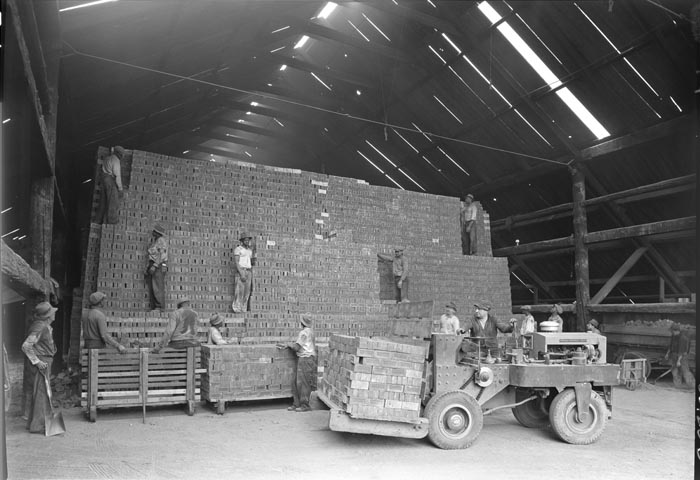
Article featured image. Taking bricks from kiln at Hutton Brick Works, Kingston, 1939. (Gottscho-Schleisner Collection, Library of Congress)
The information provided in our guides, installation tips, and blog content is for general reference only. Every project is unique, and site conditions can vary. We strongly recommend consulting a qualified professional installer to review your specific project and provide final guidance.






Share: