

Stand at a busy New York corner and look down. Between the crosswalk paint and the curb there is often a line of rough gray stone: squared granite blocks, set shoulder to shoulder, marking where the street ends and the people begin. They hold their line for years, and nobody notices them until they are gone. This fall, the city added more of them. In the East Village, the redesigned Avenue B now has new curb extensions at its intersections, and the city lists granite blocks among the things that protect them.
Granite is a small part of that story. The redesign is mostly about space for people, safer crossings, cycling and loading zones. But it is a good reminder of something homeowners and designers can use: a row of granite blocks can be one of the simplest, longest-lasting ways to mark an edge.
Maybe you are a homeowner who wants a clean border along a driveway or a garden bed. You might be a landscape designer drawing edging and aprons for a client. Or maybe you are a contractor who wants a quick reference for sizes, joints and quantities. This guide breaks down what changed on Avenue B, the jobs granite blocks do on city streets, how the same idea works at home with Belgian block edging, and how to work out how many blocks you need.
Our Belgian blocks are new granite from our own dedicated quarry in India. These are the sizes we carry, with the uses they are most often chosen for.
| Size | Dimensions | Stones per pallet | Colors | Common use |
|---|---|---|---|---|
| Jumbo | 10" x 7" x 4" | 120 | Grey, Pink, Buff, Black | Driveway edging and borders |
| Regulation | 9" x 5" x 5" | 178 | Grey, Pink, Buff, Black | Driveway aprons |
| Landscape | 8" x 4" x 4" | 255 | No color choice | Pairs with the 4" cube |
| Paver | 12" x 6" x 3" | 180 | Split-face or bush hammered finish | Pathways, patios, driveway borders and edging |
| Cube | 4" x 4" x 4" | 450 | Grey, Black | Pairs with the landscape block |
Note: sizes are a style choice, not a rule. "Common use" is what most projects choose, or what the product page suggests. Every size is sold by the stone, by the pallet, or as a sample by priority mail.
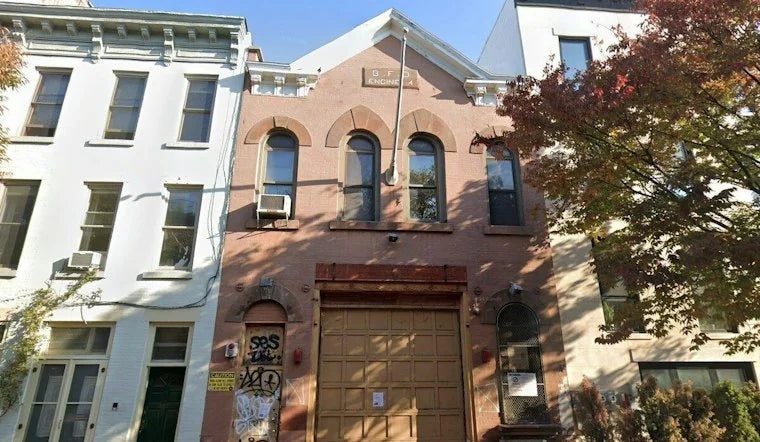
On October 13, 2026, the NYC Department of Transportation (DOT) announced that it had finished the permanent redesign of the Avenue B Open Street, from East Fourth Street to East 14th Street in the East Village, near Tompkins Square Park and several schools.
According to the DOT, the agency redesigned every intersection in the project area "with new pedestrian curb extensions that are protected with planters, bike corrals, granite blocks, or other elements." The DOT says these sidewalk expansions create more public space for pedestrians, shorten crossing distances and improve visibility between people crossing and other road users.
The redesign also added neighborhood loading zones at the start and end of every block, and turned vehicle traffic northbound only between East Seventh Street and East 10th Street. Open Street hours stay the same: 8 a.m. to 8 p.m. daily.
So granite blocks are one option among several on Avenue B, next to planters and bike corrals. The release does not say how many blocks were used, or at which corners. What it does show is that, in a brand-new street design, a city still reaches for plain granite to protect a pedestrian space.
Granite blocks have been part of New York's streets for a long time, as paving, as curbs and as borders. On today's streets they tend to do three jobs.
A line of blocks marks where one surface ends and the next begins: road and sidewalk, sidewalk and tree pit, plaza and planting. It is easy to see, easy to step over and hard to wear out. Granite is a dense, hard-wearing stone, and set well, a granite edge can last decades.
A curb extension pushes the sidewalk out into the street at a corner. Something has to show drivers where the new edge is. On Avenue B, the DOT lists planters, bike corrals and granite blocks for that job. A row of heavy stones is simple, needs no power and little upkeep, and looks at home on an old street.
A large block set on its own at a corner or a path entrance works as a marker: a solid object that shows drivers where not to go and gives pedestrians a clear edge. People sometimes call these bollards. At home, a Belgian block border can do the same job.
It is worth being clear about what a border is not. Granite edging marks an edge; it is not a security or crash barrier. If you need to stop vehicles, for example at a storefront, a playground or a building entrance, that calls for barriers designed for that purpose by an engineer.
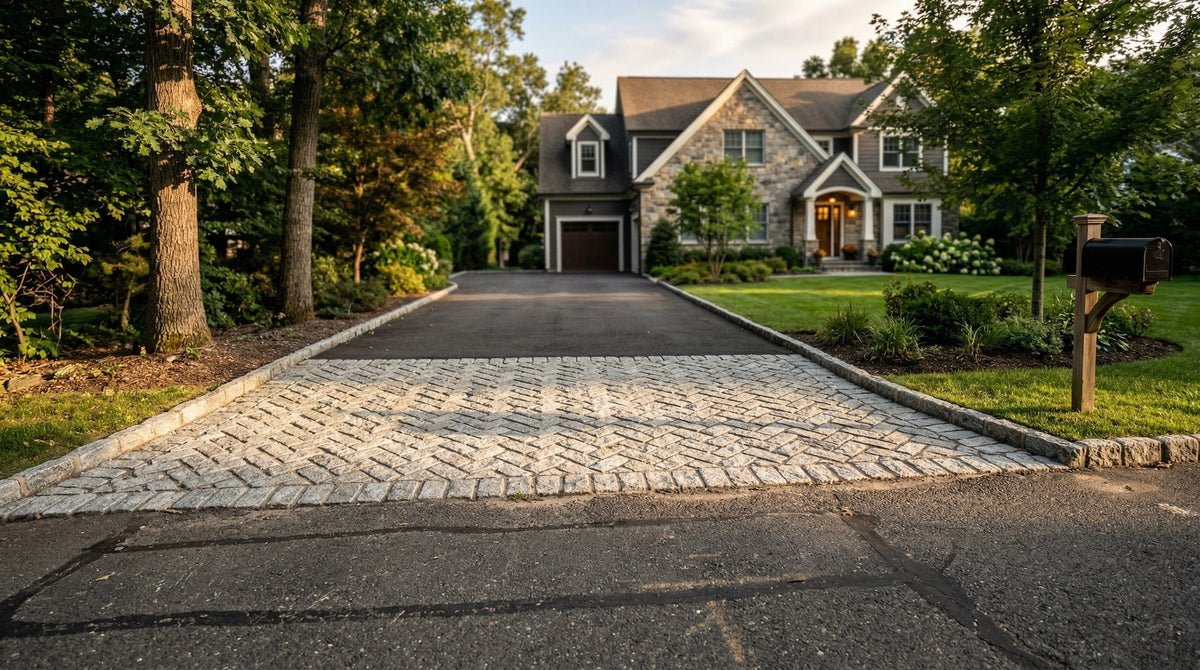
The same ideas scale down neatly to a house:
For more ideas, see our guide to styles of driveway edging and aprons with granite Belgian blocks. And if you are not sure whether you want new Belgian blocks or reclaimed cobblestones, cobblestones vs. Belgian blocks explains the difference.
An edge only works if it stays put. That is why Belgian block edging is set in concrete, not loose in soil.
This is the outline, not a full installation plan. Your installer will set the depths for your soil, drainage and use. For the step-by-step version, read how to install granite Belgian block driveway edging.
For edging, the count depends on the length of each run, the length of the block, how it is set and the joint. Laid lengthwise in a single row, the sum is simple: the length of the run divided by the block's length plus one joint.
For example, a 100-foot run is 1,200 inches. A jumbo block is 10" long, so with a 1" joint each block takes 11 inches. That is 1,200 ÷ 11, or about 110 blocks, before any allowance for cuts and waste. At 120 stones a pallet, that is about one pallet.
The easier way is our Belgian block and cobblestone edging calculator. Choose the stone, enter the length of each straight run, choose how it is set, the number of rows, the joint and a cut-and-waste allowance, and it works out the stones, pallets, weight and price, with a top and side view drawn to scale. It opens at a 1" joint.
Two tips make the count more accurate:
Size. There is no wrong answer, but there are common ones. Jumbo blocks are the usual choice for driveway edging: at 10" x 7" x 4", they are large enough to hold a firm line and to look in proportion next to a driveway. Regulation blocks, 9" x 5" x 5", are the usual choice for aprons. Pavers, 12" x 6" x 3", suit larger paved areas.
Weight. Granite is heavy, which is part of why it stays put. A Jumbo Black block weighs about 31 lb, and a Regulation Black about 25 lb. Plan for a pallet delivery and for two hands per block.
Color. Jumbo and regulation blocks come in Grey, Pink, Buff and Black. Cubes come in Grey and Black. Pick the color next to your house, your driveway and your planting, not on its own: a sample makes that easy.
Finish. Our Belgian blocks are handcut. "Handcut" and "split face" mean the same finish: the rough, natural faces that make Belgian block look like Belgian block. The 12" x 6" x 3" paver also comes bush hammered, for a more even surface.
If you want to see a color before you order, every Belgian block size can be ordered as a sample by priority mail.
If you want an edge that holds its line and still looks right years from now, granite block edging is a strong choice. It is the same idea the city uses on its streets, scaled to a driveway or a garden: a row of solid stones, set in concrete, that tells everyone where the edge is.
The trade-offs are clear. Granite blocks are heavy to handle, they need a proper concrete bed to stay in line, and the work is best done once, by someone who sets stone. And a border, however solid, is not a barrier designed to stop a car.
For most homes, those trade-offs are worth it. To see the sizes and colors, start with our Belgian blocks guide, or visit our yard in Nanuet, NY. No appointment is needed, but if you call ahead at (718) 379-1232, we will make sure you get our full attention.
The information provided in our guides, installation tips, and blog content is for general reference only. Every project is unique, and site conditions can vary. We strongly recommend consulting a qualified professional installer to review your specific project and provide final guidance.

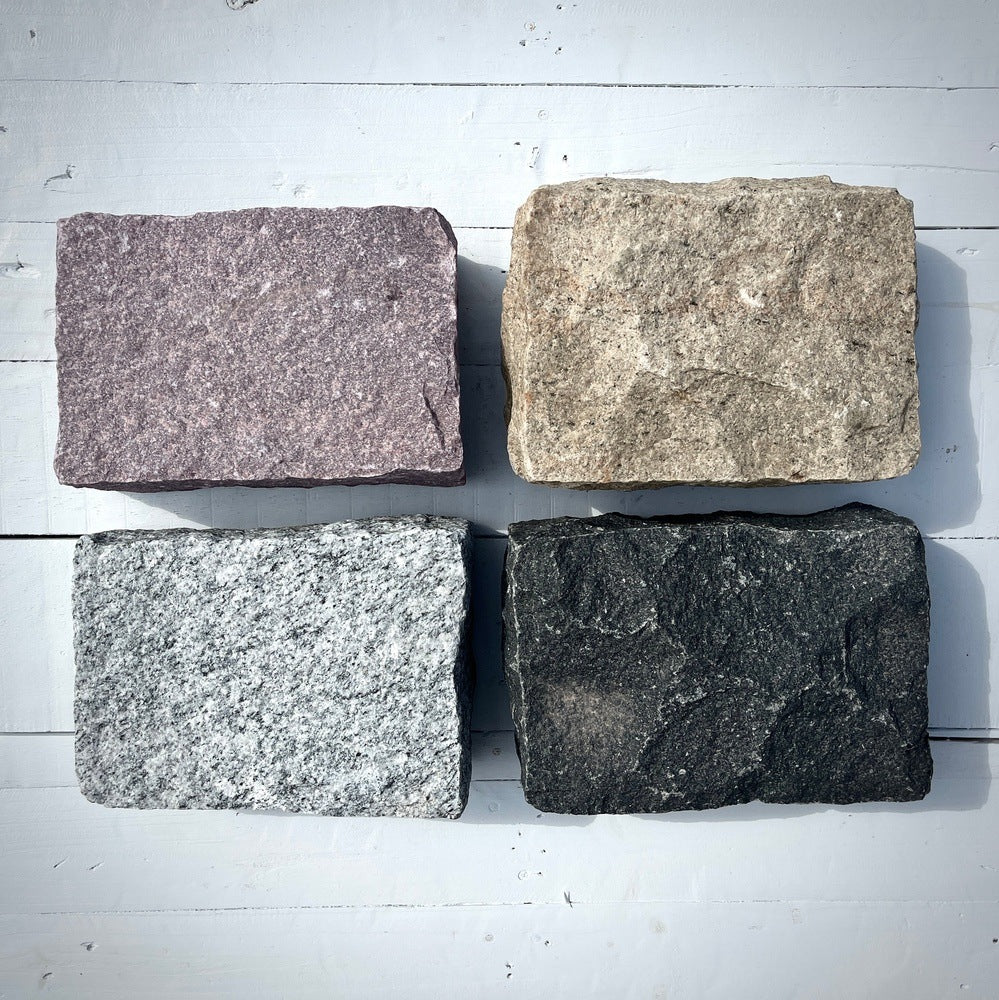



Elevate your outdoor spaces with Chief Bricks’ New Jumbo Cobblestones, the highest-quality cobblestones in the USA. Handcut from one of the hardest granites in the world, these durable, non-tumbled stones are designed for lasting performance and stunning visual appeal. Whether you’re installing a cobblestone driveway, walkway, or patio, our cobblestones are engineered to stand the test of time while offering seamless installation with 100% usability.
A cobblestone driveway not only boosts curb appeal but also makes a statement about the quality of your home. Impress visitors and enhance your property’s value with these durable, non-tumbled stones that exude timeless elegance and unparalleled durability.
Work out how many Belgian blocks or reclaimed cobblestones you need for your edging with our Belgian Block & Cobblestone Edging Calculator.
Pictures are an indication only. Feel, look and color differ from item to item.
Share: