
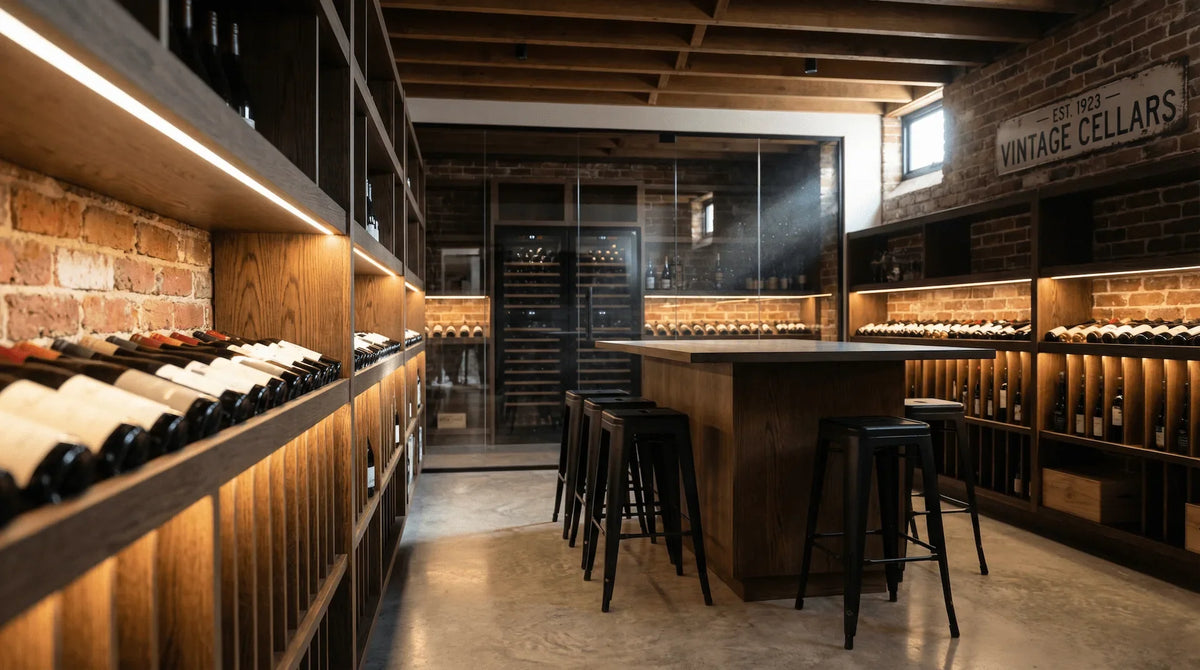
A great wine cellar should feel like it has always been there. Reclaimed brick lets you build that sense of age and story on day one, while still hitting modern standards for structure, moisture, and temperature control. This guide walks through the key design choices, masonry details, and practical tricks that make an “old‑world” brick cellar look right, perform well, and stay beautiful for decades.
Walk into a good wine cellar and you can feel when the shell is made of real, aged masonry instead of brand‑new surfaces trying to look old. Reclaimed brick has worn edges, lime stains, and color variation that instantly changes the mood of the room.
Most reclaimed bricks used in cellars started life in 19th or early 20th century buildings and have already survived decades of freeze‑thaw cycles, moisture, and day‑to‑day abuse. That service history is the quiet quality check behind their appeal. You are not guessing how they will age; you are standing on proof.
When you wrap a wine room with these salvaged units, the bottles are not the only thing with a story. The room itself feels like a continuation of the city around it rather than a brand‑new set built last week. That sense of continuity is hard to get from standard stock.
Old‑world wine rooms share a few visual and sensory cues, no matter where they are: soft, uneven textures, mixed tones, and a feeling that the space has slowly evolved over time. You see arches, alcoves, and reveals instead of flat drywall. You notice surfaces that have been touched and used rather than kept pristine.
In masonry terms, this usually shows up as:
Pair that with cool air, controlled lighting, and the hush of a partially enclosed room, and the cellar starts to feel like it belongs under a farmhouse or old townhouse. Reclaimed masonry delivers these cues naturally instead of trying to fake them with surface treatments.
Not all reclaimed masonry is the same, and not all of it belongs in a wine cellar. The starting point is understanding what you are actually working with.
Common reclaimed options for cellars include:
For homeowners, the key questions are: where did these bricks come from, how old are they, and how are they sorted? For builders, the questions expand to include compressive strength, thickness ranges, and how consistent the units are for the bond you want to run.
Chief Bricks sorts stock by color and size, so you are not buying a mystery pile. Instead, you choose blends and sizes that match your vision and your budget, then plan from there.
You do not need reclaimed brick on every surface for the room to feel old‑world. In many projects, the smartest play is to concentrate character in a few key areas and let quieter surfaces support them.


The goal is to use brick where people look and move: at the entry, at tasting height, and underfoot. Everything else fills in around that.
Behind the romance of reclaimed masonry, a wine room still has to work. Temperature, humidity, moisture control, and structure are all non‑negotiable, even when the shell looks like it is 150 years old.
If you handle drainage, vapor control, and insulation early, the reclaimed brick becomes a durable finish rather than a headache. It can then age in place, the same way it already did in its first life.
Designing a reclaimed brick wine room starts with honest limits: how much space you have, how much you want to spend, and how you actually plan to use the cellar.
If you want maximum impact per dollar, three moves go a long way:
You can run more modest finishes on secondary walls and still have a room that feels special. Spending top dollar on heavy antique bricks makes the most sense at focal points like arches, tastings nooks, or the first wall you see at the door.
Match your storage to the story you want the room to tell:
Once you know which direction fits your home, brick becomes the thread that ties everything together.
Builders see a different side of reclaimed masonry than homeowners. The romance is still there, but so are pallets, tolerances, and coordination with other trades. A little planning turns those variables into advantages instead of surprises.
Key points for builders:
Think through cuts, corners, and transitions up front. Thin corner pieces, half bricks, and specialty sizes can reduce saw time and help the finished work read like solid masonry. The goal is to make the craft look effortless, even though the planning behind it was not.
Sometimes it helps to picture a few clear starting points instead of abstract ideas. Here are three directions that work well with reclaimed masonry.


Each style uses brick differently, but all rely on the same principle: let the reclaimed masonry do the heavy lifting for character, and keep other elements simple.
| Cellar element | Recommended reclaimed masonry use | Best for homeowners who want | Builder notes |
|---|---|---|---|
| Entry / doorway | Brick jambs, arches, and short vestibules | Strong first impression, “hidden room” feel | Plan thickness and door swing early; use corner units to sell depth |
| Feature walls | Full reclaimed brick wall behind main racks | Maximum visual impact on a defined budget | Mock up blends and bonds; coordinate lighting positions before laying |
| Floors | Flat brick pavers or thin brick tiles | Warm, grounded feel and instant sense of age | Confirm substrate and build‑up; choose pattern that suits room size |
| Niches & details | Brick bottle niches, ledges, reveals | Small moments of character at eye level | Use specialty sizes and careful layout to minimize cutting |
| Ceiling accents | Partial arches or full barrel vaults | Strong old‑world story and immersive experience | Check structure and load, especially in retrofit basement work |
This table is a quick way to decide where reclaimed brick will have the most effect in your own project and what your builder should be planning for behind the scenes.
Launching a reclaimed brick wine cellar project is easier when you break it into a few clear steps. You do not need to solve every detail at once.
When the planning is done well, the finished wine room feels effortless. The brick tells its story, the bottles sit safely in a controlled climate, and the space becomes a place people gravitate to, one that feels like it has always been part of the home, even though you just finished laying the last course.
The information provided in our guides, installation tips, and blog content is for general reference only. Every project is unique, and site conditions can vary. We strongly recommend consulting a qualified professional installer to review your specific project and provide final guidance.



Share: