
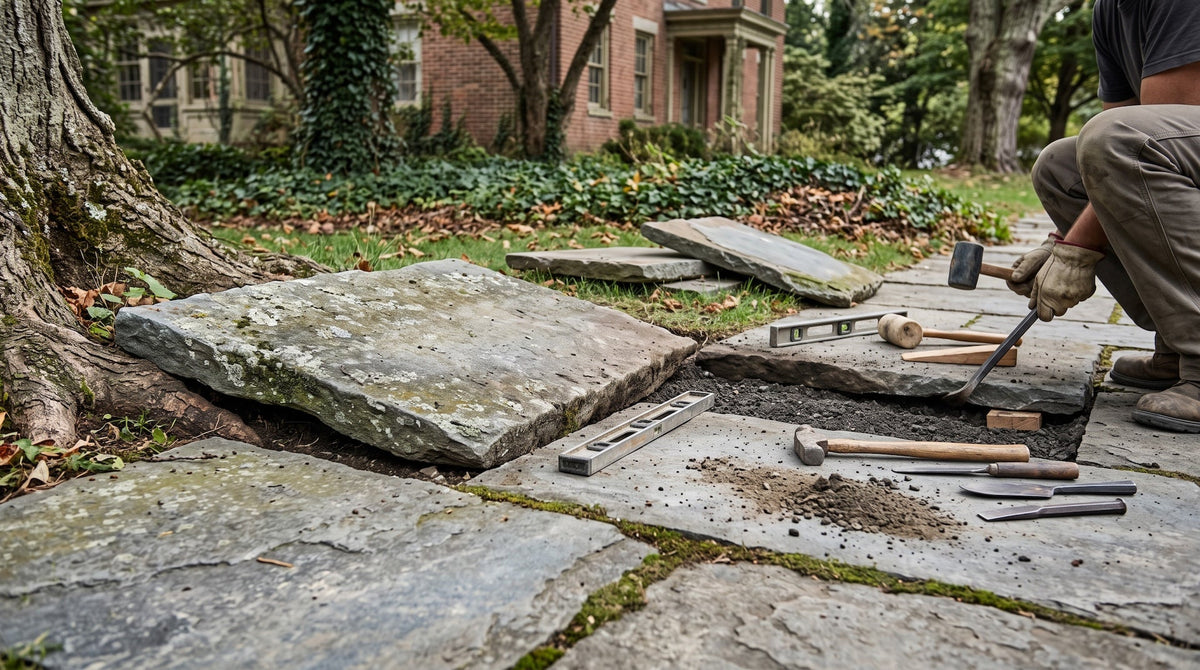
After a hard winter, an old bluestone sidewalk tells you everything that happened to it. One slab has tipped up at the corner where a tree root pushed underneath. Another rocks with a dull clunk when you step on it. A third has a crack running straight across, though both halves still sit tight. The stone is still beautiful. The question is what to do about it: repair it, reset it, or tear it out and start again?
In the Hudson Valley, it is a live question. In Kingston, NY, the city is studying its sidewalks to decide where bluestone can stay outside its historic districts, and it is laying new bluestone around one of its parks in 2026. Homeowners with an old bluestone walk at the front door face the same choice on a smaller scale.
Maybe you are a homeowner with a front walk that has started to heave and trip visitors. You might be a designer working on a historic house where the original stone matters. Or maybe you are a contractor who has been asked to quote a bluestone walk that is half sound and half broken. This guide breaks down when a bluestone sidewalk needs a small repair, when it needs to be lifted and reset, when a slab really has to be replaced, and how to match old stone when it does.
Table of Contents
- Repair, Reset or Replace at a Glance
- Kingston's Bluestone Sidewalks
- Why Old Bluestone Is Worth Keeping
- When a Small Repair Is Enough
- When to Lift and Reset
- When a Slab Has to Be Replaced
- Matching Old Bluestone With Reclaimed Slabs
- Public Sidewalks and Historic Districts
- Keeping a Reset Walk in Good Shape
- Planning and Ordering
- Is It Worth Keeping a Bluestone Sidewalk?
Repair, Reset or Replace at a Glance
Most problems with an old bluestone walk come from what is under the stone, not the stone itself. This table matches the most common problems with the usual fix. Use it as a starting point, then have a mason or hardscape contractor look at your walk in person.
| What you see | Likely cause | Usual fix |
|---|---|---|
| A slab rocks when you step on it | The base under it has settled or washed out | Reset: lift it, fix the bedding, set it back |
| One edge sticks up and catches feet | A tree root, frost or settling next door | Reset, after dealing with the cause |
| Joints are empty or full of weeds | Joint material has washed or blown out | Repair: clean and refill the joints |
| A crack, with both halves still tight and level | Old stress in the stone or an uneven base | Often leave it, or reset it on a better base |
| A slab broken into loose pieces | The base failed, or a heavy load landed on it | Replace the slab with matching reclaimed stone |
| The whole walk sinks or holds puddles | The base or drainage has failed | Rebuild the base and reset the original slabs |
Note: these are common patterns, not a diagnosis. Soil, drainage, tree roots and the age of the original installation vary from walk to walk.
Kingston's Bluestone Sidewalks
Kingston, NY, is working out how to look after its bluestone sidewalks. It is running a sidewalk improvement study to decide where bluestone can stay outside its historic districts.
The city has been clear about one point: no bluestone will be removed as part of the study, and the study will follow the city code, which says bluestone will be used and kept in historic districts. At the same time, Kingston is putting $1.5 million into 81 new curb ramps and laying new bluestone sidewalks around Academy Green Park, with work scheduled from June to December 2026.
That combination is a useful lesson for anyone with an old bluestone walk. Keeping bluestone and making a sidewalk safe are not opposites. With the right base and a little care, an old walk can be both.
Why Old Bluestone Is Worth Keeping
Bluestone is a dense, fine-grained sandstone. The slabs in an old sidewalk have already been through decades of snow, salt, summer heat and foot traffic. The ones still in one piece have proven they can take it.
They also carry something new stone cannot: real age. Edges have softened, faces have worn smooth in the walking line, and the blue-gray color has deepened and shifted. That surface took a long time to form, and once it is gone, it does not come back.
Keeping old bluestone in place is also the simplest kind of reuse. The stone has already been quarried, shaped and laid. Lifting and resetting it costs labor, but it does not ask for any new material at all.
And on an older house, the original walk is often part of what makes the front of the property feel right. Swapping it for poured concrete changes the whole approach to the house, and it is hard to undo. Our article on what makes reclaimed bluestone different looks more closely at that character.
When a Small Repair Is Enough
Not every problem needs heavy work. If the slabs sit firm and level, a walk can often be put right in an afternoon.
Empty joints. On a dry-laid walk, joints filled with stone dust or coarse sand slowly wash out. Pull the weeds while they are small, sweep out loose debris, and refill the joints. A well-filled joint holds the slabs in place and grows fewer weeds in the first place.
Cracked mortar joints. On a walk set in mortar over concrete, check for cracked or missing mortar, especially before winter. Open joints let water in, and water is what freeze-thaw needs to do damage.
A tight crack. A crack across a slab is not always a reason to replace it. If both halves sit firm, level and flush with each other, it can often be left as it is. It becomes part of the walk's history. Keep an eye on it, and if the halves start to move apart or tip, reset or replace the slab.
Moss and green growth. Shaded, damp walks can grow a thin green film. Scrub it off with water, a mild soap and a stiff brush. The lasting fix is more sun and better drainage, not stronger chemicals.
When to Lift and Reset
A slab that rocks, tips or stands proud of its neighbors usually means the base under it has settled. This is the most common problem with old bluestone walks, and the good news is that the stone itself is usually fine.
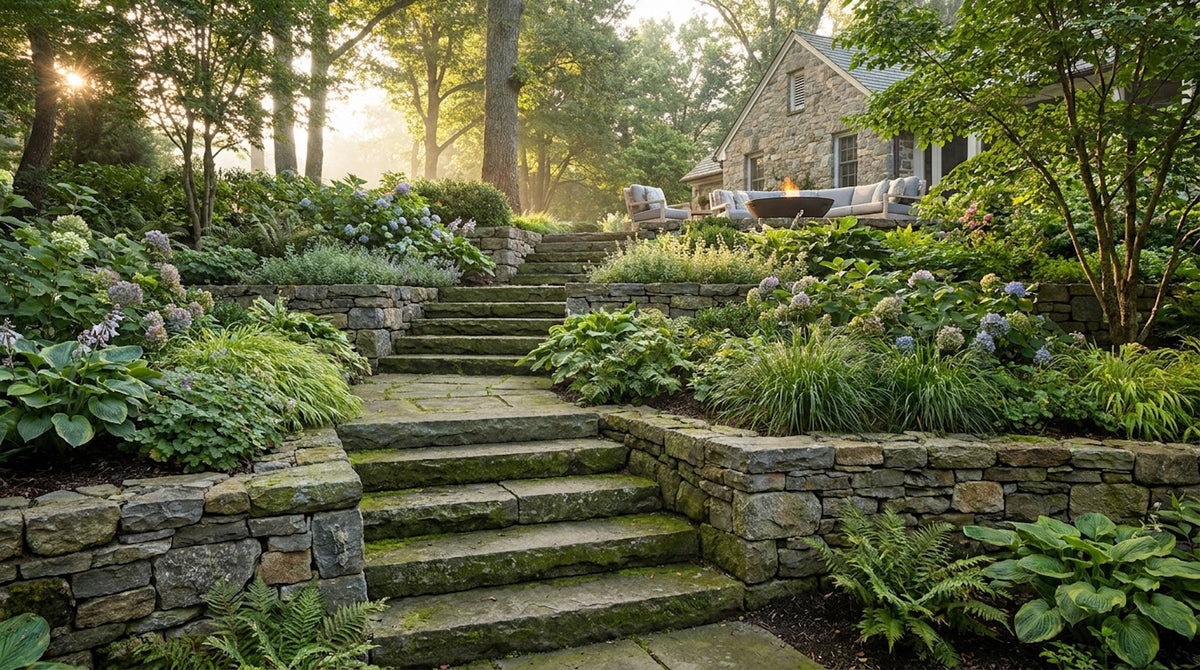
One of the advantages of a dry-laid walk is that the fix is straightforward. The slab is lifted, the bedding underneath is built back up or scraped down until the slab sits firm and level, and the slab is set back in place. Bluestone slabs vary in thickness, so the bedding is adjusted under each one to bring the surface flush.
When several slabs are moving, or the whole walk dips and holds water, the base is the real problem. In that case the slabs are lifted and set aside, the old base is dug out, and a new one is built. For a walk, that usually means a new compacted crushed stone base, with a thin setting bed of stone dust or sand on top. The original slabs then go back down, and the walk looks the same as before, only flat.
Pitch matters too. A walk next to a house should fall gently away from the building, about 1/4 inch per foot, so water runs off instead of pooling at the door.
If a tree root lifted the slab, deal with the root before resetting the stone, or the problem will come back. On a large or valued tree, ask an arborist before cutting anything.
A rocking slab is a trip hazard, so do not wait on it. Fix it before winter if you can, because freeze-thaw will only make it worse. Our guide on how to build a reclaimed bluestone patio explains the base, bedding and joints in more detail, and the same principles apply to a walk.
When a Slab Has to Be Replaced
Sometimes a slab is past saving. It may be broken into several loose pieces, or crumbling at the surface, or missing altogether after an earlier repair. Then the right move is to replace that slab, not the whole walk.
Replacing one or two slabs keeps the rest of the walk, and its character, intact. The new piece should match the old ones as closely as possible in color, thickness and surface. New bluestone tends to look sharp and bright next to stone that has spent decades outdoors, which is why reclaimed slabs are often the closer match.
If a large part of the walk is broken, it can still make sense to keep the sound slabs and fill in with reclaimed stone. A walk that is half original and half reclaimed bluestone will look far closer to the original than one patched with new pavers or concrete.
Where a walk crosses a driveway, think about thickness. Sidewalk slabs are generally too thin to carry cars. For a driveway crossing or apron, thicker reclaimed curbstone is the better choice.
Matching Old Bluestone With Reclaimed Slabs
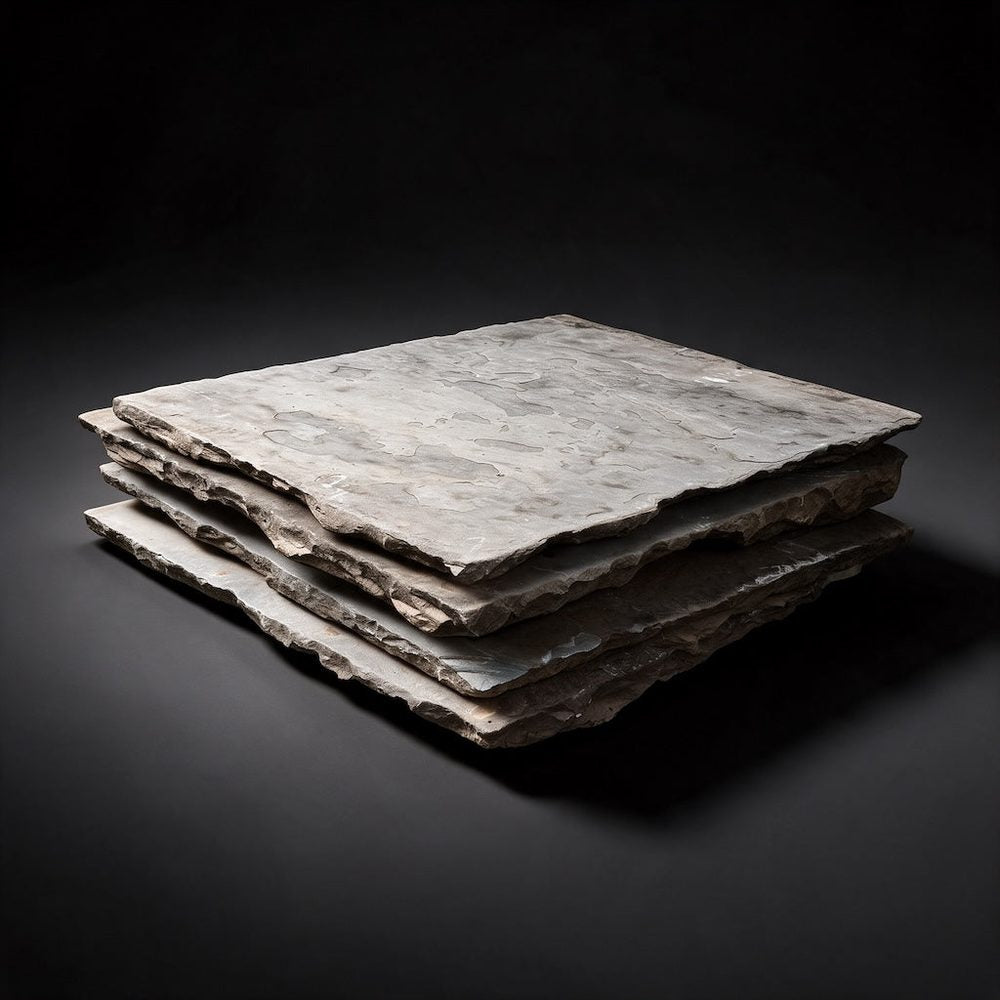
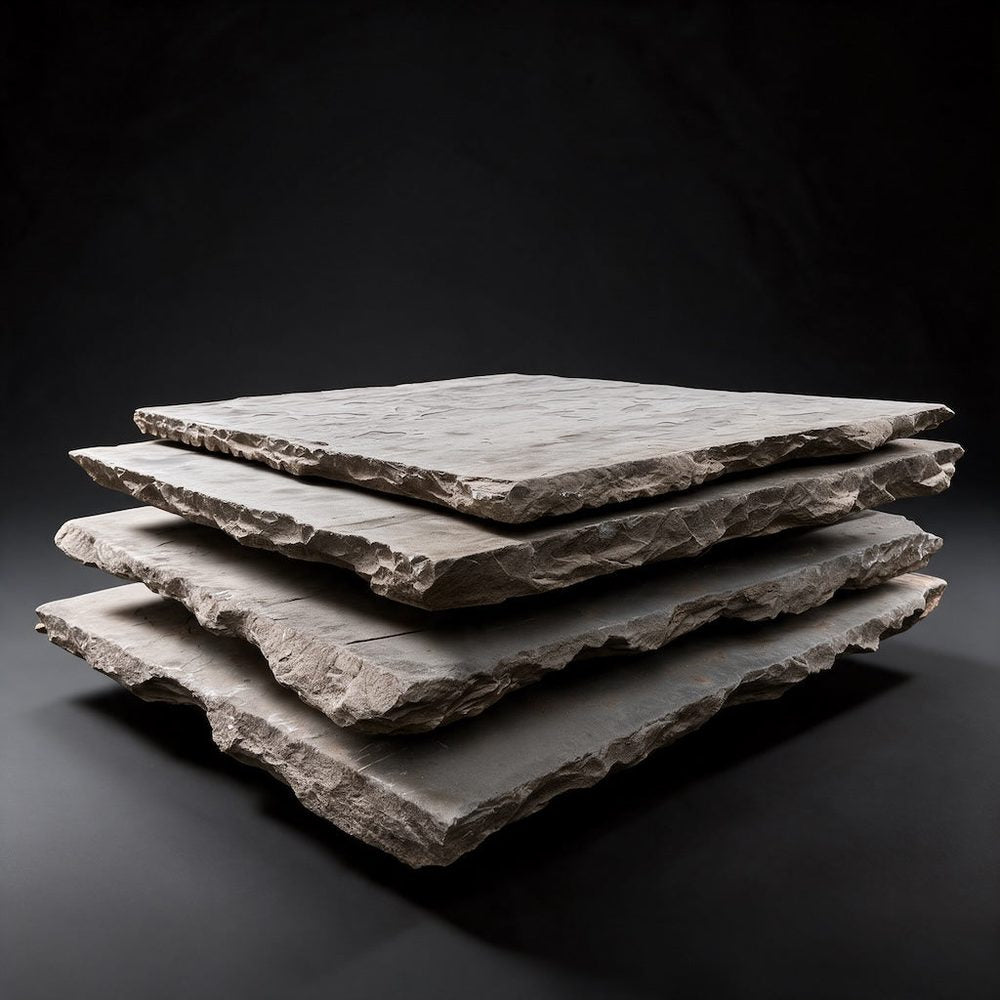
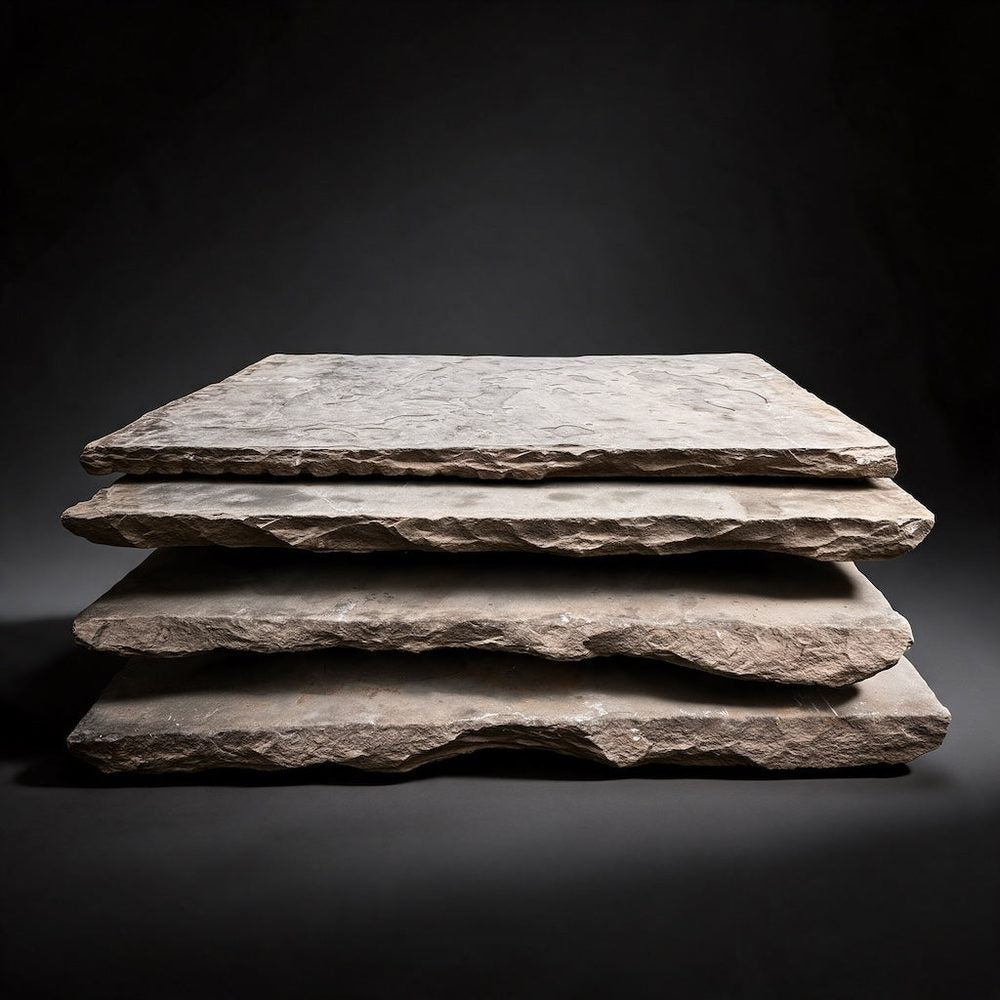
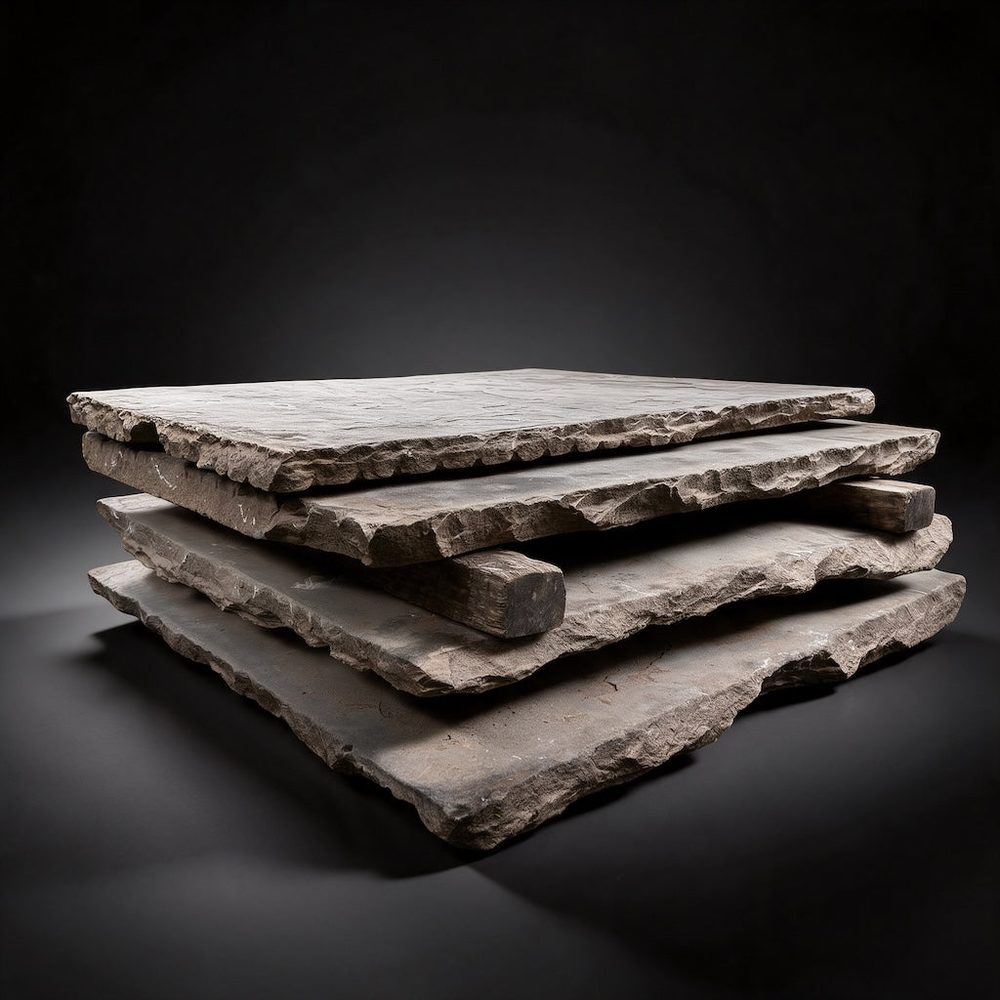
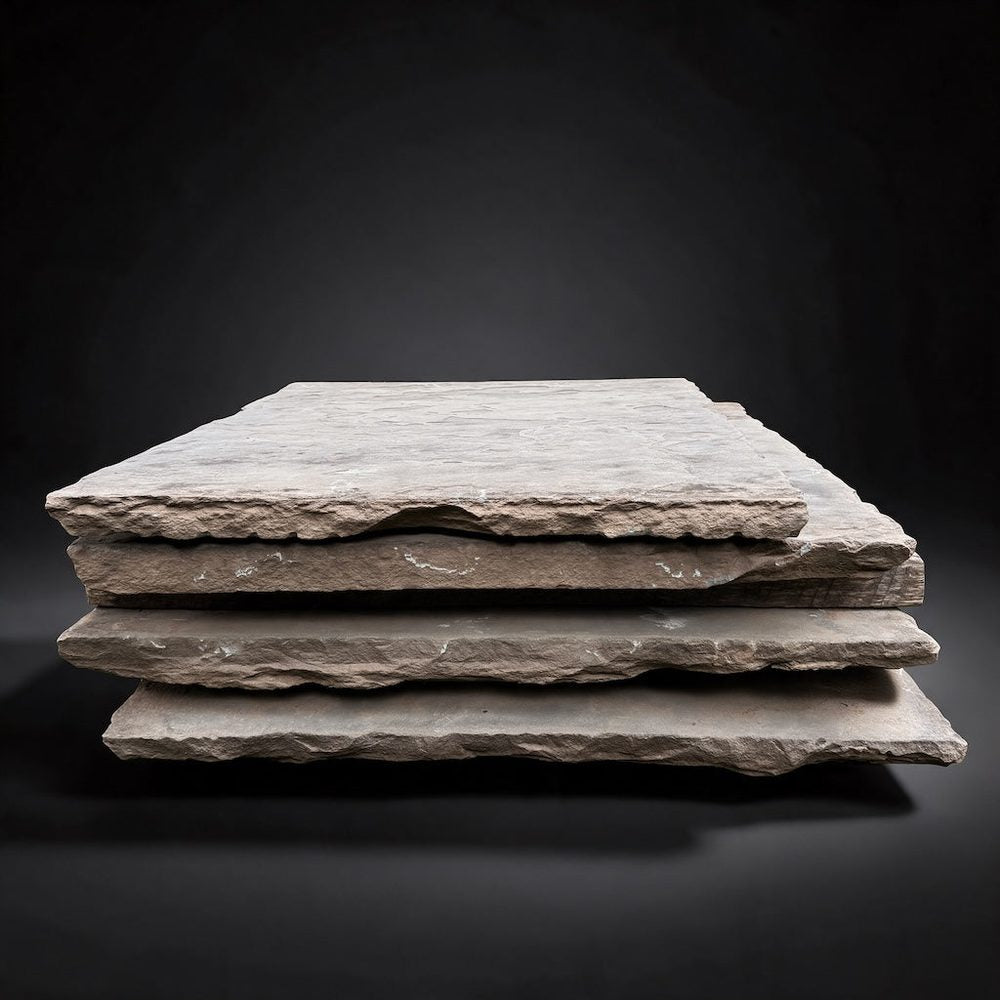
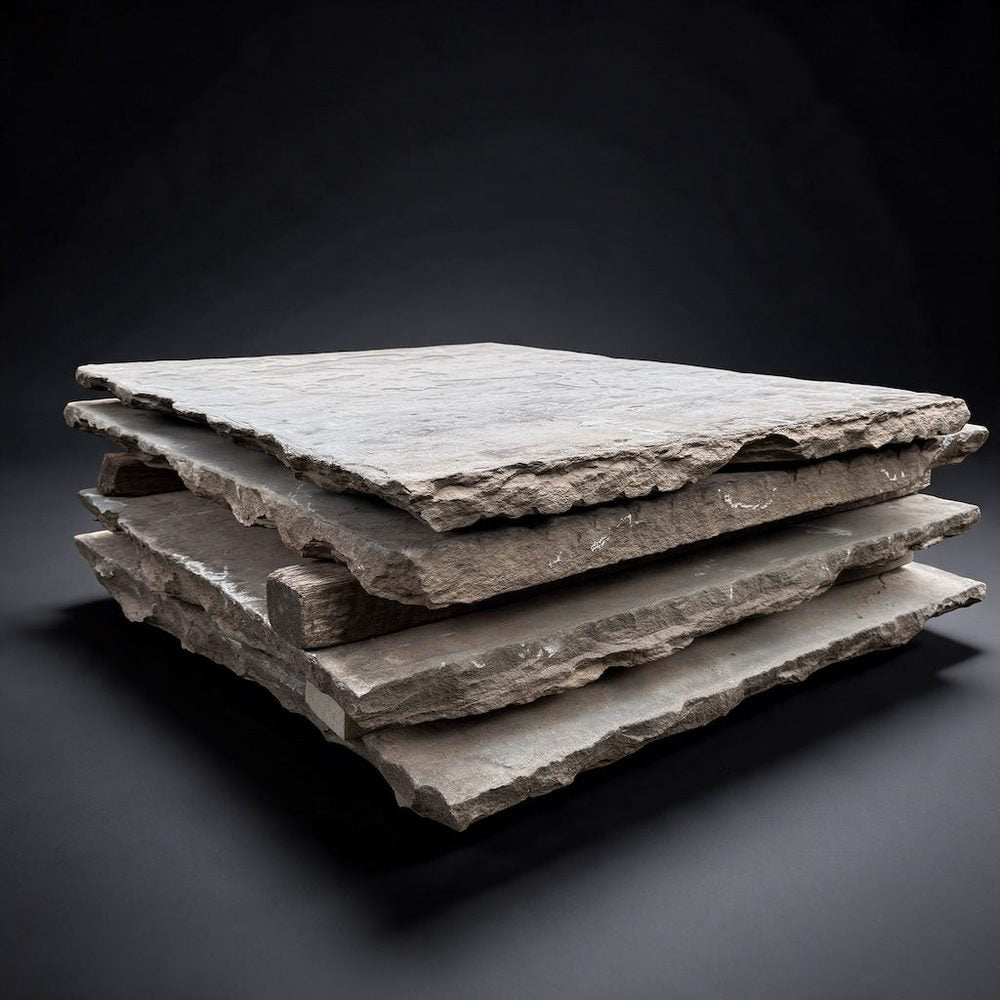
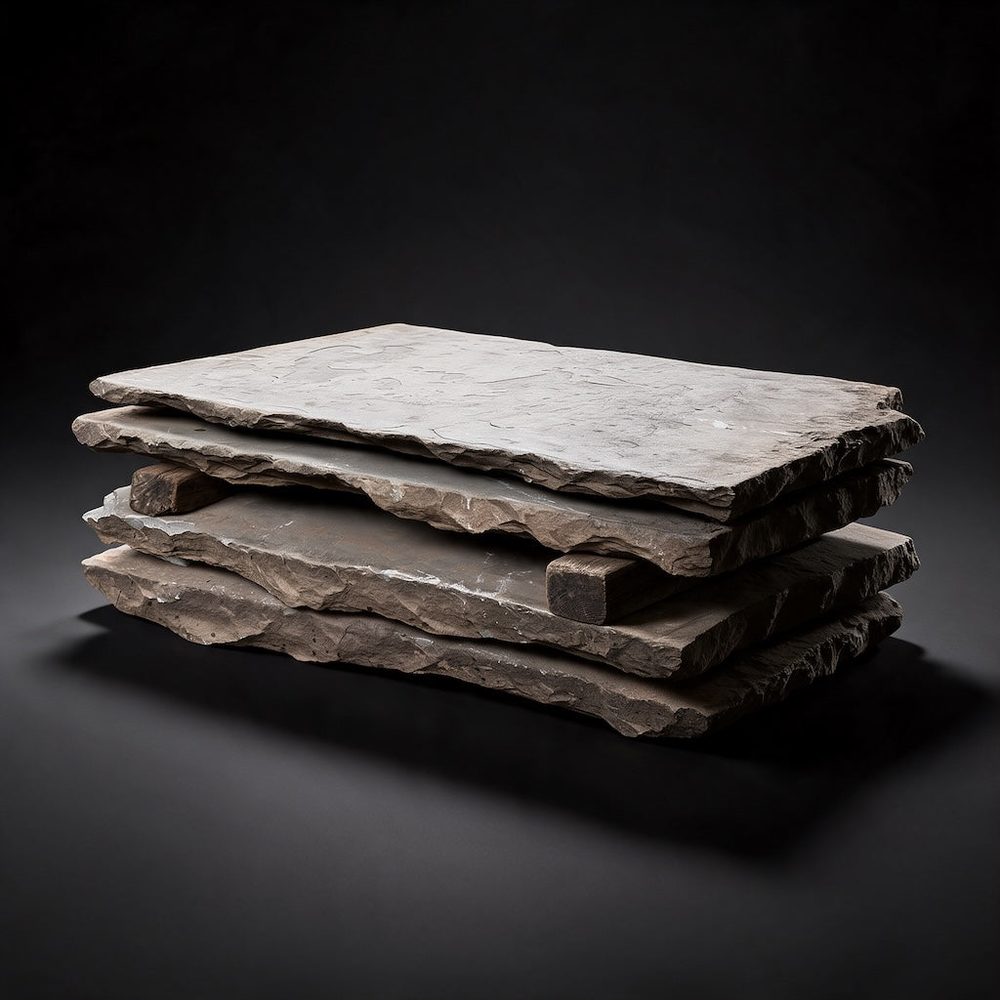
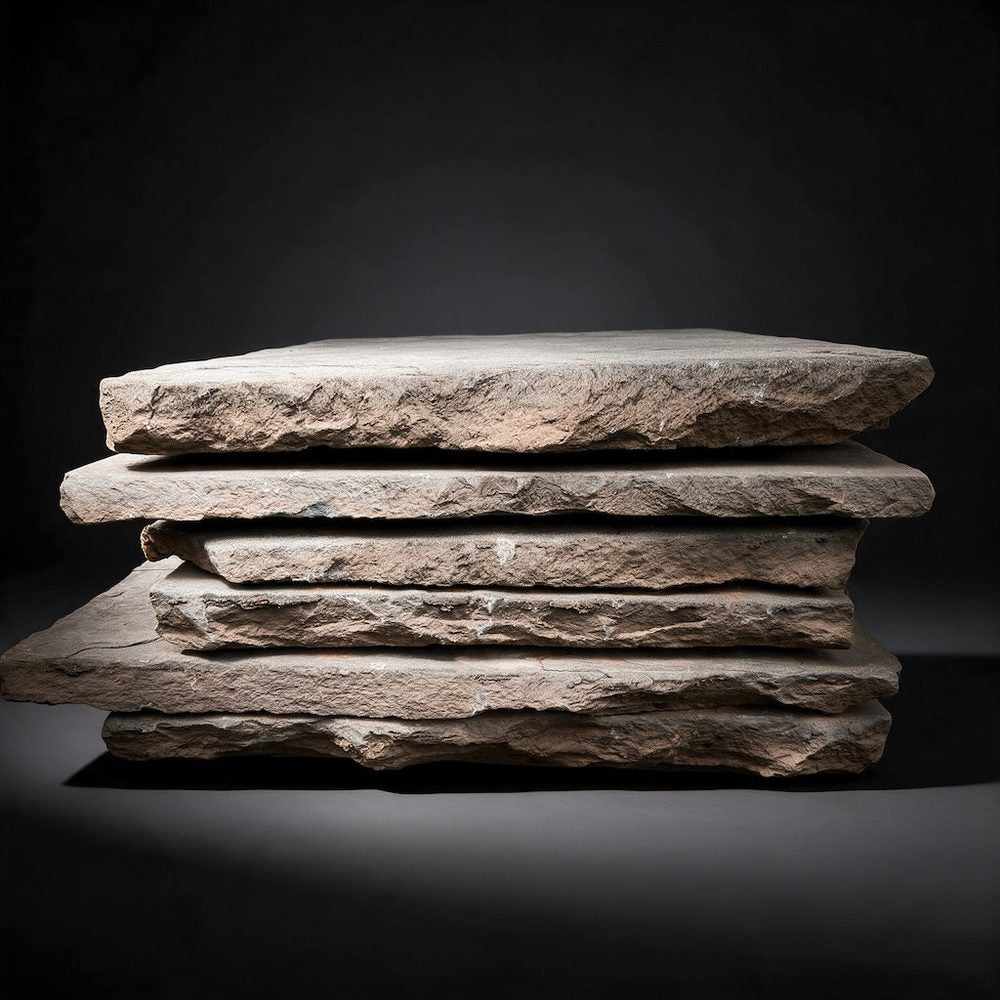
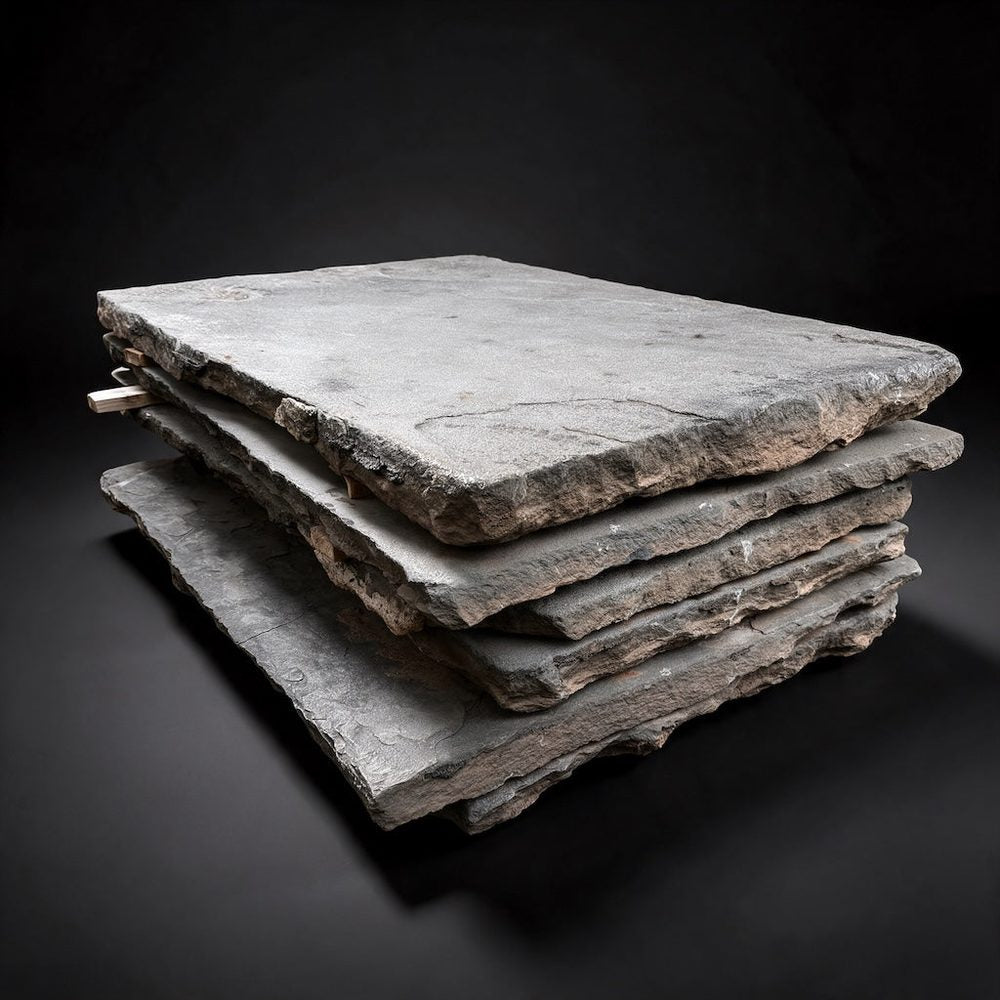
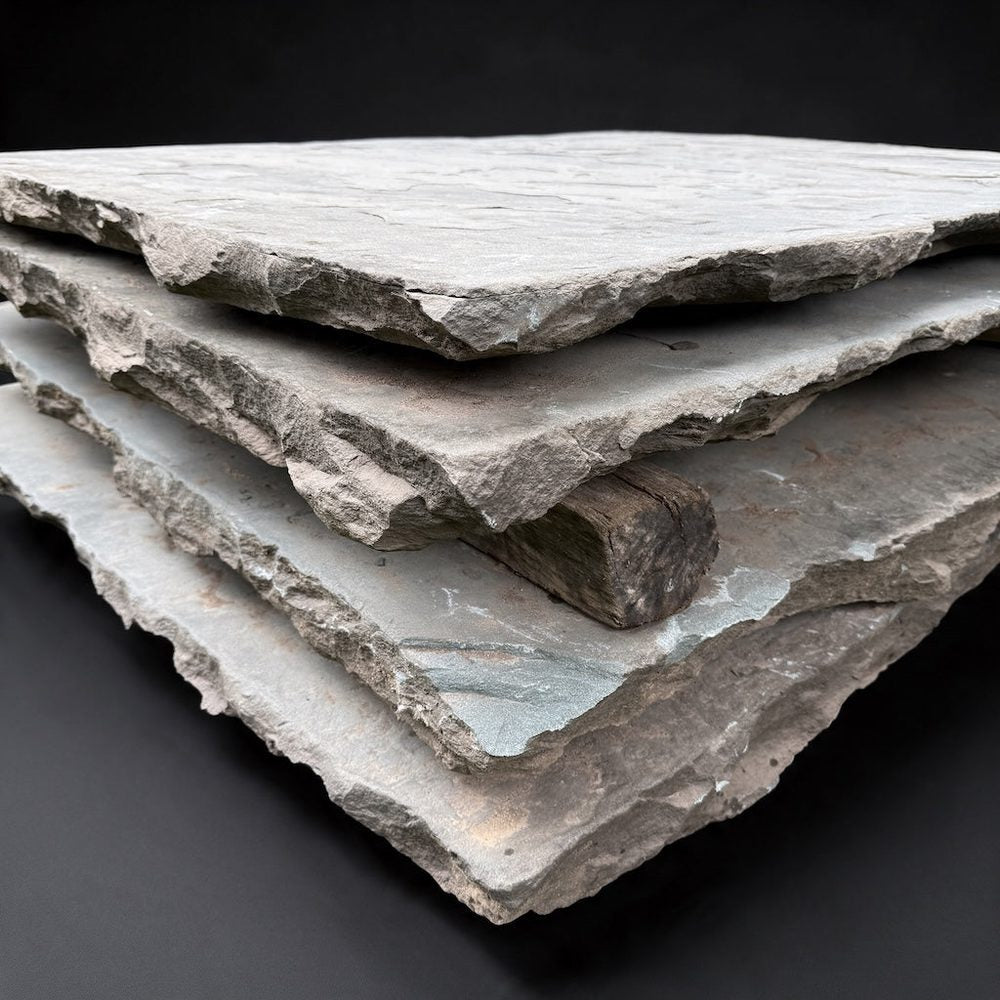
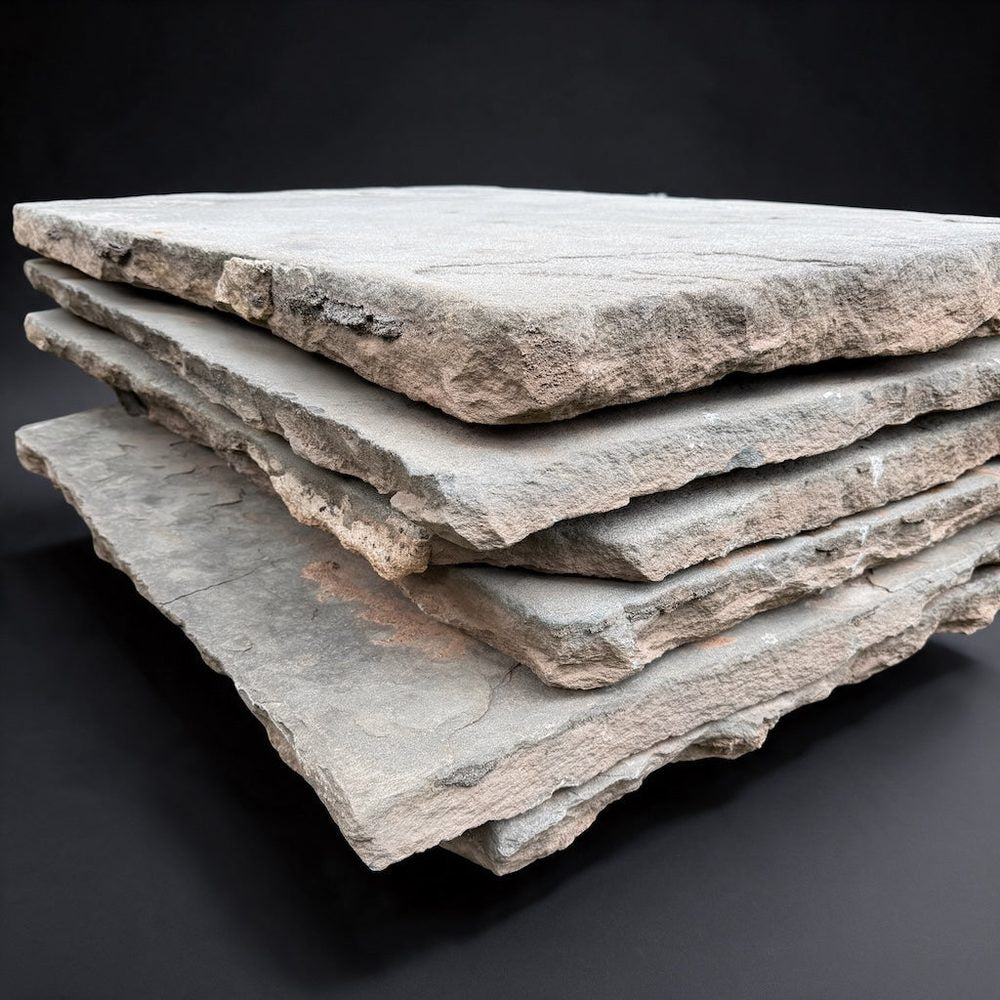
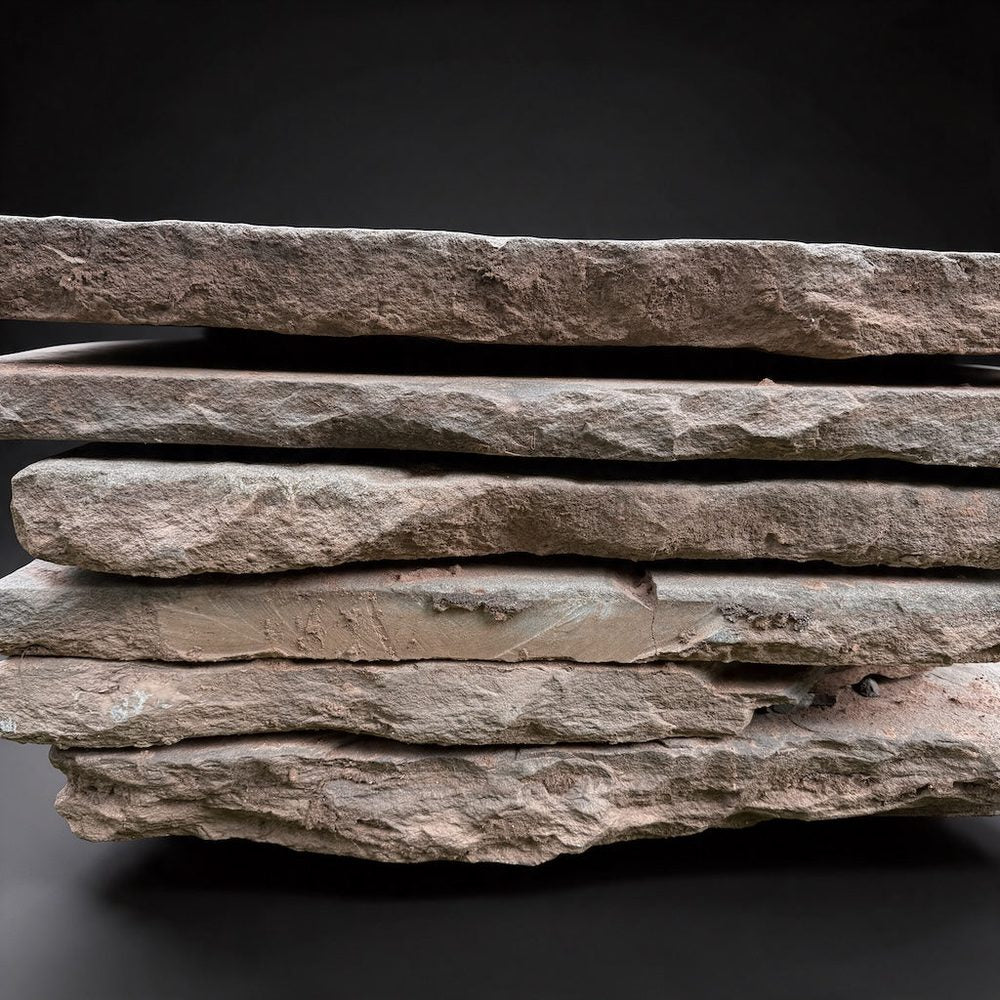
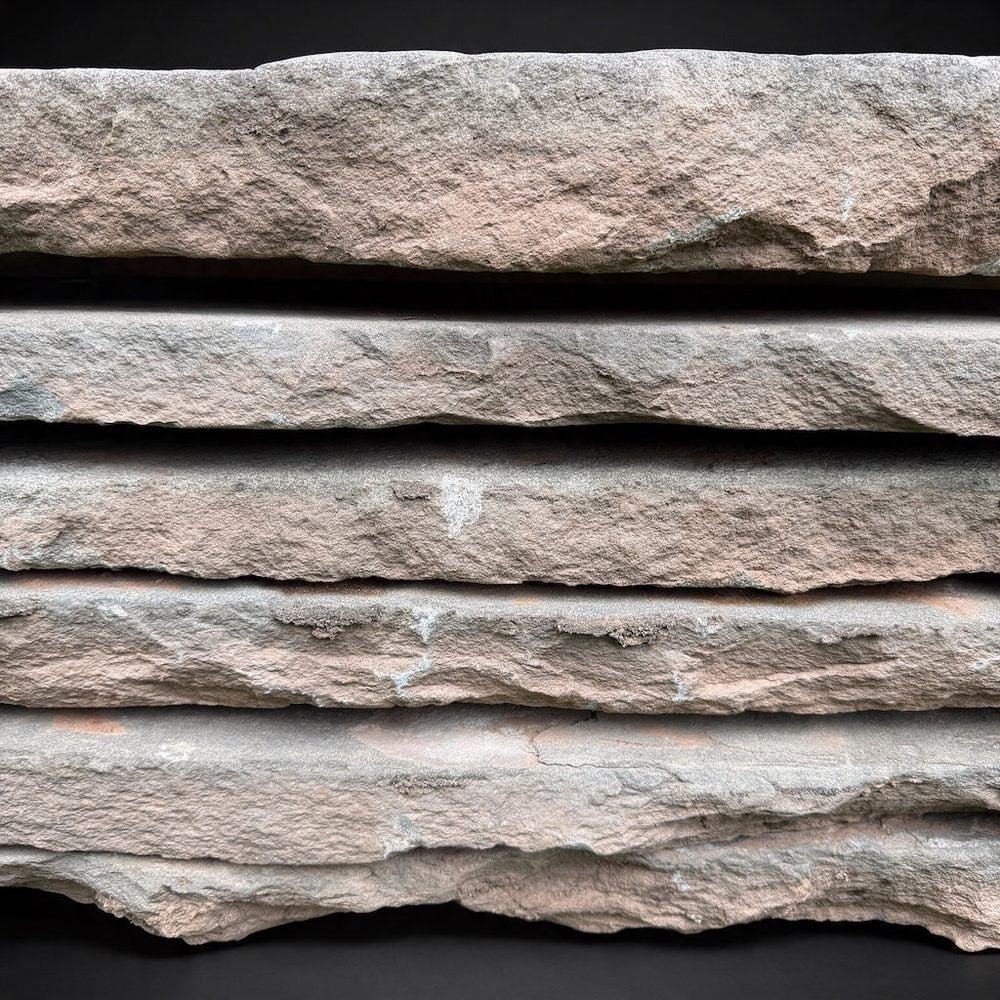
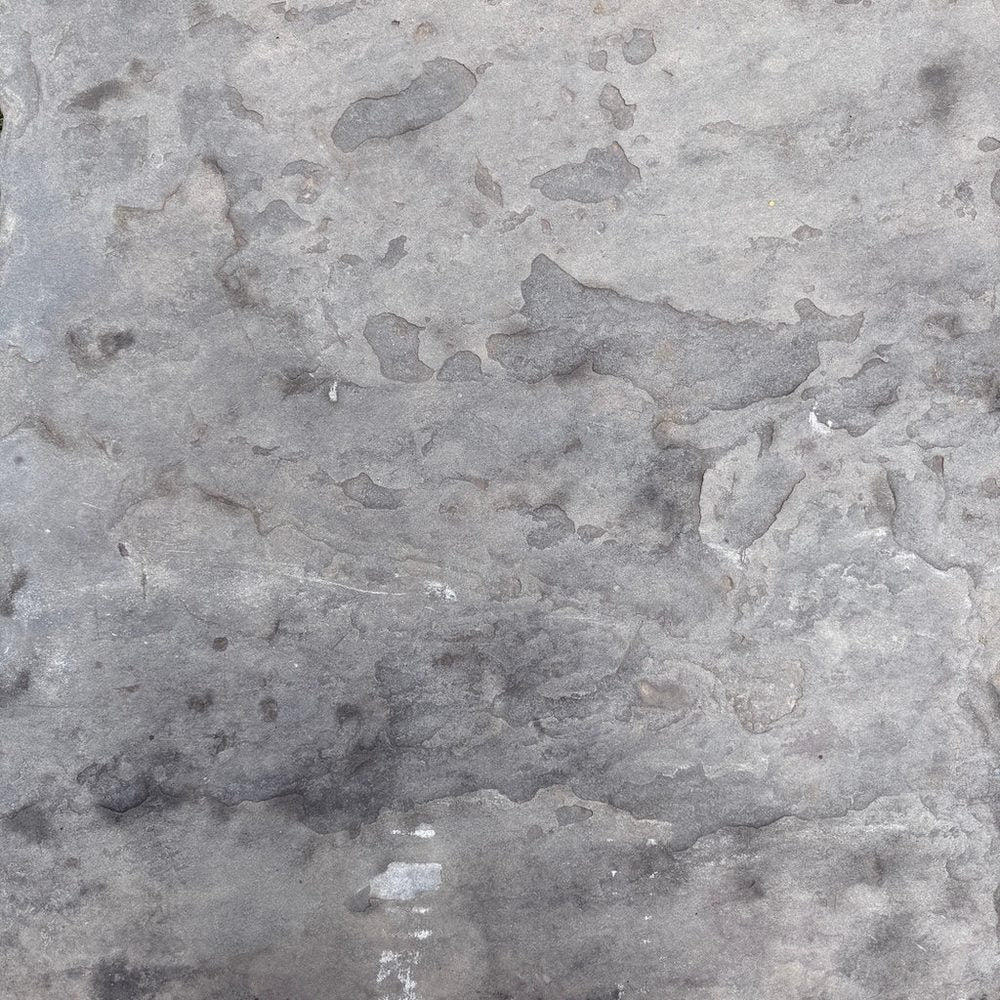
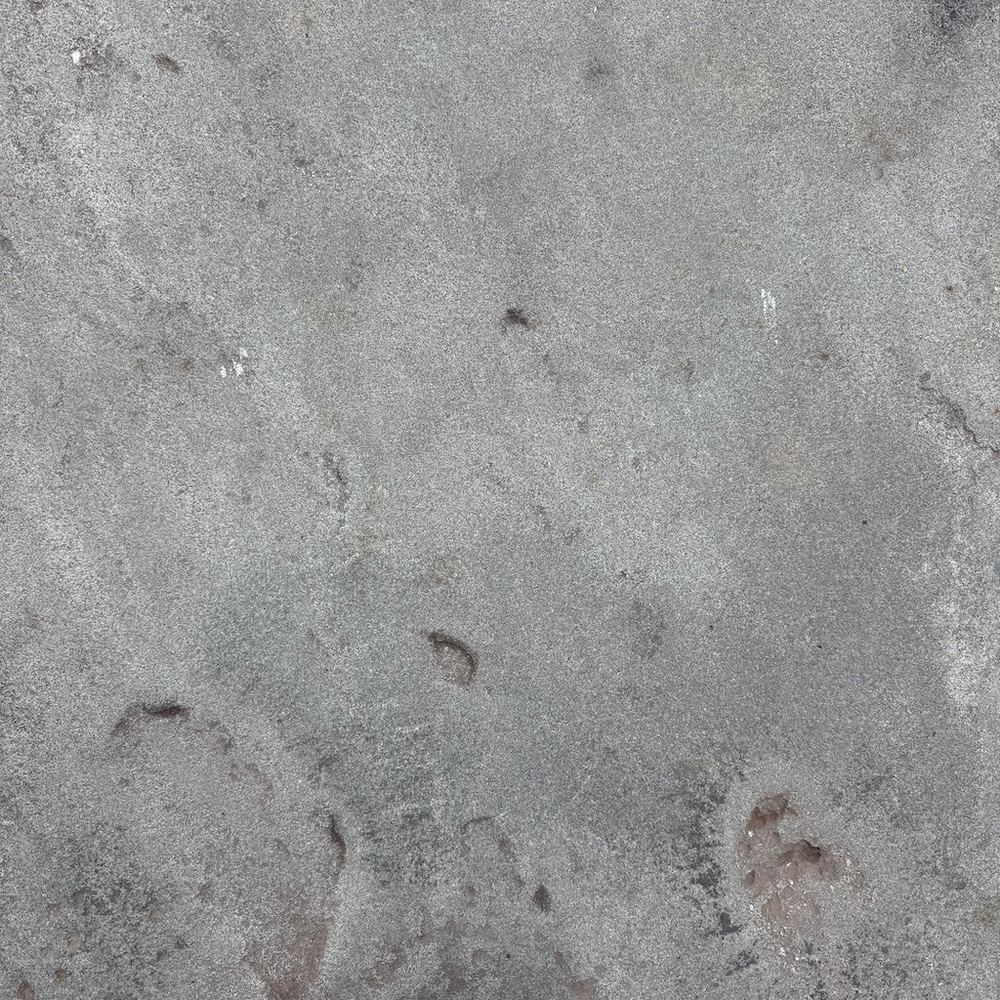
Our Reclaimed Bluestone Sidewalk Stones & Slabs are salvaged from old sidewalks and other historic paving. They already carry the softened edges, worn faces and color variation of a walk that has been in use for years, so they sit naturally next to original stone.
The slabs come in three sizes: about 3 feet long by 2 to 3 feet wide, 4 feet long by 2 to 4 feet wide, and 5 feet long by 2 to 5 feet wide, all about 2 to 4 inches thick. The slabs are selected for solid, intact edges with no broken corners.
Because every slab is different, it helps to bring a few measurements and photos of your existing walk when you choose stone. Match the thickness range first, so the bedding work stays simple, then look at color and surface. Pictures are an indication only. The best way to judge a match is to see the stone in person.
You are welcome to visit our yard in Nanuet, NY. No appointment is needed, but if you call ahead at (718) 379-1232, we will make sure you get our full attention. Our guide to reclaimed bluestone vs. new bluestone pavers explains how the two compare side by side.
Public Sidewalks and Historic Districts
Before you work on a sidewalk along the street, find out who is responsible for it and what the rules are. Many towns have their own requirements for public sidewalks, and some need a permit before work starts.
In a historic district, there may also be rules about materials. Kingston's code, for example, says bluestone will be used and kept in its historic districts. Check with your town or local preservation office before you lift, replace or remove any stone, and keep a record of what you do.
These rules differ from place to place, so treat this as a reminder to ask, not as advice on what your town requires.
Keeping a Reset Walk in Good Shape
Once a walk has been reset, it asks for very little. Sweep it, rinse it, and wash it now and then with water, a mild pH-neutral soap and a stiff brush. Avoid acid cleaners and high-pressure washing, which can strip the weathered surface that makes old stone special.
Winter is where most damage starts. Do not use rock salt. Use calcium chloride or magnesium chloride sparingly, shovel with a plastic blade, and use sand for traction.
Sealing is optional. If you seal, use a breathable penetrating sealer made for natural stone, never a film-forming or wet-look coating.
Each spring and fall, walk the length of the path and check for rocking slabs and empty joints. Resetting one slab early is far easier than rebuilding a section later. Our guide on how to care for reclaimed bluestone covers cleaning, stains, sealing and winter care in full.
Planning and Ordering
Reclaimed bluestone slabs are sold by the full pallet. Each pallet holds about 100 square feet of stone, not counting joints, and weighs about 3,950 lb. The 3- and 4-foot slabs are $59 per square foot, or $5,900 per pallet, and the 5-foot slabs are $69 per square foot, or $6,900 per pallet.*
To work out how much you need, multiply the length of the walk by its width, then add about 10% for cuts and sorting on a straight walk, or 12% to 15% for curves and irregular edges. A 4-foot-wide walk about 25 feet long comes to about 100 square feet, or one pallet before cuts.
If you are only replacing a few slabs, a full pallet may be more stone than you need. The extra stone can go into a matching landing, a garden path or a small patio. Call us at (718) 379-1232 to talk through your project.
For steps, curbs and driveway crossings, our Reclaimed Bluestone Curbstone Steps come 2 to 8 feet long, about 14 to 20 inches deep and 4 to 6 inches thick, at $79 per linear foot for 2- to 4-foot pieces, $89 for 5 and 6 feet, and $99 for 7 and 8 feet.* At roughly 100 lb per linear foot, plan for a crew or a machine to set them.
Installation labor for bluestone typically runs about $12 to $24 per square foot, with standard excavation and base included. Extra base work, removal of old material and drainage are priced separately. Our reclaimed bluestone cost guide walks through a full budget.
Add the Reclaimed Bluestone Sidewalk Stones & Slabs to your cart and enter your address for a shipping quote. If it looks too high, call us at (718) 379-1232; we sometimes have alternative ways to get your Reclaimed Bluestone Sidewalk Stones & Slabs to your door for a more reasonable price.
Is It Worth Keeping a Bluestone Sidewalk?
In most cases, yes. When an old bluestone walk heaves or rocks, the stone is usually fine and the base is the problem. Lifting and resetting the slabs costs labor, but it keeps stone that has already proven itself and a surface that no new material can copy.
The trade-offs are real. Resetting takes skilled work, a walk on a poor base will keep moving until the base is fixed, and a slab that is truly broken does need replacing. Plan for those cases with matching reclaimed stone rather than patching with concrete.
If you need to replace part of your walk, start with our Reclaimed Bluestone Sidewalk Stones & Slabs, or call us at (718) 379-1232 to talk through what you have.
* Prices as of October 2026. Confirm current pricing on each product page before ordering.

Share: