

You've been staring at that cracked, boring concrete patio for years, haven't you? You picture a beautiful stone space for summer cookouts, but the thought of a huge demolition project makes you tired. The noise, the dust, and the cost of tearing it all out feels like too much.
What if you could get that stunning natural stone look right over your existing concrete? That is exactly what a thin stone paver is designed for. You can completely transform your outdoor space without a massive headache.
This guide will walk you through everything about the thin stone paver. We'll look at the good, the bad, and how it all comes together for your outdoor living area.
Table of Contents:
- What Exactly Is a Thin Stone Paver?
- The Big Wins: Why Choose Thin Pavers?
- Lighter on Your Wallet (and Your Back)
- Thin Natural Stone vs. Other Outdoor Flooring Options
- Are There Any Downsides? Let's Be Honest.
- Design Ideas for Your Thin Stone Paver Project
- Installing a Thin Stone Paver Patio: A Quick Guide
- How Much Should You Expect to Pay?
- Conclusion
What Exactly Is a Thin Stone Paver?
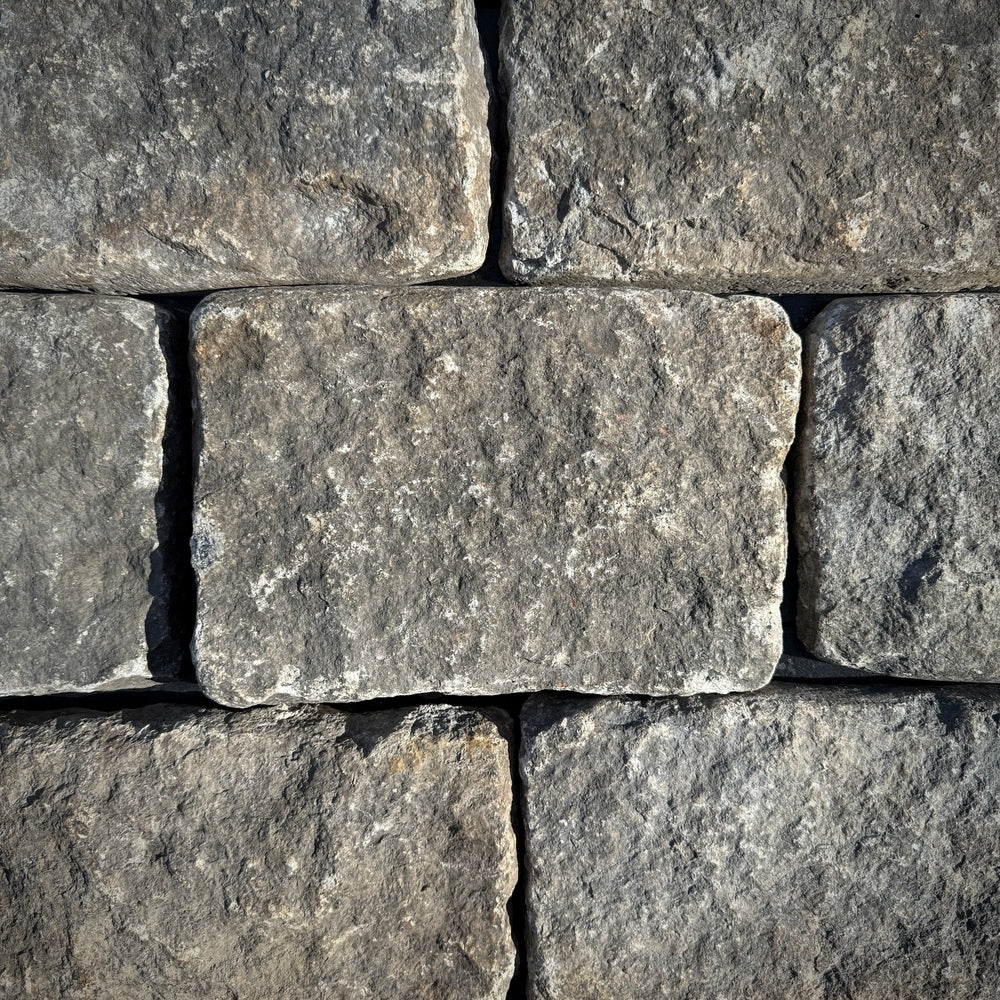
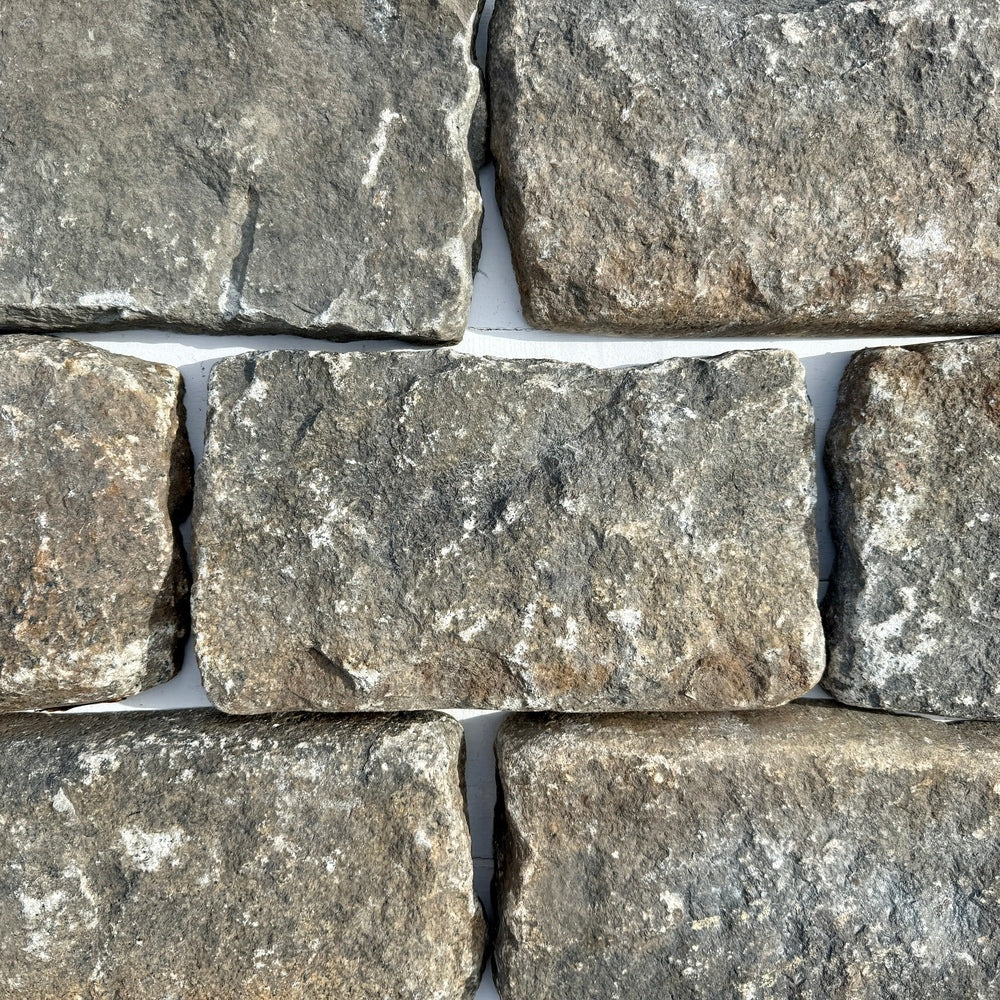
Let's clear this up right away. A thin stone paver is not a fake product trying to look like stone. It is 100% authentic durable natural stone, just like its thicker cousins.
A typical stone paver might be two or three inches thick. This gives it the strength to be laid on a gravel and sand base for a new patio or driveway. A thin stone paver is usually cut to about one inch thick, making it an ideal choice for overlays.
Their whole purpose is to be an overlay material. They are made to be installed with mortar directly over an existing, solid surface. This is most often a concrete slab you already have in your backyard or outdoor areas.
The Types of Stone You'll Find
Because they are real stone, you get all the amazing variety that nature provides. You can find a wide range of color options and textures to suit your personal taste. You will commonly find thin pavers made from several types of beautiful and durable natural stone.
- Travertine: This is a popular choice for outdoor spaces, especially for pool decks, because it stays cooler in the sun than other materials. It often features a porous, textured surface with warm, earthy tones.
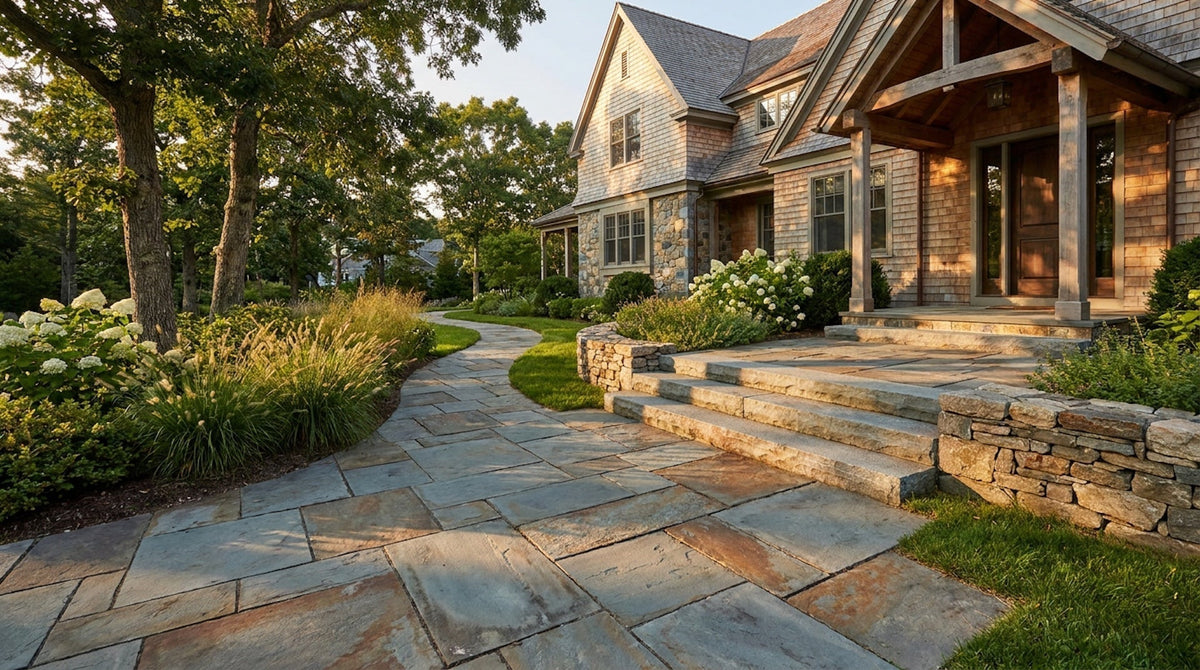
- Bluestone: This material offers that classic, rich blue-gray look that feels timeless and elegant. It is a dense, hard-wearing stone perfect for patios walkways that experience heavy foot traffic. You can find Blue Limestone varieties that offer similar durability and color.
- Slate: This paver natural stone gives you earthy tones of gray, green, and rust for a more organic feel. Its naturally layered surface provides great slip resistance. Slate works wonderfully for creating rustic textures in an outdoor project.
- Granite: For incredible durability, granite is hard to beat. It is highly resistant to scratching and staining. Its granular appearance adds a touch of sophistication to any outdoor living design.
- Limestone Pavers: Offering a smooth and often uniform appearance, limestone is a great option for creating a sleek modern look. Colors typically range from soft whites and tans to darker grays.
- Grey Sandstone: Known for its consistent coloring and subtle texture, grey sandstone provides a clean and contemporary backdrop for outdoor furniture and decor. It's a practical choice that complements many home styles.
The Big Wins: Why Choose Thin Pavers?
You're probably wondering what makes these pavers a better choice than just tearing everything out and starting over. The benefits are significant, especially for time and money. It's a renovation secret that many people don't know about.
A Fresh Look Without a Full Demo
This is easily the biggest advantage. The ability to install pavers over concrete saves a massive amount of work. There is no need for a jackhammer, no massive piles of broken concrete, and no cost to haul all that debris away.
You can take a tired but structurally sound patio, walkway, or pool deck and give it a high-end facelift. This can often be done in a fraction of the time of a full replacement project. This means less disruption to your home and life as you improve your outdoor space.
Natural Beauty That Lasts
People have used natural stone for buildings and pathways for centuries because it lasts. According to the Natural Stone Institute, different stones have various properties, but all are known for their resilience. A thin stone paver offers that same enduring beauty.
It weathers naturally and resists fading far better than manufactured concrete pavers. The colors are part of the stone itself, not dyes that can wear away. This gives your project a look of quality and permanence that's hard to beat against harsh weather conditions.
Lighter on Your Wallet (and Your Back)
Cost is a huge factor in any home improvement project. Because you are skipping demolition and base preparation, you cut a large chunk of labor costs. The pavers installation process is just simpler.
The pavers themselves can also be less expensive than their full-thickness versions. They use less raw material, which can translate to a lower price per square foot. Since they weigh less, shipping costs are also reduced, and DIYers can more easily handle the lighter material.
Thin Natural Stone vs. Other Outdoor Flooring Options
While thin stone pavers offer a great solution, it helps to know how they stack up against other popular materials. Understanding the differences between pavers natural stone, porcelain, and manufactured veneer will help you make the best decision. Each has its place in creating beautiful outdoor kitchens, patios, and living areas.
Porcelain Pavers
Porcelain pavers are a type of ceramic tile made from dense clay fired at high temperatures. This process makes them extremely strong and non-porous. Because they absorb very little water, they are highly resistant to staining, frost damage, and moss growth.
While stone porcelain can mimic the look of natural stone, the pattern is often a printed surface layer. The selection is vast, from wood grains to concrete looks. However, some people feel they lack the authentic depth and variation of real stone.
Manufactured Stone Veneer
Manufactured stone, sometimes called cultured stone, is another alternative. This product is made from concrete poured into molds and colored with pigments to resemble real stone. A key benefit is its lighter weight and often lower cost compared to full-thickness natural stone.
However, the color of veneer manufactured stone is only on the surface and can chip or fade over time, revealing the concrete beneath. While it can be a good choice for vertical applications like an outdoor fireplace or stacked stone accents on retaining walls, it may not offer the same long-term durability as a durable natural stone paver for ground-level foot traffic.
Are There Any Downsides? Let's Be Honest.
No product is perfect for every single situation. To make a smart choice, you have to know the limitations. Being aware of these potential issues ahead of time will save you a lot of trouble later.
The Foundation is Everything
This is the most important thing to understand. A thin stone paver overlay is only as good as the concrete slab underneath it. If your existing concrete is badly cracked, crumbling, or heaving, this is not the right solution for you.
Minor cracks can be repaired before you start. But major structural problems in the base will just transfer right through to your new stone surface over time. An unstable foundation will lead to cracked pavers and failed mortar joints, so you have to be honest about the condition of your concrete.
Not for Every Project
It's also important to know where these pavers don't work. Because they are thin, they cannot be used for a project where you are building from the ground up with a gravel base. They rely completely on the strength of the slab below them.
This means they aren't the right choice for a new driveway or a patio where no concrete exists. In those cases, you would need traditional, full-thickness pavers. Thin pavers are a renovation tool, not a new construction material for every application.
Design Ideas for Your Thin Stone Paver Project
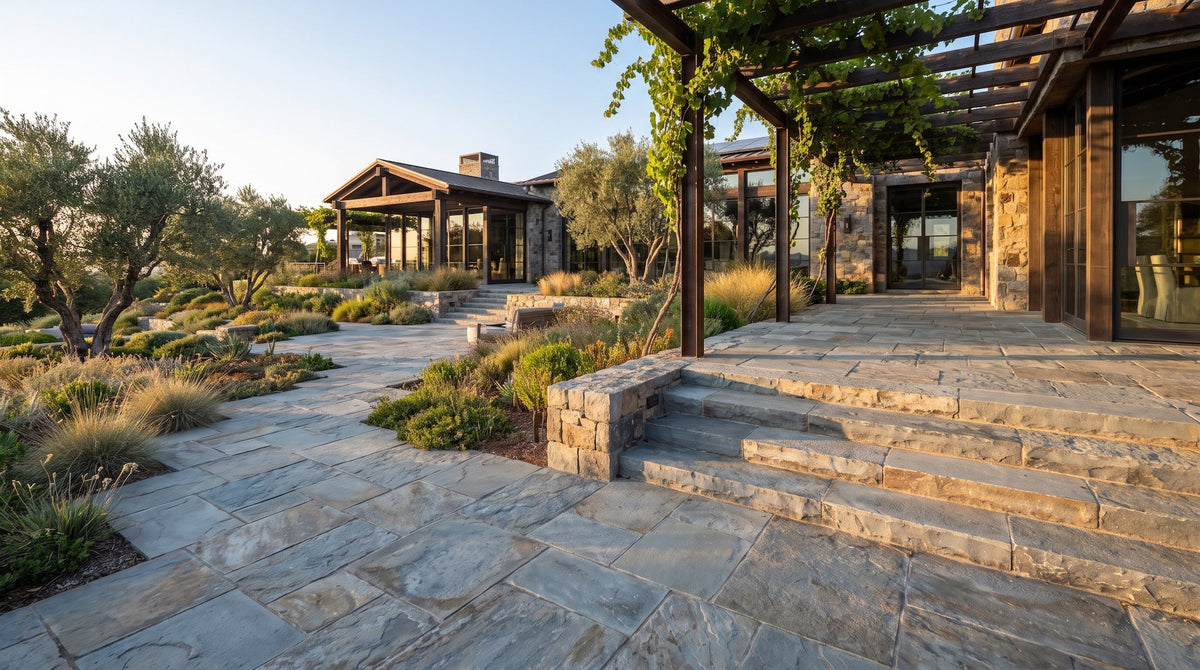
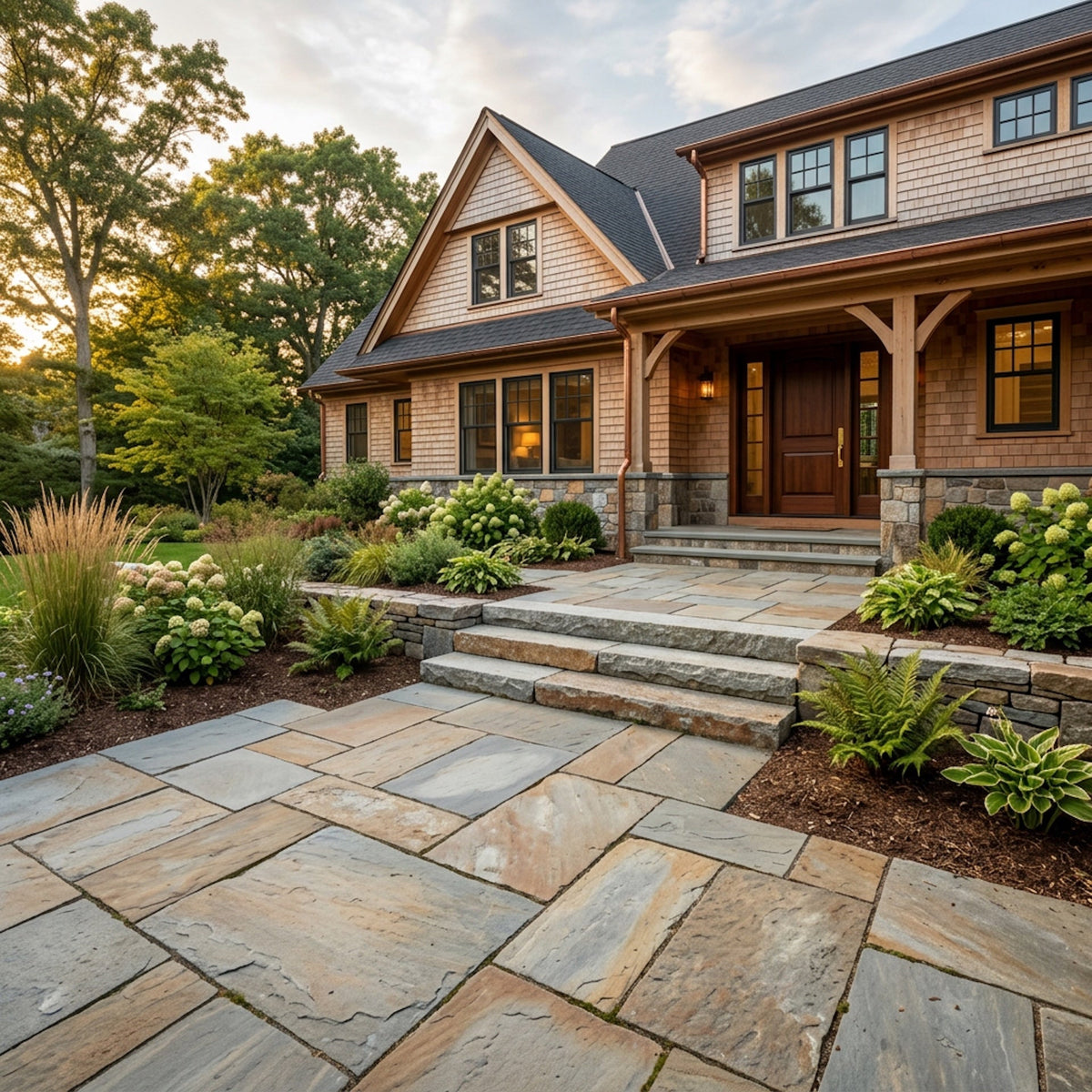
Thin pavers are incredibly versatile. You can use them to define different zones in your backyard. Think about creating a cohesive look that flows from your patio to other features.
These pavers provide the perfect surface for outdoor kitchens, where durability and ease of cleaning are important. You can also use them to create beautiful surrounds for fire pit kits or custom outdoor fireplaces. The right stone can complement other hardscaping elements like retaining walls or stone accents on columns.
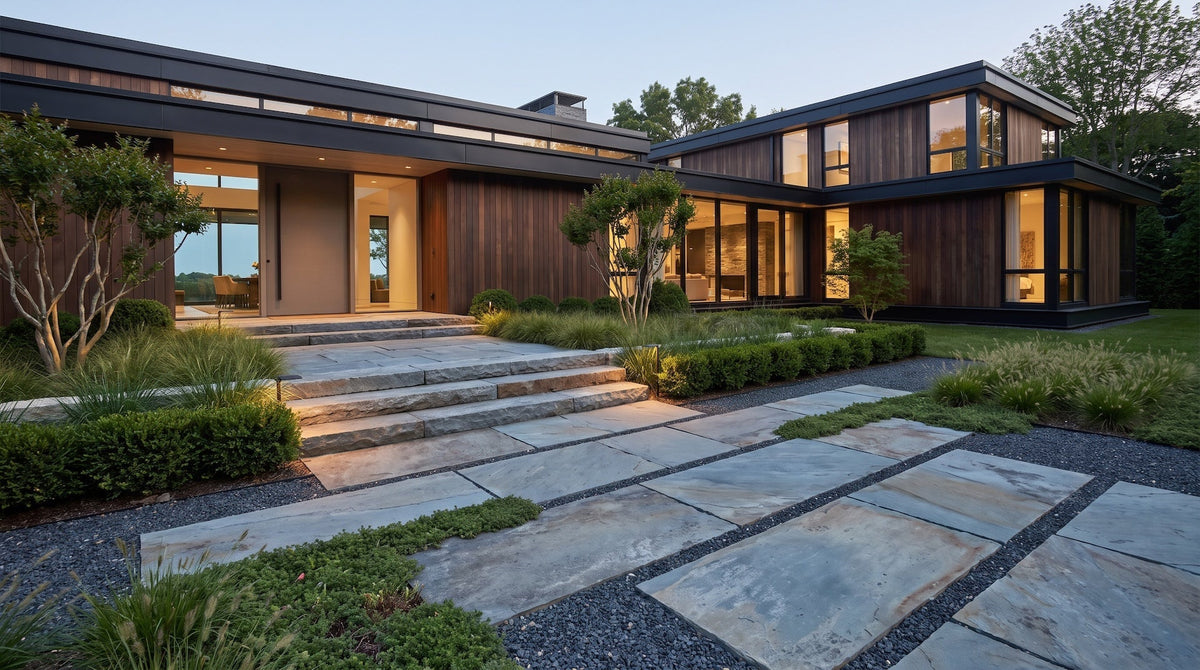
Don't be afraid to mix materials. For example, a sleek Grey Sandstone paver patio could be edged with darker Blue Limestone for a sharp, modern contrast. Thoughtful outdoor lighting can highlight the natural texture of the stone at night, making your outdoor living space inviting after the sun goes down.
Installing a Thin Stone Paver Patio: A Quick Guide
If you've decided your concrete slab is in good shape, you might be thinking about the installation process. While hiring a professional is a great idea, it helps to understand the steps involved. It's a fairly straightforward process but relies heavily on proper prep work.

-
Surface Preparation is Key
You absolutely cannot skip this step. The concrete must be completely clean and free of dirt, oil, paint, or any sealers. A pressure washer is your best friend here. Any cracks should be filled with a concrete repair compound and allowed to cure fully. -
Applying the Mortar
A layer of thin-set mortar is spread over a section of the concrete using a notched trowel. This acts as the adhesive that bonds the stone to the concrete. You only want to spread enough mortar for a few pavers at a time so it doesn't dry out. -
Laying the Pavers
Each paver is pressed firmly into the wet mortar with a slight twisting motion to make sure it's fully seated. A rubber mallet can be used to gently tap them into place. You'll need to use spacers to keep the gaps between the pavers, known as grout joints, consistent. -
Filling the Joints
After the mortar has set, it's time to fill the joints. You can use more mortar for a solid, permanent joint. Another popular option is polymeric sand, a special sand that hardens when you wet it, which helps lock the pavers together and prevents weeds. You can learn about choosing the right jointing sand to see what works best. -
Sealing for Protection
This final step is optional but highly recommended for stone patios. Applying a good quality stone sealer helps protect your new patio from stains. It also makes cleaning easier and can enhance the natural color of the stone.
How Much Should You Expect to Pay?
Let's talk about the bottom line. The cost of a thin stone paver project can vary quite a bit. It depends on the type of stone you choose, labor costs in your area, and whether you are doing it yourself.
The stone itself is usually the biggest part of the budget. Some types, like slate, can be more affordable, while rare stones will be on the higher end. It's wise to visit various stone suppliers or check their store locations online to compare a wide variety of options and pricing; you can often request a sample or add one to your sample cart before committing.
Here is a general breakdown of potential costs. Keep in mind these are just estimates, and prices can differ based on your zip code and the supplier you choose, such as those in North Carolina versus California. Always get a free estimate from a contractor.
| Cost Component | Average Price Range (per sq. ft.) |
| Thin Stone Pavers | $4 - $15 |
| Installation Labor | $10 - $20 |
| Other Supplies (Mortar, Sand, Sealer) | $2 - $4 |
| Estimated Total Project Cost | $16 - $39 |
Even at the high end, this can be significantly cheaper than a full demolition and replacement. A new paver patio from scratch can easily run $25 to $50 per square foot or more. This makes the overlay option very attractive from a financial point of view for high-traffic areas.
Conclusion
That old, ugly concrete slab doesn't have to be a permanent feature of your backyard. An overlay project with a thin stone paver is a powerful way to get a premium, natural stone surface without the premium price tag of a full-scale demolition. The wide variety of stone pavers offer endless design possibilities for any outdoor project.
You get all the beauty and durability of real stone while saving time, money, and a lot of mess. If your concrete is in solid shape, this could be the perfect solution. You can finally create the outdoor living space you've always wanted.
Share: