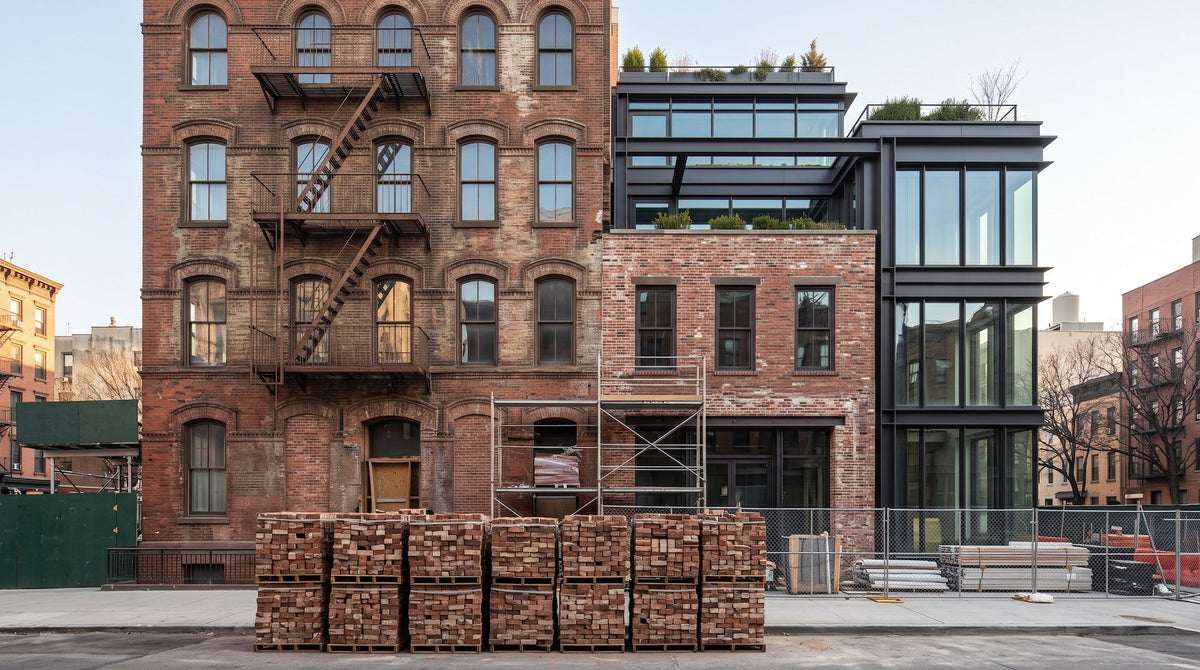
Every brick wall in New York already holds a cost that most people never think about. Before the first brick was laid, clay was dug, shaped, fired in a kiln and trucked to the site. That cost was paid long ago, and it stays locked in the wall for as long as the wall stands. Tear the wall down and build a new one, and you pay it all over again.
That idea sits at the heart of the New York Embodied Carbon Action Plan, a new statewide plan for lower-carbon building released by the New York Embodied Carbon Working Group. Its first strategy is simple: build less, and reuse more. For anyone who works with brick, that is worth paying attention to.
Maybe you are a homeowner planning a renovation and wondering whether to keep your old brick walls. You might be an architect or designer starting to hear about embodied carbon in specifications. Or maybe you are a contractor or developer who wants to know what the plan could mean for future projects. This guide breaks down what the plan proposes, why it puts reuse first, and what it means for reclaimed brick in New York.
Table of Contents
- The Plan at a Glance
- What Embodied Carbon Means
- What the Plan Proposes
- Why Reuse Comes First
- Start With the Building You Have
- Salvaged Materials and Reclaimed Brick
- The Role of Salvage Yards
- What You Can Do Now
- What the Plan Is Not
- Is Reclaimed Brick Worth It for a Lower-Carbon Project?
The Plan at a Glance
If you only need the essentials, this table covers what the plan says and what it means for brick. Everything in the plan is a recommendation to the State. None of it is law.
| What the plan proposes | What it means for brick |
|---|---|
| Put "build less, reuse more" first among its four strategies | Keeping existing buildings and reusing materials, brick included, come first. |
| Extend the life of existing buildings through adaptive reuse | Old brick walls are seen as something to keep, not clear away. |
| Encourage material reuse | Reclaimed brick is a ready example of a reused material. |
| Ask project teams to set targets for salvaged materials, as a share of material cost | Reclaimed brick could help teams meet those targets, if they are adopted. |
| Offer grants to help salvage yards and deconstruction contractors buy equipment | It could mean more capacity to recover, handle and check salvaged materials. |
Note: this is our plain-language summary of a set of recommendations. How any of them are adopted, and what they would require, is up to the State.
What Embodied Carbon Means
Embodied carbon is the carbon released over a building material's whole life: making it, moving it, installing it, maintaining it and finally disposing of it. It is different from the carbon a building uses once it is running, for heating, cooling and lighting.
For a long time, most attention went to the running side: better insulation, more efficient systems. Embodied carbon is the other part of the picture, and it is the part that plans like this one now put in focus.
Brick is a good example of why this matters. A new brick has to be made from clay and fired in a kiln. A brick that already exists has already been made. Keeping it in use, in its original wall or in a new one, avoids making a new brick at all.
What the Plan Proposes
The New York Embodied Carbon Action Plan was released in July 2026 by the New York Embodied Carbon Working Group. It sets out four groups of strategies for cutting the embodied carbon of buildings across the state, and it draws on 22 real-world case studies.
The first strategy is "build less, reuse more": extend the life of existing buildings through adaptive reuse, and reuse materials.
For new construction and major renovations, the plan proposes three ways a project could meet its proposed embodied carbon requirements. One of them is a reuse pathway: projects that document reusing more than 40% of the structure and envelope of an existing building would comply automatically. That pathway is about keeping a building, not about buying reclaimed materials, but it shows how much weight the plan puts on reuse.
The plan also recommends that project teams set specific targets for salvaged materials, measured as a share of total material cost. And it proposes grants to help salvage yards and deconstruction contractors buy handling equipment and tools for checking heavy salvaged items for reuse.
Why Reuse Comes First
Putting reuse first is not a new idea, but it is a practical one. The material that does not have to be made is the one with the least new impact.
A building that is kept rather than replaced holds on to all the brick, stone, timber and steel already in it. A material that is reused rather than thrown away saves the cost of making its replacement. In both cases, the gain comes before any question of which new product to choose.
For brick, that is especially clear. Brick lasts a long time, and a brick that has come through decades of service intact has already proven itself. When a brick wall has to come down, its bricks can often be saved and used again, as long as the work is planned with salvage in mind.
Our sustainability story on reclaimed bricks and lime mortar looks at how the brick and the mortar work together in a low-impact wall.
Start With the Building You Have
The biggest reuse decision is often the first one: keep the building or replace it. The plan's focus on adaptive reuse is a reminder that the greenest brick wall is usually the one already standing.
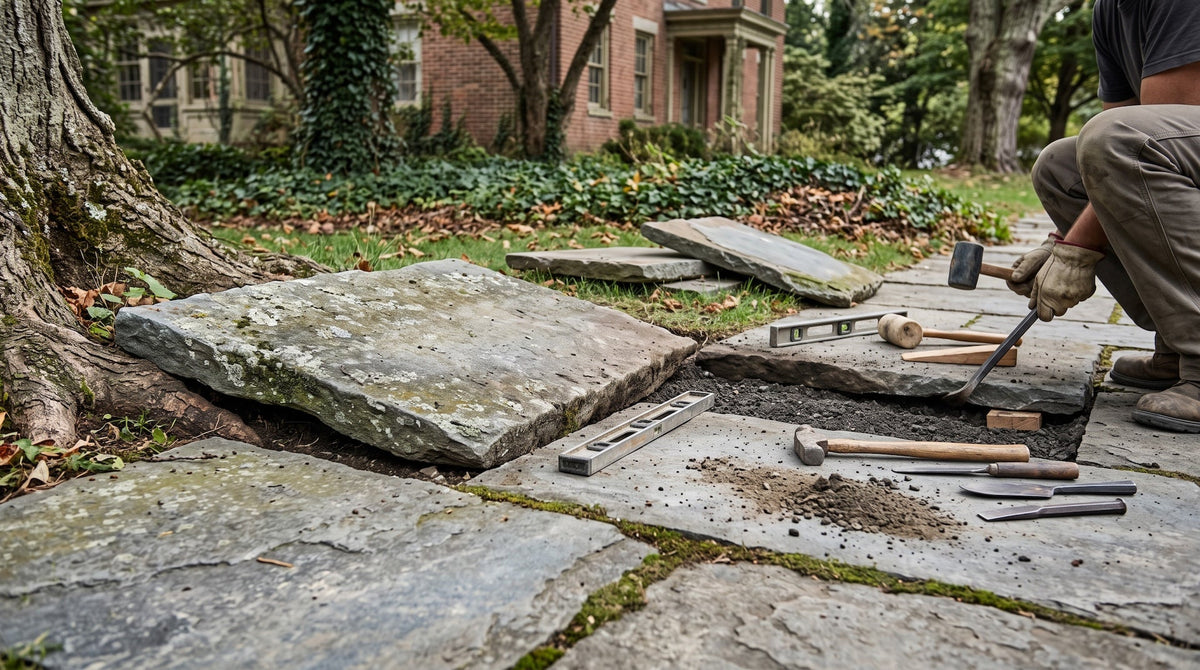
If you own an older brick building, look at what can stay before planning what to add. Sound brick walls can often be cleaned gently, repaired and repointed rather than rebuilt. Where some bricks are damaged, replacing those individual bricks keeps the rest of the wall in place.
When you do repair or extend an old brick wall, reclaimed brick of a similar size, color range and texture helps new work sit naturally beside old. A breathable lime mortar suits older brick far better than a hard cement mix, and it keeps the wall easier to repair later. Our guide on how to repoint reclaimed brick with NHL 3.5 walks through the process.
Salvaged Materials and Reclaimed Brick
When a project needs new masonry, reclaimed brick is one of the simplest salvaged materials to use. It does the same job as new brick, it carries real age and color, and it keeps an existing material in use.
If project teams are asked to set targets for salvaged materials as a share of material cost, as the plan recommends, the paperwork will matter. Keep clear records of what you buy: invoices that describe the material as reclaimed, the quantities, the cost and, where it is known, where the material came from.
We already cover what project teams usually keep on file for green building documentation in our guide on reclaimed bricks, stone and LEED v4 and v5. The same habits will serve you well if salvaged material targets become part of New York projects.
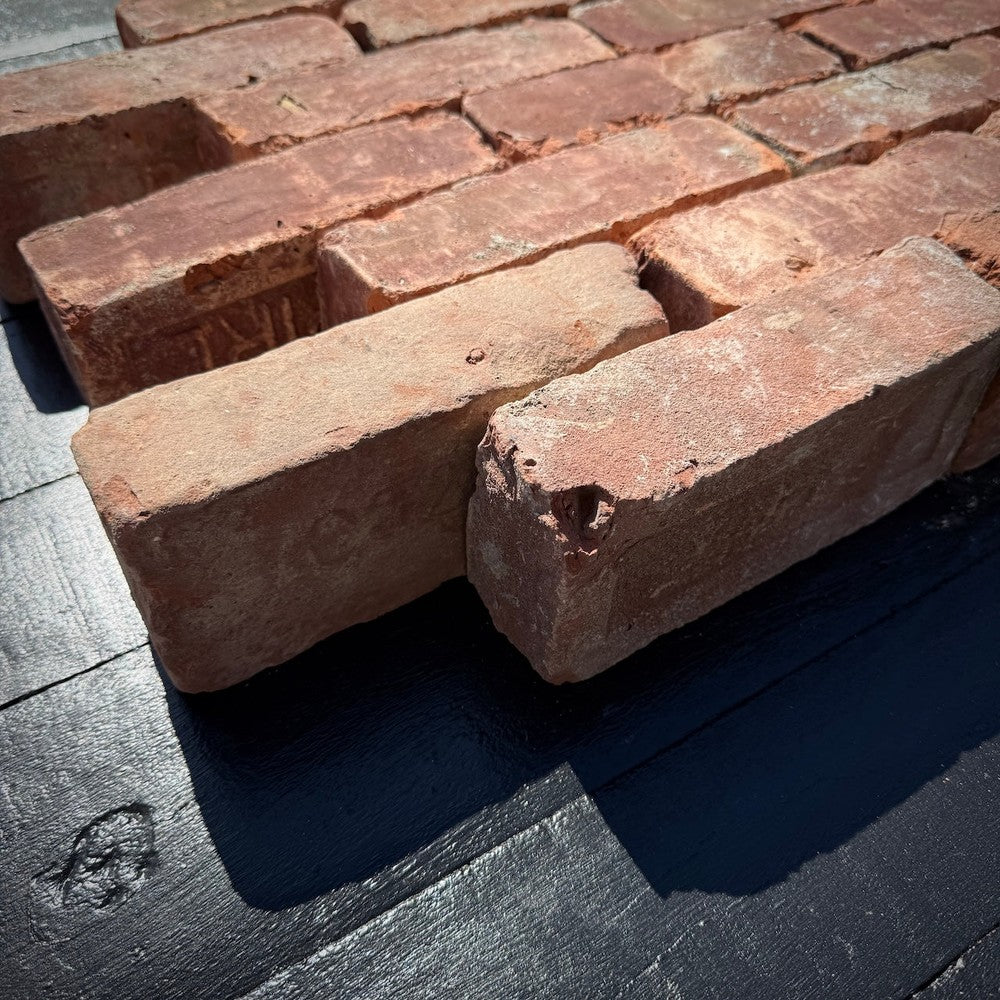
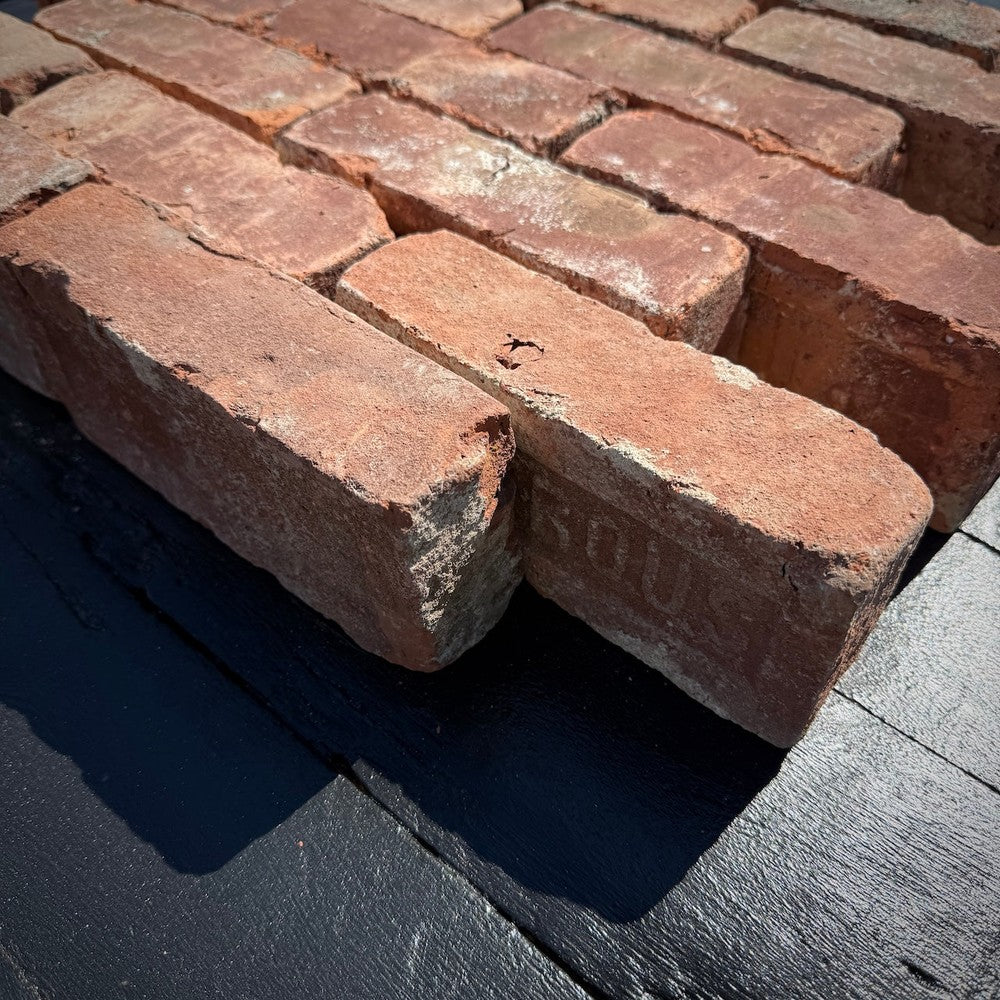
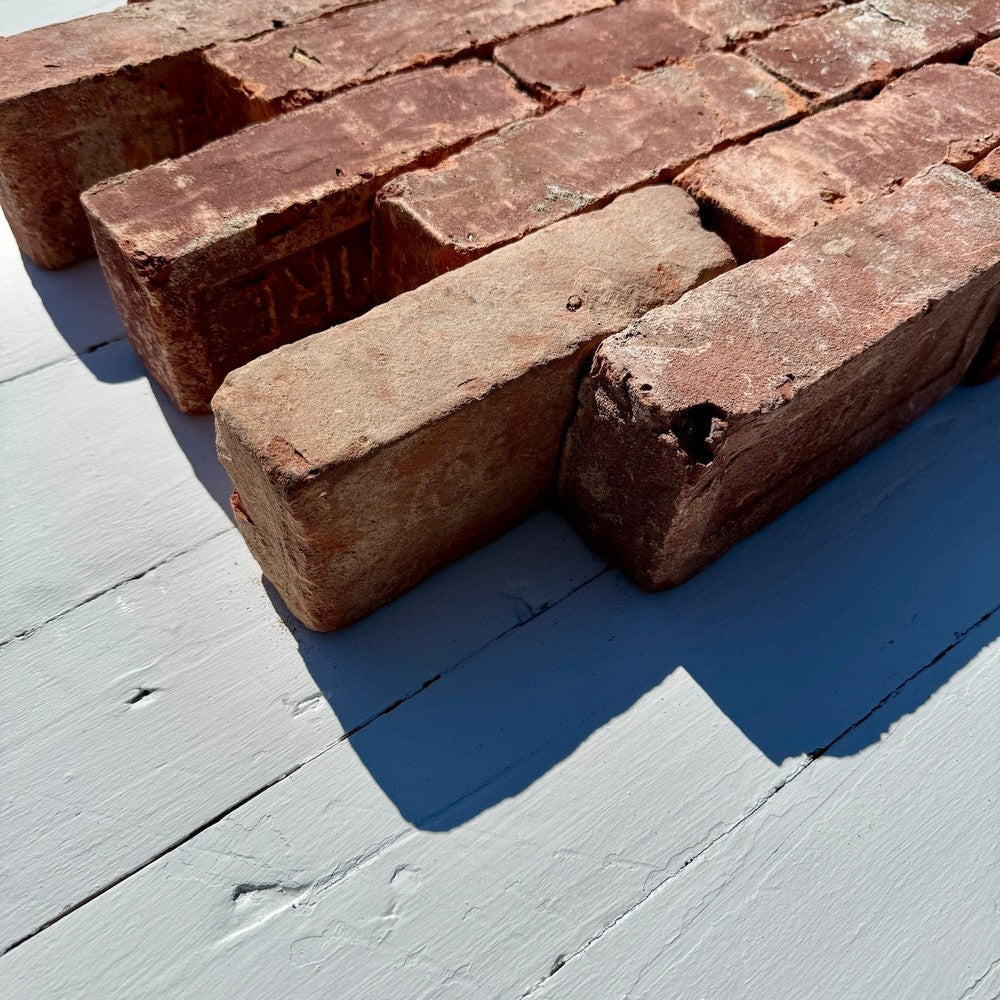
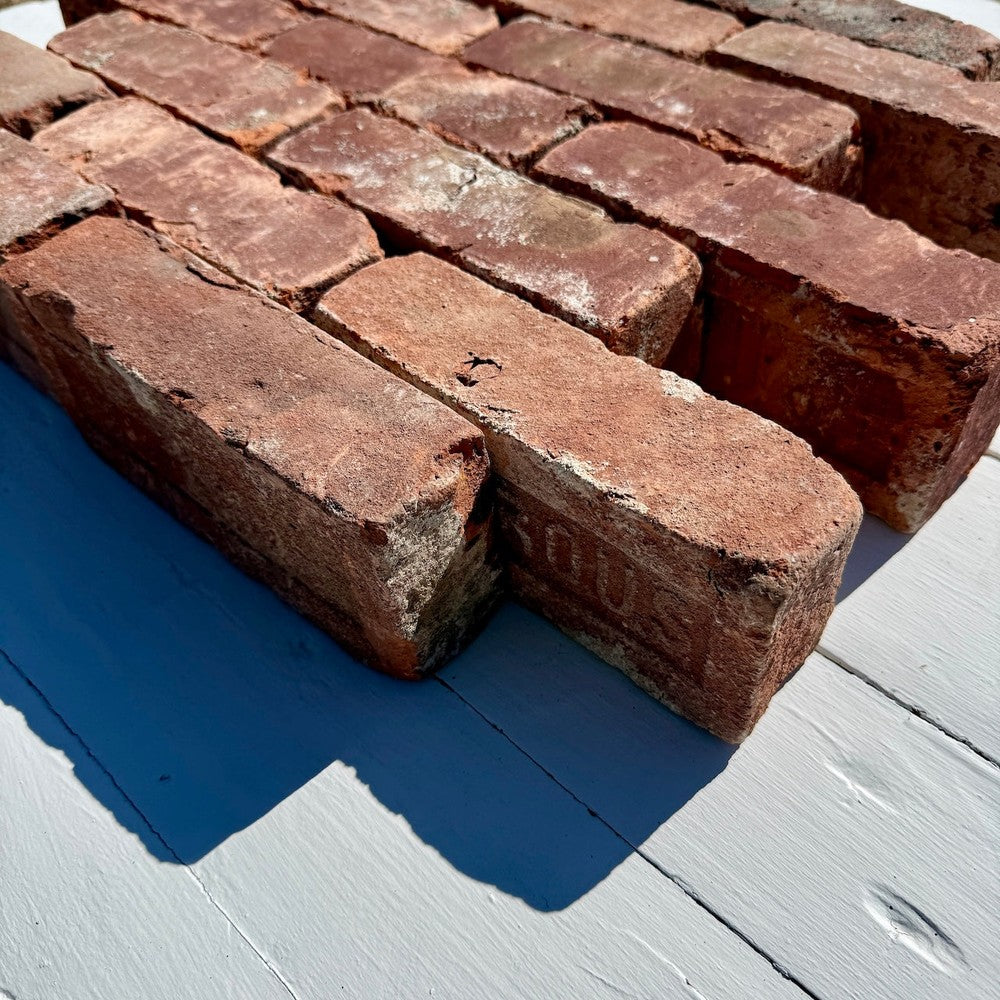
All of our reclaimed brick comes from the United States, and much of it from New York. Our New York reclaimed bricks were made in the Hudson Valley.
The Role of Salvage Yards
Reuse only works if someone recovers the material, prepares it and gets it to the next project. That is the job of salvage yards and deconstruction contractors, and the plan recognizes it by proposing grants to help them buy equipment.
At our yard in Nanuet, NY, every brick is checked by hand. We handle about a million bricks a year this way. Bricks are cleaned of old mortar and dirt with hammers, chisels and wire brushes, with no chemical treatments, and then sorted by type, size and color. Our article on how we source, sort and clean reclaimed bricks walks through each step.
We also take old bricks from projects in our area for reuse. If you are taking down an old brick building, wall or chimney, our brick reclamation and recovery services page explains how it works.
What You Can Do Now
The plan's recommendations may take time to become rules, but nothing stops a project from following its logic today.
Keep before you replace. Look hard at existing brick walls before deciding to remove them. Repair and repoint where you can.
Plan for salvage. If masonry has to come out, plan the work so the bricks can be saved, and line up where they will go before the job starts.
Choose reclaimed for new masonry. Where you need new brick, consider reclaimed brick first, and match it to the job so it can last.
Build for the next reuse. Lay brick in a breathable lime mortar so it can be taken apart and reused again one day.
Keep good records. Save invoices and quantities for reclaimed material, in case your project needs to document them.
You are welcome to see the brick in person at our yard in Nanuet, NY. No appointment is needed, but if you call ahead at (718) 379-1232, we will make sure you get our full attention.
What the Plan Is Not
It is worth being clear about what this plan does and does not do. It is a set of recommendations to the State. It does not change any building code or requirement on its own.
The 40% reuse pathway applies to reusing an existing building's structure and envelope. It is not a rule about buying reclaimed brick, and buying reclaimed brick does not on its own put a project on that pathway.
We cannot tell you how any future rule will treat a specific project or material. If your project has embodied carbon or green building goals, your project team decides what applies and how it is documented.
Is Reclaimed Brick Worth It for a Lower-Carbon Project?
For most projects that need brick, yes. Reclaimed brick avoids making a new brick, keeps a sound material in use, and fits directly into the "build less, reuse more" thinking the plan puts first.
It is not the whole answer. Keeping an existing building usually matters more than any single material choice, and reclaimed brick still has to suit the job and be laid well to last. Treat it as one part of a reuse-first approach, not a shortcut.
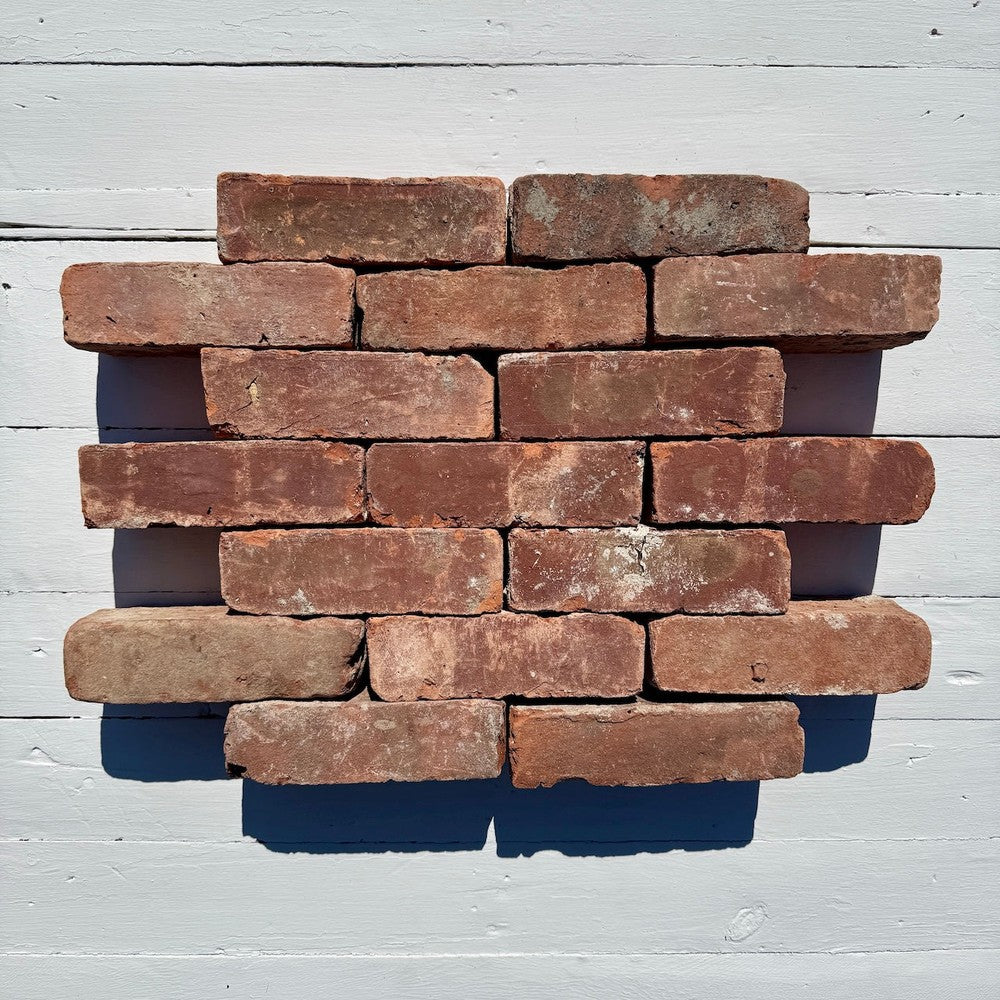
If you are planning masonry for a project with reuse in mind, start with our Reclaimed NY Red Bricks, or call us at (718) 379-1232 to talk it through.


Share: