
Why Thin Brick Thickness Matters
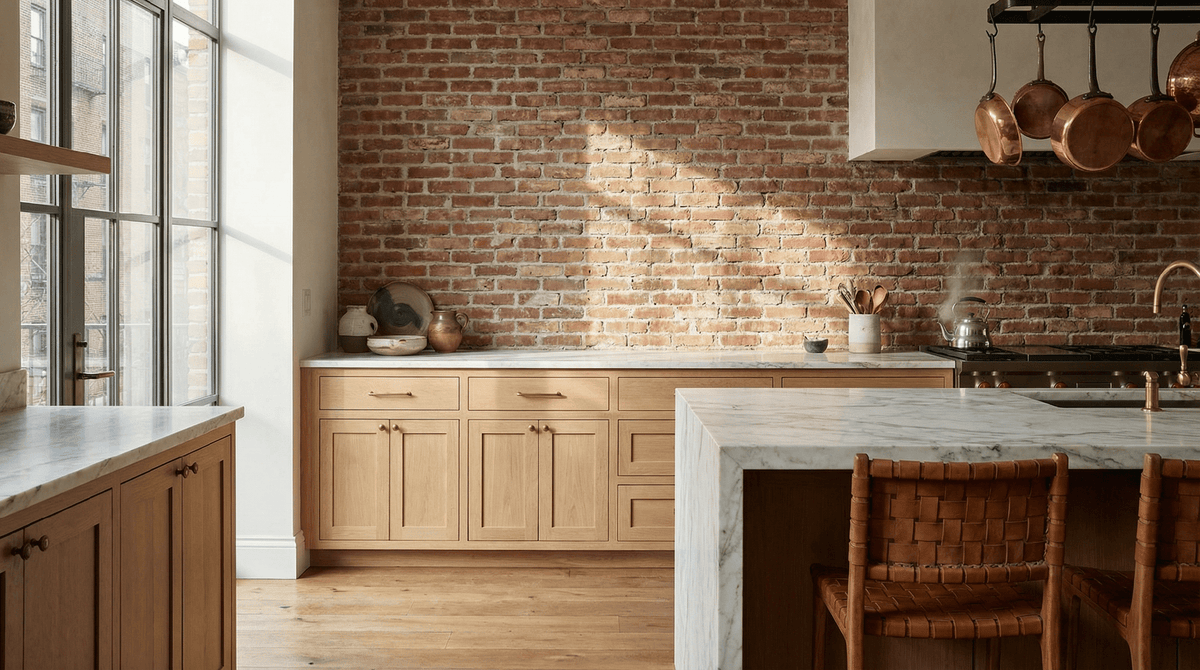
Thin brick has made it possible to bring honest masonry into tight urban apartments, busy commercial interiors and renovation projects where full-depth brick simply won’t fit. Whether you are building out a restaurant in Manhattan or refreshing a townhouse entry hall, thickness is one of the quiet decisions that drives how your wall or floor performs over time.
For newly manufactured wall veneer and tiles, 1/2" thickness is common. It works well in many situations and has become the default specification for designers and contractors ordering thin brick. When reclaimed materials enter the conversation, however, Chief Bricks encourages you to pause and consider 3/4" slices instead, especially for projects that value longevity, sustainability and a confident installation experience.
Maybe you are a homeowner choosing between two thicknesses for a kitchen wall or a mudroom floor. You might be a designer or architect working within tight finished heights at thresholds and cabinetry. Or maybe you are a contractor or tile installer who wants a material that handles well on site and holds up after you leave.
1/2" vs 3/4" Thin Brick: What Changes?
On paper, the difference between 1/2" and 3/4" might look small. On site, it feels very different. A 3/4" reclaimed thin brick carries more of the original unit’s mass, which translates into better durability during cutting, handling and long-term use. That extra quarter inch is often the difference between a brick that chips easily and a brick that can handle backpacks, chair legs and janitorial carts brushing past your walls or floors every day.
In practice, thickness affects four main aspects of your project: how many bricks break during cutting, how robust the material feels in hand, how forgiving the installation is, and how well the brick stands up to daily wear. Chief Bricks has cut hundreds of thousands of reclaimed bricks from New York City and Hudson Valley buildings; the results are clear enough that 3/4" has become the preferred thickness for most wall veneer and floor tiles supplied out of the yard.
Chief Bricks’ Recommendation for Most Projects
Chief Bricks supplies both 1/2" and 3/4" reclaimed thin bricks, with nationwide delivery. The recommendation is simple: for most residential and commercial projects, especially in high-touch or high-traffic areas, choose 3/4" thickness for both wall veneer and floor tiles.
There are three practical reasons behind that recommendation:
- Less breakage during cutting. A 3/4" slice is more forgiving when cut from an old brick, which means fewer units break or chip in the process. This lowers production cost, helps keep lead times realistic, and keeps more historic bricks out of the landfill.
- Higher longevity once installed. Thicker thin bricks tolerate a bit more impact in everyday use from water splashing up around a bar, to coats and backpacks rubbing along a corridor wall, to elbows and furniture occasionally bumping into the surface.
- Easier installation. A 3/4" reclaimed thin brick or tile feels solid in hand. It does not require the hands of pianists to place it gently. Installers can work confidently without worrying that a slight squeeze or misstep will snap a piece in half.
The thicker cut is also the better value. Because fewer pieces break during cutting, 3/4" costs less than 1/2" at Chief Bricks:
| Product | 3/4" (standard) | 1/2" (cut to order) |
|---|---|---|
| Thin brick wall veneer | $2.05 per piece, about $14.30 per sq ft | $2.55 per piece, about $17.80 per sq ft |
| Thin brick floor tile | $3.05 per tile, about $12.90 per sq ft | $3.75 per tile, about $15.90 per sq ft |
Square-foot figures use 6.98 pieces per sq ft for walls (with a 1/4-inch joint) and 4.24 for floors (with a 1/2-inch joint), from our brick coverage calculator guide. Prices as of October 2026.
If your project or client insists on 1/2" wall veneer or floor tiles to match an existing specification, 1/2" reclaimed thin bricks are available, cut to order. When you have the flexibility to choose, 3/4" is the thickness we stand behind.
Residential Applications: Walls, Floors & Details
In homes, thin brick thickness shows up most clearly in spaces where people live close to the material: entryways, kitchens, mudrooms, stairwells and living room feature walls. A 3/4" reclaimed thin brick provides a reassuring sense of solidity in these spaces, without demanding full-depth masonry or major structural changes.
Common residential applications where 3/4" reclaimed thin brick shines include:
- Apartment and townhouse accent walls. Bring New York’s historic brick character indoors with 3/4" reclaimed thin brick wall veneer for living rooms, dining nooks and bedroom headboard walls.
- Entryway and mudroom floors. Use 3/4" floor veneer thin brick pavers for durable, easy-to-clean floors in spaces that see wet boots, strollers and pet traffic.
- Kitchen and pantry walls. Wrap pantry alcoves or kitchen feature walls in thin brick for texture and warmth, knowing the thicker veneer will better resist bumps from step stools and small appliances.
- Fireplace surrounds and niches. Use 3/4" reclaimed thin brick as a surround around electric or gas fireplaces, set with a heat-rated thin-set and within the fireplace maker’s clearances, or to line wall niches and shelving alcoves for a quietly historic feel.
For more inspiration on bringing reclaimed thin brick into residential interiors, explore our guide on reclaimed thin brick veneer, which covers color, layout and detailing ideas that pair well with the thickness decisions you make here.
Commercial Applications: Hospitality, Retail & Offices
Commercial interiors ask more from their materials, both in performance and in storytelling. Restaurants in Brooklyn, hotel lobbies in Midtown, coworking spaces and boutique retail stores often depend on brick to set the tone: honest, tactile and grounded.
In these environments, 3/4" reclaimed thin brick delivers reliable performance in the face of heavy daily use:
- Restaurant and bar walls. Behind banquettes, host stands and bar fronts, 3/4" thin brick better withstands the inevitable scuffs from chairs, trays and bags.
- Cafe and retail floors. In coffee shops, bakeries and retail stores, floor veneer thin brick pavers at 3/4" thickness help create a durable surface that can handle foot traffic, rolling racks and occasional spills.
- Office corridors and stair cores. Brick-clad elevator lobbies and stairwell walls see constant movement. Thicker reclaimed thin brick supports long-term resilience without sacrificing visual authenticity.
- Hospitality amenity spaces. In hotel lounges and bars, 3/4" reclaimed thin brick can be used on walls and select floor areas to tie contemporary furnishings back to New York’s masonry heritage.
For designers working on cellars and specialty spaces, our guide to reclaimed brick wine cellars offers additional ideas for using reclaimed bricks to achieve Old World character in modern hospitality projects.
Design & Construction Considerations
Thickness is not the only parameter on the table. As you refine your specification, consider substrate, adhesive, layout and maintenance alongside your choice between 1/2" and 3/4" thin bricks. Particularly in renovation projects, the right thickness can save you from extensive rework of wall or floor heights.
A few practical considerations:
- Substrate and build-up. 3/4" thin brick adds slightly more depth than 1/2", but often still fits comfortably within typical build-ups on gypsum board, CMU, or existing concrete slabs.
- Weight and coverage. Thicker slices carry about half again as much weight per square foot, so factor this into your structural and installation planning, particularly when cladding large walls. Coverage does not change: both thicknesses share the same face size, so you order the same number of pieces.
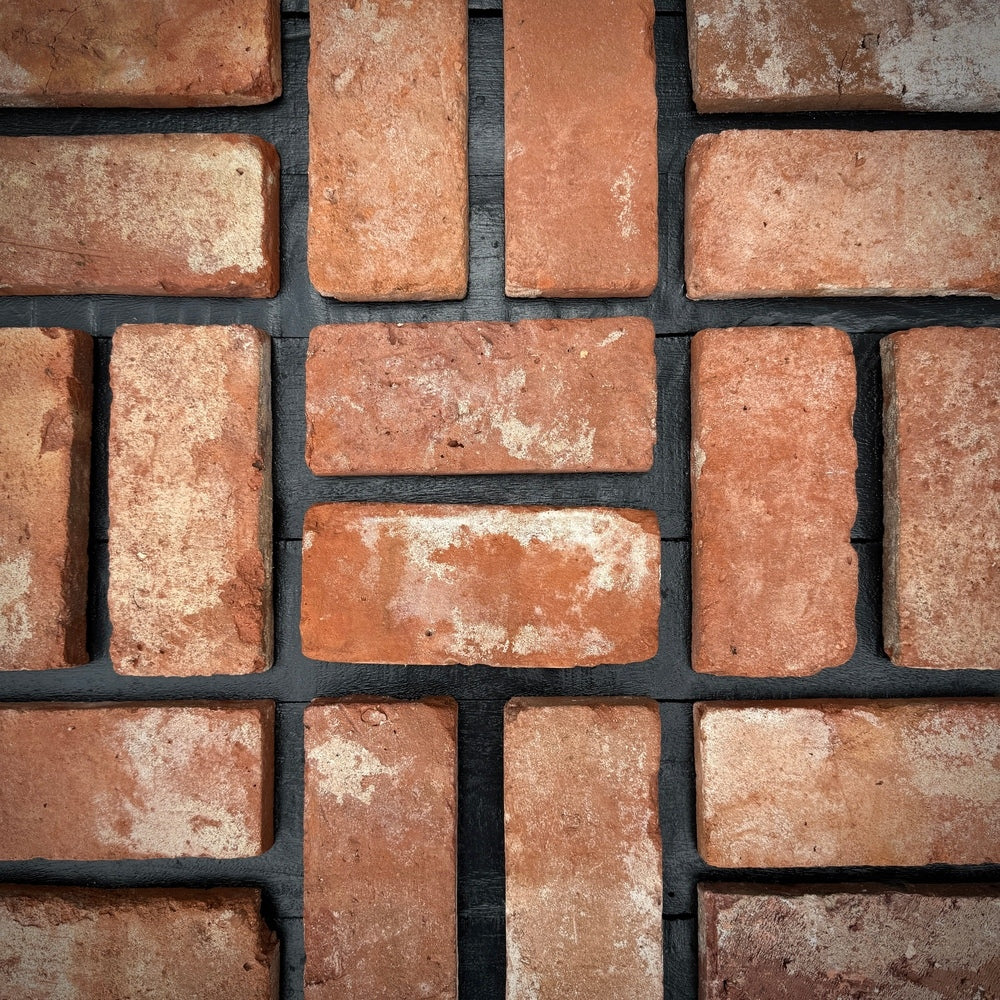
- Grout joint and pattern. The tactile feel of reclaimed brick pairs well with traditional running bond, herringbone, or basketweave layouts. Joints and patterns can be tuned to accentuate the thickness you select.
- Cleaning and maintenance. For brick floors, appropriate sealers and regular maintenance are essential, regardless of thickness. Our guide on how to clean brick floors walks through practical routines for kitchens, mudrooms and commercial spaces.
If your project hinges on specific finished elevations, coordinate early with your contractor, tile installer or mason to confirm how a shift from 1/2" to 3/4" will affect transitions at thresholds, cabinetry and baseboards.
When 1/2" Thin Brick Still Makes Sense
There are scenarios where 1/2" reclaimed thin brick is still the right choice. In some tight retrofit applications, every millimeter matters. Designers may be matching an existing 1/2" specification on adjacent surfaces, or working within limited structural tolerances.
Typical cases where 1/2" can be appropriate include:
- Overlay installations with strict height limits. When adding brick over an existing floor directly under door leaves or appliances, 1/2" may help you stay within tolerance.
- Detail conditions around cabinetry, trim or fixtures. In millwork-intensive spaces, thinner veneer can simplify alignments.
- Projects replicating a previously approved detail set. Where drawings and approvals are already based on 1/2" thin brick, you may choose to maintain consistency.
1/2" wall veneer and floor tiles are cut to order from reclaimed bricks. When you place your order, choose the 1/2" option instead of our standard 3/4" and allow extra time for production.
Ordering Reclaimed Thin Bricks from Chief Bricks
Chief Bricks supplies reclaimed thin brick wall veneer and floor tiles sourced from historic New York buildings, and ships nationwide from our yard in Nanuet, NY. Whether you are working on a single Brooklyn brownstone kitchen or a multi-location hospitality concept, both thicknesses are available for walls and floors.
To explore product options:
- Visit our Reclaimed Thin Brick Wall Veneer product page for wall applications.
- Review Reclaimed Thin Brick Floor Tiles for kitchen, mudroom and commercial flooring.
- Compare thin brick veneer cost vs full brick if you are still deciding between veneer and full-depth masonry.
- Browse more design ideas in our guides to thin brick floor tiles and reclaimed thin brick veneer.
If you are unsure which thickness to specify, order a sample of each and compare the 3/4" and 1/2" cuts in hand before you decide.
Work out how many bricks or stones you need for your wall, patio or walkway with our Masonry Brick & Stone Calculator.
Is 3/4-Inch Thin Brick Worth It?
For most projects, yes. The 3/4-inch cut breaks less during cutting, feels more solid in hand, and stands up better to everyday bumps on walls and foot traffic on floors. Because fewer pieces are lost in production, it also costs less per piece than the 1/2-inch cut.
The 1/2-inch cut still earns its place where finished heights are tight, such as overlay floors under doors and appliances, or where approved drawings already call for it. Keep in mind that it is cut to order, so plan for production time. Whichever thickness you choose, wall veneer and floor tiles are different products: wall veneer is for walls, and floors need thin brick floor tiles.
To feel the difference for yourself, order a sample of our reclaimed thin brick wall veneer and hold the 3/4-inch cut in your hand before you decide.
Share: