
If you have granite steps, winter probably makes you a little nervous. You want safe footing, but you also do not want to wreck that stone with the wrong ice melt or tools. Learning How to De‑Ice Granite Steps Safely in The Winter is about more than convenience.
It is about protecting an investment in your home or project and keeping people out of the emergency room. Falls on ice are a real problem. According to the CDC, falls are the leading cause of emergency room visits in the United States, with winter surfaces playing a big part in that number.
So if you are an architect, builder, homeowner, or landscaper working with granite treads and stoops, this topic is worth taking seriously. You do not have to choose between safety and beautiful stone. You can have both if you use the right deicers, tools, and habits.
Let us walk through how to keep those granite steps grippy, clean, and structurally sound season after season. With the right approach to ice removal, your granite will last for generations.
Table of Contents:
- Why Granite Steps Need Special Winter Care
- How Deicers Work On Stone Surfaces
- Deicers To Avoid On Granite Steps
- Better Options For De‑Icing Granite Safely
- Infographic: Choosing The Right De-icer For Granite Steps
- Right Way To Shovel And Chip Ice On Granite
- Protecting Nearby Plants, Soil, And Water
- Smart Application Habits For Winter Safety
- Is There A Perfect Ice Melt For Granite
- Granite Step Design Choices That Make Winter Easier
- Conclusion
Why Granite Steps Need Special Winter Care
Granite looks tough, and it is. However, it is still a natural stone that reacts to moisture, salt, temperature swings, and impact. In cold climates, granite can suffer from spalling, pitting, and staining if it gets abused every winter with harsh chemicals and bad snow removal habits.
Many common deicing products are formulated with performance on concrete or asphalt in mind, not natural stone. That mismatch is where trouble starts. You might not see the damage right away.
Hairline cracks, flaked edges, and surface roughness can sneak up after a few hard winters. This deterioration is often caused by salt fretting, where salt crystals grow inside the stone's pores and exert pressure. If you specify reclaimed granite treads or blocks on a project, the stakes are even higher.
Those stones have history and character you do not want to destroy with a bag of cheap rock salt. A little education up front saves a lot of cost and frustration later. Keeping walkways clear safely is a vital part of masonry building maintenance.
How Deicers Work On Stone Surfaces
Most ice melt products work in one of two basic ways. They either lower the freezing point of water, or they create a brine that seeps under the ice and helps it release from the surface. Both paths are chemistry driven.
The catch is that these same chemicals do not stop at melting ice. They soak into joints, stone pores, soil, and even nearby planting beds. That is where you start to see staining, plant stress, or white crusty deposits that will not go away without hard scrubbing.
University of Maryland Extension points out that people dump tons of ice melting materials on sidewalks and steps each winter without much thought about melting ice safely guidance. That extra salt then washes into local streams and bays as soon as things start to thaw. This excess runoff can pollute streams and harm aquatic life.
Deicers To Avoid On Granite Steps
Some products are simply poor choices around granite. They may cause scaling on nearby concrete, discolor stone, harm soil, or create long term structural issues. If you care about stone performance and landscape design, be picky here.
Here are the main categories that cause the most trouble.
1. Standard Rock Salt Sodium Chloride
Rock salt is cheap, easy to find, and fast acting in moderate cold. That is why so many bags end up on front steps each winter. However, sodium chloride is a common deicing salt that is very hard on almost every material it touches over time.
Sodium ions are rough on mortar joints and on many types of stone, especially once freeze and thaw cycles start working them into cracks. Rock salt releases heat during the melting process, but the leftover crystals can pull moisture into the surface. This increases scaling and flaking risk during cold snaps.
Runoff carries salt into nearby soil and waterways. Groups that focus on bay and stream health urge people to be far more careful with how much salt they put on their hardscapes each winter to Deice The Bay Friendly Way. Granite may handle salt a bit better than some softer stones, but that does not mean it is a free pass.
2. Fertilizers Used As Ice Melt
You might see suggestions online to throw fertilizer on icy surfaces as a "two for one" trick. Do not do this around granite or any paved area you care about. It is hard on stone surfaces and very rough on the environment.
Maryland's Lawn Fertilizer Law actually bans the use of fertilizer as a deicer because the nitrogen and phosphorus cause water pollution. These chemicals harm vegetation and water quality once they wash into streams and the Chesapeake Bay. Those nutrients feed algae blooms and hurt aquatic life downstream.
Urea and similar fertilizer based products also add a lot of nitrogen to nearby soils. The St Johns River Water Management District notes that high nitrogen runoff drives algae growth and cause algal blooms in waterways. That is the last thing you want linked to a well designed landscape project.
3. Ammonium Based Ice Melts
Some niche ice melt products are based on ammonium salts, like ammonium sulfate. They are sometimes promoted as fertilizer style deicers. These are a red flag around any stone or concrete.
Research has shown ammonium sulfate is very corrosive. It can chemically attack concrete and damage masonry structures significantly. It can also cause lethal effects on wildlife if it moves into water through runoff.
Those same reactions can spell trouble for mortars, stone faces, and metal railings connected to granite stairs. This ingredient creates an acidic reaction that eats away at the cement paste. For residential and light commercial sites, there is rarely a reason to pick an ammonium based product when safer options exist.
Better Options For De‑Icing Granite Safely
So what does work well with granite in cold climates? The answer is a mix of gentler chemicals, more physical removal, and sometimes a shift in mindset. Instead of trying to instantly turn an ice rink into bare stone, think about creating safe traction and slower, controlled melting.
There are yard-friendly ways to manage winter precipitation without causing damage. Look for products that list ingredients safe for masonry building materials.
Safer Chemical Deicers
You want products that melt at the temperatures you deal with, but that are easier on stone and soils. University and extension charts often compare melting power and side effects for different ice melting products info. Check your climate and average lows as you choose.
| Deicer Type | Pros For Granite Steps | Main Drawbacks |
|---|---|---|
| Calcium Magnesium Acetate (CMA) | Gentler on stone and metal, lower environmental impact | Costs more, works best just below freezing |
| Magnesium Chloride | Less harsh than rock salt, works at lower temps | Can still add chloride to soil, may leave residue |
| Calcium Chloride | Fast acting in very cold weather, smaller amounts needed | Can be irritating to skin, some risk to nearby soil and stone if overused |
| Potassium Chloride | A common deicing ingredient safe for plants | Works slower than other salts, not good for very low temps |
Calcium Magnesium Acetate: This is widely considered a good choice for stone. It is often biodegradable and less likely to chemically attack concrete or mortar. It stops ice particles from sticking to each other.
Magnesium Chloride: This often comes in rounded white pellets. It is effective even when the temperature reaches fairly low degrees. It releases less chloride than rock salt, making it a common deicing alternative.
Calcium Chloride: This powerful deicing ingredient typically appears as white pellets. It generates heat to melts ice quickly. However, it can be a skin irritant, so wear gloves.
Potassium Chloride: Often sold as a safe option for pet owners. It is a common deicing ingredient that is generally kinder to vegetation. It does not work well in extreme cold.
Homemade and Liquid Solutions
If you want an easy solution that you can make at home, consider mixing rubbing alcohol or isopropyl alcohol with water. This homemade mixture has a much lower freezing point than water alone. It can be sprayed directly on icy surfaces to help break the bond.
Some people try using hot water mixed with a little dish soap. This can be effective to remove ice in a pinch, but be careful. The excess water can refreeze quickly if the air temperature is too low.
Another yard-friendly option is sugar beet juice mixtures. These provide additional melting power when mixed with other deicers. They are becoming a popular "granite melt" alternative because they are effective and less corrosive.
Non Salt Traction Boosters
If the goal is preventing slips, traction matters more than seeing bare stone ten minutes after a storm. Sand, crushed stone, or gritty mineral products sit on top of ice and give shoe treads something to grip. You can also use kitty litter to provide traction in a pinch.
These options will not chemically attack concrete or granite faces. You may see some particles work into joints, but that is usually not harmful if the steps are well built. The tradeoff is that you must sweep or vacuum in spring so the material does not end up in drains or lawns.
For entry steps with frequent visitors or aging residents, consider pairing limited chemical melt with regular grit. This ensures you never have a slippery surface, even during long cold stretches. This is one of the best ways salt can be supplemented for safety.
Heated Mats And Electric Systems
For busy entrances or high end stone stairs, heated systems are worth a look. Surface heating avoids many of the chemical and shoveling headaches people deal with every winter. It is a fantastic way to prevent ice entirely.
Removable heated snow melting mats can be rolled out on treads before storms. They plug into standard power and keep surfaces warm enough that snow turns to slush instead of solid ice Heated snow melting mats. This option works well for small stoops, townhouse entries, or apartment doors.
Built in electric or hydronic snow melting systems under granite treads are a bigger investment. However, they are appealing for architects and builders planning new construction. They can protect stone from constant freeze thaw stress and eliminate the need for most chemical products.
Infographic: Choosing The Right De-icer For Granite Steps

Right Way To Shovel And Chip Ice On Granite
Even the safest deicer will not help if you scrape and hammer your granite every storm with rough tools. A smart physical removal plan is half the battle. It protects the finish and makes any product you use work better.
Choose Gentle Tools
Stay away from bare steel blades that can gouge edges or leave dark marks. Go for shovels with plastic blades or metal blades that have plastic edges. Rounded corners are much less likely to catch on stone noses.
A flat sidewalk scraper can help with thin ice if you use a careful, low angle. Do not slam the tool down on the step face. A simple hand broom is useful for getting snow and slush out of joints where a sidewalk ice scraper cannot reach.
If you deal with very stubborn patches, some professionals use a propane weed torch to soften ice on hardscapes. This takes a gentle hand and real care propane weed torch. Open flame near railings, doors, or dry plantings is risky, so most homeowners should skip this approach.
Work In Layers, Not All At Once
Think of winter maintenance as a few light passes instead of one big heroic effort. You get better results and put less stress on the stone that way. This applies at every scale, from a small front stoop to a long granite staircase.
- Shovel or sweep fresh snow before people walk on it and pack it down.
- Spread a thin layer of your chosen deicer or traction product on any remaining slush or thin ice.
- Come back and scrape or sweep once the product has broken the bond between ice and granite.
A good shovel and a simple sidewalk scraper often do more than people expect when used this way. University of Maryland Extension notes that shoveling and mechanical removal are still some of the best ways to cut back on guidance on safe melting. This reduces how much chemical melt you use in the first place.
Protecting Nearby Plants, Soil, And Water
If you care about design, you probably also care about what happens just beyond the steps. Landscape beds, street trees, and local creeks feel the effect of every deicer spread through a long winter. That is true even if you never see direct burn on leaves or branches.
Excess salt and fertilizer products wash into storm drains and water bodies. Programs focused on bay health highlight that smarter deicer use is a simple way property owners can cut pollution bay friendly deicing. It starts with putting down less material overall.
If you already have plant beds near your granite steps that have taken years of splash and runoff, there are amendments that help. Certain products on the market can buffer some of the damage from salts soil amendments that buffer salt. That said, these fixes add one more step and cost to a winter routine.
Smart Application Habits For Winter Safety
Knowing what to buy is step one. Knowing how to apply deicers on granite steps is where projects either thrive or start slipping. Small habits add up to big differences in surface life, indoor cleanliness, and stormwater impact.
Measure, Do Not Dump
More deicer on the steps does not equal more melting. Once a brine forms on the surface, any extra product mostly just waits around to be tracked indoors or washed into the garden. Excess water and chemical runoff are never good.
Check the manufacturer's instructions for the spread rate printed on your chosen product. Follow it with a simple scoop or cup. A light, even pattern across the granite gives better melt than thick piles near the top tread and none below.
If your stairs keep refreezing, consider whether water is flowing from higher grades, roofs, or gutters onto the steps. Adjusting drainage might help more than piling on white pellets every day. Fixing the source of the water is always the best prevention.
Use Timing To Your Advantage
Pre treating before a storm hits often means you can use smaller amounts of product and get faster release later. On granite steps, a light pre storm application paired with prompt shoveling protects both footing and finish. This prevents heavy ice buildup from forming.
If you wait until three inches of snow have been walked flat, the job gets much harder. You will lean on heavier doses and rougher scraping. This raises the odds of chipped edges, etching stone surfaces, and surface scratches.
Watch the weather and aim to do a quick pass as flakes taper off rather than letting everything sit overnight in a deep freeze. The less time snow spends melting and refreezing on your granite, the longer that stone will look like the day it was set. Quick action makes it easier to remove snow.
Is There A Perfect Ice Melt For Granite
No single product checks every box for cost, performance, plant safety, and stone health. You are looking for a reasonable compromise that respects your climate and site layout. That is true for architects designing stairs as much as for a homeowner shopping the hardware aisle.
For many properties, a two part strategy works best. Pick a gentler deicer you trust for stubborn ice and heavy foot traffic, like magnesium acetate or CMA. Then lean on sand or grit on top for ongoing traction during cold snaps.
The newest deicing salt products often combine ingredients to try and balance these needs. Always read the label. If you have elderly residents, children, or customers using your granite steps daily, weight the safety side of that trade a little heavier.
Slips can be serious on slippery surfaces. Emergency visit data from the CDC drives that point home every winter falls leading emergency visits. Offer alternative paths if the ice is too thick to manage safely.
Granite Step Design Choices That Make Winter Easier
If you are still in planning stages, you can make a few smart calls that simplify winter maintenance for decades. Design has more power here than any chemical product. Thoughtful stair layout reduces the need for harsh treatment later.
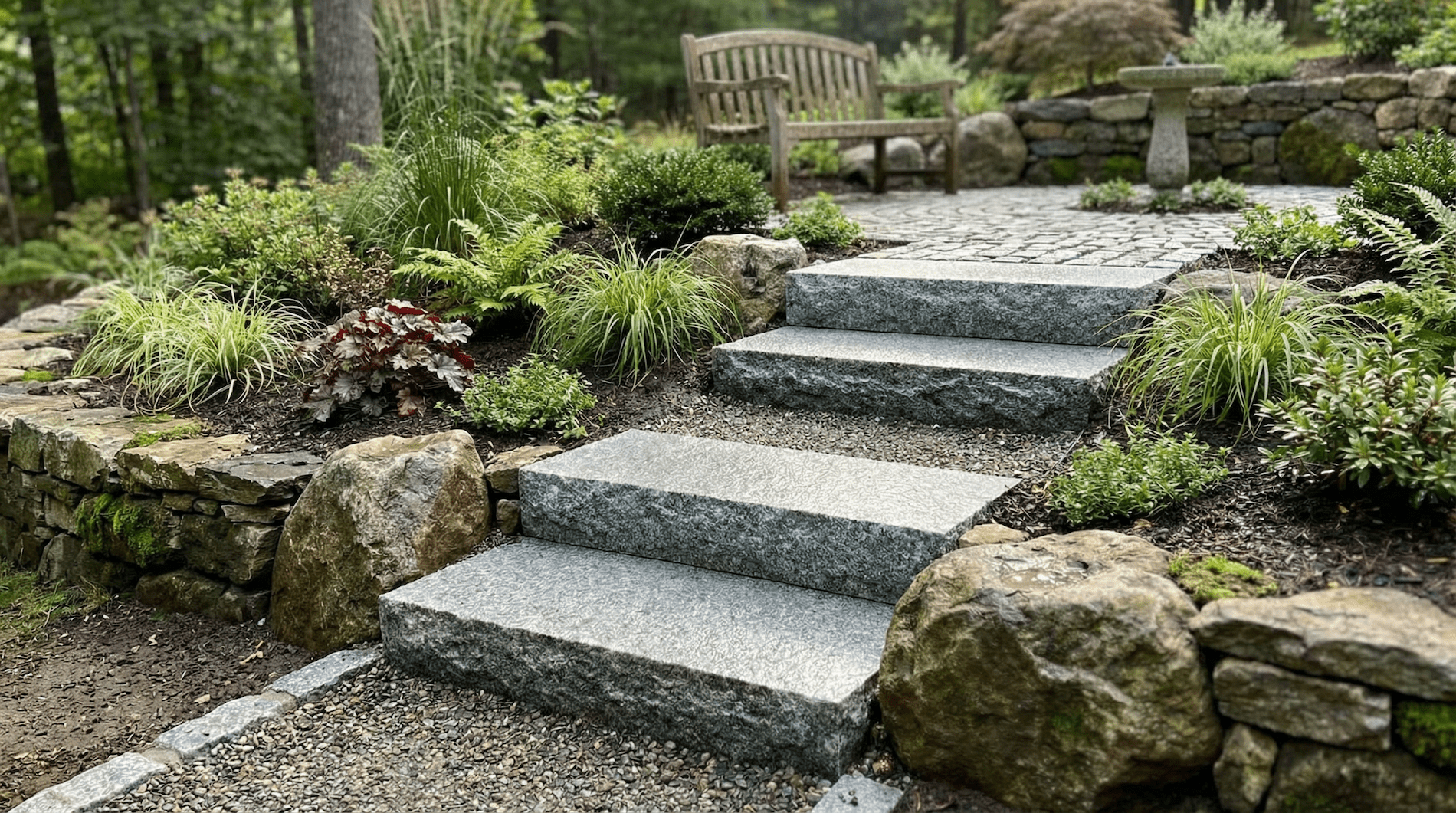
Use enough depth in treads so people have a full, stable landing. Slight texture on granite faces, like the typical thermal flamed top finish the Chief Bricks steps offer, helps shoes grip even if a light film of slush is present. Good handrails add a safety backup for the worst weather days.
Grading also matters significantly. Direct drainage away from stair runs so meltwater does not cross every tread and refreeze at night. Catch basins, French drains, or simply pulling the landscape grade back from the risers will reduce the constant wet and dry cycle that ruins steps over time.
Consider installing electric melting mats during the construction phase. This investment completely changes how you manage the winter months. It allows you to keep the stone clean without any salt releases affecting the integrity of the material.
Conclusion
Learning How to De‑Ice Granite Steps Safely in The Winter is really about respect for the material, the people using it, and the landscape around it. Granite can stand up to harsh climates, but it does much better if you are thoughtful with chemicals and tools. Avoiding rock salt prevents salt fretting and damage.
Skip fertilizer based melts and ammonium products. Use gentler deicers like calcium magnesium acetate sparingly and support them with regular shoveling, sand, or even heated mats where the budget allows. That choice protects stonework and also keeps excess nutrients and salts out of local streams and bays.
Programs like bay friendly winter care remind property owners every year of the environmental impact. In the end, the safest winter stair is one that is treated with a light hand, checked often, and cleared in layers. Clear snow before it packs down.
Whether you are overseeing a multi story granite entry or just your own front stoop, those habits help your stone age gracefully. More importantly, they help the people who use it get through winter without a trip to the emergency room. A little care goes a long way in keeping walkways safe and beautiful.






Share: