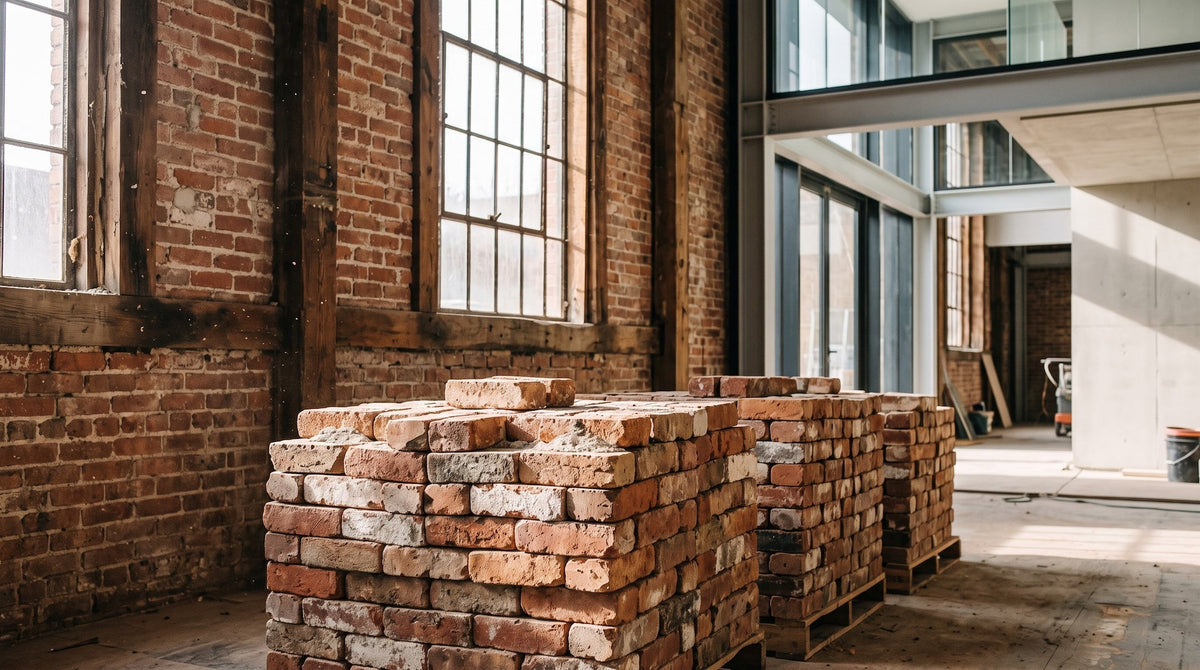
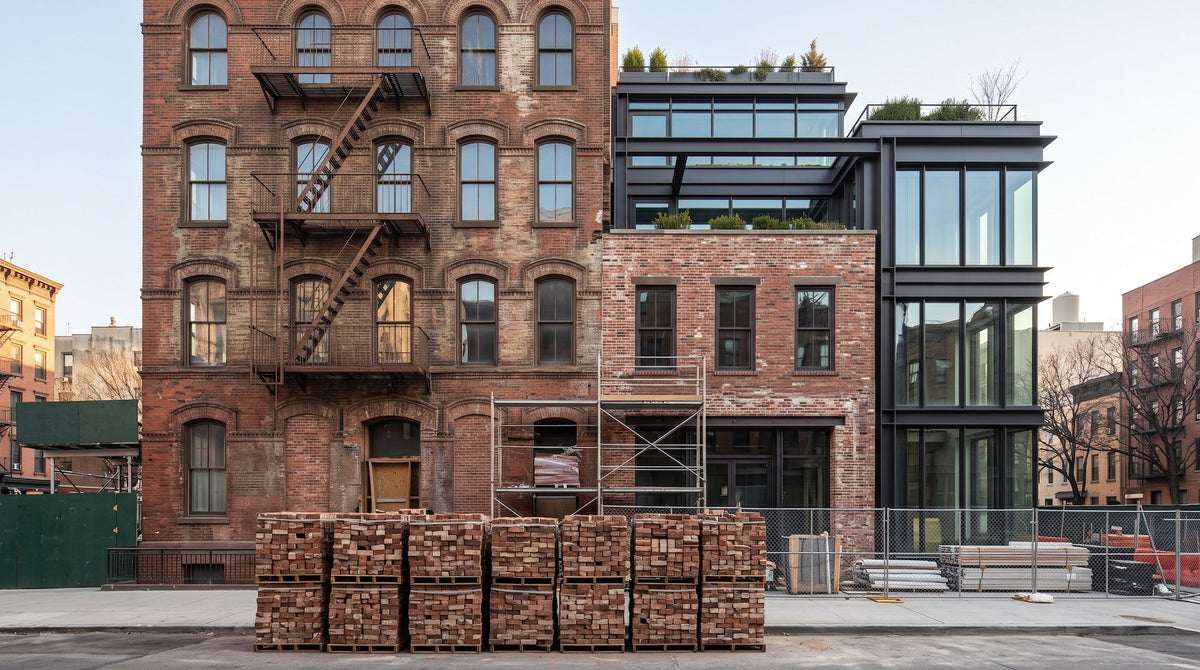
Walk through an old brick building on the day before it comes down and it still feels solid. The walls are cool to the touch, the corners are square, and every brick in them was set by hand. In a few weeks the site will be empty. What happens between now and then decides whether those bricks become rubble or someone's new patio, fireplace or garden wall.
That is the question deconstruction answers. Instead of knocking a building down, it is taken apart, piece by piece, so its materials can be used again. One American city has now been doing this by law for ten years, and its results are a useful guide for anyone with an old building, wall or chimney that has to go.
Maybe you are a homeowner with an old brick garage, wall or outbuilding that has reached the end of its life. You might be an architect or designer planning a renovation that will remove masonry. Or maybe you are a contractor pricing a demolition and wondering whether the bricks are worth more than the dumping fees. This guide breaks down how deconstruction works, what it means for the bricks, and what you can do with old bricks instead of sending them to a landfill.
Table of Contents
- Deconstruction at a Glance
- Ten Years of Deconstruction in Portland
- What Deconstruction Means
- Before Anything Comes Down
- How a Building Is Taken Apart
- Which Bricks Are Worth Saving
- What Happens to the Bricks Next
- Have Old Bricks? What to Do With Them
- Building With Bricks From Deconstruction
- Is Deconstruction Worth It?
Deconstruction at a Glance
Deconstruction is not one step but a sequence. This table shows the usual stages and what each one means for the brick. Every building is different, so treat it as an outline, not a plan.
| Stage | What happens | What it means for the brick |
|---|---|---|
| Planning | The building is looked over to see what can be saved, and the work is scheduled. | Brick worth saving is identified before any work starts. |
| Clearing out | Fixtures, doors, trim and other reusable items come out first. | Clear access to the walls makes careful removal possible. |
| Taking apart | The structure comes down in the reverse order it went up. | Masonry is removed in sections or course by course, so more bricks stay whole. |
| Stacking | Materials are sorted and stacked on site. | Whole bricks go on pallets; broken pieces are set aside. |
| Processing | Materials go to a yard to be cleaned and sorted. | Old mortar comes off, and each brick is checked by hand. |
| Reuse | Materials go into new projects. | The brick starts a second life in a wall, floor, patio or path. |
Note: the order and the methods depend on the building, the site, safety requirements and the time the job allows.
Ten Years of Deconstruction in Portland
In October 2026, the City of Portland, Oregon, marked ten years of its deconstruction law. The rule was adopted in 2016 and took effect on October 31 of that year. It requires certain older houses to be taken apart for reuse instead of demolished. In 2018, the city extended it to houses built in 1940 or earlier.
The results are substantial. Over the decade, 765 buildings have been deconstructed under the program: 673 houses and duplexes and 92 accessory structures. More than 4.8 million pounds of lumber has been recovered. The city has also started a pilot that looks at deconstruction for commercial buildings.
Most of the numbers Portland reports are about wood, but the lesson applies just as well to masonry. When taking a building apart is planned from the start, its materials are treated as a supply for the next project rather than as waste. That is exactly how reclaimed brick reaches the market.
Where there is no rule like Portland's, deconstruction is a choice made by the owner or the contractor. That makes it all the more important to think about the bricks early.
What Deconstruction Means
Demolition and deconstruction both end with an empty site. The difference is what happens to the materials on the way.
Demolition is built for speed. Heavy machines push walls over or break them up, and most of the building ends up as mixed debris. Some whole bricks can be saved afterward, but many are lost along the way.
Deconstruction is built for recovery. The building comes apart in roughly the reverse order it went up, and materials are separated as they come off. It takes more time and more hands on site, but far more of the building survives in a usable state.
Many jobs are a mix of the two: careful removal where the materials are worth it, and faster methods for the rest. What matters is making that decision on purpose, before the work starts.
Before Anything Comes Down
The most useful work in a deconstruction happens before anyone picks up a tool.
Look at what you have. Walk the building and note the masonry: walls, chimneys, foundations, garden walls, brick floors and paths. Take clear photos of the brick faces and the mortar joints, and note roughly how much there is.
Check the mortar. Older brick was usually laid in soft lime mortar, which lets go of the brick when the wall is taken apart. That is a good sign for salvage.
Check the rules. Old buildings can need surveys, permits or special handling for some materials before work starts. These rules depend on where you are and what the building contains, so ask your town and your contractor what applies.
Build salvage into the schedule. Careful removal takes longer than a straight demolition. If the bricks matter, plan the time and the space on site to stack them before the job is priced.
Line up where the bricks will go. Bricks that have been saved need somewhere to go. Deciding that early means they can be stacked and picked up as the job moves, instead of piling up in the way.
How a Building Is Taken Apart
Every deconstruction is different, but most follow the same general order: from the inside out and from the top down.
First, reusable items inside the building come out: doors, windows, fixtures, trim, flooring and anything else that can be used again. This clears the way and saves materials that would otherwise be lost in the debris.
Next comes the roof, then the upper floors and walls, working down toward the foundation. Taking the building down in reverse order keeps the work more controlled and lets each material be separated as it comes off.
For masonry, the goal is to lift bricks out with as little damage as possible. Walls are taken down in sections or course by course, and bricks are separated from the old mortar as they come free. Whole bricks are stacked on pallets on site. Broken pieces and loose mortar are kept apart.
All of this is skilled, physical work, and safety comes first. It should be done by an experienced crew that knows how to take down masonry in a controlled way.
Which Bricks Are Worth Saving
Not every brick that survives the take-down is worth reusing. The ones worth saving are whole and sound, with plenty of life left in them.
A good salvage brick is a full brick, not a half or a fragment. Its faces may be worn, stained or marked, and its corners may be softened by age. That is part of its appeal. What matters is that it is still solid.
Bricks that are soft, crumbling or badly cracked are set aside. So are pieces that broke on the way down. Some loads turn out to be too damaged or too mixed to be worth sorting at all.
This is also why the method matters so much. A careful take-down produces more whole bricks, and whole bricks are what can be reused.
What Happens to the Bricks Next
Once bricks leave the site, they still have work ahead. At Chief Bricks, they come to our yard in Nanuet, NY, where every brick is checked by hand, cleaned of old mortar and dirt, and sorted by type, size and color. Our article on how we source, sort and clean reclaimed bricks walks through each step.
Have Old Bricks? What to Do With Them
If you are taking down an old brick building, wall or chimney in our area, the bricks do not have to go to a landfill. Chief Bricks is a reuse center, not a recycling center: we focus on putting bricks back to work, not crushing them.
The process is simple. Send us pictures of the bricks or cobblestones you are removing, and we will confirm what we can take. You can bring the bricks to our yard, where we palletize them on the spot and pay per brick. We pay for full bricks only, delivered to our yard, and the value depends on the age, type, condition and quantity. Or, if you would rather leave everything on site, tell us where the materials are and how many there are, and we will arrange a pickup.
We provide pickup and reuse services throughout the Hudson Valley, Rockland County, Westchester County and the New York City metro area, and in parts of Long Island, New Jersey and surrounding regions. Availability depends on the type of material, the quantity and access to the site.
Not every material qualifies for reuse, so contact us before you bring anything in. Our brick reclamation and recovery services page has the details and a form to get started, or you can call us at (718) 379-1232.
Building With Bricks From Deconstruction
If you are on the other side of the process, looking for brick rather than getting rid of it, deconstruction is where much of the best reclaimed brick begins. All of our reclaimed brick comes from the United States, and much of it from New York. Our New York reclaimed bricks were made in the Hudson Valley.
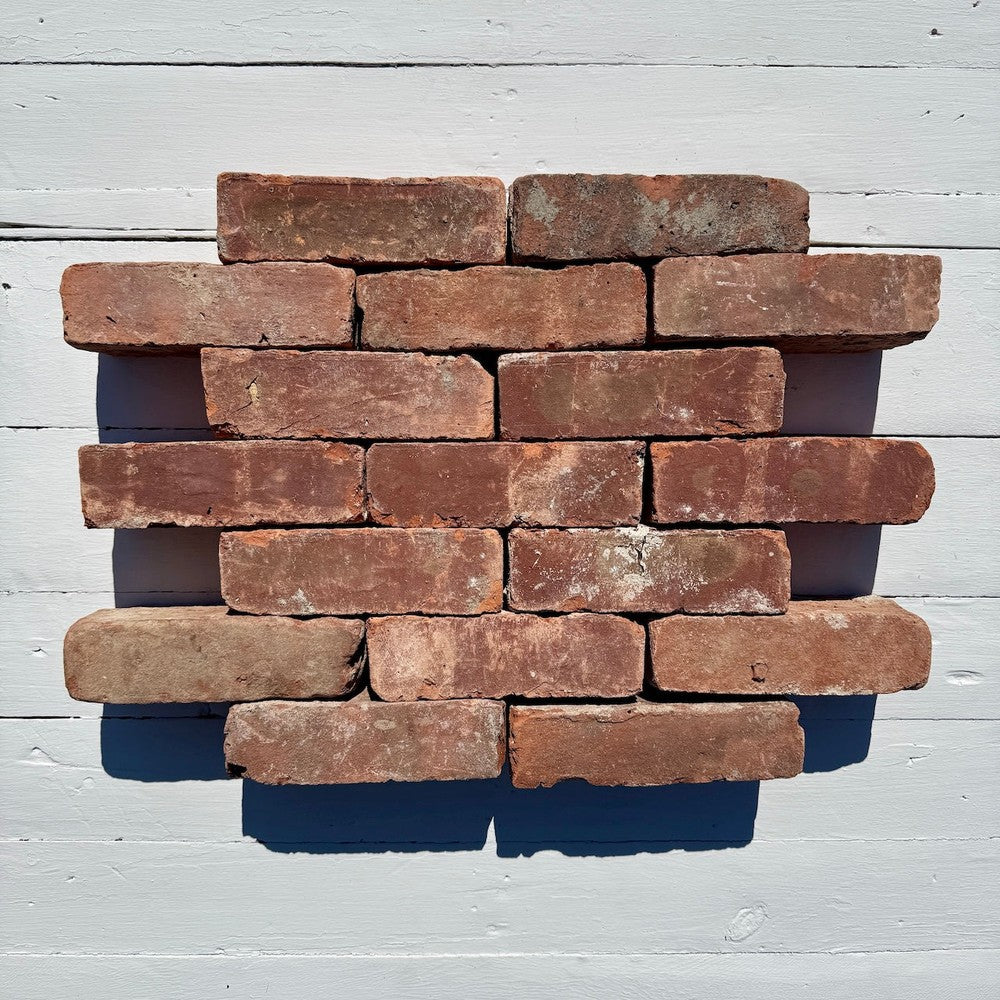
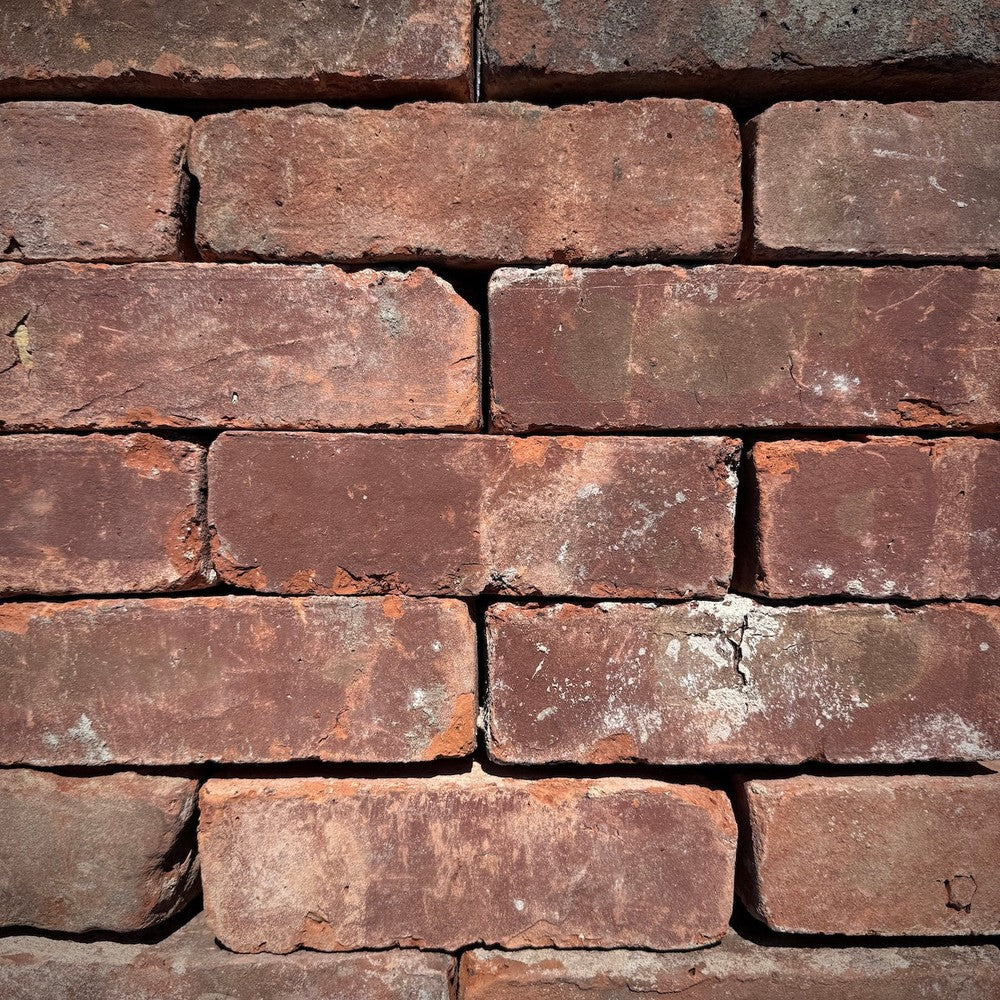
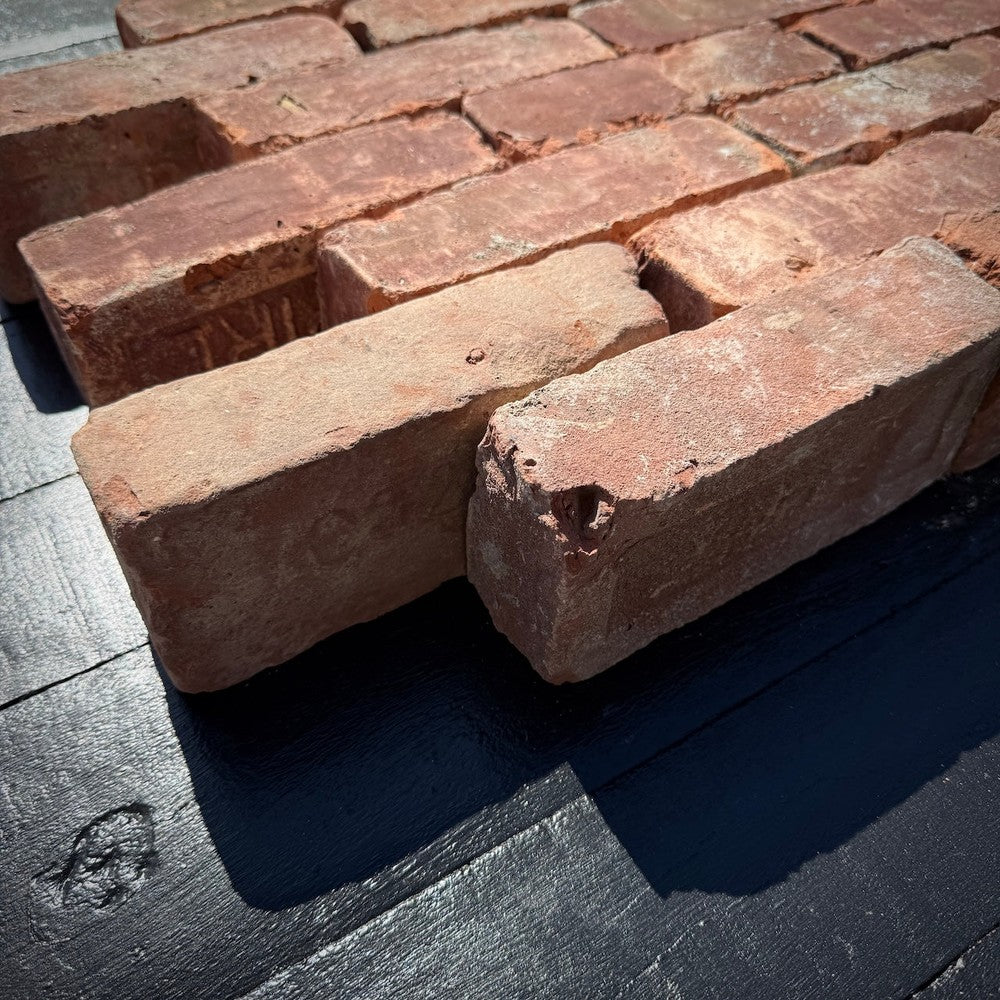
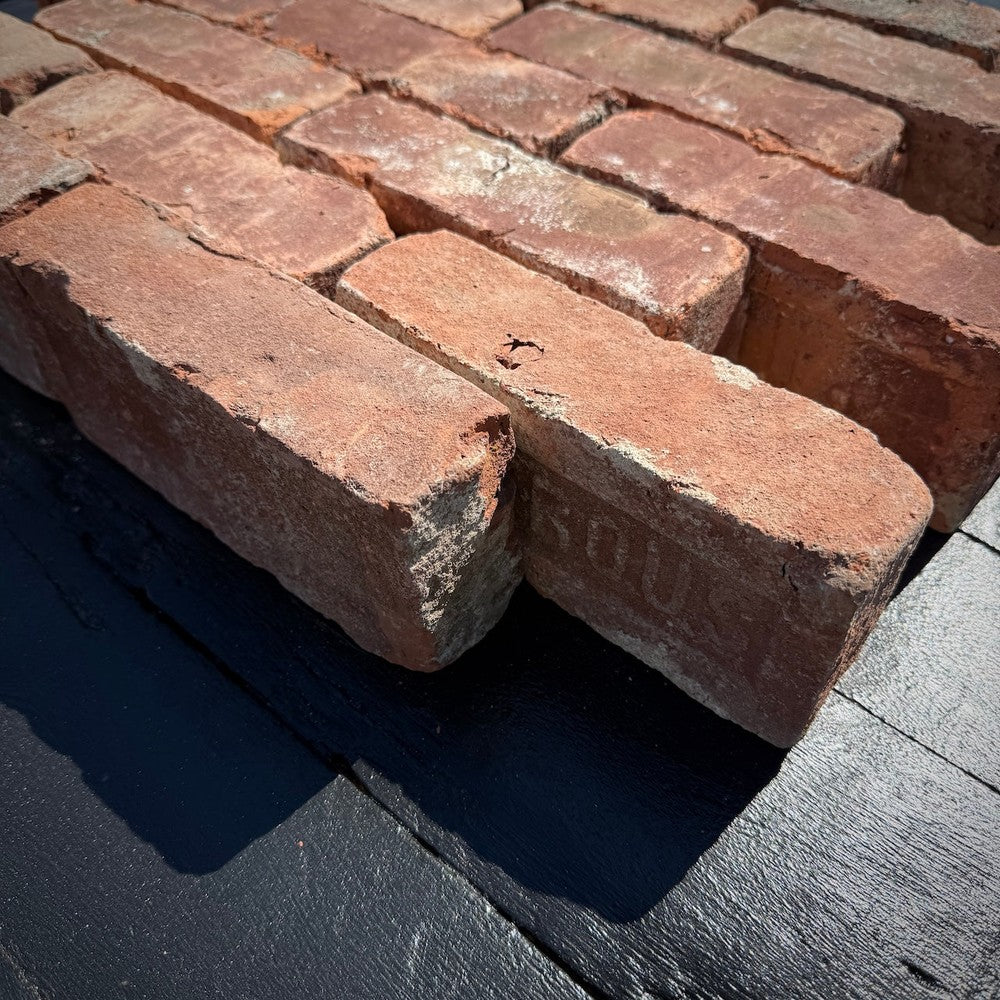
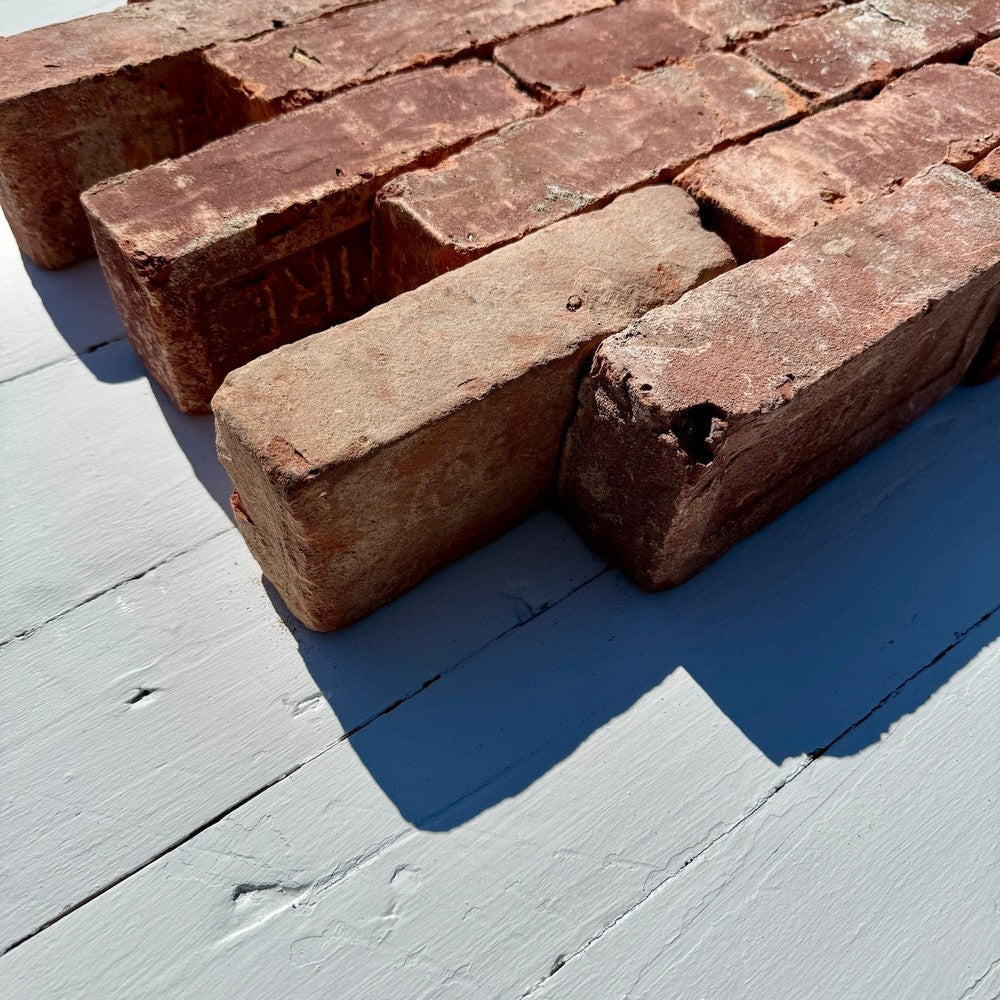
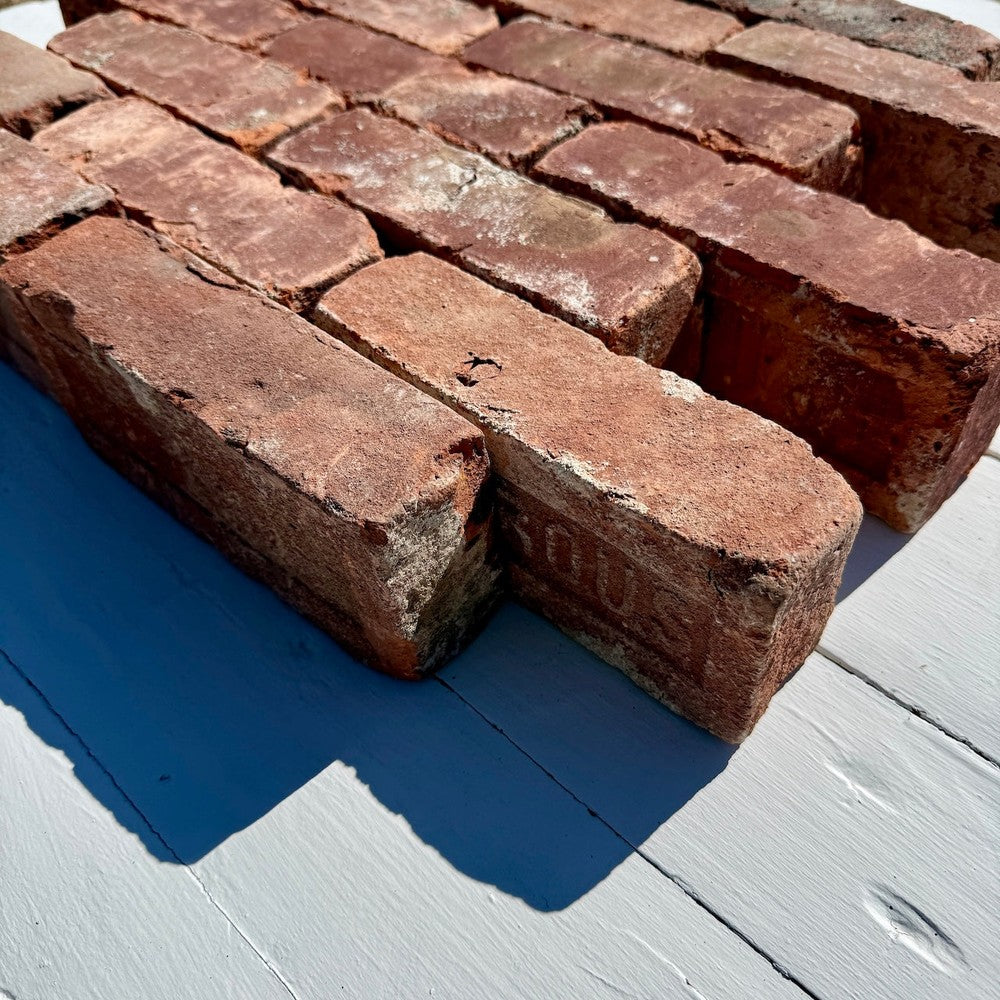
Brick from an old building carries real age: worn faces, softened corners and a range of color that new brick cannot copy. Our Reclaimed NY Red Bricks are a good place to start, and our guide to reclaimed New York bricks covers the different types and their history.
Because every batch is different, order your full quantity at once, with extra for cuts and future repairs, so the brick on your job matches. For walls, plan on about 6.98 bricks per square foot with a 1/4-inch joint, plus about 10% for simple layouts or 12% to 15% for complex ones. Our Masonry Brick & Stone Calculator does the math.
When you lay reclaimed brick again, use a breathable lime mortar, like the one old brick was usually laid in. Our guide on why reclaimed bricks need different mortar than new bricks explains why.
You are welcome to see the brick in person at our yard in Nanuet, NY. No appointment is needed, but if you call ahead at (718) 379-1232, we will make sure you get our full attention.
Is Deconstruction Worth It?
For a building with sound brick laid in lime mortar, usually yes. Taking it apart with care keeps a useful material in circulation, can save on dumping fees, and turns what would have been debris into a supply for someone else's project.
It is not free of trade-offs. Deconstruction takes longer than demolition, needs a skilled crew and space on site, and not every building has brick worth the effort. The way to find out is to look before the plan is set, not after the machines arrive.
If you have old bricks coming out of a building, start with our brick reclamation and recovery services, or call us at (718) 379-1232 to talk through what you have.


Share: