

Why Granite Belgian Blocks Belong on Your Driveway
Stand at the curb on almost any street and you can usually tell which driveways were simply paved and which were actually finished. The ones that stand out almost always have a crisp line of granite Belgian blocks guiding you from the road to the house.
In climates with harsh winters, hot summers, or heavy rain, that small detail does a lot of heavy lifting. Granite edging keeps asphalt and concrete from fraying at the edges, protects the apron where cars turn hardest, and gives the front of your home a calm, intentional frame. It is part curb appeal, part armor for your driveway.
Belgian Block Basics for Driveways
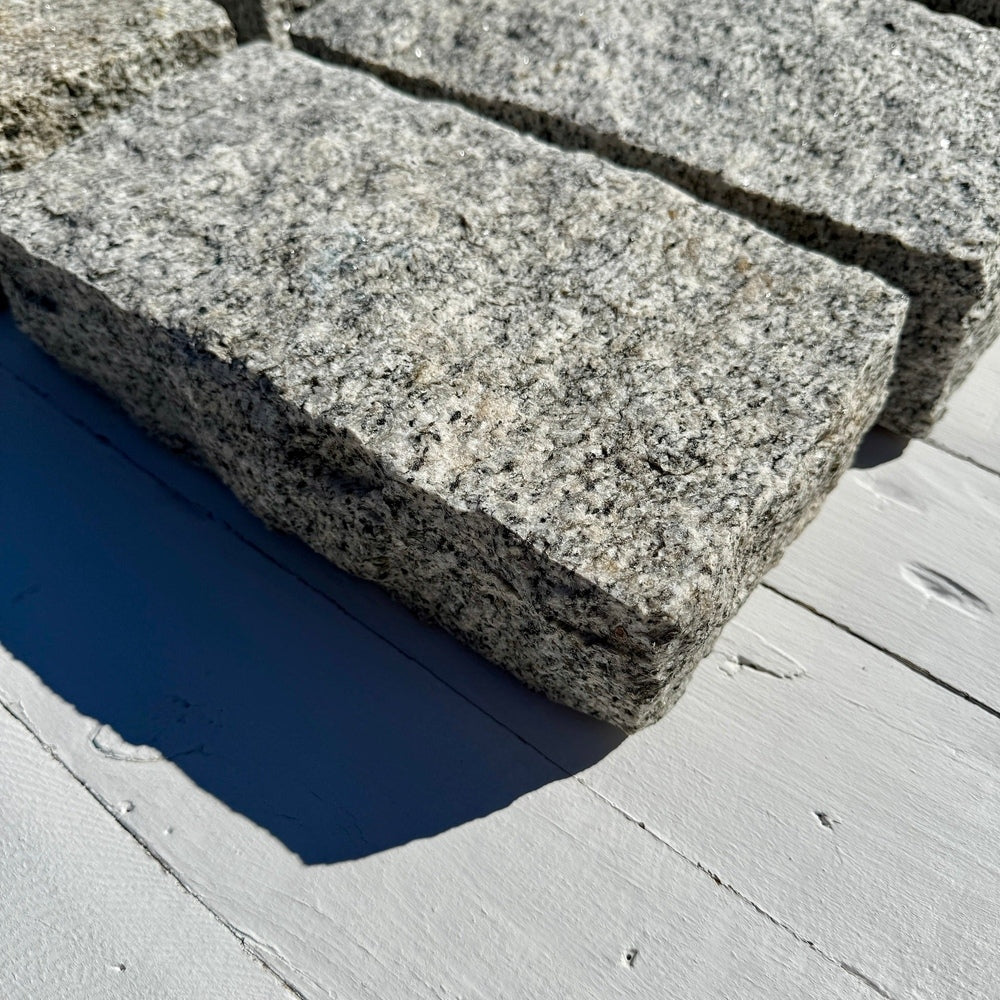
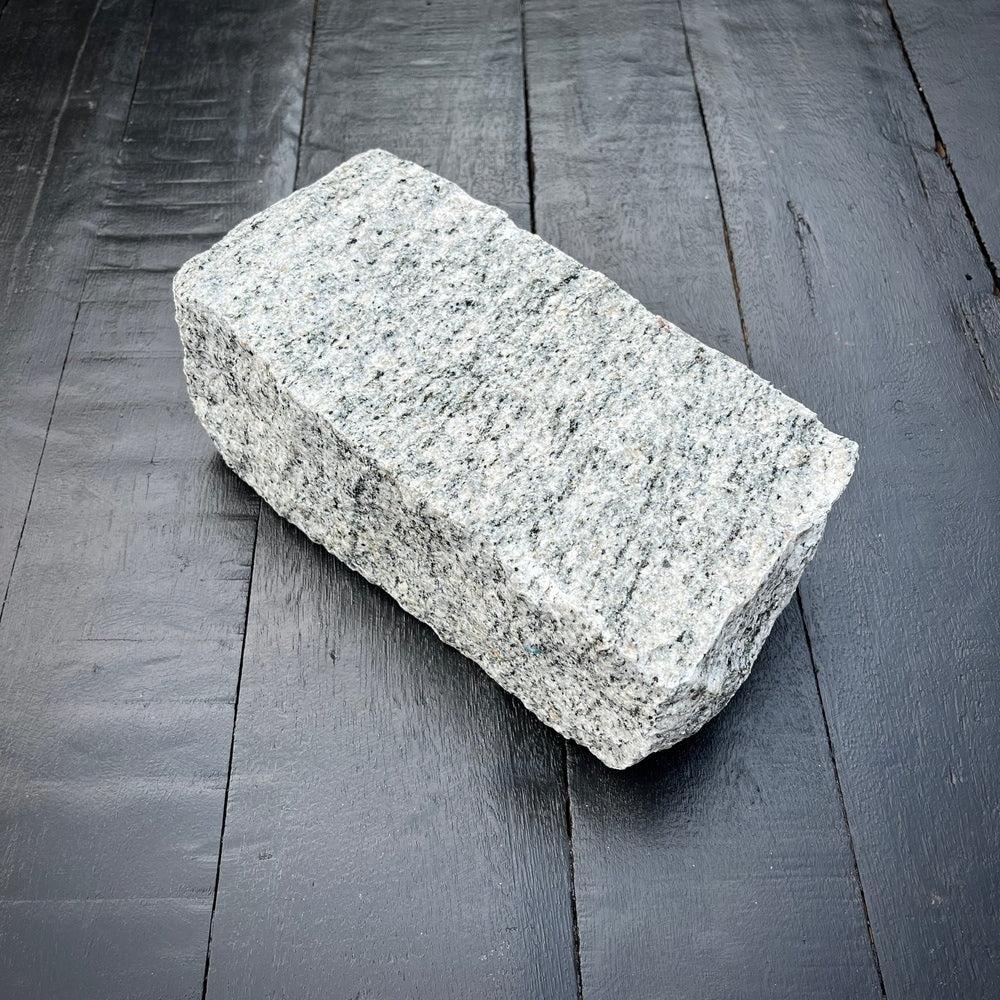
Granite Belgian blocks started as street cobbles and evolved into one of the most dependable materials for edging and aprons. They are solid chunks of granite—dense, weather‑resistant, and perfectly happy living through freeze–thaw cycles and temperature swings year after year.
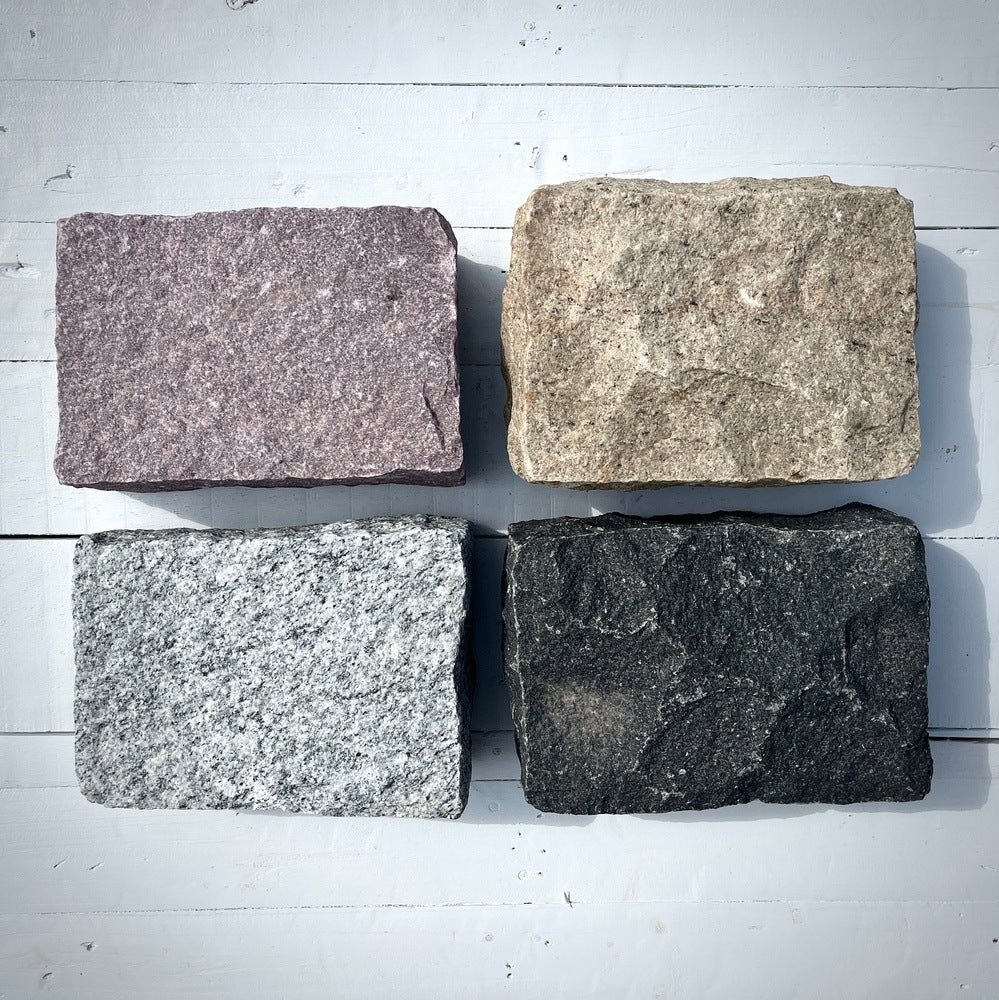
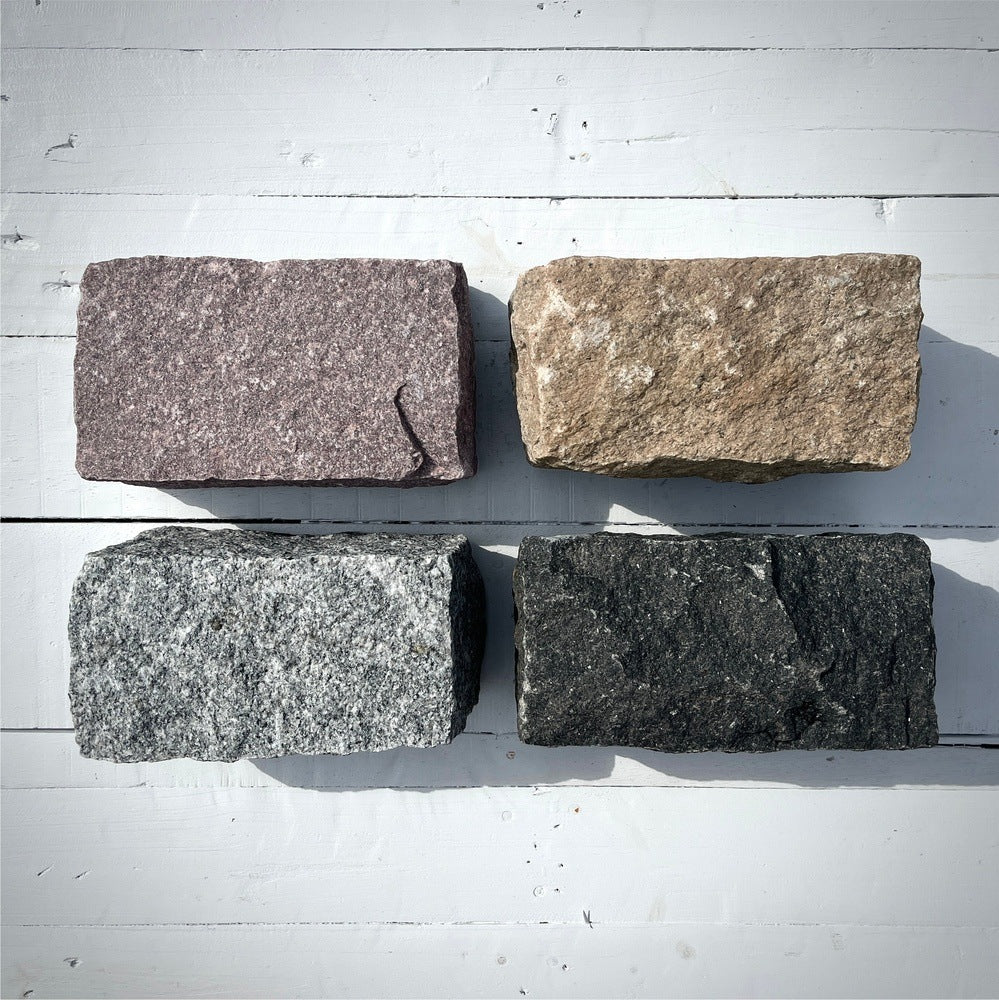
You will see them in a few common sizes: full rectangular blocks, smaller “cubes,” and wider jumbo pieces. Split‑face blocks have a rough, historic feel; sawn‑top blocks lean a bit more tailored and contemporary. Whichever you choose, the job is the same: hold the driveway in place and draw a clean line between pavement, lawn, and street.
On a typical residential driveway, Belgian blocks usually show up in two places:
- Edging: a border running along one or both sides of the driveway.
- Aprons: a reinforced zone at the street where the driveway starts.
Styles of Driveway Edging with Granite Belgian Blocks
1. Single(or Double)‑Row Flat Edging

If you want a clean upgrade without changing the whole layout, a single flat row of Belgian blocks along each side is hard to beat. The stones sit flush with, or just slightly above, the surface of the asphalt or concrete and quietly tidy up the edges.
On tighter lots or narrow drives, this style works especially well. A light gray granite border against blacktop feels simple and calm. A darker or salt‑and‑pepper stone adds contrast and a sharper outline. The joints can be tight and uniform for a more modern look, or slightly varied for a softer, hand‑laid feel.
2. Angled (On‑Edge) Soldier Course

Tip the same blocks up on edge and the character changes. The visible face gets taller, the shadows deepen, and the border starts to feel more like traditional stone curbing you see in older neighborhoods.
The look is classic, but there is function behind it: that extra height helps keep gravel in place, makes the edge easier to see in snow or low light, and gives plow drivers or maintenance crews a clearer boundary. It is a good match for driveways that see regular winter service and for homes with more traditional architecture.
3. Vertical Curb‑Style Edging

Set the blocks fully vertical and they become a low curb instead of a trim line. Now the granite acts like a small wall along the driveway, holding back soil, mulch, and stone while keeping cars where they belong.
This style makes sense on steeper drives, along planting beds that sit higher or lower than the drive, or in spots where runoff tends to chew away at the edges. The trick is to plan for people and water: enough height to work as a barrier, enough breaks and grading to let water escape and passengers step out comfortably.
4. Double‑Row and Banding Borders

If a single row feels too light for the house or the width of the drive, a double‑row border brings more presence. You can keep both rows flat, set both on edge, or mix them—one flat, one vertical, one split‑face, one sawn.
Staggered joints give the border a more hand‑laid, historic feel. Aligned joints read cleaner and lean contemporary. Banding is also a smart way to visually connect the driveway to other stone elements like front steps, retaining walls, or walkways.
5. Curved and Sweeping Edges

Many driveways bend to meet the street, wrap around a tree, or curve past a planting bed. Belgian blocks can follow those curves closely, which makes the whole front yard feel more cohesive.
On gentle curves, full blocks with adjusted joint spacing usually do the trick. Tight radiuses might call for a bit of cutting so gaps stay even. The payoff is a border that echoes the landscape instead of fighting it—a soft arc at the road, a smooth curve around a garden, or a circular drive that feels finished from every angle.
6. Edging for Gravel Driveways

Gravel driveways are common on larger properties and rural or semi‑rural sites. Without a border, the stone has a way of wandering into the lawn, beds, and even the street. A raised granite edge acts like a neat container for that gravel.
Here, thoughtful height is everything. Too low and the gravel still spills out. Too high and snow equipment or low bumpers struggle. A well‑set Belgian block edge keeps the stone where it belongs and gives you a clear, durable line to mow against.
Styles of Driveway Aprons Using Belgian Blocks
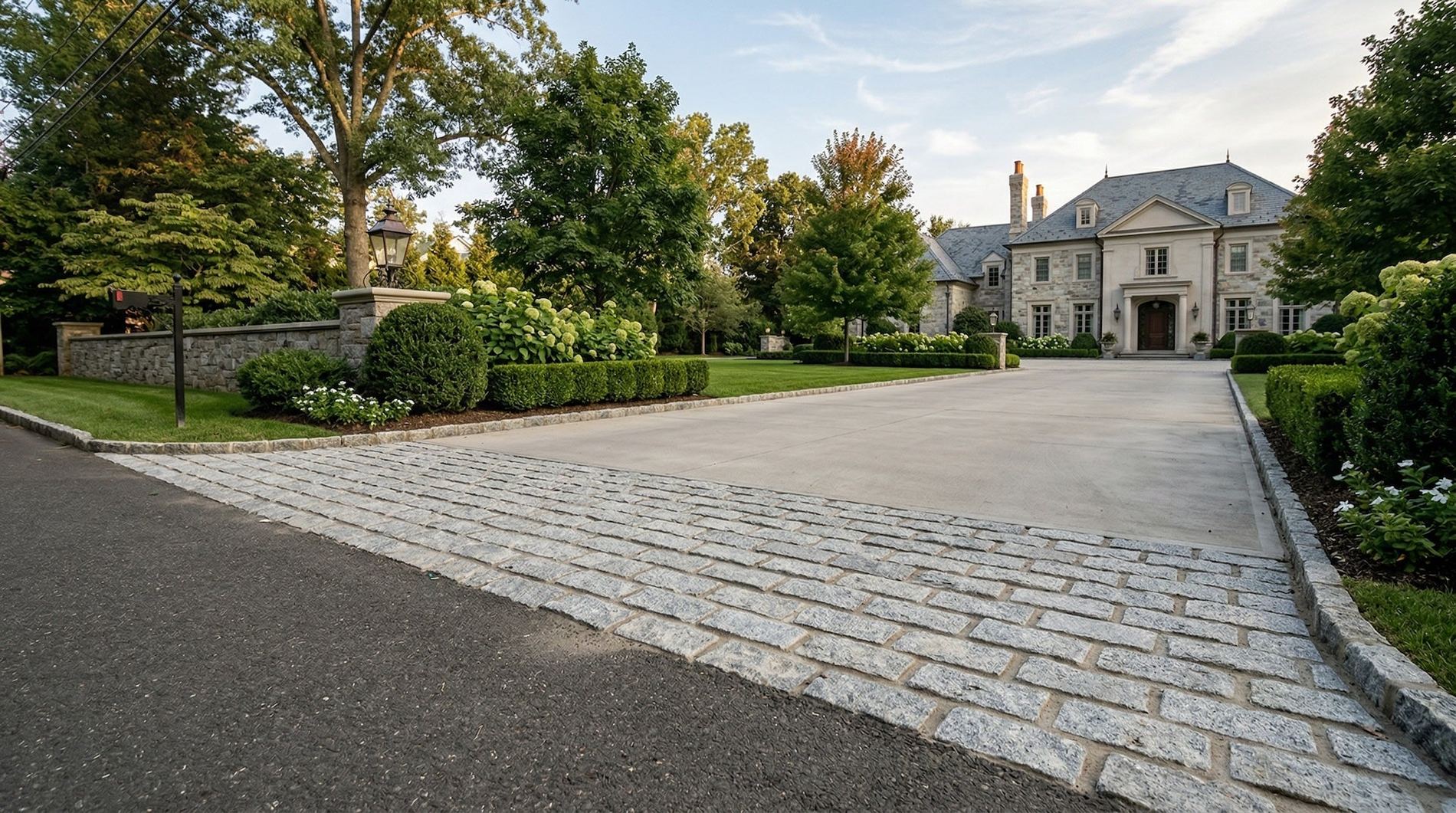
1. Full Granite Belgian Block Apron

The driveway apron—the first few feet where the drive meets the street—takes more abuse than almost any other part of your paving. It is where cars turn sharply, where water crosses, and where plows or street sweepers push debris. Replacing that strip with solid granite is a long‑term move.
A full Belgian block apron looks like a stone welcome mat from the road. A simple running bond pattern feels straightforward and solid. Herringbone adds movement and mechanical strength. Fan patterns bring an old‑world touch that works especially well on wider or gently arched entrances.
2. Border‑Only Aprons

You do not always need a full stone field to get a defined entrance. A border‑only apron frames the opening with Belgian blocks and leaves the center in asphalt, concrete, or pavers that match the rest of the driveway.
This layout gives you a crisp outline at the street, extra edge protection, and less stone to install. It is a good fit when you are tying into existing sidewalks, curbs, or a street that already has its own distinct material.
3. Accent Band Aprons

Another subtle way to mark the transition from road to driveway is with one or more bands of Belgian block crossing the entrance. You see the texture shift as you pull in and feel a quick change under the tires.
You can repeat that band further up the driveway—before a side spur, in front of garage doors, or near a parking pad—to break up long stretches of pavement. It is a small detail that quietly organizes the space.
4. Mixed‑Material Aprons

Belgian blocks also shine when they frame other materials. A granite border around a brick or concrete paver field lets you pick up colors from the house, steps, or walkway. A single granite band can soften the edge between an older concrete section and a new asphalt layer.
This approach works especially well on properties where you are layering new work onto existing hardscape. Granite becomes the thread that ties different eras and textures together so the entrance feels curated, not patched.
5. Extended Aprons and Flares

On narrow roads or busier driveways, a standard‑width apron can feel tight and unforgiving. Extending the apron into a flare at the street gives you more room to swing in and out without chewing up lawn edges.
In granite, that practical flare doubles as a design move. Curved or angled Belgian block edges ease the wider opening back into the main driveway, so you gain maneuvering space and a stronger visual entrance at the same time.
Patterns and Layout Ideas
Once you know where you want Belgian blocks, the pattern you choose is what sets the tone. Running bond—rows of stones with aligned joints—is the simplest choice and keeps the eye moving along the driveway. Staggered joints soften that line and add a more historic feel.
In aprons, you have more room to play. Straight running bond is calm and confident. Herringbone introduces a sense of motion and locks the stones together. Fan patterns lean more traditional and feel right at home on wider or curved entrances where you want a little extra character.
Color and finish tie everything back to your home. Light and mid‑gray granite tends to work with most siding, stone, and trim. Darker or salt‑and‑pepper blocks pop against black asphalt and can echo darker roofing, window frames, or railings. Split faces catch light and shadow; smoother faces sit back and let other details lead.
Practical Design & Installation Tips
A clean, long‑lasting border starts with what you do below the surface. Whether the blocks sit on compacted stone or a concrete footing, the base needs enough depth, width, and compaction to handle vehicle loads and seasonal movement. This is especially important along the outer edges and at the apron, where turning, braking, and water all concentrate.
Before you get into tools and trenches, it is worth deciding if this is a project you want to tackle yourself or hand off. Some homeowners enjoy the process and are comfortable with layout lines, saws, and compactors. Others would rather have a crew handle excavation, drainage, and setting. For a deeper look at what goes into each approach, see our guide on DIY vs Pro Granite Belgian Block Installation.
Drainage is the next check. The driveway should still pitch where it needs to—usually away from the house and toward the street or a drain. Edging and aprons should help guide water, not trap it. Even a small unplanned bump at the apron can collect water, create ice, and shorten the life of the pavement behind it. Planning weep gaps or low points in the border where needed keeps water moving in the right direction.
In areas with snow, heavy rain, or regular street cleaning, planning around maintenance is essential. Keep exposed heights reasonable, avoid delicate joint materials right where blades or brooms will run, and make the edges easy to see in low light. Granite itself is low‑maintenance; over time, most of the care comes down to keeping joints in good shape and cleaning off dirt or organic buildup.
One detail that is easy to overlook is the quality of the stone itself. Not all Belgian blocks are cut or graded the same way, and small differences in size, density, or finish can show up quickly once the stone is in the ground. If you want to know what to check for—consistent dimensions, clean splits, and true faces—take a look at our breakdown of what to look for in quality Belgian block before you place an order.
Finally, check scale. A small home on a compact lot usually feels right with a thinner, quieter edge and a modest apron. Larger homes, long drives, or corner lots can comfortably carry wider borders, full aprons, and multiple bands without feeling busy. Laying out a few rows dry, or mocking up the width with string lines and marking paint, is an easy way to make sure the proportions feel right from the street before any concrete is mixed.
Design Inspiration for Any Home
Picture a standard blacktop driveway on a typical suburban street. It does its job but disappears into the background. Add a single row of light gray Belgian blocks along each side and a simple granite apron at the street, and the same driveway suddenly feels like part of the architecture. Nothing about the footprint changed—just the way it is framed.
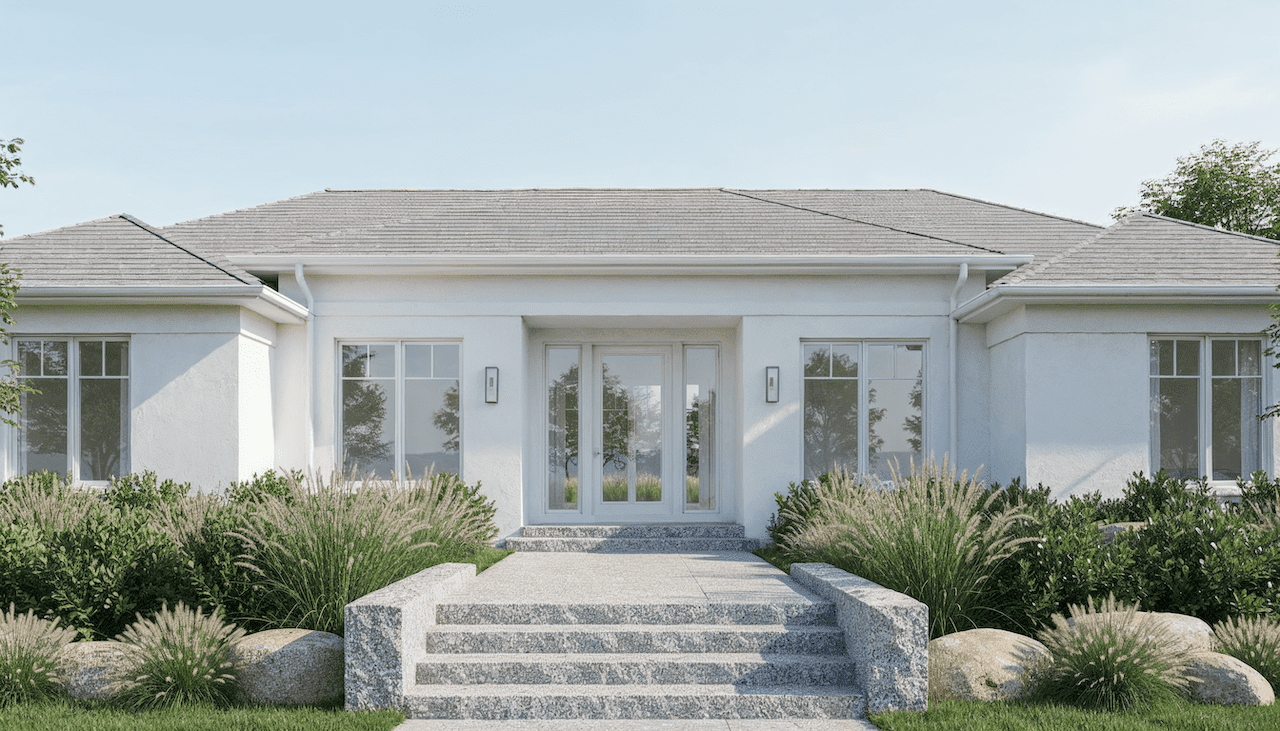
Now picture a traditional home with a central walk and masonry steps. Angled granite edging along a gently curved driveway, tied into a herringbone Belgian block apron at the street, picks up the tones and patterns of the existing masonry. The whole front yard starts to read as one continuous design instead of separate pieces.
On a larger or more natural property, a gravel drive contained by a raised granite edge keeps the informal feel while tightening up the lines. You get the sound and softness of gravel with much less wandering stone and a clear, durable edge to mow against.
How to Choose the Right Style
When you are deciding which edging and apron styles make sense for your driveway, start with a few simple questions. What surface do you have now—asphalt, concrete, pavers, or gravel—and how long do you plan to keep it? How steep is the drive, and how often do you see snow, heavy rain, or service vehicles? Do you want the entrance to feel subtle and refined, or clearly framed from the street?
For many homes, a single row of edging on each side is the best “first step” upgrade. It tightens up the look and protects the edges without changing the layout. If the street end is already showing wear, investing in a full or framed Belgian block apron usually delivers the biggest functional and visual payoff.
You can also think in phases. Start with the apron and the most visible stretch near the road, then extend edging or add bands when you resurface the rest of the driveway or update the front walk. Granite Belgian blocks age gracefully, so each new piece you add still feels like it belongs.

Share: