
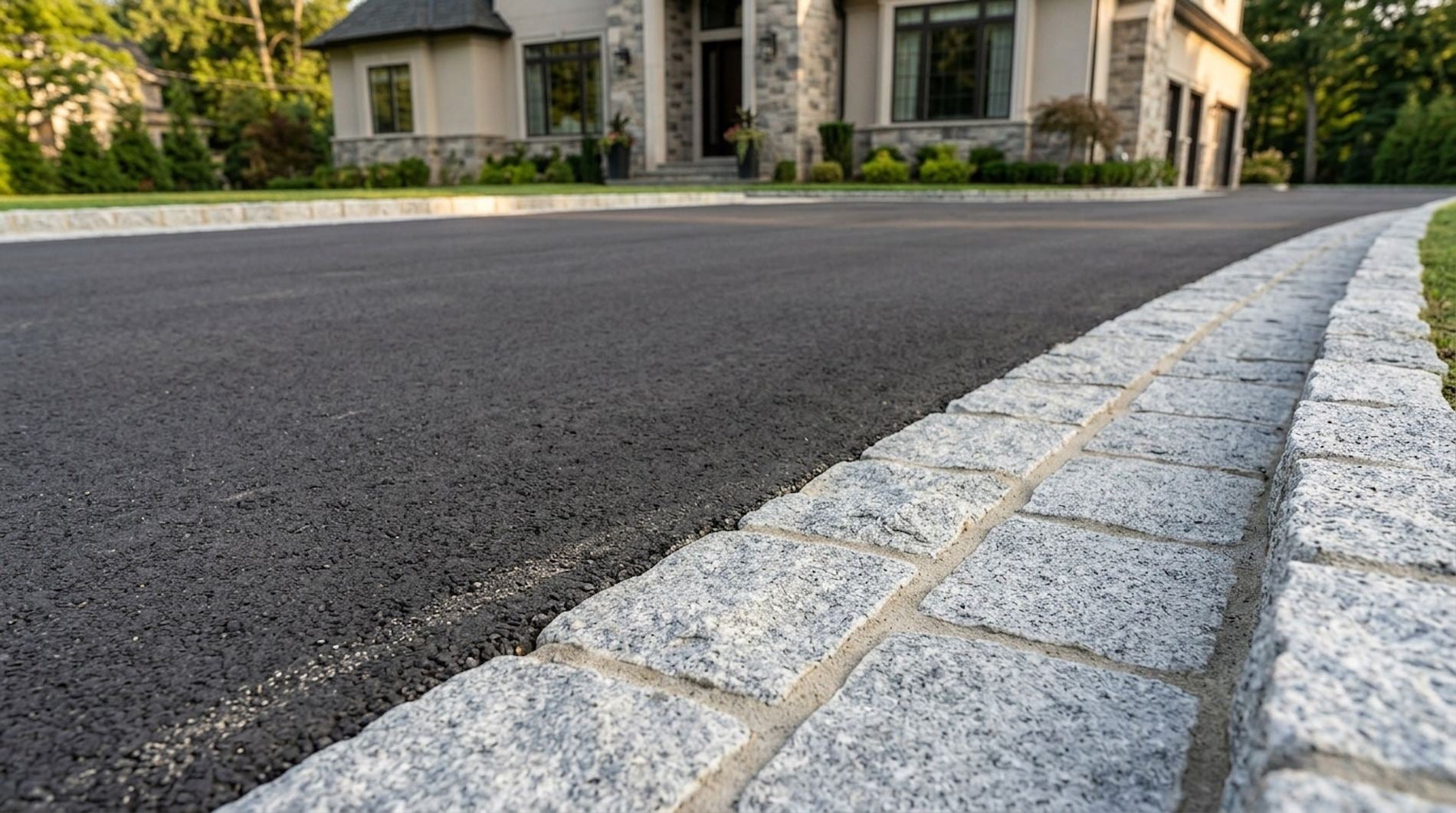
You can spot the difference the moment you pull up to the curb. Some driveways feel generic. Others look like they were planned with care, right down to the edge where the street meets the property. Granite Belgian blocks and concrete pavers both play a big role in that upgrade.
If you are deciding between a full concrete paver driveway, a granite Belgian block apron, or a mix of both, this guide is for you. You will see how these materials differ in cost, durability, maintenance, and curb appeal. You will also learn where each one makes the most sense, especially in freeze–thaw climates like the Northeast.
By the end, you will know whether to go all in on one material or use a smart hybrid that combines the strengths of both. Chief Bricks ships nationwide, so you can plan projects confidently wherever you are based in the United States.
Table of Contents
- What Are Granite Belgian Blocks?
- What Are Concrete Pavers?
- Granite Belgian Blocks vs. Concrete Pavers at a Glance
- Cost and Long-Term Value
- Durability and Climate Performance
- Maintenance and Repairs Over Time
- Design and Curb Appeal
- Smart Hybrid Designs: Belgian Block + Pavers
- How to Choose the Right Mix for Your Home
- Logistics, Shipping, and Planning with Chief Bricks
What Are Granite Belgian Blocks?
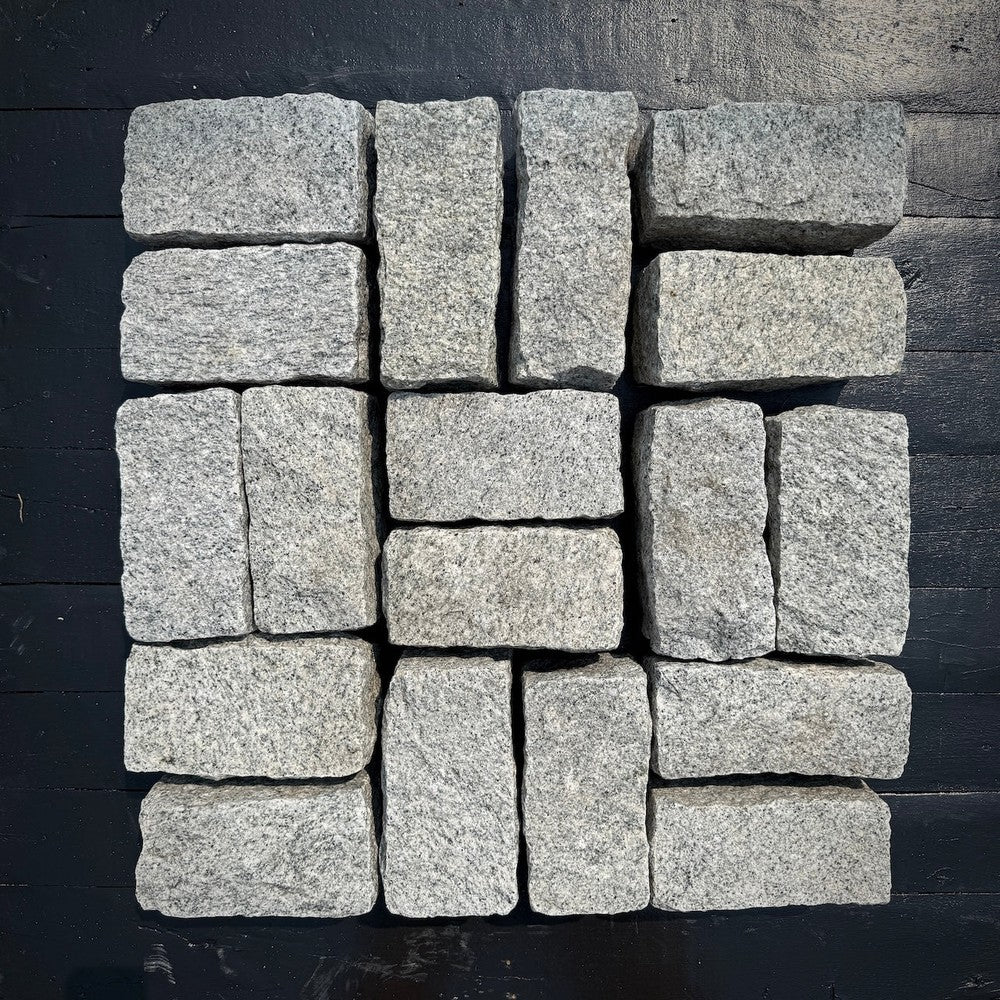
Granite Belgian blocks are not a stamped pattern or a thin veneer. They are solid pieces of natural stone sized and shaped to handle real loads, the kind of material you choose when you want an edge, apron, or driveway to feel substantial for generations.
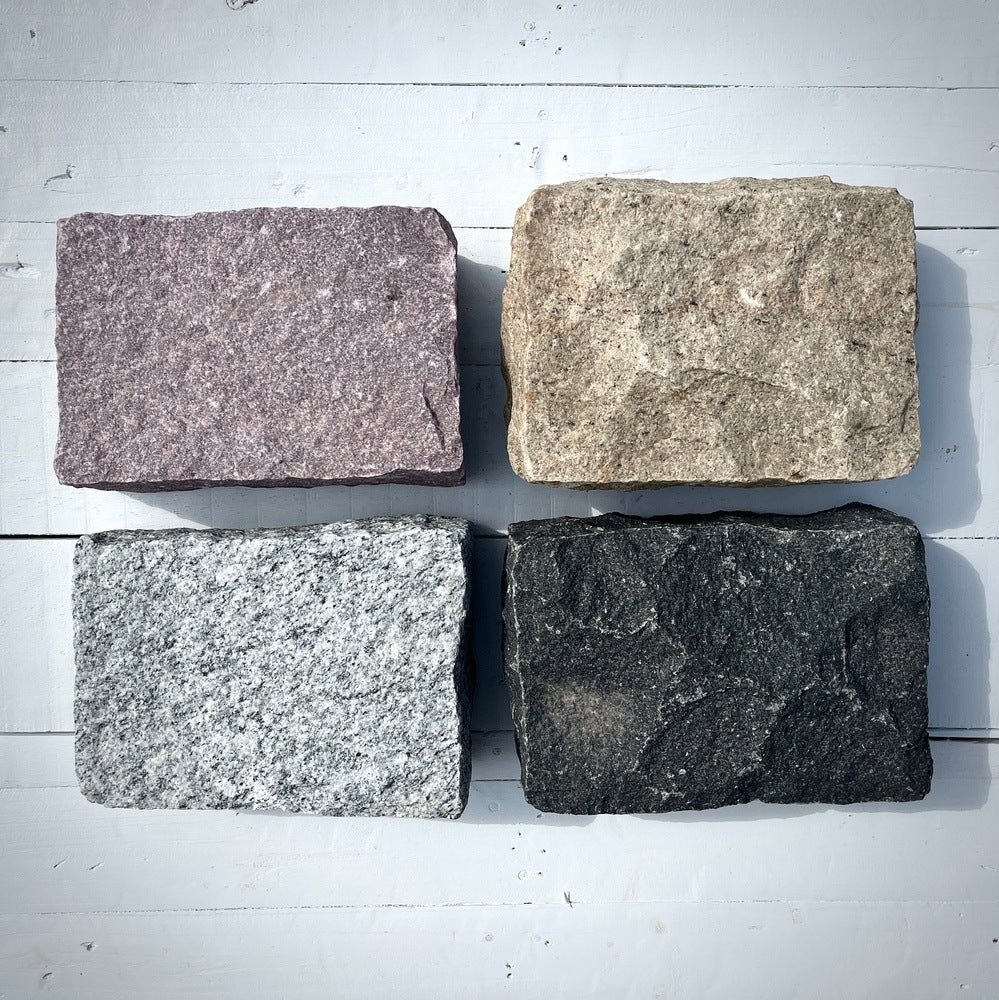
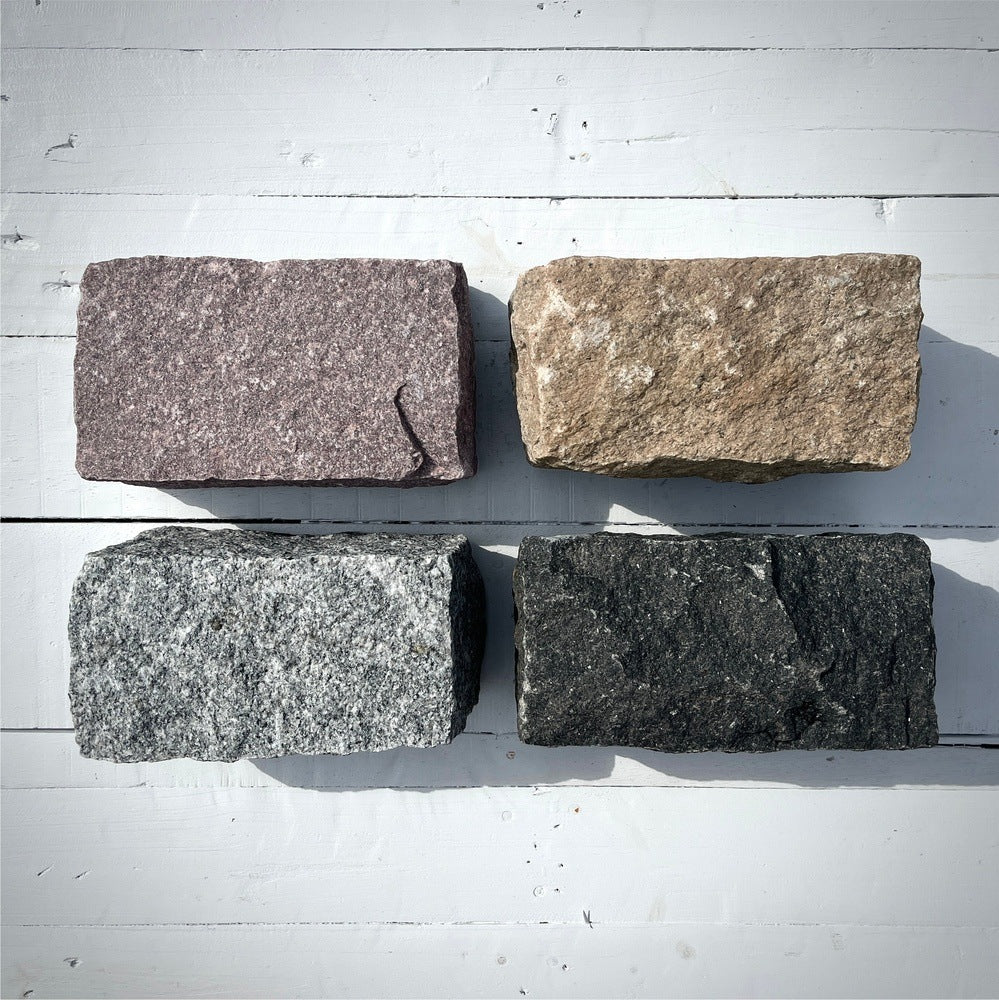
Each block is cut from dense granite, with color and texture running all the way through. That density is what makes Belgian blocks so reliable along busy streets, driveways, and high-traffic landscape edges. Instead of chipping or spalling like some lighter materials, they take on a soft patina as they age.
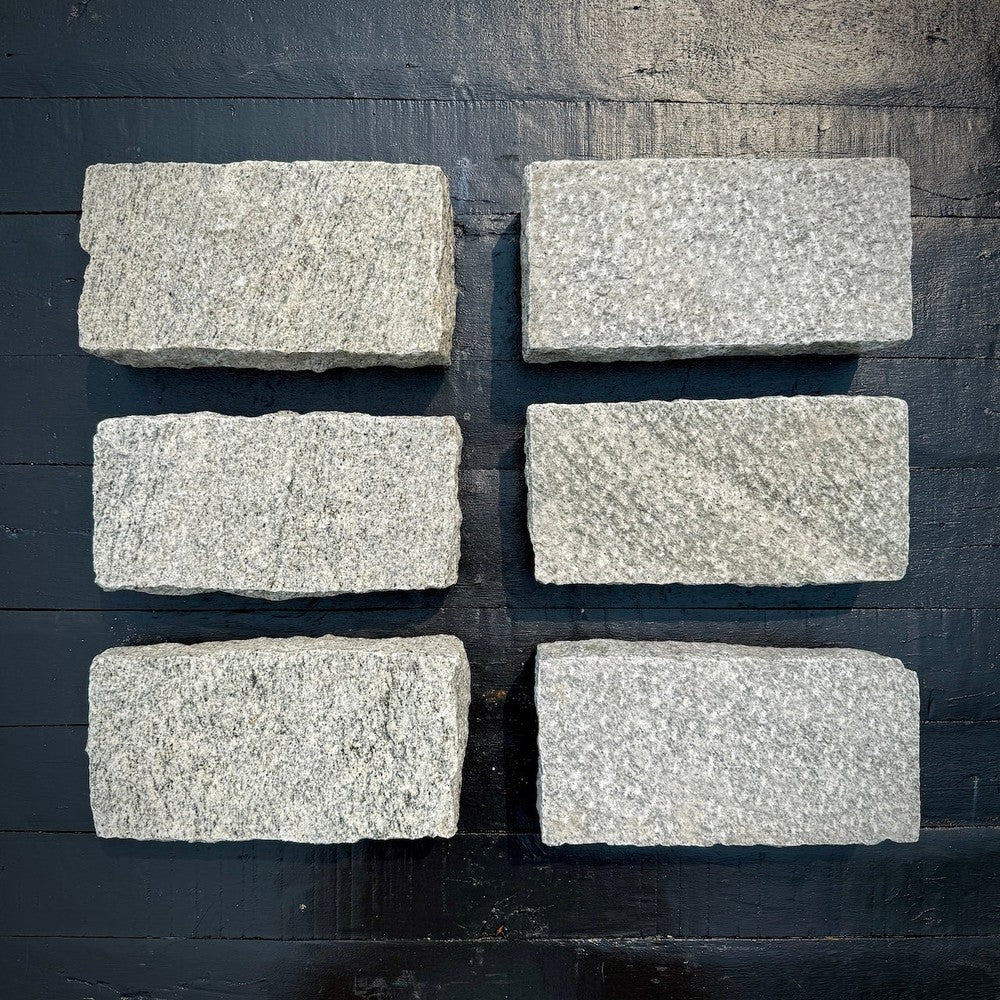
At Chief Bricks, you can choose from several granite Belgian block formats to match your layout and scale:
- Jumbo Belgian blocks – Larger-format stones that create bold aprons, strong driveway edges, and substantial parking areas. They are a go-to when you want fewer joints and a confident, oversized look. Explore them here: Belgian Block Granite – Jumbo Cobblestones.
- Regulation Belgian blocks – A classic driveway and edging size often used for straight runs, curves, and traditional aprons. They balance detail and coverage, and they pair well with asphalt, pavers, or gravel in the main field. See the regulation option here: Belgian Block Granite – Regulation Cobblestones.
- Granite cubes – Smaller, nearly square blocks that are perfect for tighter curves, decorative bands, and pedestrian areas where you want more intricate patterns underfoot. Take a closer look: Belgian Block Granite – Cube Cobblestones.
- Granite pavers – Lower-profile pieces sized more like traditional pavers, ideal when you want the look of granite with a smoother transition to adjacent hardscape surfaces. They work especially well in patios, walkways, and courtyards. View them here: Belgian Block Granite – Paver Cobblestones.
Because all of these pieces are solid granite, they share the same core advantages: freeze–thaw resistance, long service life, and a natural color blend that does not rely on surface coatings. The size you choose simply tunes the scale of the pattern to your home, driveway width, and overall landscape design.
Granite Belgian blocks develop a patina instead of peeling, flaking, or fading in the same way many manufactured surfaces do. The color runs through the whole piece, not just the top face.
Further reading: What Are Granite Belgian Blocks? History, Uses, and Lasting Curb Appeal
What Are Concrete Pavers?
Concrete pavers are man-made units cast from high-strength concrete mixes. They come in calibrated sizes and thicknesses, designed to lock together and spread loads across a prepared base. Many homeowners choose them for full driveways, patios, and walkways because they offer a wide range of colors and textures.
Compared with poured concrete, pavers add movement and detail to large surfaces. Compared with natural stone, they generally come at a lower upfront cost and offer more consistent shapes, which can speed up installation.
You will frequently see concrete pavers used for:
- Full driveway fields with herringbone, running bond, or modular patterns
- Front walkways, patios, and pool decks
- Outdoor rooms where you want a specific color or style repeated
Like Belgian blocks, paver systems are typically installed as a segmental surface over compacted base materials. That means individual units can move slightly with the ground instead of cracking in one piece like a slab. It also makes future repairs or utility work easier, since you can lift and relay sections of the surface.
Granite Belgian Blocks vs. Concrete Pavers at a Glance
Before diving into the details, it helps to see the big picture. Both materials can be excellent in the right context. The goal is to match their strengths to how you actually use your driveway and landscape.
| Factor | Granite Belgian Blocks | Concrete Pavers |
|---|---|---|
| Material | Natural granite stone units | High-strength cast concrete units |
| Typical Uses | Driveway aprons, full driveways, edging, curbing | Full driveways, patios, walkways, pool decks |
| Upfront Cost | Higher due to stone and labor | Moderate; often lower than natural stone |
| Expected Lifespan | Can last for generations on a proper base | Long-lasting when installed correctly, often several decades |
| Maintenance | Low; occasional joint care and rare resetting | Moderate; joint sand refresh and selective re-leveling |
| Aesthetics | Historic, premium, “old-world” character | Wide range of styles from rustic to modern |
| Best Fit | High-impact zones, long-term investments, heritage look | Large fields, design flexibility, mid-range budgets |
In short, granite Belgian blocks behave more like a stone infrastructure choice. Concrete pavers cover more ground quickly and keep options open for color, pattern, and modern design language.
Cost and Long-Term Value
Most homeowners start with price. That is natural. What matters just as much is how often you want to revisit the same project.
Granite Belgian blocks usually cost more per square foot to install than concrete pavers. You are paying for dense stone, heavier handling, and more precise setting work at the apron or edge. But that investment stretches over a very long service life. Once a properly built Belgian block apron is in, it is rare to replace it because of wear.
Concrete pavers sit in a middle zone. They are typically more expensive than a simple poured concrete slab but less than full natural stone. Over decades, a paver driveway can still offer excellent value, especially when compared with the patchwork repairs and resurfacing often needed on plain concrete or asphalt.
One helpful way to look at this is simple: if you plan to be in the home long term, granite Belgian blocks start to look more like a one-time decision. If you are balancing a finite budget across a driveway, patio, and other upgrades, pavers give you a way to upgrade the entire landscape while keeping the numbers in check.
Further reading: Are Granite Belgian Blocks Worth It? Cost, Value, and Long‑Term Payoff
Durability and Climate Performance
Durability is where granite Belgian blocks really show their heritage. Think of old streets and alleys lined with stone that have carried carriages, trucks, and plows for decades. Those same qualities carry over to modern residential driveways and aprons.
Because the material is solid granite, there is nothing to delaminate or peel. The surface you see is the same material all the way through. Freeze–thaw cycles, road salt, and heavy turning at the apron are exactly the conditions these blocks are built for. When the base is prepared correctly, the system can ride out movement without major cracks.
Concrete pavers approach durability from a different angle. Many pavers are produced with very high compressive strength and dense mixes designed for vehicle loads. They perform well in snowbelt climates when the base and drainage are correct. The joints allow a bit of movement, and individual units can be reset if a small area settles.
The weak point for both systems is almost never the stone or paver itself. It is the base. Proper excavation, compaction, and drainage design matter more than whether you choose stone blocks or concrete pavers on top. That is why choosing a contractor who understands local soil and climate is just as important as choosing the surface material.
Maintenance and Repairs Over Time
Both granite Belgian blocks and concrete pavers are segmental systems. That gives you a big maintenance advantage: you can address small issues without tearing out entire slabs.
With Belgian blocks, routine care usually comes down to joint attention and the occasional reset. Joints can be filled with sand or other appropriate material, and weeds can be managed with normal landscape maintenance. If one block shifts or a corner settles slightly, it can be lifted, the base corrected, and the same block reset.
Concrete pavers follow a similar pattern. Over time, joint sand can wash out or break down. A quick re-sanding and compaction session can tighten things up. If a small section settles, pavers in that area can be removed, base material adjusted, and the same units installed again. This is very different from a cracked slab, where color-matching and patch visibility become headaches.
For both materials, regular cleaning and basic care go a long way. In snowbelt regions, using de-icing products approved for the surface and avoiding metal shovels on edges helps protect the finish. A well-maintained surface continues to look intentional instead of tired.
Further reading: Low‑Maintenance Care Guide for Granite Belgian Blocks
Design and Curb Appeal
The design question is often the fun part. This is where your home’s architecture, your neighborhood, and your own taste come into play.
Granite Belgian blocks lean toward a timeless, historic look. They work beautifully with classic Northeast homes, older brick facades, and projects that want a sense of permanence. Even in more contemporary designs, a clean band of granite at the apron can create a strong visual “threshold” between the street and your property.
Concrete pavers, on the other hand, excel at pattern and palette. You can choose warm blends that echo traditional cobblestones or cool, large-format slabs that feel minimal and modern. It is easier to match paver colors across multiple areas: driveway, front walk, side patio, and pool deck can all draw from the same collections to keep the property feeling cohesive.
In many homes, the most successful projects use both. Granite frames the key transitions and edges. Pavers fill in the main surfaces with patterns that suit the architecture. The mix keeps things from feeling flat or overdesigned.
Further designs: Styles of Driveway Edging & Aprons with Granite Belgian Blocks
Smart Hybrid Designs: Belgian Block + Pavers
A full stone driveway is beautiful, but not every budget needs or wants that level of investment. Hybrid designs give you a way to put granite exactly where it delivers the most benefit while letting pavers cover large surfaces efficiently.
Common hybrid approaches include:
- Granite apron + paver driveway: Use Belgian blocks at the street or at the garage doors to handle the heaviest turning and braking forces. Run pavers in the main field of the driveway for pattern and color.
- Granite edging + paver field: Border a paver driveway or walk with a band of Belgian blocks. This frames the surface, protects edges from chipping, and adds a subtle premium touch.
- Granite accents in high-traffic zones: Drop in Belgian block bands where cars transition from one surface to another, such as from asphalt to pavers, or at tight curves.
This layered approach works well in established Northeast neighborhoods and across the country. It respects the existing streetscape while giving your property a distinct identity. Because Chief Bricks ships nationwide, you can use these same strategies on projects well beyond the New York metro area.
How to Choose the Right Mix for Your Home
If you are still torn, it helps to ask a few simple questions. Your answers will point you toward the right balance of granite Belgian blocks and concrete pavers.
First, think about time horizon. Are you planning to stay in the home for the long haul, or is this a five-to-ten-year chapter? Long-term owners often lean into more stone at key points because they know they will be living with the driveway for decades.
Second, look at your project footprint. A compact front apron and walk may be the perfect place to prioritize granite. A very large driveway or rear patio might make pavers the smart choice for the main field, with Belgian blocks reserved for edges and thresholds.
Third, consider style. If you are drawn to older streets, historic districts, and masonry that looks like it has been there for a century, granite Belgian blocks should have a starring role. If you are after precise patterns, large-format slabs, and a clean modern look, pavers will carry most of the load, with stone used as a strong accent.
You do not have to decide everything alone. Sharing photos of your home, rough dimensions, and a few inspiration images with a knowledgeable supplier can help refine the mix quickly.
Logistics, Shipping, and Planning with Chief Bricks
Once you settle on a material strategy, the practical side begins: stock, shipping, and timing. This is where a clear supply partner makes a big difference.
At Chief Bricks, granite Belgian blocks and other natural stone products are stocked, sorted, and ready for real projects. Live inventory and transparent pricing per piece or per square foot make early planning much easier. You can estimate materials, talk with your installer, and adjust the layout before anyone breaks ground.
Nationwide shipping means you can bring a Northeast-inspired driveway or apron to homes across the United States. Whether you are in New York, the Mid-Atlantic, the Midwest, the South, or the West Coast, our team can coordinate pallet counts, truckloads, and delivery timing for your site conditions.
If you are working with a landscaper, mason, or builder, we can help them match block sizes and patterns to the layout. If you are a homeowner starting from scratch, we can help you narrow down options so you do not waste budget on the wrong mix of materials.
The result is a driveway, apron, and edging plan that reflects your taste, respects your climate, and makes the most of both granite Belgian blocks and concrete pavers. It is an upgrade you notice every time you come home.
Share: