
Reclaimed brick pavers are one of the few hardscape materials that deliver instant character, curb appeal, and a sense of history the day they’re installed. But how much do reclaimed brick pavers actually cost in 2026, and what should you expect to pay per square foot once you factor in labor, base preparation, and regional price differences?
This guide walks you through reclaimed brick paver cost per square foot, typical installed prices for patios, driveways, and walkways, and the main variables that push your project toward the low or high end of the range. It’s written for homeowners who want that classic street–brick look and prefer clear numbers before they invite contractors into the yard.
Maybe you are a homeowner pricing a new patio or driveway and trying to separate the cost of the bricks from the cost of the work. You might be a designer or landscape architect putting together a budget for a client who wants reclaimed street brick. Or maybe you are a contractor building a bid who needs current material prices before quoting the job.
Across the U.S. in 2026, most homeowners will see reclaimed brick paver pricing fall into two buckets: material cost and installation cost. The Chief Bricks reclaimed Flint street brick pavers sell for $3.75 per paver, or about $18.00 per square foot laid tight with no joint ($16.80 per square foot when you buy a full pallet).
Once you add excavation, base preparation, sand or mortar setting, and professional labor, a reclaimed street paver project typically lands in the $30 to $44 per square foot range installed. Brick paver patios and walkways usually sit at the lower end of that spectrum, while driveways and complex patterns trend toward the higher end. For patios and garden paths that will never see a car, reclaimed flat floor bricks can bring the installed cost down to roughly $19 to $25 per square foot.
When homeowners search for “reclaimed brick paver cost,” they usually want a simple dollar-per-square-foot number for the bricks themselves. That number is driven by three things: the supply of salvaged brick in your region, the story behind the brick (for example, reclaimed New York street brick versus generic industrial brick), and how much cleaning and sorting the supplier has already done.
Chief Bricks offers two reclaimed options at different price points:
Because reclaimed brick is not a commodity product, many suppliers sell by the square foot or by the pallet, and they price each lot based on provenance, condition, and how much hand work goes into prepping the load. That’s why you’ll often see two different reclaimed brick paver lots with similar dimensions priced very differently.
Material cost is only half the story. To understand your true reclaimed brick paver cost per square foot, you need to factor in installation. In 2026, national brick paver installation runs from the low teens to the upper twenties per square foot once you blend labor, base materials, and equipment. Reclaimed brick projects tend to sit slightly above standard concrete pavers because of the extra handling and layout work required.
The table below illustrates typical installed cost ranges for projects using Chief Bricks reclaimed Flint street pavers, combining material (about $18.00 per square foot) with excavation, base, and labor into a single per-square-foot estimate.
| Project Type | Typical Size | Estimated Installed Cost per Sq Ft | Estimated Total Project Cost | Notes |
|---|---|---|---|---|
| Reclaimed brick patio | 200 sq ft | $30–$36 per sq ft | ~$6,000–$7,200 | Moderate base depth, lighter loads, ideal for outdoor living spaces. |
| Reclaimed brick driveway | 400 sq ft | $36–$44 per sq ft | ~$14,400–$17,600 | Requires deeper base and heavier compaction to handle vehicle traffic. |
| Reclaimed brick walkway | 100 sq ft | $30–$36 per sq ft | ~$3,000–$3,600 | Smaller footprint, often combined with steps or edging transitions. |
| Reclaimed brick pool surround | 300 sq ft | $32–$40 per sq ft | ~$9,600–$12,000 | Additional drainage and slip-resistance considerations around pools. |
These ranges assume a reasonably accessible site, a compacted aggregate base, and professional installers familiar with reclaimed materials. Complex patterns, curves, or structural elements like steps, seat walls, and inlays will push your reclaimed brick paver cost per square foot toward the top of the range. Our step-by-step guide to installing reclaimed brick street pavers shows where that labor goes.
Reclaimed street pavers are usually laid tight, with no visible mortar joint, which works out to about 4.80 pavers per square foot. A full pallet of 450 Flint street pavers covers roughly 94 square feet, so a 200-square-foot patio needs a little over two pallets, and a 400-square-foot driveway needs about four and a quarter before you add extra for cuts.
Plan on 10% extra for a simple rectangle and 12% to 15% for herringbone, curves, or borders. Our brick coverage calculator guide walks through the math with real examples.
Freight is the other line item to budget for. Reclaimed brick ships on pallets by truck, and the cost depends on distance, the number of pallets, and whether your site needs a liftgate or a smaller truck. Full pallets ship more efficiently than partial orders, so it often pays to round up. To see your number, add the pavers to your cart and enter your delivery address for a shipping quote. If it looks too high, call us at (718) 379-1232; we sometimes have alternative ways to get your bricks to your door for a more reasonable price. If you are unsure about color, order a sample of three pavers first; they ship by priority mail in one to three days.
Every reclaimed brick project is a mix of fixed and flexible costs. Some line items move only slightly from job to job, while others swing dramatically based on design decisions. Understanding those levers helps you tailor your project to your budget without sacrificing the character that drew you to reclaimed brick in the first place.
The main cost drivers include:
Because reclaimed brick pavers are slightly less predictable in dimension than new concrete pavers, experienced contractors will often build a small mockup area first. This ensures the pattern works visually and structurally before they commit to the full layout, and that staging time is baked into the overall labor cost.
Two homeowners can build the same 300-square-foot reclaimed brick patio and end up with very different final invoices, purely because of where they live. Installed brick paver prices can differ by several dollars per square foot between regions with relatively low labor costs and coastal metros where demand for hardscape work is already high.
In broad terms, reclaimed brick paver projects in lower-cost regions of the Midwest and South tend to land near the bottom of the national ranges, while projects in the Northeast, West Coast, and high-cost urban areas often hover near the top. That difference is driven primarily by labor rates and permit or inspection requirements rather than the bricks themselves, especially when your reclaimed brick supplier ships nationwide.
One practical way to anticipate regional variation is to collect at least three quotes from local installers using the same reclaimed brick paver spec. When you hold the material constant, the differences in your bids are usually a clean reflection of local labor and overhead costs rather than the bricks.
Once you understand reclaimed brick price per square foot and the installed cost ranges for your project type, the next step is to turn those numbers into a realistic budget. For most homeowners, that budget includes a contingency—usually 10–15%—for the surprises that inevitably show up once the old patio, lawn, or driveway is removed.
A simple budgeting framework looks like this, and our guide to choosing reclaimed street brick pavers covers the material decisions behind it:
This approach keeps your focus on the reclaimed brick paver cost per square foot while still leaving room for the real-world factors that make each site unique. It also makes it easier to adjust scope—reducing size, simplifying patterns, or phasing the project—if the first round of bids comes in higher than expected.
Work out how many brick pavers you need for your patio, walkway or driveway with our brick paver calculator.
If you’re investing in a reclaimed brick paver surface, you’re buying more than a hardscape; you’re buying a story that will live in your driveway, patio, or walkway for decades. That story starts with where your bricks came from, how they were salvaged, and how carefully they were prepared before they reached your job site.
Chief Bricks sources reclaimed brick pavers from historic streets and structures, cleans the old mortar and dirt off them, checks every brick by hand before it goes on a pallet, and ships nationwide so homeowners can access authentic material regardless of their ZIP code. Pairing those reclaimed bricks with a qualified local installer gives you the best of both worlds: a unique surface with proven durability and a contractor who understands your soil, climate, and building codes. Our paver maintenance guide shows how to keep it looking its best.
When you’re ready to move from research to planning, start by locking in your reclaimed brick paver cost with a material quote, then share that spec with your preferred installers. With the right numbers in hand, you can turn a line item on a budget spreadsheet into a finished surface that looks like it has always belonged to your home. Still weighing your options? Compare reclaimed brick, new clay, and concrete pavers, or see whether reclaimed street pavers are right for your driveway.
For most homeowners who want a surface with real character, yes. Reclaimed brick pavers cost more than basic concrete pavers, and a reclaimed street paver project typically lands around $30 to $44 per square foot installed. In return you get proven durability, a surface that looks like it has always belonged to your home, and salvaged brick put back to work instead of new units fired from scratch.
It is not the right call for every budget. If the lowest installed price is the goal, standard concrete pavers will usually cost less. For patios and garden paths that will never see a car, reclaimed flat floor bricks bring the installed cost down to roughly $19 to $25 per square foot while keeping the reclaimed look.
Whichever way you lean, price your material first. Our reclaimed Flint street brick pavers list current pricing on the product page, and a sample of three lets you see the color before you commit.
Prices as of October 2026. Confirm current pricing on each product page before ordering.
The information provided in our guides, installation tips, and blog content is for general reference only. Every project is unique, and site conditions can vary. We strongly recommend consulting a qualified professional installer to review your specific project and provide final guidance.

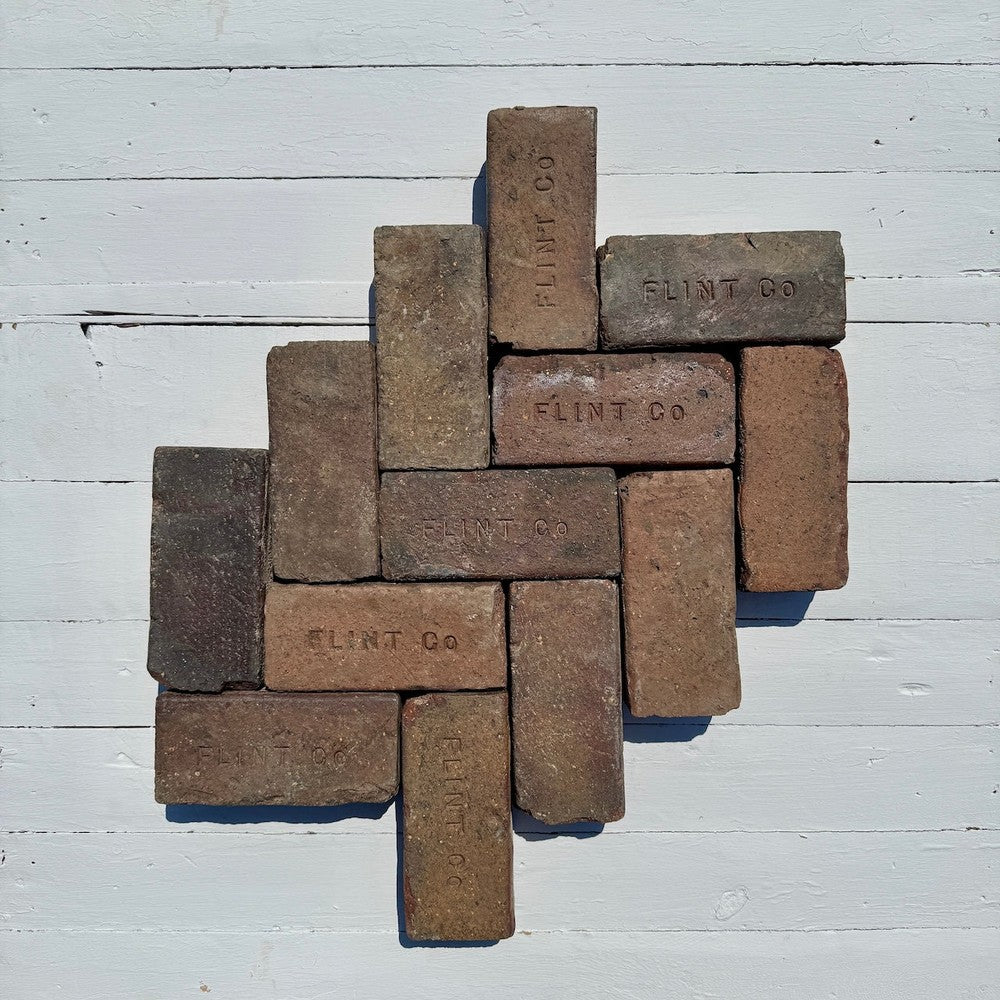
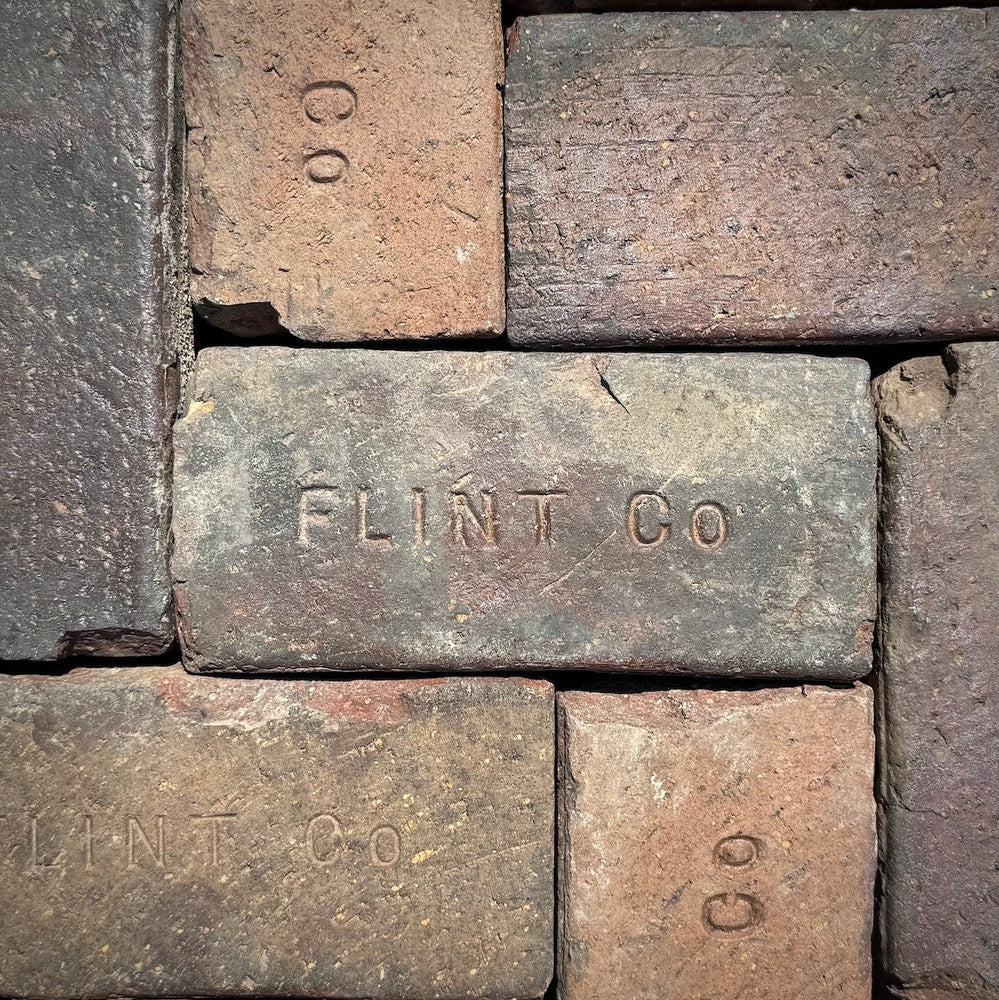
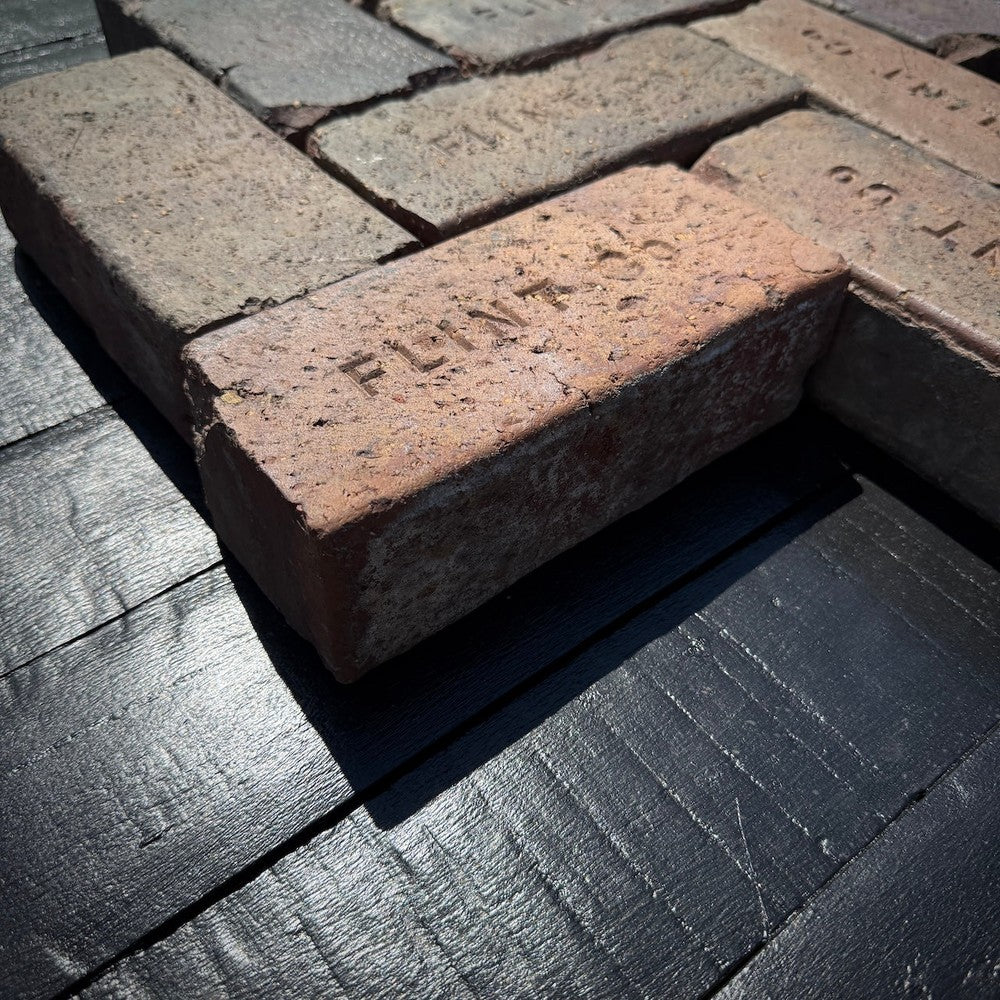
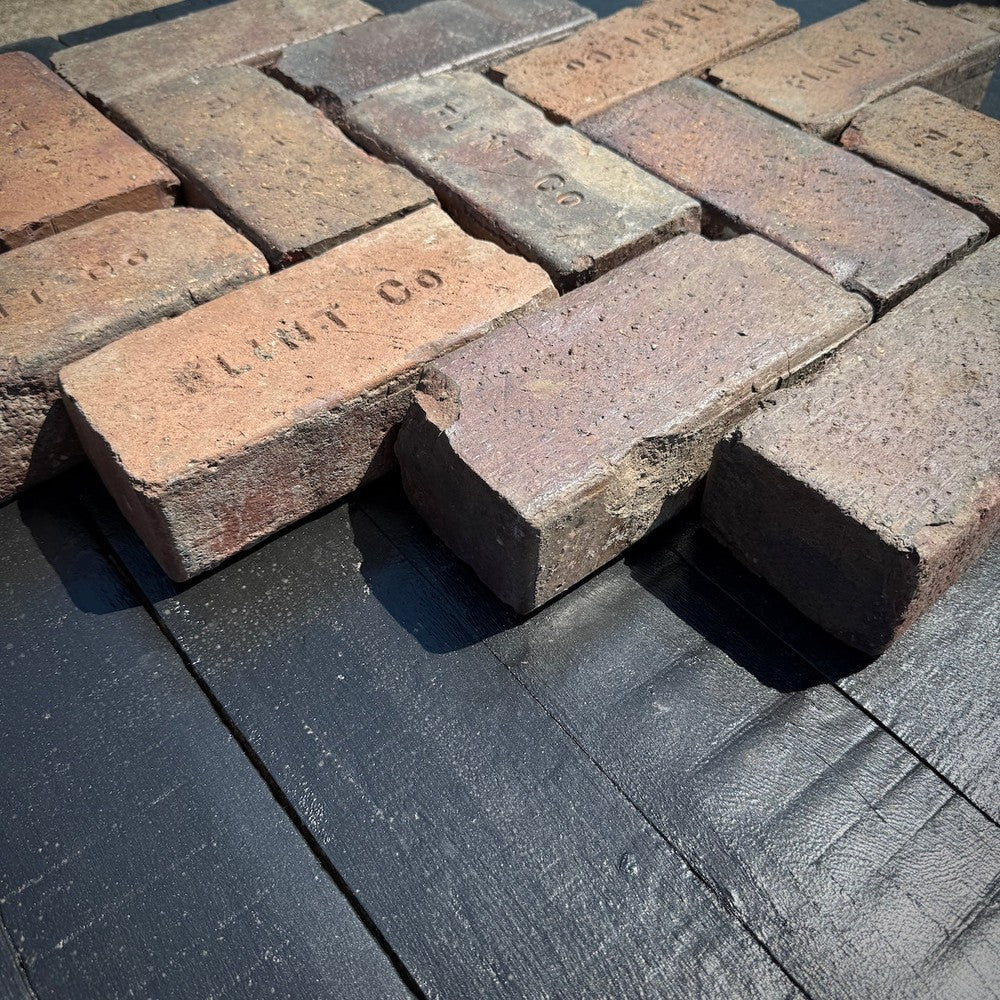
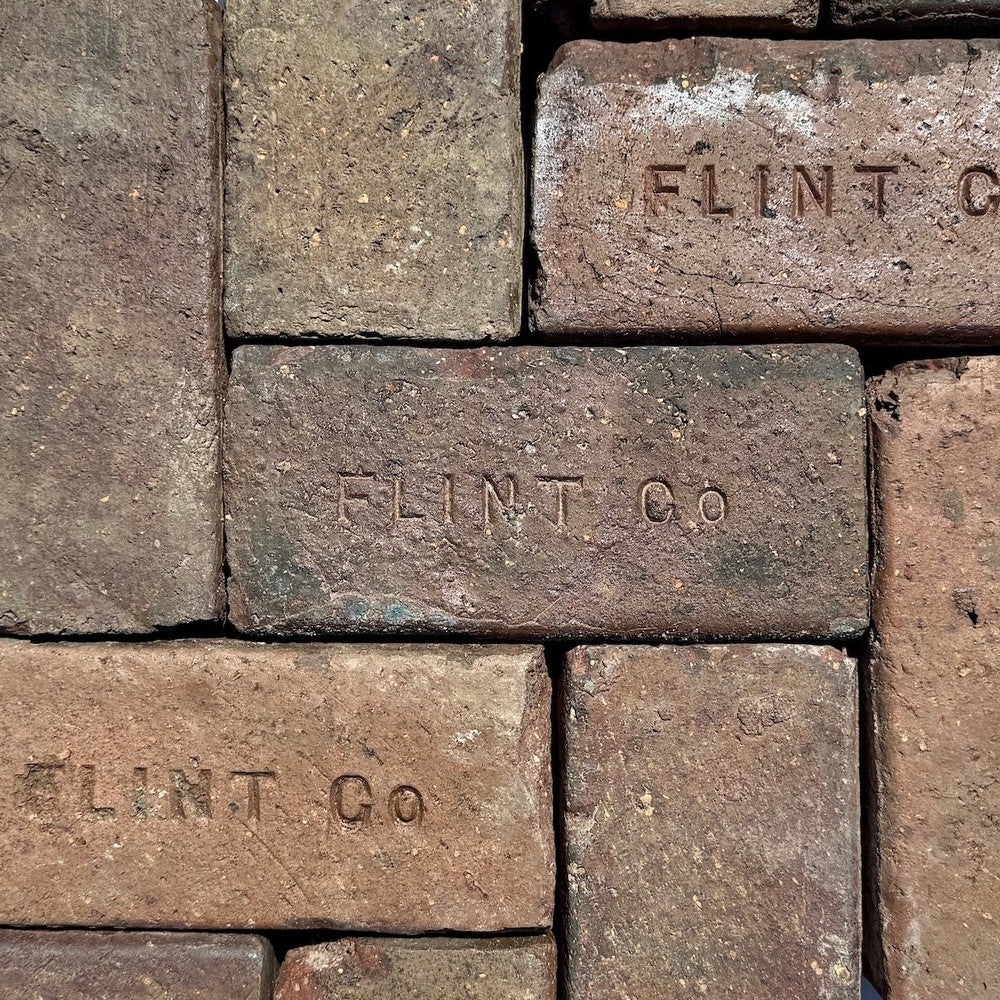
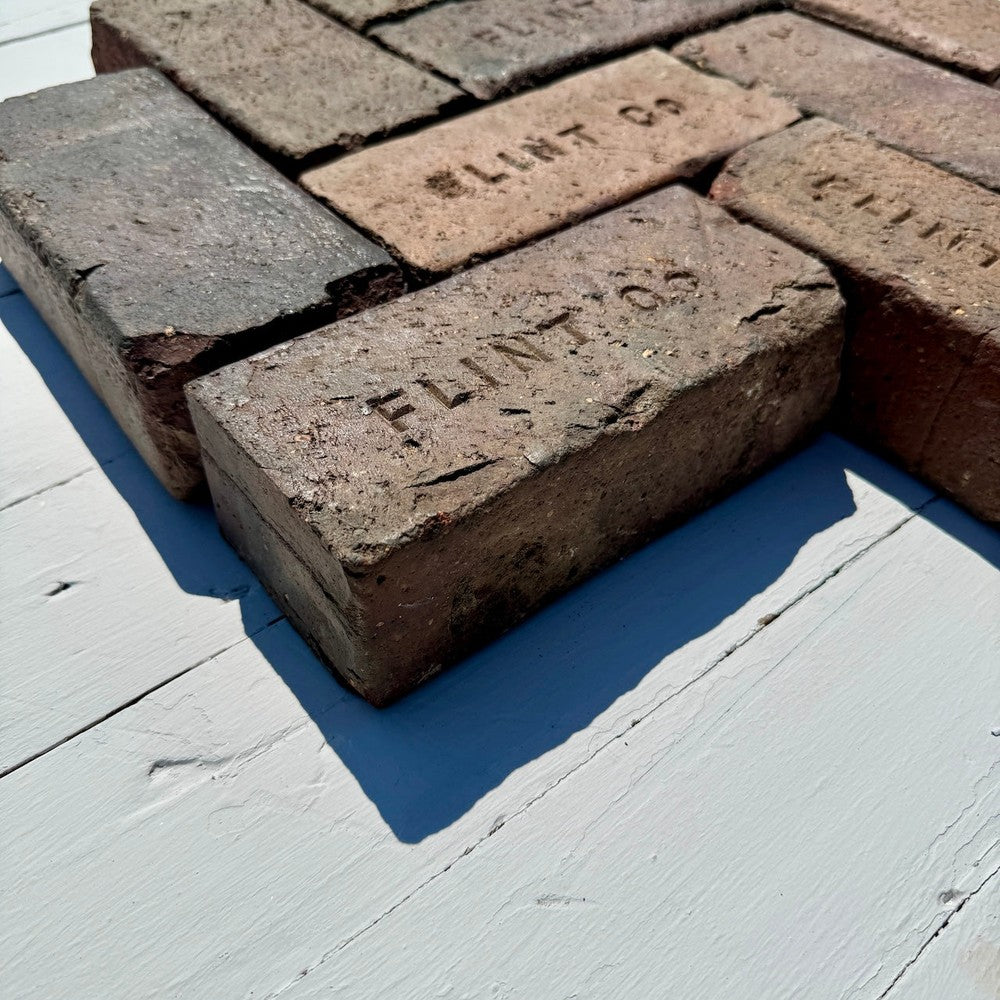
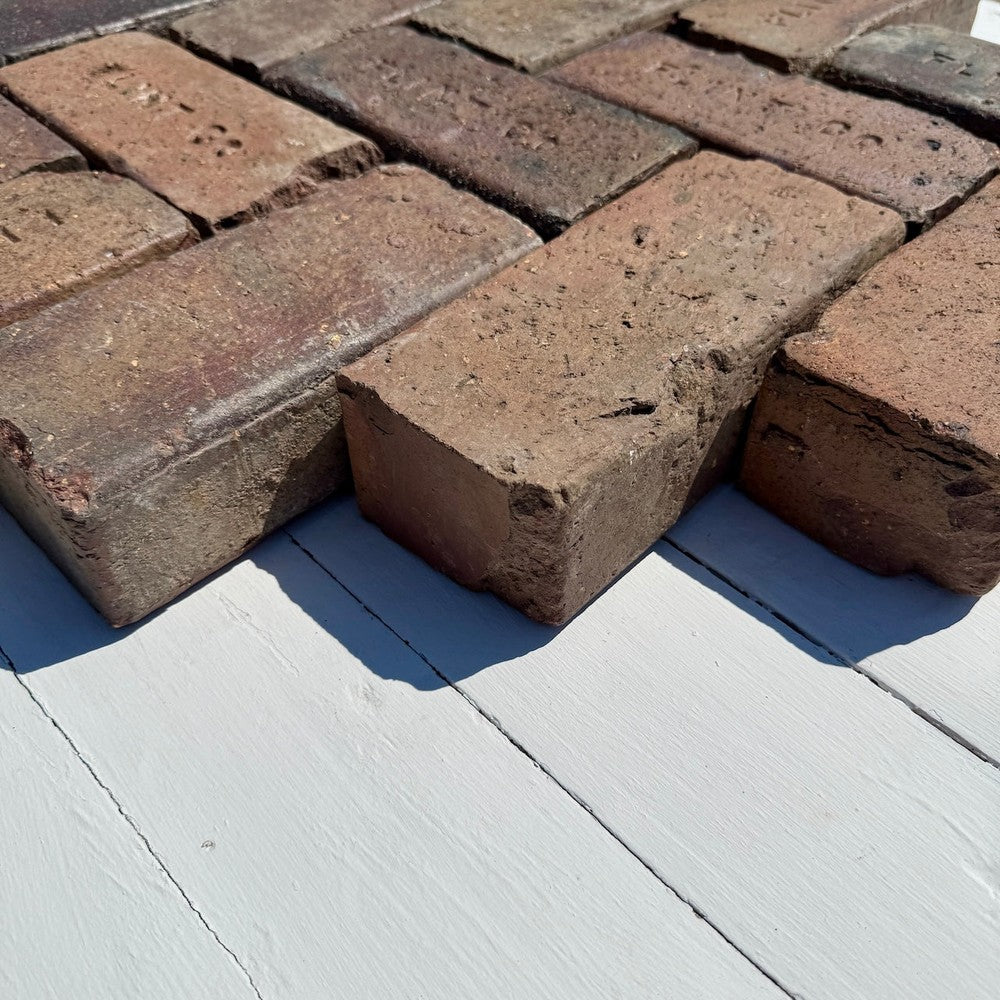
Discover the character and durability of our Reclaimed Street Brick Pavers. Each brick weighs approximately 7 lbs and features an original “Flint Co” marking, giving every piece a strong sense of history and authenticity.
These antique brick pavers are ideal for driveways, patios, walkways, garden paths and courtyards. The reclaimed street brick pavers call for a timeless, historic look with real reclaimed material underfoot. Their worn surfaces, dense feel, and natural color variation make them a beautiful choice for restoration-inspired hardscape designs.
Work out how many street pavers you need for your patio, walkway or driveway with our brick paver calculator.
Pictures are an indication only. Feel, look and color differ from item to item.
Share: