
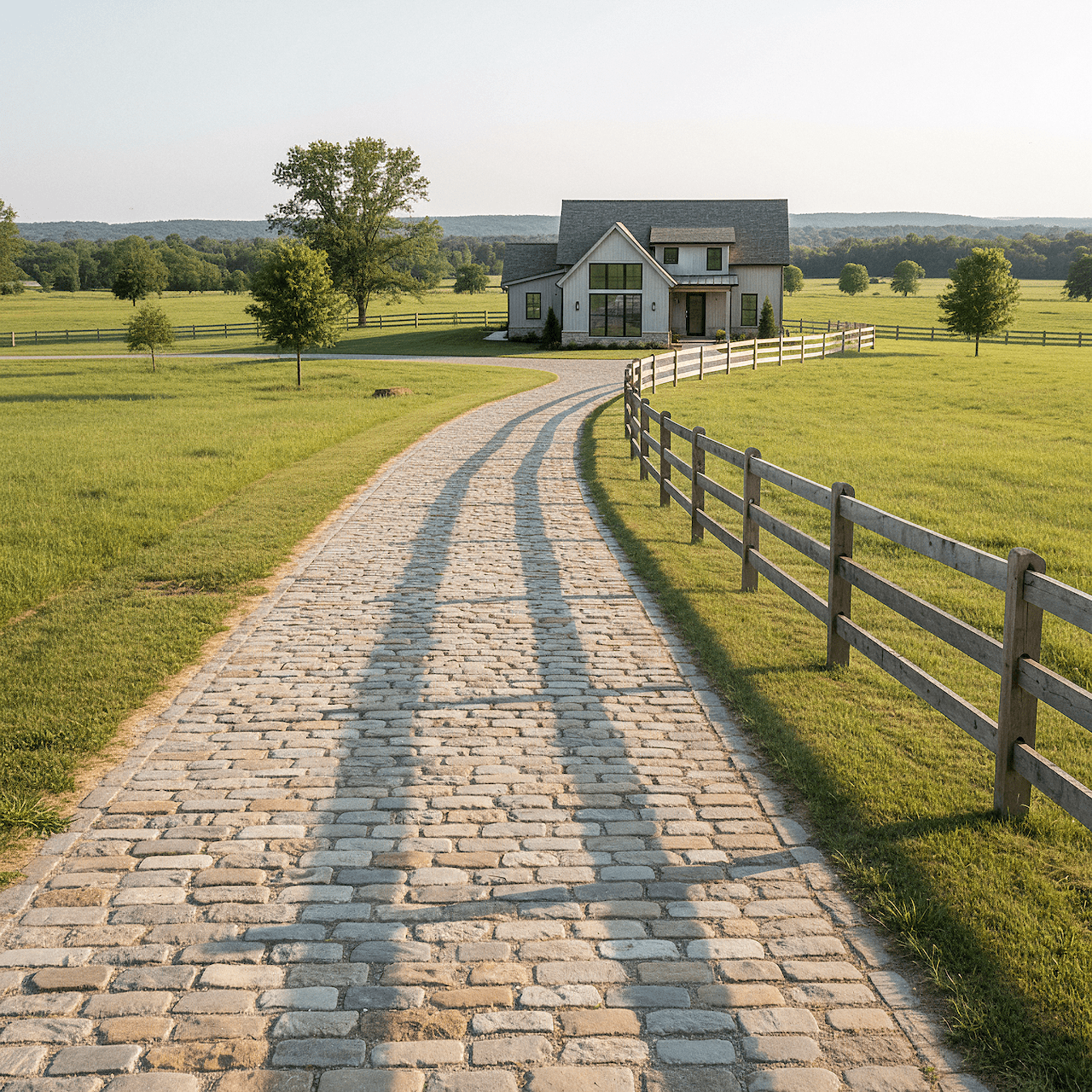
Some driveways look new. A few look like they have a story to tell.
Reclaimed cobblestones and concrete pavers both upgrade a basic asphalt or poured concrete driveway, but they do it in very different ways. One brings back the texture and character of historic New York streets. The other gives you clean lines, color control, and modern patterns across larger surfaces.
If you are picturing a reclaimed cobblestone apron, a full stone driveway, or a mix of stone and pavers, this guide is for you. You will see how these materials compare in cost, durability, maintenance, and curb appeal, and where each one makes the most sense on real projects in the Northeast and beyond.
By the end, you will know whether to lean fully into reclaimed cobbles, use pavers for the main field, or combine both for a smart hybrid layout. Chief Bricks ships nationwide, so you can bring that historic New York cobblestone look to projects across the United States.
Table of Contents
- What Are Reclaimed Cobblestones?
- What Are Concrete Pavers?
- Reclaimed Cobblestones vs. Concrete Pavers at a Glance
- Cost and Long-Term Value
- Durability and Climate Performance
- Maintenance and Repairs Over Time
- Design and Curb Appeal
- Hybrid Designs: Cobblestone + Pavers
- How to Choose the Right Mix for Your Home
- Logistics, Shipping, and Planning with Chief Bricks
What Are Reclaimed Cobblestones?
Reclaimed cobblestones are not a factory product. They are pieces of real history.
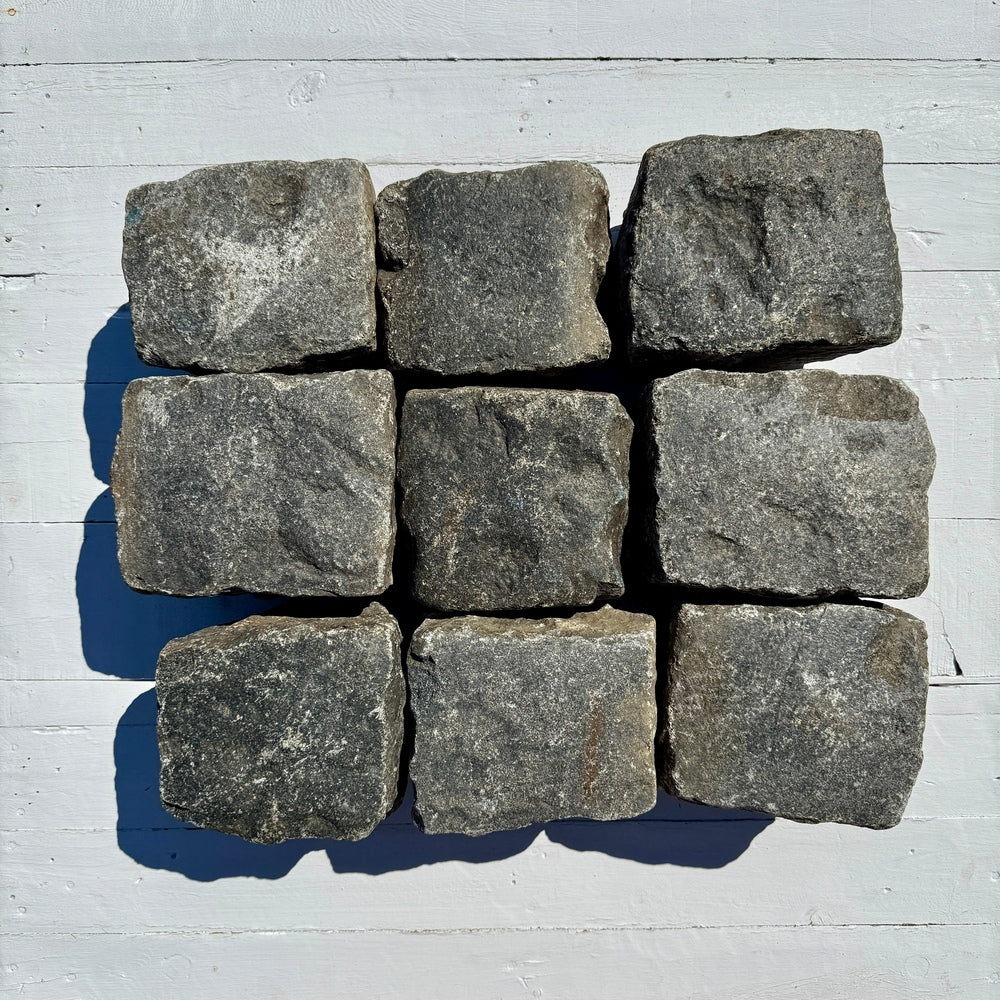
Each stone starts its life in a street, port, or industrial yard, usually laid decades ago as part of heavy-duty roadways. When those sites are redeveloped, the granite cobbles are carefully salvaged, sorted, and palletized instead of being crushed or discarded. That is how you end up with reclaimed New York cobblestones that already carry a patina and a story.
At Chief Bricks, that history shows up in two frequent formats:
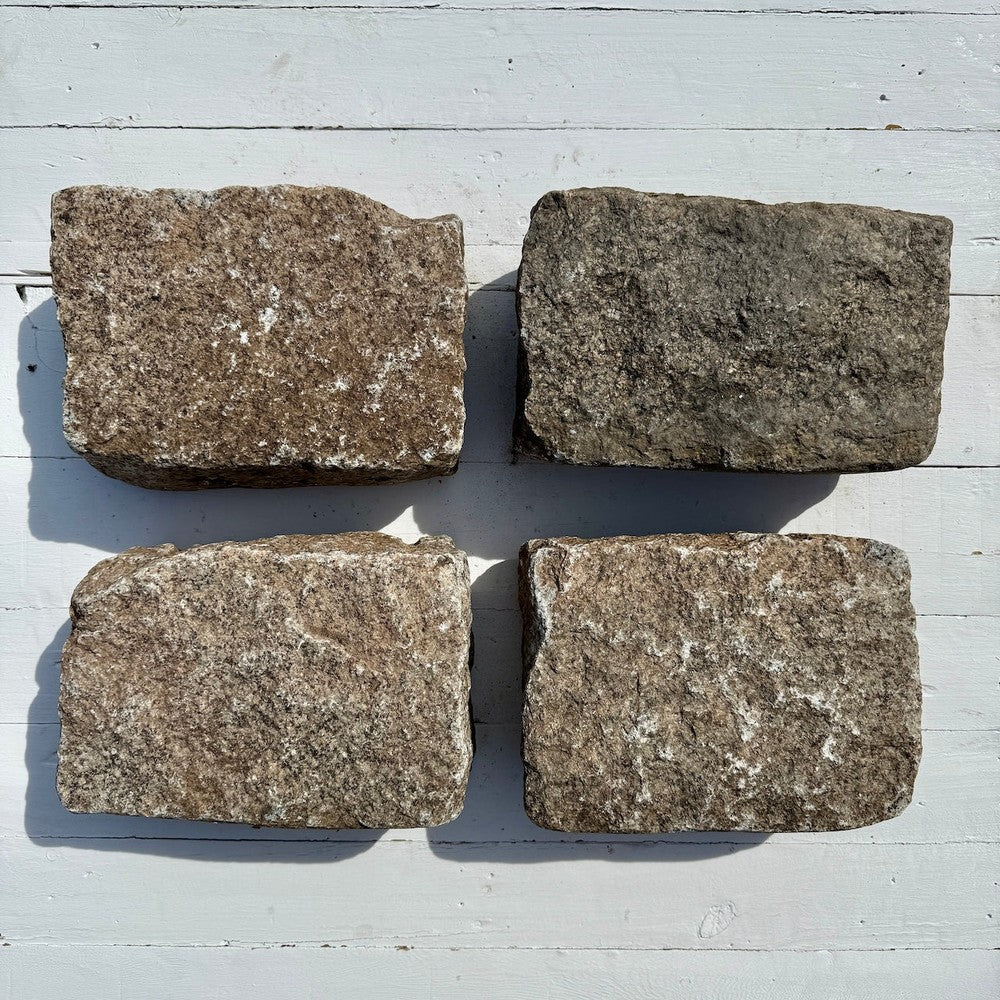
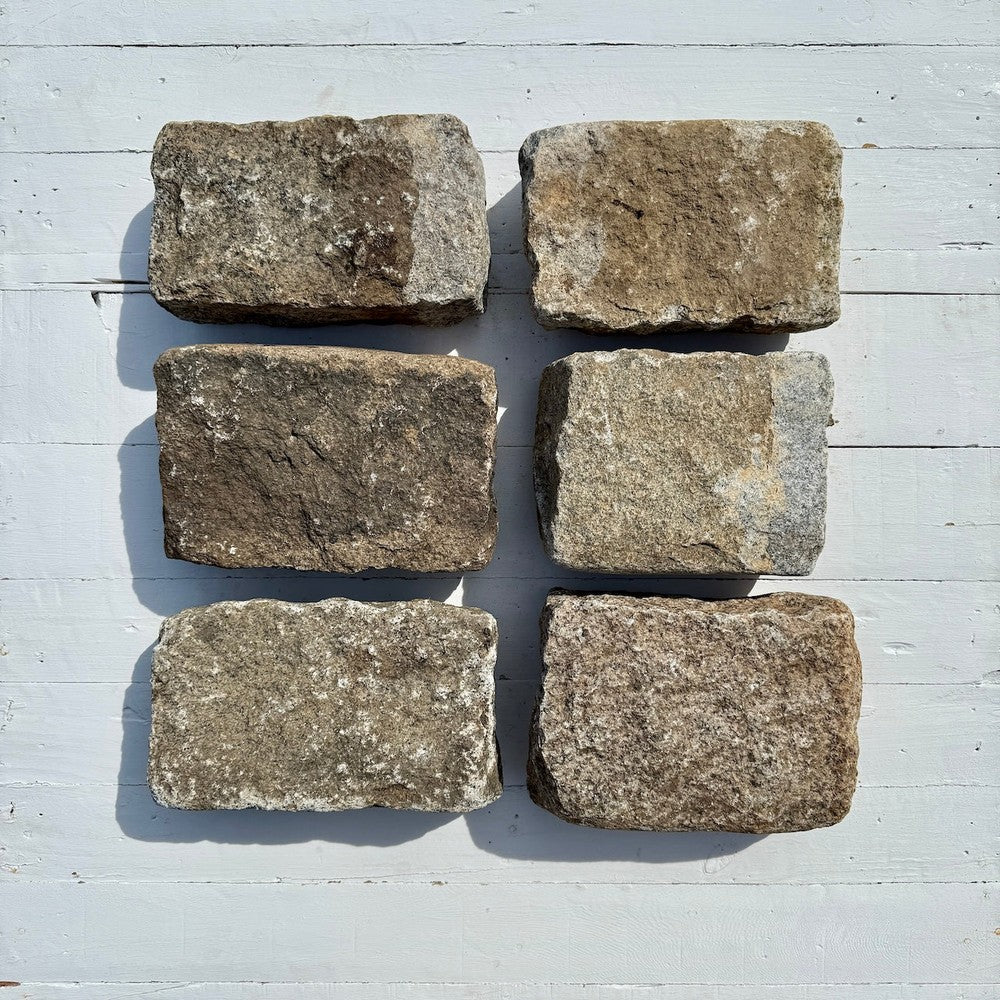
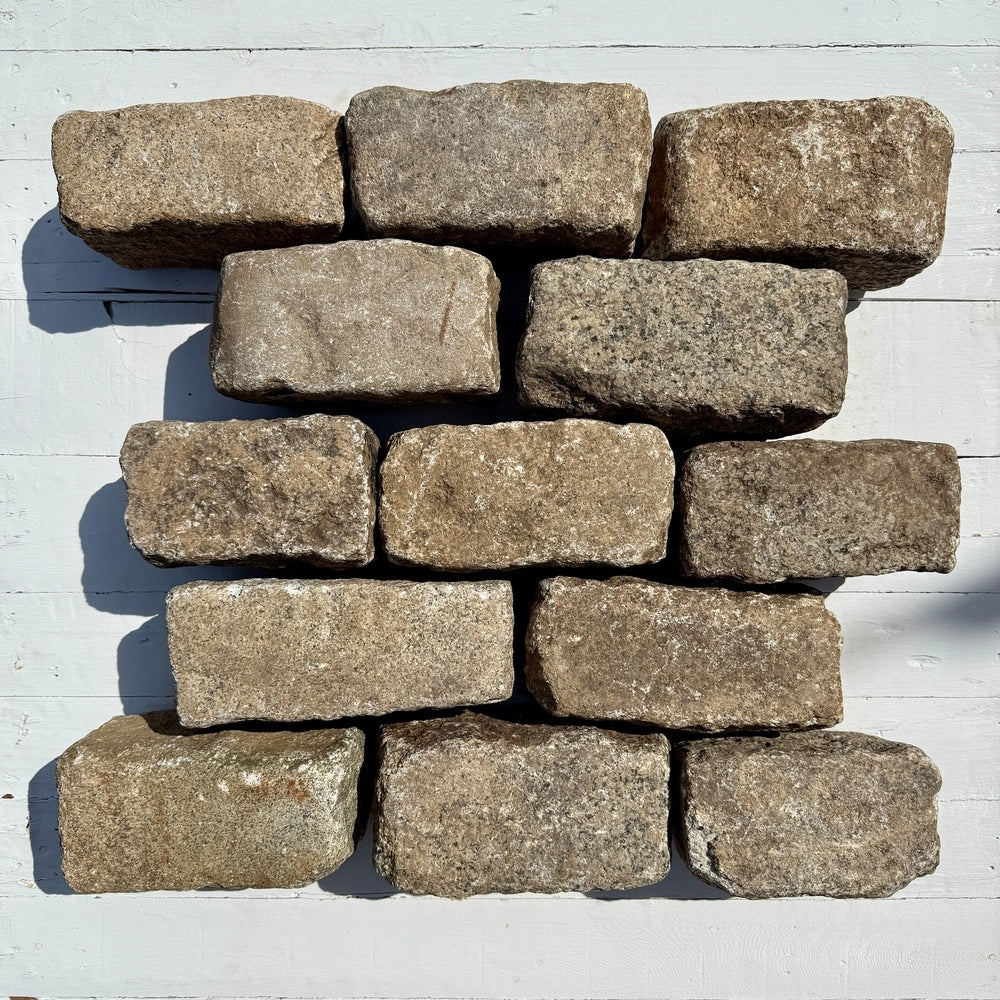
- Regulation reclaimed cobblestones (approx. 9" x 5" x 5") – A classic size for driveways, walkways, and edging, often called “reclaimed Belgian block” or “old used cobble.” See them here: Reclaimed New York Granite Cobblestone – Regulation 9" x 5" x 5".
- Jumbo reclaimed cobblestones (approx. 11" x 7" x 4") – Larger-format stones that make a bolder statement and cover more area with fewer pieces. Explore them here: Reclaimed New York Granite Cobblestone – Jumbo Dark 11" x 7" x 4".
Because these stones are reclaimed, you can expect some variation in size, color, and texture from piece to piece. That variation is the point. It is what makes a reclaimed cobblestone driveway or apron feel like it has been there for years on day one.
What Are Concrete Pavers?
Concrete pavers take a different path to your project.
Instead of being salvaged from streets, pavers are cast from high-strength concrete mixes into precise shapes and thicknesses. They are manufactured to fit a pattern system, which makes them fast to install and easy to repeat across driveways, walkways, patios, and pool decks.
You can think of pavers as the “modern toolkit” for hardscape design. They come in a wide range of colors and textures: tumbled pieces that echo traditional cobbles, smooth large-format slabs that feel contemporary, and everything in between. Most are installed as part of a segmental system over a compacted base, much like cobblestones.
On many homes, pavers are the go-to for full driveway surfaces and outdoor living spaces. Reclaimed cobblestones then step in as a character piece at key transitions and edges.
Reclaimed Cobblestones vs. Concrete Pavers at a Glance
Both materials can perform beautifully on residential driveways and aprons. The key is matching them to your budget, your climate, and the story you want your home to tell.
| Factor | Reclaimed Cobblestones | Concrete Pavers |
|---|---|---|
| Material | Salvaged granite stone with natural patina | New high-strength cast concrete units |
| Look and Feel | Historic, weathered, one-of-a-kind character | Controlled colors and patterns, from rustic to modern |
| Typical Uses | Driveway aprons, full cobblestone drives, edging, curbing | Full driveway fields, patios, walkways, outdoor rooms |
| Upfront Cost | Higher per square foot due to stone and labor | Generally more budget-flexible across large areas |
| Environmental Story | Reuses existing stone, reduces demand for new material | New material; some lines may include recycled content |
| Variation | High; each stone is slightly different | Low to moderate; consistent unit sizes and colors |
| Best Fit | Heritage-inspired projects, statement aprons, premium edges | Large, unified surfaces and precise design layouts |
If you want your driveway to feel like it could belong on a historic New York block, reclaimed cobblestones are the clear winner. If you need to cover a lot of square footage with a specific pattern and color, concrete pavers will get you there more efficiently.
Cost and Long-Term Value
Cost is usually the first question, but it should not be the only one.
Reclaimed cobblestones are a premium material. Each pallet has been sourced, salvaged, cleaned, and handled multiple times. The stone itself is dense granite, and installation is more hands-on than simply pouring a slab. As a result, a full reclaimed cobblestone driveway often sits at the top end of residential hardscape budgets.
Concrete pavers usually land in the middle. They are more of an investment than basic poured concrete or asphalt, but they are typically more affordable than building the same area with reclaimed stone. Pavers also give you flexibility: you can keep patterns simple and budgets tighter, or layer in borders and inlays when you want to push the design further.
Where reclaimed cobblestones shine is in time. A properly built cobblestone driveway or apron is not a five-year upgrade, it is the kind of surface you expect to see decades from now. Reusing stone that has already proven itself on streets and docks is one of the few ways you can literally buy character and lifespan at the same time.
That is why many homeowners choose a hybrid approach: invest in reclaimed cobblestones at the most visible, abuse-heavy parts of the project, and use pavers to carry the design across the larger field without blowing the budget.
Durability and Climate Performance
Reclaimed cobblestones are not just about looks. They were originally chosen for work.
These granite blocks were designed to live their first life under iron wheels, truck tires, and freeze–thaw cycles in port cities and industrial yards. When you bring them into a residential driveway or apron, you are putting them into softer duty than they were built for. That is why they perform so well in snowbelt climates and along busy suburban streets.
Concrete pavers take a more engineered route to durability. Many are made with dense, high-strength mixes specifically formulated for vehicle areas. When installed over a properly built base, they distribute loads evenly and handle everyday traffic and winter conditions without the cracking and spalling you see in many poured slabs.
In both cases, the same truth holds: the base matters more than the surface. Excavation depth, compaction, and drainage design determine whether your driveway rides out winter or starts to settle and shift. The surface material then expresses that success or failure. Granite cobbles and concrete pavers alike need a proper foundation to perform at their best.
Maintenance and Repairs Over Time
One thing reclaimed cobblestones and pavers share is that they are segmental surfaces. That is a big advantage over monolithic slabs when it comes to maintenance and repairs.
With reclaimed cobbles, everyday care usually involves keeping joints filled, sweeping or washing as needed, and managing weeds like you would in any landscape setting. Because the stones already have a weathered surface, they do not show small scuffs or patina the way new surfaces do. In many cases, they actually look better as they settle into the property.
If a small area ever does need attention—after utility work, for example—the stones can be lifted, the base corrected, and the same cobbles reset. You are not trying to color-match a patch in the middle of a poured slab. The repair blends naturally because all of the material is authentic stone with existing character.
Concrete pavers behave in a similar way. Joints can be refreshed with sand or other compatible joint materials over time. If a spot settles or a few units are damaged, that area can be removed and rebuilt without disturbing the rest of the driveway. Keeping up with joint care and cleaning helps paver surfaces stay looking intentional instead of tired.
For both systems, routine care is straightforward compared with managing large cracks and mismatched patches in asphalt or plain concrete. That simplicity is a big part of their long-term appeal.
Design and Curb Appeal
This is where reclaimed cobblestones pull away from almost any alternative.
There is a specific feeling you get when you see a cobblestone apron or driveway: a mix of old-world character and quiet confidence. The irregular edges, soft corners, and subtle color variations are almost impossible to replicate with new products. They work especially well in historic districts, older neighborhoods, and homes that want to look like they have always belonged on the street.
The choice between regulation and jumbo cobblestones adds another layer of design control. Regulation sizes create tighter, more intricate patterns and transitions. Jumbo stones feel bolder and more relaxed, covering more space per piece and rebalancing the scale on wider driveways. Many projects mix both, using jumbos in the main field and regulation pieces for bands, aprons, or curves.
Concrete pavers hold their own in a different way. If you want exact joint lines, repeated modules, and color palettes that match your siding, trim, and landscape, pavers are the flexible option. From subtle cobble-style tumbled pavers to clean large-format slabs, they let you tune the design to your architecture with precision.
The best projects often let each material do what it does best: reclaimed cobblestones deliver the story and the “wow” at the curb, while pavers bring comfort and continuity across the rest of the hardscape.
Further reading: Enhancing Farmhouse Design with Reclaimed Cobblestones
Hybrid Designs: Cobblestone + Pavers
You do not have to choose one material for everything. In fact, many of the strongest designs use reclaimed cobblestones and concrete pavers together.
Here are a few hybrid ideas that work well on real residential projects:
- Cobblestone apron + paver driveway: Build a band of reclaimed regulation or jumbo cobbles at the street or garage, then transition into a paver field. The cobbles handle the hardest hitting zone and set the tone for the property.
- Cobblestone edging + paver field: Run a single or double course of reclaimed cobblestones along the sides of a paver driveway or walk. This frames the surface, protects edges, and introduces stone character without using it everywhere.
- Cobblestone inlays and thresholds: Drop reclaimed cobblestone panels at key thresholds—front entry, courtyard, or the pull-in section closest to the house—while using pavers for larger areas behind.
These combinations are especially powerful in the Northeast, where historic masonry and modern renovations sit side by side, but they translate just as well to other regions. Nationwide shipping makes it practical to specify reclaimed New York cobblestones on projects from coastal towns to mountain markets and everything in between.
How to Choose the Right Mix for Your Home
If you are still sketching ideas, a few simple questions can help you narrow down the right balance of reclaimed cobblestones and concrete pavers.
How long do you plan to stay? If this is a long-term home or a family property, investing more in reclaimed cobblestones at the front edge and key transitions often feels right. You are the one who will enjoy the upgrade every day.
How big is the project footprint? A compact front drive, shared driveway, or urban parking pad might be the perfect candidate for a heavier cobblestone presence. Very large rural or suburban driveways often work best with cobblestones in the first impression zones and pavers or other surfaces beyond.
What fits your architecture and neighborhood? If the streets nearby are lined with historic brick, stone, and mature trees, reclaimed cobblestones will feel like they belong instantly. In newer subdivisions with modern architecture, pavers can carry the dominant look, with cobblestones used as a deliberate nod to classic materials.
Sharing photos of your home, inspirational driveways you like, and rough dimensions with a knowledgeable supplier is often the fastest way to move from “idea” to a confident plan. It also helps ensure you order the right mix of regulation and jumbo cobblestones from the start.
Logistics, Shipping, and Planning with Chief Bricks
Once you have a direction, the next step is making sure the stone and pavers actually arrive on site, on time, and in the right quantities. That is where a focused supply partner matters.
At Chief Bricks, reclaimed granite cobblestones are sorted, palletized, and ready for real-world projects. Detailed product pages for Regulation Reclaimed Cobblestones and Jumbo Reclaimed Cobblestones give you dimensions, weights, and coverage per pallet so you can plan accurately with your landscaper or mason.
Because Chief Bricks ships nationwide, you are not limited to local salvage yards or whatever is left on a given jobsite. You can design with reclaimed New York granite cobblestones from the outset, whether your project is in the New York metro area, the Mid-Atlantic, the Midwest, the South, or the West Coast.
If you are a contractor, architect, or designer, you can loop our team into the early phases to align stone sizes, joint preferences, and layout strategies with your plans. If you are a homeowner, you can lean on our experience to avoid over- or under-ordering and to choose the right balance of reclaimed cobblestones and complementary materials.
The goal is simple: a driveway, apron, or courtyard that feels like it has always belonged on your property and will keep doing so for decades to come.

Share: