
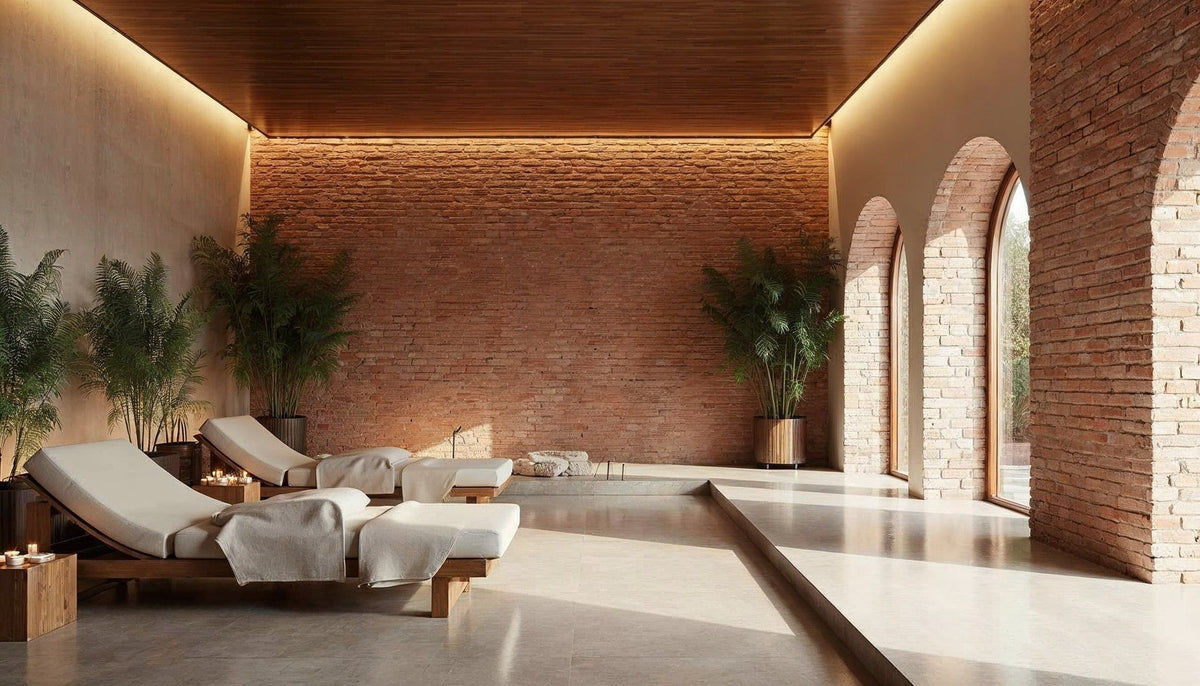
Brick has a way of making a space feel established. It adds warmth to a clean modern kitchen, grit to a restaurant wall, and age to a new build that might otherwise feel a little too polished. But once you start pricing it out, one question comes up fast: should you use thin brick veneer or full brick?
The answer is not always about the material price. Thin brick veneer and full reclaimed brick sit surprisingly close in cost per square foot, and in 3/4-inch thickness our reclaimed thin brick is actually slightly cheaper. The real difference shows up in installation, labor, structural support, wall thickness, and how much work the building needs before the first brick is even laid.
Maybe you are a contractor trying to keep a renovation on budget. You might be a designer looking for authentic texture without sacrificing floor space. Or maybe you are a homeowner who wants a reclaimed brick fireplace wall but does not want to rebuild the room around it. This guide breaks down thin brick veneer cost vs. full brick price so you can make the right call before ordering material.
Table of Contents
- Thin Brick Veneer vs. Full Brick at a Glance
- Material Cost: Thin Brick Veneer vs. Full Brick
- Installed Cost and Labor
- Structural Requirements and Wall Thickness
- Longevity, Maintenance, and Long-Term Value
- Best Uses for Thin Brick and Full Brick
- How to Plan Your Brick Project
- Nationwide Shipping and Material Planning
- Is Thin Brick Veneer Worth It?
Thin Brick Veneer vs. Full Brick at a Glance
If you need the short version first, this table shows where thin brick veneer saves time and money, and where full brick still earns its place. The right choice depends on what the wall needs to do, not only on what you want it to look like.
| Category | Thin Brick Veneer | Full Brick |
|---|---|---|
| Material cost | Chief Bricks reclaimed 3/4-inch thin brick wall veneer: about $14.30 per sq. ft.* (1/2-inch: about $17.80) | Chief Bricks reclaimed red brick material: about $15.70 per sq. ft.* |
| Installed cost | Usually lower because the material is lighter and installation is faster. | Usually higher because full masonry takes more labor, space, and support. |
| Labor | Often installed using a prepared substrate, adhesive, thin-set mortar, or mortar bed. | Requires traditional masonry work, full-bed mortar, layout, and more handling. |
| Structural needs | Usually non-structural and suitable for existing walls when properly prepared. | May need footings, ledgers, anchors, reinforcement, and engineered support. |
| Wall thickness | About 3/4-inch brick thickness, plus adhesive or mortar and substrate. | Substantially thicker due to full brick depth and complete wall assembly. |
| Weight | Lighter and easier to use in remodels, upper floors, and interior spaces. | Heavier and more demanding on floors, foundations, and framing. |
| Best uses | Interior feature walls, fireplaces, kitchens, restaurants, retail, and wine cellars. | Structural walls, exterior masonry, garden walls, facades, and traditional construction. |
| Longevity | Long-lasting real brick finish when installed over a sound substrate. | Exceptional durability for structural and exterior masonry applications. |
| Best value when... | You want real reclaimed brick character with less structural work and less lost floor space. | You need actual masonry mass, a load-bearing wall, or a full-depth brick assembly. |
Note: Material prices can change based on blend, quantity, availability, delivery distance, and job requirements. Installation cost depends on wall condition, labor market, access, pattern complexity, and structural needs.
Material Cost: Thin Brick Veneer vs. Full Brick
At first glance, thin brick veneer looks like it should be far less expensive than full brick. It is thinner, lighter, and easier to carry. But reclaimed brick pricing does not always work that way, because thin brick is sliced from the same reclaimed bricks. You are still paying for authentic clay, age, color variation, salvage work, sorting, and the character that comes from a past life.
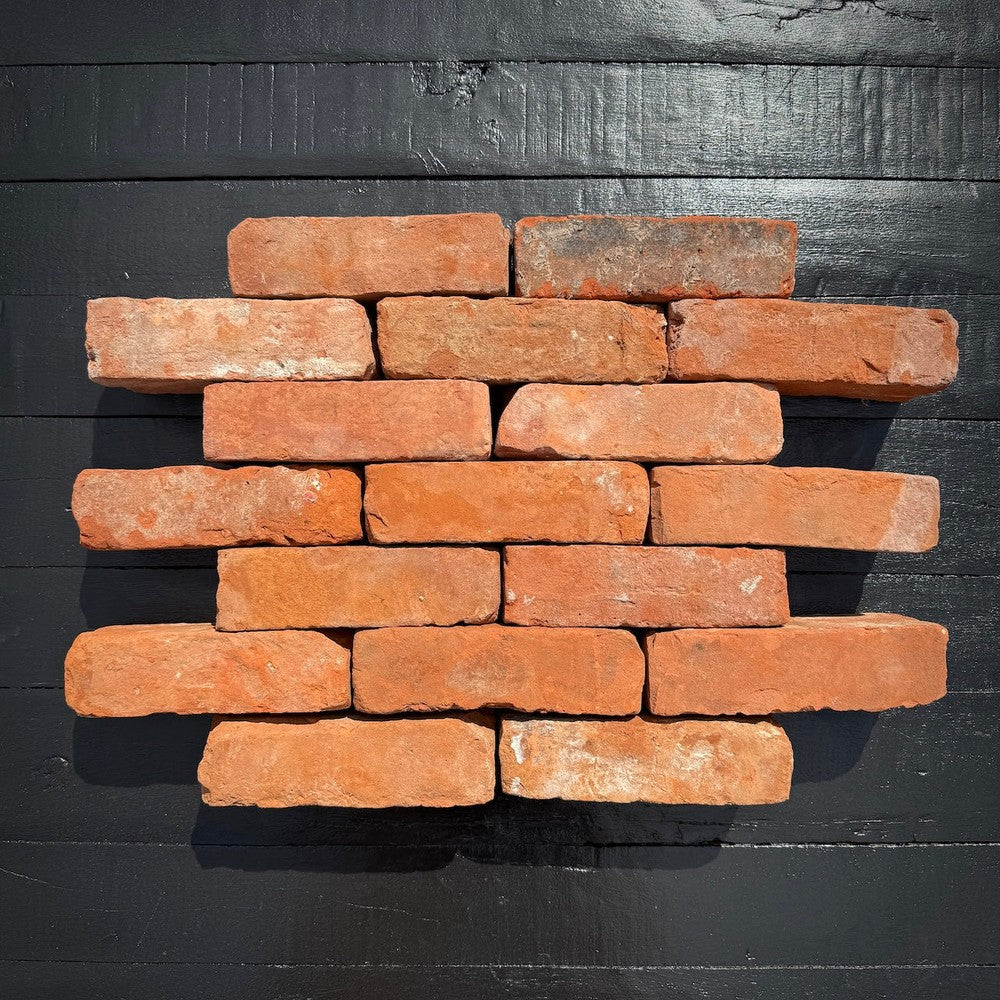
Chief Bricks’ Reclaimed Thin Brick Wall Veneer in 3/4-inch thickness is $2.05 per piece, or about $14.30 per square foot*. The 1/2-inch cut is $2.55 per piece, or about $17.80 per square foot. It is cut from reclaimed full brick and gives you the same worn face, weathered reds, softened corners, and natural variation people want from historic masonry.
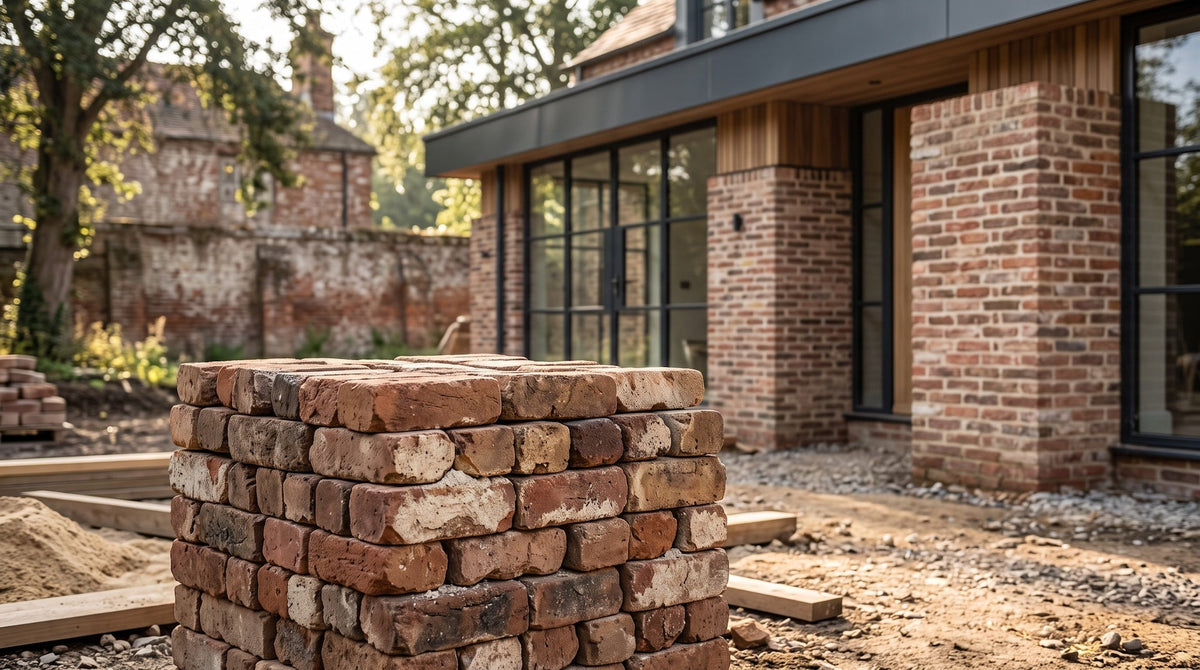
Our Reclaimed Red Bricks come in at $2.25 per brick, or about $15.70 per square foot in material cost* ($13.60 when bought by the pallet). That means the brick itself is not dramatically cheaper in either format. The bigger difference is what happens after the material reaches the job site.
All of these figures use the same wall coverage of 6.98 pieces per square foot with a 1/4-inch joint, because thin brick and full brick share the same face size. Our brick coverage calculator guide shows how to work out quantities and how much extra to order.
Work out how many bricks or stones you need for your wall, patio or walkway with our Masonry Brick & Stone Calculator.
Full brick must be handled, laid, mortared, aligned, supported, and built into a proper masonry wall. Thin brick veneer is designed to create the face of full masonry without all of that depth. In many projects, that is where the real savings begin.
Installed Cost and Labor
Installed cost is where thin brick veneer usually pulls ahead. A thin brick wall can often be installed over a properly prepared surface using adhesive, thin-set mortar, or a suitable mortar system. The process is closer to installing tile than building a traditional full-depth masonry wall.
That does not mean thin brick is a shortcut or a cheap imitation. It still takes layout, cutting, joint work, grouting or pointing, and a good eye for blending reclaimed material. But crews can move faster because they are handling lighter pieces and working with a thinner wall build-up.
Full brick requires a masonry crew, mortar beds, line work, wall ties or anchors when needed, and more physical staging. The material has to be moved, lifted, and placed one unit at a time. On a large exterior project, those labor hours add up quickly.
For an interior feature wall, a restaurant bar, a loft conversion, or a fireplace surround, thin brick veneer usually creates the better installed value. You get the visual depth and irregularity of reclaimed masonry without turning a finish project into a structural masonry project.
Structural Requirements and Wall Thickness
This is where the two options separate most clearly. Full brick is heavy. A true masonry wall needs a proper base, adequate support, and a wall assembly designed to carry that weight over time. Depending on the project, that can mean footings, foundation work, reinforcement, ledgers, wall ties, and engineering review.
Those requirements make sense when the brick wall is structural or when the project calls for a traditional exterior masonry assembly. But they can be difficult to justify in an existing house, condo, commercial suite, or renovation where the brick is there mainly for finish and atmosphere.
Thin brick veneer changes the equation. The 3/4-inch pieces offer a slim profile that helps preserve usable floor space. You can bring the look of a real brick wall into a hallway, wine room, kitchen, office, or retail space without losing several inches to a full brick wythe.
Thin brick is still real clay brick. It just does not need to carry the building. It is a finish material, not a structural wall. That makes it a strong option for remodels where existing floors and framing were never designed for the load of full masonry.
If you are deciding between thicknesses, read our thin brick thickness guide. It explains how different thin brick cuts affect wall build-up, visual depth, and installation planning.
Longevity, Maintenance, and Long-Term Value
Both choices can last for decades. Full brick has a long track record because it has been used in structural buildings, facades, garden walls, and industrial spaces for generations. When correctly designed and maintained, a full brick wall has the strength and permanence that made masonry a standard building material in the first place.
Thin brick veneer has a different job. It is not intended to support a roof or carry a structural load. Its value comes from giving a space the warmth and texture of genuine masonry while depending on the wall behind it for support.
A well-installed thin brick wall can stay beautiful for a very long time. The reclaimed face does not go out of style. Small chips, color variation, and worn edges are not flaws to hide. They are the details that keep the wall from looking flat or manufactured.
Maintenance is usually straightforward. Interior thin brick may need occasional dusting, spot cleaning, or resealing where spills are likely. Full exterior masonry may need periodic inspection of mortar joints, flashing, drainage details, and areas exposed to water or freeze-thaw conditions.
Best Uses for Thin Brick and Full Brick
Thin brick veneer is best suited to lightweight, non-structural wall cladding, while full brick is the stronger choice for projects that need full masonry depth, durability, or structural performance.
| Application | Thin Brick Veneer | Full Brick | Recommended Option |
|---|---|---|---|
| Interior feature walls | Excellent for living rooms, bedrooms, hallways, staircases, and media walls. | Possible, but often heavier and more expensive than necessary. | Thin brick veneer |
| Fireplace surrounds | Ideal for decorative fireplace surrounds when installed over an appropriate, heat-rated substrate. | Best for traditional masonry fireplaces or full-depth hearth construction. | Thin brick for surrounds; full brick for masonry fireplaces |
| Kitchen backsplashes | Excellent choice for adding authentic brick texture with minimal wall depth. | Usually too thick and heavy for a standard backsplash application. | Thin brick veneer |
| Restaurant interiors | Ideal for dining rooms, bars, host stands, feature walls, and rustic or industrial interiors. | Useful when the design includes a full masonry wall or major architectural element. | Thin brick veneer |
| Retail and office interiors | Well suited for brand walls, reception areas, fitting rooms, conference rooms, and storefront interiors. | Rarely necessary unless the wall is part of a larger masonry build. | Thin brick veneer |
| Wine cellars and tasting rooms | Excellent for creating an old-world brick atmosphere without sacrificing valuable floor area. | Best where full masonry vaults, arches, or substantial wall depth are part of the design. | Thin brick veneer for walls; full brick for structural masonry features |
| Basement renovations | Ideal for finished basements, rec rooms, bars, and accent walls with limited space. | Can require additional floor and wall support in an existing basement. | Thin brick veneer |
| Condo and apartment renovations | Lightweight, space-efficient option for interior upgrades and feature walls. | Often impractical because of weight, wall thickness, and building restrictions. | Thin brick veneer |
| Exterior cladding | Suitable for properly designed exterior veneer systems with correct drainage and weatherproofing. | Suitable for traditional full-depth masonry exterior assemblies. | Full brick with proper engineering |
| New-build exterior facades | Useful when a thinner cladding system is preferred over a full masonry wall. | Ideal when the design calls for a traditional full brick facade or masonry construction. | Full brick with proper engineering |
| Freestanding garden walls | Not recommended because veneer needs a stable backing wall. | Ideal for freestanding walls, planters, garden borders, and landscape structures. | Full brick |
| Retaining walls | Not suitable as a standalone structural retaining system. | Can be used only when designed as part of an engineered masonry or landscape wall system. | Full brick with proper engineering |
| Structural walls | Not intended to carry building loads. | Appropriate for traditional masonry construction when properly designed and supported. | Full brick with proper engineering |
| Brick arches and openings | Can create a decorative arch appearance over a prepared backing surface. | Best for true structural arches, headers, and full-depth masonry openings. | Thin brick for decorative arches; full brick for structural arches |
| Patios, walkways, and floors | Wall veneer is not rated for floors; use reclaimed thin brick floor tiles for interior floors. | Suitable for patios, paths, walkways, and brick floors when the correct brick and base preparation are used. | Thin brick floor tiles indoors; full brick or street pavers outdoors |
| Historic restoration | Useful for interior restoration work or areas where full-depth masonry is not required. | Best for restoring original masonry walls, facades, and full-thickness historic construction. | Depends on restoration scope |
Thin brick veneer is cut from authentic reclaimed brick and is intended primarily for interior wall cladding. Chief Bricks’ reclaimed thin brick wall veneer is not intended for flooring or structural applications; for floors, see our guide to thin brick floor tiles. Full reclaimed brick is heavier and deeper, making it appropriate for traditional masonry projects when the assembly is properly designed and supported.
How to Plan Your Brick Project
Start with the simplest question: is the brick supposed to hold something up, or is it supposed to create a look? If it is structural, full brick or a properly engineered masonry system may be necessary. If it is aesthetic, thin brick veneer deserves serious consideration.
Next, look at the existing conditions. Measure wall depth. Check floor capacity. Think about doors, trim, outlets, windows, baseboards, and built-ins. A thin brick system can solve a lot of problems in tight spaces because it adds less depth than full brick.
Then plan for the reclaimed material itself. Reclaimed brick is not supposed to look perfectly uniform. Blend from multiple boxes or pallets during installation. Lay out a sample area first. Let color shifts, old mortar marks, and small chips work together rather than grouping similar pieces in one spot.
If you want a closer look at the design possibilities, read our guide on reclaimed thin brick veneer. It covers why real reclaimed veneer feels different from manufactured products and where it works best. For a finished example, see the reclaimed thin brick speakeasy in Friends Lake, NY.
Nationwide Shipping and Material Planning
Reclaimed brick projects need a little more planning than standard big-box materials. Stock can vary because every salvage lot is different. Colors, texture, dimensions, and surface wear are part of what makes reclaimed brick special, but they also make it important to order with the full project in mind.
Chief Bricks ships nationwide, helping contractors, designers, and homeowners bring authentic reclaimed brick into projects across the United States. Whether you need a small amount for a fireplace wall or material for a larger hospitality or commercial build, planning quantities early helps keep the look consistent from start to finish.
Order enough material to account for cuts, waste, layout adjustments, and future repairs. On a reclaimed project, having extra material from the same shipment can make a big difference if you ever need to replace a piece later.
Is Thin Brick Veneer Worth It?
For most interior and renovation projects, yes. Thin brick veneer gives you the face of real reclaimed brick with less weight, less disruption, and a lower installed cost than a full masonry wall. It is one of the most effective ways to make a new space feel grounded, textured, and lived in.
Full brick is still the right material when the wall needs to be structural, exterior-focused, or built as traditional masonry from the ground up. It brings mass and permanence that thin veneer is not designed to replace.
The best choice is not about which material is better in every situation. It is about using the right brick system for the job. If your goal is authentic character without unnecessary structure, thin brick veneer is usually worth it. If your project needs the strength and depth of real masonry construction, full brick earns the investment.
* Prices as of October 2026, per piece by the unit unless noted. Confirm current pricing on each product page before ordering.


Share: