
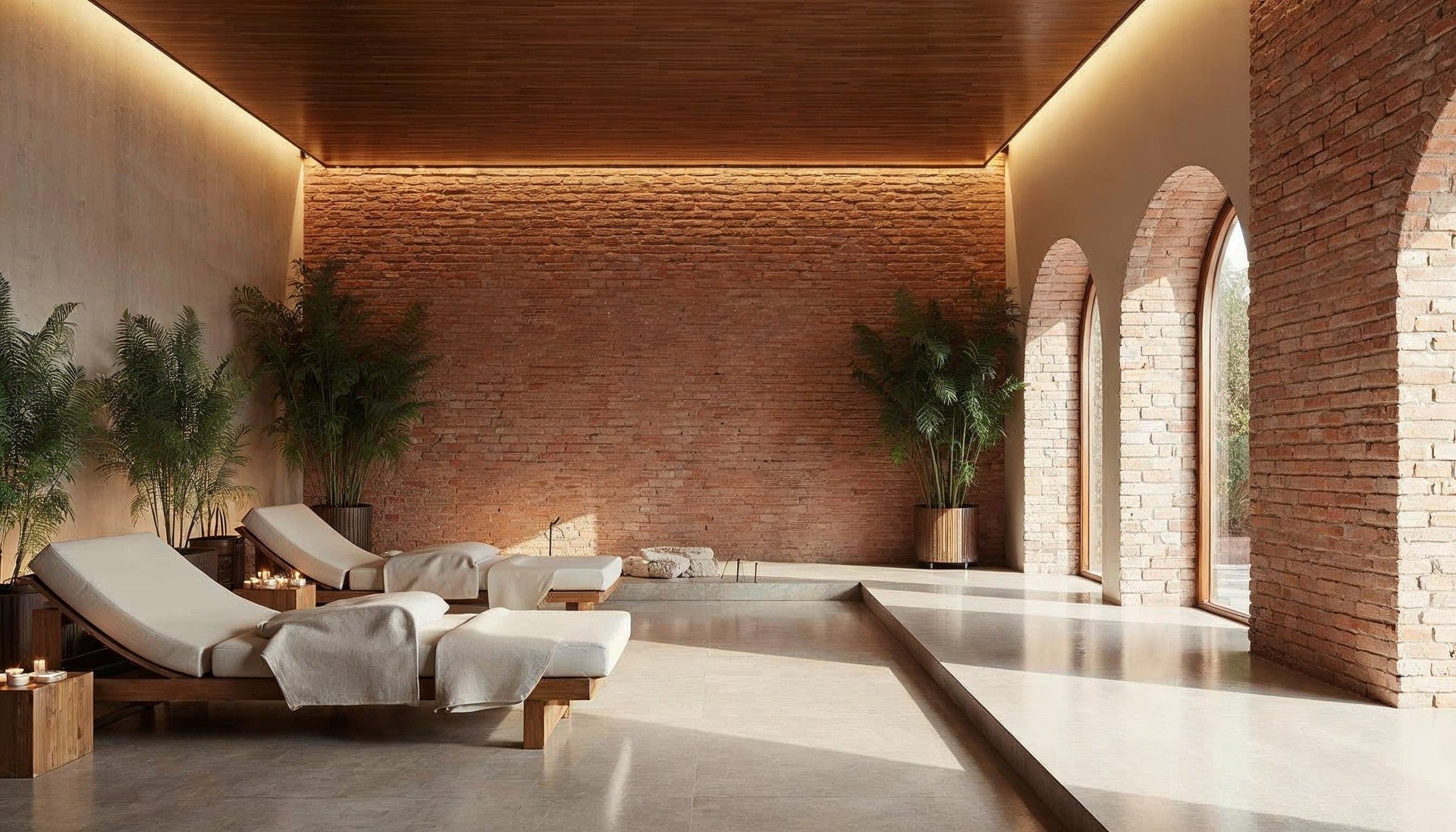
Ordering brick should feel simple. Measure the area, figure out how many bricks fit in a square foot, add a little extra for cuts and breakage, and you have a realistic quantity to order.
In practice, it is easy to get the number wrong. A wall uses a different coverage rate than a brick floor. Thin brick veneer has a different installation method than full-depth brick. A driveway built with reclaimed street pavers may use no visible joints at all. Even a small change in mortar-joint width can affect the total quantity.
Whether you are a contractor pricing a masonry job, a designer specifying reclaimed material, or a homeowner planning a kitchen floor or patio, this guide will help you estimate the number of bricks you need with confidence.
For a faster project estimate, use the Chief Bricks Masonry Brick and Stone Calculator. Enter your project dimensions, choose the application and joint thickness, and use the result as a starting point for ordering.
Table of Contents
- Why Brick Quantity Calculations Matter
- Quick Answer: How Many Bricks Per Square Foot?
- Step 1: Measure the Area You Are Covering
- Brick Coverage Per Square Foot by Product Type
- How to Calculate Bricks for a Wall
- How to Calculate Bricks for a Floor or Patio
- How to Calculate Reclaimed Street Pavers for a Driveway
- Full Brick vs. Thin Brick: What Changes?
- How Much Extra Brick Should You Order?
- Use the Chief Bricks Online Calculator
- Choose the Right Brick for Your Project
- Conclusion
Why Brick Quantity Calculations Matter
Brick is not like paint, where an extra gallon can sit on a shelf for years. Reclaimed brick comes from finite salvage lots. Color, texture, size, weathering, and available volume can vary from one pallet to another. Ordering too little can delay the installation or force you to blend in material that does not match the original shipment as closely as you would like.
Ordering too much has its own downside. Brick is heavy, freight matters, and unused pallets take up space on a job site. The goal is not to order the exact mathematical minimum. The goal is to order enough material for a clean installation, normal cuts, sensible sorting, and future repairs without creating unnecessary excess.
A good brick estimate begins with three things:
- The net square footage of the surface you are covering.
- The correct brick coverage rate for the application.
- A waste allowance based on the layout, pattern, cuts, and condition of the project area.
Once you have those three numbers, your quantity becomes much easier to plan.
Quick Answer: How Many Bricks Per Square Foot?
The number of bricks per square foot depends on the brick size, whether the brick is laid on a wall or flat on the ground, and the mortar-joint width. For the reclaimed products below, the most useful planning figures are 6.98 bricks per square foot for a wall with a 0.25-inch joint and 4.65 bricks per square foot for a floor or paver installation.
| Product Type | Typical Application | Coverage Rate | Joint Assumption | Best Starting Product |
|---|---|---|---|---|
| Reclaimed red full brick | Walls, facades, garden walls, fireplaces | 6.98 bricks per sq. ft. | 0.25-inch wall joint | Reclaimed Red Bricks |
| Thin brick wall veneer | Interior walls, backsplashes, fireplaces, feature walls | 6.98 pieces per sq. ft. | 0.25-inch wall joint | Thin Brick Wall Veneer |
| Reclaimed flat no frog floor brick | Floors, patios, mudrooms, kitchens, walkways | 4.65 bricks per sq. ft. | 0.25-inch floor joint | Reclaimed Flat No Frog Floor Brick |
| Thin brick floor tile | Interior floors, hearths, entries, renovation projects | 4.65 pieces per sq. ft. | 0.25-inch floor joint | Thin Brick Floor Paver |
| Reclaimed street brick pavers | Driveways, courtyards, paths, vehicular paving | 4.65 bricks per sq. ft. | No joint | Reclaimed Street Pavers |
These numbers are planning rates. Reclaimed products have natural variation, and final quantities should always account for job conditions, layout, cuts, and the installation method recommended by your mason or installer.
Step 1: Measure the Area You Are Covering
Before you calculate brick quantity, calculate square footage. The basic formula is simple:
Length × Width = Square Footage
For a wall, measure the width and height. For a floor, patio, driveway, or walkway, measure the length and width. Keep all measurements in feet before multiplying.
Example: Calculating a brick wall
Imagine an interior feature wall that is 16 feet wide and 9 feet high.
16 ft. × 9 ft. = 144 square feet
If the wall has a 3-foot-wide by 6-foot-high doorway, subtract that opening:
3 ft. × 6 ft. = 18 square feet
144 sq. ft. − 18 sq. ft. = 126 net square feet
That 126-square-foot figure is the area that needs brick coverage.
Example: Calculating a brick patio
For a patio that measures 18 feet by 14 feet:
18 ft. × 14 ft. = 252 square feet
If the patio has no openings, 252 square feet is your starting coverage area.
For curved patios, angled driveways, stairs, borders, insets, and irregular spaces, break the layout into smaller rectangles where possible. Calculate each section separately, then add the totals together. This is usually more reliable than trying to estimate the entire shape by eye.
Brick Coverage Per Square Foot by Product Type
The biggest quantity mistake is using the wrong coverage rate. A full brick laid in a vertical wall does not cover the same area as that brick laid flat on a floor. Thin brick veneer may create the same finished visual coverage as full brick, but it changes the weight, depth, installation system, and often the labor approach.
Wall coverage: 6.98 bricks per square foot
For a traditional wall application with a 0.25-inch mortar joint, plan on approximately 6.98 bricks per square foot. This applies to reclaimed red full bricks used in a wall and to thin brick veneer installed with the same face dimensions and joint spacing.
This is the right starting point for:
- Interior exposed brick walls.
- Fireplace surrounds.
- Restaurant and retail feature walls.
- Exterior facades and garden walls.
- Brick backsplashes and bar fronts.
Floor coverage: 4.65 bricks per square foot
For bricks laid flat in a floor application with a 0.25-inch joint, plan on approximately 4.65 bricks per square foot. The same rate is useful for full-depth reclaimed flat floor bricks and thin brick floor pavers when the face dimensions and joint spacing are comparable.
This is the right starting point for:
- Kitchen brick floors.
- Mudrooms and entryways.
- Covered patios.
- Garden paths.
- Hearths and sunrooms.
Street paver coverage: 4.65 bricks per square foot
For reclaimed street pavers installed tightly with no visible joint, use approximately 4.65 bricks per square foot. This is a practical planning figure for reclaimed Flint street brick pavers used in driveways, arrival courts, walkways, and historic-style paving projects.
Driveway installations deserve extra attention. The base, edge restraint, drainage plan, traffic load, bedding material, compaction method, and local climate all affect long-term performance. Quantity is only one piece of a successful paving job.
How to Calculate Bricks for a Wall
Use this formula for a full-brick wall or a thin brick veneer wall with a 0.25-inch joint:
Wall square footage × 6.98 = Base number of bricks
Then add your waste allowance.
Wall calculation example
Using the 126-square-foot wall from earlier:
126 sq. ft. × 6.98 bricks per sq. ft. = 879.48 bricks
Round up to 880 bricks before adding waste.
For a straightforward rectangular wall with limited cuts, a 10% waste allowance is usually a sensible planning target:
880 bricks × 10% = 88 additional bricks
880 + 88 = 968 bricks
For this example, order approximately 970 reclaimed red bricks or thin brick wall veneer pieces.
If the wall includes multiple windows, arches, corners, herringbone details, soldier courses, irregular edges, or a highly selective reclaimed blend, increase the waste factor. It is better to have matching material available when the mason is selecting faces and making cuts.
For an authentic old New York look, start with Reclaimed Red Bricks for full-depth masonry, or choose thin brick veneer when wall depth and weight are priorities.
How to Calculate Bricks for a Floor or Patio
Use this formula for reclaimed flat floor bricks or thin brick floor pavers installed with a 0.25-inch joint:
Floor square footage × 4.65 = Base number of bricks
Then add waste based on the pattern and number of perimeter cuts.
Floor calculation example
Take the 252-square-foot patio example:
252 sq. ft. × 4.65 bricks per sq. ft. = 1,171.8 bricks
Round up to 1,172 bricks before waste.
For a running-bond pattern in a mostly rectangular area, add 10%:
1,172 bricks × 10% = 117.2 additional bricks
1,172 + 117.2 = 1,289.2 bricks
Round up and plan for approximately 1,290 floor bricks.
A running bond usually creates less waste than herringbone, basketweave, diagonal layouts, circles, curves, or projects with many interruptions. A herringbone floor looks exceptional with reclaimed material, but it creates more perimeter cuts. For that type of layout, ordering 12% to 15% extra is often more realistic.
For floors and patios, Reclaimed Flat No Frog Floor Brick is a strong choice when you want a flat, unmarked brick face underfoot. For a lower-profile option suited to renovation work, explore the Thin Brick Floor Paver.
How to Calculate Reclaimed Street Pavers for a Driveway
For tightly installed reclaimed street pavers with no joint, use this formula:
Driveway square footage × 4.65 = Base number of pavers
Then add a waste factor for cuts, curved edges, transitions, drainage features, and sorting.
Driveway calculation example
Imagine a 24-foot by 20-foot driveway:
24 ft. × 20 ft. = 480 square feet
480 sq. ft. × 4.65 pavers per sq. ft. = 2,232 pavers
For a straightforward rectangular driveway, add 10%:
2,232 + 223.2 = 2,455.2 pavers
Round up and plan for approximately 2,460 reclaimed street pavers.
If the driveway has curved edges, a circular motor court, granite borders, drainage channels, a decorative fan pattern, or a transition into another paving material, consider a 12% to 15% waste allowance instead.
For a hard-wearing historic paving look, use Reclaimed Street Pavers. Their dense, weathered character makes them especially compelling for driveways, courtyards, walkways, and landscape projects where the surface needs real visual weight.
Full Brick vs. Thin Brick: What Changes?
For quantity planning, full brick and thin brick veneer can have the same coverage rate when they share the same visible face dimensions and joint width. The difference is not usually the number of pieces per square foot. The difference is what sits behind the visible brick face.
| Feature | Full Brick | Thin Brick Veneer |
|---|---|---|
| Depth | Full masonry depth | Thin cut face for lower build-up |
| Weight | Heavier | Lighter than full-depth brick |
| Wall coverage | 6.98 bricks per sq. ft. with 0.25-inch joint | 6.98 pieces per sq. ft. with 0.25-inch joint |
| Floor coverage | 4.65 bricks per sq. ft. with 0.25-inch joint | 4.65 pieces per sq. ft. with 0.25-inch joint |
| Common use | New masonry, walls, landscape construction, full-depth paving | Interior walls, renovations, fireplaces, backsplashes, low-profile floors |
If you are building a true masonry wall or need full-depth material for a specific design or structural assembly, full brick may be the right path. If you are renovating an existing room, working around a limited floor height, or want a brick finish without adding the depth of full masonry, thin brick veneer can be the better fit.
Always confirm the wall assembly, substrate, waterproofing, support requirements, and local code needs with a qualified installer or design professional. Reclaimed brick has natural variation and should be selected for the intended application carefully.
How Much Extra Brick Should You Order?
Do not order only the exact calculated quantity. Every masonry or paving job needs an allowance for cuts, breakage, sorting, layout adjustments, and future repairs.
| Project Condition | Recommended Extra Material |
|---|---|
| Simple rectangular wall, floor, or patio | 10% |
| Multiple openings, corners, borders, or angled edges | 10% to 12% |
| Herringbone, basketweave, diagonal, or decorative pattern | 12% to 15% |
| Curves, circles, complex transitions, or selective color blending | 15% or more |
| Historic restoration or highly visible custom work | Discuss the allowance with your mason or designer |
With reclaimed materials, the extra brick also gives your installer room to make better aesthetic decisions. They can set aside pieces with the best faces for prominent areas, manage natural color variation across the surface, and keep a small number of matching units for future touch-ups.
Use the Chief Bricks Online Calculator
If you want to skip the manual math, use the Chief Bricks Masonry Brick and Stone Calculator. It is designed to help contractors, architects, designers, masons, and homeowners estimate the brick or stone quantity required for a project.
Start by entering the dimensions of your wall, floor, patio, path, or driveway. Select the appropriate application, include the mortar-joint thickness where applicable, and use the result as your base material estimate. From there, add the right waste factor for your project.
The calculator is especially useful when you are comparing several design directions. You might calculate one option for a reclaimed red brick feature wall, another for thin brick veneer, and a third for a brick floor or street-paver courtyard. Knowing the approximate material quantity early makes it easier to compare budgets, freight, labor, and installation approaches.
Choose the Right Brick for Your Project
Once you know how many bricks you need, the next question is which product matches the application. The best choice depends on whether you are covering a vertical wall, an interior floor, a patio, or a driveway.
For walls: Reclaimed Red Bricks or Thin Brick Veneer
For a full-depth wall, exterior facade, garden wall, or classic masonry project, explore Reclaimed Red Bricks. These bricks bring the warm reds, softened edges, frog marks, and natural variation associated with historic New York masonry.
For interior renovations, feature walls, fireplaces, bars, kitchen backsplashes, and similar applications where depth matters, consider Thin Brick Wall Veneer. You get the reclaimed brick look with a slimmer profile.
For floors: Reclaimed Flat No Frog Brick or Thin Brick Floor Pavers
For full-depth brick floors, patios, mudrooms, and walkways, Reclaimed Flat No Frog Floor Brick provides a practical, flat surface with the character of historic reclaimed clay.
For renovation projects and interior spaces where finished floor height is a major concern, Thin Brick Floor Pavers offer a lower-profile alternative.
For driveways: Reclaimed Street Pavers
For driveways, arrival courts, heavy-use walkways, and outdoor paving that calls for a more substantial historic look, choose Reclaimed Street Pavers. Their dense, aged appearance works beautifully with traditional homes, brownstones, estates, garden walls, and contemporary architecture that needs real material contrast.
Chief Bricks ships reclaimed brick, thin brick, pavers, cobblestones, and architectural materials nationwide. If your project has unusual dimensions, a custom pattern, a phased schedule, or a large commercial quantity, planning the product selection and quantity early will help keep the installation moving smoothly.
Conclusion
Calculating how many bricks you need is straightforward once you match the coverage rate to the correct application. For walls and thin brick wall veneer with a 0.25-inch joint, use 6.98 bricks per square foot. For reclaimed floor brick, thin brick floor pavers, and tight-laid street pavers, use 4.65 bricks per square foot.
Measure the net area, multiply by the appropriate coverage figure, and add enough extra material for cuts, pattern work, sorting, and future repairs. A simple rectangular project may need 10% extra. Complex layouts and decorative patterns often need more.
Ready to estimate your project? Use the Chief Bricks Masonry Brick and Stone Calculator, then explore reclaimed red bricks, flat floor pavers, thin brick veneer, and reclaimed street pavers to find the right material for your wall, floor, patio, or driveway.



Share: