

If you’ve ever looked at a landscape and thought, “Why does that yard look so finished while mine feels a little messy?”, the answer is often simple: edging. Gray edging stones are the quiet backbone of clean, durable outdoor spaces. They don’t shout for attention, but they make everything else look better, your lawn, your planting beds, your driveway, and your walkways.
This guide is written for homeowners, especially in New York City and the broader Northeast, who want to understand their choices and make smart, lasting decisions with stone edging. Instead of chasing trends, you’ll see how to use classic materials that age well, stand up to freeze–thaw cycles, and look right at home in both historic brownstone blocks and modern suburban streets.
Table of Contents
- Why Edging Matters More Than You Think
- What Is Gray Edging Stone?
- Main Types of Gray Edging Stones
- Where Gray Edging Stones Work Best
- Design Tips for a Clean, Timeless Look
- Installation Basics for Homeowners
- Maintenance, Longevity, and Climate Considerations
- When to Choose Gray Edging Stones Over Other Options
Why Edging Matters More Than You Think
Edging is one of those details people tend to ignore until they notice how much difference it makes. Without a defined border, the edge between lawn and mulch, or driveway and planting bed, slowly blurs. Grass creeps into beds, gravel bleeds into the lawn, mulch washes out onto the sidewalk after a big storm. Everything looks softer in the wrong way.
Gray edging stones solve that by drawing a crisp line. They act as a physical stop for soil, gravel, and mulch, and give your eye a clear edge to follow. The color gray plays a special role here: it behaves like a neutral anchor. It doesn’t fight your red brick, your brown soil, your green lawn, or your cream‑colored siding. It simply frames them.
In cities like New York, where lots are tight and every inch matters, that clarity is powerful. A simple band of gray stone along a driveway or stoop can make a small front yard feel intentional instead of improvised. It’s a subtle upgrade that quietly raises the overall impression of your property.
What Is Gray Edging Stone?
“Gray edging stone” is a broad term. It can mean hand‑cut granite blocks, molded concrete edgers, sawn stone strips, or reclaimed cobblestones that once lived in a street before yours. The common thread is the role they play: creating a durable border line at the edge of a surface.
For homeowners, it helps to think of edging stone in terms of three things:
- Material – Natural granite, other natural stone, concrete, or clay.
- Shape – Blocky like a cobblestone, long and slender like a curb, or sculpted pieces meant for curves.
- How it’s set – Dry‑set in compacted base and sand, or mortared into place for a more permanent, structural edge.
Granite edging stones sit at the “built to last” end of the spectrum. They resist salt, freeze–thaw cycles, and plenty of abuse from shovels and snowplows. Concrete edging pieces can look similar at first but often show wear faster, especially in Northeastern winters. Knowing this up front helps you pick something that still looks good ten or twenty years from now, not just this season.
Main Types of Gray Edging Stones
1. Granite Belgian Blocks and Cobblestones
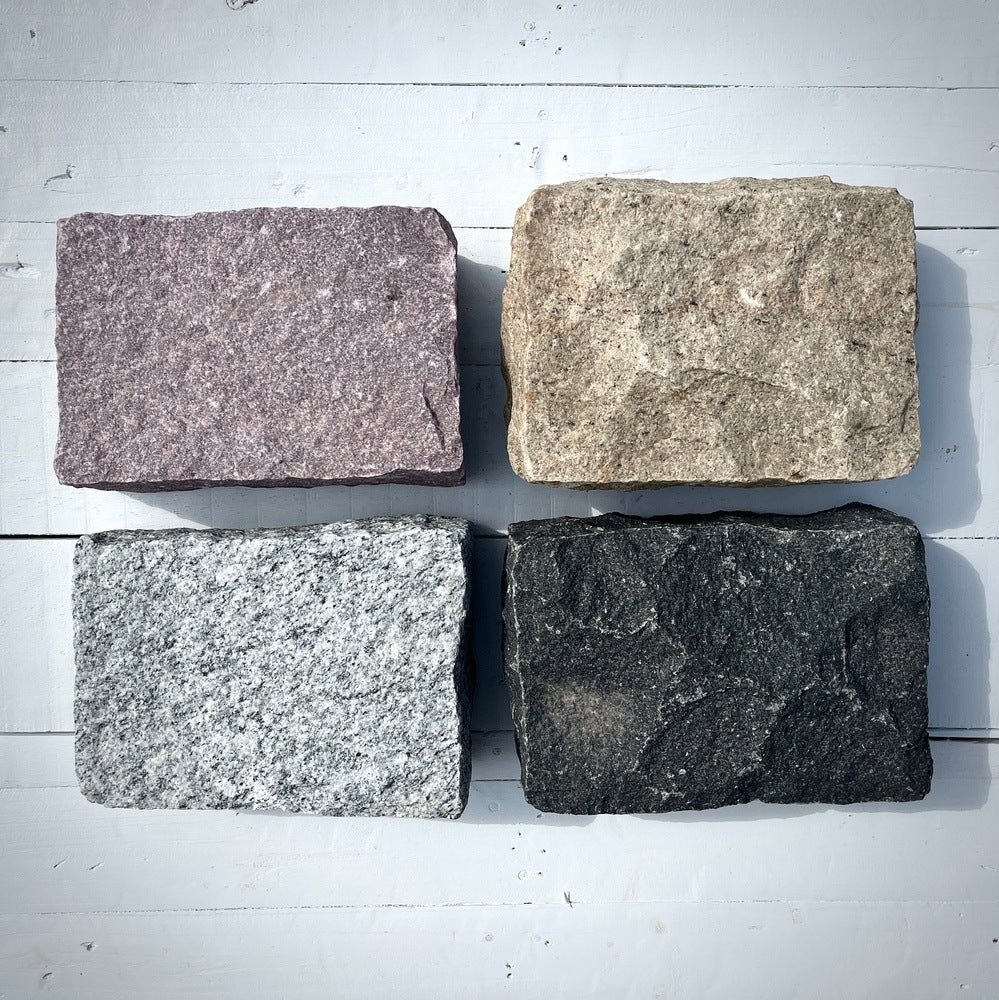
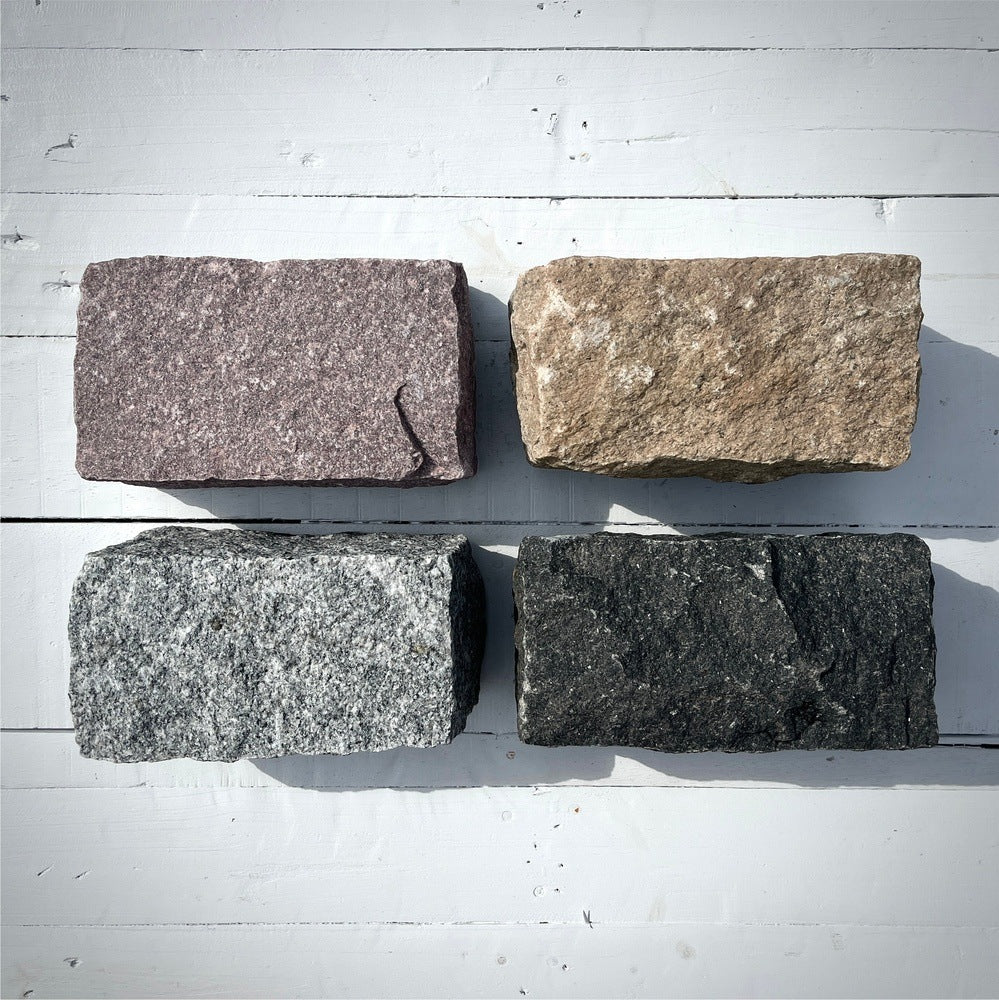
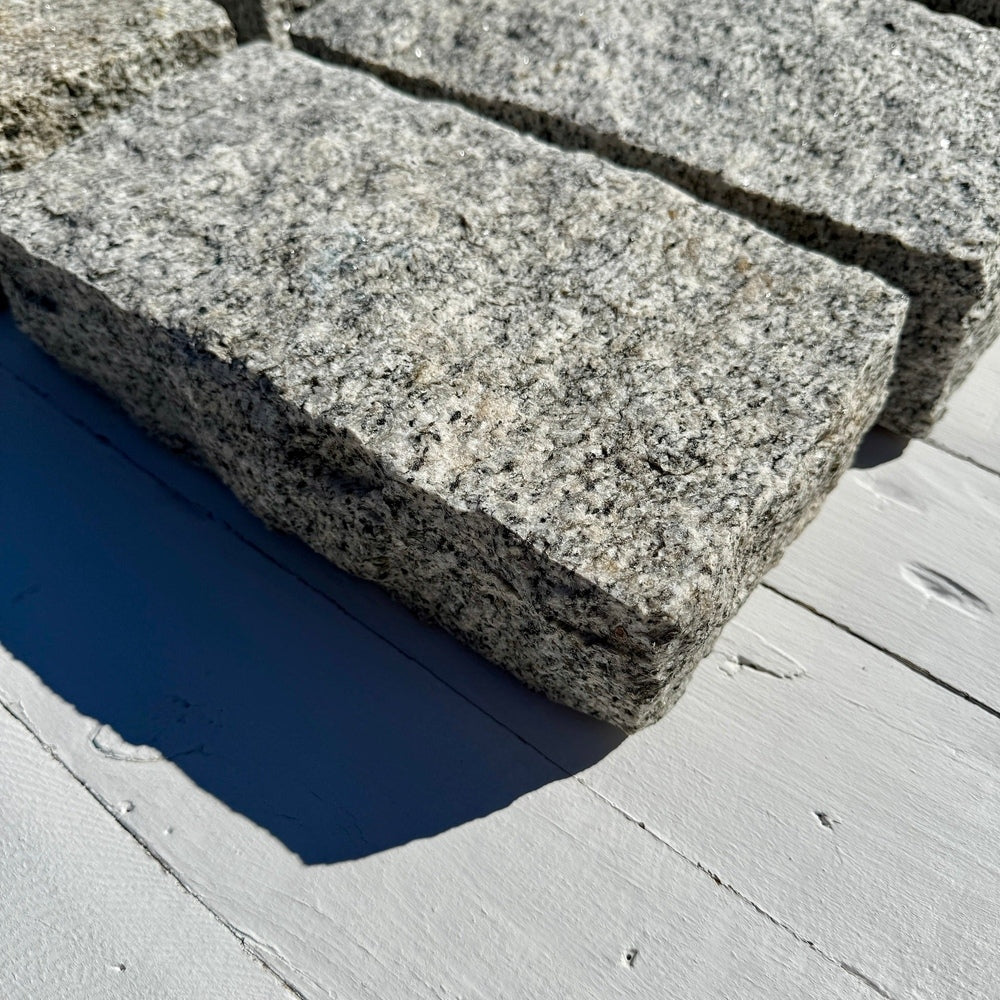
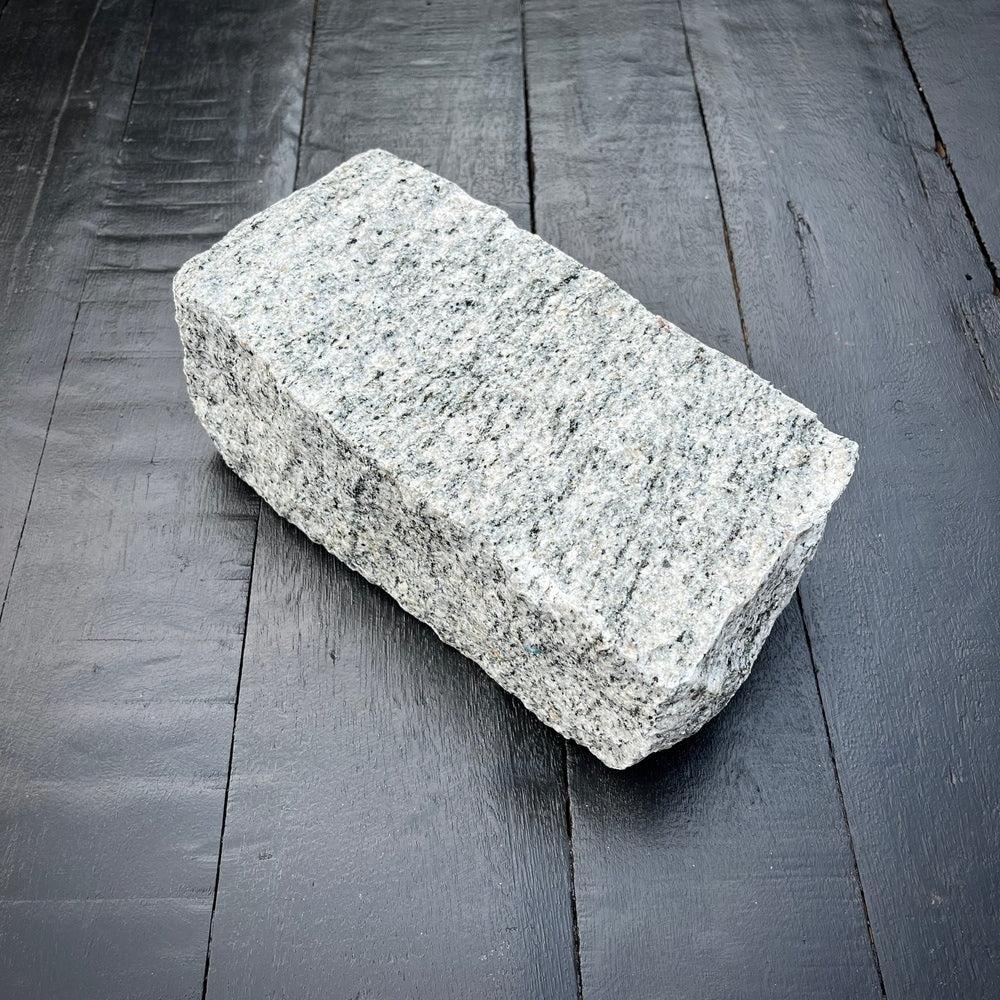
Granite Belgian blocks and cobblestones are small, rectangular or roughly rectangular blocks cut from solid stone. They’re the same style of stone you’ll see in historic streets and old industrial yards, and they adapt perfectly to edging.
Common uses include:
- Single or double rows along asphalt driveways to protect the edge and define the border.
- Borders around planting beds, especially where you want a traditional or slightly rustic feel.
- Transitions between materials—like where a brick walkway meets a lawn or gravel strip.
Because they’re stone all the way through, chips or wear simply reveal more stone, not a different core material. That’s a big part of why they read as “real” and age gracefully.
2. Gray Granite Curbing and Treads Used as Edging
Sometimes edging doesn’t look like little blocks at all. Long granite curbs or cut stone treads can be laid horizontally as a sleek, linear border. You’ll often see this look in more modern landscapes, where the goal is a clean, uninterrupted line.
These pieces work especially well:
- Along straight driveways and long walkways.
- Framing patios and pool decks when you want a minimalist look.
- As both edge and step, for example where a path steps up or down slightly.
Because these are larger, heavier pieces, they’re usually set in a prepared base and sometimes mortared for extra stability. The result feels more like architecture than just edging.
3. Concrete Edging Stones in Gray Tones
Concrete edging stones can be cast in many shapes: scalloped, rectangular, tapered, or designed to lock together in curves. They’re widely available at big‑box stores and are often the first thing homeowners see when they think “edging.”
They do have advantages: they’re lighter to handle, easy to source, and the upfront cost is typically lower than granite. The tradeoff comes with durability. In regions like New York and the Northeast, repeated freeze–thaw cycles, road salt, and occasional impact can cause chipping or surface wear faster than with natural stone.
4. Reclaimed Cobblestones as Edging
Reclaimed gray cobblestones bring history right to the edge of your lawn. These pieces often come with a worn patina, rounded corners, and subtle color variations that feel softer and more established than brand‑new materials.
They are ideal when you want the edge to feel like it has always been there, especially around older homes, brownstones, and farmhouses. The imperfections are part of the charm. Every chip and color streak hints at a previous life—on a city street, in a courtyard, or in an industrial yard.
Where Gray Edging Stones Work Best
Along Driveways
Asphalt and concrete driveways benefit enormously from a solid edging. Without it, the sides can crumble over time as tires push against the edge and water erodes the base. A row of granite Belgian blocks set along the edge of an asphalt drive does double duty: it protects your investment and looks like a deliberate design choice.
For narrow urban driveways or tight parking pads, edging also helps drivers visually “read” the edge line. That makes parking easier and reduces the chance of vehicles drifting onto lawn or planting areas.
Check Styles of Driveway Edging & Aprons with Granite Belgian Blocks.
Around Walkways and Paths
Walkways, especially those built from pavers, bricks, or loose gravel, rely on edging for stability. Without a firm border, pavers can creep over time and gravel has a habit of migrating into lawns or beds.
Gray edging stones act like a quiet frame for the surface. They keep materials in place, clarify the route for guests, and help your walkway look intentional from the street. In side yards and backyard paths, a simple stone edge can also keep mulch from spilling over onto stepping stones or crushed stone paths.
Check Patio & Walkway Design Ideas Using Reclaimed Bricks & Stones.
Around Planting Beds and Lawns
This is the classic use most homeowners imagine: a neat border between lawn and planting bed. Gray edging stones shine here because they set off the color of mulch and greenery without competing.
Done well, this kind of edging can:
- Reduce the time you spend string‑trimming around irregular edges.
- Keep mulch from washing onto the lawn during heavy rains.
- Make seasonal cleanups easier, since leaves stop at the stone, not in the grass.
Around Trees, Patios, and Special Features
Tree rings, patio perimeters, fire pits, and pool decks all benefit from a defined edge. Gray stones can create circular or curved borders around tree bases and focal points, tying them visually back to straighter lines along paths and driveways.
Think of edging here as punctuation. A low ring of gray stone around a tree tells your eye, “This is intentional.” A slim granite band around a patio says, “This is a finished space, not just a slab dropped in the yard.”
Design Tips for a Clean, Timeless Look
Keep the Color Palette Simple
Gray edging stones work best when they’re not fighting too many other colors. If your home already has multiple materials—brick, siding, concrete, and metal railings—let the edging be the calm backdrop.
Staying in the gray family (from light silver to deeper charcoal) lets the edging connect visually with asphalt driveways, concrete walks, and stone steps without stealing the show. It also plays well with New York’s typical streetscape of brownstone, brick, and concrete.
Match the Character to the Home
The right stone is as much about character as color. Rough granite cobbles with worn tops feel natural with older homes, farmhouses, and brownstones. Clean, sawn‑edge granite strips feel at home with more modern architecture where sharp lines and minimalism matter.
A helpful rule of thumb: if your house has a lot of age and texture, don’t be afraid of reclaimed or hand‑cut stone. If your house is more minimal and geometric, lean toward straighter, smoother pieces.
Decide on Flush vs Raised Edging
Flush edging, where the top of the stone sits level with the surrounding lawn or pavement, allows a mower to ride right over it. This is great for low‑maintenance lawn edges and driveway borders.
Raised edging stands above the surrounding surface. It creates more of a visual “wall” and does a better job containing mulch and gravel, but may require a little more careful trimming or hand work around it. Many homeowners choose a mix: flush along mowing edges, slightly raised around beds and loose materials.
Use Consistent Patterns
Even simple materials look better when the pattern is deliberate. A single soldier course (stones laid end‑to‑end) along a driveway, a staggered pattern around planting beds, and a carefully aligned curve around a tree ring will all read as intentional.
Try not to switch styles too often on one property. Using the same type of gray stone in two or three key locations—driveway, front walk, and front planting beds—usually looks more cohesive than four different edging styles competing for attention.
Installation Basics for Homeowners
Even if you plan to hire a contractor, understanding the basics of proper installation helps you ask better questions and recognize quality work. If you’re comfortable with shovels, levels, and some patience, small edging projects can also be DIY‑friendly.
1. Excavate a Proper Trench
Good edging starts with a trench that’s deep and wide enough. For most small edging stones, that means digging a trench a bit wider than the stone and deep enough to hold a compacted base layer plus the portion of stone you want buried.
The deeper the stone is set, the more stable it will be over time. In cold climates, setting stones deep enough and on a compacted base helps minimize frost heave and movement.
2. Add and Compact a Base
A stable base is what keeps stones from tilting and drifting. Typically, this means a layer of compacted crushed stone or gravel at the bottom of the trench. It should be moistened and tamped in thin layers until firm.
For lighter‑duty garden edging, some homeowners use sand alone, but for driveways, walkways, and areas exposed to vehicles, a proper crushed‑stone base is worth the effort.
3. Set Stones to a String Line
A string line, pulled tight between two stakes, is a simple tool that makes your edging look like a pro did it. It gives you a reference for both alignment and height as you set each stone.
Place stones one by one, checking that each touches the string or sits just under it by the same amount. Step back every few stones to eyeball the line. The little corrections you make as you go will pay off in a smooth, clean edge.
4. Backfill and Lock Them In
Once the stones are in place and you’re happy with the line, backfill on both sides. On the “hidden” side—the side facing soil or base—you can pack in more crushed stone or soil and tamp it firmly. On the exposed side, you may sweep in sand or fine stone into the joints if it’s a dry‑set installation.
For edging that needs extra strength, such as driveway borders, some installers use a bit of concrete or mortar on the back side only, leaving the visible faces and joints looking natural from the front.
Maintenance, Longevity, and Climate Considerations
One of the reasons homeowners in New York and other Northeastern areas gravitate toward granite and quality stone edging is simple: longevity. Properly installed granite edging can outlast the driveway it protects and the bed it borders.
Basic maintenance usually comes down to:
- Occasional cleaning with a stiff brush or gentle wash to remove dirt and organic growth.
- Re‑topping joints with sand or fine stone if they settle over time.
- Inspecting for any stones that have shifted after harsh winters and re‑setting them as needed.
In regions where de‑icing salts are common, natural granite and other dense stones typically hold up better than many concrete edging products. They’re less likely to spall or show surface flaking after years of exposure.
Check Removing Weeds Between Cobblestones: Best Practices Guide.
When to Choose Gray Edging Stones Over Other Options
There are plenty of edging options out there: plastic strips, metal edging, timber, and even no edging at all. So when does it make sense to commit to gray stone?
Consider gray edging stones when:
- You want something that looks as good next decade as it does this year.
- Your property deals with harsh winters, freeze–thaw cycles, and street salt.
- You’re upgrading a driveway, walkway, or front entry and want it to feel “finished,” not temporary.
- You like the idea of materials that tie into the larger streetscape, cobblestones, granite curbs, brick, especially in older neighborhoods.
Plastic or thin metal edging can be fine for purely temporary or low‑impact areas, but they rarely add to the character of a home. Gray stone edging, especially granite and reclaimed cobbles, feels like part of the architecture. It connects your front yard to the history and material language of the city around it.
Whether you’re edging a tight Brooklyn driveway, a small Queens front yard, or a larger suburban property north of the city, gray edging stones are a reliable way to bring order, durability, and quiet elegance to the spaces that greet you every day.


Share: