
Sustainability in building materials is no longer just a talking point for architects and LEED-certified projects. Homeowners are asking real questions about where materials come from, how much energy went into making them, and what happens at the end of their useful life. When it comes to patios, walkways, and driveways, the choice between reclaimed brick street pavers and new concrete pavers carries real environmental weight.
Reclaimed street brick pavers offer a genuinely sustainable alternative to new concrete, and the reasons go deeper than just "reusing old stuff." They eliminate manufacturing emissions, divert waste from landfills, require minimal processing, and deliver decades of performance without needing replacement. In this guide, we will walk through the environmental case for reclaimed brick, compare it directly to new concrete pavers, and show you how choosing reclaimed material reduces your project's carbon footprint while creating beautiful, durable outdoor spaces.
Table of Contents
- 1. Understanding embodied carbon and why it matters
- 2. The reclaimed brick advantage: zero new manufacturing
- 3. The environmental cost of new concrete pavers
- 4. Waste diversion and landfill reduction
- 5. Lifecycle durability and long-term performance
- 6. Local sourcing and transportation impacts
- 7. Maintenance, repair, and end-of-life recyclability
- 8. Environmental impact comparison: reclaimed brick vs. concrete pavers
- 9. Chief Bricks sustainable reclaimed brick options
- 10. Making the sustainable choice for your project
- Sources
1. Understanding embodied carbon and why it matters
Embodied carbon is the total greenhouse gas emissions produced during the extraction, manufacturing, transportation, and installation of a building material. It is different from operational carbon, which comes from heating, cooling, and using a building over time. For hardscape materials like pavers, embodied carbon is the primary environmental concern because patios and driveways do not consume energy once installed.
The construction industry is responsible for a significant share of global carbon emissions, and embodied carbon in materials like concrete, steel, and new brick is a major contributor. Studies show that embodied carbon can make up 20 to 50 percent of a building's total carbon footprint, which means material choices have real environmental consequences.
When you choose reclaimed street brick pavers, you are working with material that already "paid" its embodied carbon debt decades ago. No new firing, no cement production, no industrial manufacturing. The carbon cost of making those bricks happened fifty or a hundred years ago, and now you are simply extending their useful life instead of creating demand for new production.
2. The reclaimed brick advantage: zero new manufacturing
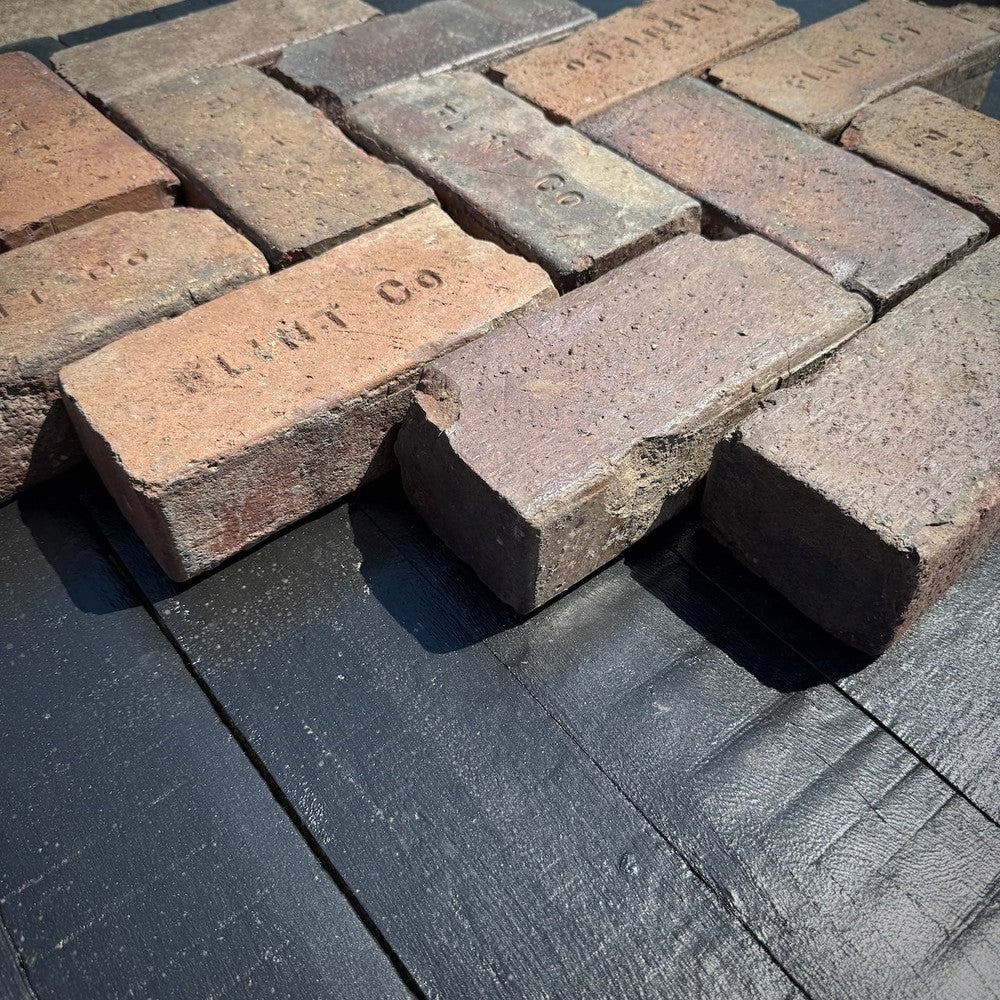
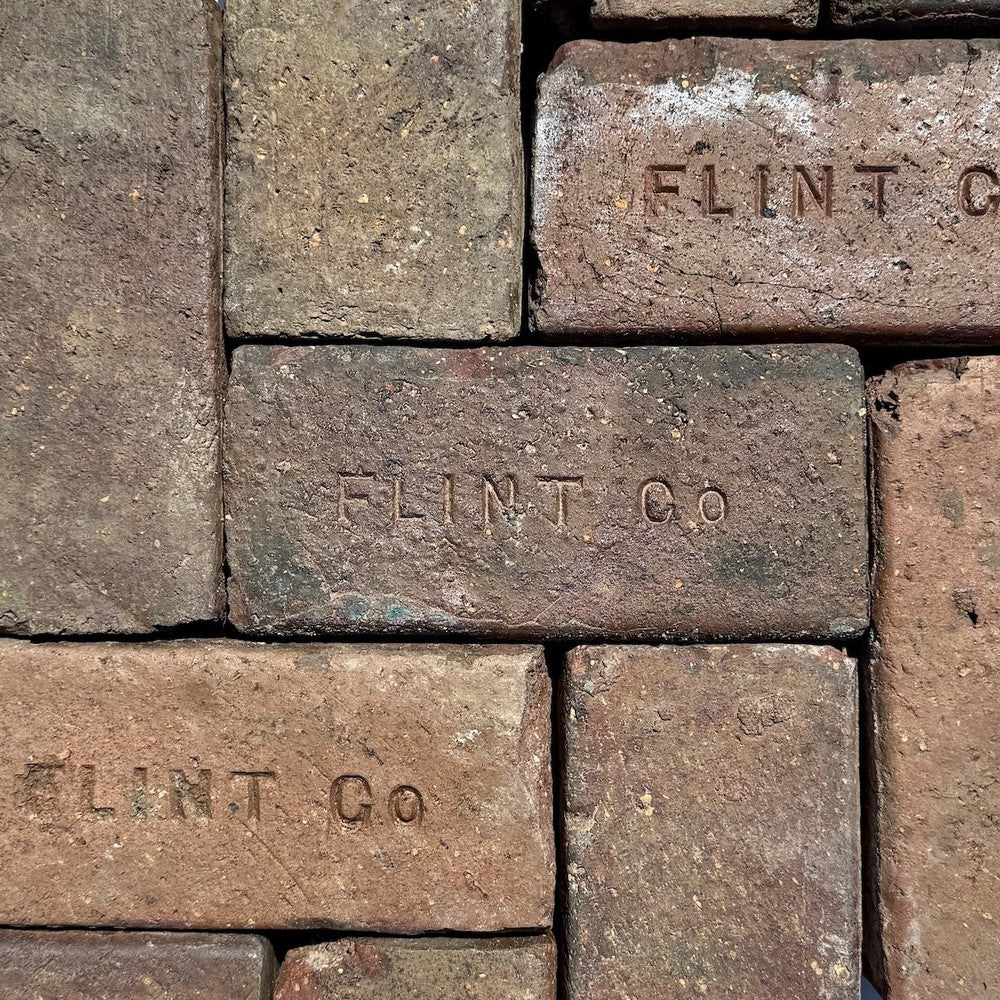
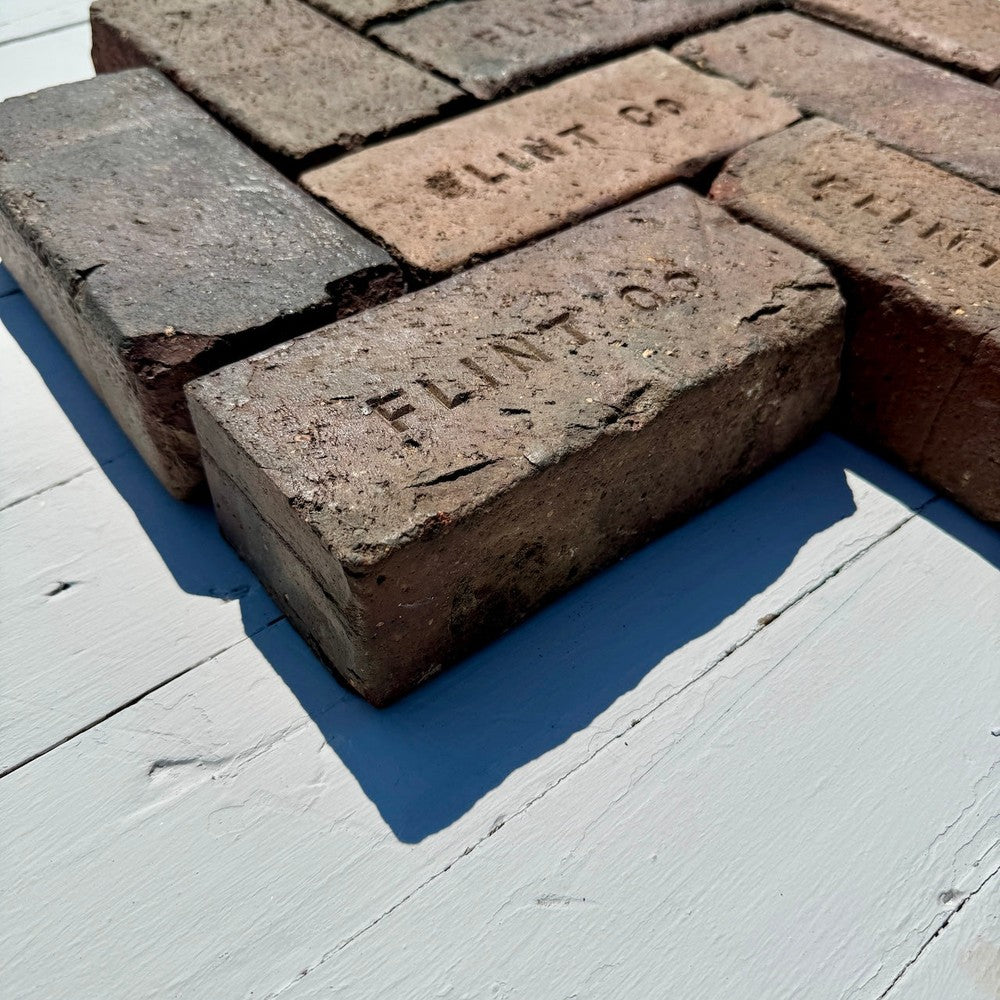
The single biggest environmental advantage of reclaimed brick street pavers is that they require zero new manufacturing. Every brick you buy was already fired, used, and proven durable in its first life. Your project diverts that material from waste streams and puts it back to work without triggering any new industrial production.
Firing new clay bricks requires high-temperature kilns that consume significant energy, typically from natural gas or other fossil fuels. Kiln temperatures reach over 1,800 degrees Fahrenheit, and the process releases carbon dioxide both from fuel combustion and from the chemical breakdown of clay itself. When you skip that step entirely by choosing reclaimed brick, you eliminate those emissions from your project.
Reclaimed brick does require some processing: cleaning, sorting, grading, and transportation. But those steps consume a fraction of the energy required to mine clay, shape new units, fire them in kilns, and ship finished products from manufacturing plants. Research shows that reusing reclaimed bricks can reduce environmental impact by 85 to 86 percent compared to new bricks, representing savings of nearly 1.5 kilograms of CO₂ per brick.
3. The environmental cost of new concrete pavers
New concrete pavers are one of the most popular hardscape materials in the country, and for good reason: they are affordable, versatile, and widely available. But concrete comes with a substantial environmental cost, primarily driven by cement production.
Cement is the binding agent in concrete, and producing it is one of the most carbon-intensive industrial processes in the world. Making one ton of Portland cement releases approximately 0.9 tons of CO₂, with emissions coming from both the energy required to heat limestone and the chemical reactions that occur during calcination. Globally, cement production accounts for roughly 8 percent of all human-caused carbon emissions.
Concrete pavers also require aggregates, water, pigments, and energy for molding, curing, and transportation. While some manufacturers are working to reduce embodied carbon through supplementary cementitious materials, recycled content, and lower-carbon mixes, new concrete pavers still carry a significant carbon footprint compared to reused materials.
For homeowners trying to reduce their project's environmental impact, the carbon cost of new concrete is difficult to avoid unless you choose an alternative material with lower embodied energy, like reclaimed brick.
4. Waste diversion and landfill reduction
Beyond carbon emissions, reclaimed street brick pavers also address the problem of construction and demolition waste. When old streets are resurfaced or historic buildings are torn down, the bricks have to go somewhere. Without a reclaimed market, they end up crushed for fill material or sent to landfills.
Construction and demolition debris makes up a significant portion of solid waste in the United States. By choosing reclaimed brick, you are directly reducing that waste stream and keeping durable, reusable material in circulation. Every pallet of reclaimed pavers you buy is a pallet of bricks that did not end up buried or crushed.
This is waste diversion in the most practical sense: taking material with remaining useful life and giving it a second purpose instead of treating it as trash. It is circular economy thinking applied to hardscaping, and it works because reclaimed bricks were built to last far longer than their first installation.
5. Lifecycle durability and long-term performance
Sustainability is not just about what happens during manufacturing. It is also about how long a material lasts and how well it performs over its lifetime. Reclaimed street brick pavers excel in both areas.
These bricks were originally fired to handle real vehicle traffic, freeze-thaw cycles, and harsh weather. Many of them already survived fifty to a hundred years of use before being salvaged. When you install them in your patio, walkway, or driveway, you are working with material that has already proven its durability in the field.
New concrete pavers, while durable, can show surface wear, color fading, and cracking over time, especially in demanding climates or under heavy traffic. Lower-quality concrete options may need replacement sooner, which means another round of embodied carbon for new material and disposal costs for the old.
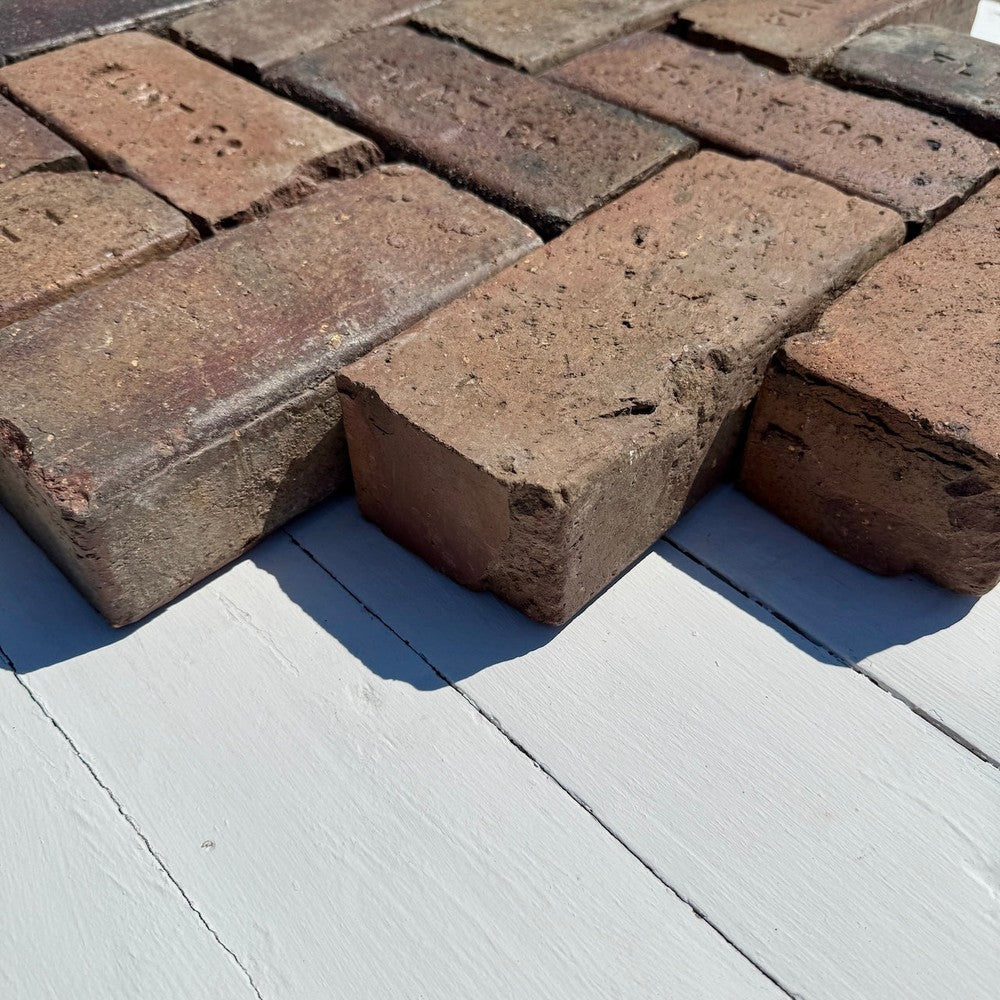
Reclaimed brick, on the other hand, ages gracefully. The patina deepens, the surface softens slightly, but the structural integrity remains. You are not replacing worn-out material in fifteen or twenty years; you are maintaining a surface that can last another fifty or more with basic care. That extended lifespan spreads the environmental cost over many more years of use, making reclaimed brick one of the most sustainable long-term choices available.
6. Local sourcing and transportation impacts
Transportation is another piece of the embodied carbon puzzle. The farther a material travels from production to installation, the higher its carbon footprint from fuel consumption and logistics.
Reclaimed brick often has a localized supply chain. Many batches are salvaged from nearby demolition projects, processed at regional facilities, and delivered within a few hundred miles. When you source reclaimed brick locally or regionally, you reduce transportation emissions significantly compared to materials manufactured overseas or across the country.
New concrete pavers are typically produced domestically, which helps keep transportation distances reasonable, but they still require shipping raw materials to manufacturing plants, then distributing finished products to retail and wholesale yards before reaching job sites.
The advantage of reclaimed material is that much of the transportation has already happened. The bricks were delivered to their original installation decades ago. Now, the only transportation cost is moving them from salvage site to processing facility to your project, often with fewer total miles than new manufactured products.
7. Maintenance, repair, and end-of-life recyclability
Sustainable materials should not just last a long time; they should also be easy to maintain, repair, and recycle at the end of their useful life. Reclaimed street brick pavers check all three boxes.
Maintenance for reclaimed brick is minimal: sweeping, occasional rinsing, topping up joint sand, and optional sealing. No special treatments, no proprietary products, no intensive cleaning regimens. The material was designed to live outdoors with minimal intervention, and it still performs that way today.
When repairs are needed, reclaimed brick pavers are modular and easy to replace. Lift a damaged unit, address the underlying issue, and drop in a replacement. The repair blends in naturally because the material already has patina and variation. You are not trying to match a factory finish; you are working with material that accepts change as part of its character.
At the end of a project's life, whether you are redesigning a space or selling a property, reclaimed bricks can be lifted and reused again. They are 100 percent recyclable in the truest sense: they can go back into another project, be crushed for aggregate, or used in landscape applications. There is no landfill required, no disposal fee, and no environmental cost for "throwing away" the material.
8. Environmental impact comparison: reclaimed brick vs. concrete pavers
To make the sustainability case clear, here is a side-by-side comparison of the environmental impacts of reclaimed brick street pavers versus new concrete pavers across key metrics.
Environmental Impact Comparison
| Environmental Factor | Reclaimed Brick Street Pavers | New Concrete Pavers |
|---|---|---|
| Embodied Carbon | Very low; no new manufacturing, minimal processing | High; cement production is carbon-intensive |
| Manufacturing Emissions | Zero; bricks already fired decades ago | Significant; kiln energy and cement calcination release CO₂ |
| Waste Diversion | High; keeps bricks out of landfills and extends useful life | None; all new production with no waste diversion |
| Resource Extraction | Zero; reuses existing material | Moderate to high; requires mining of aggregates and limestone |
| Transportation Impact | Low to moderate; often sourced regionally | Moderate; raw materials and finished products both shipped |
| Lifecycle Durability | Excellent; proven performance over 50–100+ years | Good to very good depending on quality; 30–40 years typical |
| Maintenance Requirements | Minimal; sweeping, joint care, optional sealing | Moderate; sealing recommended to prevent fading |
| End-of-Life Recyclability | 100% recyclable; can be reused, repurposed, or crushed | Recyclable as aggregate; cannot be reused as pavers |
| CO₂ Savings per Brick | ~1.5 kg CO₂ saved compared to new brick production | Baseline; new production releases full embodied carbon |
| Overall Sustainability Rating | Excellent; circular economy model with minimal impact | Fair to good; improving with lower-carbon mixes |
This comparison makes it clear: reclaimed brick street pavers outperform new concrete pavers on nearly every environmental metric. The only area where concrete holds an advantage is in predictable uniformity and manufacturing standards, but those benefits come at a measurable environmental cost.
9. Chief Bricks sustainable reclaimed brick options
At Chief Bricks, every reclaimed brick product we offer carries the same sustainability advantages: zero new manufacturing, waste diversion, and proven durability.
You'll find an overview of our current reclaimed brick inventory and how each option supports sustainable building practices on our article How We Source, Sort, and Clean Reclaimed Bricks.
Every one of these products represents material diverted from landfills, emissions avoided from new production, and decades of remaining useful life. Choosing any reclaimed brick from Chief Bricks is a measurable step toward lower-impact building.
10. Making the sustainable choice for your project
Sustainability in hardscaping is not about perfection; it is about making informed choices that reduce environmental impact without sacrificing performance or beauty. Reclaimed street brick pavers offer one of the clearest paths to lower-impact outdoor projects.
When you choose reclaimed brick over new concrete pavers, you are eliminating manufacturing emissions, diverting waste, supporting circular economy principles, and investing in material with proven long-term durability. You are also creating patios, walkways, and driveways with authentic character that new manufactured products cannot replicate.
The environmental case for reclaimed brick is strong, backed by research, lifecycle data, and the simple logic of reuse. You are not asking these bricks to do something new; you are asking them to keep doing what they have already proven they can do, just in a different place, under your feet, as part of your home.
That is sustainable building in its most practical, effective form: choosing materials that have already stood the test of time, giving them new purpose, and keeping them in use for generations to come.
Sources
- Brick Industry Association – Sustainability: Brick Benefits
- Reclaimed or new? Life cycle assessment of ceramic bricks (Journal of Cleaner Production)
- The Brick Pit – The Environmental Impact of Choosing Recycled Bricks Over New Ones
- Cherokee Brick – Achieve the Look of Reclaimed Brick
- Unilock – Reducing Embodied Carbon
- Techo‑Bloc – The Sustainable Advantage of Concrete Pavers
- The Concrete Centre – Embodied Carbon
- Environmental Product Declaration – Reclaimed Bricks
- Modular Clay Products – How To Know If Bricks Are High Quality?
- Natural Stone Institute – Embodied Carbon and Natural Stone
- ECS Products – Understanding the Benefits of Recycled and Renewable Building Materials
- BLDR – Why Sustainable Building Materials Are Growing in Popularity
- Cheshire Demolition – The Benefits of Recycled Bricks in Modern Construction
- Bricks Victoria – What Happens to Bricks After a Demolition?




Share: