New York and New Jersey have a long relationship with brick. Walk through neighborhoods in Brooklyn, Queens, Newark, or Hoboken and you will see brick rowhouses, historic industrial buildings, and old streets still paved with the same material homeowners are rediscovering today. Using reclaimed brick pavers for patios, walkways, and driveways in the tri-state area is not just an aesthetic choice; it is a way of tying new projects to the region's architectural history.
The practical side matters just as much. New York and New Jersey winters are real: freeze-thaw cycles, snow, ice, salt, and temperature swings that test every outdoor surface. Reclaimed street bricks were made for exactly this kind of punishment, and many of them already survived decades of northeastern weather before arriving at your home. In this guide, we will walk through why reclaimed brick pavers work so well in the tri-state area, what to know about climate and performance, sourcing and delivery, local permitting, and design ideas that fit the character of New York and New Jersey homes.
Table of Contents
- 1. Why reclaimed brick pavers are a natural fit for the region
- 2. Freeze-thaw performance and northeastern winters
- 3. Sourcing reclaimed brick in New York and New Jersey
- 4. Delivery, access, and urban site challenges
- 5. Permitting and local requirements
- 6. Design ideas for New York and New Jersey homes
- 7. Driveways and parking areas in tight urban lots
- 8. Backyard patios, courtyards, and gardens
- 9. Front walkways, stoops, and entry sequences
- 10. Seasonal maintenance and snow removal
1. Why reclaimed brick pavers are a natural fit for the region
The tri-state area has always been a brick region. Brick built the cities, lined the streets, and shaped the character of entire neighborhoods. When you use reclaimed street brick pavers today, you are working with a material that already speaks the local architectural language.
Many of the reclaimed bricks available in New York and New Jersey markets actually came from local streets and demolition projects. That means they already survived the exact climate, freeze-thaw cycles, and urban conditions you are asking them to handle again. It is a material with a proven track record in the environment where you live.
There is also a visual continuity that feels right. Reclaimed brick patios and walkways blend naturally with brownstones, row houses, and older suburban homes across the region. Even newer construction benefits from the warmth and grounding that reclaimed material provides, especially in areas where everything else feels fresh and raw.
2. Freeze-thaw performance and northeastern winters
Winter in New York and New Jersey is one of the main reasons reclaimed street brick pavers perform so well here. They were built for it.
Freeze-thaw cycles happen when water gets into porous materials, freezes, expands, and causes cracking or spalling. Dense, fully fired reclaimed street bricks resist this damage because they have low water absorption and were originally designed to live outdoors under harsh conditions. Many of these bricks already spent fifty to a hundred years in northeastern streets before being salvaged, which is about as good a durability test as you can get.
That said, the brick is only part of the system. A well-drained base is just as important as the paver itself. In New York and New Jersey, that typically means a thick compacted gravel base that sheds water and prevents heaving. When water has a way to move through and away from the pavement structure, freeze-thaw damage becomes much less likely.
Snow and ice are also part of the equation. Reclaimed brick handles de-icing salts better than many concrete products, though using salt sparingly and choosing brick-safe products still makes sense. A plastic-edged shovel or snow blower protects brick corners from chipping, and the surface itself is naturally slip-resistant when clean.
3. Sourcing reclaimed brick in New York and New Jersey
One advantage of living in the tri-state area is access. New York and New Jersey have active salvage and reclaimed material markets, and reclaimed brick is a staple product. You can often find locally sourced stock that came from streets, factories, or buildings right in the region.
Local sourcing means shorter transportation distances, lower shipping costs, and the ability to see material in person before you commit. Many suppliers keep outdoor yards where you can walk through stacks of reclaimed brick, compare batches, and get a sense of color, wear, and character up close.
That said, availability fluctuates based on salvage timing and demand. If you find a batch you love, especially one with provenance or a specific look tied to local history, it can be smart to secure it sooner rather than waiting. Reclaimed stock does not sit on shelves indefinitely the way manufactured products do.
4. Delivery, access, and urban site challenges
Urban and suburban sites in New York and New Jersey come with their own logistical quirks, especially when you are bringing in pallets of heavy brick. Planning delivery and site access ahead of time makes the whole process smoother.
In cities like New York, access can be tight. Narrow streets, low-hanging trees, parked cars, and brownstone stoops all affect where a delivery truck can go and how pallets get unloaded. Many suppliers use smaller trucks or liftgates for urban deliveries, and curbside drop-off is standard. From there, you or your contractor will need to move bricks to the backyard, side lot, or wherever the project is happening.
In suburban New Jersey, access is usually easier, but driveways may be steep or gated, and some properties have overhead wires or narrow turns that limit where large trucks can maneuver. Communicate site conditions to your supplier early so they can plan the right equipment and avoid delays or extra fees.
Once bricks are on site, think about staging. You want pallets on firm ground, out of the way of daily traffic, and close enough to the work area that you are not hauling bricks across the whole property multiple times. A little planning here saves hours of labor later.
5. Permitting and local requirements
Permitting rules for patios, walkways, and driveways vary widely across New York and New Jersey, and even from town to town within the same county. Understanding what is required in your municipality helps you avoid surprises and keeps the project moving forward.
In many cases, small residential patio projects in backyards do not require permits, especially if they are not attached to the house and do not involve grading changes or stormwater impacts. Driveways and front walkways, on the other hand, often do require permits because they affect curb cuts, drainage, and public right-of-way.
New York City has particularly detailed rules around curb cuts, driveway aprons, and work in the public right-of-way. If you are adding or expanding a driveway in Brooklyn, Queens, or the Bronx, expect to pull permits and possibly work with a licensed contractor to handle approvals and inspections.
In New Jersey suburbs, requirements tend to be less rigid but still vary by town. Some towns require site plans or stormwater management details for larger paver projects, while others have simpler permit processes. A quick call to your local building department before you start can save headaches down the road.
6. Design ideas for New York and New Jersey homes
Reclaimed brick pavers work across a wide range of architectural styles common in the tri-state area, from Brooklyn brownstones to New Jersey colonials and everything in between. The key is to match the scale, pattern, and tone of the brick to the character of your home and neighborhood.
For historic urban row houses, reclaimed brick feels natural in front stoops, entry landings, and small courtyard gardens. Running bond or herringbone patterns complement the formal lines of these homes without overwhelming them. Deep reds and browns tie into the existing masonry, creating a cohesive look from curb to front door.
In suburban settings, reclaimed brick works beautifully for larger patios, curved walkways, and driveways that want to feel less suburban-standard and more intentional. Mixing brick with bluestone, granite curbing, or gravel borders adds local flavor and breaks up large expanses of one material.
For modern or contemporary homes, choosing cleaner-lined patterns and editing out heavily worn or stamped bricks can make reclaimed material feel current rather than nostalgic. The warmth and texture are still there, but the overall effect is more restrained.
7. Driveways and parking areas in tight urban lots
Driveways in New York and New Jersey often deal with limited space, steep grades, and heavy use. Reclaimed brick street pavers handle all of this when the base is built correctly and the pattern is chosen with loads in mind.
In cities, driveways are often short and narrow, squeezed between buildings or leading to small garages or parking pads. Reclaimed brick adds visual interest to these tight spaces and can help them feel less utilitarian. Herringbone patterns work especially well because they lock together under vehicle turning forces.
In suburban New Jersey, driveways are longer and wider, which gives you more room to play with borders, bands, and transitions. A reclaimed brick apron at the street or a contrasting border along the edges can frame the driveway and tie it visually to the house.
Snow removal is a practical concern. Reclaimed brick driveways handle plowing and shoveling well, but using plastic or rubber-edged equipment protects brick corners from chipping. The pavers themselves are durable, but a little care during winter keeps them looking good year after year.
8. Backyard patios, courtyards, and gardens
Backyards in the tri-state area range from postage-stamp city courtyards to sprawling suburban gardens, and reclaimed brick pavers work across that entire spectrum.
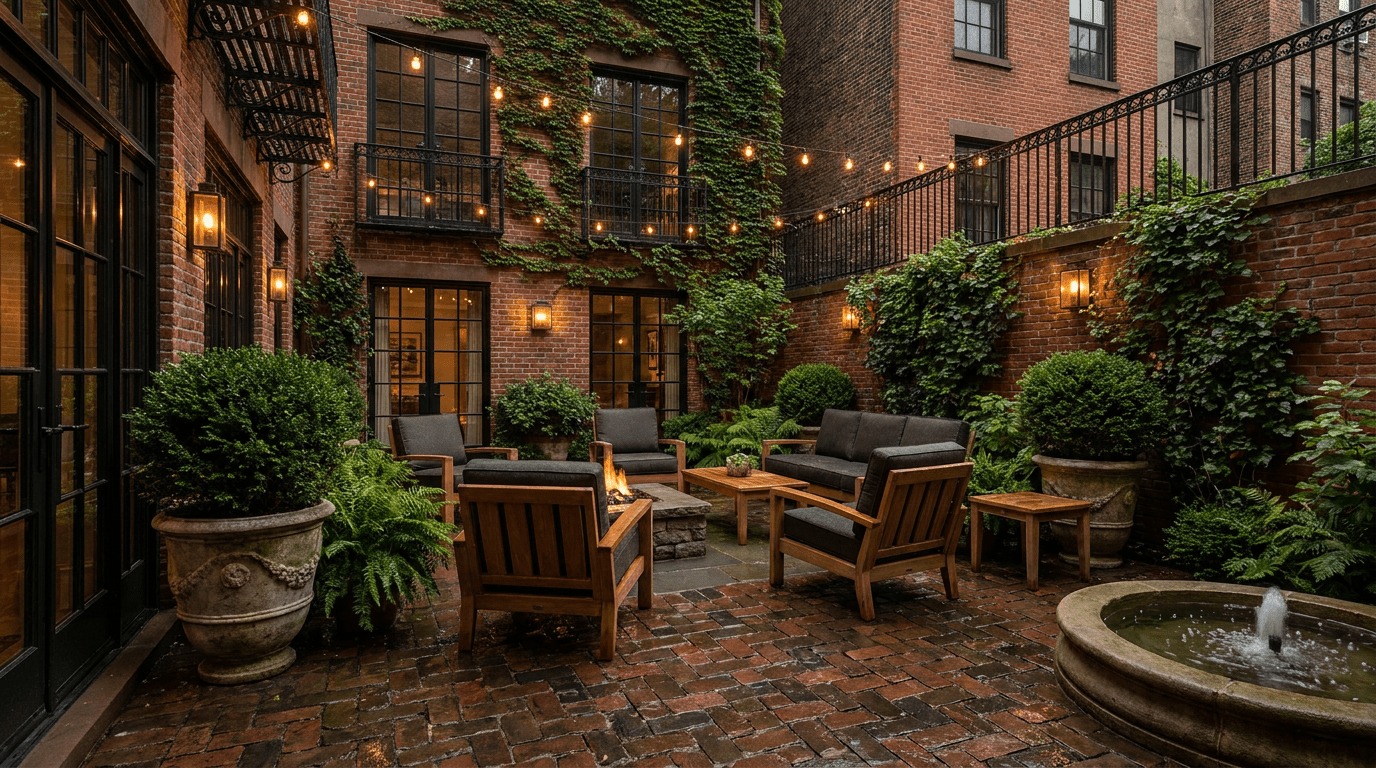
In urban backyards, every square foot counts. A well-designed reclaimed brick patio can serve as dining area, garden focal point, and outdoor living room all at once. Tight patterns and clean edges help small spaces feel finished and intentional rather than cramped. Pairing brick with planters, vertical gardens, and built-in seating maximizes usability.
In larger suburban yards, reclaimed brick patios anchor outdoor kitchens, fire pits, and seating areas. You have room to create zones: a brick dining area near the house, a gravel path through the garden, and a brick-edged fire pit at the back of the lot. The consistency of material ties everything together even as spaces flow and shift.
Shade, drainage, and tree roots are common challenges. Reclaimed brick is modular, so you can work around existing trees and adjust layouts as roots grow. Good base design keeps water moving away from the house and prevents pooling in low spots.
9. Front walkways, stoops, and entry sequences
The front of your home is where reclaimed brick pavers make their first impression. Walkways, stoops, and entry landings are high-visibility, high-traffic areas where durability and curb appeal both matter.
In brownstone neighborhoods, reclaimed brick walkways and stoops feel like a natural extension of the building's masonry. They bridge the sidewalk and the front door with warmth and texture, and they age gracefully alongside the rest of the facade. Running bond patterns keep things simple and classic; borders or inlays add custom touches without overdoing it.
In suburban New Jersey, front walkways often curve through lawns or connect driveways to front doors. Reclaimed brick adds character to these paths and helps them feel less generic than poured concrete. Mixing brick with bluestone treads, granite steps, or planted borders creates layered, interesting entries.
Snow and ice management on front walks is easier with slip-resistant brick and good drainage. A slight crown or slope keeps water moving off the surface, and strategic placement of downspouts and drainage swales prevents ice buildup in problem areas.
10. Seasonal maintenance and snow removal
Living with reclaimed brick pavers in New York and New Jersey means dealing with four real seasons, and a little seasonal maintenance keeps everything performing well.
In spring, sweep away leftover de-icing materials, check for any settled or heaved bricks, and top up joint sand where it has washed out over winter. This is also a good time to rinse surfaces and remove any organic buildup from fall leaves or winter debris.
Summer and fall are mostly about keeping up with routine cleaning and addressing stains or spills as they happen. If you sealed your brick, check whether water still beads on the surface; if not, it may be time to reapply.
Winter requires a bit more attention. Use plastic shovels or snow blowers with non-metal edges to avoid chipping brick corners. Apply de-icing products sparingly and choose options that are less aggressive on masonry. Most importantly, make sure your drainage is working so meltwater does not refreeze in low spots or against the house.
With thoughtful seasonal care, reclaimed brick pavers in the tri-state area will look better and perform more reliably with each passing year, becoming a permanent part of your home's character and a connection to the region's deep brick-building tradition.
Share:
Gray Edging Stones 101: Types, Uses, and Design Ideas for Homeowners
How to Install Reclaimed Brick Street Pavers for Patios, Walkways, and Driveways